Level 1 vs Level 2 EV Charging Cost: A Comparison
Per-mile electricity cost is nearly identical between Level 1 and Level 2 — often only a few dollars per 1,000 miles — while Level 2 adds equipment and installation costs that efficiency savings alone rarely repay. The real swing factor is whether Level 2 lets you charge inside a cheaper off-peak window.
Most drivers researching Level 1 vs Level 2 charging cost expect a dramatic difference, but the honest answer is that the electricity itself is nearly a wash — often just a few dollars per 1,000 miles. The real cost gap sits in equipment, installation, and whether a faster charger lets you capture cheaper off-peak rates.
- Cost: At an illustrative $0.16/kWh, 1,000 miles in a 3.5 mi/kWh EV costs roughly $54.
- Compatibility: Verify connector type (J1772 or NACS/SAE J3400) and your vehicle’s onboard-charger limit before buying.
- Safety: Level 2 requires a 240V circuit; NEC continuous-load sizing, permits, and panel capacity vary.
- Payback: Efficiency alone rarely covers a Level 2 install — off-peak TOU access and convenience.
The Short Answer: Level 1 vs Level 2 Charging Cost in 2026
Level 1 charging is almost always cheaper to own because it usually requires no new hardware — the cord typically comes with the car. Level 2 charging costs more up front but delivers energy at slightly higher efficiency and far greater speed.
On a typical residential rate, the per-mile energy difference between the two is small. The bigger financial variable is not the charging level; it is your electricity rate, your utility’s time-of-use windows, and how many miles you drive each year.
Upfront Cost vs. Per-Mile Cost: What Changes and What Doesn’t
Per-mile energy cost changes only slightly, because both levels convert AC power to DC inside the vehicle and both lose some energy along the way. Upfront cost changes a lot: Level 2 generally means buying an EVSE, running a 240V circuit, and paying for labor, permits, and possibly a panel upgrade.
Who Each Option Fits: Level 1, Level 2, and the Break-Even Point
Level 1 fits low-mileage drivers with a garage or driveway outlet. Level 2 fits higher-mileage drivers, households sharing one charger, and anyone on a time-of-use plan with a narrow off-peak window. Break-even depends almost entirely on installation cost divided by annual savings — and efficiency savings alone rarely cover a full install.
How to Calculate Level 1 and Level 2 Charging Cost: Formula and Assumptions
You can estimate either option with one formula, as long as you keep “energy stored in the battery” separate from “energy purchased from the utility.”
The Cost Formula: Electricity Rate × kWh Delivered ÷ Charging Efficiency
Charging cost = (energy added to the battery ÷ charging efficiency) × your electricity rate. Energy added is what the vehicle reports; energy delivered is what the meter bills. Efficiency is the bridge between them.
Example: adding 50 kWh at 90% efficiency means roughly 55.6 kWh delivered. Multiply by your all-in rate — including taxes and fees — to get the true cost.
Assumptions for U.S. Drivers in 2026: Miles, mi/kWh, Rates, and Losses
The examples below use clearly labeled illustrative assumptions: 1,000 miles driven, a vehicle averaging 3.5 mi/kWh, a residential rate of $0.16/kWh, about 85% charging efficiency on Level 1, and about 92% on Level 2.
Your numbers will differ. The U.S. Energy Information Administration publishes monthly average residential electricity prices, and state averages vary widely. Treat every figure here as a worked example, not a quote for your bill.
Electricity Rate, kWh Delivered, and Charging Losses
Two homes can charge identical cars and pay very different amounts, because the rate structure and the losses both vary.
Flat, Tiered, and Time-of-Use Rates: Why Your Rate Is Not One Number
A flat rate charges the same price around the clock. A tiered rate raises the price as monthly usage climbs, which means an EV can push a household into a higher tier. A time-of-use (TOU) rate charges less overnight and much more during peak hours.
Under TOU, when you charge can matter more than how you charge. That is the single biggest reason Level 2 sometimes wins on total cost despite the installation bill.
Level 1 vs. Level 2 Charging Losses: Where the Extra kWh Goes
Losses come from the vehicle’s onboard charger, battery thermal management, and the time the car spends awake while charging. Level 1 sessions run long, so parasitic and thermal overhead is spread over many more hours, which is why Level 1 is generally a bit less efficient.
Published efficiency figures vary by vehicle and conditions. Some owners report much smaller gaps in mild weather; cold-weather charging can widen them noticeably.
kWh Delivered vs. kWh Stored: Using Utility Bills and EV Apps
Your utility bill shows kWh delivered. Your car’s app or trip meter shows energy added or consumed. Comparing the two over a full month is the most reliable way to estimate your own real-world charging efficiency — no lab equipment required, just two numbers from the same period.
Level 1 Charging Cost Breakdown: 120V, Low Power, and Real-World Examples
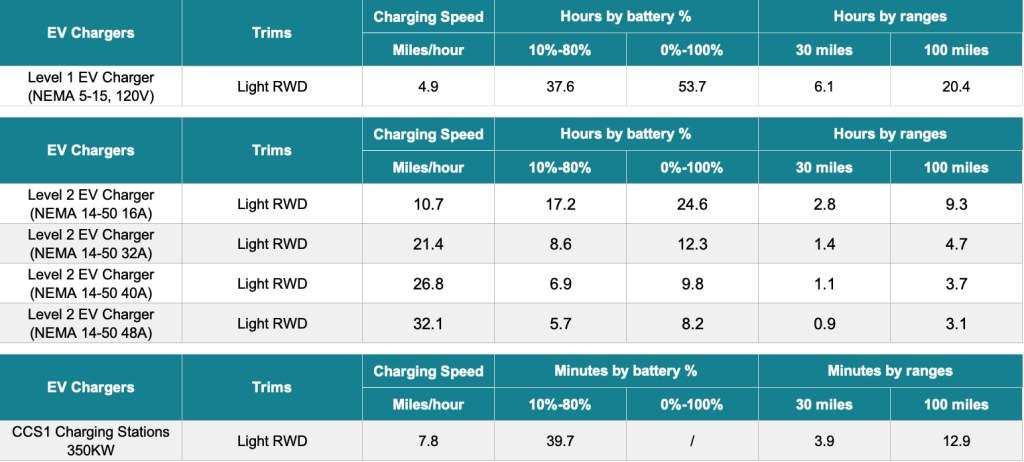
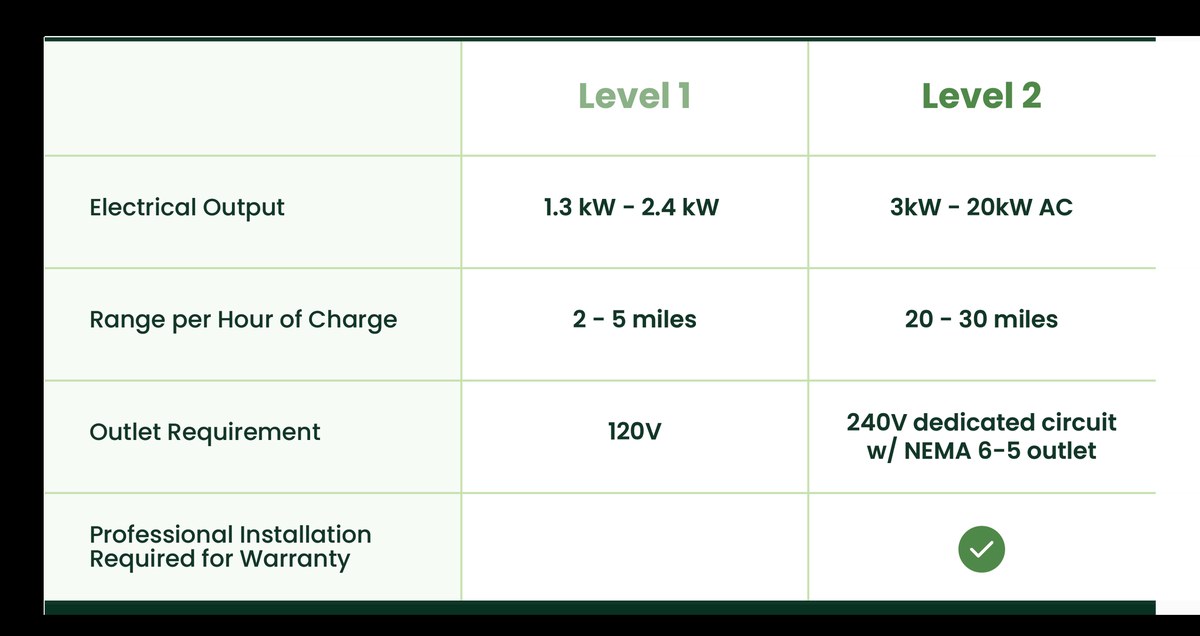
Level 1 uses a standard 120V household circuit. A typical Level 1 cord draws 12A on a 15A circuit, which is about 1.4 kW; some vehicles support 16A on a 20A circuit, roughly 1.9 kW. In practice that adds only a few miles of range per hour.
Connector, EVSE Amperage, Vehicle Onboard-Charger Limits, Circuit, Cable Length, Weather, Smart Features, Warranty, and Support
Check the connector type (J1772 or NACS/SAE J3400) against your vehicle inlet. Confirm the cord’s amperage rating and whether the outlet is a dedicated circuit — a shared garage circuit can trip a breaker. Cable length, outdoor rating, and connector storage matter if you park in a driveway rather than a garage.
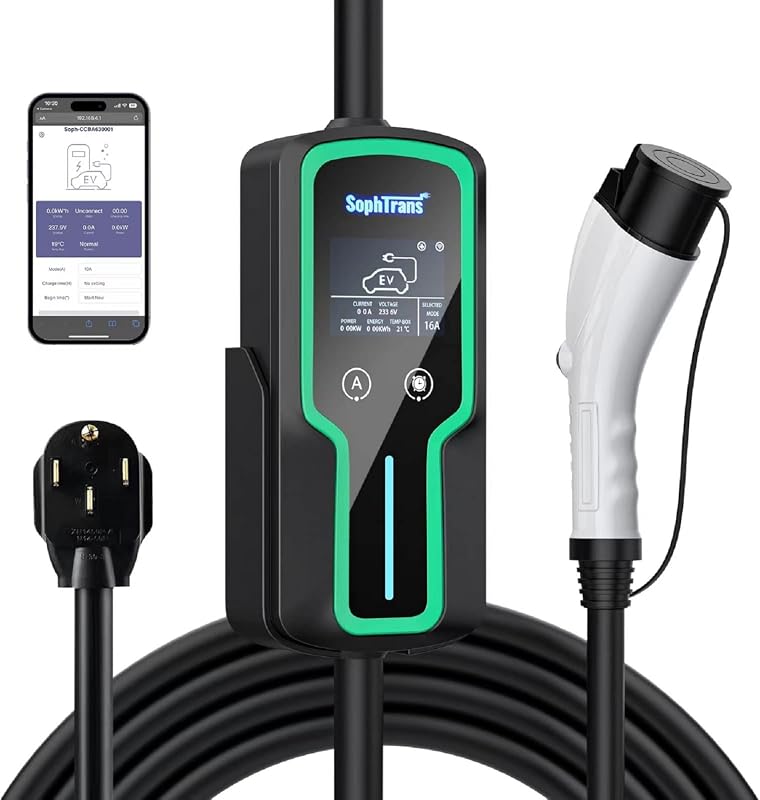
Level 1 cords rarely include smart scheduling, so TOU optimization usually depends on the vehicle’s own scheduling feature. If you want portability and both voltage options in one unit, a dual-voltage portable unit is worth understanding before you buy.
Cost Example: 1,000 Miles in a 3.5 mi/kWh EV on Level 1
Illustrative assumptions only. Rates, taxes, tiered pricing, time-of-use windows, and real-world losses vary by utility and vehicle.
Level 2 Charging Cost Breakdown: 240V, Higher Power, and Real-World Examples
Level 2 uses a 240V supply and delivers far more power. Common EVSE ratings include 32A (about 7.7 kW), 40A (about 9.6 kW), and 48A (about 11.5 kW) — but the vehicle’s onboard charger often caps the actual rate.
Connector, EVSE Amperage/kW, Vehicle Onboard-Charger Limits, Plug-In vs. Hardwired, Circuit/Panel, Permits, and Local Code
Match the connector to your inlet, then check the onboard charger limit. A 48A EVSE cannot push 11.5 kW into a car limited to 7.7 kW. If you are weighing amperage options, this breakdown of whether 48 amps is enough for a Level 2 charger is a useful reality check.
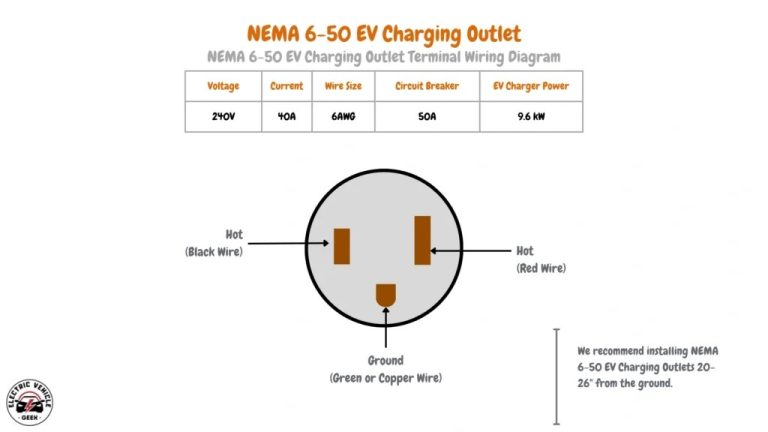
Under the NEC’s continuous-load rule, a branch circuit for EV charging is generally sized at 125% of the EVSE’s maximum current — so a 48A unit typically lands on a 60A circuit. Local code adoption, permits, and inspection requirements vary, so confirm with your local authority and the manufacturer’s instructions.
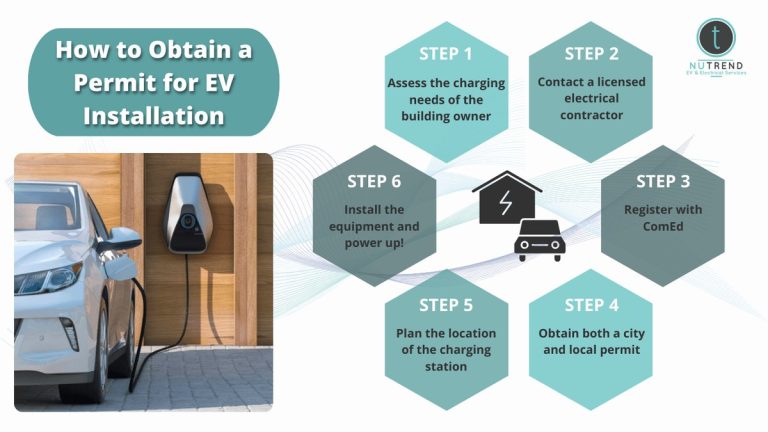
Level 2 installation may involve a dedicated 240V circuit, a new breaker, hardwiring or a suitable receptacle, a panel capacity check, permits, and inspection. Panel limits, service size, and wiring runs differ by home. Use a qualified electrician and follow the equipment instructions.
Cost Example: 1,000 Miles in the Same 3.5 mi/kWh EV on Level 2
Same illustrative assumptions as above. The per-mile energy gap versus Level 1 is roughly $4 per 1,000 miles at this rate.
Adapters, Connectors, and Power Limits: Source, Destination, Direction, AC/DC Mode, Restrictions, Thermal Safety, and Firmware
Adapters are where compatibility claims get sloppy. A physical fit does not prove the charging mode is supported. NACS/SAE J3400, J1772, and CCS1 differ in both connector shape and protocol, and AC versus DC charging is a separate question from connector shape.
Before using any adapter, verify the vehicle-side inlet, the charger-side connector, whether the session is AC or DC, the adapter’s rated current, and whether the vehicle or network restricts that combination. Check for a safety listing and follow the manufacturer’s thermal and firmware guidance.
Smart Features, Cable Length, Weather Rating, Warranty, and Support
Smart EVSEs add scheduling, load management, utility program integration, and usage reporting — all useful for TOU savings. Confirm whether the app requires an account, what happens if cloud service is unavailable, and whether scheduled charging runs locally on the device.
Also verify cable length for your parking position, the enclosure’s outdoor suitability and operating temperature range, the warranty term, and how support is handled in the U.S. If you are comparing specific hardware, our roundup of the best 48-amp Level 2 EV chargers for home charging covers these criteria side by side.
Equipment, Installation, and Electrical Requirements: Level 1 vs. Level 2
This is where the two options genuinely diverge, and where most of the total cost difference lives.
Level 1 Equipment and Installation Costs
Level 1 typically adds no equipment cost because the cord ships with the vehicle. If a suitable outlet already exists on a dedicated circuit, there may be nothing to install. If the garage outlet is shared, ungrounded, or worn, an electrician may need to add or repair a circuit — and that work is safety-sensitive, not a DIY shortcut.
Level 2 Equipment and Installation Costs
Level 2 requires a 240V supply, an EVSE, and professional installation in most cases. Total cost depends on the equipment you choose, the distance from your panel to the parking spot, whether the unit is plug-in or hardwired, and whether your panel has spare capacity. Long runs, conduit through finished walls, and trenching to a detached garage all raise the bill.
Because these variables swing so widely, ask for a written quote that itemizes equipment, labor, permit fees, and any panel work rather than relying on a national average.
Panel Upgrades, Permits, and Manual-First Code Rules
Time-of-Use Pricing, Battery Health, and Range Efficiency
Three factors decide whether your real-world cost matches the simple math: when you charge, how you charge, and how efficiently you drive.
How TOU and Off-Peak Charging Change the Level 1 vs. Level 2 Math
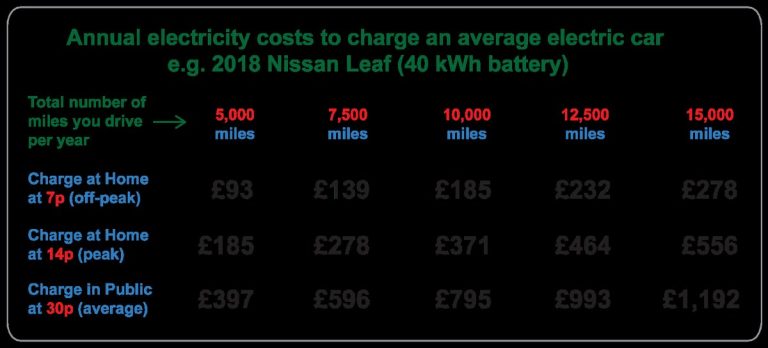
Off-peak rates are often a fraction of peak rates. Level 2’s higher power makes it easier to finish a full charge inside a short off-peak window, which can be worth more per year than the efficiency gain itself.
Level 1’s slow rate is its main financial weakness under TOU: a long session may spill into partial-peak or peak hours even when you plug in at night. If your utility offers a narrow super-off-peak window, that limitation can erase Level 1’s upfront savings.
Manufacturer Guidance vs. General Battery Patterns: Temperature, State of Charge, Charging Power, Chemistry, Thermal Management, and DC Fast Charging Context
Range Efficiency: mi/kWh, Weather, HVAC, Speed, Elevation, Payload, Tires, and Battery Temperature
A car rated at 3.5 mi/kWh may drop well below that in winter with the heater running, at highway speeds, or when climbing. Lower mi/kWh means more kWh purchased per mile, which raises cost on both charging levels equally.
Who Should Choose Level 1 vs. Level 2? Side-by-Side Fit and Payback
| Factor | Level 1 (120V) | Level 2 (240V) |
|---|---|---|
| Typical power | About 1.4–1.9 kW | About 7.7–11.5 kW, capped by the vehicle |
| Range added per hour | A few miles | Roughly 25–40 miles, vehicle dependent |
| Upfront equipment | Usually included with the vehicle | EVSE purchase plus installation |
| Energy cost per 1,000 miles | About $54 at the example assumptions | About $50 at the example assumptions |
| TOU flexibility | Limited; long sessions | High; fits narrow off-peak windows |
| Best fit | Low annual miles, existing outlet | Higher miles, shared car, TOU plans |
Level 1 Fits These Drivers
- Drivers under roughly 30–40 miles per day
- Households with a dedicated garage or driveway outlet
- Owners who want zero installation cost and overnight charging
- Narrow off-peak TOU windows
- Two EVs sharing one outlet, or long daily commutes
Level 2 Fits These Drivers
Level 2 suits drivers covering 40+ miles daily, households sharing one charger, owners with short off-peak windows, and anyone who wants to replenish a depleted battery in a few hours rather than a couple of days.
Total Cost Comparison Over 1, 3, and 5 Years
Using the example assumptions and 12,000 miles per year, the energy difference is roughly $48 per year in Level 2’s favor. Over three years that is about $145; over five years, about $240.
Now compare that to installation. If a Level 2 install costs more than a few hundred dollars, efficiency savings alone will not pay it back within five years. Level 2 pays off financially only when it unlocks cheaper TOU energy, avoids public charging, or replaces a second vehicle’s fuel — not on losses alone.
Final Recommendation: Match Charger to Miles, Rates, and Housing
- Best for low-mileage owners: Level 1, because the equipment is typically free and the per-mile energy penalty is small.
- Think twice if: Your installation quote is large and you drive few miles — efficiency savings alone rarely justify it.
- Next step: Compare your utility’s off-peak rate to your standard rate, then get a written Level 2 quote that itemizes equipment, labor, permits, and any panel work.
Frequently Asked Questions
Level 1 is cheaper to set up because the cord usually comes with the vehicle and no new circuit may be needed. On energy alone, Level 2 is slightly cheaper per mile because it loses less electricity during charging, but the gap is small — often just a few dollars per 1,000 miles.
Multiply the kWh your car consumes by your all-in electricity rate, then add about 5–10% for charging losses. At 12,000 miles per year in a 3.5 mi/kWh EV, that is roughly 3,430 kWh stored, or about $550 per year at $0.16/kWh before losses. Your rate, taxes, and TOU schedule will change that figure.
Generally yes, but usually by a modest amount. Level 1 sessions take many more hours, so the vehicle’s onboard charger and battery thermal management draw overhead for longer. Real-world losses vary by vehicle, temperature, and battery state, so treat any single percentage as an estimate rather than a fixed rule.
No. Level 2 requires a 240V supply, and most Level 2 EVSEs are designed for a dedicated 240V circuit, either hardwired or on a suitable receptacle. Plugging equipment into a circuit it was not designed for is a fire and shock hazard. Confirm the electrical requirements with a qualified electrician.
Installation cost varies too widely for a single national number. The main variables are the distance from your electrical panel to the parking spot, whether the unit is plug-in or hardwired, whether your panel has spare capacity, and local permit and labor rates. Request an itemized written quote rather than relying on an average.
Yes. Level 2 charging uses a 240V AC supply, which is why a dedicated circuit is normally required. Some homes also need a panel or service upgrade before that circuit can be added. Your local authority having jurisdiction and the EVSE manufacturer’s instructions govern the specific requirements.