How Much Does It Cost to Charge an EV at Home Per Month?
Most U.S. drivers pay roughly $30–$130 per month to charge an EV at home, with the average mid-size EV around $50 at typical residential rates. The biggest variable is your utility’s price per kWh and whether you can shift charging to an off-peak window.
The cost to charge electric car at home per month in the United States usually lands between roughly $30 and $130 for most drivers, depending on your electricity rate, how many miles you drive, and your vehicle’s efficiency. The single biggest variable is not the car — it is the price per kilowatt-hour (kWh) your utility charges and when you charge.
This guide walks through the actual math, the assumptions behind it, and the one-time equipment costs that quietly change your monthly number. Everything below uses published utility rate structures and manufacturer efficiency figures, not test data, because no hands-on measurement was performed for this article.
- Cost: Formula is rate × kWh used ÷ charging efficiency; a 1,000-mile month in a.
- Performance: Level 2 home charging loses roughly 8–12% of wall energy, and vehicle efficiency (mi/kWh).
- Compatibility: EVSE output is capped by the vehicle’s onboard charger; a 7.2 kW car will.
- Safety: 240V circuits, permits, and panel capacity require local code compliance and a qualified electrician.
The Short Answer: What Most U.S. Drivers Pay Per Month to Charge at Home
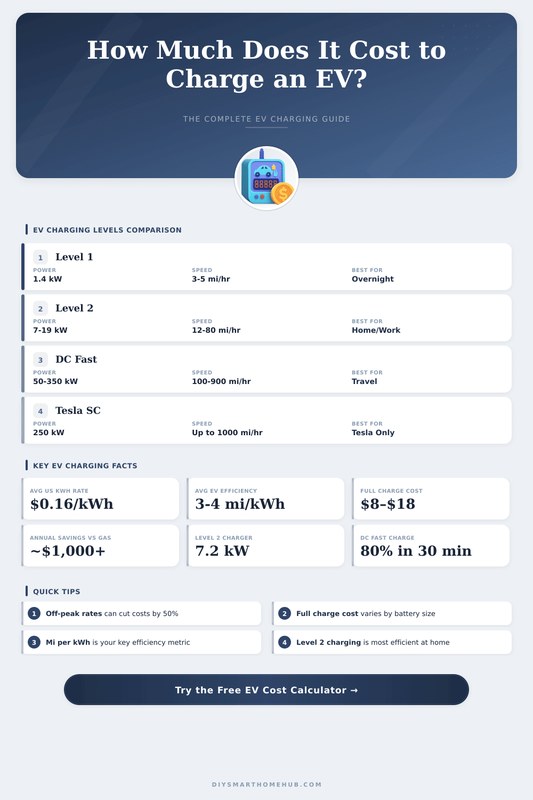
For a typical American household driving a mid-size EV about 1,000 miles a month, home charging generally runs between $40 and $80 per month at average residential rates. Drivers on a dedicated off-peak EV rate often land closer to $25–$45. Drivers in high-rate states like California, Hawaii, or parts of the Northeast can exceed $120 for the same mileage.
A Simple Formula: Electricity Rate × kWh Used ÷ Charging Efficiency
The core formula is straightforward:
Monthly cost = (Monthly miles ÷ vehicle mi/kWh) × electricity rate ÷ charging efficiency
Charging efficiency accounts for energy lost as heat during AC-to-DC conversion inside the vehicle and in the EVSE. For Level 2 home charging, roughly 88–92% of the energy drawn from the wall reaches the battery in typical conditions. That means you pay for about 8–12% more kWh than the battery actually stores.
2026 Example: 1,000 Miles per Month in a Mid-Size EV
Assumes 3.5 mi/kWh efficiency and a flat residential rate. Rates, taxes, time-of-use pricing, and losses vary by utility and season.
At 3.5 mi/kWh, 1,000 miles requires about 286 kWh delivered to the battery. Adding 10% for charging losses brings the wall draw to roughly 315 kWh. At $0.16/kWh, that is about $50. Shift the same charging to a $0.09/kWh super-off-peak window and the same month costs about $28.
Why Your Number Will Differ: Rate, Efficiency, and Miles
Three variables dominate. Electricity rate varies from under $0.09/kWh in parts of the Pacific Northwest and Southeast to over $0.40/kWh in Hawaii. Vehicle efficiency ranges from about 2.0 mi/kWh for a large electric truck to over 4.5 mi/kWh for an efficient sedan in mild weather. And monthly mileage varies from a few hundred for a retired driver to 2,500+ for a long-distance commuter.
How to Calculate Your Own Monthly EV Charging Cost
Step 1: Find Your Home Electricity Rate (¢/kWh)
Look at your utility bill and find the “energy charge” line, not the total bill divided by kWh. The total-bill method inflates your rate because it includes fixed monthly charges, taxes, and riders that do not scale with usage. If you are on a time-of-use plan, note each window’s rate separately.
Step 2: Estimate Monthly Miles and Vehicle Efficiency (mi/kWh or Wh/mi)
Use your actual monthly mileage from your odometer or commute math. For efficiency, check the EPA fuel economy label or the vehicle’s trip meter. Wh/mi and mi/kWh are reciprocals — 250 Wh/mi equals 4.0 mi/kWh. Cold weather, highway speed, and HVAC use can cut real-world efficiency by 20–35% versus the label.
Step 3: Account for Charging Losses (AC Level 2 vs. DC Fast)
Level 2 home charging typically loses 8–12% of wall energy to heat and onboard-charger conversion. DC fast charging can lose more because of battery thermal management and the charging curve, but it is also priced per kWh or per minute at much higher rates, so it is rarely a cost-saving option.
Step 4: Add Time-of-Use, Tiered, or Flat-Rate Pricing Effects
Flat rates are simple but rarely cheapest for EV owners. Tiered rates punish heavy usage by pushing you into higher brackets as monthly kWh climbs — and an EV adds 300–500 kWh a month for many households. TOU rates reward overnight charging, which is exactly when most EVs charge.
Step 5: Subtract Any Solar, Credits, or Off-Peak Savings
If you have rooftop solar, your marginal cost for daytime charging may be near zero, but overnight charging pulls from the grid unless you have storage. Some utilities also offer EV-specific credits, rebates, or a separate EV meter that can change the math significantly.
Electricity Rates and Pricing Plans: The Biggest Variable in Your Monthly Cost
Flat vs. Tiered vs. Time-of-Use (TOU) Rates
Flat-rate customers pay the same price per kWh around the clock. Tiered customers pay more as monthly usage rises. TOU customers pay a premium during peak hours (often 4–9 p.m.) and a discount overnight. For most EV owners who can schedule charging, TOU is the lowest-cost structure — provided the rest of the household does not shift heavy usage into peak windows.
How to Find Your Utility’s EV Rate or Off-Peak Window
Search your utility’s website for “EV rate” or “electric vehicle time-of-use.” Most investor-owned utilities publish a dedicated EV plan with a super-off-peak window, often between 11 p.m. and 6 a.m. Verify the current rate schedule on the utility’s own page rather than a third-party summary, since rates change.
Demand Charges and Why They Rarely Apply to Home Level 2
Demand charges bill you for your single highest 15- or 30-minute kW draw during a billing period. They are common on commercial accounts but rare on residential ones. A Level 2 home charger drawing 7–11 kW is unlikely to trigger a residential demand charge unless your utility specifically applies one, which is uncommon.
What Happens in 2026: Rate Trends and Regional Differences
Residential electricity prices have trended upward in most U.S. regions, driven by grid investment, fuel costs, and capacity needs. Regional spread remains wide: the Pacific Northwest and Southeast generally offer the lowest residential rates, while Hawaii, California, and parts of New England sit at the top. Always check your current tariff — a rate that was accurate last year may not be today.
Charging Equipment and Installation: One-Time Costs That Affect Your Monthly Math
Level 1 vs. Level 2: What You Get and What It Costs
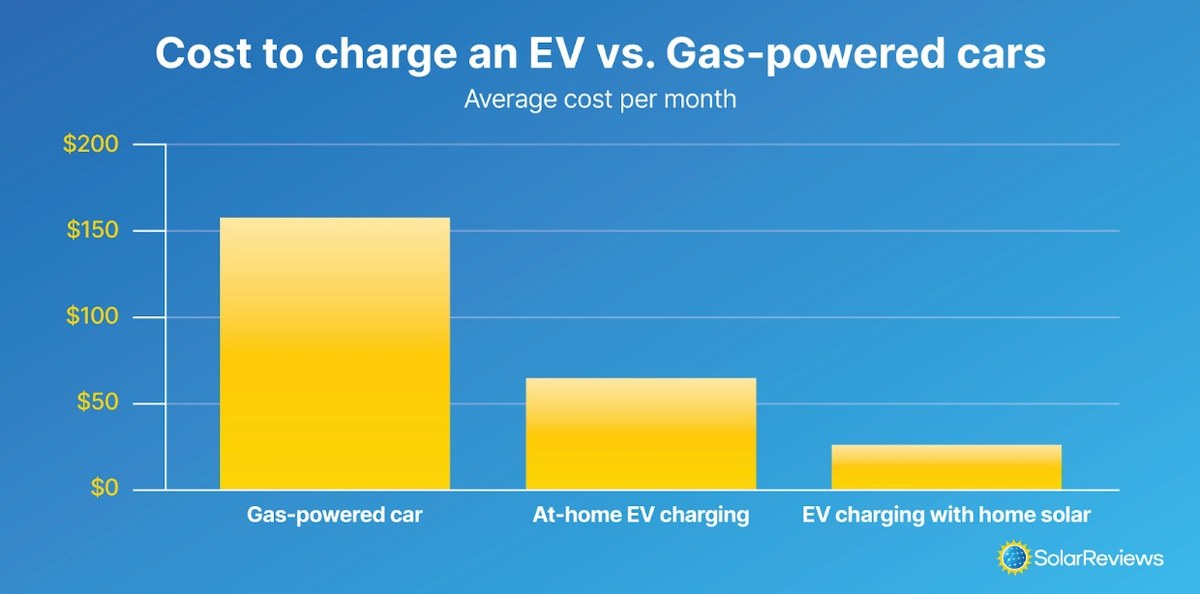
Level 1 uses a standard 120V household outlet and adds roughly 3–5 miles of range per hour. It costs nothing beyond the included cord but is slow. Level 2 uses a 240V circuit and adds 20–40+ miles per hour, depending on EVSE output and the vehicle’s onboard charger. Level 2 requires a dedicated circuit and typically a licensed electrician.
Plug-In vs. Hardwired EVSE: Trade-Offs for Cost, Speed, and Code
Uses a NEMA 14-50 or 6-50 receptacle. Portable between homes, but usually capped at 40 A continuous on a 50 A circuit and may require a GFCI breaker depending on local code.
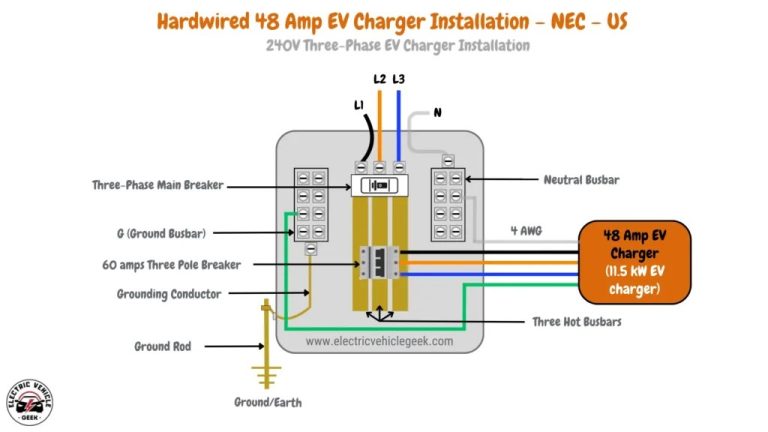
Wired directly to the circuit. Supports higher continuous current, avoids receptacle wear, and is often preferred for outdoor or high-amperage installs. Requires a qualified electrician.
Circuit, Panel, and Permit Considerations (Manual + Local Code First)
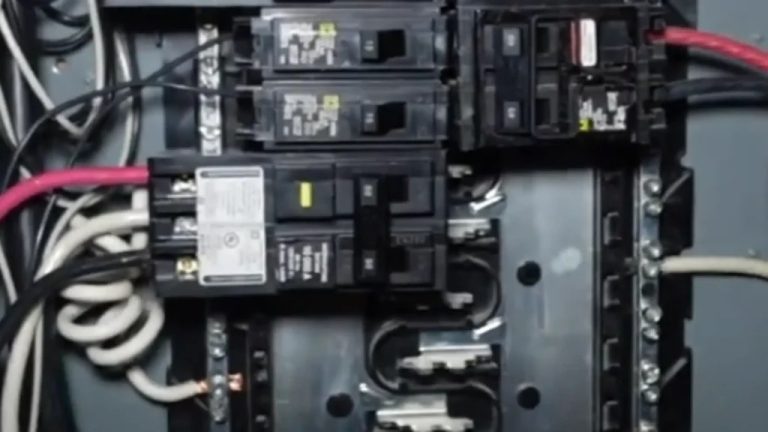
Before buying anything, confirm your electrical panel has capacity for a new 40–60 A dedicated circuit. Many older homes need a panel upgrade, which can add significant cost. Permits and inspections are typically required for new 240V circuits, and requirements vary by jurisdiction.
Smart Features, Cable Length, Weather Rating, and Warranty/Support
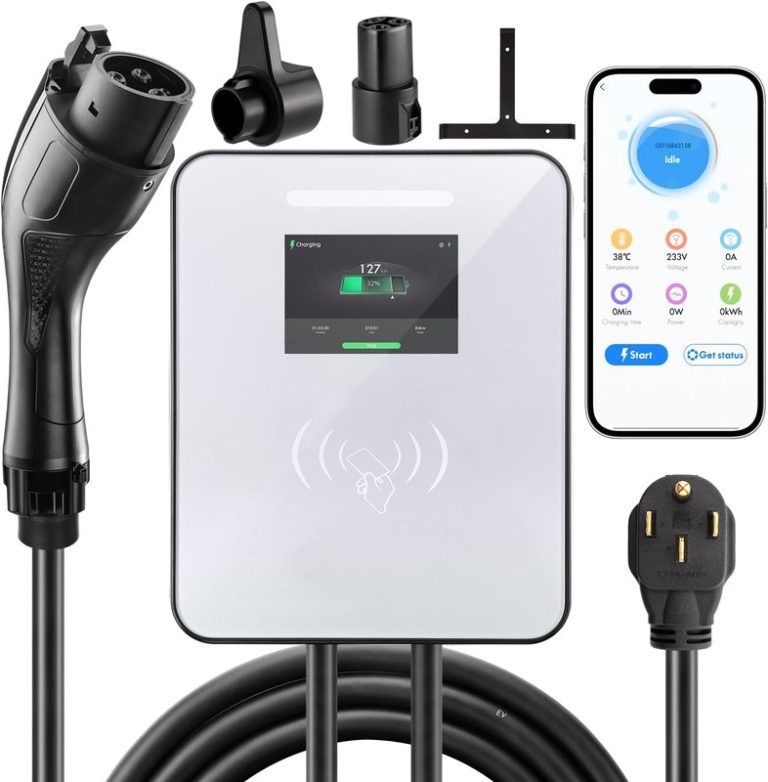
Smart EVSEs add scheduling, energy monitoring, and utility demand-response integration. Cable length matters for driveway or garage layout. For outdoor installs, verify the enclosure’s weather rating and operating-temperature range from the manufacturer. Confirm the safety listing (UL, ETL, or another recognized NRTL) and the warranty term on the manufacturer’s own documentation.
How to Amortize Equipment and Installation into a Monthly Figure
If a Level 2 EVSE and installation cost $1,500 and you keep the setup for 8 years, that is roughly $15.60 per month on top of your electricity cost. Spread over a longer ownership period, the monthly figure drops. This is why equipment cost is a small but real part of the total monthly picture.
Vehicle and Charger Limits: Why You Might Not Get the Full 11.5 kW
Onboard Charger Limits by Vehicle (e.g., 7.2 kW, 9.6 kW, 11.5 kW)
The EVSE’s output is only half the story. The vehicle’s onboard AC charger sets the ceiling. A car with a 7.2 kW onboard charger will not draw more than 7.2 kW even from an 11.5 kW EVSE. Matching a high-output EVSE to a low-capability vehicle wastes money unless you plan to upgrade the car.
EVSE Amperage and kW: Matching the Charger to the Circuit
Continuous loads are typically limited to 80% of circuit ampacity. A 50 A circuit supports 40 A continuous, which at 240V is 9.6 kW. A 60 A circuit supports 48 A continuous, or 11.5 kW. Confirm the EVSE’s settable amperage and the circuit’s actual rating before assuming a specific kW.
Connector Types: J1772, NACS, and Adapter Considerations for Home
Most non-Tesla EVs use the J1772 connector for AC charging. Tesla vehicles use NACS (SAE J3400). Many newer EVs are moving to NACS inlets. Adapters exist in both directions, but they must be rated for AC Level 2 and certified for the specific use. Physical fit alone does not prove the charging mode is supported.
Adapter Direction, AC/DC Mode, and Safety Limits for Home Charging
AC adapters and DC adapters are not interchangeable. A J1772-to-NACS AC adapter cannot be used for DC fast charging, and a CCS1-to-NACS DC adapter is not for home Level 2 use. Always verify the adapter’s rated amperage, certification, and the vehicle/EVSE combination it is approved for.
Battery Health, Temperature, and Charging Losses: Hidden Cost Factors
Manufacturer Guidance vs. General Patterns for Daily Charging
Follow your vehicle manufacturer’s specific guidance on daily charge limits and charging frequency. Some manufacturers recommend a daily charge ceiling; others do not. There is no universal 80% rule that applies to every EV, chemistry, or thermal-management system.
Temperature Effects on Efficiency and Cost (Cold and Hot)
Cold weather reduces range and increases charging losses because the battery must be warmed. Hot weather can trigger active cooling during charging. Both effects raise the kWh you draw from the wall for the same miles driven, which raises your monthly cost.
State of Charge, Charging Power, and Convenience Trade-Offs
Charging from a very low state of charge to a high one is not linear — power tapers as the battery fills. For home Level 2 charging, this taper is usually mild and rarely a cost issue. It matters more for DC fast charging, where the session cost is tied to time or kWh delivered.
DC Fast Charging Context: Why Home AC Is Usually Cheaper Per kWh
DC fast charging typically costs two to four times more per kWh than residential home charging, and it also incurs higher charging losses in some conditions. For daily driving, home Level 2 charging is almost always the lowest-cost option.
Range, Efficiency, and Driving Habits: What Actually Drives Your Monthly kWh
mi/kWh and Wh/mi: The Numbers That Matter
These two figures describe the same thing. Higher mi/kWh means lower cost per mile. A vehicle at 4.0 mi/kWh uses 25% less energy per mile than one at 3.0 mi/kWh, which directly cuts your monthly bill.
Speed, Weather, HVAC, Elevation, Payload, and Tires
Highway speed above 65 mph increases aerodynamic drag sharply. Cold weather and cabin heating can cut range 20–35%. Elevation gain, heavy payloads, and underinflated tires all raise consumption. None of these are captured in the EPA label’s single number.
Battery Temperature and Preconditioning Effects
Preconditioning the battery before departure in cold weather can improve efficiency, but it uses energy. Whether preconditioning saves money depends on whether it is done on grid power or battery power, and on how much range it recovers.
Charging Losses: AC vs. DC and How They Show Up in Cost
Level 2 AC losses are typically 8–12%. DC fast charging losses vary more widely and are affected by battery temperature and charging rate. Both are real costs you pay for at the meter even though they never reach the battery.
Comparing Common Home Charging Scenarios Side by Side
| Scenario | Miles / month | Estimated monthly cost |
|---|---|---|
| A: Efficient sedan, off-peak rate | 500 | ~$13–$20 |
| B: Crossover, flat rate | 1,200 | ~$55–$75 |
| C: Truck/SUV, TOU + solar | 2,000 | ~$40–$90 (solar-dependent) |
Scenario A: 500 Miles/Month, Efficient Sedan, Off-Peak Rate
A low-mileage driver with a 4.2 mi/kWh sedan on a $0.10/kWh off-peak rate pays roughly $13–$20 per month. This is the cheapest realistic home charging profile.
Scenario B: 1,200 Miles/Month, Crossover, Flat Rate
A crossover at 3.2 mi/kWh on a flat $0.17/kWh rate pays roughly $55–$75 per month. This is close to the U.S. average household EV charging cost.
Scenario C: 2,000 Miles/Month, Truck/SUV, TOU + Solar
A high-mileage truck or SUV at 2.2 mi/kWh on a $0.12/kWh TOU rate pays roughly $110–$130 before solar. With rooftop solar covering daytime charging, the effective cost can drop substantially, but overnight charging still pulls from the grid.
Who Each Scenario Fits and What to Watch
Scenario A fits retirees and short commuters. Scenario B fits most two-car households. Scenario C fits long-distance commuters and larger vehicles, where efficiency and rate structure matter most. In every case, the rate structure is the lever with the biggest effect.
Practical Steps to Lower Your Monthly Home EV Charging Cost
Shift Charging to Off-Peak or Super Off-Peak Windows
Use the vehicle’s or EVSE’s scheduled charging feature to charge only during the lowest-rate window. This is the single highest-impact, lowest-effort change for most owners.
Optimize Efficiency Without Sacrificing Comfort
Moderate highway speed, maintain tire pressure, precondition in cold weather, and use seat heaters instead of full cabin heat when possible. These habits reduce kWh per mile without meaningful comfort loss.
Consider Solar, Storage, or Utility EV Programs
Check whether your utility offers an EV-specific rate, off-peak credit, or managed charging program. Verify current program terms on the utility’s own page, since these change.
When Upgrading Your EVSE Pays Back (and When It Doesn’t)
Upgrading from Level 1 to Level 2 pays back in convenience, not usually in cost per kWh. Upgrading to a higher-amperage EVSE only pays back if your vehicle’s onboard charger can use the extra power. See our guide to the Level 2 home chargers we cover for context on what different outputs actually deliver.
Track Your Actual kWh and Cost with the Right Tools
Use the EVSE’s energy-monitoring feature or a whole-home energy monitor to see actual kWh drawn. Compare that to your utility bill to confirm your effective rate. If you are considering a 48 A unit, our breakdown of whether a Tesla can charge at 48 amps explains how vehicle limits interact with EVSE output.
- Best for: Drivers who can schedule charging overnight on a TOU or EV rate.
- Think twice if: Your utility’s peak-hour rate is high and your household cannot shift usage.
- Next step: Pull your utility’s current rate schedule and run the formula with your real miles and efficiency.
Frequently Asked Questions
Most U.S. drivers pay roughly $30–$130 per month, with a typical mid-size EV at 1,000 miles per month costing about $50 at a $0.16/kWh flat rate. Off-peak EV rates can cut that to $25–$45, while high-rate states can push it above $120.
Home Level 2 charging is almost always cheaper per kWh. Residential rates typically range from $0.09 to $0.40/kWh, while public DC fast charging often costs two to four times more per kWh. Home charging also avoids the higher losses and session fees common on public networks.
Not per kWh — Level 1 and Level 2 draw the same energy, just at different rates. Level 1 is cheaper only because it avoids EVSE and installation costs. For most drivers, Level 1 is too slow to cover daily mileage, so Level 2 is the practical choice.
TOU plans charge less overnight and more during peak hours, typically 4–9 p.m. If you schedule charging to the off-peak window, your per-kWh cost can drop 30–60%. The risk is that other household usage during peak hours can offset the savings.
Yes. Level 2 AC charging typically loses 8–12% of the energy drawn from the wall as heat during AC-to-DC conversion. You pay for that energy at the meter even though it never reaches the battery, so it is part of your real monthly cost.
No. A higher-output EVSE charges faster but does not change the price per kWh. It only lowers your monthly cost if your utility offers a rebate tied to a specific charger, or if faster charging lets you capture a shorter off-peak window you would otherwise miss.