Is 48 Amps Enough for a Level 2 Charger?
Yes, 48 amps is enough for many U.S. EV owners who want reliable overnight Level 2 charging. The main checks are your vehicle’s AC charging limit and whether your home electrical system can support the installation.
is 48 amps enough for a level 2 charger? For most U.S. EV owners, yes—48A is a strong home Level 2 charging target, but the real answer depends on your vehicle’s onboard AC charger, your daily miles, and whether your electrical panel can support the required setup.
- Compatibility: 48A only helps if the EV, connector, and installation all support that level.
- Performance: It is usually enough for overnight home charging and many daily commutes.
- Safety: Follow the manual, permits, and electrician guidance for circuit and hardwire requirements.
- Cost: Installation can matter more than the charger price, especially if panel work is needed.
Is 48 Amps Enough for a Level 2 Charger? Quick Answer for EV Owners in the U.S.
In practical terms, 48A is often enough for overnight home charging, even for many long-commute drivers. It is not automatically “best” for every household, because the vehicle may cap charging speed below 48A and the installation may require hardwiring and a properly sized circuit.
If you want a deeper breakdown of the power math, see our guide on how many kW a 48-amp Level 2 EV charger delivers.
When 48 amps is a strong fit
48A is a strong fit if you drive daily, park at home for several hours, and want a charger that can refill a meaningful amount of range overnight. It also makes sense if you want some future-proofing for a newer EV with a higher AC charging limit.
When you may want more, less, or a different charging setup
You may want more than 48A only if your vehicle can accept it and your home electrical service supports it. You may want less if your commute is short, your panel is tight, or your car tops out at 32A or 40A anyway. In those cases, a 40-amp Level 2 charger can be the better value.
What “48 Amps” Actually Means in Level 2 EV Charging
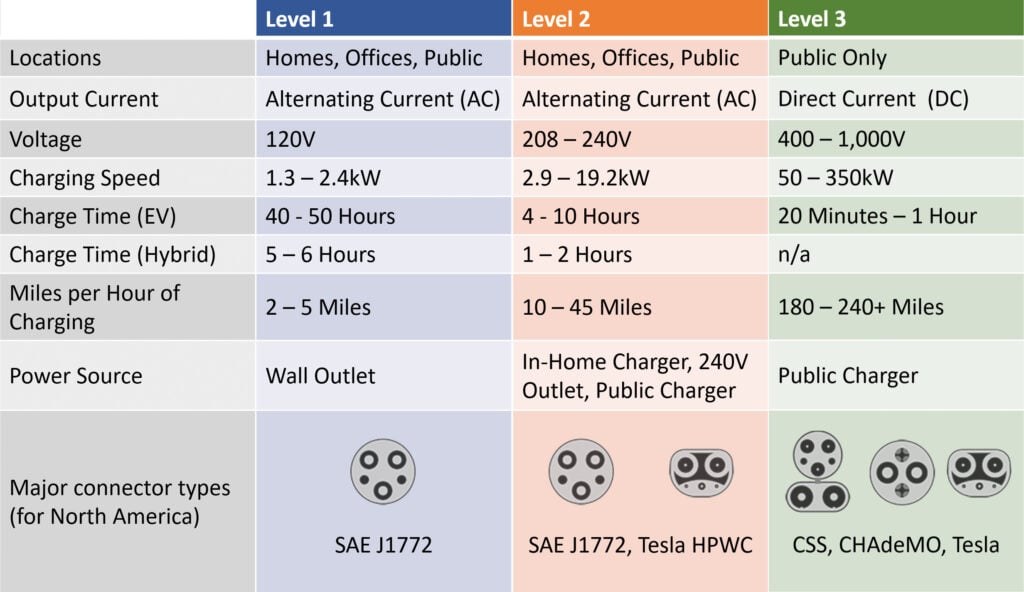
“48 amps” usually refers to the EVSE’s maximum AC output current, not the battery’s charging speed by itself. The charger, the circuit, the plug or hardwire method, and the vehicle all have to line up for you to see that full output.
EVSE amperage vs. charging power in kW
At common U.S. home voltage, 48A Level 2 charging is roughly 11.5 kW before losses and rounding. That is the EVSE output level, not necessarily the exact power your vehicle battery receives.
How the vehicle’s onboard charger sets the real charging limit
Every EV has an onboard AC charger that converts incoming AC power into DC for the battery. If the vehicle only accepts 7.2 kW or 9.6 kW, a 48A EVSE will not make it charge faster than that limit. The car decides the ceiling.
Connector basics: J1772, NACS, and what your EV supports
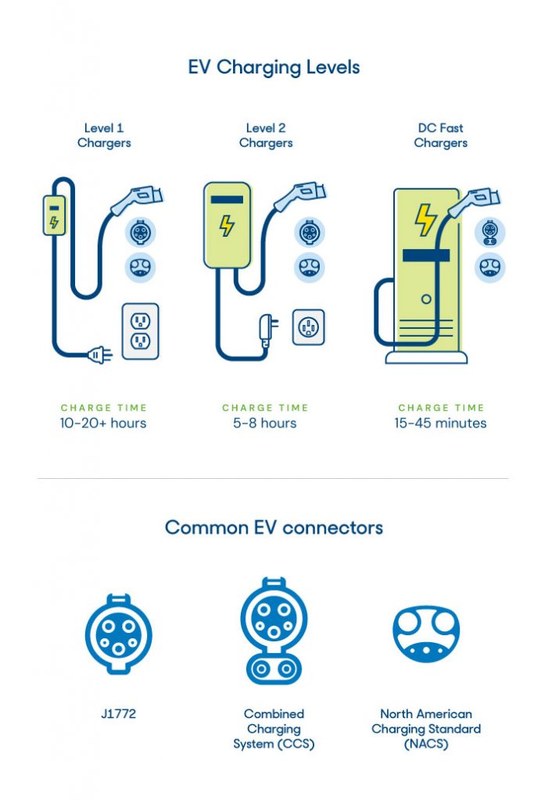
For AC home charging, the charger-side connector and the vehicle-side inlet must match or be supported through a verified adapter. J1772 has long been the common AC standard in the U.S., while NACS/SAE J3400 is becoming more common on newer vehicles and home equipment. Physical fit alone does not prove every charging mode is supported.
For buyers comparing EVSE output levels, our overview of the best 48-amp Level 2 EV chargers for home charging can help you narrow the options by installation style and feature set.
How Fast Will a 48-Amp Charger Charge Your EV?
Speed depends on the EVSE output, the vehicle’s onboard charger, battery temperature, charging losses, and how much energy the battery can accept at that moment. A 48A charger is fast for home AC charging, but it is still much slower than DC fast charging.
Typical miles of range per hour based on efficiency
As a rough estimate, 48A Level 2 charging can add about 25 to 45 miles of range per hour for many U.S. EVs. Efficient sedans may sit near the high end, while larger SUVs and trucks often land lower because they use more energy per mile.
Why battery size, state of charge, and temperature change results
A larger battery takes longer to fill, even with the same charger. Cold weather, a very full battery, or a battery that is too hot or too cold can reduce charging speed. That is normal behavior, not a problem with the charger itself.
Label estimates and state vehicle, onboard-charger, battery, temperature, and loss assumptions.
How 48 amps compares with 32A, 40A, and 80A Level 2 charging
Compared with 32A and 40A, 48A is a noticeable step up in power and can shorten overnight charging windows. Compared with 80A, it is lower, but 80A home charging usually requires heavier electrical infrastructure and a vehicle that can actually accept that rate.
| Item | Verified value | Why it matters |
|---|---|---|
| 32A Level 2 | About 7.7 kW | Good for lighter daily driving and smaller panels |
| 40A Level 2 | About 9.6 kW | Common middle ground for many homes |
| 48A Level 2 | About 11.5 kW | Strong overnight refill speed without jumping to 80A class |
| 80A Level 2 | About 19.2 kW | Only useful if vehicle and electrical system support it |
Is 48 Amps Enough for Your Driving Pattern and Daily Range Needs?

For many households, yes. The real question is whether 48A gives you enough energy during the hours your car is parked at home. If you regularly recharge overnight, even a long commute can be manageable with the right EVSE and vehicle combination.
Commute length, errands, and overnight charging windows
If you drive 30 to 80 miles per day and can plug in for 8 to 12 hours, 48A is usually more than enough. Even with some charging losses, that window often covers a normal commute plus errands.
Range and efficiency factors: weather, HVAC, elevation, tires, and payload
Cold weather, cabin heating, higher speeds, steep routes, underinflated tires, and heavy cargo all reduce efficiency. That means the same 48A charger can feel “faster” or “slower” depending on how much range your vehicle actually uses each day.
When a lower-amperage charger is still plenty
If you drive fewer miles each day and mostly charge overnight, 32A or 40A may already cover your needs. In that case, a lower-amperage charger can reduce installation complexity and may fit better with an older electrical panel.
Electrical Requirements: Plug-In vs. Hardwired, Panel Capacity, and Code Considerations
This is where many buyers need to slow down. The charger’s advertised amperage is only part of the story. The circuit, receptacle or hardwire setup, breaker sizing, panel capacity, and local permitting rules all matter.
Why the product manual and local permitting rules matter most
Follow the EVSE manufacturer instructions first, then check your local authority having jurisdiction for permit and inspection requirements. Electrical code adoption and local rules vary by state, city, utility, and installation type.
Electrical-code adoption, permitting, inspections, utility requirements, and local rules vary. Cite the current local or primary authority for specific requirements.
Circuit sizing, load calculations, and panel limitations
A 48A continuous load typically requires a circuit sized above the charging current, but the exact requirement depends on the equipment instructions and applicable code. A load calculation is often the deciding factor when a panel is already close to capacity.
Charging current: 48 A. Circuit / breaker: Follow the equipment instructions and applicable local electrical requirements.
When a plug-in 48A setup is not appropriate
Many 48A EVSEs are not meant to be plugged into a standard receptacle. If the product manual calls for hardwiring, do not improvise with an adapter or undersized outlet. That can create heat, nuisance tripping, or worse.
Why many 48A units are hardwired only
Hardwiring can support cleaner installs, fewer receptacle concerns, and a more permanent high-power setup. It is also why many 48A units are sold as hardwired-only products rather than portable plug-in chargers.
Best when the manual explicitly supports a receptacle-based install and you want easier removal or relocation.
Best for permanent home charging, higher-power output, and installations where the manual requires it.
Installation Factors That Affect Cost and Convenience
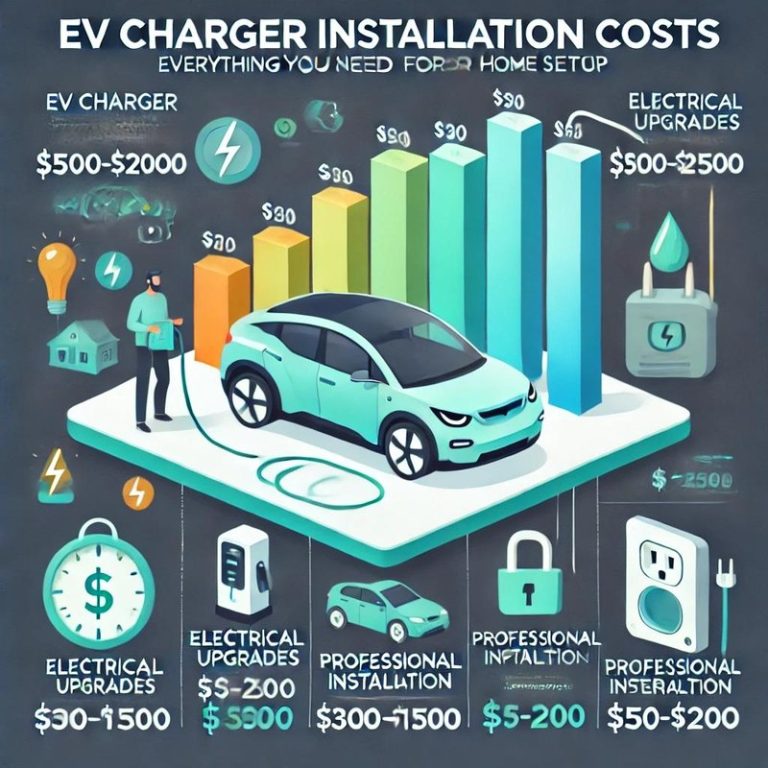
The charger price is only part of the budget. Labor, panel upgrades, conduit, trenching, and cable routing can cost more than the EVSE itself, especially in garages with difficult panel access or outdoor parking.
Equipment cost vs. professional installation cost
A 48A charger may cost more than a 32A unit, but installation is often the bigger variable. If the home already has panel capacity and a straightforward route, costs may stay reasonable. If not, the project can expand quickly.
Panel capacity, dedicated-circuit work, mounting, cable routing, receptacle or hardwiring needs, permit, and inspection requirements can change the real cost and timeline.
Cable length, parking layout, and garage placement
Choose cable length based on where the car actually parks, not where the charger looks best on the wall. A too-short cable can turn a good charger into a daily annoyance, while a longer cable may improve flexibility for multi-EV homes.
Indoor vs. outdoor use, weather rating, and durability
If the EVSE will live outdoors, verify the enclosure rating, operating-temperature range, connector storage guidance, and any manufacturer restrictions. Do not assume a charger is outdoor-safe just because it looks weather resistant.
State verified enclosure/weather rating, connector storage guidance, operating-temperature limits, and manufacturer restrictions.
Smart features, scheduling, and app controls that add value
Smart charging can help you schedule off-peak sessions, track usage, or manage multiple vehicles. The trade-off is that some features depend on an app, Wi-Fi, cloud service, or account login, so it is worth checking how the charger behaves if connectivity is lost.
Battery Health, Charging Speed, and Long-Term Ownership Trade-Offs
For home AC charging, 48A is usually more about convenience than battery stress. The battery management system controls charging behavior, and many EVs are designed to accept regular AC charging as part of normal ownership.
Manufacturer guidance vs. general battery-care patterns
Always defer to the vehicle maker’s charging guidance if it differs from general advice. There is no universal “best” daily charge percentage for every EV, because battery chemistry, thermal management, and software controls vary by model.
Explain relevant charging habits, temperature, state of charge, chemistry/thermal-management context, and manufacturer guidance. Avoid universal battery-health rules.
AC charging at 48A vs. DC fast charging for battery stress
Home AC charging is generally gentler than frequent DC fast charging because it usually produces less heat and lower charging stress. That does not mean DC fast charging is bad; it just has a different use case for road trips and time-sensitive charging.
Temperature, state of charge, and chemistry/thermal management
Charging slows as the battery fills, and many vehicles also reduce power when the battery is cold or hot. Those limits are normal and are managed by the car, not by the EVSE alone.
Convenience vs. gentler charging habits
For most owners, the best home setup is the one that is easy to use every day. A 48A charger may be the right balance of speed and convenience if it lets you plug in once and stop thinking about charging.
Compatibility and Adapter Considerations for 2026 EV Buyers
Compatibility is not just about connector shape. You need the vehicle inlet, EVSE connector, charging mode, and any adapter to line up correctly. That is especially important as NACS and J1772 equipment continue to coexist in the U.S. market.
Source connector and destination connector requirements
Check the vehicle-side inlet first, then confirm the charger-side plug or cable. If the vehicle uses one standard and the EVSE uses another, you need a verified adapter that is approved for the charging mode you plan to use.
Important: Physical fit alone does not prove every AC or DC charging mode is supported.
Adapter direction, AC vs. DC use, and power-limit warnings
Adapter direction matters. An adapter that works for AC home charging may not be valid for DC fast charging, and vice versa. Also check whether the adapter or vehicle imposes a lower current limit than the EVSE’s maximum output.
Vehicle, network, firmware, and vendor restrictions to check
Some chargers, vehicles, or apps may have firmware requirements, account restrictions, or vendor-specific compatibility notes. Before buying, confirm support in the product documentation rather than assuming any J1772 or NACS setup will work the same way.
Thermal and safety concerns with non-native charging setups
Adapters and mixed-standard setups can be safe when they are officially supported and used within their ratings. They can also become a weak point if they are mismatched, damaged, or asked to carry more current than intended.
Who Should Buy a 48-Amp Level 2 Charger, and What to Compare Before You Decide
48A is a smart middle-to-upper home charging tier for many EV owners. It is often the sweet spot between fast overnight charging and avoiding the more demanding electrical requirements of 80A-class systems.
Best fit: daily drivers, multi-EV homes, and future-proofing buyers
- Daily drivers who want reliable overnight charging
- Households that may add another EV later
- Buyers who want strong AC charging without going to 80A
- Homes with tight panel capacity
- Vehicles limited to lower AC charging speeds
- Buyers who need a simple plug-in setup only
Comparison criteria: amperage, kW, cable length, smart features, warranty, support, and installation flexibility
When comparing chargers, look beyond amperage. Cable length, indoor/outdoor rating, safety listing, warranty, app dependence, load management, and whether the unit is plug-in or hardwired all affect real ownership value.
- Confirm vehicle inlet and AC/DC compatibility
- Check the vehicle’s maximum AC charging capability
- Verify EVSE amperage and electrical requirements
- Confirm cable length, mounting, and indoor/outdoor suitability
- Verify safety listing, warranty, app requirements, and support
- Include installation, adapter/accessory, and electricity costs
Who may be better served by a 32A, 40A, or higher-power charger instead
If your EV caps out below 48A, paying for a bigger EVSE may not add meaningful speed. If your panel is limited or your driving is modest, a 32A or 40A charger may be the better practical choice. If your vehicle and home can support it, a higher-power charger can make sense, but only when the extra capacity is actually usable.
Bottom line for U.S. EV owners
For most drivers asking whether 48 amps is enough for a Level 2 charger, the answer is yes. It is a strong home charging level for overnight top-offs, longer commutes, and future-proofing, as long as your vehicle supports it and your electrical setup is designed correctly.
If you are still comparing sizes, a 48A unit often lands in the “buy once, use for years” zone. Just make sure the charger, vehicle, adapter, and installation all match before you commit.
Frequently Asked Questions
For many EVs, a 48A Level 2 charger adds roughly 25 to 45 miles of range per hour, depending on vehicle efficiency, temperature, and charging losses.
No. The vehicle’s onboard AC charger sets the maximum charging speed, so an EV that only accepts 32A or 40A will not benefit fully from a 48A EVSE.
It depends on the product. Many 48A chargers are hardwired only, while some lower-output models support plug-in installation. Always follow the manufacturer manual.
Yes, if the vehicle and EVSE are compatible or a verified adapter is supported. Connector fit alone does not guarantee AC charging compatibility or full power support.
Not necessarily. For many homes it is a strong Level 2 target, but it may be too much for an older panel, a limited service capacity, or a vehicle that cannot use that much AC power.
Choose 48A if you want more overnight charging headroom and your setup supports it. Choose 40A if your car, panel, or budget makes a mid-power charger the better fit.

6 Comments