Portable EV Charger Generator: What It Is and How It Works
A portable EV charger generator is usually a portable EVSE plugged into a portable generator that supplies 120V or 240V AC power — never a single device that makes electricity and charges your car. The main check is matching your generator’s continuous output to an adjustable EVSE setting your vehicle can actually accept.
A portable ev charger generator is not one product you buy off a shelf — in practice it is a portable EVSE (the charging cord and control box) paired with a portable generator that supplies 120V or 240V AC power. Understanding that split matters, because connectors, amperage settings, generator output, and safety rules all have to line up before anything charges safely.
- Compatibility: The EVSE connector must match your vehicle inlet (J1772 or NACS), and the EVSE.
- Performance: Generator charging is always Level 1 or Level 2 AC — never DC fast.
- Safety: Never backfeed a generator into a home panel without an approved transfer switch; run.
- Cost: Generator fuel cost per kWh is typically higher than residential grid rates, so it.
What a Portable EV Charger Generator Is: Mark Reynolds’ Direct Answer for 2026
Most people searching this term want backup charging without a permanent wall unit: a generator in the truck bed or garage, plus a charging cable that plugs into it. That is a real, workable setup — with firm electrical limits.
It Is Usually a Portable EVSE Paired with a Generator—Not One Magic Device
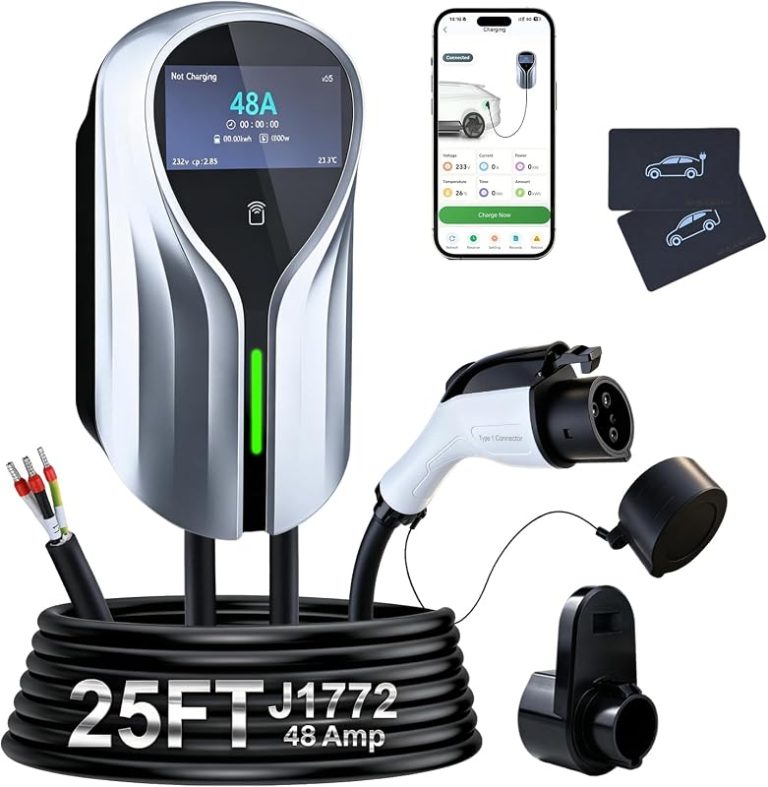
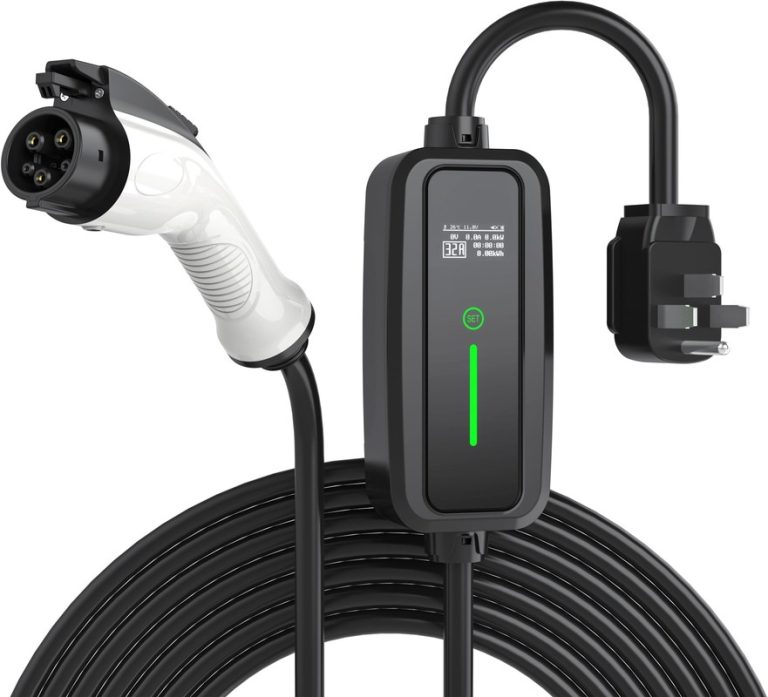
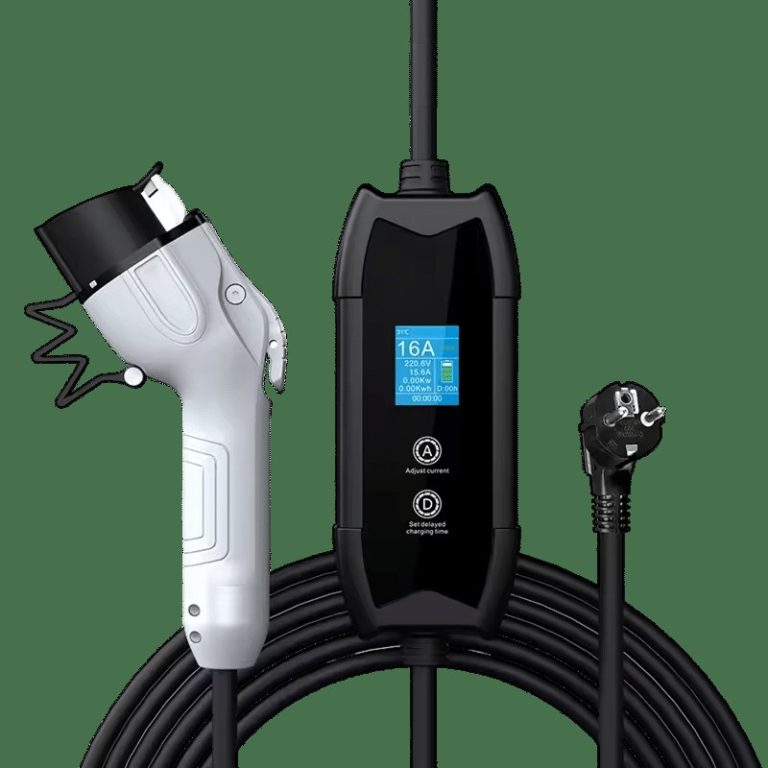
Nearly every “portable EV charger generator” on the market is two separate pieces of equipment. The generator makes AC power. The portable EVSE negotiates with your vehicle’s onboard charger and delivers that power through a J1772 or NACS connector. The EVSE does not create energy, and the generator does not talk to your car.
When the Term Refers to a Generator with Built-In EV Charging Outlets
A smaller number of generators ship with a 240V receptacle marketed for EV charging, or with an integrated charging cord. Even then, the charging logic lives in the EVSE, and the generator simply supplies voltage and current. Marketing language blurs this; the electrical reality does not.
Why the Distinction Matters for Connectors, Power, and Safety
If you assume one device does everything, you may buy a generator whose 240V outlet cannot feed your EVSE, or an EVSE whose plug does not match the generator’s receptacle. You also risk overloading a generator that was never sized for continuous EV loads.
Portable EVSE, Generator, Connector, and Adapter Basics
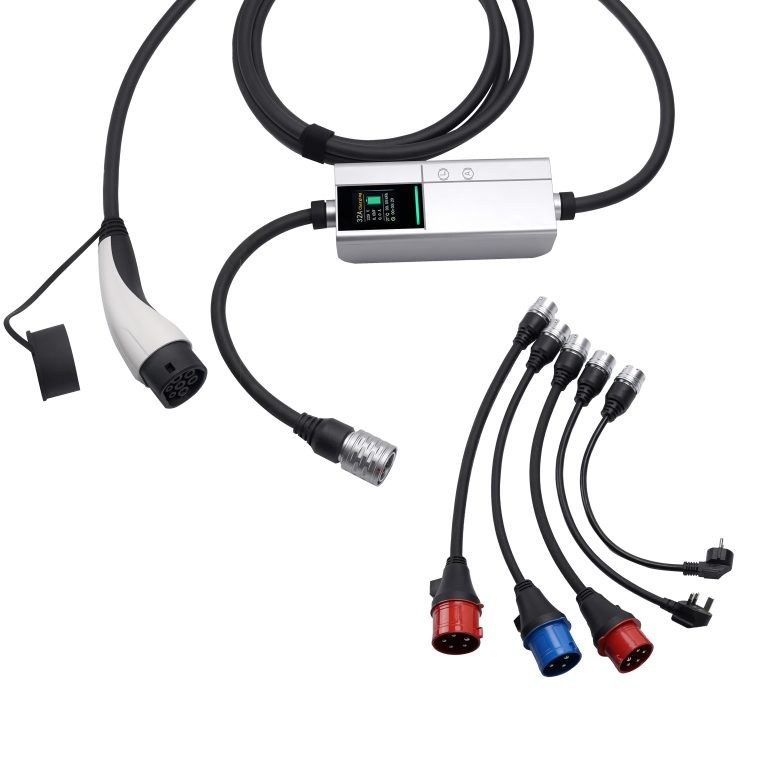
Four things must match: the generator’s output, the EVSE’s plug and current setting, the adapter (if any), and your vehicle’s inlet and onboard charger.
Connector Types: J1772, NACS/Tesla, and 120V/240V Generator Receptacles
On the vehicle side, most non-Tesla EVs use J1772 for AC charging, while newer North American vehicles increasingly use NACS (SAE J3400). On the generator side, expect NEMA 5-15/5-20 for 120V and NEMA 14-50, L14-30, or similar for 240V. These are unrelated systems — a 14-50 receptacle is not a car connector.
Source vs. Destination Connectors and Adapter Direction
Adapters are directional. A J1772-to-NACS adapter for AC charging only works one way and only for AC. Using the wrong direction, or using a DC-oriented adapter on an AC circuit, can damage equipment. Always confirm the adapter’s stated AC/DC support and direction in the manufacturer documentation.
Important: Physical fit alone does not prove every AC or DC charging mode is supported.
AC vs. DC Mode, Vehicle/Network Restrictions, and Power Limits
Portable generators output AC only. That means generator charging is always Level 1 or Level 2 AC charging — never DC fast charging. Some vehicles also restrict charging while the ignition is on or while certain safety systems are active; check your owner’s manual.
Thermal Safety, Firmware, and Vendor Requirements for Adapters
Adapters add resistance and heat. Vendors may require specific firmware versions, temperature ranges, or lockout behavior. If an adapter or EVSE is not listed for the amperage you plan to run, do not run it.
Vehicle Onboard Charger Limit vs. EVSE Amperage/kW
Your car’s onboard charger caps how much AC power it accepts — often 7.2 kW to 11.5 kW on newer EVs, but lower on some models. A generator and EVSE that can deliver more than that simply charge at the vehicle’s ceiling. Understanding how amperage translates to power helps: a 40A Level 2 charger at 240V delivers roughly 9.6 kW, though the vehicle may not accept all of it.
Power and Electrical Limits: What a Portable Generator Can Safely Deliver
Generator ratings are the most common source of disappointment. The number on the box is rarely the number you can run continuously.
Generator Continuous Watts vs. Surge Watts and 120V vs. 240V Output
Portable generators list running (continuous) watts and surge watts. EV charging is a sustained load, so only the continuous rating matters. A generator rated for 7,500 running watts at 240V can theoretically support about 31A — but few EVSE units offer that exact setting.
EVSE Amperage, Plug Types, and Vehicle Onboard Charger Limits
Adjustable-current portable EVSE units let you dial down amperage to match the generator. That flexibility is the single most important feature for generator use. Fixed-amperage units often cannot be safely matched to a modest generator.
EVSE setting, generator continuous output, and the vehicle’s onboard charger all limit real-world power.
Circuit, Panel, Breaker, and Permit Implications—Per Manual and Local Code
If you are running a generator into a home panel through a transfer switch or inlet, that work is governed by local electrical code and typically requires a permit and a qualified electrician. Plugging an EVSE directly into a generator’s receptacle avoids the panel entirely — but the generator’s own breaker and receptacle ratings then become your limits.
Cable Length, Weather Suitability, and Smart Features
Portable EVSE cables commonly run 15–25 feet; longer runs mean more voltage drop. Outdoor generator use raises weather questions for both the generator and the EVSE. Verify enclosure ratings and operating-temperature limits from the manufacturer rather than assuming “portable” means “all-weather.”
Plug-In vs. Hardwired EVSE: Trade-Offs for Generator Use
Portable and easy to move between a generator and a wall receptacle. Requires a matching plug and a receptacle rated for the load.
Higher, more consistent amperage but not portable. Poor fit for generator charging unless permanently wired to a transfer switch.
How to Size a Portable EV Charger Generator Setup
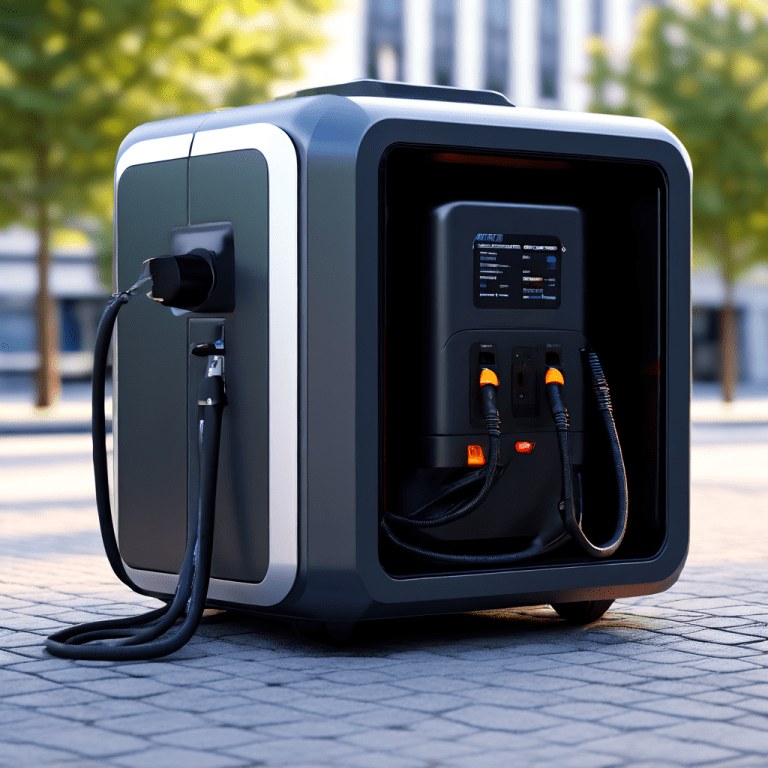
Sizing is arithmetic, not guesswork. Start with the generator’s continuous 240V output, subtract losses, and compare that to the vehicle’s onboard charger.
Formula: Available kW, Charging Losses, kWh Delivered, and Time to Charge
Available kW = (generator continuous watts × power factor) ÷ 1,000. Energy delivered to the battery ≈ available kW × hours × charging efficiency (roughly 85–90% for AC charging, per typical estimates). Time to charge = battery kWh needed ÷ (available kW × efficiency).
Level 1 Example: 120V Generator and Portable EVSE
A 120V generator with a 12A EVSE setting delivers about 1.44 kW. At 85% efficiency, that is roughly 1.2 kW into the battery — around 4–5 miles of range per hour on a typical 250–300 Wh/mi EV. Overnight, that is a modest top-up, not a full charge.
Level 2 Example: 240V Generator and Adjustable-Current EVSE
A generator with 7,200 continuous watts at 240V supports roughly 30A. Setting the EVSE to 24A yields about 5.8 kW, or roughly 4.9 kW after losses — enough to add meaningful range in a few hours. If your vehicle tops out at 11.5 kW onboard, the generator becomes the bottleneck, not the car.
Estimates assume a 250–300 Wh/mi vehicle, 85% charging efficiency, mild temperature, and a generator capable of sustained 240V output.
Fuel Type, Runtime, Noise, and Maintenance Considerations for 2026
Gasoline and propane generators remain the common choice; inverter models run quieter and produce cleaner power. Runtime depends on tank size and load — a heavy EV load drains fuel quickly. All generators need oil checks, fuel stabilization, and periodic exercise.
Cost to Charge an EV with a Portable Generator: Assumptions and Math
Generator charging is almost always more expensive per kWh than grid charging. The math below shows why.
Electricity Rate vs. Generator Fuel Cost per kWh
US residential electricity rates vary widely by state and time of use, so check your current utility rate. Generator fuel cost per kWh is higher: a generator burning roughly 0.5–1.0 gallon per hour under load, at current gasoline prices, often lands well above typical residential rates.
kWh Delivered, Charging Losses, and Time-of-Use Pricing
Charging losses mean you pay for more energy than reaches the battery. Time-of-use plans can push grid charging costs lower at night, widening the gap further.
State assumptions; rates, taxes, time-of-use pricing, and losses vary.
Equipment, Installation, and Maintenance Costs
Budget for the generator, the portable EVSE, any adapters, fuel, and maintenance. If you add a transfer switch or inlet, include electrician labor and permitting.
When Generator Charging Makes Financial Sense—and When It Does Not
It rarely makes sense as a routine charging method. It can make sense as outage insurance, for remote worksites, or for camping where no grid connection exists.
Battery Health and EV Compatibility When Charging from a Generator
Generator charging is essentially Level 1 or Level 2 AC charging, so battery impact is similar to any AC source — provided power quality and voltage are stable.
Manufacturer Guidance vs. General Battery Patterns
Follow your vehicle manufacturer’s guidance on charging. Many automakers publish recommended charging habits; these supersede generic advice.
Temperature, State of Charge, and Charging Power
Cold or hot batteries accept less power. State of charge also matters — charging tapers near full. On a slow generator feed, these effects are usually minor.
DC Fast Charging Context, Chemistry, and Thermal Management
Generator charging is never DC fast charging, so the thermal stress associated with high-power DC sessions does not apply here.
Range, Efficiency, and Convenience Trade-Offs
Generator charging adds range slowly, and your vehicle’s efficiency determines how far each kWh actually goes.
mi/kWh and Wh/mi: What Generator Charging Adds
If your EV uses 250 Wh/mi, one delivered kWh equals about 4 miles. A 5.8 kW generator feed at 85% efficiency delivers roughly 4.9 kW to the battery — about 19–20 miles per hour of charging at that efficiency.
Speed, Weather, HVAC, Elevation, Payload, Tires, and Battery Temperature
All of these change real-world miles per kWh. Cold weather, highway speeds, and cabin heating can cut efficiency substantially, so generator-added range shrinks in winter.
Charging Losses and Real-World Daily Use
For daily driving, grid charging is faster, quieter, and cheaper. Generator charging is a deliberate trade-off for situations where the grid is unavailable.
Buying Guide: Matching a Portable EV Charger Generator to Your Use Case
Match the setup to the job, not to the biggest number on a spec sheet.
Side-by-Side Criteria: Output, Connectors, Portability, Safety, Warranty, Support
| Criteria | What to verify | Why it matters |
|---|---|---|
| Continuous output | Running watts at 240V | Sets maximum safe EVSE amperage |
| Receptacle type | NEMA 14-50, L14-30, 5-20, etc. | Must match EVSE plug or adapter |
| EVSE adjustability | Selectable current settings | Prevents generator overload |
| Connector | J1772 or NACS | Must match vehicle inlet |
| Safety listing | Verified NRTL mark | Confirms third-party testing |
| Warranty & support | US terms and documentation | Affects long-term ownership value |
Best Fit by Use Case: Roadside Backup, Camping, Worksite, Home Emergency
Roadside backup favors a compact inverter generator and a low-amperage portable EVSE. Camping and worksite use favor quiet inverter models with 240V output. Home emergency use favors a larger generator with a transfer switch installed by a qualified electrician.
Evidence Limits: What This Guide Can and Cannot Claim Without First-Hand Testing
This guide is based on manufacturer documentation and published specifications, not on EmissionsFreeCars testing a specific generator/EVSE/vehicle combination. Always verify compatibility for your exact setup.
Warranty, Support, Firmware, and Vendor Requirements
Check warranty terms, US-based support, firmware update requirements, and any vendor restrictions on generator use. Some EVSE manufacturers limit or void support when the unit is powered by a generator.
- Emergency backup and off-grid charging
- Users who need occasional, portable AC charging
- Daily home charging on a grid connection
- Anyone expecting DC fast-charging speeds
Installation, Safety, and Troubleshooting Checklist for EmissionsFreeCars Readers
Generator charging involves fuel, exhaust, high current, and weather. Treat it accordingly.
Manual, Local Code, Permits, GFCI, and Neutral-Ground Bonding
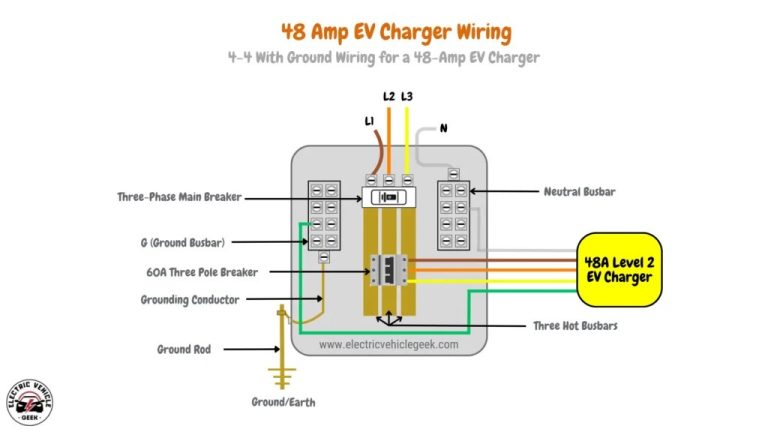
Portable generators often have a bonded neutral, which can conflict with GFCI-protected EVSE. Follow the generator and EVSE manuals, and consult a qualified electrician for any panel-connected setup. If you are planning a fixed 240V circuit instead, details like wire sizing for a 48 amp EV charger or breaker sizing for a 48 amp EV charger are separate considerations that belong to a permanent installation.
Thermal, Ventilation, Carbon Monoxide, and Weather Safety
Run generators outdoors, well away from windows, doors, and garages. Carbon monoxide is invisible and deadly. Keep the EVSE and connectors out of standing water and follow the manufacturer’s operating-temperature limits.
Common Compatibility and Failure Points
Typical problems include mismatched plugs, EVSE current settings above generator capacity, bonded-neutral conflicts with GFCI, voltage drop on long cables, and adapters used in the wrong direction. If a portable EVSE is adjustable and listed for the amperage you need — similar to what you would look for in a 40 amp level 1 and 2 portable EV charger — it will be far easier to match to a generator.
Final Bottom Line: Who Should Consider This Setup in 2026
Consider a portable EV charger generator setup if you want backup charging during outages, work or camp off-grid, or need a portable option for occasional use. Skip it if grid charging is available — it is faster, quieter, and cheaper.
- Best for: Emergency backup and off-grid AC charging where no grid connection exists.
- Think twice if: You want daily charging speed, low cost, or quiet operation.
- Next step: Confirm your generator’s continuous 240V output, your EVSE’s adjustable amperage range, and your vehicle’s onboard charger limit before buying anything.
Frequently Asked Questions
In most cases, it refers to two separate products: a portable EVSE (the charging cable and control box) and a portable generator that supplies 120V or 240V AC power. The generator produces electricity; the EVSE manages the charging session with your vehicle’s onboard charger.
Yes, if the generator’s continuous output matches an EVSE amperage setting your vehicle supports. You need a compatible receptacle, an adjustable-current EVSE, and a connector that fits your vehicle inlet. Charging is always Level 1 or Level 2 AC — never DC fast charging.
It depends on your target speed. A 120V generator with a 12A EVSE setting delivers about 1.44 kW. A generator with roughly 7,200 continuous watts at 240V can support about 30A, or roughly 5.8 kW after EVSE settings. Your vehicle’s onboard charger may cap this lower.
Generator charging is AC charging, so battery impact is similar to any Level 1 or Level 2 session, provided voltage is stable and the generator is not overloaded. Follow your manufacturer’s charging guidance rather than applying universal rules.
The grid is almost always cheaper per kWh. Generator fuel cost per kWh is typically higher than residential electricity rates, and charging losses mean you pay for more energy than reaches the battery. Generator charging makes sense mainly as backup or off-grid power.
Only with an approved transfer switch or generator inlet installed per local code, typically by a licensed electrician. Backfeeding a panel without a transfer switch is dangerous and illegal in most jurisdictions. Plugging the EVSE directly into the generator’s receptacle avoids the panel but limits you to the generator’s own breaker rating.