Portable DC Fast Charger for EV: What to Know
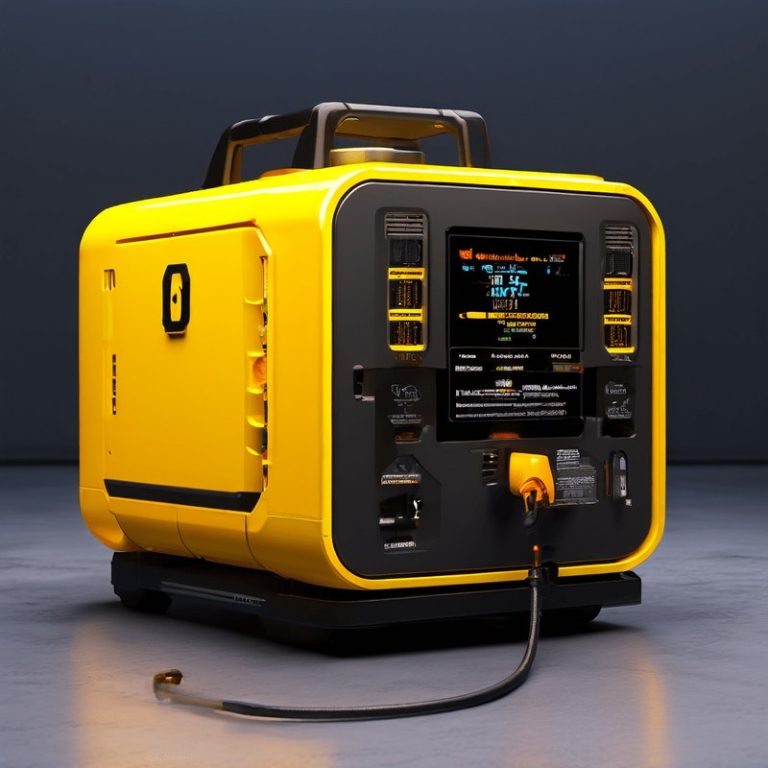
A portable DC fast charger for EV is a movable DC-output unit, but it is usually heavy, expensive, and dependent on high-power input or an internal battery. Most U.S. drivers are better served by Level 2 AC home charging and public DC fast charging unless they have a fleet, remote, or emergency use case.
A portable dc fast charger for ev is a DC-output charging unit that can be moved or transported, but for most U.S. EV owners it is not a practical everyday home charging solution. It can make sense for fleets, roadside assistance, remote sites, or emergency use, yet it usually requires heavy equipment, high-power input or a large battery buffer, and careful checks for connector, voltage, and vehicle limits.
- Compatibility: Verify CCS1, NACS/J3400, or CHAdeMO support and adapter direction before buying.
- Performance: Vehicle DC acceptance, battery temperature, and state of charge limit real charging speed.
- Safety: High-power DC equipment requires manufacturer instructions, correct circuit protection, and local code compliance.
- Cost: Equipment, installation, utility upgrades, and charging losses can far exceed a Level 2 AC.
What Is a Portable DC Fast Charger for EV—and Can You Really Use One?
A portable DC fast charger is not simply a bigger version of the Level 2 charging cable many owners keep in the trunk. It is a different class of equipment with different electrical, thermal, and compatibility demands.
AC vs. DC Charging: Where the Charger Actually Lives
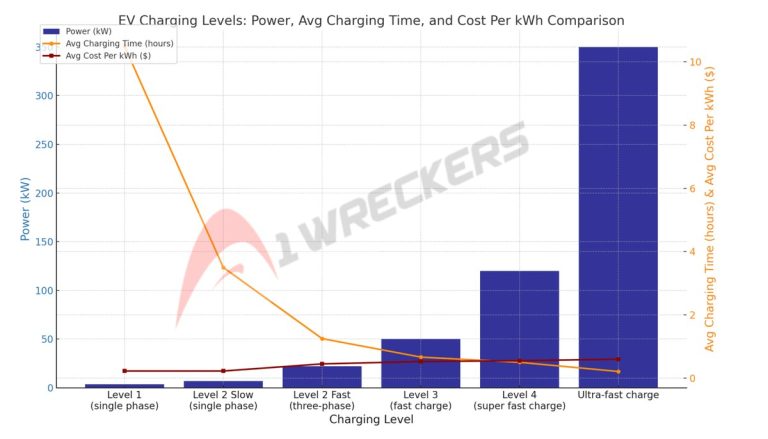
With Level 1 and Level 2 AC charging, the charger that converts alternating current into battery-ready direct current is inside the vehicle. The external EVSE supplies AC power and handles safety signaling. That is why a home Level 2 unit can be relatively compact and why its speed is capped by the vehicle’s onboard charger.
With DC fast charging, the conversion happens outside the vehicle. The DC charger rectifies AC power, manages high-voltage output, and delivers DC directly to the battery. That equipment is larger, heavier, and more expensive because it contains power electronics, controls, and often active cooling.
A portable DC fast charger must package that off-board conversion into a movable format. Some units are battery-buffered, meaning they store energy internally and then deliver DC to the vehicle. Others require a high-capacity electrical supply. Either way, “portable” usually means movable on wheels, a cart, or a trailer—not something you casually lift into a trunk.
Why “Portable” DC Fast Charging Is Rare, Heavy, and Expensive in 2026
The physics and electrical requirements work against miniaturization. DC fast charging involves high voltage, high current, heat management, and safety systems. Shrinking that into a suitcase-sized device while maintaining reliability and certified safety is difficult and costly.
Input power is another barrier. Many U.S. homes have 240 V single-phase service, not the three-phase supply that some commercial DC equipment expects. Battery-buffered units can work from lower input, but the internal battery adds weight and limits how many kWh they can deliver before recharging.
Price and availability also vary widely. Equipment, installation, utility upgrades, and maintenance can push total ownership far beyond a typical Level 2 home setup. For most drivers, public DC fast charging already covers the occasional fast-charge need.
The Short Answer for Most U.S. EV Drivers
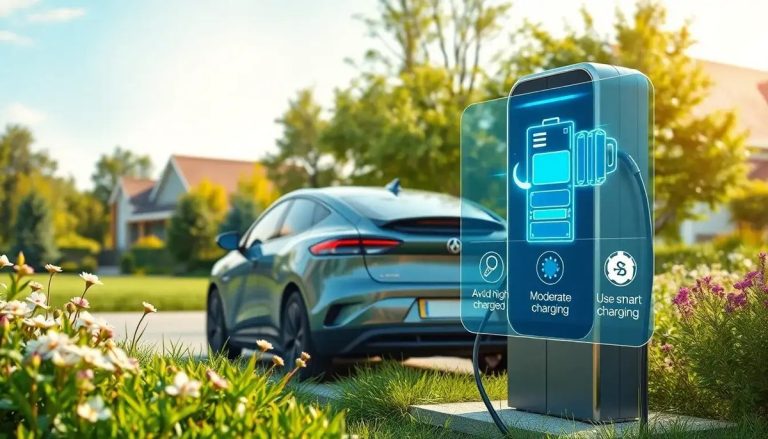
For daily home charging, a Level 2 AC setup is the practical choice. For road trips, public DC fast charging is the normal solution. A portable DC fast charger is a niche tool for fleets, roadside service, remote worksites, events, or emergency backup—not a replacement for a home Level 2 charger.
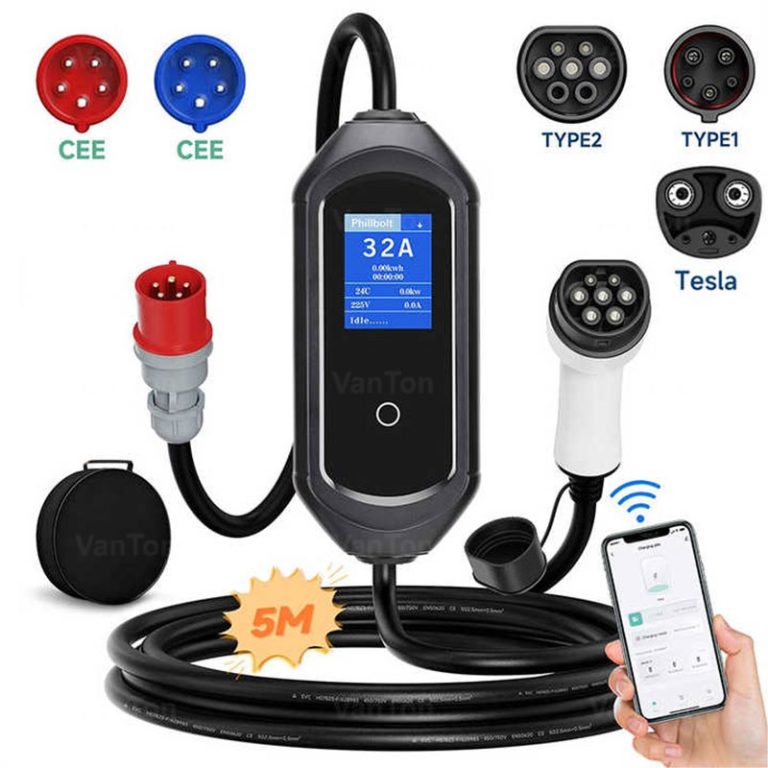
If your real need is occasional portable AC charging, a 40 amp Level 1 and 2 portable EV charger is a more realistic category. It will not match DC fast charging speed, but it fits many everyday use cases without the same electrical and cost burden.
Connector, Voltage, and Vehicle Limits You Must Check First
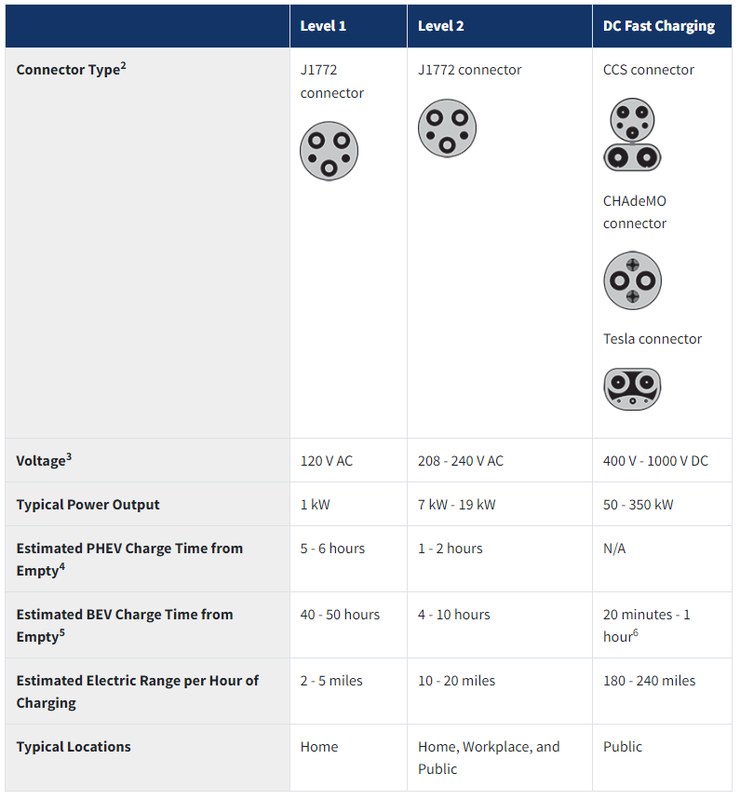
Before considering any portable DC unit, confirm the physical connector, the charging mode, and the vehicle’s own limits. A connector that fits is not proof that DC fast charging will work.
CCS1, NACS/J3400, CHAdeMO, and Adapter Direction
CCS1 combines a J1772-style AC connector with additional DC pins. NACS, also standardized as SAE J3400, uses a single connector design that can support AC and DC charging on the vehicle side. CHAdeMO is an older DC standard that remains on some vehicles but has been declining in new U.S. models.
Adapter direction matters. A NACS-to-CCS1 adapter and a CCS1-to-NACS adapter are not the same product. One may support DC fast charging while another is only for AC. Always verify the source connector, the destination connector, and whether the adapter is rated for DC.
Important: Physical fit alone does not prove every AC or DC charging mode is supported.
Your EV’s Onboard Charger vs. Its DC Fast-Charging Limit
The onboard charger affects AC charging speed only. It does not set DC fast-charging speed. During DC charging, the vehicle’s battery management system controls how much power the pack accepts based on state of charge, temperature, voltage, and battery condition.
A portable DC charger may be capable of more output than your vehicle will accept, or it may be limited below your vehicle’s maximum. The vehicle’s DC acceptance rate is the ceiling that matters.
What the Owner’s Manual Says About Third-Party DC Charging
Check the owner’s manual and any manufacturer statements about third-party DC charging, adapters, and portable equipment. Some automakers provide specific guidance on approved adapters or warranty implications. If the manual restricts a charging method, follow that guidance before buying equipment.
Portable DC Fast Charger Specs That Matter: kW, Amps, Input, and Cable
Spec sheets can be misleading if you compare only peak numbers. Look for sustained output, input requirements, duty cycle, and the conditions under which the rating applies.
Output kW and Amperage: Peak vs. Sustained Power
Peak output may be available only briefly or under ideal temperatures. Sustained output is what matters over a real charging session. Ask how the unit manages heat and whether output tapers as temperature rises.
Also distinguish charger output from vehicle acceptance. A 30 kW charger cannot force 30 kW into a vehicle that is limited to 20 kW at that state of charge.
Input Requirements: Single-Phase, Three-Phase, or Battery-Buffered
Some portable DC units expect three-phase input, which is uncommon in U.S. homes. Others use high-current single-phase input and may require a dedicated circuit or service upgrade. Battery-buffered units can operate from lower input power, but their internal battery limits total energy delivery per session.
Match the input requirement to the site. A unit that works at a commercial depot may not be usable at a typical residential garage without significant electrical work.
Cable Length, Weather Rating, and Connector Durability
Cable length affects where the vehicle can park. Verify the enclosure rating, operating temperature range, connector storage guidance, and whether the manufacturer permits outdoor use. A DC connector is a precision component; dropping it or storing it in wet, dirty conditions can damage it.
Smart Features, Apps, and Load Management
Apps, authentication, firmware updates, and load management can be useful, especially for fleets. Ask what happens if the cloud service or app is unavailable. For home use, confirm whether the unit can operate offline and whether any subscription is required.
Electrical Requirements, Permits, and Installation Realities
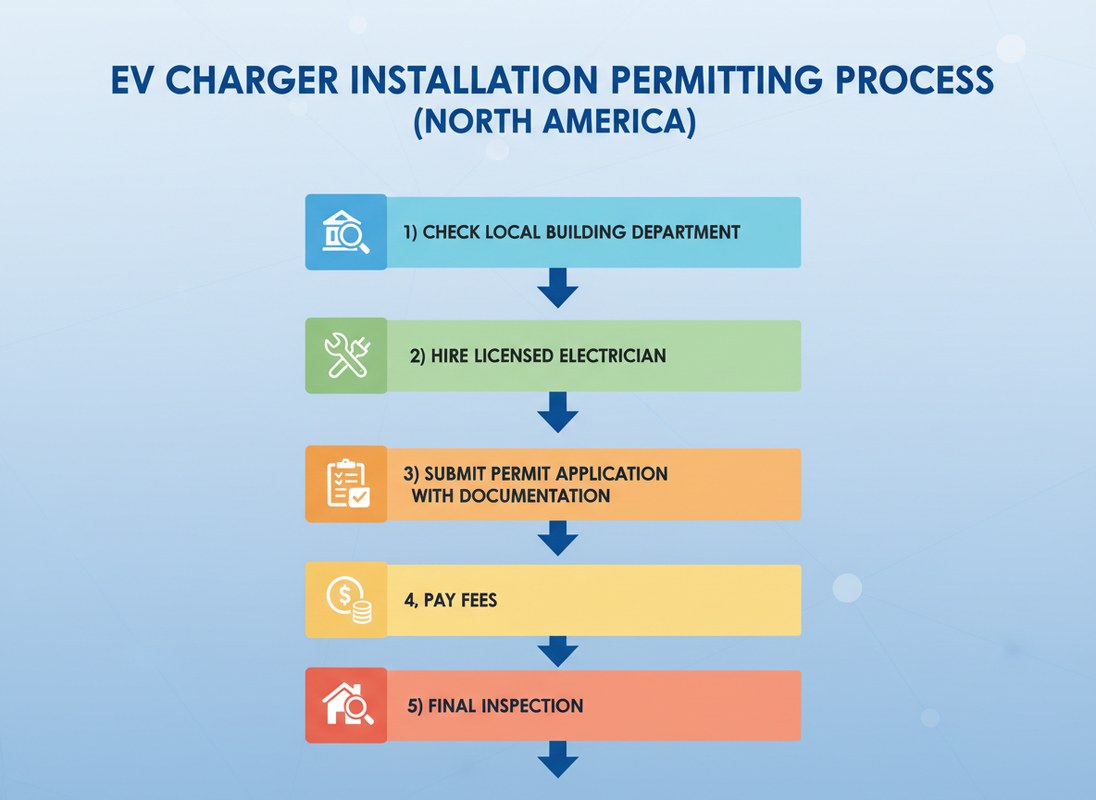
High-power charging equipment is safety-sensitive. Follow the manufacturer’s instructions and the applicable local electrical code. Do not treat a portable label as permission to bypass overcurrent protection, grounding, or inspection requirements.
Plug-In vs. Hardwired: What the Manual and Local Code Require
Some equipment may be designed for a specific plug and receptacle, while other units must be hardwired. The manual and local code determine what is allowed. If the unit requires hardwiring, a qualified electrician should handle the installation.
Panel Capacity, Circuit Breaker, and Utility Coordination
Panel capacity, available service amperage, breaker size, conductor size, and voltage drop all matter. Even a 48 amp Level 2 AC charger can require a 60-amp circuit, so a DC unit with higher input demands is a different electrical category. See our guide to whether a 48 amp EV charger needs a 60 amp circuit for context on how circuit sizing works in practice.
Conductor sizing is not a guess. Our explanation of 48 amp EV charger wire size shows why amperage, distance, and code requirements must be matched to the equipment instructions.
Permits, Inspections, and 2026 U.S. Code Considerations
Electrical-code adoption, permitting, inspection, and utility requirements vary by state, county, and city. Some utilities also require notification or approval for large new loads. Verify current local rules before purchasing or installing high-power charging equipment.
Adapters and Cross-Connector Charging: What Works, What Doesn’t
Adapters can solve connector mismatch, but only when the adapter, vehicle, and charger all support the same charging mode and power level.
Source Connector, Destination Connector, and Adapter Direction
The source connector is on the charger or charging station. The destination connector is on the vehicle. An adapter changes one side to fit the other. Direction is critical: a J1772-to-NACS adapter for AC charging is not the same as a NACS-to-CCS1 adapter for DC fast charging.
AC vs. DC Mode: Why Most Adapters Are Not Interchangeable
AC and DC charging use different pins, communication, and safety protocols. Some connectors carry both AC and DC capability, but the adapter must be rated for the mode you intend to use. Never assume an adapter that fits will allow DC fast charging.
Power Limits, Thermal Safety, Vehicle/Network Restrictions, and Firmware
Adapters have their own amperage and temperature limits. The vehicle may also restrict adapter use, and charging networks may require authentication or firmware compatibility. Check the adapter manufacturer’s documentation and the vehicle manual before using any cross-connector setup.
Cost to Use a Portable DC Fast Charger: Equipment, Electricity, and Time
The total cost includes equipment, installation, electrical upgrades, electricity, and time. Equipment prices vary widely, so verify current quotes and specifications rather than relying on older figures.
Equipment and Installation Cost Assumptions
Portable DC equipment is generally far more expensive than a Level 2 EVSE. Installation may require a dedicated circuit, panel upgrade, transformer, or utility coordination. Battery-buffered units add battery cost and replacement considerations.
Electricity Rate, kWh Delivered, and Charging Losses
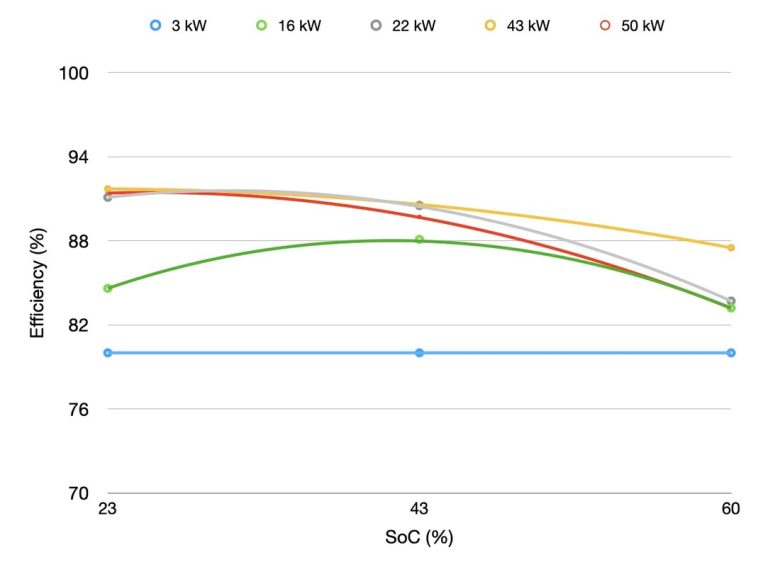
Electricity cost is based on energy drawn from the grid, not just energy added to the battery. If charging efficiency is 90%, you draw more kWh than the battery receives. The formula is: cost = (energy added ÷ charging efficiency) × electricity rate.
Time-of-Use Pricing and Demand Charges
Residential time-of-use rates can make overnight charging cheaper. Commercial sites may face demand charges based on peak power, which can change the economics of high-power charging. Check your utility tariff and any local fees or taxes.
State assumptions; rates, taxes, time-of-use pricing, and losses vary.
Cost Formula and Example Scenarios
Using the example above: 60 kWh added ÷ 0.90 = 66.7 kWh drawn. At $0.16/kWh, that is about $10.67. If your rate is $0.30/kWh, the same session would cost about $20.00 before taxes and fees. These are illustrative numbers, not quotes.
Battery Health and Charging Speed: What Manufacturer Guidance Says
DC fast charging is a normal part of EV ownership, but how often and under what conditions depends on the vehicle. Follow the manufacturer’s guidance for your specific model.
Temperature, State of Charge, and DC Fast-Charging Context
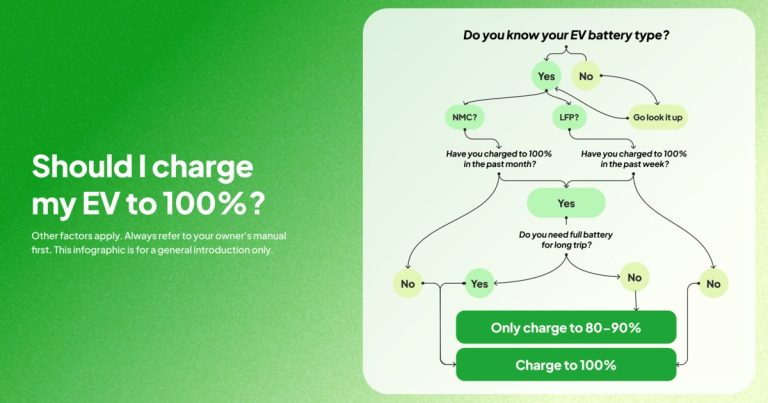
Battery temperature and state of charge strongly affect DC charging speed. A cold battery may charge slowly until it warms. A very high or very low state of charge can also reduce acceptance. There is no universal 80% rule that applies to every EV.
Chemistry, Thermal Management, and Convenience Trade-Offs
LFP and NMC batteries behave differently, and vehicles with active thermal management may handle repeated DC sessions differently than those with simpler systems. Portable DC charging may not provide the same thermal conditioning as public DC stations, so check the equipment’s operating limits.
When Portable DC Fast Charging Makes Sense—and When It Doesn’t
It can make sense for fleet depots, roadside assistance, remote job sites, and events where fixed DC infrastructure is unavailable. It rarely makes sense for a typical homeowner who already has Level 2 charging and access to public DC fast chargers.
Range, Efficiency, and Real-World Charging Losses
Range added depends on vehicle efficiency and conditions. Label any estimate and avoid treating laboratory ratings as guaranteed real-world results.
mi/kWh and Wh/mi: Setting Expectations
Many EVs operate in a range of roughly 2.5 to 4.5 mi/kWh depending on the model and conditions, but that is an example range, not a universal specification. Your vehicle’s efficiency display and trip data are better guides.
Speed, Weather, HVAC, Elevation, Payload, and Tires
Highway speed, cold weather, cabin heating, elevation change, payload, and tire pressure all affect efficiency. A charging session that adds 60 kWh may deliver different range in winter than in mild weather.
Battery Temperature and Charging Losses
Cold batteries may require heating, which consumes energy. Charging losses also vary with equipment, voltage, and current. These factors mean the cost and time to add a given number of miles can differ from a simple calculation.
Buying Guide: How to Choose a Portable DC Fast Charger for Your EV
Start with compatibility and electrical feasibility, not price or peak kW. A unit that cannot be legally or safely installed at your site is not a bargain.
Match Connector, Power, and Vehicle Limits
Confirm the vehicle inlet, the charger connector, the maximum DC acceptance of your vehicle, and the available input power at the site. Also verify whether an adapter is needed and whether it is approved for DC use.
Compare Warranty, Support, Firmware, and Safety Certifications
Check the warranty term, U.S. support, firmware update process, and safety listing. A legitimate safety listing from a recognized testing laboratory should be verified through the manufacturer or certification record, not inferred from marketing language.
Side-by-Side Comparison Criteria and Who Each Option Fits
Compare the same criteria: connector support, sustained output, input requirements, cable length, weather rating, smart features, warranty, and installation needs. A battery-buffered unit may fit a remote site with limited power. A hardwired high-power unit may fit a fleet depot with three-phase service.
Evidence Limits and What to Verify Before Buying
Because this article does not test specific products, treat manufacturer claims as claims until you verify them. Ask for the manual, installation guide, certification record, and written compatibility confirmation for your exact vehicle.
- Confirm vehicle inlet and AC/DC compatibility
- Check the vehicle’s maximum DC fast-charging acceptance
- Verify charger input requirements and site electrical capacity
- Confirm cable length, mounting, and indoor/outdoor suitability
- Verify safety listing, warranty, app requirements, and support
- Include installation, adapter, utility, and electricity costs
- Best for: Fleets, roadside service, remote sites, and emergency use where fixed DC charging is unavailable.
- Think twice if: You mainly need home charging; a Level 2 AC setup is usually simpler, lighter, and less expensive.
- Next step: Verify your vehicle’s connector and DC limits, then confirm the site’s electrical capacity with a qualified electrician before buying.
Frequently Asked Questions
Yes, portable or movable DC fast chargers exist, but they are niche products. Many are designed for fleets, roadside service, or remote sites rather than typical homeowner use. They may be battery-buffered or require high-power input, and they are generally much heavier and more expensive than Level 2 EVSE.
It depends on your vehicle inlet. CCS1, NACS/SAE J3400, and CHAdeMO are the main DC connector types in the U.S. market. The charger connector must match the vehicle inlet or use a verified adapter that supports DC fast charging in the correct direction.
Some units may be usable at home, but only if the site has the required electrical capacity and the installation follows manufacturer instructions and local code. Many homes lack three-phase power, and high-power DC equipment may require a service upgrade, permits, and a qualified electrician.
Adapters can be safe when they are certified, correctly rated for the charging mode, and approved for the vehicle and charger combination. Physical fit alone is not enough. Check the adapter’s DC rating, amperage limit, thermal specifications, and vehicle manufacturer guidance.
DC fast charging is a normal part of EV use, but battery impact depends on chemistry, thermal management, temperature, state of charge, and how often it is used. Follow your manufacturer’s guidance rather than applying a universal charging rule to every EV.
Cost depends on equipment, installation, electricity rate, energy added, charging losses, taxes, and any demand charges. A simple estimate is: (energy added ÷ charging efficiency) × electricity rate. Verify current local rates and quotes because prices and utility tariffs change.