How Much Does a Portable EV Charger Cost? EVSE Price Guide
Most portable EV chargers cost roughly $150 to $1,500 in 2026, with the typical daily-driver unit landing between $400 and $800 before installation or adapters. The bigger constraint is usually your vehicle’s onboard charger limit and the circuit you can safely plug into.
If you are asking how much does a portable ev charger cost, the practical answer in 2026 is roughly $150 to $1,500 or more for the EVSE itself, before any electrical work, adapters, or electricity. Most US drivers shopping for a plug-in Level 1 or Level 2 unit land somewhere in the $200–$600 band, while heavy-duty, high-amperage, or smart-enabled models push toward the top of the range.
What separates a $180 unit from a $900 one is rarely a single feature. It is a stack of decisions about amperage, cable length, connector type, weather sealing, smart hardware, warranty length, and support — and only some of those change how fast your car actually charges.
- Compatibility: Confirm J1772 or NACS on both the vehicle and EVSE side before buying; adapters.
- Performance: A 40 A or 48 A EVSE cannot exceed your vehicle’s onboard charger rating.
- Safety: Verify a recognized safety listing and follow the equipment instructions plus applicable local electrical.
- Cost: Budget separately for equipment, installation, adapters, and electricity — installation is the most variable.
How Much Does a Portable EV Charger Cost? 2026 Price Ranges at a Glance
Portable EVSE pricing is driven by a small number of variables: how much current the unit can deliver, how long the cable is, whether it has smart connectivity, and how long the warranty runs. The bands below describe typical US advertised pricing for new units. Sales, bundles, and closeouts move them around, so verify at the point of purchase rather than budgeting from a headline number.
Budget Portable EVSE: $150–$400
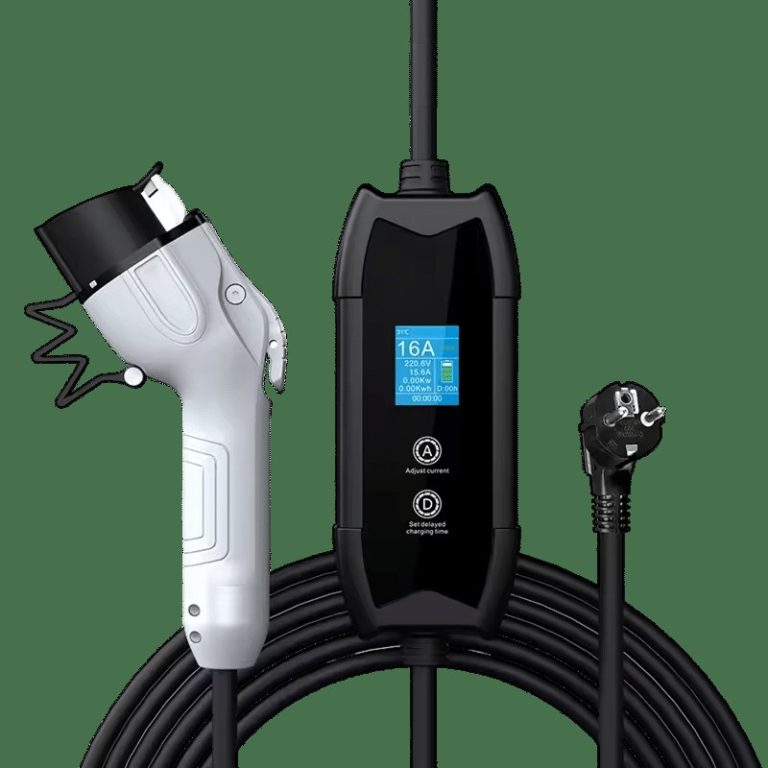
This band is dominated by Level 1 units that plug into a standard 120 V household receptacle, plus entry-level Level 2 models with fixed or lightly adjustable current. Expect shorter cables, basic LED indicators, and modest warranty terms.
The one feature worth refusing to compromise on is a recognized safety listing. An unlisted unit is not a bargain at any price, and marketing language alone does not prove certification.
Mid-Range Portable EVSE: $400–$800
Mid-range units typically add adjustable amperage, longer cables, a wider operating temperature range, and app-based scheduling or charging history. Many include interchangeable plug adapters for 120 V and 240 V receptacles.
This is where most daily-driver households land, because adjustable current and a proper safety listing matter more than raw peak output.
Premium and Heavy-Duty Portable EVSE: $800–$1,500+
At the top of the market you find 40–48 A capable units, 25-foot or longer cables, ruggedized enclosures, load-management features, and longer warranty terms. Some bundle multiple adapters or a carrying case.
Premium pricing does not automatically mean faster charging. The vehicle’s onboard charger still sets the ceiling, so a more expensive EVSE can deliver identical results to a mid-range one on the same car.
What Changes the Price Most: Amperage, Cable Length, Smart Features, and Warranty
Amperage is the biggest single lever, because higher current requires heavier conductors, larger contactors, and more thermal margin. Cable length follows closely: copper is expensive, and a 25-foot cord costs meaningfully more than a 15-foot one.
Smart hardware and firmware add cost, as do longer warranties and domestic support. None of these change how many kW your vehicle actually accepts.
Portable EV Charger Types and Connectors: What You Are Paying For
Level 1 vs Level 2 Portable Chargers: Voltage, Amperage, and kW
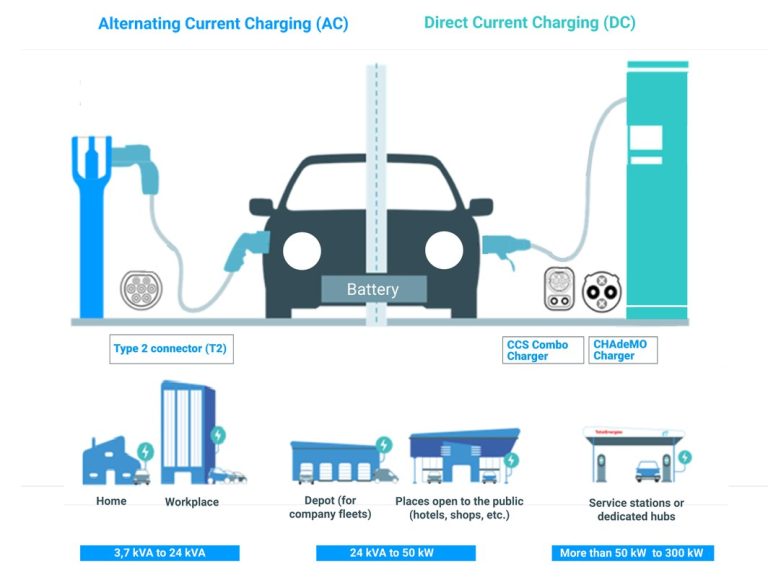
Level 1 uses a 120 V circuit and commonly draws 12 A, which works out to roughly 1.4 kW. Level 2 uses 240 V and can range from about 16 A to 40 A or more in a portable format, translating to roughly 3.8 kW to 9.6 kW of available output.
Level 1 is slow but needs no new circuit. Level 2 is far faster but requires a suitable 240 V receptacle or a hardwired connection. If you are weighing a 40 A portable unit against other options, our breakdown of the 40 amp Level 1 and 2 portable EV charger explains how those two modes differ in day-to-day use.
NEMA Plugs and Adapters: 5-15, 14-50, 6-20, and Beyond
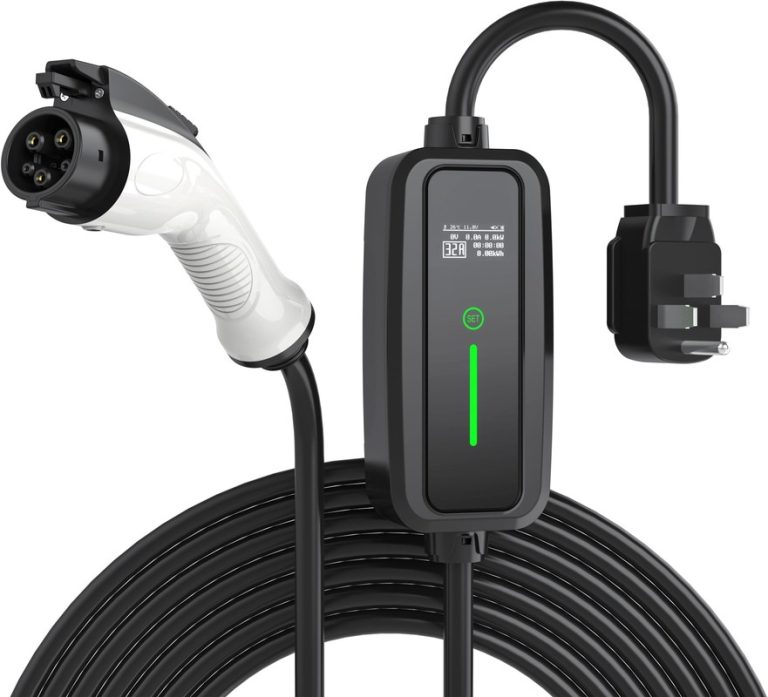
The plug on the wall end of a portable EVSE determines where you can use it. NEMA 5-15 is the ordinary household outlet. NEMA 14-50 is the common 240 V receptacle used for ranges and some dryers. NEMA 6-20 is a 240 V 20 A receptacle sometimes found in garages.
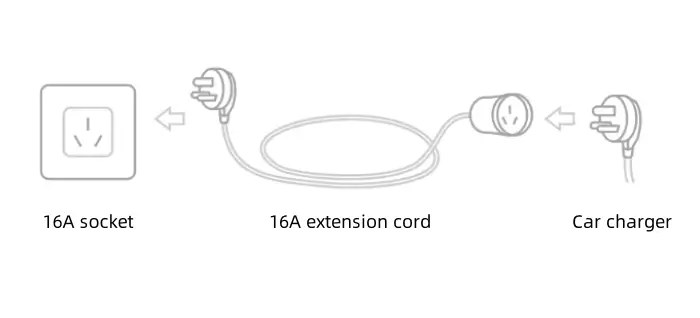
Adapters let one EVSE body serve several receptacle types, but each adapter carries its own current limit. The EVSE must be set to a current the receptacle and its circuit can actually support.
J1772 vs NACS Connectors in 2026: Vehicle Compatibility and Adapter Direction
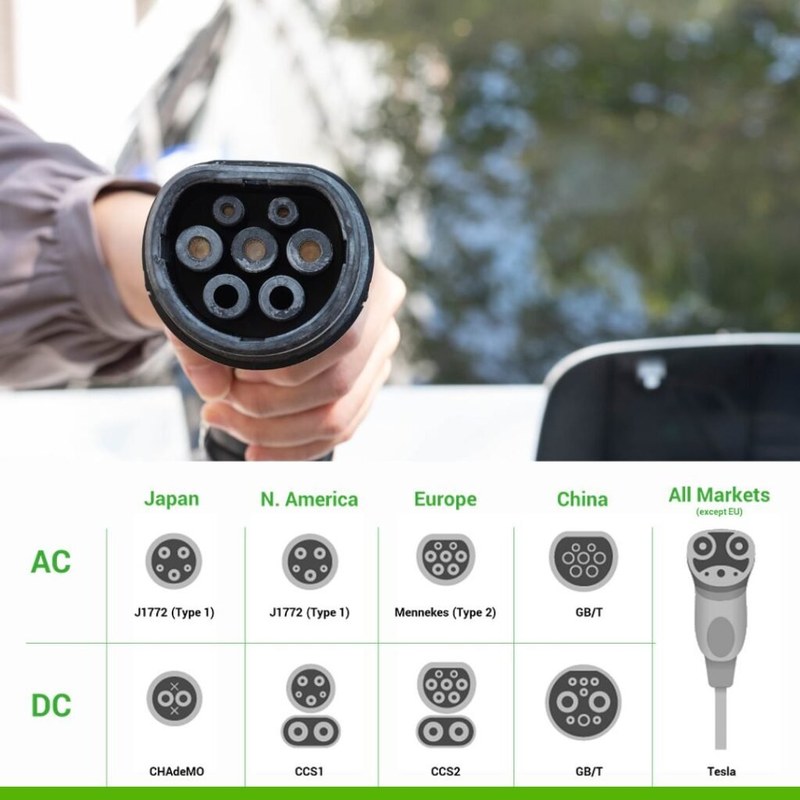
J1772 remains the standard AC connector on many EVs, while NACS (SAE J3400) is now common on newer vehicles. Portable EVSE is sold with either connector, and the two are not interchangeable without an adapter.
Direction matters. A J1772 EVSE needs a NACS-to-J1772 adapter to charge a NACS vehicle, and a NACS EVSE needs a J1772-to-NACS adapter for an older car. These are AC-only adapters and do not enable DC fast charging.
When an Adapter Makes Sense vs When It Adds Cost, Heat, and Risk
An adapter makes sense when it solves a genuine receptacle or connector mismatch for occasional use. It makes less sense as a permanent solution when a correctly configured EVSE or a new receptacle would be safer and simpler.
Every extra connection point adds contact resistance, and resistance means heat under load.
Adapter Power Limits, Thermal Safety, and Firmware or Vendor Requirements
Adapters have their own amperage ratings, and running above them is a fire risk. Some EVSE manufacturers restrict which adapters may be used, and some smart units refuse to charge when an unrecognized adapter is detected.
Check the manufacturer’s documentation before assuming any adapter is approved for your unit.
Important: Physical fit alone does not prove every AC or DC charging mode is supported.
Vehicle Onboard Charger Limits: Why a 40-Amp EVSE May Not Charge Faster
How Onboard Charger kW Caps Portable EVSE Output
The EVSE is essentially a smart, safety-rated switch. The actual AC-to-DC conversion happens inside the vehicle, in the onboard charger, and that hardware has a fixed maximum.
If your vehicle’s onboard charger tops out at 7.2 kW, a 9.6 kW EVSE will still deliver only about 7.2 kW. Our explainer on how many kW a 48 amp Level 2 EV charger produces is a useful reference for converting amperage into real output.
Matching Portable EVSE Amperage to Your Vehicle and Circuit
Three numbers have to agree: the EVSE’s current setting, the circuit’s capacity, and the vehicle’s onboard charger limit. The lowest of the three wins.
Common practice is to set the EVSE at no more than 80% of the circuit’s rating for a continuous load, and to follow the equipment instructions and applicable local electrical requirements.
Plug-In vs Hardwired: Cost, Convenience, and Code Implications
Portable by definition. Requires a matching receptacle and a circuit rated for the current setting. Easy to move, but the receptacle becomes a wear and heat point.
Typically allows higher continuous current and removes the plug connection. Not portable, and generally requires a qualified electrician and possibly a permit.
Portability is the entire point of a plug-in unit. Hardwiring buys headroom and permanence, but you give up the ability to take the charger with you.
Electrical Requirements, Circuit Capacity, and Installation Costs
Reading the Product Manual and Local Code Before You Buy
The manual states the required circuit, breaker, conductor, and receptacle type. Local code and the authority having jurisdiction govern what is actually permitted in your home.
Buying first and checking requirements later is how people end up with a charger they cannot legally or safely plug in.
Panel Capacity, Breaker Sizing, and Permit Rules
A 240 V EV circuit is a significant new load. Panel capacity, available breaker spaces, service size, and load calculations all matter, and permits or inspections may be required depending on where you live.
Our article on whether a 48 amp EV charger needs a 60 amp circuit walks through the relationship between continuous charging current and breaker sizing.
What Installation Typically Adds to Your Total Cost
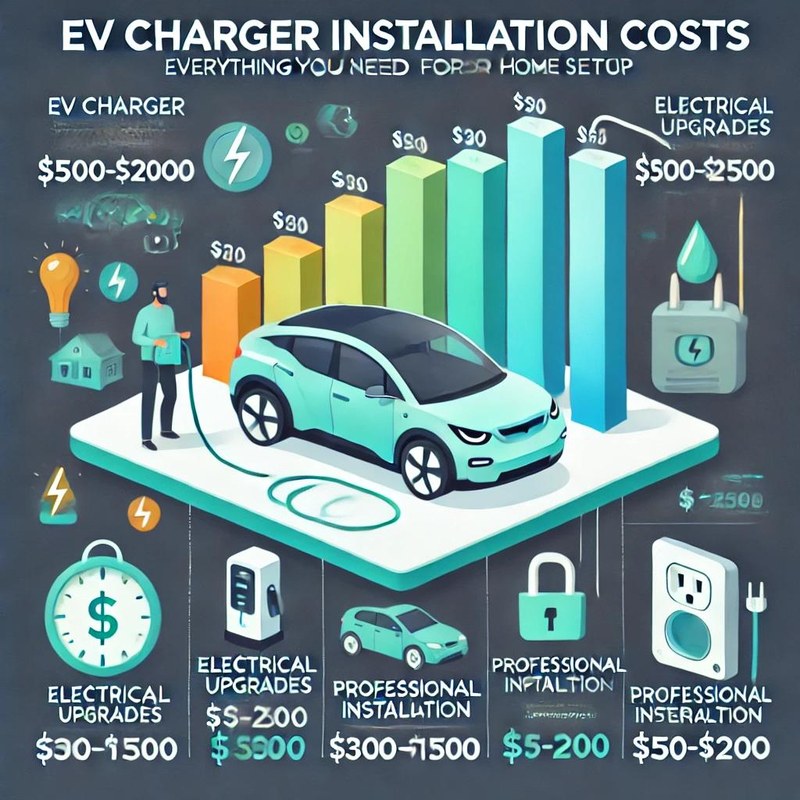
Installation is the most variable line item in the whole purchase. A short run from a panel with spare capacity is a very different job from a long conduit run, a panel upgrade, or a new subpanel.
Because labor rates, permit fees, and material costs vary by region and by the specifics of your home, get a written quote rather than budgeting from a national average.
Cable Length, Weather Suitability, and Outdoor Use
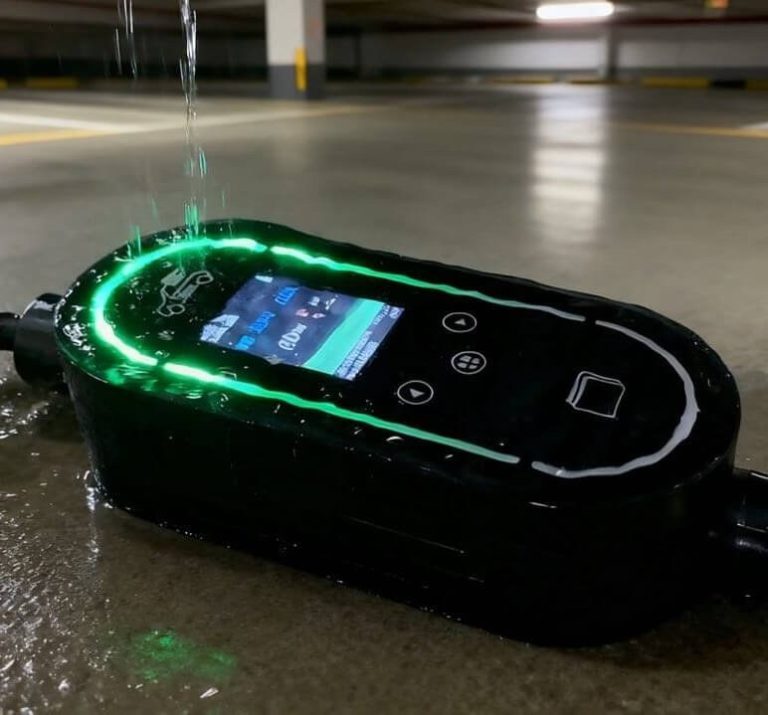
Longer cables cost more and are more convenient, but they also need somewhere to live. For outdoor use, check the enclosure rating, the operating temperature range, and the manufacturer’s guidance on connector storage.
Weather suitability is a documented specification, not something you infer from a product photo.
Smart Features, Warranty, and Support: Hidden Value in Portable EVSE Pricing
Wi-Fi, Bluetooth, Scheduling, and Load Management
Scheduling lets you charge during off-peak windows. Load management can reduce the circuit size needed by sharing capacity with other household loads. Both add cost and complexity.
Bluetooth-only units usually work without an account, while Wi-Fi units may depend on a cloud service to function fully.
Warranty Length and Customer Support: What to Compare Side by Side
Compare warranty term, what is actually covered, who pays return shipping, and whether support is domestic. A three-year warranty on a $500 unit can be worth more than a one-year warranty on a $400 unit.
Firmware Updates and Network Restrictions for Adapters and Smart EVSE
Firmware can change behavior, add features, or tighten adapter restrictions after you buy. Ask what happens if the manufacturer’s app or cloud service is discontinued.
A charger that becomes a dumb switch is still usable. A charger that refuses to start without a server is not.
How Much Does It Cost to Charge? Electricity, Losses, and Time-of-Use Rates
The Formula: kWh Delivered × Electricity Rate + Charging Losses
The core formula is simple: energy added in kWh multiplied by your electricity rate. AC charging also loses some energy as heat, so the meter may register more kWh than the battery actually receives.
That gap is why the same car can cost slightly different amounts to charge at two homes with identical rates.
Time-of-Use Pricing and Off-Peak Savings
Many US utilities offer time-of-use plans where overnight rates are lower. Shifting charging into those windows can reduce cost per mile substantially without changing any equipment.
Check your current tariff, including taxes and fixed fees, rather than assuming a national average rate applies to you.
Separating Equipment Cost, Installation Cost, and Electricity Cost
Keep these three buckets separate when comparing options. A cheaper EVSE that triggers a panel upgrade is not cheaper overall, and a slightly higher electricity rate can outweigh a small equipment saving within a year.
Illustrative only. Rates, taxes, time-of-use pricing, demand charges, and charging losses vary by utility and by vehicle.
Battery Health and Charging Speed: What Portable EVSE Owners Should Know
Manufacturer Guidance vs General Patterns for Daily Charging
Follow your vehicle manufacturer’s guidance first. General patterns about charge limits and daily charging habits are not universal across chemistries and battery management systems.
Temperature, State of Charge, and Charging Power
Charging power tapers in cold and hot conditions, and often slows as the battery fills. A portable EVSE’s maximum output is rarely the limiting factor in those moments.
DC Fast Charging Context: When Portable AC Is the Better Daily Choice
DC fast charging is a different mode with different connectors and different equipment. For daily home charging, AC is generally the more convenient and less stressful option.
Chemistry, Thermal Management, and Convenience Trade-Offs
Vehicles with active thermal management handle high ambient temperatures differently than those with passive systems. Convenience and battery care sometimes pull in opposite directions, and the right answer depends on your specific vehicle.
Range, Efficiency, and Real-World Charging Trade-Offs
mi/kWh and Wh/mi: Why Charging Losses Matter
Efficiency is usually expressed as miles per kWh or watt-hours per mile. Charging losses mean the energy you pay for exceeds the energy stored, which quietly raises your real cost per mile.
Speed, Weather, HVAC, Elevation, Payload, Tires, and Battery Temperature
Highway speed, cold weather, cabin heating, elevation change, extra weight, tire pressure, and battery temperature all move range. Any figure quoted without those variables is an estimate, and should be labeled as one.
Portable Flexibility vs Fixed Installation: Who Each Option Fits
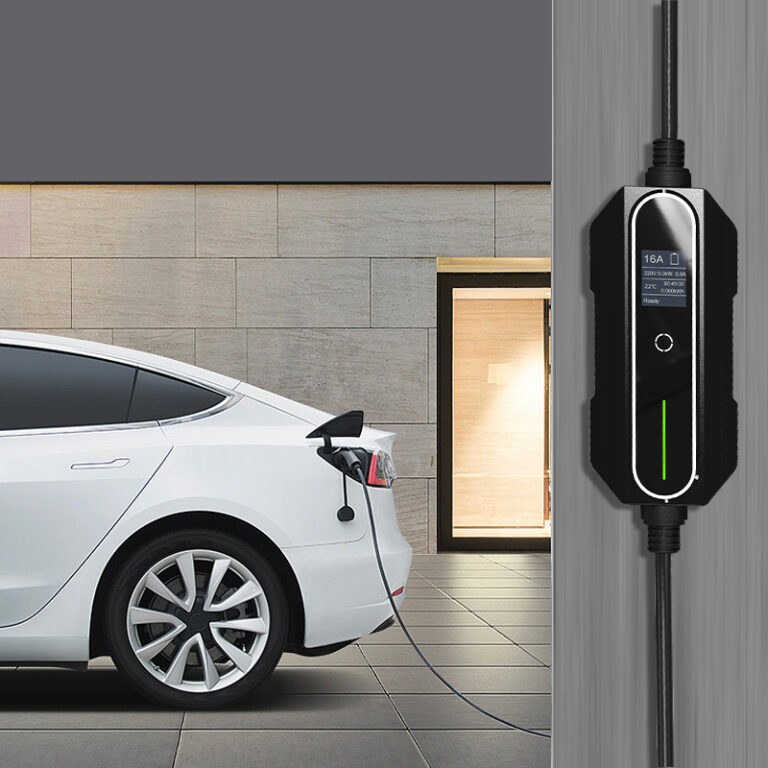
Portable EVSE fits renters, travelers, and households that need one unit in more than one place. A fixed installation fits owners with a dedicated parking spot and predictable daily needs.
Who Should Buy Which Portable EV Charger? A Side-by-Side Comparison
Same Criteria Compared: Price, Amperage, Connector, Cable, Weather Rating, Smart Features, Warranty
Compare every candidate on the same seven criteria rather than mixing specs. Price and amperage are easy to read; connector, weather rating, and warranty are where mismatches hide.
Best for Renters and Apartment Dwellers
Renters usually want a Level 1 unit or a low-amperage Level 2 with a common NEMA plug, plus a recognized safety listing and a forgiving return policy.
Best for Road Trips and Emergency Use
Travel kits favor compact bodies, multiple adapters, a carry case, and clear documentation. Peak amperage matters less than the ability to use whatever receptacle you find.
Best for Daily Home Charging on a Dedicated Circuit
For a dedicated 240 V circuit, a mid-range adjustable-amperage unit with a solid warranty is the practical sweet spot. If your vehicle accepts higher current, our roundup of the best 40 amp Level 2 EV charger options is a reasonable place to start comparing.
Evidence Limits: What This Guide Does and Does Not Claim
This guide does not claim hands-on testing of any specific unit, and it does not publish measured charging times or verified product prices. Treat every dollar figure as a planning range, not a quote.
- Confirm your vehicle’s inlet and its maximum AC charging capability
- Verify the EVSE amperage setting and the circuit it requires
- Check connector type and whether any adapter is manufacturer-approved
- Confirm cable length, mounting, and indoor/outdoor suitability
- Verify the safety listing, warranty term, app requirements, and support
- Add installation, adapter, and electricity costs to the total
- Best for: Renters, travelers, and households needing one charger in more than one place.
- Think twice if: Your vehicle’s onboard charger caps output well below the EVSE rating, or your panel cannot support the circuit.
- Next step: Confirm your vehicle’s maximum AC charging rate and the circuit available at your parking spot before comparing prices.
Frequently Asked Questions
Typical US advertised prices run from about $150 for basic Level 1 units to $1,500 or more for heavy-duty, high-amperage portable EVSE. Most households shopping for a plug-in Level 1 or Level 2 unit spend in the $200–$600 range. These are planning ranges, not quotes, and prices change with sales and bundles.
Often yes on equipment, because plug-in units do not require an electrician to hardwire them. But the total can flip if you need a new 240 V receptacle, a longer circuit run, or a panel upgrade. Compare the full installed cost, not just the charger price.
Yes. Level 2 charging uses a 240 V supply, typically through a NEMA 14-50 or similar receptacle, or a hardwired connection. Level 1 units use a standard 120 V household outlet and charge much more slowly. Always match the EVSE setting to what the circuit can safely support.
Only if your vehicle’s onboard charger accepts more than the lower unit delivers. The EVSE, the circuit, and the onboard charger all have limits, and the lowest one governs the result. Many EVs cap AC charging well below 48 A.
Only if the manufacturer documents the enclosure rating and operating temperature range for outdoor use, and you follow its guidance on connector storage. Weather suitability is a verified specification, not something to assume from appearance.
Multiply the kWh added by your electricity rate, then account for charging losses. As an illustration, 40 kWh at $0.16 per kWh is about $6.40 before losses. Your actual rate, taxes, time-of-use windows, and losses will differ.