Portable Solar EV Charger: How It Works and What to Know
A portable solar EV charger is a small off-grid solar system — panels, inverter, and storage — feeding a standard portable EVSE that supplies AC power to your car’s onboard charger. It works best for off-grid, emergency, or low-mileage use, and it cannot deliver DC fast charging speed.
A portable solar EV charger is not one box you plug into the sun — it is a small off-grid solar power system feeding a standard portable EVSE. It can add real range in the right setting, but only if you understand the power math, the connector rules, and the safety requirements before you spend money.
- Compatibility: Solar kits supply AC only, so your vehicle needs a J1772 or NACS AC.
- Performance: Real daily output is a few kWh in good sun, which translates to modest.
- Safety: The AC side still needs correctly rated receptacles, overcurrent protection, and listed hardware; follow.
- Cost: You trade electricity cost for equipment cost, and battery replacement is a recurring expense.
What Is a Portable Solar EV Charger and How Does It Work?
In almost every consumer product sold under this name, the energy path looks like this: sunlight hits photovoltaic panels, which produce DC electricity. That DC power runs through a charge controller into a battery bank, or directly into a hybrid inverter. The inverter produces ordinary 120 V or 240 V AC household power, and a portable EVSE plugged into that AC output talks to your car. The vehicle’s onboard charger then converts AC back to DC and feeds the pack.
That last step is the part most shoppers miss. The device on the wall or on the ground is not the charger — it is the EV supply equipment. Your car contains the actual charger.
The Three Core Parts: Solar Panels, Charge Controller or Inverter, and EVSE
Solar panels convert sunlight to DC. Their real output depends on irradiance, panel temperature, tilt, shading, and how clean they are — not just the nameplate wattage on the label.
The charge controller or hybrid inverter manages the DC side. An MPPT charge controller extracts more energy from the array and protects the battery. An inverter converts stored DC into usable AC. Many portable kits combine both functions in one unit.
The EVSE is the cable-and-box assembly with a J1772 or NACS connector. It communicates available current to the vehicle and provides the safety interlocks that make AC charging work.
AC vs. DC Coupling: What Your EV Actually Accepts
AC coupling is the only realistic consumer path. The vehicle’s onboard charger accepts AC through the J1772 or NACS AC pins, so the solar system’s job is simply to produce clean, stable AC power.
DC coupling would mean feeding high-voltage DC directly into the pack through a CCS1 or NACS DC interface, with the communication protocol, insulation monitoring, and safety systems a DC fast charger requires. That is not a portable consumer product. If a listing implies a folding panel array can DC fast charge your car, treat that claim with heavy skepticism.
Why “Portable” Has Limits: Power, Weight, and Sunlight
A genuinely useful solar array is physically large. Panels that produce a few hundred watts each typically weigh 20 to 40 pounds apiece, and a battery plus inverter adds substantial weight on top of that. “Portable” usually means movable by vehicle and hand-truck, not carried in one hand.
Sunlight is the harder limit. A fixed array in a good solar region might harvest the equivalent of four to six productive hours per day, and that figure drops sharply in winter, shade, or poor panel angles. Portable arrays are also often deployed at suboptimal angles, which costs additional output.
Portable Solar EV Charger vs. Standard EVSE: Key Differences
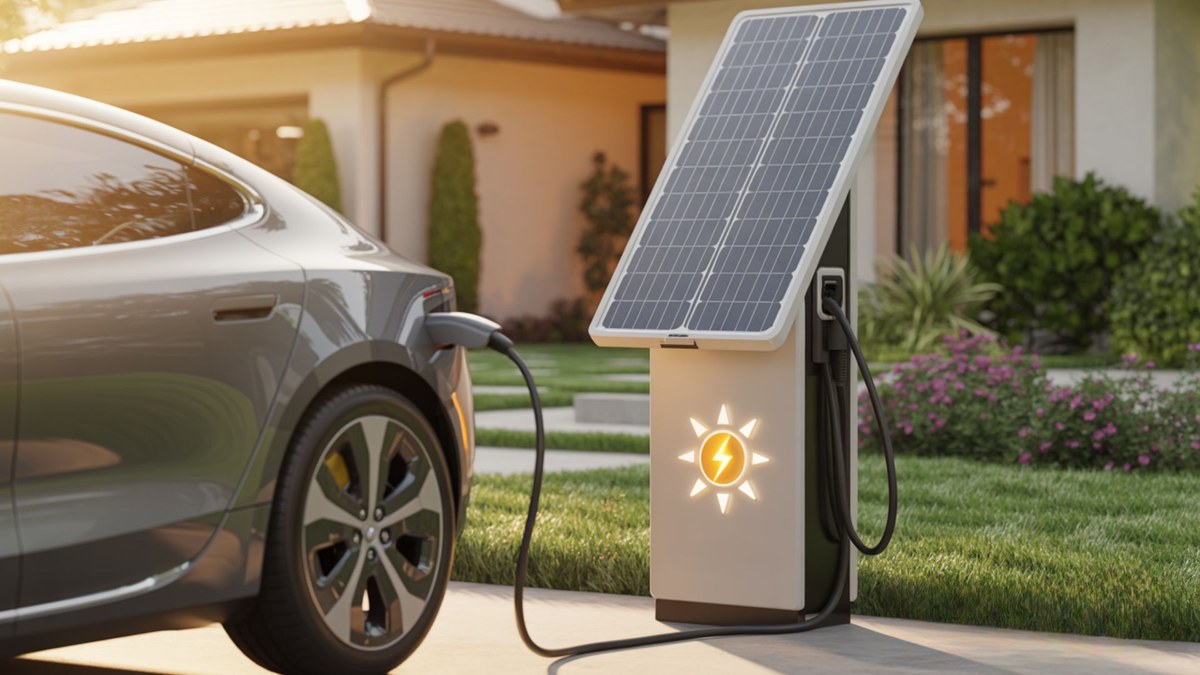
A standard Level 2 EVSE draws from the grid continuously and predictably. A solar-fed portable setup adds generation, storage, and inversion stages in front of the EVSE, which changes power consistency, cost structure, and complexity.
Connector Types and Adapter Direction: J1772, NACS, and Others
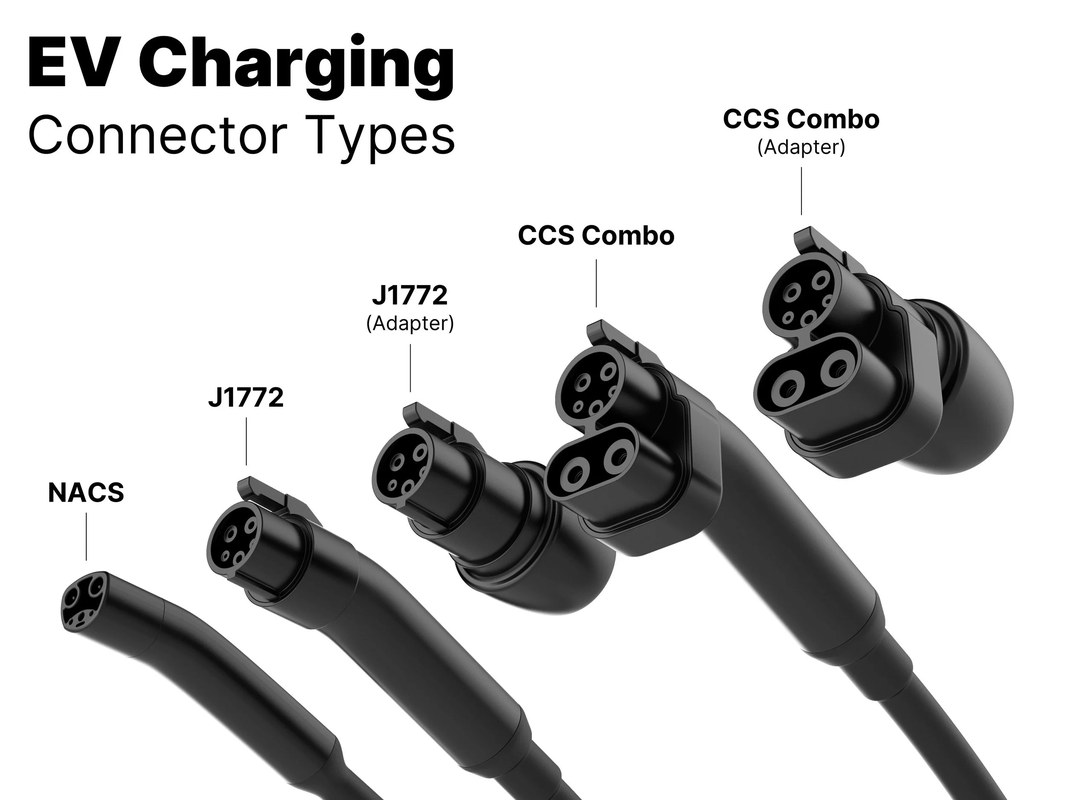
J1772 is the long-standing North American AC connector. NACS, standardized as SAE J3400, carries both AC and DC on one inlet. CCS1 uses the J1772 shape for AC and adds two DC pins for fast charging.
Adapter direction matters. An AC adapter that lets a J1772 EVSE plug into a NACS vehicle is not the same part as a DC adapter, and DC adapters must never be used on an AC-only solar setup. Physical fit alone does not prove the charging mode is supported. If you are comparing portable AC units, our breakdown of the 40 amp Level 1 and Level 2 portable EV charger category explains how dual-voltage portables handle this.
Vehicle Onboard Charger Limits and EVSE Amperage/kW
The EVSE can only offer current; the car decides how much to accept. A portable solar setup running through a 120 V outlet is typically limited to a Level 1 rate, and a 240 V inverter output may cap out well below what a modern EV can accept. If you are weighing whether a mid-tier AC rate is worth it, our analysis of whether 40 amps is enough for Level 2 EV charging walks through the onboard-charger ceiling.
Plug-In vs. Hardwired and Circuit/Panel Implications
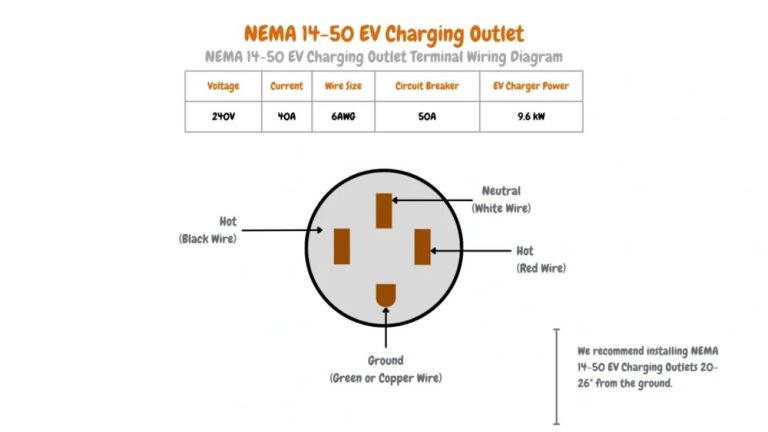
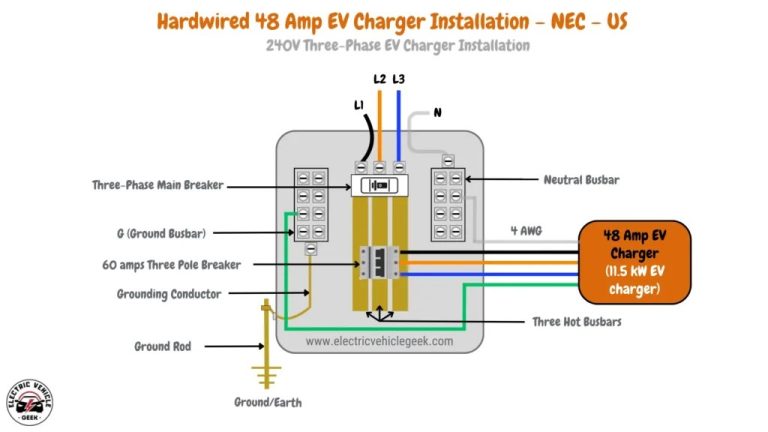
Most solar kits feed a receptacle, so the EVSE remains plug-in and movable. If the inverter output is 240 V, the receptacle, breaker, and conductor sizing still have to match the equipment instructions and local rules — the fact that the power came from panels does not exempt the AC side from electrical requirements. For a sense of how circuit sizing scales with current, see our guide on whether a 48 amp EV charger needs a 60 amp circuit.
Cable Length, Weather Suitability, and Smart Features
Portable EVSE cables are usually shorter than wall-mounted units, which matters when the panels sit in the sun and the car sits in shade. Weather suitability is a separate question for the panels, the inverter enclosure, and the EVSE — each has its own rating and storage guidance. Smart features such as scheduling or app control depend on the EVSE having power and connectivity, which an off-grid setup may not provide around the clock.
How Much Can You Actually Charge? Real-World Power and Range Math
Nameplate solar wattage is a laboratory rating. Real arrays in real conditions typically deliver less, and every conversion stage takes another bite.
Solar Panel Output, Charging Losses, and kWh Delivered
Expect panel output below the label in heat, at poor angles, or under partial shade. Add charge-controller and inverter losses, then add AC charging losses inside the vehicle. If energy passes through a battery bank and back out through the inverter, round-trip storage losses apply as well.
Mi/kWh and Wh/mi: Estimating Range Added per Hour
Range added equals kWh delivered multiplied by your vehicle’s efficiency in miles per kWh. A car that returns 3.5 mi/kWh gains about 3.5 miles for every usable kWh that reaches the pack. Divide that by the hours of charging to get miles per hour.
Speed, Weather, HVAC, Elevation, Payload, Tires, and Battery Temperature
Highway speed, cold weather, cabin heating, elevation gain, a loaded vehicle, underinflated tires, and a cold battery all reduce miles per kWh. That means the same solar input adds fewer miles in January than in May. Treat any single “miles per hour” number as an estimate tied to specific assumptions.
Adapters, Connectors, and Compatibility: What You Need to Know
Compatibility has two halves: whether the connector physically mates, and whether the vehicle and equipment support that charging mode at that power level.
Source and Destination Connectors: AC vs. DC Mode
On a solar setup, the “source” is an AC receptacle or inverter output, and the “destination” is the car’s AC inlet. Any adapter in that chain must be an AC-rated adapter. DC adapters, such as CCS1-to-NACS units, serve a completely different purpose and are not interchangeable.
Vehicle and Network Restrictions, Power Limits, Thermal/Safety
Some vehicles impose their own limits on AC current, and some will not begin a session if the EVSE’s pilot signal is out of spec. Adapters and connectors can also heat up at sustained high current, which is why listed, correctly rated hardware matters more than convenience.
Firmware and Vendor Requirements for Adapters
Adapter support can depend on vehicle software versions and vendor documentation. Check the adapter manufacturer’s compatibility list and your vehicle’s current guidance rather than assuming a fit that worked on another model applies to yours.
Battery Health and Charging Behavior with Portable Solar
Slow AC charging is generally gentle on a pack, but that does not mean battery rules can be stated universally.
Manufacturer Guidance vs. General Patterns
Follow your automaker’s owner’s manual and charging recommendations first. Chemistry, pack size, and thermal management differ enough between models that generic advice about charge targets can be wrong for your vehicle.
Temperature, State of Charge, and Charging Power
Very cold or very hot packs accept less power, and many vehicles precondition or limit charging accordingly. A solar setup that delivers only a small trickle may not be enough to warm or condition the pack, so cold-weather sessions can deliver less than the raw math suggests.
DC Fast Charging Context and Convenience Trade-Offs
Solar-fed AC charging is slow by design. It suits topping up an already-charged car or adding a small buffer, not replacing a road-trip fast charge. Owners who need speed should plan around DC fast charging and treat solar as a supplement.
Cost Breakdown: What Portable Solar EV Charging Really Costs
Solar charging is not free — it shifts cost from electricity to equipment. Both sides belong in the comparison.
Electricity Rate, kWh Delivered, and Time-of-Use Pricing
If you already own the panels, the marginal cost of the energy is effectively zero, but you gave up the value of that energy elsewhere. If you would otherwise charge on a time-of-use plan, compare against your off-peak rate, not your average rate, and remember that taxes and fees often ride on top of the published rate.
Equipment and Installation Costs (or Lack Thereof)
A portable kit avoids trenching, conduit, and a dedicated wall circuit, which is a genuine advantage for renters or temporary sites. But you still pay for panels, mounting, battery, inverter, and a portable EVSE, and battery replacement is a recurring cost over the system’s life.
State assumptions; rates, taxes, time-of-use pricing, and losses vary. Verify current rates with your utility.
Formula and Assumptions for Your Own Estimate
The workable formula is: daily miles ÷ mi/kWh = kWh needed at the pack. Then divide by charging efficiency to get kWh that must leave the inverter, and divide that by your realistic daily solar harvest. The result tells you how many days of sun a full top-up takes.
Electrical Safety, Code, and Permits: What the Manual and Local Rules Require
Solar does not make the AC side safer or exempt. The inverter output still feeds ordinary household voltage into an EVSE.
Circuit and Panel Considerations for Plug-In vs. Hardwired
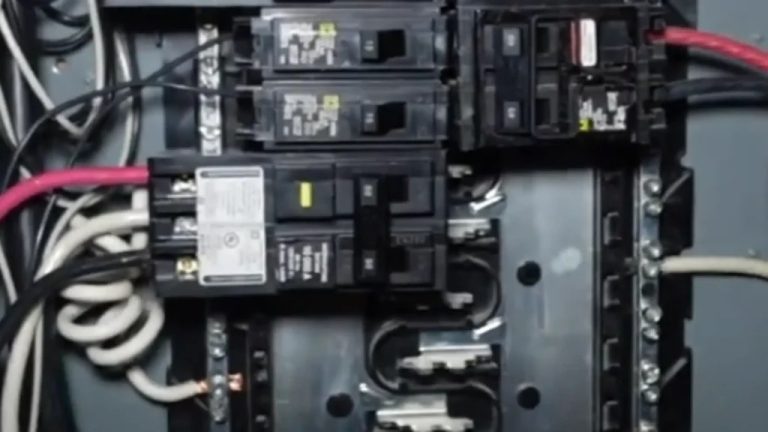
If the solar kit’s inverter feeds a receptacle, that receptacle and its overcurrent protection must match the equipment instructions. If you hardwire anything, panel capacity, conductor sizing, grounding, and GFCI requirements apply as they would to any other AC circuit.
Weather Suitability and Outdoor Use
Verify the enclosure rating, operating-temperature range, and connector storage guidance for every component — panels, inverter, and EVSE. A weather-resistant EVSE does not make an indoor-rated inverter safe to leave in the rain.
Warranty, Support, and Installation Requirements
Confirm the US warranty term, whether self-installation voids coverage, and whether the manufacturer requires a licensed installer for any part of the system. Verify any safety listing mark on the actual product label rather than relying on marketing copy.
Who Should Buy a Portable Solar EV Charger in 2026?
This category solves a narrow problem well and a common problem poorly.
- Off-grid or remote sites with no practical grid connection
- Emergency backup and low-mileage top-ups
- Renters or temporary locations where permanent circuits are not possible
- Daily commuting that needs a full pack overnight
- Anyone expecting DC fast charging speed
- Households where a standard Level 2 circuit is already available
Best Fit: Off-Grid, Emergency, and Low-Mileage Scenarios
If your car sits for days between short trips and you have sun exposure plus space for panels, a solar-fed portable setup can genuinely offset some grid energy. It is also a reasonable resilience tool when paired with realistic expectations about how little it adds per day.
Poor Fit: Daily Commuting and High-Power Needs
For a 40-mile daily commute, a grid-fed Level 2 circuit will almost always be cheaper, faster, and simpler than a solar kit of comparable capability. Solar shines where the grid is absent or impractical, not where it is merely inconvenient.
Evidence Limits and What to Verify Before Buying
Published wattage, “miles per hour” claims, and daily harvest estimates come from specific test conditions that rarely match your driveway. Before buying, verify the actual panel rating method, the inverter’s continuous AC output, the EVSE’s listing and warranty, and the connector type on both ends. Confirm your vehicle’s AC inlet and onboard charger limit, and confirm that any adapter you plan to use is rated for AC use in that direction.
- Best for: Off-grid sites, emergency backup, and low-mileage vehicles with reliable sun exposure.
- Think twice if: You need dependable daily range or anything resembling DC fast charging speed.
- Next step: Calculate your daily kWh need, then compare it against a realistic daily solar harvest before you buy any hardware.
Frequently Asked Questions
Yes, but slowly. The system produces AC power that feeds a portable EVSE, and your car’s onboard charger converts it to DC. In practice, daily output from a portable array is usually a few kWh, which adds a limited number of miles rather than filling a pack.
Consumer solar kits use AC charging. The inverter produces 120 V or 240 V AC, and the EVSE delivers that to the vehicle’s AC inlet. DC fast charging requires high-voltage DC equipment and communication protocols that portable solar kits do not provide.
Only if the EVSE connector does not match your vehicle inlet. A J1772 EVSE on a NACS vehicle needs an AC-rated adapter, and direction matters. Never use a DC adapter on an AC-only solar setup, and verify adapter compatibility with both the vehicle and adapter manufacturer.
It depends on the inverter’s usable output, the EVSE’s current setting, your vehicle’s onboard charger limit, and your car’s efficiency in miles per kWh. A Level 1 rate typically adds only a few miles per hour, and losses, temperature, and HVAC use reduce that further.
Not usually, if you already have grid power available. You avoid electricity rates but pay for panels, inverter, battery, and EVSE, plus eventual battery replacement. Solar becomes cost-competitive mainly where a grid connection is impractical or where equipment is already owned.
Confirm the panel rating method, the inverter’s continuous AC output, the EVSE’s safety listing, warranty, and connector type, and your vehicle’s AC inlet and onboard charger limit. Also check enclosure ratings for outdoor use and whether the manufacturer requires professional installation.