Emergency Portable EV Charger: How They Work and When to Use
An emergency portable EV charger is a travel EVSE that feeds AC power from a wall outlet or 240-volt receptacle into your car’s onboard charger — useful for top-ups, not fast charging. The main check is your vehicle’s inlet type, its maximum AC acceptance rate, and whether the circuit you plan to use is rated for continuous charging.
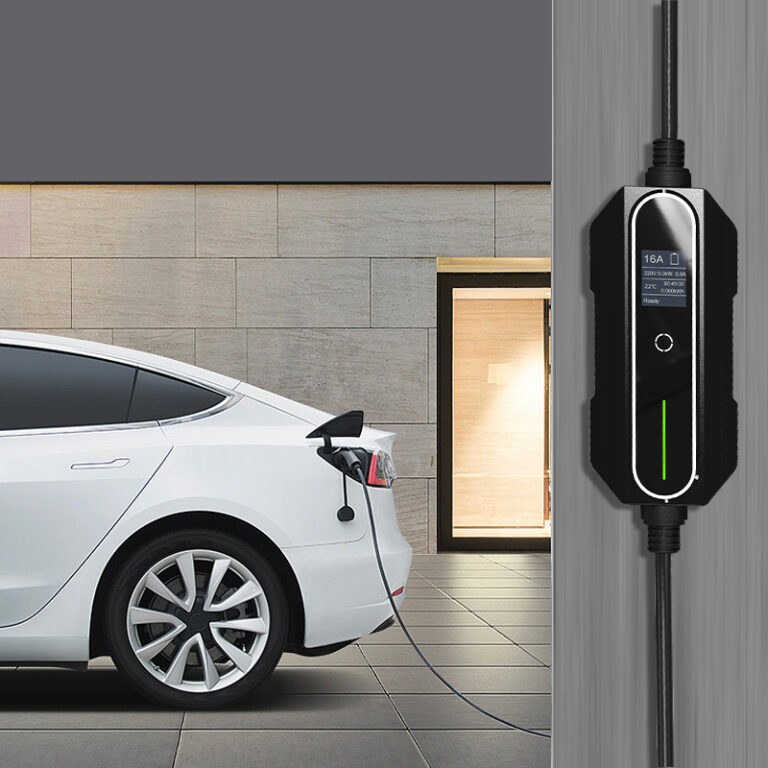
An emergency portable EV charger is a plug-in EVSE you carry in the vehicle so a low battery does not automatically mean a tow truck. It works by feeding AC power from an ordinary outlet or a 240-volt receptacle into your car’s onboard charger — which means its real-world speed depends as much on your vehicle and the circuit as on the box itself.
- Compatibility: Match the EVSE connector to your vehicle inlet (J1772 or NACS) and confirm AC-only.
- Performance: Your onboard charger and the circuit — not the box — usually set the.
- Safety: Continuous loads are generally limited to 80% of circuit rating; verify the equipment manual.
- Cost: A single top-up is typically a few dollars; the real spend is the unit.
What Counts as an Emergency Portable EV Charger in 2026
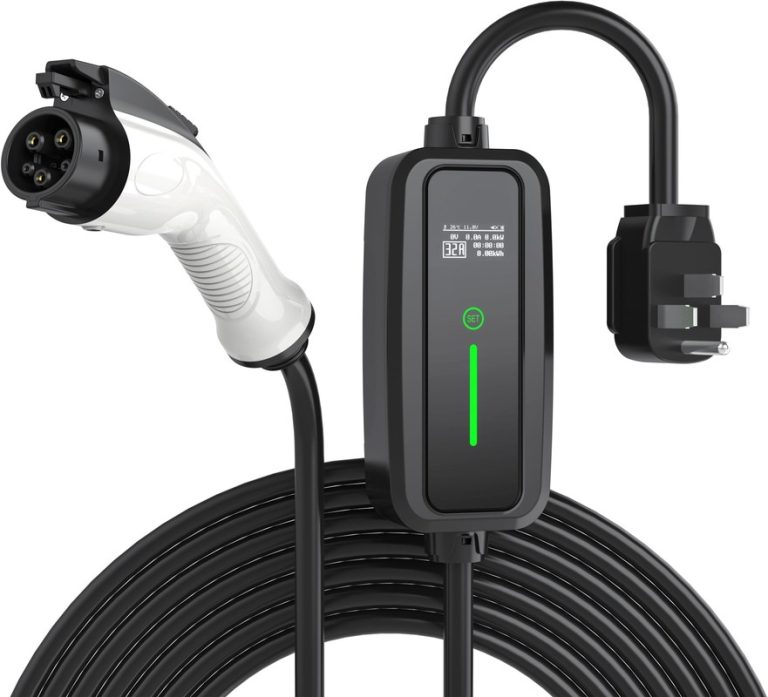
The term gets used loosely, so it helps to be precise. In this article, an emergency portable EV charger means a portable EVSE: a cable-and-control-box assembly that plugs into a wall outlet or receptacle and supplies AC power to the vehicle. The actual conversion from AC to DC happens inside the car, in the onboard charger.
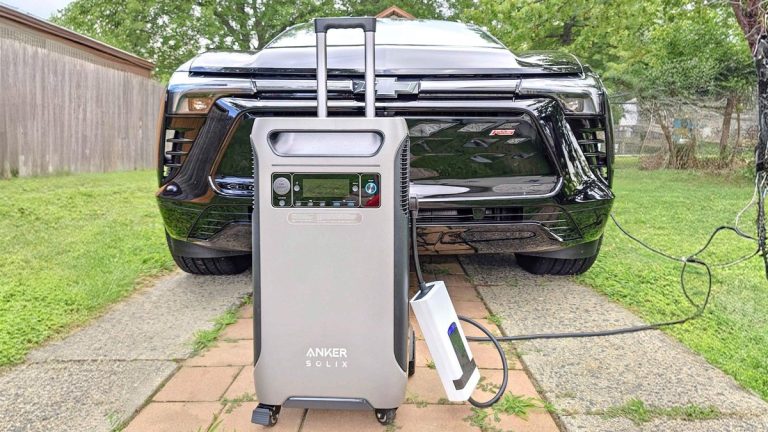
That distinction matters because portable units are not fast chargers. They are backup and top-up tools. A separate category — battery-integrated roadside “rescue” units that store energy and discharge it into the car — exists, but those are a different product class with their own specifications, and any claim about them should be checked against the manufacturer’s documentation.
Portable EVSE vs. Fixed Home Charger: The Practical Difference
A fixed home charger is typically hardwired or plugged into a dedicated 240-volt circuit, mounted on a wall, and sized to your panel. A portable unit is designed to travel: shorter cable, lighter enclosure, and a plug that matches a receptacle you may or may not find where you park.
The trade-off is not quality — it is predictability. A fixed unit gives you a known circuit and a known amperage every night. A portable unit gives you flexibility and a set of unknowns you have to solve at the moment you need it.
Four Situations Where a Portable Charger Beats Waiting for a Tow Truck
Arriving at a destination with no charging. A relative’s driveway, a rental cabin, or a job site with a working outlet can turn a stranded night into a slow but usable top-up.
Unexpected range shortfall. Cold snaps, a headwind, or a closed charging station can leave you short of the next reliable DC fast charger. A few hours on a portable unit may be enough to close the gap.
A failed home charger. If your wall unit faults, a portable EVSE on a compatible circuit can keep the car usable until the repair happens.
Fleet or shared-vehicle gaps. A vehicle returned below the needed state of charge can be recovered without moving it to a charging site.
How a Portable EV Charger Delivers Power: Connector, Onboard Charger, and Amperage Ceilings
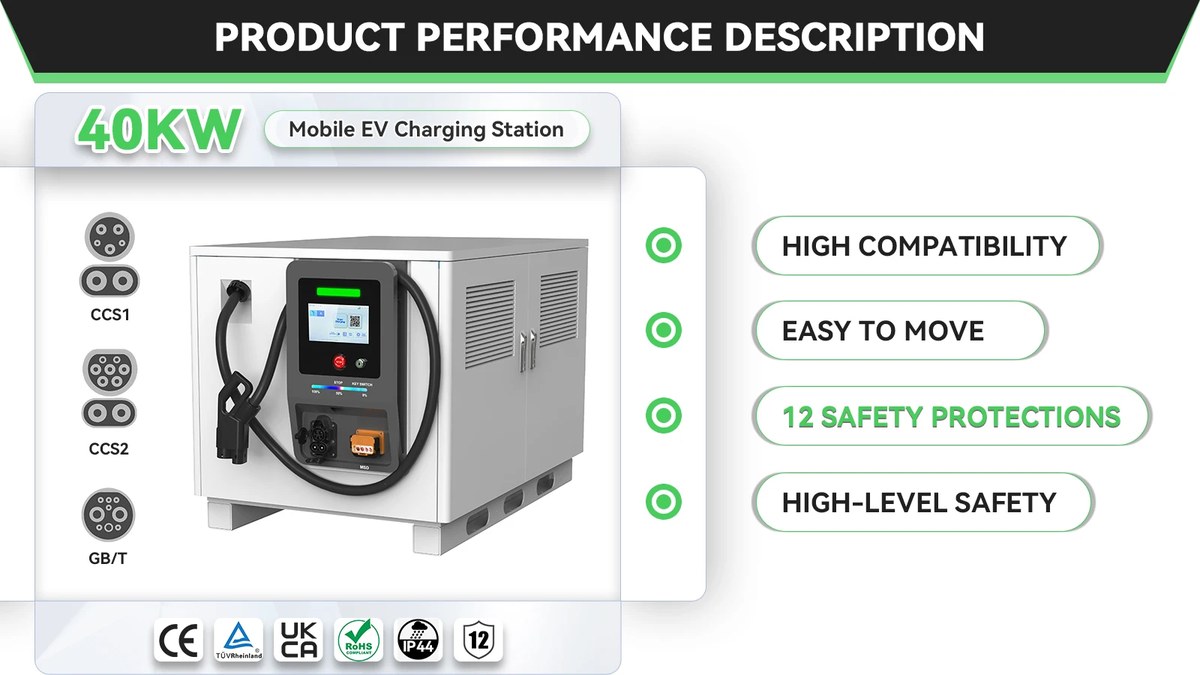
Three separate limits govern how fast energy actually reaches the battery: what the connector allows, what the onboard charger accepts, and what the circuit can safely supply. The lowest of the three wins.
Connector Standards: J1772, NACS, and What Your Vehicle Actually Accepts
AC Level 1 and Level 2 charging in the United States uses the J1772 connector or the NACS connector (standardized as SAE J3400). Many newer vehicles use NACS inlets; many older and mid-generation vehicles use J1772. Adapters exist in both directions for AC charging, but the adapter must be rated for the direction of power flow and for AC service.
CCS1 is a DC fast-charging connector. A CCS1 plug does not deliver AC Level 2 charging, and a J1772 or NACS AC adapter does not create DC fast charging capability.
The Vehicle’s Onboard Charger Is the Real Bottleneck, Not the Box
Every EV has a maximum AC acceptance rate, commonly expressed in kW. Some vehicles accept roughly 7 kW to 11 kW on AC; others are lower. If your car caps at 7.2 kW, a 48-amp portable unit cannot push more than that regardless of what the box advertises.
This is why two owners with the same portable charger can report very different results. The EVSE sets the ceiling; the car sets the actual draw.
Reading the Spec Sheet: EVSE Amps, kW, and the 80% Continuous-Load Rule
EV charging is a continuous load, and long-standing National Electrical Code practice limits continuous loads to 80% of the circuit’s rating. A 40-amp EVSE setting therefore generally pairs with a 50-amp circuit, and a 48-amp setting with a 60-amp circuit. Local code adoption and the equipment instructions govern the specifics, so verify both.
Portable units often let you dial down the amperage. That is a safety feature, not a compromise — it lets the unit match a circuit it would otherwise overload.
Level 1, Level 2, Plug-In vs. Hardwired: Matching the Unit to the Circuit
120-Volt vs. 240-Volt Portable Units and Realistic Charge Rates
Level 1 uses a standard 120-volt household outlet. Typical portable Level 1 EVSE draws around 12 amps, which works out to roughly 1.4 kW. In practice that often adds only a few miles of range per hour, and cold weather or HVAC use can reduce the net gain further.
Level 2 uses 240 volts. Plug-in portable Level 2 units commonly range from about 16 amps up to 40 amps, which is roughly 3.8 kW to 9.6 kW of potential output — but only if the circuit and the vehicle both allow it. For a deeper look at how one popular configuration behaves, see our breakdown of the 40 amp Level 1 and Level 2 portable EV charger.
Panel Capacity, Dedicated Circuits, and Why the Manual Plus Local Code Decide
A portable Level 2 unit needs a 240-volt receptacle that can carry the load continuously. That usually means a dedicated circuit, and sometimes a panel load calculation to confirm the service can handle the addition. If your panel is tight, the answer is not a smaller breaker — it is a qualified electrician’s assessment.
Circuit sizing questions come up constantly with higher-amperage equipment. Our explainer on whether a 48 amp EV charger needs a 60 amp circuit walks through how the 80% rule shapes that pairing.
Cable Length, NEMA Enclosure Ratings, and Weather Suitability
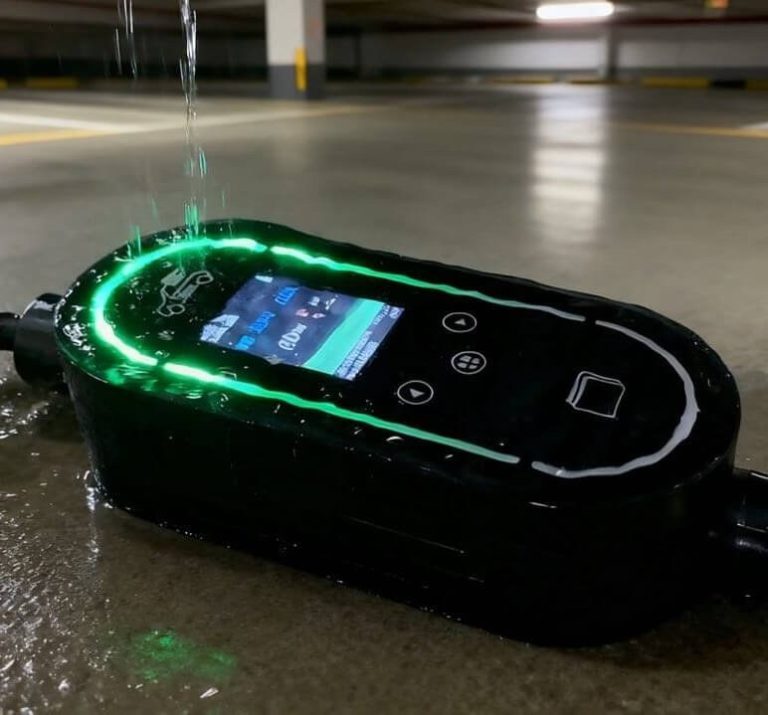
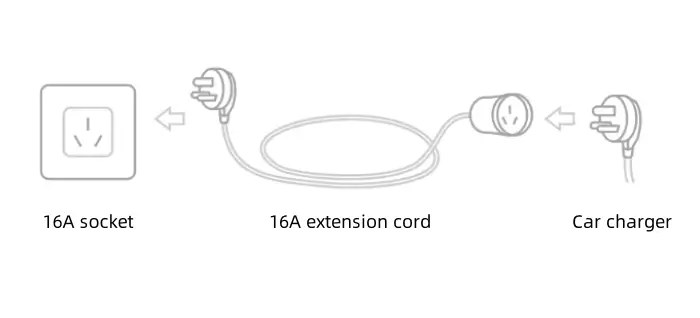
Cable length determines whether you can reach the car without an extension cord — and extension cords should not be used for EV charging unless the manufacturer explicitly permits it. Enclosure ratings (the NEMA type) describe resistance to dust and water, not permission to charge in any condition.
Check the manufacturer’s stated operating temperature range, connector storage guidance, and any restriction on charging during precipitation.
Adapters and Connector Conversion: Direction, Mode, and Hard Limits
Source Connector, Destination Connector, and Which Way Power Flows
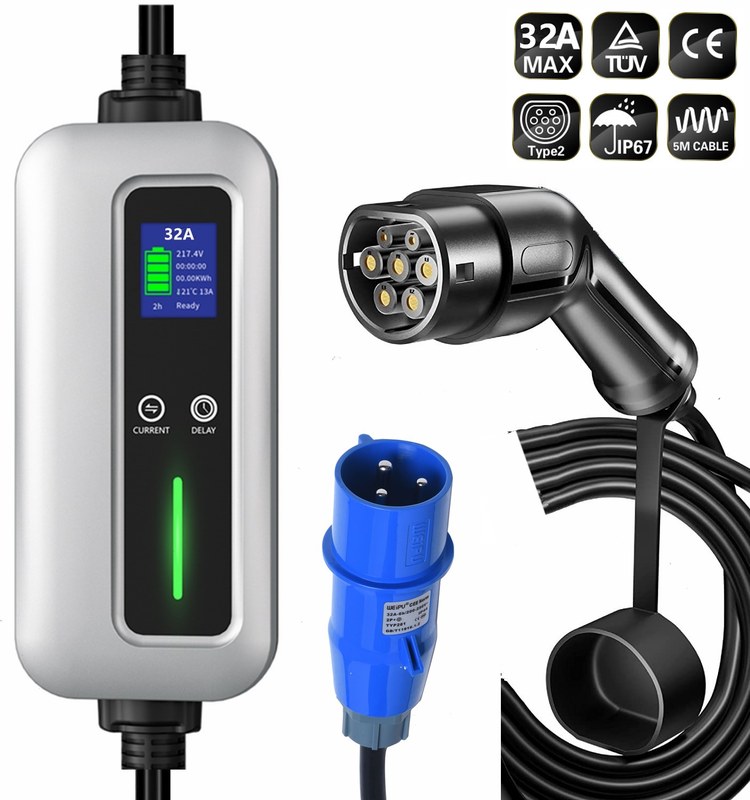
Adapters are directional. A J1772-to-NACS adapter lets a NACS vehicle draw AC power from a J1772 EVSE. A NACS-to-J1772 adapter does the reverse. Using one in the wrong direction is not a minor inconvenience — it can be a safety and equipment risk.
Before buying, identify the source connector (the charger or receptacle side) and the destination connector (your vehicle inlet), then confirm the adapter is rated for that exact pairing.
AC Adapters vs. DC Adapters: Different Category, Different Thermal Risks
AC adapters carry alternating current to the onboard charger. DC adapters carry high-voltage direct current straight to the battery and involve substantially higher thermal and electrical stress. They are different products with different certification requirements.
An AC adapter will never enable DC fast charging, and a DC adapter should never be plugged into an AC EVSE.
Vehicle, Charging-Network, and Firmware Restrictions That Can Block a Charge
Even with correct hardware, a charge can fail. Vehicles may require a firmware update to recognize a particular adapter. Charging networks may restrict which adapters are authorized on their equipment. Some vehicles limit charging rate when an adapter is detected.
Verify compatibility with the vehicle manufacturer and, where relevant, the charging network — not just the adapter seller.
What Emergency Charging Costs: Electricity Rate, Losses, and Time-of-Use Math
Emergency charging is rarely expensive in absolute terms. A single top-up is usually a few dollars. The bigger cost question is what you paid for the equipment and whether you already have a usable circuit.
The Working Formula: kWh Delivered × Rate ÷ Charging Efficiency
The math is straightforward: energy delivered to the battery, multiplied by your electricity rate, divided by charging efficiency. If you add 10 kWh at $0.16 per kWh with an assumed 88% AC charging efficiency, you draw about 11.4 kWh from the grid and pay roughly $1.82.
Time-of-use plans change the rate by hour, and taxes and fees may sit on top of the published rate. Check your current utility tariff rather than relying on a national average.
Illustrative only. Rates, taxes, time-of-use pricing, demand charges, and losses vary by utility, vehicle, and conditions.
Equipment, Adapter, and Installation Costs to Budget For
Budget for four line items: the portable EVSE itself, any required adapter, a 240-volt receptacle or circuit if you do not already have one, and an electrician’s labor where applicable. Adapters are usually the smallest cost and the most common source of compatibility problems, so treat them as a specification decision rather than an accessory.
Battery Health During Emergency Charging: Manufacturer Guidance vs. General Patterns
Portable AC charging is generally the gentlest way to add energy. It is slow, it runs at low power, and it rarely stresses the pack thermally. That said, battery guidance is vehicle-specific, and general rules should not override your manufacturer’s instructions.
Temperature, State of Charge, and Charging Power
Charging a cold pack is slower and, in some vehicles, restricted until the battery warms. Charging a very hot pack may also be limited. State of charge affects acceptance rate too: the last portion of a charge typically tapers.
Many manufacturers publish guidance on daily charge targets and preconditioning. Follow the manual for your specific model rather than applying a universal percentage rule.
Where DC Fast Charging Fits, and Where a Portable Unit Should Not
DC fast charging is the right tool when you need range quickly and a compatible station is available. A portable AC unit is the right tool when you have hours, not minutes, and a safe circuit.
A portable unit should not be used to attempt DC-level charging, should not be run through an extension cord unless explicitly permitted, and should not be plugged into a receptacle of unknown condition or rating.
Range and Efficiency Reality Check: What an Hour of Emergency Charging Really Adds
Manufacturers advertise charging in miles per hour, but those figures assume specific conditions. Your actual gain depends on the vehicle’s efficiency and on how much of the delivered energy the car converts into motion.
mi/kWh, Speed, Weather, HVAC, Elevation, Payload, and Tires
A vehicle that returns 3.0 mi/kWh in mild weather might return 2.2 mi/kWh in cold conditions with the cabin heater running. Highway speed, elevation change, payload, and tire condition all shift the number. So the same hour of charging produces different range in different months.
Charging speed also varies. Our look at 48 amp EV charger speed explains how circuit capacity, EVSE setting, and onboard-charger limits combine.
Charging Losses: Rated Range vs. Delivered Range
Not all the energy you pay for reaches the battery. AC charging typically loses a meaningful percentage to conversion and overhead, and Level 1 tends to lose more than Level 2 because the fixed overhead is spread across a smaller total. The result is that “miles per hour” of charging is always an estimate, not a guarantee.
Buying an Emergency Portable EV Charger: Side-by-Side Criteria and Who Each Option Fits
Compare portable units on the same criteria rather than on peak numbers. Peak output is the least useful single figure, because the vehicle and circuit usually cap it first.
Comparing on the Same Criteria: Power, Connectors, Ratings, Smart Features, Warranty
| Criterion | What to verify | Why it matters |
|---|---|---|
| Connector | J1772 or NACS, matching your inlet | Determines whether it plugs in at all |
| Adjustable amperage | Range of selectable current settings | Lets the unit match different circuits safely |
| Voltage support | 120 V only, or 120 V and 240 V | Sets the realistic charge rate |
| Enclosure rating | Manufacturer-stated NEMA type and temperature range | Governs outdoor and cold-weather use |
| Safety listing | Verified NRTL mark from the certification record | Independent evaluation, not marketing language |
| Cable length | Stated length and connector storage | Reach without extension cords |
| Warranty and support | US warranty term and contact channel | Matters when a unit fails mid-trip |
If you are shopping primarily for a 240-volt plug-in unit, our roundup of the best 40 amp Level 2 EV charger options covers how these criteria play out in practice.
Smart Features, Warranty, and Support: What Is Worth Paying For
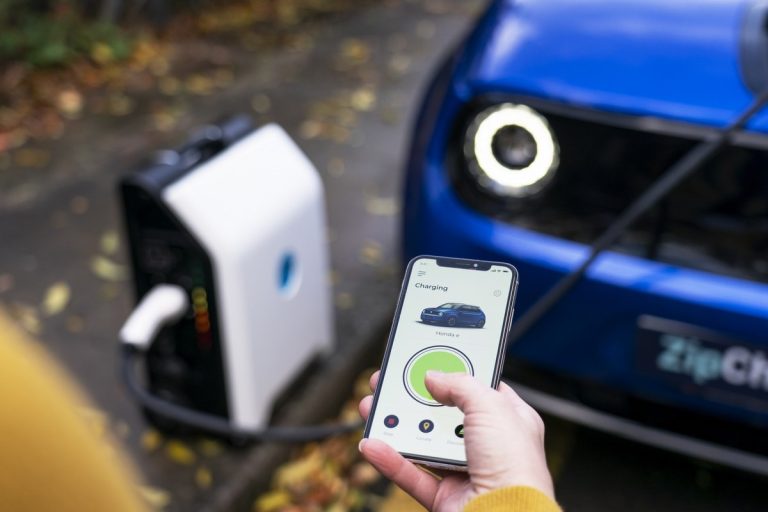
Smart features — app control, scheduling, energy monitoring — are genuinely useful for a fixed home charger. For an emergency unit, they are secondary. Ask what happens if the cloud service is unavailable: a charger that cannot start a session without an app is a poor emergency tool.
Warranty and support matter more than connectivity. Check the US warranty term, whether the company has a US support channel, and whether replacement parts or cables are available.
Storage, Pre-Trip Testing, and Long-Term Reliability Habits
A portable EVSE stored in a hot trunk, coiled tightly, or left with a wet connector is a portable EVSE that may not work when you need it. Store it per the manufacturer’s instructions, keep the connector clean and dry, and inspect the cable for damage periodically.
Test the unit at home before relying on it on a trip — plug it in, confirm it starts a session, and confirm your vehicle accepts it. That check takes minutes and prevents a very long night.
- Confirm your vehicle inlet: J1772 or NACS
- Check your vehicle’s maximum AC charging capability
- Verify the EVSE’s selectable amperage range
- Confirm the receptacle type you will actually have access to
- Verify the safety listing from the certification record
- Check warranty term, support channel, and app dependency
- Budget for adapters, a 240 V circuit, and installation if needed
- Best for: Owners who regularly park somewhere with a usable outlet and want a low-power safety net rather than a fast charge.
- Think twice if: You expect DC-fast-charging speed, or you have no safe 240 V circuit and no tolerance for Level 1’s slow pace.
- Next step: Confirm your vehicle’s inlet type and maximum AC acceptance rate, then match the EVSE to a circuit you can actually and safely use.
Frequently Asked Questions
It is a portable EVSE — a travel cable and control box that plugs into a 120-volt outlet or a 240-volt receptacle and supplies AC power to your vehicle’s onboard charger. It is not a DC fast charger and not a battery pack, so it adds range slowly rather than quickly.
It depends on the circuit, the EVSE setting, your vehicle’s onboard charger limit, and your vehicle’s efficiency. Level 1 on a 120-volt outlet often adds only a few miles per hour, while a 240-volt portable unit can add substantially more. Treat any published miles-per-hour figure as an estimate, since temperature, speed, and HVAC use change the result.
Only if the manufacturer explicitly permits it. EV charging is a continuous load, and ordinary extension cords are generally not rated for sustained high current. Using one can cause overheating at the plug and receptacle. If you cannot reach the outlet, use a longer EVSE cable or a different circuit.
Adapters are directional and mode-specific. A J1772-to-NACS adapter lets a NACS vehicle draw AC power from a J1772 EVSE; a NACS-to-J1772 adapter does the reverse. Confirm the adapter is rated for AC service and for the direction of power flow, and check whether your vehicle manufacturer or the charging network imposes restrictions.
Portable AC charging runs at relatively low power and is generally considered gentle on the pack, but battery guidance is vehicle-specific. Follow your manufacturer’s documented recommendations regarding charge targets, temperature, and preconditioning rather than applying a universal rule.
Confirm your vehicle inlet type, your vehicle’s maximum AC acceptance rate, the EVSE’s selectable amperage range, and the receptacle you expect to use. Test the unit at home first to confirm your vehicle accepts it and that a session starts normally, and verify the unit’s safety listing and warranty terms.