Does a 48 Amp EV Charger Need a 60 Amp Circuit?
does a 48 amp ev charger need a 60 amp circuit is easiest to evaluate by checking compatibility, charging limits, installation requirements, safety, and total ownership cost.
does a 48 amp ev charger need a 60 amp circuit? In most U.S. home installations, the practical answer is yes: a 48 amp Level 2 EVSE is typically treated as a continuous load that needs a 60 amp branch circuit, but the final answer still depends on the charger manual, the vehicle’s AC charging limit, and your local electrical rules.
- Compatibility: Confirm vehicle, connector, charging mode, and EVSE requirements.
- Performance: Check the vehicle and EVSE limits before assuming higher amperage means faster charging.
- Safety: Follow manufacturer instructions and applicable electrical requirements.
- Cost: Include equipment, installation, electricity, adapters, and any ongoing service costs.
Does a 48 Amp EV Charger Need a 60 Amp Circuit? The Short Answer and What It Means
For many home setups, a 48 amp Level 2 charger is designed to run on a 60 amp circuit. That is the common pairing because EV charging is usually treated as a continuous load, and continuous loads are sized with headroom rather than at the exact output current.
The important distinction is this: the EVSE may deliver up to 48 amps, but the circuit, breaker, wiring, receptacle or hardwire method, and installation instructions all have to support that use. If any one of those pieces is undersized, the answer changes.
If you want the wattage math behind that current, see how many kW a 48 amp Level 2 EV charger uses.
How 48 Amp EV Charging Works: EVSE Amperage, Power Output, and Onboard Charger Limits

A 48 amp EVSE is a Level 2 AC charging device. It supplies alternating current to the vehicle, and the vehicle’s onboard charger converts that AC to DC for the battery. That means the EVSE rating is not the whole story.
Real charging speed depends on three separate limits: the EVSE output, the circuit and installation rating, and the vehicle’s onboard charger maximum. A 48 amp EVSE can only charge as fast as the vehicle accepts AC power.
Why a 48 Amp EVSE Delivers About 11.5 kW on a 240V Circuit
At 240 volts, 48 amps works out to about 11.5 kW before losses. In real homes, voltage can vary, and charging losses reduce the energy that actually reaches the battery, so the delivered power is an estimate rather than a fixed promise.
Use verified values and distinguish EVSE setting from circuit capacity and vehicle limits.
How Your Vehicle’s Onboard Charger Can Cap Real-World Charging Speed
If your EV accepts only 32 amps or 40 amps of AC charging, a 48 amp EVSE will not make it charge faster. The car will simply draw up to its own limit. That is why a high-output EVSE can be useful for future vehicles, but not always for the one parked in the driveway today.
For buyers comparing current options, it can help to review a broader guide like the best 48 amp Level 2 EV chargers for home charging.
Circuit, Breaker, and Code Requirements: Why the Manual and Local Permit Rules Matter
There is no single universal installation rule that covers every 48 amp charger in every U.S. jurisdiction. The equipment manual, the local authority having jurisdiction, and the adopted electrical code all matter. Treat the manufacturer’s instructions as mandatory, then confirm local permit and inspection requirements before work starts.
Continuous Load Basics and Why EV Chargers Are Treated Differently
EV charging often runs for hours, so it is usually treated as a continuous load. In practical terms, that means the branch circuit must be sized above the charger’s output instead of matching it exactly. This is why a 48 amp EVSE commonly points to a 60 amp circuit.
When a 60 Amp Circuit Is Typical for a 48 Amp Charger and When It Is Not
A 60 amp circuit is typical when the EVSE is designed for 48 amp output and the installation instructions allow that configuration. It is not appropriate if the manual calls for a different breaker size, if the circuit wiring is not rated accordingly, or if panel capacity cannot support the load.
Charging current: 48 A. Circuit / breaker: Usually 60 A when the equipment instructions specify it. Follow the equipment instructions and applicable local electrical requirements.
Why Wire Size, Panel Capacity, and Local AHJ Rules Can Change the Answer
The breaker is only one part of the installation. Wire size, conductor type, run length, ambient temperature, terminal ratings, load calculations, and panel spare capacity all affect whether a 60 amp circuit is acceptable. Your AHJ may also require a permit, inspection, or load-management review.
Plug-In vs Hardwired: Which Installation Type Fits a 48 Amp Charger Best?

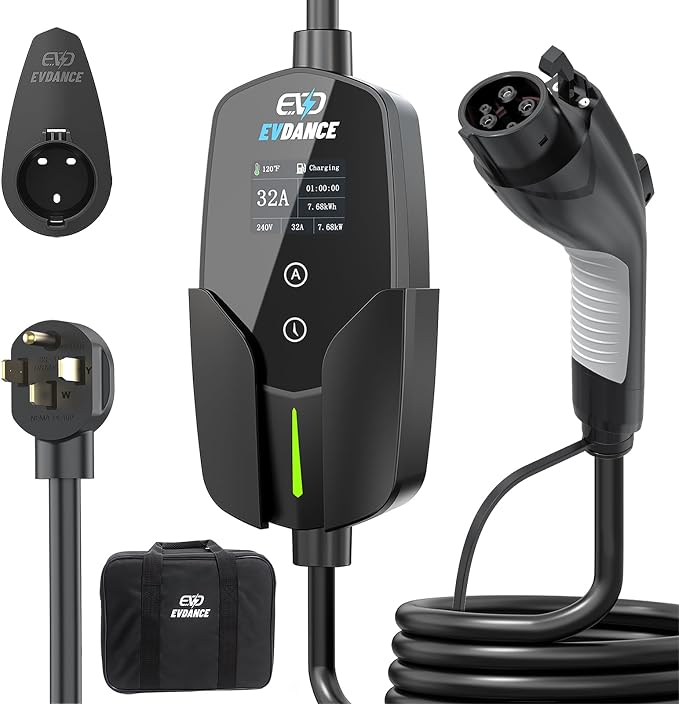
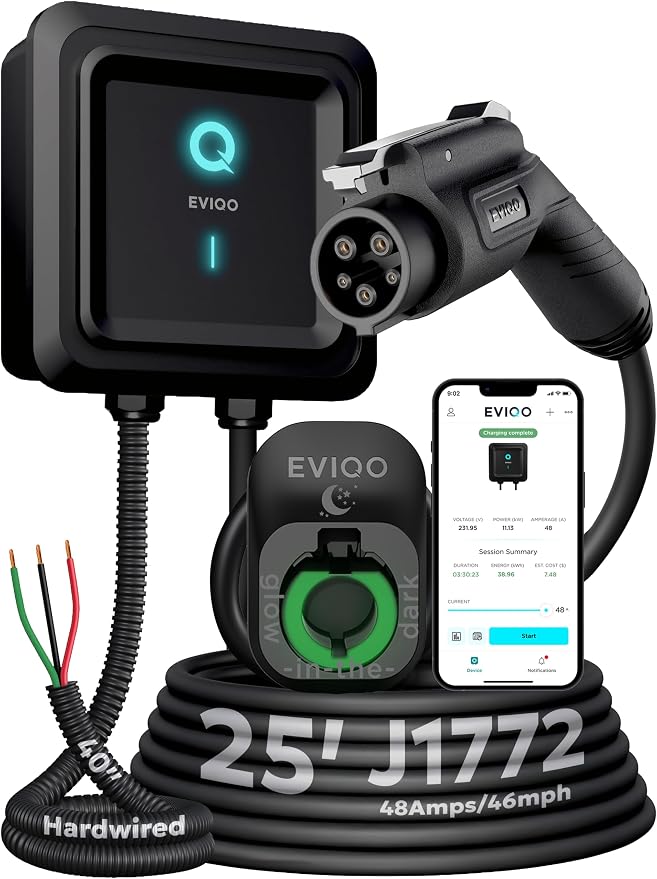
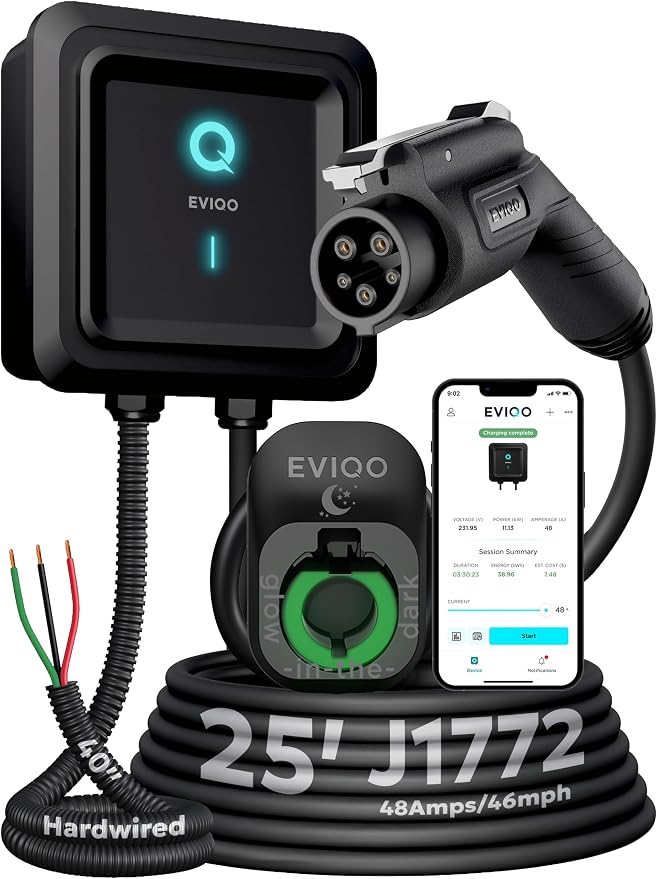
Both plug-in and hardwired 48 amp setups exist, but hardwired installations are often the more straightforward fit for higher-output home charging. The right choice depends on the charger model, the installation environment, and how much flexibility you want later.
Trade-Offs in Flexibility, Reliability, and Serviceability
A plug-in unit can be easier to replace or move, while a hardwired unit can reduce receptacle-related wear and may feel cleaner in a permanent garage installation. Some charger models are only offered in one format, so the product design may decide this for you.
Useful when the manufacturer supports a high-amperage receptacle install and you want easier removal or replacement.
Often preferred for permanent installations, especially when the manual and local rules support a fixed connection.
Weather Exposure, Receptacle Wear, and Long-Term Maintenance Considerations
Outdoor or semi-exposed installs put more stress on plugs, receptacles, and cable storage. Hardwiring can reduce one common wear point, but the enclosure, cable management, and weather rating still matter. For a portable or lower-output alternative, a 40 amp portable EV charger may fit different use cases better.
Compatibility Check: Connector Type, Vehicle Limits, and Adapter Considerations
Connector fit matters, but it does not automatically guarantee charging compatibility. For AC home charging, the vehicle inlet, the EVSE connector, and the vehicle’s AC acceptance all have to line up. Adapters can help, but only in the correct direction and mode.
J1772, NACS, and Adapter Direction for AC Charging
In U.S. home Level 2 charging, J1772 has been the common AC connector, while NACS/SAE J3400 is increasingly common on newer vehicles and equipment. If an adapter is involved, confirm whether it is vehicle-side or charger-side, and whether it supports AC charging in that direction.
Important: Physical fit alone does not prove every AC or DC charging mode is supported.
Power Limits, Thermal Safety, and Vehicle or Network Restrictions
Some adapters, vehicles, or charger firmware settings may impose power limits. Thermal buildup can also become a concern if a connector, adapter, or receptacle is not rated for the sustained current. Always verify the full chain: vehicle, adapter, EVSE, and installation.
Cost Breakdown: Electricity, Charging Losses, Time-of-Use Pricing, and Installation
The cost of 48 amp home charging has two parts: the electricity you use and the installation you pay for. Electricity cost depends on your utility rate, time-of-use pricing, taxes, fees, and charging losses. Installation cost depends on the charger, electrical work, and permit needs.
Sample Formula for Estimating Home Charging Cost in 2026
Use this simple estimate: kWh added to the battery ÷ charging efficiency × electricity rate = approximate charging cost. For example, if you add 20 kWh to the battery, assume 10% losses, and pay $0.18 per kWh, the energy cost is about $3.96 before taxes or fees.
State assumptions; rates, taxes, time-of-use pricing, and losses vary.
Equipment, Permit, and Labor Costs for 48 Amp Home Charging Setups
Equipment pricing varies widely by brand and feature set, and installation cost depends on panel distance, wire run complexity, trenching, wall mounting, and whether a new circuit is needed. If you are comparing products, check warranty support, cable length, and app requirements alongside price.
Battery Health and Charging Speed: What 48 Amps Means for Daily Use
For most EV owners, 48 amp Level 2 charging is about convenience, not battery stress. AC home charging is generally gentler than repeated DC fast charging, but battery health still depends on temperature, state of charge, chemistry, and manufacturer guidance.
Manufacturer Guidance vs General Battery Care Patterns
Some automakers suggest daily charging habits that differ by model, battery chemistry, and software settings. Rather than follow a universal rule, check the owner’s manual and the vehicle app for recommended charge limits or scheduled charging options.
Temperature, State of Charge, Chemistry, and DC Fast Charging Context
Charging near full, charging in extreme heat or cold, and frequent DC fast charging can affect battery behavior differently than routine overnight AC charging. A 48 amp home setup is often attractive because it can restore daily driving range without relying on fast chargers.
Range, Efficiency, and Convenience: Is 48 Amps the Right Home Charging Level?
Whether 48 amps is “enough” depends on your commute, your EV’s efficiency, and how much overnight time you have at home. For many households, 48 amp Level 2 charging is more than adequate, but not every driver needs that much power.
How Driving Conditions Affect Miles Added per Hour of Charging
Range added per hour is only an estimate. Cold weather, cabin preconditioning, battery temperature, elevation, tire pressure, payload, and charging losses all change the result. A vehicle that averages 3.0 mi/kWh may add very different miles per hour than one that averages 4.0 mi/kWh.
Who Benefits Most from Faster Level 2 Charging
Drivers with long commutes, multiple EVs, irregular schedules, or limited overnight charging time benefit most from 48 amp home charging. If you drive fewer miles daily or have all-night charging time, a lower-amperage EVSE may be enough and cheaper to install.
Buying Guide for 48 Amp Level 2 Chargers: Cable Length, Smart Features, and Warranty Support
If you are shopping for a 48 amp EVSE, the best choice is usually the one that fits your vehicle, your electrical setup, and your daily routine. The charger’s amperage matters, but so do cable reach, installation style, and support quality.
What to Look for in App Controls, Load Management, and Scheduling
Smart features can be useful if you want off-peak scheduling, charge reminders, or utility integration. Check whether the app is required for basic operation, whether Wi-Fi or cellular connectivity is needed, and what happens if cloud services are unavailable.
- Confirm vehicle inlet and AC/DC compatibility
- Check the vehicle’s maximum AC charging capability
- Verify EVSE amperage and electrical requirements
- Confirm cable length, mounting, and indoor/outdoor suitability
- Verify safety listing, warranty, app requirements, and support
- Include installation, adapter/accessory, and electricity costs
Durability, Outdoor Ratings, and Support Policies Worth Comparing
Look for a clearly stated safety listing from the manufacturer or certification record, a warranty that is easy to understand, and support channels that are available in the U.S. If a charger will live outdoors, verify the exact weather rating and operating limits before buying.
- Best for: U.S. EV owners who want fast, convenient overnight AC charging and have electrical capacity for a 48 amp setup.
- Think twice if: Your vehicle’s onboard charger tops out well below 48 amps, or your panel and wiring cannot support a 60 amp circuit.
- Next step: Check the charger manual, your vehicle’s maximum AC charging rate, and your electrician’s load calculation before you buy.
Does a 48 amp EV charger always require a 60 amp breaker?
Not always, but that is the common requirement for many 48 amp EVSE models. The final breaker size must match the charger manual and local code, so never assume the breaker from a different charger will work here.
Can I use a 50 amp circuit for a 48 amp charger?
Usually no, because a 48 amp charger is commonly treated as a continuous load and often needs a 60 amp circuit. A 50 amp circuit may be insufficient unless the manufacturer instructions and local authority explicitly allow a different setup.
Will a 48 amp charger charge my EV faster than a 40 amp charger?
Only if your vehicle can accept more than 40 amps of AC charging. If the onboard charger is the bottleneck, the extra EVSE output will not increase speed.
Is 48 amp Level 2 charging bad for battery health?
Generally, no. AC home charging is usually a normal daily charging method, but battery health still depends on temperature, state of charge, and the vehicle maker’s guidance.
Do I need a hardwired installation for 48 amps?
Not always, but many 48 amp EVSEs are commonly hardwired because of the current involved. If a plug-in option is allowed, the receptacle, plug, and breaker all have to be rated correctly.
What should I check before hiring an electrician for a 48 amp EV charger?
Confirm the charger’s exact amperage, breaker requirement, connector type, cable length, and whether the unit is plug-in or hardwired. Also verify panel capacity, permit needs, and any outdoor installation requirements.
Frequently Asked Questions
Check the vehicle inlet, charging mode, EVSE or adapter compatibility, electrical requirements, and the latest manufacturer instructions before buying or installing anything.
Not necessarily. Compatibility can depend on the vehicle inlet, AC or DC charging mode, onboard-charger limit, adapter direction, model year, software, and product revision.
No. Actual AC charging speed is limited by the lowest relevant limit among the circuit, EVSE setting, vehicle onboard charger, voltage, and charging conditions.
Plug-in accessories may not require electrical work, but new circuits, receptacles, hardwired EVSE, panel work, or permit-sensitive installations should follow local requirements and may need a qualified electrician.
Verify manufacturer instructions, electrical requirements, connector use, weather suitability, and any claimed safety listing or certification from a primary source.
Purchase and installation costs vary, while charging cost depends on electricity rate, energy delivered, charging losses, taxes or fees, and time-of-use plans.

9 Comments