Can You Charge an EV With a Portable Power Bank?
Yes, a large portable power station with a 120 V or 240 V AC outlet can charge an EV through a Level 1 or Level 2 EVSE, but only at low power and only if the connector and onboard charger match. A phone power bank or jump starter cannot charge an EV at all, and no portable station can perform DC fast charging.
So, can you charge an ev with a portable power bank? The short answer is yes — a large portable power station with a 120 V or 240 V AC outlet can feed a Level 1 or Level 2 EVSE and add real miles to an EV, but a pocket-sized phone power bank or a jump starter cannot. The limits are almost never about battery capacity. They are about AC output, connector path, and your vehicle’s onboard charger.
- Compatibility: You need an AC-output power station, a compatible EVSE, and a matching J1772 or.
- Performance: Expect single-digit to low-double-digit miles per hour, limited by the inverter and the vehicle’s.
- Safety: Check the station manual for EV-charging restrictions and never run fuel generators indoors or.
- Cost: Energy is cheap, but the equipment premium makes cost per mile far higher than.
Can You Charge an EV With a Portable Power Bank? The 2026 Short Answer
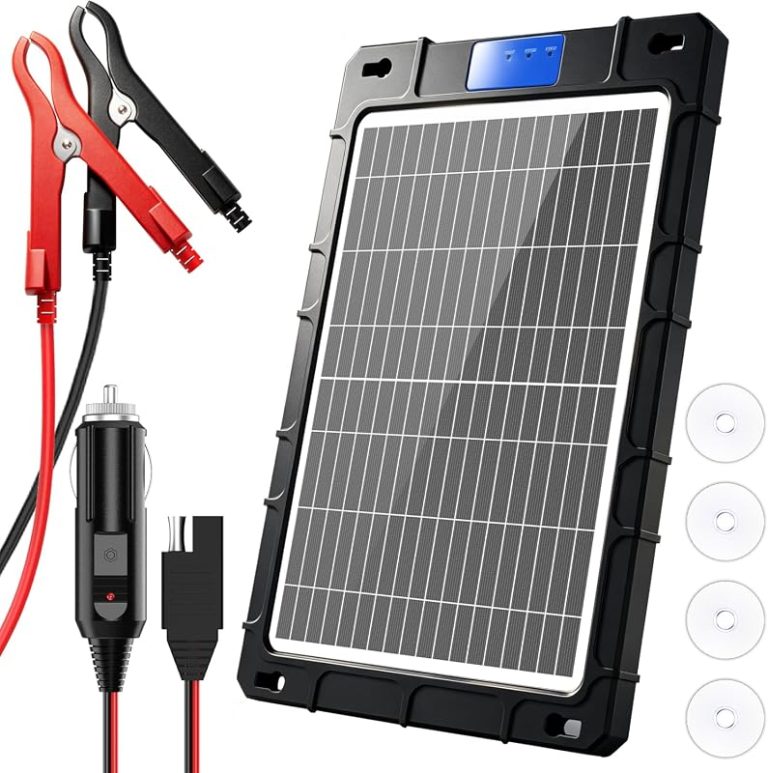
The phrase “portable power bank” covers three very different products, and only one of them is relevant to EV charging. A phone power bank stores watt-hours and outputs USB power. A jump starter delivers a brief burst of 12 V current to crank an engine or wake a low-voltage system. A portable power station stores kilowatt-hours and outputs household AC through an inverter.
Only the portable power station has any realistic path to moving an EV. Even then, the result is slow AC charging measured in single-digit or low-double-digit miles per hour, not a fast-charge session.
When a Portable Power Bank Can Add Range to an EV
A portable power station can add range when three conditions line up: the station has a continuous AC output high enough to satisfy the EVSE’s minimum draw, the EVSE and connector match the vehicle’s AC inlet, and the vehicle accepts AC charging at that power level. Typical realistic outcomes are a few miles of range from a small station and a meaningful partial top-up from a large one.
When It Cannot: Power, Connector, and Onboard-Charger Limits
It fails when the station’s inverter cannot sustain the load, when the EVSE needs a 240 V supply the station cannot provide, when the connector does not physically or electrically match, or when the vehicle’s onboard charger refuses the session. A physical connector fit alone never proves the charging mode is supported.
Portable Power Station vs. Phone Power Bank vs. Jump Starter
Phone power banks and jump starters are not EV charging devices in any practical sense. A jump starter is designed for a low-voltage boost, not sustained AC energy transfer. Treating either as an EV range extender is a misunderstanding of what the hardware does.
How Portable Power Station EV Charging Actually Works

The power station’s battery stores DC energy. Its inverter converts that DC into AC at a household voltage. That AC feeds an EVSE, which communicates with the vehicle and then passes AC to the onboard charger inside the car. The onboard charger converts AC back to DC and manages current into the traction battery.
AC Output, Inverter Rating, and Your EV’s Onboard Charger
Two numbers matter most. The station’s continuous AC output rating determines how much power the EVSE can draw without overloading the inverter. The vehicle’s onboard charger rating determines the ceiling on the car’s side. The lower of the two, minus losses, sets the actual charging rate.
Connector Path: NEMA Outlet to EVSE to J1772 or NACS
A typical path is a NEMA 5-15 or 5-20 outlet on the station feeding a Level 1 EVSE, or a NEMA 14-50 or 6-50 outlet feeding a Level 2 EVSE. The EVSE then connects to the vehicle’s J1772 or NACS AC inlet. Every link in that chain has to be rated for the current involved.
Why Level 1 and Level 2 EVSE Amperage Matters More Than Battery Capacity
A 10 kWh station paired with a low-amperage EVSE can deliver less useful energy per hour than a 5 kWh station paired with a higher-amperage EVSE. Amperage, voltage, and the onboard charger set the flow rate. Capacity only sets how long that flow can continue. For context on how amperage translates into power, see our breakdown of how many kW a 48 amp Level 2 EV charger produces.
Compatibility Check: Connectors, Adapters, and AC/DC Rules
Compatibility has two halves: the source side and the destination side. Most confusion comes from mixing them up or assuming that one adapter solves both.
Source Connector and Destination Connector: What Plugs Into What
The source connector is what plugs into the power station’s AC outlet — a NEMA plug on the EVSE. The destination connector is what plugs into the car — J1772 or NACS. Adapters generally belong on the vehicle side, not the station side, and only when the adapter is rated for AC charging.
Adapter Direction, Vehicle Restrictions, and Network Handshakes
Adapters are directional. A J1772-to-NACS adapter lets a J1772 EVSE charge a NACS vehicle. The reverse is not automatically valid, and DC-capable adapters are a different category entirely. Some vehicles also require a recognized EVSE handshake before they will close their contactors and begin charging.
Important: Physical fit alone does not prove every AC or DC charging mode is supported.
AC vs. DC Mode: Why Most Portable Power Banks Cannot DC Fast Charge
DC fast charging requires a charger that communicates directly with the battery management system, controls voltage and current at the pack level, and manages significant heat. Portable power stations output AC and have no DC fast-charging protocol. No adapter changes that.
Power Limits, Thermal Safety, and Firmware or Vendor Requirements
Inverters derate when they get hot, and a sustained EV charging load is one of the hardest things you can ask of a portable station. Some manufacturers explicitly prohibit EV charging from their AC outlets. Check the manual before assuming the outlet is rated for continuous high-draw use.
Portable Power Bank Options for EV Charging Compared
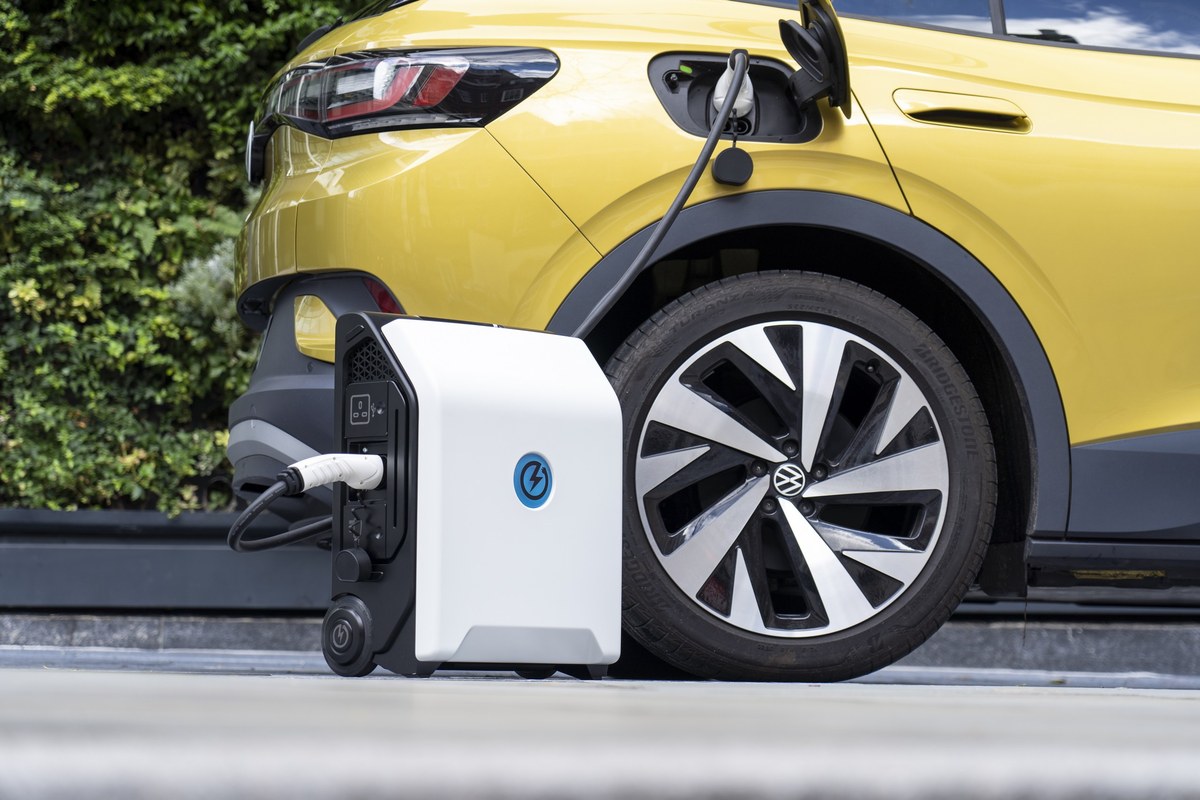
Options fall into a few practical buckets, and each one solves a different problem.
Small Portable Power Station Under 2 kWh: Emergency Top-Offs Only?
A sub-2 kWh station with a modest AC inverter is realistically an emergency device. It might deliver a handful of miles, enough to reach a real charger, but it will not replace a charging session. Expect noticeable inverter heat and a fast-draining internal battery.
Large Portable Power Station 5–10 kWh: RV, Worksite, and Backup Use
Larger stations with higher continuous AC output and 240 V capability can support a Level 2 EVSE at a reduced amperage setting. These are the units that make portable EV charging genuinely useful, though the weight, price, and recharge time are substantial.
Fuel-Powered Generator vs. Battery Power Station vs. EV-to-EV Charging
A fuel generator can run indefinitely as long as fuel lasts, but it is loud, emits exhaust, and must never be run indoors or in an attached garage. A battery power station is silent and emission-free at the point of use but finite. EV-to-EV charging uses one vehicle’s pack to feed another through a specialized bidirectional setup, and it depends heavily on whether both vehicles support the feature.
Who Each Option Fits—and Who Should Skip It
- Drivers who need a rare emergency top-off at a remote location
- RV, worksite, or off-grid users who already own a large station
- Households wanting backup power with occasional EV use
- Daily home charging, where a dedicated circuit is faster and cheaper
- Road trips, where DC fast charging is the only practical option
- Anyone expecting portable charging to match a wall-mounted EVSE
Evidence Limits: Specs, Manuals, and Third-Party Tests—Not First-Hand Testing
Charging Speed, Range, and Efficiency: What Can You Realistically Add?
Portable charging is slow by design. The math is straightforward once you separate power from capacity.
Mi/kWh and Wh/mi: Converting Power Bank Capacity Into Miles
Divide usable station energy by your vehicle’s consumption. A 6 kWh usable output at 3.5 mi/kWh is roughly 21 miles before losses. Apply a charging-loss factor and the realistic figure drops further.
Speed, Weather, HVAC, Elevation, Payload, Tires, and Battery Temperature
Highway speed, cold temperatures, cabin heating, elevation gain, extra weight, underinflated tires, and a cold battery all reduce miles per kWh. A cold pack can also limit acceptance rate, stretching the session further.
Charging Losses: Inverter, EVSE, Onboard Charger, and Standby Draw
Label these as estimates. Actual figures vary by vehicle, station, ambient temperature, and how long the equipment sits idle while powered on.
Cost of Charging an EV With a Portable Power Bank
The energy itself is often cheap. The equipment is not.
Assumptions and Formula: Electricity Rate × kWh Delivered ÷ Charging Efficiency
Start with the energy you actually deliver to the battery, then divide by charging efficiency to find the energy you must draw from the grid to refill the station. Multiply by your electricity rate, then add taxes and any fixed fees.
State assumptions; rates, taxes, time-of-use pricing, and losses vary by utility, region, and equipment.
Time-of-Use Pricing and Off-Peak Recharging the Power Bank
Because a power station is recharged separately from the vehicle, you can refill it entirely on off-peak rates and then discharge it into the car whenever you like. That flexibility is one of the few genuine cost advantages of the approach.
Equipment Cost, Installation, and Cost per Mile vs. Grid Charging
A large portable power station costs far more per kWh of storage than a wall-mounted EVSE plus a dedicated circuit. Spread that premium across the miles it actually delivers, and the cost per mile is typically several times higher than ordinary home charging. For most owners, the value is resilience and portability, not economy.
Electrical Safety, Codes, and Installation Requirements
Portable does not mean unregulated. Anything involving mains-voltage EVSE equipment deserves the same care as a permanent installation.
Circuit, Breaker, and Panel Implications: Follow the Product Manual
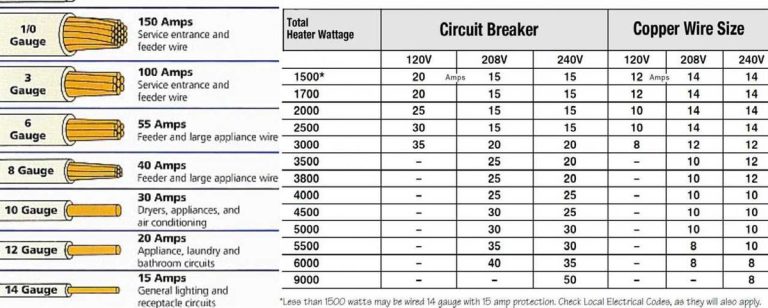
If you are feeding an EVSE from a building circuit rather than a power station, the circuit, breaker, conductor size, and receptacle must match the equipment instructions and applicable local requirements. Our guide to whether a 48 amp EV charger needs a 60 amp circuit explains how that sizing logic works.
Plug-In vs. Hardwired Power Stations and EVSE
Uses an existing receptacle. Portable and relocatable, but limited by the receptacle and circuit rating and dependent on correct plug type.
Permanently connected, typically higher amperage, and generally requires a qualified electrician, permit, and inspection.
Cable Length, Weather Suitability, and Outdoor Use
Verify the enclosure rating and operating-temperature range for any station or EVSE you plan to use outdoors. Cold reduces usable battery capacity, and heat shortens inverter life. Store connectors so they stay clean and dry.
Permits, Local Code, and When to Call an Electrician
Call a qualified electrician for any new circuit, panel work, hardwired EVSE, or anything you are unsure about. Do not bypass overcurrent protection or grounding.
Battery Health and Convenience Trade-Offs
Portable charging is gentle on the pack because the power level is low. That is one of its few technical advantages.
Manufacturer Guidance vs. General Patterns for EV Battery Care
Follow your vehicle manufacturer’s guidance rather than generic rules. There is no universal state-of-charge target that applies to every chemistry and thermal-management design.
Temperature, State of Charge, Charging Power, and DC Fast Charging Context
Low-power AC charging generally produces less heat stress than repeated DC fast charging, but temperature, state of charge, and pack design still shape the outcome. Portable charging does not exempt a vehicle from those fundamentals.
Chemistry, Thermal Management, and Repeated Portable Charging
Convenience Trade-Offs: Weight, Setup Time, Noise, and Availability
A 5–10 kWh station can weigh well over 100 pounds, needs a long recharge window, and must be positioned near the vehicle. Fuel generators add noise and exhaust. EV-to-EV charging depends on both vehicles supporting the feature. None of these are grab-and-go solutions.
Practical Verdict for EmissionsFreeCars Readers: Should You Buy a Portable Power Bank to Charge Your EV?
Buy one for resilience, not for routine charging. If you already want backup power for your home, a station with a 240 V outlet at a sensible amperage can double as an occasional EV top-off source. If your only goal is charging the car, a dedicated circuit and a wall-mounted EVSE will be faster, cheaper, and simpler.
Best Use Cases in the United States in 2026
Remote property owners, RV travelers, worksite users, and households preparing for outages get the most value. Renters who cannot install a circuit may find a large station useful, but should confirm their vehicle’s minimum AC charging requirements first.
Smart Features, Warranty, and Support Checklist
- Confirm your vehicle’s AC inlet and maximum onboard charger rating
- Verify the station’s continuous AC output and outlet types
- Check whether the manufacturer permits EV charging from the AC outlets
- Confirm the EVSE amperage setting can be reduced to match the station
- Verify safety listing, warranty terms, and US-based support
- Include the cost of adapters, EVSE, and recharging energy
What to Do Instead for Daily, Road-Trip, and Emergency Charging
For daily charging, a correctly sized Level 2 circuit is the practical answer — see our overview of a 40 amp Level 1 and 2 portable EV charger for the plug-in alternative. For road trips, plan around DC fast charging. For emergencies, keep a mobile EVSE and a known list of nearby charging locations rather than relying on a power station alone.
- Best for: Emergency top-offs, off-grid and worksite users, and households that want backup power with occasional EV use.
- Think twice if: You expect daily charging, road-trip speed, or a lower cost per mile than home charging.
- Next step: Check your vehicle’s onboard charger rating, AC inlet type, and the station manual’s EV-charging restrictions before buying.
Frequently Asked Questions
Only a portable power station with a household AC outlet can do it, and only through a compatible Level 1 or Level 2 EVSE. Phone power banks and jump starters cannot charge an EV. The result is slow AC charging measured in a few miles per hour, not a fast charge.
Divide the station’s usable energy by your vehicle’s consumption in miles per kWh, then subtract charging losses. A 6 kWh usable output at roughly 3.5 mi/kWh works out to about 21 miles before losses, and less in cold weather or at highway speed.
No. DC fast charging requires a charger that communicates directly with the battery management system and controls pack-level voltage and current. Portable power stations output AC only, and no adapter converts an AC source into a DC fast-charging session.
It depends on your vehicle’s inlet. A J1772 EVSE connects directly to most non-Tesla EVs. A NACS-equipped vehicle typically needs a J1772-to-NACS adapter rated for AC charging. Adapters are directional, and DC-capable adapters are a separate category.
It can be, provided the manufacturer permits EV charging from the AC outlets, the continuous output rating supports the EVSE load, and the equipment is used within its temperature and enclosure limits. Some manufacturers explicitly prohibit this use, so check the manual first.
Rarely. The electricity itself may be inexpensive, especially if you recharge the station on off-peak rates, but the equipment premium is large. Spread across the miles actually delivered, the cost per mile is usually several times higher than charging from a dedicated home circuit.