Portable EV Charger: What It Is and How It Works
A portable EV charger is a movable Level 1 or Level 2 AC charging unit (EVSE) that plugs into an outlet instead of being hardwired, so you can charge at home or on the road. Its real speed limit is set by the outlet, the unit’s amperage setting, and your vehicle’s onboard charger — not the connector shape.
If you are trying to pin down what is a portable ev charger, the shortest useful answer is this: it is a movable AC charging unit — technically called EVSE, or electric vehicle supply equipment — that plugs into an outlet instead of being hardwired to your home’s electrical system, so you can keep it in the trunk and charge wherever a compatible outlet exists. The important limitation is that portability does not create power. The outlet, the unit’s amperage setting, and your vehicle’s onboard charger each cap how fast you actually charge.
- Compatibility: The connector must match your vehicle inlet (J1772 or NACS), and any adapter must.
- Performance: Power equals volts × amps, but the lowest limit among the circuit, the EVSE.
- Safety: EV charging is treated as a continuous load, so follow the manufacturer’s instructions and.
- Cost: Energy cost equals kWh added times your rate, plus charging losses — while installation.
What Is a Portable EV Charger? A Straight Answer for U.S. Drivers
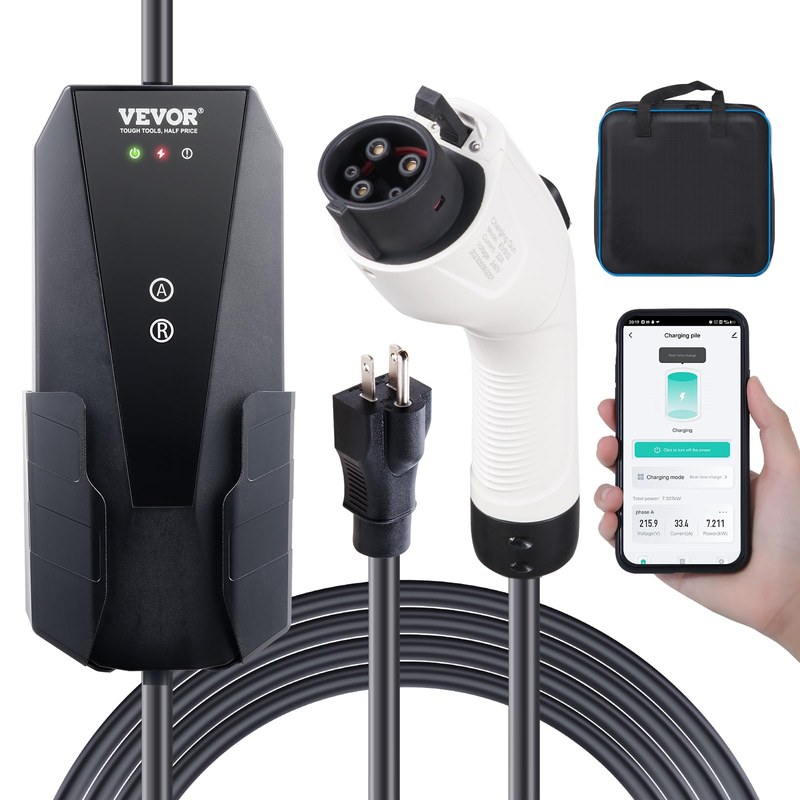
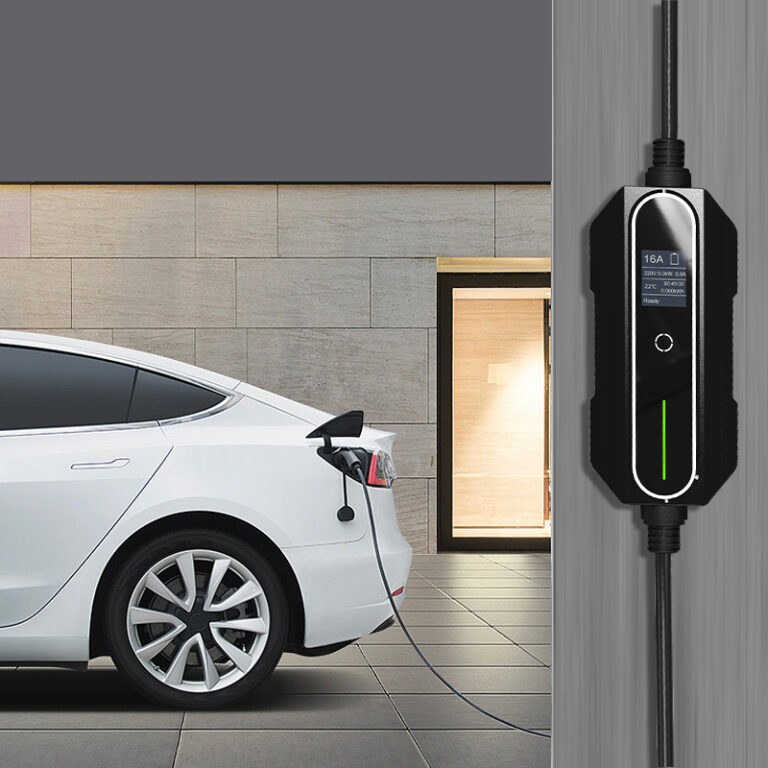
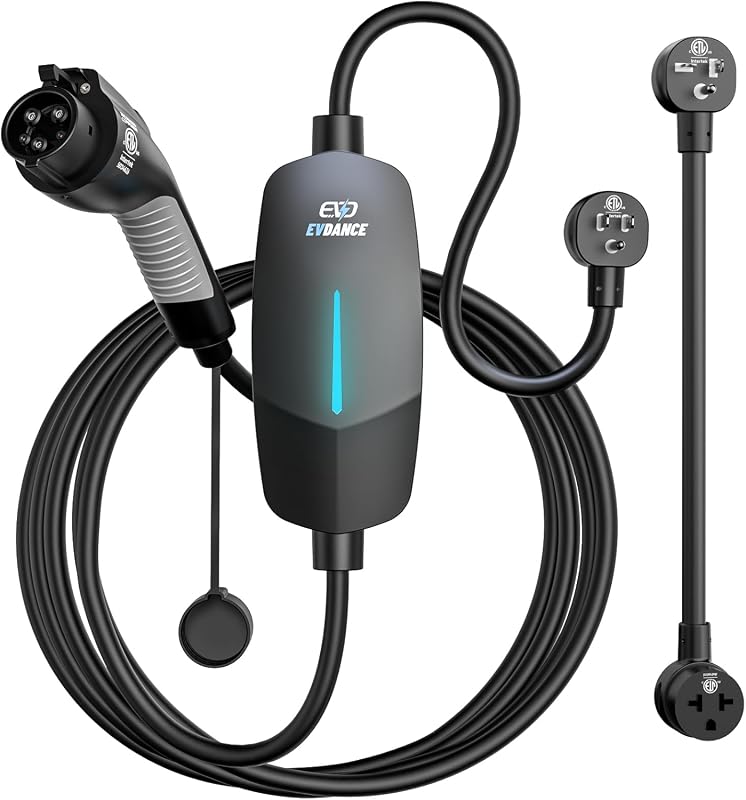
A portable EV charger is a compact Level 1 or Level 2 AC charging station built around a control box, a cable, a vehicle connector, and an input plug that you can unplug and carry. It performs the same job as a wall-mounted home charger — it delivers AC power safely and tells the vehicle how much current it may draw — but it is designed to be moved between outlets and locations rather than permanently mounted.
What it is not is a DC fast charger. Portable units in the U.S. market operate on 120 V or 240 V AC, and the actual conversion from AC to DC happens inside your car, not inside the box.
Portable EVSE vs. Fixed Home Charger: Key Differences
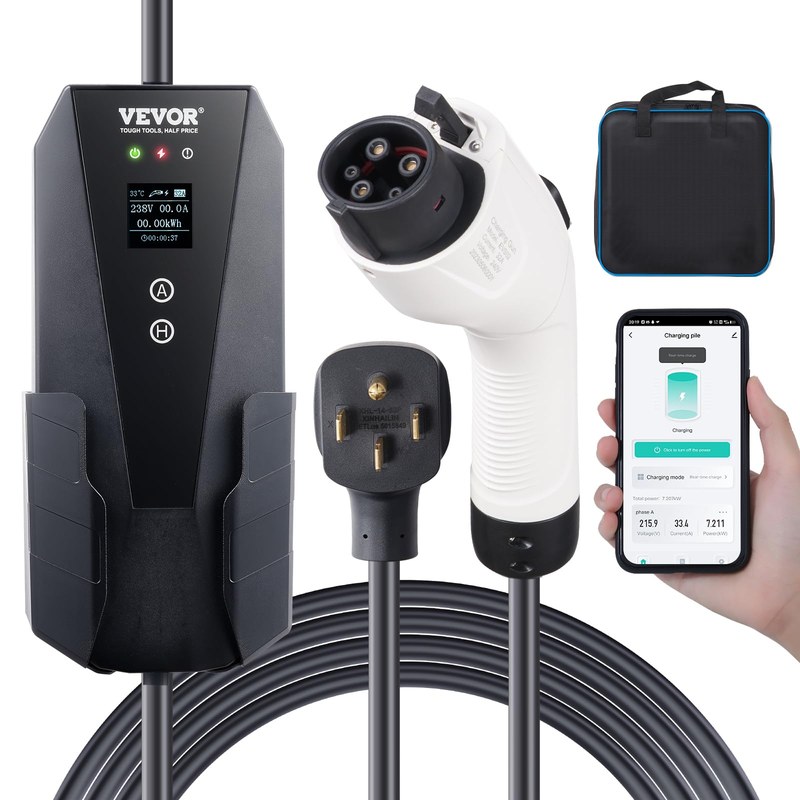
A fixed home charger is normally mounted on a wall or pedestal and either hardwired or plugged into a dedicated 240 V circuit that stays put. A portable unit trades a permanent installation for flexibility, and it often comes with swappable input adapters so one control box can work from a household outlet, a dryer outlet, or an RV-style 14-50 receptacle.
The practical differences show up in three places: maximum current, installation requirements, and where the unit lives when it is not in use. Many portable units cap out lower than hardwired models, and some reduce current automatically depending on which plug adapter is attached. If you want to compare real-world output options, our breakdown of a 40 amp Level 1 and 2 portable EV charger covers how dual-voltage designs handle those changes.
The Basic Components: Connector, Cable, Control Box, and Plug
Four parts do all the work. The vehicle connector is the handle that mates with your car’s inlet — commonly J1772 on older and many current non-Tesla models, or NACS (SAE J3400) on newer vehicles. The cable carries the current and is sized by the manufacturer for the unit’s rating.
The control box holds the electronics, ground-fault protection, and the pilot-signal circuitry that communicates available current to the vehicle. The input plug, or a swappable pigtail adapter, determines which outlet the unit can legally and safely draw from. Change any one of those four and you change what the unit can do.
How a Portable EV Charger Works: From Wall Outlet to Battery
Power flows in a straight line: outlet → input plug → control box → cable → vehicle inlet → onboard charger → battery. The EVSE’s job is to be a smart, protected switch. It energizes the cable only after it confirms a safe connection with the vehicle, and it continuously signals how many amps the car is allowed to pull.
Nothing in that chain converts AC to DC except the vehicle’s onboard charger. That single fact explains most portable-charging surprises, from “why is my 40 A unit only adding 20 miles an hour” to “why does the same charger behave differently on two different cars.”
This is a worked example (240 V × 32 A). It is not a product specification. The circuit, the EVSE setting, and the vehicle’s onboard charger each impose a separate limit, and the lowest one wins.
The Vehicle’s Onboard Charger: The Real Limit on AC Charging Speed
Every EV has an onboard AC charger with a fixed maximum input. Many current U.S. models sit in the roughly 6.6 kW to 11 kW range, while some older or entry-level models are lower. If your car’s onboard charger tops out at 7.2 kW, a 48 A portable unit cannot deliver more than that — the car simply will not accept it.
This is why upgrading a portable charger often produces no speed gain at all. Check the vehicle’s AC charging specification first, then choose EVSE capacity that at least matches it.
EVSE Amperage and kW: What the Specs Actually Mean
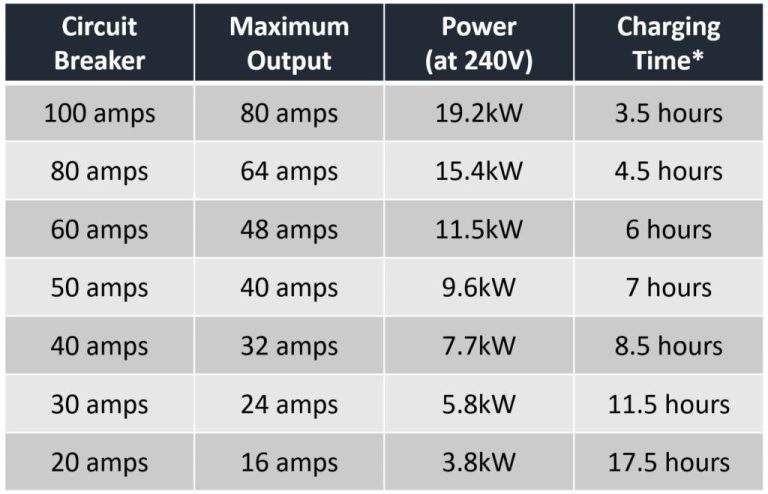
Amperage is the current the unit is set to deliver; kW is the resulting power, calculated as volts × amps ÷ 1,000. At a nominal 240 V, 16 A is about 3.8 kW, 32 A is about 7.7 kW, and 40 A is about 9.6 kW. Actual supply voltage may be 240 V or 208 V depending on your utility and building, so real output drifts slightly.
Do not confuse the EVSE’s rated amps with the circuit’s capacity. A charger is normally set below the circuit’s rating because EV charging is treated as a continuous load. Our explainer on whether 40 amps is enough for a Level 2 charger walks through how that ceiling affects daily charging. For the math behind the numbers, see how many kW a 48-amp Level 2 charger actually delivers.
Plug Types and Adapters: NEMA Outlets, J1772, NACS, and More
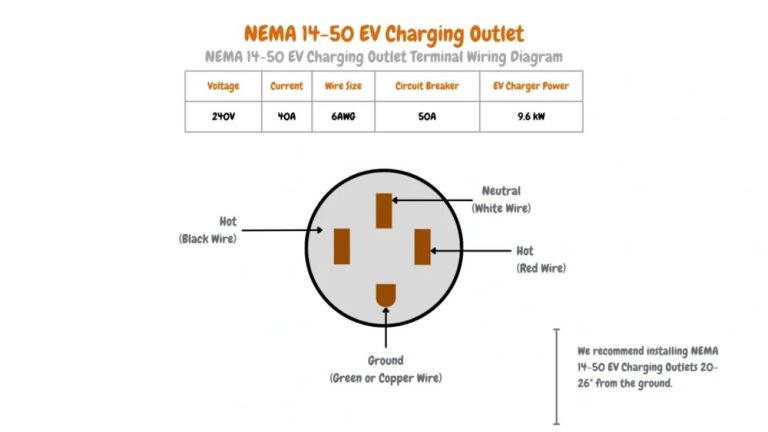
On the wall side, portable units may ship with NEMA 5-15 or 5-20 (120 V), 6-20, 14-30, 10-30, 14-50, or 6-50 (240 V) plugs, often as interchangeable pigtails. NEMA 14-50 is the one many travelers care about because it appears at RV campgrounds, though you should confirm the outlet is actually energized and not a dryer-style 30 A circuit.
On the car side, the connector must match the inlet or use a manufacturer-supported adapter. Portable units that automatically derate when a lower-capacity plug is attached are doing exactly what they should — the setting must never exceed what the outlet and circuit can supply.
Portable EV Charger Electrical Requirements and Safety
Portable does not mean plug-and-forget. The unit has to be matched to an outlet that is properly wired, grounded, and protected, and the manufacturer’s instructions plus your local electrical authority govern what is acceptable. Because EV charging runs for hours at a steady draw, the wiring and overcurrent protection are sized differently than for a short-duration appliance.
Circuit and Panel Implications: Why the Manual and Local Code Rule
EV charging is generally treated as a continuous load, which is one reason a 40 A charger is commonly paired with a 50 A circuit and a 48 A charger with a 60 A circuit. If you want the reasoning behind those pairings, read whether a 48-amp EV charger needs a 60-amp circuit.
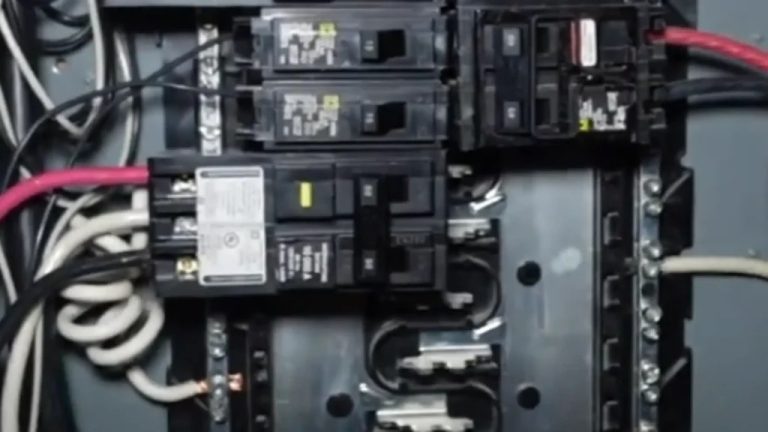
Panel capacity is the other half of the question. An older 100 A service may have little room left once the load calculation is done. A qualified electrician can tell you whether your panel supports the circuit you want, or whether load management or a panel upgrade is the realistic path.
Plug-In vs. Hardwired: When a Portable Unit Makes Sense
Best when an appropriate 240 V receptacle already exists, when you rent, or when you need one unit to travel. Requires a matching plug, verified circuit capacity, and a receptacle in good condition.
Best for permanent, higher-current home charging, outdoors without a covered receptacle, or where a plug-in connection is not permitted. Requires professional wiring and typically a permit and inspection.
Weather Suitability and Cable Length: What to Look For
For outdoor use, look at the manufacturer’s stated enclosure rating, operating temperature range, and connector storage guidance. Do not infer weather suitability from a unit’s appearance — verify the rating in the official documentation.
Cable length matters more than people expect. A 25 ft cable reaches most garages comfortably; shorter cables force awkward parking, and longer ones can be unwieldy to coil. Also confirm how the unit is meant to be hung or stored, since a portable box resting on a wet driveway is not the intended setup.
Smart Features, Warranty, and Support
Wi-Fi and app features can add scheduling, time-of-use charging, energy reporting, and firmware updates. Before buying, ask what happens when the cloud service or app is unavailable — a charger that becomes an expensive brick without an account is a real ownership risk.
Check the warranty term, whether it is a U.S. warranty, how support is reached, and whether the unit carries a recognized safety listing. Listing marks should be verified from the manufacturer or the certification record, not from a product photo.
Portable EV Charger Costs: Equipment, Electricity, and Installation
There are three cost buckets: the unit itself, the electricity it consumes, and any electrical work needed to create a suitable outlet. Only the electricity cost is predictable in advance, and even that depends on your rate plan and how much you drive.
Electricity Rate and kWh Delivered: The Core Formula
The core formula is simple: energy added (kWh) × your electricity rate ($/kWh) = energy cost. Energy added is not the same as battery capacity used, because charging losses mean the meter sees more kWh than the battery stores.
Illustrative example only. Rates, taxes, fees, time-of-use windows, and demand charges vary by utility and plan, and real charging losses differ by vehicle and temperature.
Charging Losses and Time-of-Use Pricing
AC charging losses of roughly 10% are a commonly cited planning figure, but the real number depends on the vehicle, the onboard charger, and especially temperature — cold packs and cold garages raise losses. That is why two owners paying the same rate can see different effective costs for the same miles.
Time-of-use plans can change the picture far more than the charger does. If your utility offers off-peak rates, overnight charging with a portable unit on a 240 V circuit is often the cheapest option available to a renter or traveler.
Installation and Equipment Costs: What to Budget
Equipment prices shift constantly, so verify current pricing from the manufacturer or retailer rather than trusting an article. Installation cost varies widely with panel capacity, circuit length, whether walls need to be opened, local labor rates, permits, and inspection fees.
Get at least two local quotes if new wiring is involved. If you already have a suitable 240 V receptacle in good condition, a portable unit can avoid that expense entirely — that is its biggest financial advantage.
Adapters for Portable EV Chargers: What You Need to Know
Adapters solve physical mismatches, but only when they are built for that direction, that connector pairing, and that charging mode. Using one backwards, or using a DC adapter where an AC adapter is required, is not a supported workaround.
Source and Destination Connectors: Adapter Direction Matters
An adapter has a source side (what it plugs into) and a destination side (what it connects to your car). Adapters are engineered for one direction; reversing them is outside the manufacturer’s instructions. Physical fit alone also proves nothing about which charging mode or protocol is supported.
If your vehicle uses J1772 and you encounter a NACS AC connector, you need a J1772-inlet adapter. If your vehicle uses NACS and you find a J1772 EVSE, you need the opposite. These are not the same part.
AC vs. DC Mode and Power Limits
AC adapters for Level 1 and Level 2 charging and DC adapters for fast charging are separate product categories with different electrical and thermal requirements. A portable AC unit will never become a DC fast charger through an adapter, and a DC adapter cannot be used on an AC EVSE.
Power limits matter too. Some adapters are rated for lower current than your EVSE can deliver, and the safe answer is always the lower of the two ratings.
Vehicle/Network Restrictions, Thermal Safety, and Firmware
Compatibility can be restricted by the vehicle manufacturer, the charging network, or both, and these policies change over time. Check the vehicle’s owner documentation and the network’s current terms before assuming an adapter will work.
Thermal behavior and firmware also matter: adapters and EVSEs can negotiate reduced current if temperature rises, and firmware updates occasionally change supported behavior. Buy from a source that documents its ratings and provides support.
Portable EV Charging and Battery Health: What Owners Should Know
Portable charging is generally easier on a battery than DC fast charging, because it is slower and the pack has more time to manage heat. But “gentler” is not the same as “risk-free,” and battery care is never a single universal rule.
Manufacturer Guidance vs. General Patterns
Your owner’s manual is the authoritative source for your car. General patterns — that very high states of charge held for long periods, extreme temperatures, and frequent high-power sessions tend to be less ideal — are useful context, not instructions.
If daily driving uses only part of the pack, many manufacturers suggest operating in a mid-range state of charge for routine use. Confirm the specific numbers for your model rather than applying someone else’s rule.
Temperature, State of Charge, and Charging Power
Cold batteries accept less power, and hot batteries can trigger reduced rates too. A portable unit that charges overnight will often finish at a lower average power in winter, even though nothing is wrong with the equipment.
State of charge interacts with this: the last portion of a charge typically tapers on many vehicles, so charging from 20% to 80% is usually faster than filling to 100%.
DC Fast Charging Context and Convenience Trade-Offs
DC fast charging is a different mode at a different power level, and it exists because it solves a different problem — time. Portable AC charging solves location problems instead: you can charge at a relative’s house, a campsite, or a rental without installing anything.
Most owners use portable AC charging as their routine method and reserve DC fast charging for road trips. That split usually makes sense for both battery care and cost.
Range and Efficiency While Using a Portable EV Charger
Miles added per hour depends on two numbers: how much power the car accepts, and how efficiently it converts that energy into distance. Neither is fixed.
mi/kWh and Wh/mi: Understanding Your EV’s Consumption
U.S. owners usually see consumption as mi/kWh or Wh/mi. A car that returns 3.5 mi/kWh needs about 286 Wh to travel one mile. If a portable charger delivers 7.7 kW and charging is about 90% efficient, the car receives roughly 6.9 kW — which at 3.5 mi/kWh works out to about 24 miles of range per hour of charging.
That figure is an estimate. Treat it as a planning number, not a promise.
Speed, Weather, HVAC, Elevation, Payload, and Tires
Highway speed increases consumption sharply. Cold weather reduces range and slows charging simultaneously. Cabin heating, headwinds, climbing grades, a loaded cargo area, and underinflated or high-rolling-resistance tires all push Wh/mi upward.
This is why the same portable charger can feel fast in a mild climate and slow in a northern winter. The equipment did not change; the vehicle’s appetite did.
Battery Temperature and Charging Losses
A cold pack both accepts less power and wastes more of what it accepts, so winter sessions often deliver fewer miles per hour on both ends of the equation. Preconditioning, if your vehicle supports it while plugged in, can reduce the penalty.
Charging losses also show up on your utility bill rather than at the connector, so the metered kWh is typically higher than the kWh your car reports adding.
Portable vs. Hardwired EV Chargers: A Side-by-Side Comparison
The two options are compared below on the criteria that actually change an ownership decision: power, cost, installation, portability, and weather rating.
| Criteria | Portable plug-in | Hardwired |
|---|---|---|
| Typical power ceiling | Often lower, and sometimes limited by the plug adapter attached | Can reach higher continuous current when the circuit and vehicle allow |
| Equipment and install cost | Lower install cost if a suitable 240 V outlet already exists | Higher upfront cost for wiring, permits, and labor |
| Installation | Requires a matching, properly wired receptacle | Requires professional wiring to manufacturer instructions |
| Portability | Can travel between locations and vehicles | Stays with the property |
| Weather rating | Only suitable outdoors if the manufacturer lists an appropriate rating and stored correctly | Commonly chosen for permanent outdoor installation |
Criteria: Power, Cost, Installation, Portability, Weather Rating
Power is usually decided by the vehicle and circuit, not the unit. Cost favors portable only when the outlet already exists. Installation favors hardwired for permanence and portable for flexibility. Portability is the clearest advantage of a portable unit. Weather suitability depends entirely on documented ratings for either type.
Who Each Option Fits Best
A portable charger fits renters, apartment dwellers with access to a 240 V outlet, travelers, owners of two EVs who want one unit, and anyone who wants charging capability without electrical work. A hardwired charger fits homeowners with a dedicated parking spot, higher-power vehicles, households tired of handling a cable every day, and outdoor installations where a permanent connection is preferred.
Plenty of owners use both: a hardwired unit at home and a portable unit kept in the car for trips. If you are still deciding, start by confirming your vehicle’s onboard charger limit and what your panel can support — that combination determines what either option can realistically deliver.
Frequently Asked Questions
It is a movable AC charging unit — formally called EVSE — that plugs into a wall outlet and connects to your car’s charging inlet. It contains the safety electronics and the pilot-signal circuitry that tells the vehicle how much current it may draw, but the actual conversion from AC to DC happens inside the car’s onboard charger.
Often yes, if you have a suitable 240 V receptacle on a properly protected circuit and your daily mileage fits the charging speed available. Many owners use a portable unit as their primary home charger and keep it in the car for trips. If you need the highest current your vehicle supports or a permanent outdoor installation, a hardwired unit is usually the better fit.
Speed depends on three limits: the circuit, the EVSE’s amperage setting, and your vehicle’s onboard charger. A 120 V outlet typically adds only a few miles of range per hour, while a 240 V portable unit set at 32 A delivers roughly 7.7 kW and can add on the order of 20 to 30 miles per hour on an efficient EV. Treat those as estimates, since temperature and driving efficiency change the result.
Only if the connector matches the inlet or a manufacturer-supported adapter is used. J1772 and NACS (SAE J3400) are different physical connectors, and adapters are directional — an adapter made to charge a J1772 vehicle from a NACS connector is not the same part as the reverse. Physical fit alone does not confirm that a charging mode or protocol is supported.
Only if the manufacturer documents a suitable enclosure rating, operating temperature range, and connector storage guidance for outdoor use. You should verify those ratings in the official documentation rather than inferring them from appearance. Also confirm the receptacle itself is appropriate for outdoor use and properly installed, and never leave a control box resting on wet ground.
AC charging at Level 1 or Level 2 speeds is generally gentler than DC fast charging because it is slower and generates less heat. Battery wear is influenced by chemistry, thermal management, climate, and how long the pack sits at high or low states of charge. Follow your vehicle manufacturer’s charging guidance rather than applying a universal percentage rule from someone else’s car.

4 Comments