Are Portable EV Chargers Worth It? Pros, Cons, and Costs
Portable EV chargers are worth it mainly for renters, multi-location drivers, and anyone who needs movable 240-volt charging or a travel backup. They are usually the wrong choice for nightly home charging, where a hardwired Level 2 unit is faster, better protected, and less hassle.
If you are asking are portable ev chargers worth it, the honest answer depends on where you park, how you drive, and what your electrical panel can support. For renters, travelers, and households with occasional 240-volt access, a portable EVSE can earn its place in the trunk. For a daily commuter with a dedicated parking spot and adequate service, a fixed Level 2 charger usually delivers more speed, better weather protection, and less day-to-day hassle.
- Compatibility: Match the EVSE connector to your vehicle’s AC inlet and confirm adapter direction; portable.
- Performance: Your charging speed is capped by the circuit, the EVSE setting, and the vehicle’s.
- Safety: A portable Level 2 unit still needs a correctly sized dedicated circuit, proper overcurrent.
- Cost: Add equipment, any electrical work, adapters, and electricity; account for roughly 5%–15% AC charging.
Are Portable EV Chargers Worth It? The 2026 Verdict
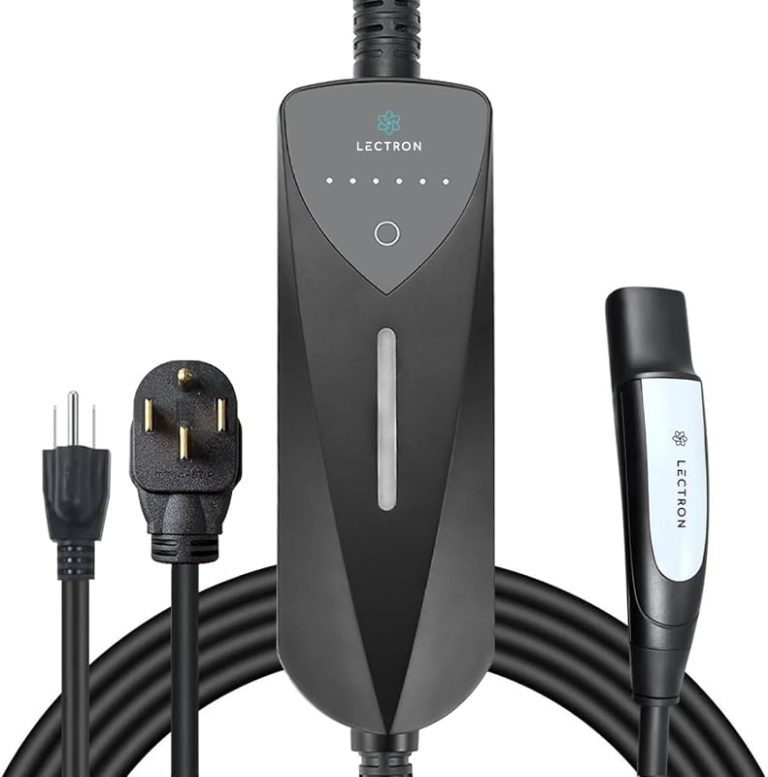
A portable EV charger — more accurately called portable EVSE — is a charging cable and control box you can carry, unplug, and move between locations. It is not a free upgrade over a fixed unit. It is a trade: you give up some charging speed, permanent mounting, and often smart features in exchange for flexibility.
Whether that trade pays off comes down to one practical question: how often will you actually move it? A portable unit that lives permanently on one garage wall is really a fixed charger with extra compromises. A portable unit that travels with you earns its price.
When a Portable EV Charger Makes Sense
Portable EVSE tends to make the most sense in a handful of recurring situations:
- Renters who cannot modify the property or add a hardwired circuit.
- Drivers who split time between two homes, one of which already has a 240-volt receptacle.
- Owners whose panel or service cannot support a new dedicated hardwired circuit right now.
- Travelers who want a backup option for campgrounds, relatives’ driveways, or rental properties with an accessible outlet.
- Households that want a second, lower-power charging option in a garage bay without a permanent install.
When a Fixed Charger Is the Better Choice
A fixed, hardwired Level 2 charger is usually the better answer if you charge at home nightly, park in the same spot, and want the fastest AC charging your vehicle supports. Hardwired units avoid receptacle wear, can often be configured to higher amperage, and typically come with longer cables and better weather-rated enclosures. If you want a permanent setup, browsing current Level 2 home charger options is a reasonable starting point.
- Renters and multi-home drivers who need movable 240-volt charging
- Owners with limited panel capacity or no permanent parking spot
- Road-trip and emergency backup charging
- Nightly home charging where a hardwired unit is possible
- Owners who want maximum AC speed and smart scheduling
Portable EV Charger Basics: Connectors, Power, and Onboard Limits
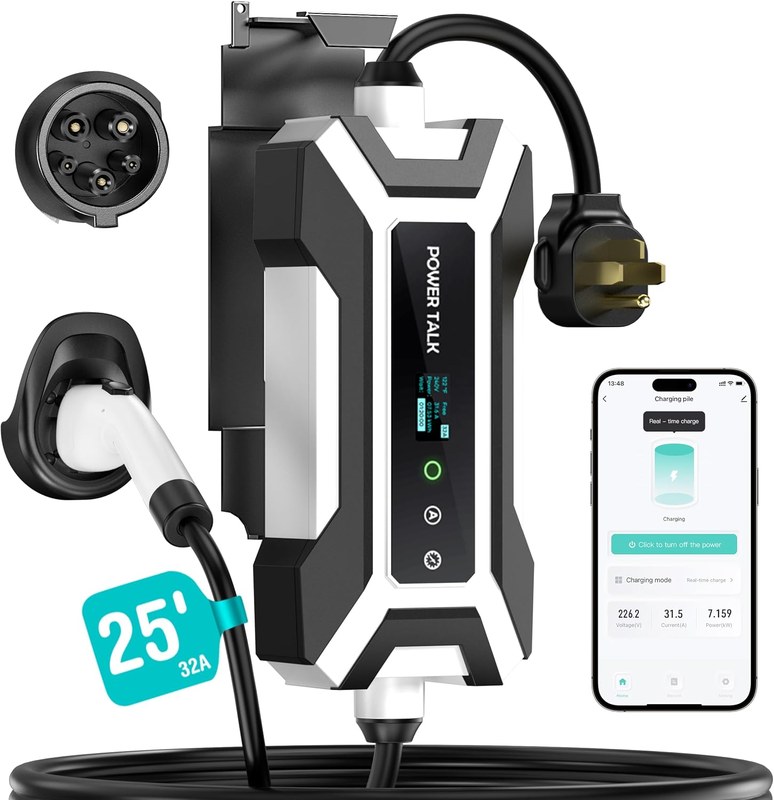
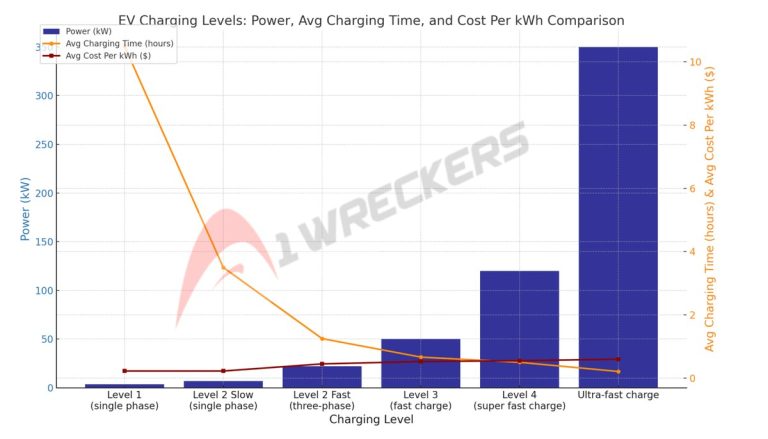
Three separate limits decide how fast any portable charger actually charges your car: the circuit it is plugged into, the EVSE’s output setting, and your vehicle’s onboard AC charger. The slowest of the three wins. Marketing language on the box rarely makes that clear.
Connector Types, Adapter Direction, and Source/Destination
In North America, portable EVSE is almost always AC-only. The connector on the charger end must match your vehicle’s AC inlet, either directly or through a correctly rated adapter. Adapter direction matters: a J1772-to-NACS adapter is not the same product as a NACS-to-J1772 adapter, and neither one adds DC fast-charging capability.
Important: Physical fit alone does not prove every AC or DC charging mode is supported.
EVSE Amperage vs. Vehicle Onboard Charger Limit
A portable unit rated at 40 A does not mean your car accepts 40 A. Many EVs have onboard AC chargers limited to 32 A, 40 A, or 48 A, and some older models are lower still. If your vehicle caps at 32 A, buying a higher-amperage portable EVSE gains you nothing at home. Check your owner’s manual for the onboard charger rating before you shop.
Level 1 vs. Level 2 Portable EVSE: Plug-in vs. Hardwired
Level 1 portable EVSE plugs into a standard 120-volt household outlet and typically delivers around 1.2 to 1.8 kW — enough for roughly 3 to 5 miles of range per hour, depending on the vehicle. Level 2 portable EVSE runs on 240 volts and commonly ranges from 16 A to 40 A. Some 40-amp portable Level 1 and Level 2 units let you switch between both modes, which is convenient but also means the 240-volt plug type and circuit requirements change with the setting.
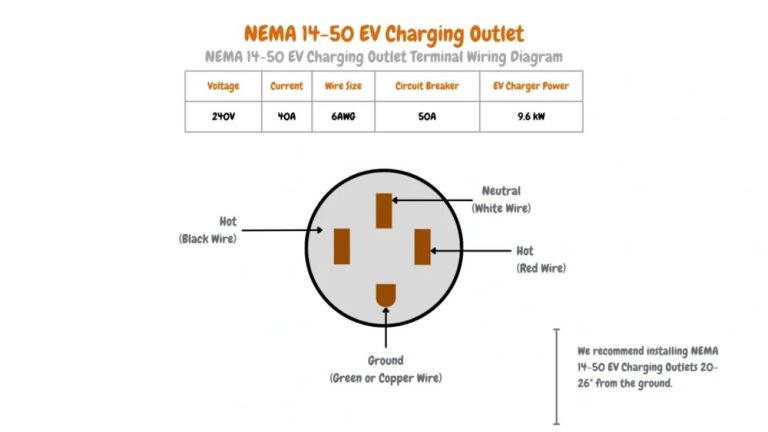
A portable Level 2 unit with a NEMA 14-50 or 6-50 plug needs a matching receptacle on a properly sized dedicated circuit. Portable by design, but the receptacle and circuit still have to be right.
Some portable-style units can be hardwired permanently. That removes plug wear and may allow a higher amperage setting, but it also ends the portability that justified the purchase.
Portable vs. Fixed EV Chargers: A Side-by-Side Comparison
Comparing the two categories on the same criteria makes the trade-offs clearer than any single spec sheet.
| Criteria | Portable EVSE | Fixed Level 2 EVSE |
|---|---|---|
| Typical power | 1.2–9.6 kW depending on mode and circuit | Up to the vehicle’s onboard limit, often 9.6–11.5 kW |
| Installation | Often plug-in; may be hardwired | Usually hardwired on a dedicated circuit |
| Portability | High — designed to move | None once installed |
| Weather exposure | Varies; verify enclosure rating per unit | Often rated for permanent outdoor mounting |
| Smart features | Varies widely; some app-free | More commonly includes scheduling and utility integration |
| Warranty and support | Varies; check US terms | Varies; check US terms |
Power, Speed, and Charging Curves
Portable Level 2 units can match a fixed charger if the circuit, EVSE setting, and onboard charger all line up. In practice, plug-in portable units are often limited by the receptacle circuit they use. A 14-50 receptacle on a 50-amp circuit supports a 40-amp continuous load under the usual continuous-load provisions, but many portable units ship set lower for safety and must be adjusted per the manufacturer’s instructions.
Installation, Circuit, and Panel Implications
Even a plug-in portable charger needs a properly sized, dedicated circuit with correct overcurrent protection and grounding. If you are weighing higher-amperage options, our explanation of whether a 48-amp charger needs a 60-amp circuit walks through how the continuous-load math works. Panel capacity, service size, wire gauge, and receptacle type all still matter — portability does not reduce the electrical requirements.
Weather Suitability, Cable Length, and Portability
Portable units vary enormously in outdoor suitability. Some are rated for temporary outdoor use, others are intended for indoor or covered use only. Cable length is usually shorter than on fixed units, which matters if your parking spot is far from the outlet. Read the enclosure rating and operating temperature range in the manual rather than assuming a weatherproof look means a weatherproof rating.
Smart Features, Warranty, and Support
Many fixed chargers include Wi-Fi, scheduling, energy monitoring, and utility demand-response programs. Portable units are more likely to be app-free, which is simpler but also means fewer tools for time-of-use optimization. Warranty terms differ by brand and are frequently shorter on portable models. Verify the US warranty length, support channel, and firmware update policy before buying.
The True Costs of Portable EV Charging in 2026
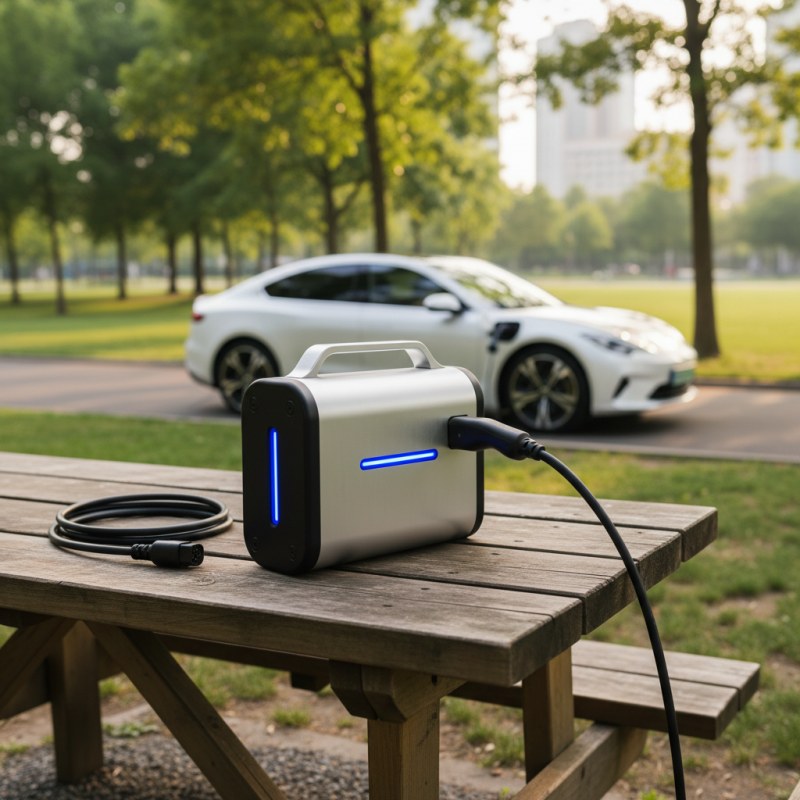
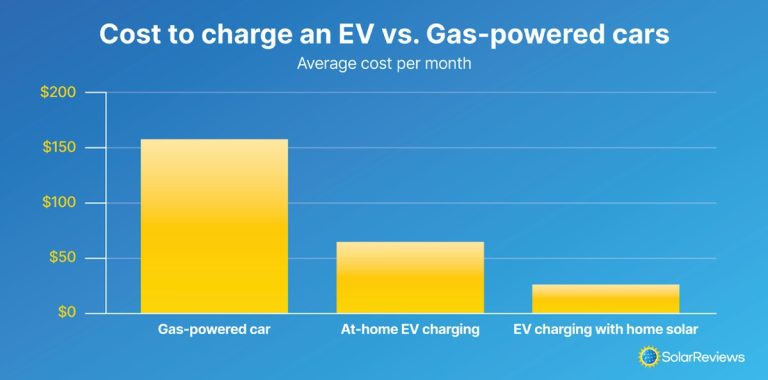
Portable charging is not automatically cheaper. The equipment may cost less than a premium fixed unit, but you may still pay for a receptacle, a dedicated circuit, an electrician, and permits.
Equipment and Installation Costs: Assumptions and Formulas
Total cost roughly equals equipment price plus any electrical work plus adapters and accessories plus electricity. Electrical work varies with circuit length, panel capacity, and local labor rates, so quotes are the only reliable number. Get at least two written estimates if a new circuit is involved.
Electricity Rate, kWh Delivered, and Charging Losses
Charging cost is not simply rate times battery capacity. You pay for energy drawn from the wall, which is higher than the energy stored in the battery because of conversion and thermal losses. AC charging losses commonly run in the range of about 5% to 15%, depending on the vehicle, power level, and temperature.
Illustrative example only. Your utility rate, taxes, fees, time-of-use windows, and actual losses will differ.
Time-of-Use Pricing and Total Cost per Mile
If your utility offers time-of-use rates, shifting charging to off-peak hours can change the math more than any equipment choice. To estimate cost per mile, divide your effective cost per kWh by your vehicle’s mi/kWh, then adjust for charging losses. A car that returns 3.5 mi/kWh at $0.17 per kWh works out to roughly 5 cents per mile before losses — and noticeably more on a peak-rate plan.
Adapters and Compatibility: What Portable Charger Owners Must Know
Adapters are where portable charging gets confusing, because a connector that fits is not the same as a charging mode that works.
AC vs. DC Adapters and Power Limits
Portable EVSE delivers AC power only. Adapters used with portable units are AC adapters and carry no DC fast-charging capability. DC fast charging requires the vehicle’s DC inlet and a DC-capable charging station. Never assume an adapter that physically connects two connectors also supports the electrical protocol behind them.
Vehicle and Network Restrictions
Some vehicles restrict charging to approved EVSE or require a handshake that generic units cannot complete. Some charging networks also restrict access to their equipment. Check your owner’s manual and the manufacturer’s compatibility documentation rather than relying on forum reports, which may describe older firmware or different model years.
Thermal Safety and Firmware/Vendor Requirements
Adapters and plugs heat up under continuous load. A warm plug is not automatically a fault, but a hot connector, discolored plug, or burning smell is a stop signal. Some EVSE requires app registration or firmware updates to enable full amperage, and a unit that depends on a cloud service may lose features if that service changes.
Electrical Safety, Code, and Permits: A Manual-First Approach
Portable does not mean exempt. A portable Level 2 charger draws the same current as a fixed one and carries the same risks.
Circuit and Panel Considerations
Before plugging in a 240-volt portable unit, confirm that the receptacle is on a dedicated circuit of the correct rating, that the breaker and wiring match, and that the panel can carry the added load. If any of that is unclear, stop and have a qualified electrician evaluate it.
Plug-in vs. Hardwired Portable Units
Plug-in units are easier to move but depend on receptacle condition and repeated plug cycles. Hardwiring removes that wear point and can allow a higher amperage setting, but it converts a portable purchase into a permanent installation. Decide which you actually need before buying.
Weather, Cable, and Warranty Realities
Outdoor use depends on the specific unit’s enclosure rating, operating temperature limits, and connector storage guidance. Leaving a connector in standing water, snow, or direct sun is not the same as using it in light rain, and manufacturer instructions govern.
Battery Health and Charging Power: Guidance vs. General Patterns
Portable charging is generally gentle on a battery because it is slow. That is a real advantage, but it is not a substitute for following your manufacturer’s guidance.
Temperature, State of Charge, and Charging Power
Charging power tapers as the battery fills and as temperatures move away from the ideal range. A cold battery accepts less power, and a very hot one may be actively cooled before charging ramps up. This is normal behavior, not a charger defect.
DC Fast Charging Context for Portable Use
Portable EVSE cannot DC fast charge. That is a limitation, not a flaw — it also means portable charging avoids the heat and stress associated with high-power DC sessions. If you need fast turnaround on a road trip, portable equipment is not the tool for that job.
Chemistry, Thermal Management, and Convenience Trade-offs
Battery chemistry and thermal management design vary by vehicle, and so does the manufacturer’s charging guidance. Some automakers publish specific recommendations for daily charge limits; others do not. Follow your own vehicle’s documentation rather than applying a universal rule you read online.
Range, Efficiency, and Charging Losses: What to Expect
Charging speed and driving efficiency are different numbers, and portable charging affects both in small ways.
mi/kWh, Speed, Weather, and HVAC
Vehicle efficiency, measured in miles per kWh, swings widely with speed and weather. Highway driving above 70 mph, cold temperatures, and heavy cabin heating can cut efficiency substantially compared with mild-weather city driving. Those variables change how many miles each charging hour actually delivers.
Elevation, Payload, Tires, and Battery Temperature
Climbing grades, carrying passengers and cargo, underinflated tires, and a cold-soaked battery all reduce range. None of these are charger problems, but they change how far a given charging session takes you.
Accounting for Charging Losses
When you plan around a portable charger, budget for losses. If you need 30 kWh in the battery and assume roughly 10% loss, plan on drawing about 33 kWh from the wall. At Level 1 speeds, that difference in time is significant.
Who Should Buy a Portable EV Charger? A 2026 Buyer’s Guide
The decision usually comes down to whether flexibility or speed matters more in your specific parking and living situation.
Best Use Cases for Portable EV Chargers
- You rent and cannot install permanent equipment.
- You regularly park at a second location that already has a suitable 240-volt receptacle.
- You want a backup charging option for travel or emergencies.
- Your panel cannot support a new hardwired circuit right now.
- You need only modest daily charging and can top up overnight on Level 1.
Who Should Skip Them
- You have a dedicated parking spot and can install a hardwired Level 2 unit.
- You need the fastest AC charging your vehicle supports every night.
- You want built-in scheduling, energy monitoring, and utility program integration.
- You park outdoors in a location where the unit’s weather rating is inadequate.
- Portable between homes, rentals, and travel stops
- Often usable without a permanent installation
- Lower power is generally easier on the battery
- Slower than a comparable hardwired unit
- Still requires a correct dedicated circuit for Level 2
- Shorter cables, variable weather ratings, and less common smart features
- Best for: Renters, multi-location drivers, and owners who need movable 240-volt charging or a travel backup.
- Think twice if: You park in one place and could install a hardwired Level 2 charger instead.
- Next step: Confirm your vehicle’s onboard AC charger limit, your available circuit and receptacle, and the unit’s safety listing and warranty before you buy.
Frequently Asked Questions
Yes, for some owners. If you rent, park at multiple locations, or drive modest daily distances, a portable Level 2 unit on a properly installed 240-volt circuit can serve as your primary charger. If you park in one spot and can hardwire a unit, a fixed charger usually gives you more speed, longer cables, and better weather protection.
Portable Level 2 units commonly run from about 16 A to 40 A on 240 volts, which works out to roughly 3.8 kW to 9.6 kW. Actual speed depends on the circuit rating, the EVSE’s configured setting, and your vehicle’s onboard AC charger limit. A car capped at 32 A will not charge faster just because the EVSE is rated higher.
They can, but the connector has to match. J1772 portable EVSE can work with a NACS-equipped vehicle through a correctly rated J1772-to-NACS AC adapter, and NACS portable EVSE can work with a J1772 vehicle through the opposite adapter. Verify adapter direction, AC-only rating, and your vehicle’s approved accessories before relying on it.
Level 1 portable EVSE is designed for standard 120-volt household outlets, but the outlet should be in good condition and on a circuit that can carry the continuous load. Older wiring, shared circuits, and worn receptacles are common causes of overheating. If the plug or outlet feels hot, stop using it and have an electrician inspect the circuit.
A Level 2 portable unit needs a 240-volt receptacle matched to its plug type, on a dedicated circuit sized per the manufacturer’s instructions and applicable local electrical requirements. Many units ship set to a lower amperage than the circuit can support and must be adjusted correctly. Confirm the receptacle, breaker, wiring, and panel capacity before first use.
Only within the limits the manufacturer states. Check the enclosure rating, operating temperature range, and connector storage guidance in the manual. Some units are approved for outdoor use and others are intended for indoor or covered locations, and warranty coverage may exclude damage from exposure the product was not rated for.