48 Amp EV Charger Speed: How Fast Does It Charge?
48 amp ev charger speed is easiest to evaluate by checking compatibility, charging limits, installation requirements, safety, and total ownership cost.
48 amp ev charger speed is fast for home AC charging, but the real answer depends on your car’s onboard charger, voltage, wiring, and installation setup. For many U.S. EV owners, 48 amps is a strong Level 2 option that can add a large daily buffer overnight without moving into DC fast charging territory.
- Compatibility: Confirm vehicle, connector, charging mode, and EVSE requirements.
- Performance: Check the vehicle and EVSE limits before assuming higher amperage means faster charging.
- Safety: Follow manufacturer instructions and applicable electrical requirements.
- Cost: Include equipment, installation, electricity, adapters, and any ongoing service costs.
48 Amp EV Charger Speed: The Short Answer for U.S. Home Charging
A 48 amp Level 2 EVSE on a 240 V circuit can deliver about 11.5 kW of AC power in ideal conditions. In practical terms, that often translates to roughly 30 to 45 miles of range per hour for many EVs, but the vehicle’s efficiency and onboard charger limit matter just as much as the charger itself.
If you want the power math in more detail, see our guide on how many kW a 48 amp Level 2 EV charger uses.
How fast 48 amps is in kW and miles of range per hour
Verified electrical math is straightforward: 48 A × 240 V = 11,520 W, or about 11.5 kW before charging losses. The actual energy reaching the battery is lower because AC charging has conversion losses and the vehicle may taper power as the battery fills.
Range added per hour is only an estimate. A vehicle that averages 3 miles per kWh may gain around 34 miles of range per hour at an 11.5 kW charge rate, while a more efficient EV could gain more and a larger, less efficient SUV could gain less.
Label estimates and state vehicle, onboard-charger, battery, temperature, and loss assumptions.
Why the vehicle’s onboard charger can make 48 amps charge no faster than 32 or 40 amps
The EVSE only supplies AC power. The vehicle’s onboard charger decides how much of that AC power it can accept and convert to DC for the battery. If the car is limited to 32 A or 40 A AC charging, a 48 A EVSE will not make it charge faster than that limit.
This is why two vehicles plugged into the same 48 A home charger can charge at different speeds. The charger may be capable of 48 A, but the car’s onboard AC charger, battery temperature, and state of charge can all reduce the real-world rate.
What Actually Determines Charging Speed at Home
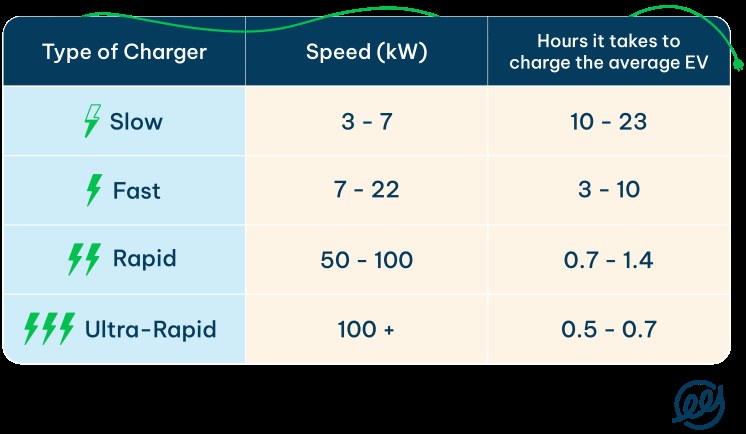
Home charging speed is a system, not a single spec. The important pieces are the circuit, the EVSE output, the vehicle’s AC charging limit, and the connector or adapter arrangement that allows the plug to work safely and correctly.
EVSE amperage, voltage, and the real-world power ceiling
For Level 2 charging, amperage and voltage together determine the power ceiling. In most U.S. homes, 240 V is the standard reference point, so a 48 A charger usually lands near 11.5 kW. That is the EVSE’s output ceiling, not always the vehicle’s actual intake.
Charging losses, cold weather, battery preconditioning, and top-of-pack taper can all reduce the observed speed. If you want a practical buying angle, our roundup of the best 48 amp Level 2 EV chargers for home charging is a useful starting point.
Connector type and compatibility: J1772, NACS, and adapter considerations
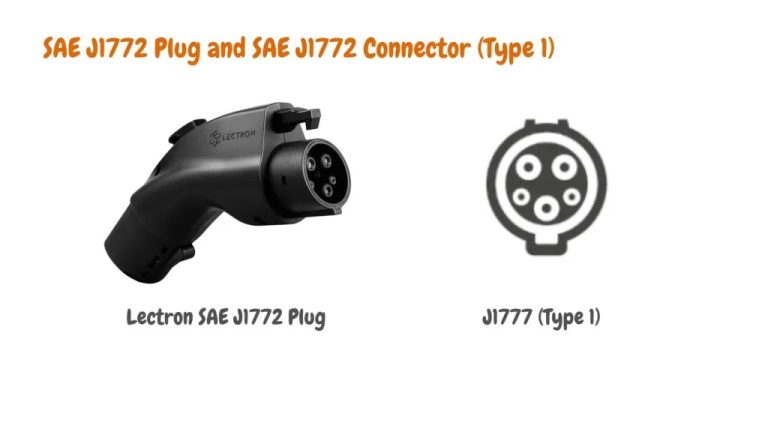
Connector fit matters, but it does not tell the whole story. A J1772 EVSE is the traditional AC Level 2 standard for many U.S. EVs, while NACS, now standardized as SAE J3400, is increasingly common on newer vehicles and some chargers.
Adapter direction matters. A vehicle with a NACS inlet may use a J1772-to-NACS adapter for AC charging if the vehicle and adapter support it. That does not automatically mean DC fast charging compatibility, and it does not change the vehicle’s onboard AC charging limit.
Important: Physical fit alone does not prove every AC or DC charging mode is supported.
Plug-in vs hardwired setups and why installation style matters
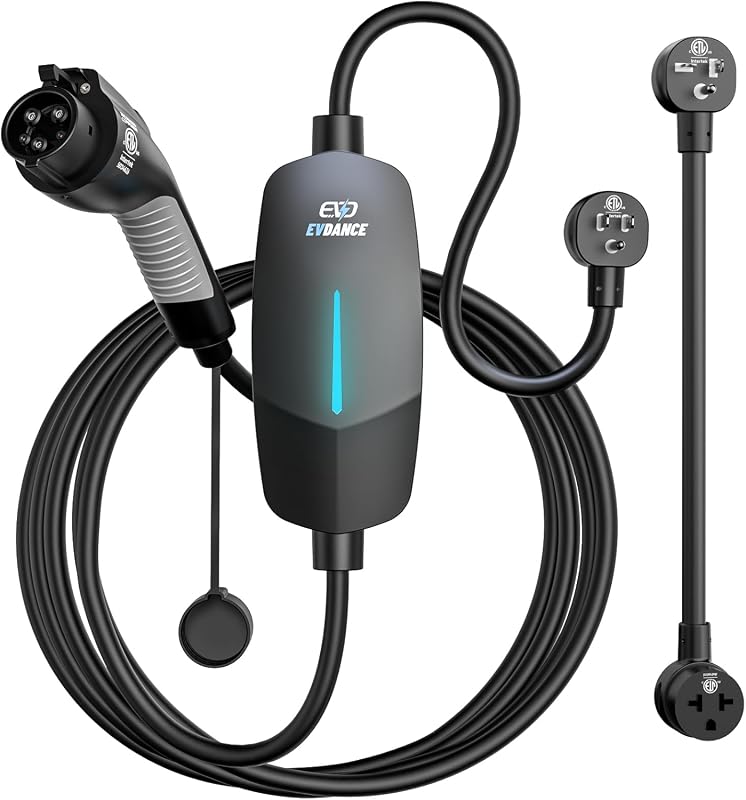
Installation style affects both flexibility and electrical design. Some 48 A units are hardwired only, while others offer plug-in options at lower output levels or with specific receptacles. The product manual should always be the first source for the allowed installation method.
In many homes, hardwiring is the cleaner long-term answer for a 48 A circuit. Plug-in setups can be convenient, but they depend on the correct receptacle, breaker, and equipment design.
Is a 48 Amp Charger Worth It for Your EV?
For many drivers, yes — especially if you want fast overnight recovery, have a larger battery pack, or share charging between two vehicles. But a 48 A charger is not automatically the best value if your vehicle cannot use more than 32 A or 40 A AC charging.
When 48 amps makes sense for daily driving, commuters, and larger battery packs
48 A is a strong fit for commuters who regularly add 30 to 80 miles of driving per day and want the battery ready again by morning. It is also attractive for households with larger EV batteries, second vehicles, or a schedule that leaves only a short overnight window.
- Daily drivers who want a large overnight recharge buffer
- Households with larger battery packs or multiple EVs
- Vehicles capped at 32 A or 40 A AC charging
- Homes with limited panel headroom
When a 32 amp or 40 amp charger is just as practical
If your EV tops out at 32 A or 40 A AC charging, buying a 48 A unit usually does not increase charging speed. In that case, a lower-cost charger can be just as practical and may be easier to install on a smaller circuit.
This is why many shoppers compare a 48 A unit with a more modest option before buying. If you are weighing value, our related guide on the 40 amp versus 48 amp question can help frame the trade-off.
How to compare charging speed by vehicle model and onboard charger limit
Start with the vehicle’s maximum AC charging rate in the owner’s manual or manufacturer specs. Then compare that limit with the EVSE’s amperage, the circuit capacity, and the expected voltage. The lower number among those factors usually sets the real charging speed ceiling.
A 48 A EVSE is most useful when the vehicle can actually accept close to that level. If the car is limited to 7.2 kW, 9.6 kW, or another lower value, the charger’s extra capacity is mostly future-proofing.
Electrical Requirements, Panel Capacity, and Code Considerations
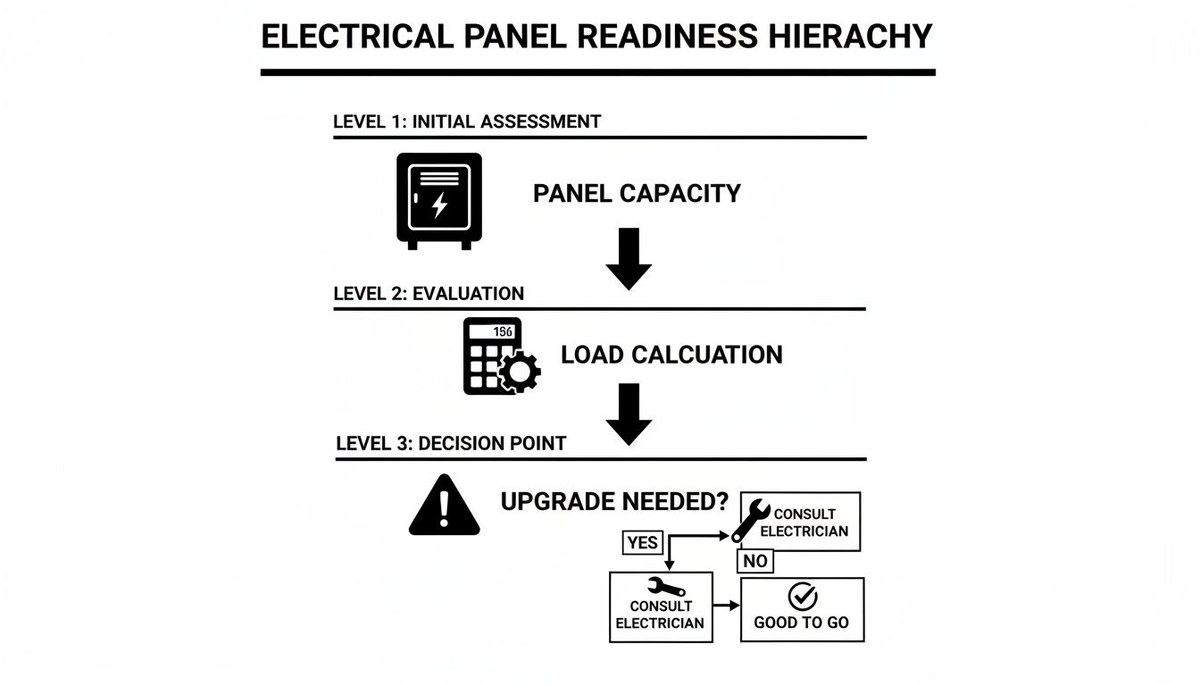
A 48 A EV charger is a serious electrical load. The equipment manual, local electrical rules, and a qualified electrician’s assessment should drive the installation plan, not a generic assumption based on the charger’s label.
Do not guess on breaker size, wire size, receptacle selection, grounding, or torque specs for a 48 A EVSE. Incorrect installation can create fire, shock, or equipment-damage risk. Stop and use a qualified electrician if any part of the circuit is uncertain.
How to read the product manual for breaker, wire, and circuit guidance
Use the manual to confirm whether the charger is plug-in or hardwired, what breaker size it requires, whether a GFCI-protected circuit is needed, and whether the unit has any special wiring or torque instructions. Those requirements can vary by product.
For a similar installation topic, see our article on 40 amp EV charger breaker size, which shows why circuit sizing must follow the actual equipment instructions.
Panel load, service capacity, and when an electrician may recommend an upgrade
Even if a 48 A charger is electrically possible, your main panel may not have enough spare capacity. An electrician may recommend a load calculation, a load-management device, or in some cases a service upgrade if the existing panel is already close to its limit.
Panel capacity, dedicated-circuit design, mounting location, and wire routing all affect whether a 48 A charger is straightforward or expensive to install. A load calculation is often the practical starting point.
Permits, local code rules, and why installation requirements vary by U.S. location
Permits and inspections are often required, but the exact rules depend on the jurisdiction and the adopted electrical code. Local utility programs can also add requirements for load management, metering, or inspection documentation.
Electrical-code adoption, permitting, inspections, utility requirements, and local rules vary. Cite the current local or primary authority for specific requirements.
Plug-In vs Hardwired 48 Amp Chargers: Which Setup Fits Your Home?
Both setup styles can work well, but they fit different homes and priorities. The right choice usually depends on whether you value portability or a cleaner permanent installation.
Best when you want easier removal or relocation and the product manual supports a receptacle-based install.
Best when you want a permanent, tidy setup and the charger is designed for direct wiring at 48 A.
Convenience, portability, and outlet compatibility
Plug-in chargers are easier to take with you if you move, but they depend on the right outlet and plug format. Hardwired units are less portable, yet they avoid receptacle wear and can be a better fit for a dedicated long-term charging spot.
Safety, long-term reliability, and thermal considerations at higher amperage
At 48 A, connection quality matters. High continuous current makes correct terminations, proper torque, and sound equipment design more important. That is one reason many electricians prefer hardwiring for higher-amperage home EVSEs when the product allows it.
Cable length, garage layout, and weather suitability for indoor or outdoor mounting
Choose cable length based on where your EV parks, not just where the outlet is. If the charger will be outdoors, verify the enclosure rating, operating-temperature range, and any storage or connector-capping guidance in the manufacturer documentation.
State verified enclosure/weather rating, connector storage guidance, operating-temperature limits, and manufacturer restrictions.
Charging Cost Breakdown: What 48 Amp Speed Means for Your Electric Bill
Faster charging does not automatically mean more expensive charging per kWh, but it can affect when you use electricity and how much you pay under time-of-use plans. Installation cost is a separate issue from energy cost.
How to estimate cost using electricity rate, kWh delivered, and charging losses
A simple estimate is: kilowatt-hours added × electricity rate = energy cost, then adjust for charging losses. For example, if you add 30 kWh and your rate is $0.18 per kWh, the raw energy cost is $5.40 before losses, taxes, or fees.
State assumptions; rates, taxes, time-of-use pricing, and losses vary.
Time-of-use pricing and why faster charging does not always mean cheaper charging
If your utility charges less overnight, a 48 A charger can help you finish sooner during the cheaper window. But if your plan includes demand charges, peak pricing, or a narrow off-peak window, the best cost strategy may be to schedule charging rather than simply charge as fast as possible.
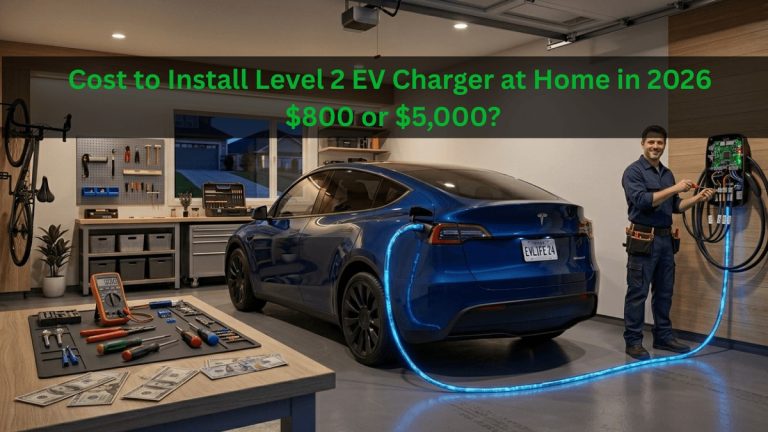
Installation and equipment costs: charger price, electrician labor, permits, and possible panel work
The charger itself is only part of the budget. You may also need electrician labor, permit fees, conduit, wiring, a receptacle or disconnect if required, and possibly a panel upgrade or load-management equipment. Those costs can easily outweigh the difference between a 32 A and 48 A EVSE.
Battery Health and Charging Efficiency: Does Faster Home Charging Matter?
For most drivers, Level 2 AC charging is the everyday sweet spot because it is convenient and generally gentler than frequent DC fast charging. Still, battery health depends on temperature, state of charge, chemistry, and how often the car sees high-power charging.
Explain relevant charging habits, temperature, state of charge, chemistry/thermal-management context, and manufacturer guidance. Avoid universal battery-health rules.
Manufacturer guidance vs general battery-care patterns for Level 2 charging
Some automakers provide specific recommendations about daily charging limits, storage habits, and long-term battery care. Those instructions should outweigh generic rules. In general, many owners use Level 2 charging to keep the battery in a comfortable operating window without relying on frequent rapid charging.
AC charging, heat, state of charge, and chemistry/thermal management basics
Heat is one of the main reasons charging speed can change. A battery that is cold, very hot, or near the top of its charge range may accept energy more slowly. The vehicle’s thermal-management system and battery chemistry both influence that behavior.
How 48 amp home charging compares with DC fast charging for battery wear and convenience
DC fast charging is much quicker, but it is usually used for travel or occasional top-ups rather than daily home use. A 48 A home charger is slower than DC fast charging, yet it is often more convenient for overnight charging and may be easier on the battery than repeated high-power DC sessions.
Smart Features, Warranty, and Support: What to Look for in a 48 Amp Charger
Once the electrical basics are covered, the best 48 A charger for your home often comes down to software, durability, and support. These features can matter as much as raw amperage over the life of the product.
App controls, scheduling, load management, and energy tracking
Smart features can help you schedule off-peak charging, monitor energy use, and sometimes participate in utility programs. Before buying, check whether the app is required for basic operation, whether there are subscription fees, and what happens if the cloud service is unavailable.
Weather ratings, cable quality, and build features that matter in U.S. homes
For garages and outdoor driveways, look for a verified weather rating, sturdy cable strain relief, and a connector holster or cable-management system. Do not assume a product is outdoor-safe just because it looks rugged; verify the manufacturer’s documentation.
Warranty length, customer support, and what to verify before buying
A strong warranty is useful only if the company is responsive and the terms are clear. Check the U.S. warranty period, what parts are covered, whether labor is included, and how support handles firmware, replacement parts, or connector issues.
How to Compare Popular 48 Amp Level 2 Chargers Side by Side
When comparing chargers, use the same criteria for every product. That keeps the decision focused on what actually changes ownership value: compatibility, installation, speed, weather suitability, smart features, and support.
Use the same criteria: max amperage, kW output, plug-in or hardwired, cable length, smart features, warranty, and price
A fair comparison starts with verified specs. Compare the charging current, maximum output, connector type, installation method, cable length, safety listing, app features, and warranty. Price matters, but only after the electrical and compatibility details are confirmed.
| Item | Verified value | Why it matters |
|---|---|---|
| Maximum amperage | 48 A | Sets the EVSE ceiling for compatible vehicles |
| Vehicle AC limit | Model-specific | Can cap charging below 48 A |
| Installation type | Plug-in or hardwired | Affects cost, flexibility, and electrical design |
| Cable length | Model-specific | Determines parking reach in garage or driveway |
| Warranty | Check current manufacturer terms | Supports long-term ownership value |
Which charger type fits apartment garages, single-family homes, and multi-EV households
Apartment garages often need portability, landlord approval, or a simpler plug-in arrangement if the electrical setup allows it. Single-family homes with dedicated parking often benefit from hardwired 48 A units. Multi-EV households may prioritize load management and scheduling over raw speed alone.
Evidence limits for product reviews and why specs should be verified against current manufacturer documentation
Product specs, certifications, connector support, and installation requirements can change. Because no verified first-hand testing evidence is available here, the safest buying approach is to confirm every important detail against current manufacturer documentation before purchase.
- Best for: U.S. EV owners who want fast overnight Level 2 charging and whose vehicle can actually accept close to 48 A AC.
- Think twice if: Your EV is capped at 32 A or 40 A, or your panel cannot comfortably support a 48 A circuit.
- Next step: Verify your vehicle’s AC charging limit, then confirm the charger’s installation requirements with the manual and a qualified electrician.
48 Amp EV Charger Speed: The Bottom Line
For most home charging setups, 48 amps is fast enough to make overnight charging easy and predictable. The key is to match the EVSE to the vehicle’s onboard charger limit and to the home’s electrical capacity, rather than assuming the highest amperage is always the best choice.
Frequently Asked Questions
It often adds roughly 30 to 45 miles of range per hour, but the exact number depends on vehicle efficiency, charging losses, temperature, and the car’s onboard charger limit.
Only if your vehicle can accept more than 40 amps of AC charging and your home electrical setup supports the higher load. Otherwise, the extra capacity may not improve actual charging speed.
No. The EVSE may support 48 amps, but the vehicle’s onboard charger must also accept that level of AC power. Some EVs are limited to 32 amps or 40 amps.
Not always, but many 48 amp units are hardwired only. If a plug-in option exists, the manual will specify the receptacle and circuit requirements.
Level 2 AC charging is generally the normal home-charging method for most EVs. Battery health depends more on temperature, state of charge, and charging habits than on the charger’s label alone.
Confirm your vehicle’s AC charging limit, the charger’s installation type, connector compatibility, cable length, safety listing, warranty, and whether your panel can support the circuit.

3 Comments