EV Charger Installation Cost: A Complete Guide
Most U.S. homeowners pay between $500 and $3,000 for a Level 2 home charger install, and the deciding factor is usually panel capacity and circuit distance rather than the charger itself. Get three itemized quotes and confirm your panel’s spare capacity before committing to a higher-amperage unit.
For most U.S. homeowners, EV charger installation cost lands somewhere between $500 and $3,000 for a Level 2 home setup, and the final number depends far more on your electrical panel, circuit run, and local permit rules than on the charger itself. The sections below break down what drives that range, how to compare quotes, and how to estimate your real cost per mile once the hardware is in.
- Compatibility: The vehicle’s onboard AC charger caps real charging speed, so a larger EVSE may.
- Performance: Higher amperage shortens session time but does not improve mi/kWh or range efficiency.
- Safety: Panel load calculations, permits, and inspections are local requirements — verify with the authority.
- Cost: Itemize equipment, labor, materials, permits, and any panel work so three bids are actually.
EV Charger Installation Cost: The Short Answer for U.S. Homes in 2026
A simple install — an existing 240 V circuit or an easy run from a panel with spare capacity — is usually the low end. A long conduit run, a detached garage, a panel upgrade, or a service upgrade pushes you toward the high end.
Equipment alone is rarely the biggest line item. Labor, permits, and any panel work typically decide whether you pay closer to $500 or closer to $3,000.
What the Typical $500–$3,000 Range Includes and Why It Varies
That range generally covers the EVSE (electric vehicle supply equipment — the box people call a “charger”), the electrician’s labor, conduit and wiring, a breaker, and permit and inspection fees. It does not include the vehicle’s onboard charger, which is built into the car and cannot be upgraded by your electrician.
Variation comes from four things: distance from the panel to the parking spot, whether your panel has usable spare capacity, whether local rules require a permit and inspection, and whether you choose a plug-in or hardwired unit.
Three Quotes to Compare: Equipment, Labor, and Permit Fees
Ask each electrician to break the bid into separate lines: EVSE cost, labor, materials (wire, conduit, breaker, receptacle or hardwire kit), permit fee, and any panel or service work. Bids that lump everything into one number are hard to compare and easy to inflate.
Get three quotes and make sure all three describe the same amperage, the same installation type, and the same circuit length. Comparing a 40 A plug-in bid against a 48 A hardwired bid tells you nothing useful.
Charger and EVSE Specs That Drive Installation Cost
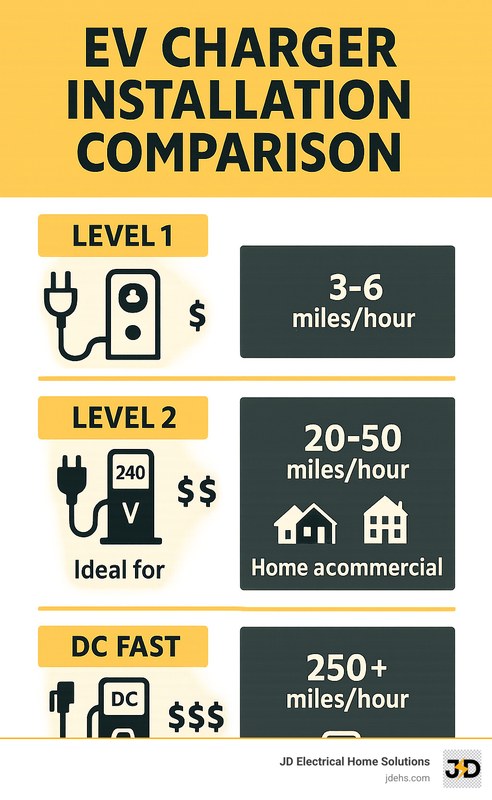
Higher amperage does not automatically cost more, but it usually requires heavier wire and a larger breaker — and that is where the money goes. If you are weighing output levels, our look at whether 40 amps is enough for a Level 2 EV charger covers the practical trade-off.
Connector Type, Vehicle Onboard-Charger Limit, and EVSE Amperage/kW
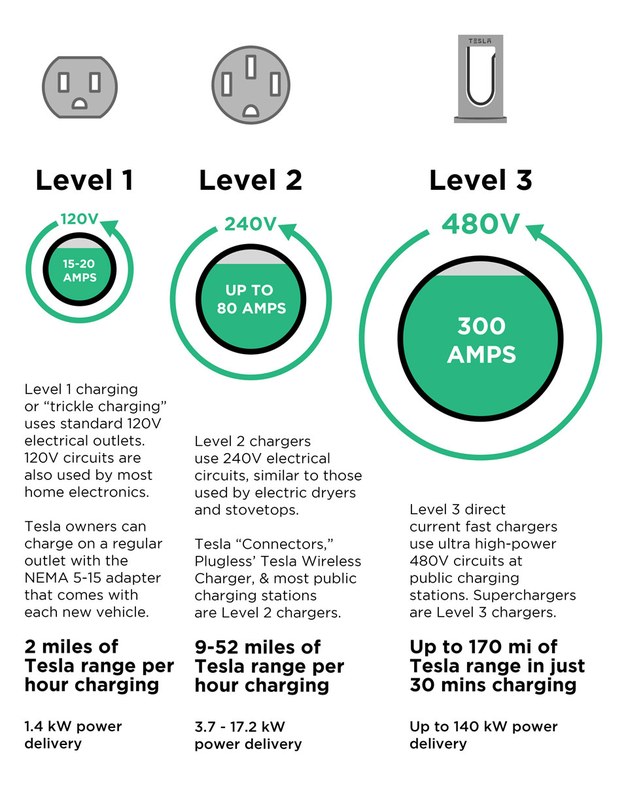
The EVSE sets the ceiling, but the vehicle’s onboard AC charger sets the real limit. A 48 A EVSE connected to a car with a 32 A onboard charger will still deliver about 32 A. Buying more EVSE than the car can accept raises equipment cost without raising charging speed.
Connector type matters too. J1772, NACS / SAE J3400, and CCS1 are not interchangeable at the plug, and AC versus DC support is a separate question from physical fit.
Cable Length, Weather Suitability, and Warranty Support
A longer cable can reduce or eliminate the need for a longer conduit run, which sometimes saves more in labor than the longer cable costs. Indoor versus outdoor mounting, enclosure ratings, and operating-temperature limits should be verified in the manufacturer documentation rather than assumed from appearance.
Warranty length and U.S. support channels are worth checking before you buy, because a charger that fails outside warranty becomes a labor cost again.
Plug-In vs Hardwired Chargers: Same Criteria, Different Cost and Fit
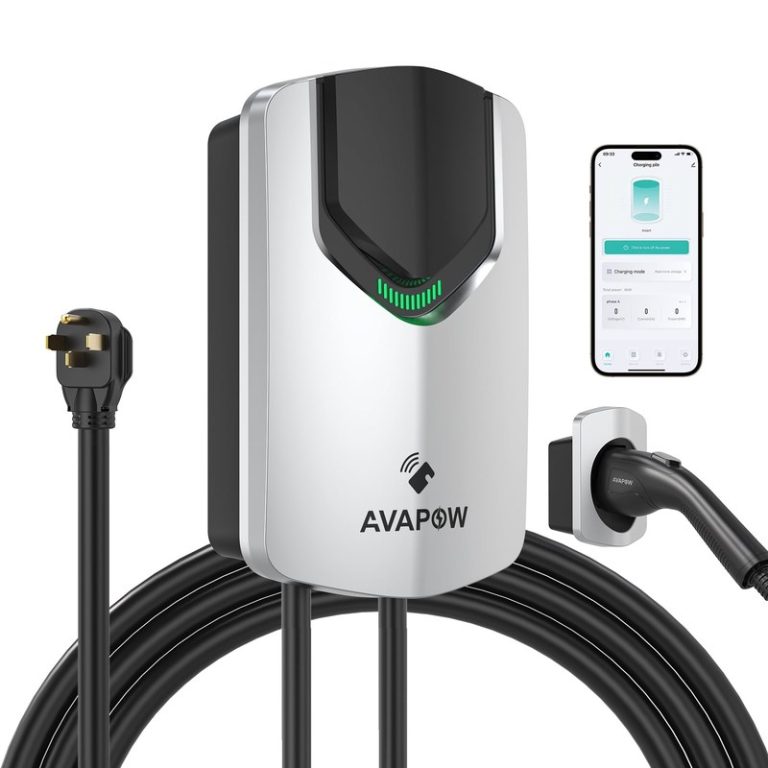
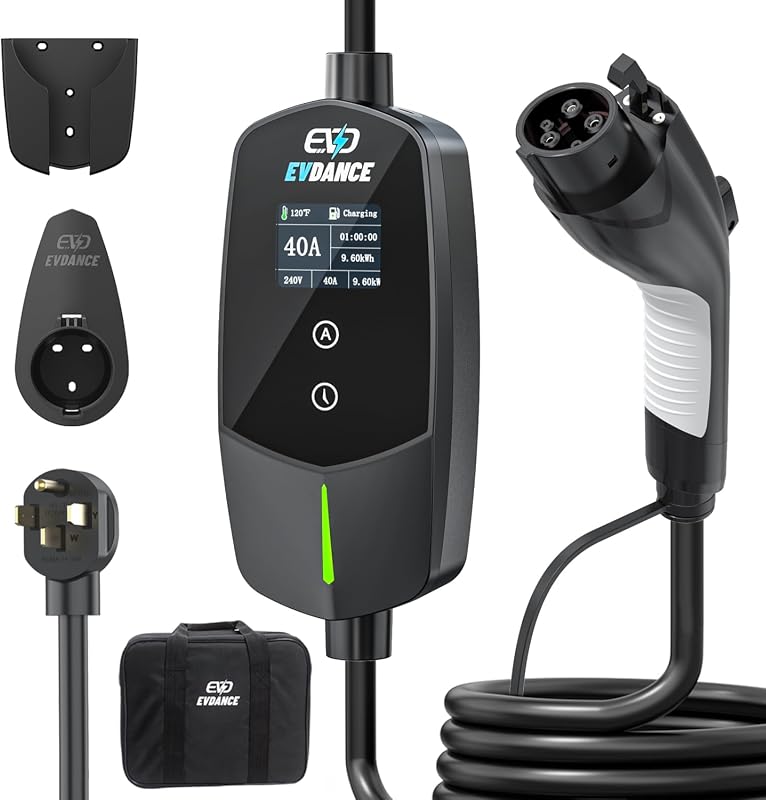
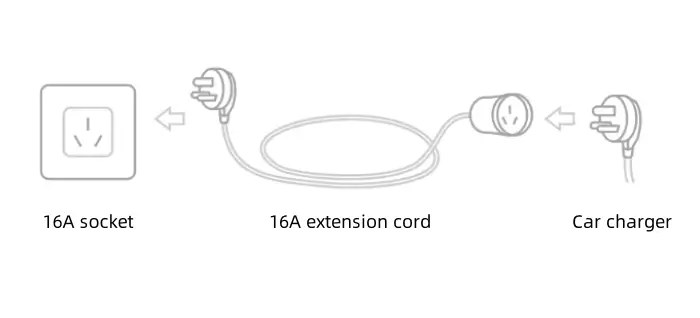
Uses a compatible 240 V receptacle and plug. Often easier to swap or take along, but typically limited to lower continuous current and adds a receptacle, breaker, and GFCI consideration.
Wired directly to the circuit with no plug. Usually needed for the highest continuous current, and generally the tidier long-term install for a permanent home charger.
Installation, Circuit, Code, and Convenience Trade-Offs
Plug-in setups are simpler to install and simpler to replace, which matters if you lease, move, or want to change hardware later. The trade-off is that continuous-duty EV charging at higher amperage generally calls for hardwiring, and receptacles add a connection point that must be specified correctly.
Hardwiring removes the plug and receptacle, supports higher continuous current, and reduces the number of physical connections. It is less portable and any future hardware change becomes an electrician visit.
Who Each Option Fits: Renters, Homeowners, Cold-Climate, and High-Power Drivers
Renters and anyone planning to move within a couple of years often lean plug-in. Homeowners staying put, drivers with long daily commutes, and owners of vehicles with large onboard chargers usually get more value from hardwired.
In cold climates, verify the manufacturer’s operating-temperature range and connector storage guidance — cold-weather performance depends on the EVSE rating, the vehicle, and battery temperature, not on marketing claims.
Electrical Panel, Circuit, and Permit Costs: What the Manual and Local Code Require
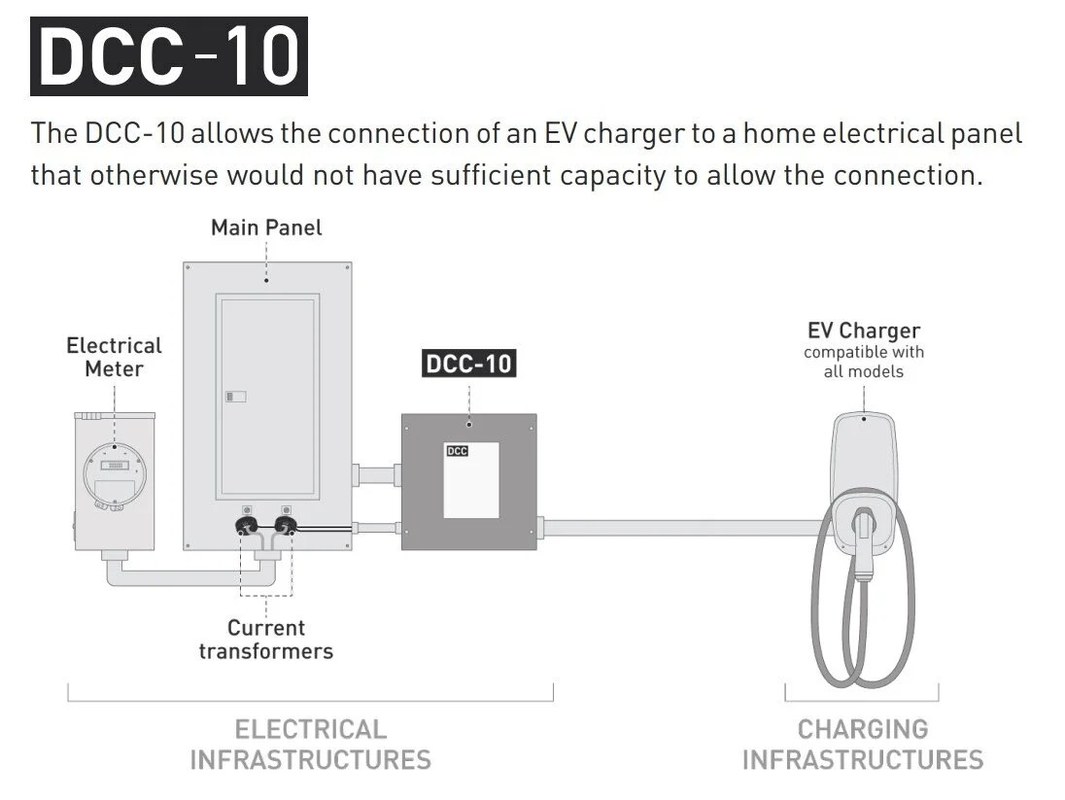
Panel work is the single largest variable in EV charger installation cost. A panel with usable spare capacity may need only a new breaker and a circuit run. A full panel, or a service that cannot support the added load, can turn a modest job into a major one.
Load Calculations, Panel Upgrades, and Service Capacity
A qualified electrician performs a load calculation to determine whether your existing service can carry the new continuous load. If it cannot, options include a panel upgrade, a service upgrade, or an energy-management device that limits EVSE draw based on the home’s total usage.
Energy management can be cheaper than a service upgrade, but it adds hardware, configuration, and a dependency on that device working correctly. Ask what happens if the management module fails.
Permits, Inspections, and Why No Universal Breaker/Wire Answer Exists
There is no single correct breaker or wire size that applies to every 40 A or 48 A charger in every U.S. jurisdiction. Wire sizing depends on conductor type, insulation rating, ambient temperature, conduit fill, and terminations — and local code adoption varies.
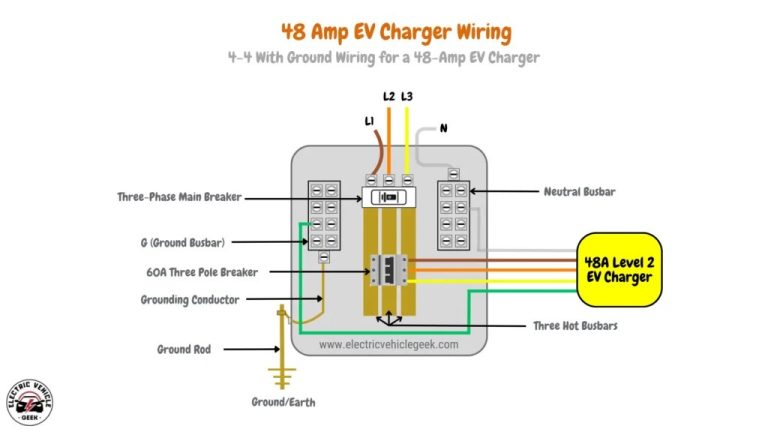
For background on how these factors interact, see our breakdown of 48 amp EV charger wire size and the separate question of whether a 48 amp EV charger needs a 60 amp circuit.
Adapters, Connectors, and Compatibility: What Adds Cost or Avoids an Upgrade
Important: Physical fit alone does not prove every AC or DC charging mode is supported.
Source Connector, Destination Connector, and Adapter Direction
Adapters are directional. An adapter that lets a NACS vehicle use a J1772 AC EVSE is not the same product as an adapter that lets a J1772 vehicle use a NACS AC EVSE. Some adapters are AC-only, some are DC-only, and some are neither.
Confirm the source connector, the destination connector, and the supported charging mode from the adapter manufacturer before buying. A wrong-direction adapter is at best useless and at worst a thermal risk.
AC vs DC Mode, Vehicle/Network Restrictions, Power Limits, Thermal Safety, and Firmware
A connector shape does not define the protocol. AC Level 2 charging and DC fast charging use different pins, different communication, and different safety requirements. Network restrictions — such as a charging network limiting which vehicles or adapters may be used — are separate again.
Firmware matters for smart EVSE and for some vehicles. Check whether the manufacturer publishes update history and what happens if cloud services or the app become unavailable.
How to Estimate EV Charger Installation Cost and Cost per Mile
Installation cost is a one-time number. Cost per mile is the ongoing number that decides whether home charging beats public charging for your situation.
Formula: Equipment + Labor + Permits + Electricity Rate × kWh Delivered ÷ Charging Efficiency
Upfront: EVSE + labor + materials + permit fees + any panel or service work. Ongoing: (electricity rate per kWh × kWh delivered) ÷ charging efficiency, then divide by your vehicle’s mi/kWh to get cost per mile.
Separating Electricity Rate, kWh Delivered, Charging Losses, and Time-of-Use Pricing
The rate on your bill is not the only number that matters. Taxes, fixed fees, demand charges, and time-of-use windows all change the effective price. Many utilities offer overnight EV rates that are materially lower than peak pricing.
Illustrative only. Rates, taxes, time-of-use pricing, demand charges, and charging losses vary by utility, vehicle, and conditions. Verify your current rate before relying on this math.
Range, Efficiency, and Charging Losses: mi/kWh, Wh/mi, Speed, Weather, HVAC, Elevation, Payload, Tires, Battery Temperature
Estimates only. Real-world mi/kWh drops in cold weather, at highway speed, with HVAC use, and with elevation gain.
Higher amperage does not improve mi/kWh — it only shortens session time. If you want to see how output translates into miles added per hour, our explainer on 48 amp EV charger speed walks through the math.
Battery Health and Charging Power: Manufacturer Guidance vs General Patterns
Home Level 2 charging is generally the gentlest routine option because power levels are low relative to DC fast charging and sessions usually happen at moderate states of charge. That said, the right habits depend on your specific vehicle.
Temperature, State of Charge, Charging Power, and DC Fast Charging Context
Charging power tapers as the battery fills and as temperatures move outside a comfortable band. That taper is normal and is managed by the vehicle, not the EVSE. DC fast charging stresses the pack differently than AC charging because of the higher rates involved.
Chemistry, Thermal Management, and Convenience Trade-Offs
Warranty, Smart Features, and Support: How to Vet EVSE Reviews and Installation Quotes
Reviews are useful for finding patterns, but they are not a substitute for documentation. Manufacturer spec sheets, installation manuals, safety-listing records, and warranty terms are the sources that actually settle compatibility and code questions.
Evidence Limits: What You Can and Cannot Confirm Without First-Hand Testing
Smart Charging, Load Management, Firmware Updates, and Support Terms
Smart EVSE features — schedules, utility integration, load sharing, and app control — can reduce cost by shifting charging into off-peak windows. They also add dependencies: account requirements, connectivity, firmware updates, subscription terms, and data handling.
Ask what the charger does if the app or cloud service is unavailable. A unit that cannot charge without a working account is a different ownership proposition than one that defaults to plug-and-charge.
Final Cost Checklist for EmissionsFreeCars Readers in 2026
Use the list below to turn a vague quote into a comparable, verifiable bid.
Questions to Ask Your Electrician and Charger Vendor
- What continuous current will the EVSE be configured to, and what does the manufacturer instruction manual specify?
- What does the load calculation show, and is a panel or service upgrade required?
- Is the work permitted, and who files the permit and schedules the inspection?
- What is the exact circuit length, wire type, and breaker specified in the bid?
- Is the EVSE safety-listed by a recognized testing laboratory, and what is the exact warranty term in the U.S.?
- What happens if the smart features, app, or cloud service stop working?
Matching Your Daily Miles, Panel Capacity, and TOU Rate to the Right EVSE
Start with daily miles, not maximum amperage. Multiply your daily miles by your vehicle’s Wh/mi, add a charging-loss margin, and compare that to the kWh a given amperage can deliver in your overnight window. Then check whether your panel can support it and whether a time-of-use rate makes the overnight window cheaper.
If a 40 A circuit covers your overnight needs, spending on a 48 A hardwired install plus a panel upgrade may not pay back. If you routinely arrive home near empty with a short off-peak window, the higher output can be worth the added cost.
- Best for: Homeowners with spare panel capacity who drive enough daily miles to make overnight Level 2 charging clearly cheaper than public charging.
- Think twice if: Your panel needs a service upgrade and your daily mileage is low enough that a lower-amperage circuit already covers it.
- Next step: Get three itemized quotes that name the same amperage, circuit length, and installation type, then verify every spec against the manufacturer manual.
Frequently Asked Questions
For a Level 2 home installation, a commonly cited range is roughly $500 to $3,000, covering the EVSE, labor, wiring and conduit, a breaker, and permit fees. The low end usually reflects a short run from a panel with spare capacity; the high end typically involves a long conduit run, a detached garage, or a panel or service upgrade.
Not always. A qualified electrician performs a load calculation to see whether your existing service can carry the added continuous load. If it cannot, options include a panel upgrade, a service upgrade, or an energy-management device that limits EVSE draw based on the home’s total usage. Which option fits depends on your service size, other large loads, and local requirements.
Plug-in units often cost less upfront because they use a compatible 240 V receptacle rather than being wired directly, and they are easier to replace. Hardwired installs usually cost more in labor but support higher continuous current and remove the plug-and-receptacle connection point. Compare quotes for the same amperage and circuit length to make a fair call.
There is no universal answer. Conductor sizing depends on wire type, insulation rating, ambient temperature, conduit fill, and termination ratings, and local code adoption varies. Continuous-duty EV loads also follow specific sizing rules. Confirm the requirement in the manufacturer instructions and with your local authority rather than relying on a generic chart.
Sometimes, but adapters are directional and mode-specific. An adapter that lets a NACS vehicle use a J1772 AC EVSE is not the same as the reverse, and some adapters support only AC or only DC. Physical fit does not prove the charging mode is supported, so verify the source connector, destination connector, and supported mode with the adapter manufacturer.
Multiply your electricity rate by the kWh delivered, divide by charging efficiency to account for losses, then divide by your vehicle’s mi/kWh. For example, $0.16 per kWh at roughly 90% Level 2 efficiency works out to about $0.054 per mile at 3.3 mi/kWh before taxes and fixed fees. Your utility rate, time-of-use window, and real-world efficiency will change the result.