Is 40 Amps Enough for a Level 2 EV Charger?
Yes—40 amps is enough for many Level 2 home charging setups, especially for overnight charging and normal daily driving. The main limiting factors are your EV’s AC intake rate, your home electrical capacity, and how fast you need to recharge.
Is 40 Amps Enough for a Level 2 EV Charger? For many US EV owners, yes—40 amps is enough for overnight home charging and typical daily driving, but whether it is enough for your setup depends on the vehicle’s AC charging limit, your electrical capacity, and how quickly you want to refill range.
- About 9.6 kW: A 40-amp Level 2 charger at 240 volts delivers roughly 9.6 kW before losses.
- Vehicle limit matters most: Your EV’s onboard charger can cap AC charging below 40 amps, even if the.
- Great for overnight use: For typical US daily driving, 40 amps is often enough to refill overnight.
- Installation still matters: Breaker, wiring, panel capacity, permit rules, and manufacturer instructions must all match the load.
Direct Answer: Is 40 Amps Enough for a Level 2 EV Charger?
In practical home-charging terms, 40 amps is a strong middle-ground level. It is often enough to cover a full day’s commuting overnight, and for many drivers it leaves plenty of buffer even if the battery is fairly depleted when they plug in.
The important catch is that a charger’s current rating is only one part of the equation. Your EV may accept less than 40 amps, and the charging speed may also be affected by temperature, state of charge, and charging losses. So the better question is not just whether 40 amps is “enough,” but whether it matches your vehicle and your home electrical setup.
What 40 Amps Means in Real Charging Speed: Volts, Amps, and kW
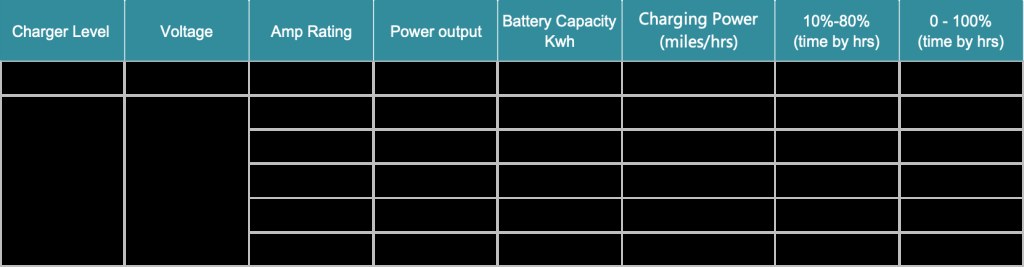
Level 2 charging in the US typically uses 240 volts AC. To estimate output, multiply volts by amps and divide by 1,000. At 40 amps and 240 volts, the result is about 9.6 kW.
Why 40A at 240V Delivers About 9.6 kW
The basic calculation is straightforward: 240 × 40 = 9,600 watts, or 9.6 kilowatts. That is the approximate power delivered by the EVSE setting, not a guarantee of what the battery receives at every moment.
Real-world charging can be lower because the vehicle’s onboard charger may cap intake below 40 amps, and some energy is lost as heat in the cable, electronics, and battery management process. That is why a “9.6 kW charger” is best treated as an estimate of maximum AC output rather than a fixed delivered number.
Use verified values and distinguish charger setting from circuit capacity.
How That Translates to Miles of Range per Hour
Range added per hour depends heavily on the EV’s efficiency. As a rough estimate, a 9.6 kW AC charge rate may add somewhere around the high teens to low 30s of miles per hour for many EVs, but that is only a broad estimate. Larger, less efficient vehicles may gain fewer miles per hour than efficient sedans or crossovers.
If you want a more useful mental model, think in terms of “overnight recovery.” A 40-amp setup can often replace a typical daily commute and still leave time to spare. If your routine regularly drains a large share of the battery, the best answer depends on how many hours you have between plug-in and departure.
Label estimates clearly; actual results depend on vehicle intake limits, battery state, temperature, losses, and charging conditions.
When 40 Amps Is Plenty—and When It Is Not
For a large share of home-charging use cases, 40 amps is enough. It is especially practical if you charge at home most nights, drive a normal daily mileage, and do not need to recover a near-empty battery in just a few hours.
Best Fit for Overnight Home Charging and Typical Daily Driving
A 40-amp Level 2 charger works well for drivers who park for 8 to 12 hours overnight. If you commute, run errands, and then plug in at home, a 9.6 kW setup is usually more than adequate to top off before morning.
This is also a sensible choice for households with one EV or a mild two-EV schedule, provided the vehicles are not both trying to charge aggressively at the same time. If your charging window is long, the difference between 40 amps and a higher-output unit may not matter much in daily life.
Cases Where a Higher-Output EVSE Makes More Sense
There are situations where 40 amps may feel limiting. If you routinely arrive home with a very low battery, need a fast turnaround before the next trip, or want to support two EVs with short charging windows, a higher-output EVSE may be worth considering—if the car can accept it and the electrical system can support it.
Some newer EVs can take advantage of 48 amps, 60 amps, or more on AC charging, but a bigger charger only helps if the vehicle and installation both support the higher current. If your car caps AC intake at 32 amps or 40 amps, a larger EVSE will not make the car charge faster.
- Overnight home charging
- Typical daily driving recovery
- EVs that accept 40 amps or less on AC
- Very short charging windows
- Homes that need to share limited electrical capacity
- Vehicles that can use much more AC power and need faster turnaround
Vehicle Intake Limits Matter More Than Charger Size
One of the biggest misunderstandings in home charging is assuming the EVSE determines the actual charging speed. In AC charging, the vehicle sets the maximum intake rate, and the charger can only supply up to that limit.
Why the Car Sets the Maximum AC Charging Rate
The onboard charger inside the vehicle converts AC to DC for the battery. That hardware has its own maximum rating, which may be 7.2 kW, 9.6 kW, 11.5 kW, or another value depending on the model and trim. If the onboard charger is limited below 40 amps, a 40-amp EVSE will not speed things up beyond the vehicle’s ceiling.
That is why some EV owners see no practical benefit from moving beyond a mid-tier charger. A larger EVSE can be future-friendly, but only if you expect to own a vehicle that can use the extra power later.
How to Check Your EV’s Onboard Charger Rating
Look in the owner’s manual, charging guide, or manufacturer specifications for the vehicle’s maximum AC charging rate. You may see it listed in amps, kW, or both. If the documentation is unclear, verify whether the rating refers to Level 2 AC charging and not DC fast charging, because those are different systems.
It also helps to check whether your vehicle supports J1772, NACS/SAE J3400, or an adapter-based solution on the AC side. Connector compatibility is not the same thing as charging-rate compatibility.
Charging Circuit, Breaker, and Installation: What Actually Needs to Match
For home installation, the charger setting, circuit capacity, breaker size, receptacle or hardwire method, and local code requirements all need to line up. A charger being set to 40 amps does not automatically mean the rest of the installation is correct for that load.
Charging Current vs. Circuit Capacity
EV charging is commonly treated as a continuous load, so the charging current and the supporting circuit must be sized with that in mind. The charger’s current setting is the operating current the EVSE will try to deliver; the circuit and breaker are the electrical infrastructure that must safely support it.
Because installation requirements vary by equipment and jurisdiction, the safest approach is to follow the manufacturer instructions and applicable local rules rather than assuming a generic breaker size is acceptable. For a deeper look at the relationship between charger current and breaker sizing, see our 40 amp EV charger breaker size guide.
Why Installation Details Affect Performance and Safety
Even if 40 amps is enough for your charging needs, a poor installation can create nuisance trips, heat buildup, or unnecessary limitations. Cable routing, mounting location, receptacle quality, hardwiring decisions, and panel capacity all affect how well the charger works day to day.
If your home panel is already near capacity, an electrician may recommend load management, a different charging current, or a different installation strategy. The right answer is not always the highest amperage available; it is the setup your home can support safely and consistently.
Connector and Compatibility Considerations for US EV Owners
In the US, the connector on the EVSE and the vehicle inlet must match, or you need a compatible adapter that is approved for the specific charging direction and use case. That is especially important as more vehicles and chargers move toward NACS/SAE J3400, while many existing Level 2 home chargers still use J1772.
J1772 vs. NACS/SAE J3400 on the Vehicle and Charger Side
Many current Level 2 home chargers are J1772-based, while some newer equipment and vehicles support NACS/SAE J3400. A physical connector match is necessary, but it does not by itself confirm the vehicle can charge at the expected AC rate.
If you are comparing equipment, check the vehicle inlet, the EVSE connector, and whether any adapter is required. If you want a broader overview of this power class, our 40 amp Level 2 charger guide covers the category in more detail.
Important: Physical fit alone does not prove every AC or DC charging mode is supported.
AC Charging Only: Why This Question Does Not Apply to DC Fast Charging
“Is 40 amps enough?” is mainly an AC home-charging question. It does not describe DC fast charging, where power levels are much higher and the charging hardware works differently. If you are comparing road-trip charging, the relevant metric is usually DC kW, not a 40-amp Level 2 EVSE.
Weather, Cable Length, and Everyday Home Use Factors
Real-world convenience matters. A charger can be technically sufficient on paper and still feel awkward if the cable is too short, the mounting location is poor, or outdoor conditions make daily use less convenient.
How Temperature and Outdoor Installation Can Influence Usability
Cold weather can slow charging or reduce the vehicle’s effective intake, especially when the battery is cold. Hot weather and direct sun can also affect cable handling and enclosure comfort, though the exact impact depends on the equipment’s design and installation location.
If the unit will be installed outdoors, verify the enclosure and cable are suitable for exterior use according to the manufacturer’s documentation. For practical outdoor considerations, see our 40 amp EV charger resource.
When a 40-Amp Unit Is Convenient for Garage or Driveway Charging
Forty amps is often a comfortable fit for a typical garage or driveway setup because it provides solid charging speed without pushing into the highest-end home electrical requirements. It can be a good balance for households that want reliable overnight charging without overbuilding the system.
That said, if your parking situation requires a very long cable run or a challenging mounting location, the practical usability of the charger may matter more than the amperage on the label.
Cost, Efficiency, and Smart Features: Do They Change the Answer?
Smart features can improve convenience, but they do not change the basic physics of 40-amp charging. The main questions remain: how much power the car can accept, how much electrical capacity the home has, and whether the charging window is long enough.
What You Gain from Load Scheduling, App Control, and Energy Tracking
Scheduling can help you charge during off-peak utility hours, and app control can make it easier to monitor sessions or adjust current when needed. Energy tracking can also help you understand how much electricity you are actually using over time.
Those features are useful, but they do not make a 40-amp charger faster than its electrical limit. They mainly improve convenience, cost management, and visibility.
Why a Higher-Amperage Charger Is Not Always Better Value
If your EV cannot use more than 40 amps, paying for a larger EVSE may not deliver a meaningful real-world benefit. Even if your next vehicle might support more power, the value of upgrading depends on how soon that change is likely and whether your home’s electrical system can support it.
For a broader look at the category, including how 40-amp units are positioned in the market, see our 40 amp Level 2 charger guide.
Practical Next Step: How to Decide If 40 Amps Is Right for Your EV
The best decision comes from matching three things: your vehicle’s AC charging limit, your home’s electrical capacity, and your daily driving pattern. If those line up, 40 amps is often enough and may be the most sensible balance of speed and practicality.
Quick Decision Checklist for Range Needs, Vehicle Limits, and Home Electrical Capacity
Check your vehicle’s maximum AC charging rate, connector type, and any adapter requirements.
Verify panel capacity, circuit requirements, mounting location, cable reach, and permit needs.
Follow the manufacturer instructions and confirm the charger delivers normal charging behavior for your vehicle.
- Confirm connector and vehicle compatibility
- Confirm current, voltage, circuit, and installation requirements
- Check cable reach and indoor/outdoor suitability
- Verify safety listing, warranty, support, and app requirements where relevant
- Include installation and electricity costs, not only charger price
Compare options in our 40 amp EV charger resource
If you are still comparing equipment, focus on the actual charging limit your vehicle can use and whether your home can support the installation cleanly. That is usually more important than chasing a bigger amperage number.
- Best for: US EV owners who charge overnight, drive typical daily mileage, and have an EV that can use 40 amps or less on AC.
- Think twice if: you need very fast home turnaround, have limited panel capacity, or own a vehicle that can take substantially more AC power.
- Next step: verify your vehicle’s onboard charger limit and confirm the installation requirements with the charger manual and a qualified electrician if needed.
Frequently Asked Questions
At 240 volts, 40 amps is about 9.6 kW before losses. Actual charging speed depends on the vehicle’s onboard charger, battery state, and conditions, so the real result may be lower.
No. The connector may fit, but the vehicle must also support the AC charging standard and accept the charging rate. Some EVs will charge at less than 40 amps even when connected to a 40-amp EVSE.
Not necessarily, and breaker sizing should not be guessed. EV charging is commonly treated as a continuous load, so the installation must follow the equipment instructions and local electrical requirements.
It can be, if the charging schedule is staggered and each vehicle has enough time to charge. If both vehicles need fast turnaround, a load-managed or higher-capacity setup may be better.
AC charging at 40 amps is generally a normal home-charging use case, but battery care guidance varies by manufacturer and model. Follow the vehicle maker’s recommendations for daily charge limits and charging habits.
Choose 40 amps if it fits your daily driving, overnight charging window, and electrical capacity. Go higher only if your vehicle can use the extra power and your installation can safely support it.

19 Comments