Can I Charge My Tesla at 40 Amps? What to Know
Yes, many Tesla owners can charge at 40 amps on Level 2 AC if the vehicle, EVSE, and home circuit are compatible. The key limitation is that actual charging current may be lower than the charger’s maximum, depending on the car and conditions.
can i charge my tesla at 40 amps is usually yes, as long as your Tesla model, charging equipment, and home electrical setup all support that current. The real question is not just whether the car can accept it, but whether the EVSE, circuit, and installation are correctly matched for continuous Level 2 charging.
- Yes, usually: 40 amps is a common Level 2 home-charging rate for compatible Tesla setups.
- Not automatic: The car may draw less than 40 amps based on onboard limits and battery.
- Install matters: Continuous-load rules, circuit design, and local code are just as important as charger output.
- Verify compatibility: Connector type, adapter needs, and EVSE instructions should all be checked before installation.
Can You Charge a Tesla at 40 Amps? Short Answer and What It Means
For most Tesla owners in the U.S., 40 amps is a normal Level 2 home-charging rate if the vehicle and charger are compatible. In practical terms, that means a faster home charge than a standard 120V outlet, without moving into DC fast charging territory.
If you are comparing equipment, a 40 amp Level 2 charger is often chosen because it offers a strong home-charging speed without the electrical demands of higher-output setups. Just remember that the car decides how much current it will actually draw within its own AC charging limits.
How 40 Amps Translates to Charging Speed: Volts, kW, and Real-World Range
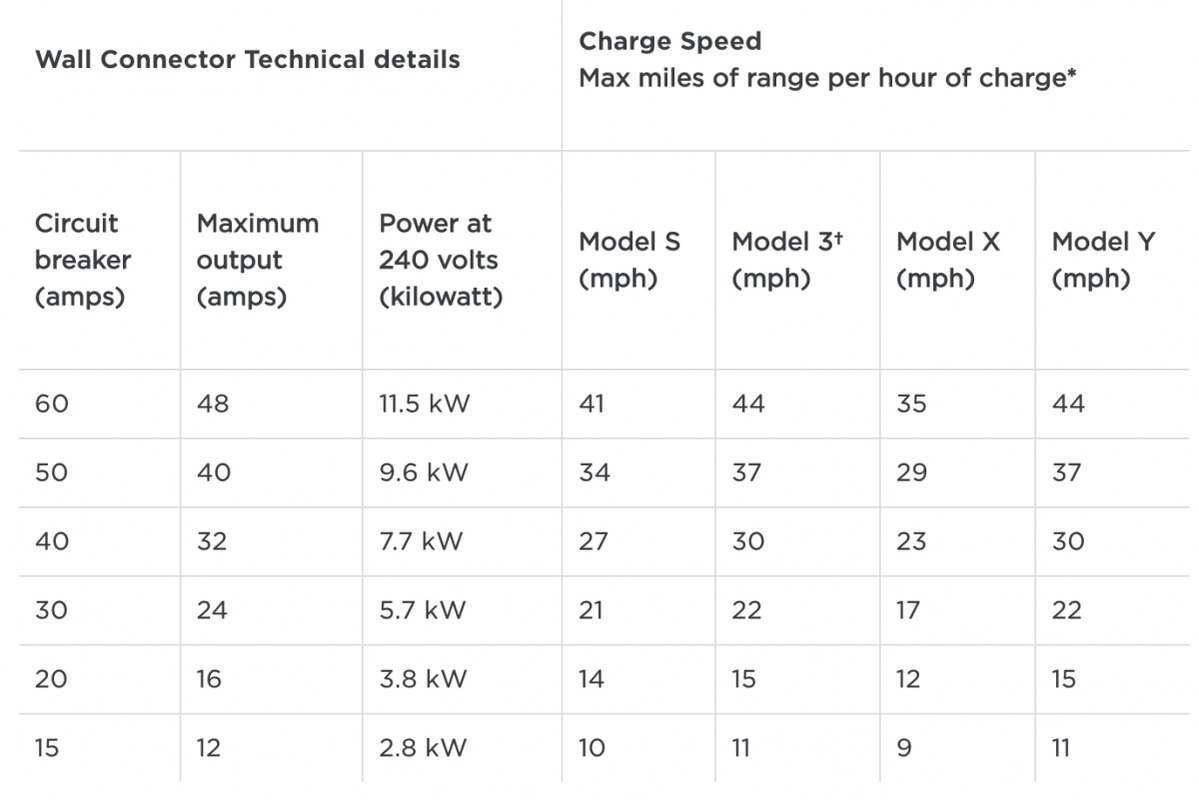
Charging power is roughly voltage × current ÷ 1000. On a typical U.S. 240V circuit, 40 amps works out to about 9.6 kW of theoretical power, before charging losses and vehicle-side limits are considered.
Use verified values and distinguish charger setting from circuit capacity.
That does not mean every Tesla will take a full 9.6 kW. The onboard charger, battery temperature, state of charge, and other conditions can reduce the actual draw. Real-world range added per hour also varies by model and efficiency, so any miles-per-hour estimate should be treated as an approximation rather than a promise.
Label estimates clearly; actual results depend on vehicle intake limits, battery state, temperature, losses, and charging conditions.
What Actually Limits Tesla AC Charging: Vehicle Intake vs. Charger Output
There are two separate limits in play: what the EVSE can supply and what the car can accept. A 40-amp charger does not force 40 amps into the battery; it only makes that current available if the Tesla is configured and able to draw it.
Why a Tesla may accept less than a 40-amp EVSE can provide
Common reasons include onboard charger limits, battery management behavior, cold battery temperatures, high state of charge, or a temporary reduction set in the car’s charging menu. In other words, if a Tesla charges below 40 amps, that does not automatically mean the charger is defective.
Compatibility Basics: Tesla Connector, J1772, and NACS/SAE J3400 on Level 2 AC Charging
Tesla charging compatibility depends on the vehicle inlet and the connector on the EVSE, not just on whether the plug physically fits. In the U.S., Tesla vehicles use the NACS / SAE J3400-style charging inlet, while many older Level 2 chargers use J1772.
Important: Physical fit alone does not prove every AC or DC charging mode is supported.
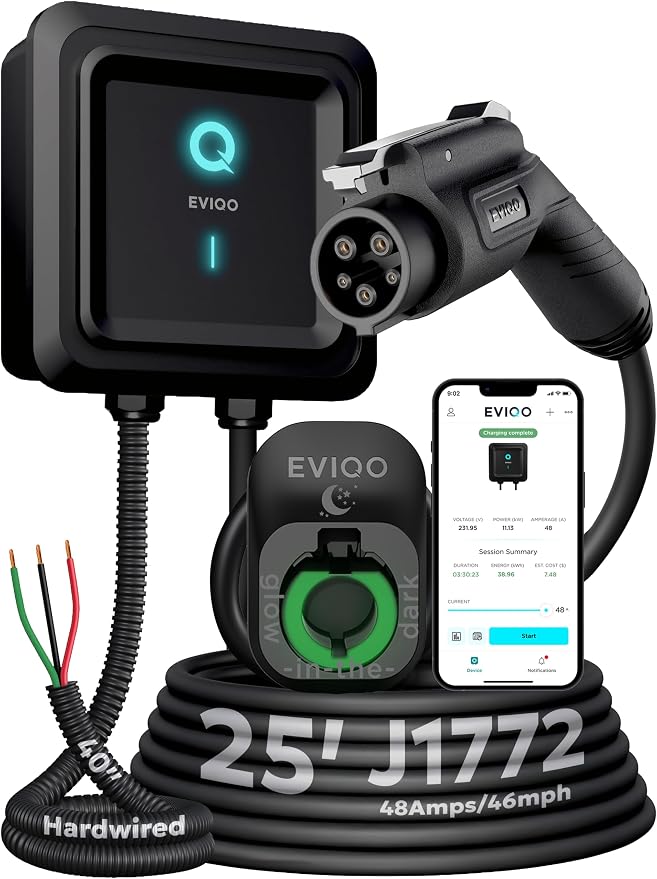
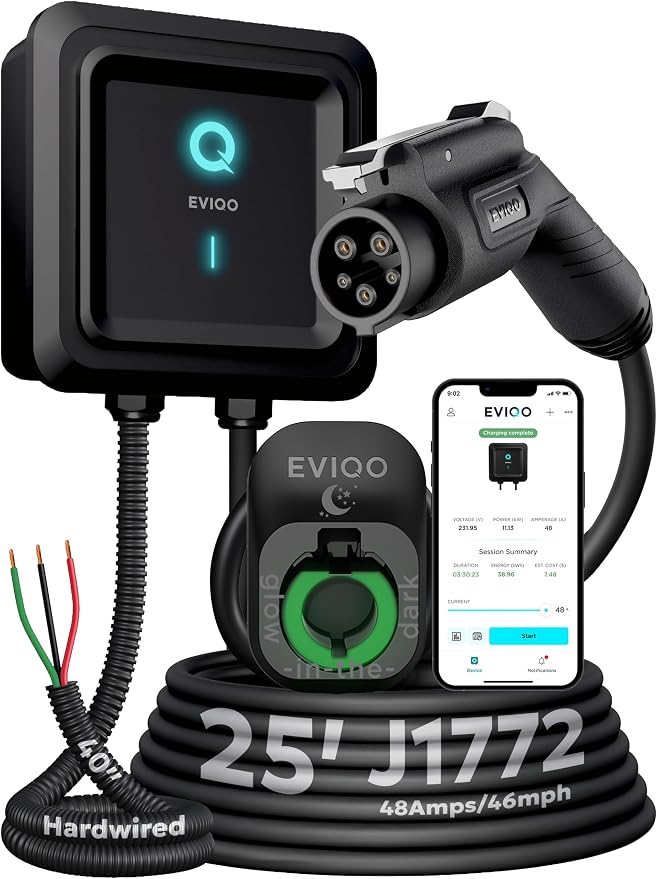
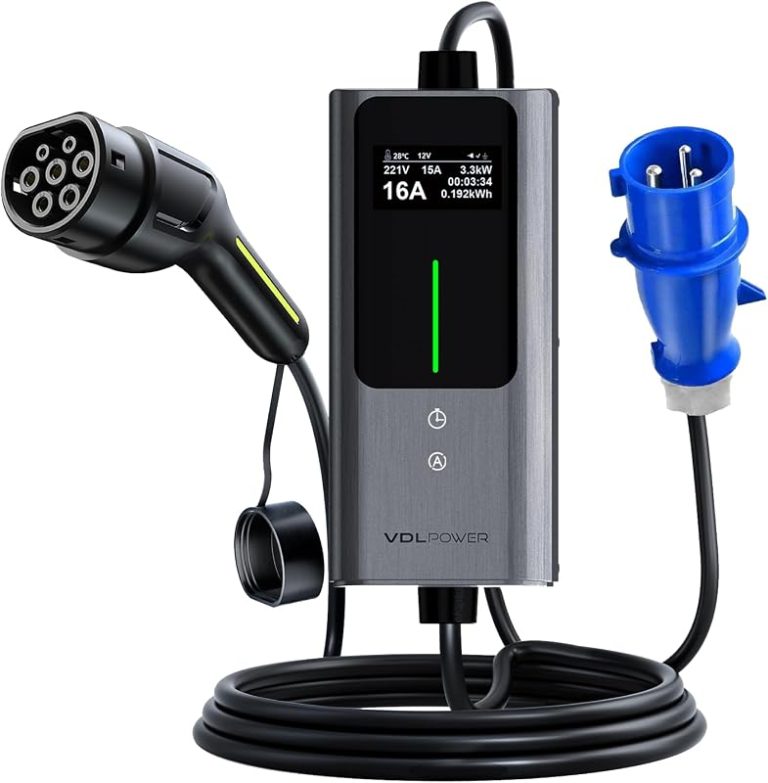
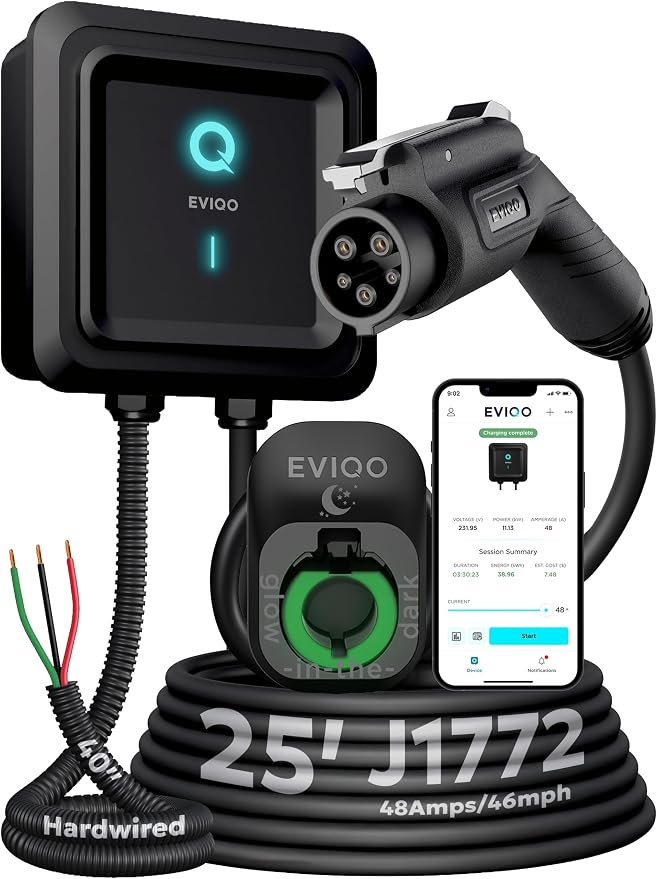
If you are comparing a Tesla-branded setup with a third-party charger, the key question is whether the EVSE supports Tesla’s AC charging path and whether any adapter is required. For a broader breakdown of equipment options, see our guide to the 40 amp EV charger.
When an adapter is needed and when it is not
An adapter is typically needed when the EVSE uses J1772 and the Tesla inlet expects NACS/SAE J3400 compatibility. No adapter is needed when the charger already uses the correct Tesla-compatible connector for AC charging. That said, adapters do not change the charger’s amperage rating or the car’s onboard charging limit.
Circuit and Installation Considerations for 40-Amp Home Charging
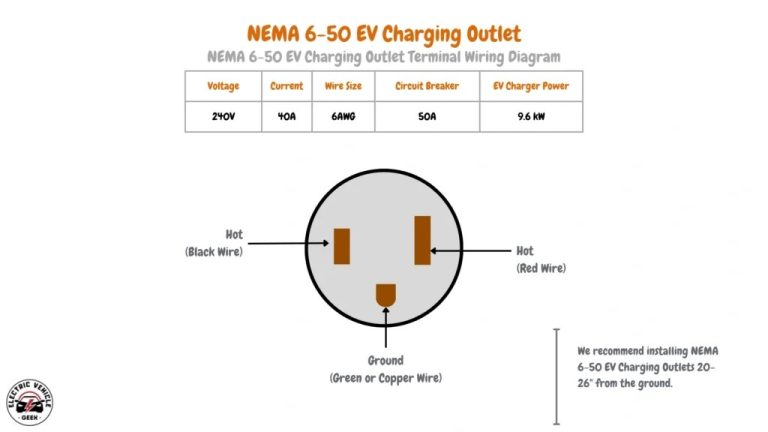
A 40-amp charging rate is not just a vehicle question; it is an electrical installation question. The charger, receptacle or hardwire setup, circuit design, and panel capacity all need to be appropriate for a continuous load.
Because 40 amps is a continuous load, many home installations are designed with headroom rather than matched exactly to the charging current. The exact breaker, wiring, receptacle, and hardwire requirements depend on the charger instructions, local code adoption, and the electrician’s load calculation for the home.
If you are specifically trying to understand the electrical side, our guide to 40 amp EV charger breaker size explains why breaker selection and charging current are related but not interchangeable.
Breaker rating, continuous load rules, and why circuit capacity is not the same as charging current
It is a common mistake to assume that “40 amps” means a 40-amp breaker is always the answer. The safe installation must follow the EVSE manual and applicable electrical requirements, which may require a larger circuit rating than the charging current itself. That is why installation details should be verified before purchase, not guessed afterward.
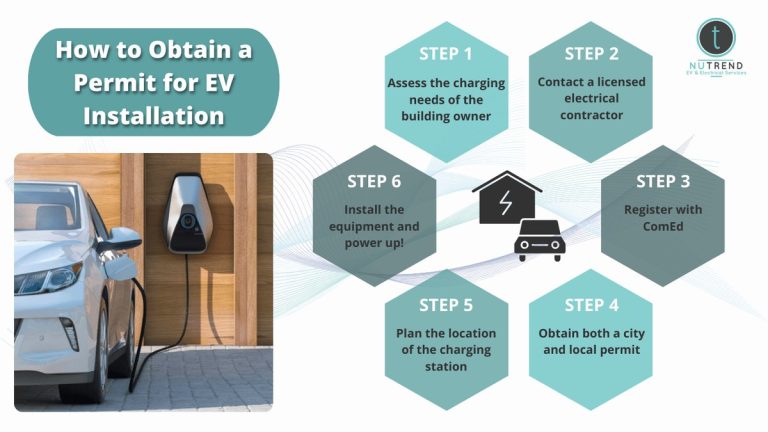
Electrical-code adoption, permitting, inspections, utility requirements, and local rules vary by jurisdiction. Verify the current local requirements before installation, especially for dedicated circuits, permits, and any outdoor mounting conditions.
Safety, Weather, and Daily Use: What to Watch for at 40 Amps
At 40 amps, daily use is usually straightforward when the charger, cable, receptacle or hardwire connection, and outlet quality are all correct. The main risks come from poor installation, worn components, heat buildup, or damaged equipment.
Cable heat, outlet quality, outdoor installation, and signs to reduce current
If a plug, receptacle, or cable feels unusually hot, that is a warning sign to stop and inspect the equipment. Other reasons to reduce current or pause charging include repeated charging interruptions, visible discoloration, melted plastic, nuisance breaker trips, or a cable that is damaged or kinked.
If you see burning smell, scorching, sparking, or a hot receptacle, stop charging immediately and have the system inspected by a qualified electrician. Do not keep retrying the connection, because that can turn a minor equipment issue into a fire hazard.
How 40 Amps Compares with Other Level 2 Options for Tesla Owners
Forty amps sits in a useful middle ground. It is faster than lower-output home chargers, but it may be more installation-intensive than a 16A, 24A, or 32A setup if your home electrical system is limited.
| Option | Charging / compatibility | Installation | Best for |
|---|---|---|---|
| 40A Level 2 | Strong AC home charging for compatible Tesla setups | Usually needs dedicated planning and correct continuous-load design | Owners who want faster overnight charging |
| 32A Level 2 | Slower than 40A, but often still plenty for daily commuting | Can be easier on older homes or tighter electrical panels | Moderate mileage drivers |
| 24A or lower | Lowest Level 2 speed in this group | Often the simplest electrical ask | Plug-in hybrids or low-mileage EV use |
If your daily driving is modest, a lower-amp charger may make more sense than a 40-amp setup, especially if your home panel is already close to capacity. If you are comparing the practical tradeoffs of the equipment itself, our overview of the 40 amp EV charger can help frame the decision.
When a lower-amp charger makes more sense than a 40-amp setup
A lower-amp charger is often the better fit if you have limited service capacity, only need overnight top-offs, or want a simpler installation with less electrical work. It can also be the smarter choice if your Tesla’s daily driving pattern never comes close to requiring the extra speed of 40 amps.
- Tesla owners who want dependable Level 2 overnight charging
- Homes with a properly designed dedicated circuit and compatible EVSE
- Homes without verified electrical capacity
- Situations where the vehicle or charger is limited below 40A anyway
Best Next Step: Confirm Your Tesla Model, Charging Equipment, and Home Electrical Setup
The safest answer to “can I charge my Tesla at 40 amps” is to verify three things: your Tesla model’s AC charging limit, the EVSE’s output and connector type, and the home circuit’s installation requirements. If all three line up, 40 amps is a common and practical Level 2 home-charging target for many U.S. EV owners.
Check your Tesla’s charging specs, the EVSE connector, and whether an adapter is needed.
Review the panel, dedicated circuit, mounting location, cable reach, and permit needs with a qualified electrician if required.
Set the charging current according to the equipment instructions and confirm normal charging behavior during the first sessions.
- Confirm connector and vehicle compatibility
- Confirm current, voltage, circuit, and installation requirements
- Check cable reach and indoor/outdoor suitability
- Verify safety listing, warranty, support, and app requirements where relevant
- Include installation and electricity costs, not only charger price
- Best for: Tesla owners who want faster overnight Level 2 charging and have a compatible EVSE plus properly designed home electrical setup.
- Think twice if: your Tesla, charger, or home circuit cannot actually support 40A continuous charging, or if your daily driving does not need the extra speed.
- Next step: verify your Tesla model’s AC limit, the charger connector/output, and the installation requirements before committing to hardware or electrical work.
Frequently Asked Questions
No. The Tesla can limit charging below 40 amps based on onboard charger capability, battery temperature, state of charge, or charging settings. The EVSE only provides the maximum available current.
It depends on the EVSE. Tesla-compatible NACS / SAE J3400 equipment does not need an adapter, while a J1772 charger typically requires the correct Tesla adapter for AC charging.
No. The charging current setting and the circuit or breaker rating are related but not identical. Installation must follow the charger instructions and local electrical requirements for continuous loads.
It varies by Tesla model, efficiency, temperature, and charging losses. A rough estimate on 240V Level 2 charging is often in the range of about 20 to 35 miles of range per hour, but that is only an estimate.
Only if the EVSE is rated for outdoor use and installed according to the manufacturer’s instructions. You should also watch for cable strain, moisture, and connector damage during daily use.
Choose 40 amps if you want faster home charging and your electrical setup can support it. A lower-amp charger may be the better fit if your panel is limited or your driving needs are modest.