Cost to Charge an Electric Car at Home Calculator
Home charging cost equals kWh added times your electricity rate, divided by charging efficiency — typically landing at a few cents per mile. The main catch is using your effective billed rate rather than a headline utility number, since losses, taxes, and time-of-use pricing all shift the result.
A cost to charge electric car at home calculator answers one question quickly: how many dollars does a charge actually cost? The math is short — energy added times your electricity rate, divided by charging efficiency — but every input behind it can move the final number by 20% or more.
- Formula: Cost = (kWh added × rate) ÷ charging efficiency; a 10% loss assumption adds.
- Inputs: Use your effective billed rate, kWh actually added, and a realistic efficiency figure for.
- Safety: Circuit, breaker, and wiring decisions follow the equipment instructions and local code — not.
- Cost: Equipment and installation are one-time costs the electricity calculator does not include.
Cost to Charge an Electric Car at Home Calculator: The Short Answer for 2026
For most US homeowners on a standard residential rate, home charging lands in the range of a few cents per mile. The exact figure depends on three things: the price you pay per kWh, how much energy the car actually accepts, and how much energy is lost as heat during the session.
The Basic Math: Battery kWh × Electricity Rate ÷ Charging Efficiency
The formula behind any home charging calculator is straightforward:
Cost = (kWh added × price per kWh) ÷ charging efficiency
The “kWh added” figure is not the same as battery size. If you drive 40 miles in a car that uses about 0.28 kWh per mile, you need roughly 11.2 kWh at the battery — before losses. Charging efficiency is the share of metered energy that reaches the battery. Level 2 charging is commonly estimated in the 85–90% range; Level 1 tends to be lower because the session runs longer and the vehicle stays awake longer.
Worked Example: 60 kWh EV at $0.16 per kWh With 10% Charging Losses
Assume a 60 kWh usable battery, a $0.16 per kWh rate, and 10% losses (90% efficiency). Charging from 10% to 90% adds 48 kWh at the battery.
Metered energy = 48 ÷ 0.90 = 53.3 kWh. Cost = 53.3 × $0.16 = $8.53. Ignoring losses would have produced $7.68 — roughly 11% low.
Illustrative assumptions only. Rates, taxes, time-of-use pricing, and losses vary by utility and vehicle.
Why Your Number Will Differ From the Calculator
Utility bills rarely show one clean rate. Supply and delivery charges, taxes, fixed fees, seasonal tiers, and time-of-use windows all change the effective price per kWh. Preconditioning the cabin on grid power, battery thermal management, and the vehicle staying awake during a long session also consume energy that never appears as added range.
How the Cost to Charge Electric Car at Home Calculator Works
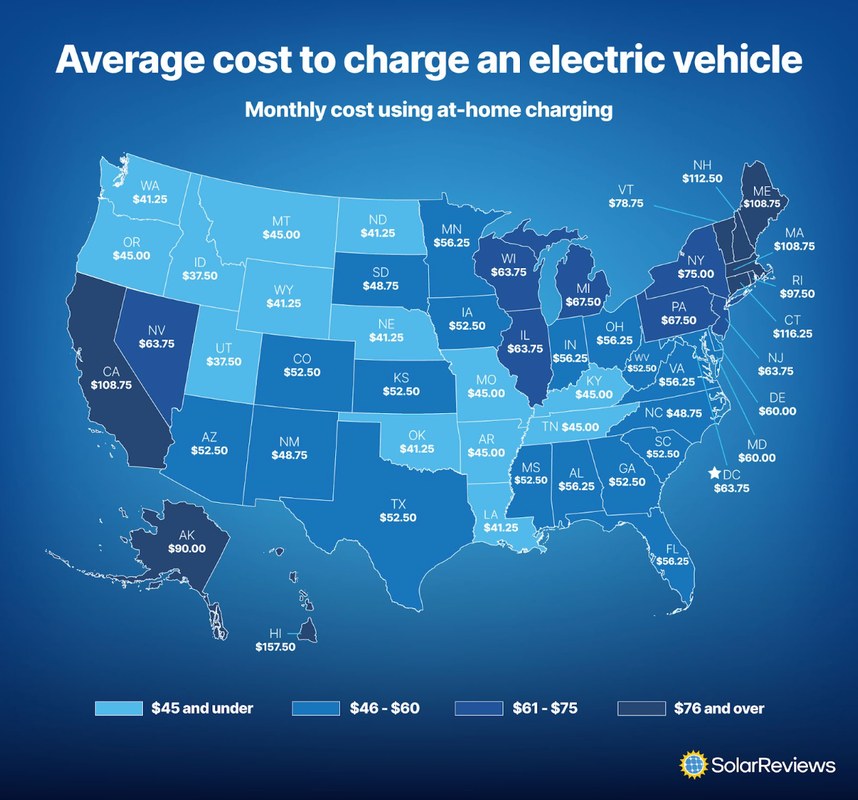
A useful calculator takes four inputs and returns three outputs. Knowing what each one represents keeps the estimate honest.
Input 1: Your Electricity Rate in Dollars per kWh
Find this on your utility bill, not on a national average chart. If your utility offers a time-of-use plan, the off-peak rate is the relevant number for overnight charging — but only if you actually schedule charging in that window. Verify current rates on your utility’s own page before relying on them.
Input 2: Usable Battery Capacity or kWh Added
Most EVs reserve a buffer at the top and bottom of the pack, so usable capacity is smaller than the marketing figure. For a partial charge, work from kWh added rather than pack size. A car with a 3.5 mi/kWh efficiency rating needs about 14.3 kWh to cover 50 miles.
Input 3: Charging Efficiency and Losses
Losses come from AC-to-DC conversion in the onboard charger, cable resistance, and the vehicle’s own electronics. Level 2 sessions are usually more efficient than Level 1. Cold ambient temperatures and a cold battery can widen losses further.
Input 4: Time-of-Use Rates and Off-Peak Scheduling
Time-of-use pricing charges different rates by hour. Off-peak windows often overlap with overnight charging, which is when most EVs sit parked anyway. Some utilities also apply demand charges or separate EV-specific rate riders — these can change the math substantially and should be read on the utility’s own tariff document.
Output: Cost per Session, Cost per Mile, and Monthly Cost
Cost per session is the simplest output. Cost per mile divides session cost by miles added and is the most useful number for comparing against gasoline. Monthly cost multiplies cost per mile by your monthly mileage — a more realistic budget figure than a single full-charge estimate.
Home Charging Equipment and Installation Costs: What the Calculator Should Include
Electricity is only part of the total cost of home charging. Equipment, installation, and any electrical upgrades are one-time expenses that belong in a full ownership comparison.
Level 1 vs Level 2 EVSE: Equipment Price Ranges and Use Cases
Level 1 uses the 120 V outlet already in most garages and requires no equipment purchase beyond the cordset that ships with the car. It is slow — commonly cited at roughly 3–5 miles of range per hour, depending on the vehicle. Level 2 uses a 240 V circuit and adds range far faster, but requires an EVSE and typically a dedicated circuit. Equipment prices vary widely with amperage, cable length, smart features, and whether the unit is plug-in or hardwired, so check current listings rather than assuming a fixed figure. If you are comparing hardware, our overview of 48-amp Level 2 home chargers covers the categories that matter most, and the Level 2 home charger archive groups them by use case.
Plug-In vs Hardwired: Cost, Convenience, and Code Implications
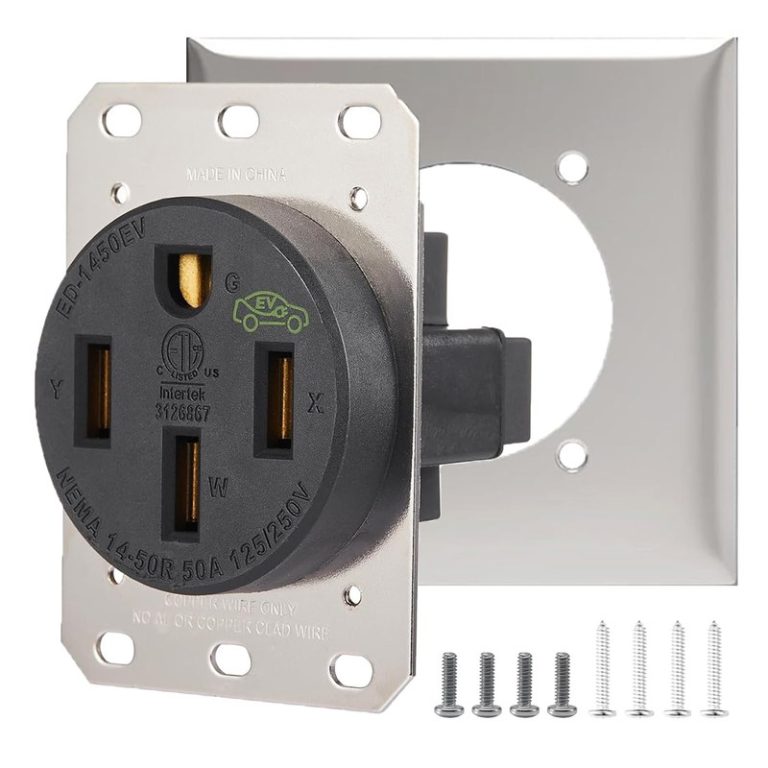
Uses a matching receptacle and can be unplugged for moving or replacement. Requires the correct receptacle type and a circuit rated for continuous charging.
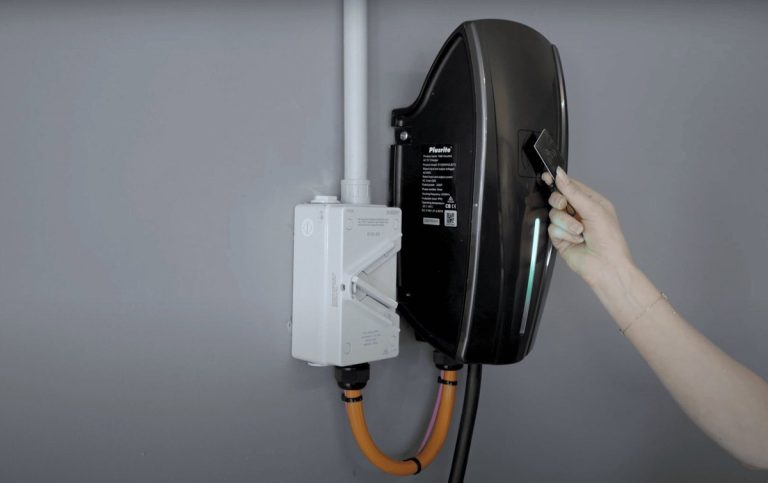
Wired directly to the circuit, often allowing higher amperage settings. Less portable, and installation should follow the manufacturer’s instructions and local requirements.
Electrical Panel, Circuit, Permits, and Installation Labor
Installation cost depends on available panel capacity, the distance from the panel to the parking spot, whether a subpanel or service upgrade is needed, and local permit and inspection requirements. A long conduit run through finished walls costs more than a short run in an open garage. Get a quote from a licensed electrician before assuming a standard price.
Smart Features, Cable Length, Weather Rating, Warranty, and Support
Smart charging adds scheduling, energy monitoring, and sometimes utility demand-response programs. Those features depend on an app and account, so consider what happens if the cloud service is unavailable. Cable length affects whether the unit reaches your parking position, and the enclosure rating determines whether outdoor mounting is permitted by the manufacturer. Warranty terms and US support channels vary by brand — verify both on the manufacturer’s documentation.
Charger, Connector, and Adapter Details That Change Your Cost Estimate
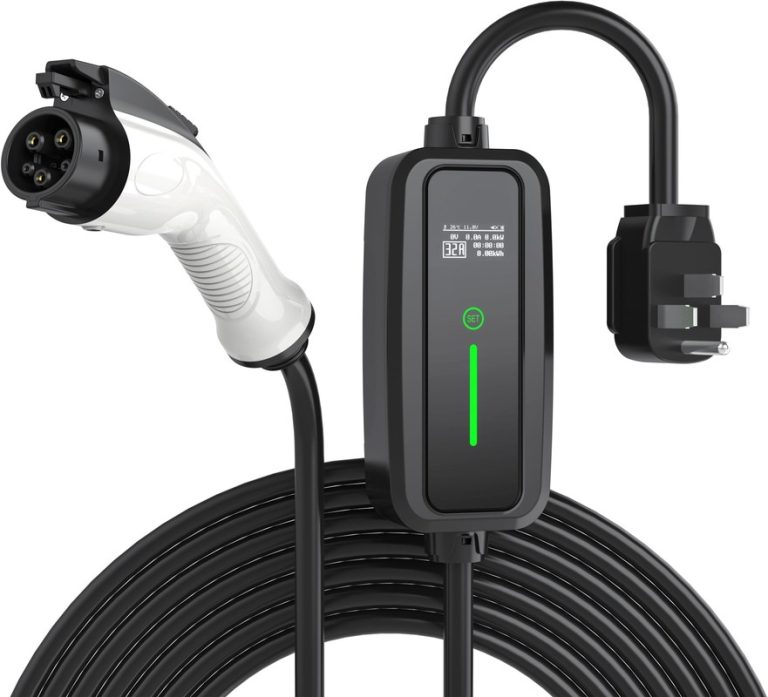
Hardware choices affect how much of your car’s charging capability you can actually use — and therefore how long each session takes and how much you spend on electricity over time.
Connector Type: J1772, NACS/Tesla, and What Your Vehicle Accepts
Most non-Tesla EVs in the US use the J1772 inlet for AC charging. Tesla vehicles use NACS, and a growing number of new EVs ship with NACS inlets. A physical connector match does not by itself prove that every charging mode is supported, so confirm the vehicle-side inlet and the charger-side connector separately.
Vehicle Onboard Charger Limit: Why a 48-Amp EVSE May Not Deliver 48 Amps
The EVSE is only one half of the equation. The vehicle’s onboard AC charger sets the ceiling on how much power the car can accept. A 48-amp EVSE connected to a car with a 32-amp onboard charger will deliver 32 amps. This is covered in more detail in our explanation of whether a Tesla can charge at 48 amps.
EVSE Amperage and kW: Matching the Charger to the Circuit and Car
Approximate AC output follows simple math: 240 V × 32 A ≈ 7.7 kW, 240 V × 40 A ≈ 9.6 kW, and 240 V × 48 A ≈ 11.5 kW. The EVSE setting, the circuit capacity, and the vehicle’s onboard charger limit all have to line up before you see that number at the battery. Vehicles with lower onboard limits behave differently — our note on charging a Tesla at 40 amps walks through that scenario.
Adapters for Home AC Charging: Source Connector, Destination Connector, and Direction
An adapter has a source side and a destination side, and reversing them is not an option. For home AC charging, the relevant question is whether the adapter is rated for the amperage and the AC charging mode involved. Confirm direction and rating in the adapter manufacturer’s documentation before use.
Adapter Power Limits, Thermal Safety, Vehicle/Network Restrictions, and Firmware/Vendor Requirements
Adapters can be limited below the EVSE’s maximum output, and some vehicles or charging networks restrict certain combinations. Heat buildup at a marginal connection is a real concern. If an adapter or connector feels unusually warm, stop the session and check the manufacturer’s guidance.
AC vs DC Adapters: Why DC Fast Charging Is Not a Home Calculator Input
DC fast charging bypasses the onboard charger and feeds the pack directly. It is not a home charging scenario, and DC adapters do not belong in a home cost estimate. Mixing AC and DC assumptions produces numbers that do not reflect your actual electricity bill.
Battery Health, Temperature, and Charging Power: What the Calculator Can’t Capture
A calculator produces a clean number. A real charging session is messier.
Manufacturer Guidance vs General Battery Patterns
Charging recommendations come from the manufacturer and vary by chemistry, thermal management design, and vehicle. There is no universal state-of-charge rule that applies to every EV. Follow the guidance in your own owner’s manual rather than a generic percentage.
Temperature, State of Charge, and Charging Power Effects
Charging power tapers as the pack fills and as temperatures move away from the ideal range. A cold battery accepts less power, and the vehicle may spend energy warming the pack first. That energy is metered but never becomes range.
DC Fast Charging Context and Convenience Trade-Offs
DC fast charging is the right tool for road trips, not for the daily home routine. It costs more per kWh than residential electricity in most cases and adds thermal stress that home AC charging avoids.
Chemistry and Thermal Management: Why Two EVs Cost Differently to Charge
Two vehicles with identical battery sizes can produce different bills. Efficiency, onboard charger rating, thermal system design, and how aggressively the car manages temperature all affect how much metered energy becomes miles driven.
Range, Efficiency, and Real-World Cost per Mile
Cost per mile is the number that makes home charging comparable to gasoline.
mi/kWh and Wh/mi: The Bridge Between Electricity and Miles
Efficiency is expressed as miles per kWh or watt-hours per mile. A car rated at 3.5 mi/kWh uses about 286 Wh/mi. Divide your electricity rate by the efficiency figure to get cost per mile before losses, then adjust for charging efficiency.
Speed, Weather, HVAC, Elevation, Payload, and Tires
Highway speeds increase aerodynamic drag sharply. Cold weather reduces usable range and increases cabin heating demand. Elevation gain, a loaded vehicle, and underinflated or high-rolling-resistance tires all push consumption up. These are estimates, not fixed values — the same car can vary substantially by season.
Battery Temperature and Charging Losses in Cold or Hot Weather
In cold conditions, part of the metered energy goes to warming the pack rather than charging it. In extreme heat, thermal management may run cooling. Both widen the gap between the calculator’s output and the utility meter.
Calculating Cost per Mile From Your Calculator Results
Take the session cost, divide by the miles added, and you have cost per mile. At $0.16 per kWh and 3.5 mi/kWh with 90% charging efficiency, the result is roughly 5 cents per mile. Recompute it seasonally rather than treating it as permanent.
Level 1, Level 2, and Portable Charging Compared: Same Criteria, Different Fits
Level 1 (120V) Home Charging: Who It Fits
Fits low-mileage drivers, renters with a usable garage outlet, and households with a second car for longer trips. Not ideal for high daily mileage or short overnight windows.
Level 2 (240V) Home Charging: Who It Fits
Fits most homeowners who drive regularly and want a full charge overnight. Requires a dedicated circuit and, in many cases, professional installation. Not ideal for renters who cannot modify the property.
Portable EVSE and Public/Work Charging: Who It Fits
Fits apartment dwellers, frequent travelers, and anyone whose parking situation changes. Public charging costs more per kWh in most cases and adds convenience costs that a home calculator will not capture.
Comparison Criteria: Speed, Installation, Equipment Cost, Convenience, Battery Impact
| Option | Typical speed | Installation | Best fit |
|---|---|---|---|
| Level 1 (120 V) | Slow — a few miles per hour | Existing outlet | Low-mileage, renters |
| Level 2 (240 V) | Fast — full charge overnight | Dedicated circuit, often professional | Most homeowners |
| Portable / public | Varies by source | None at home | No fixed parking |
Avoiding Costly Mistakes: Electrical Code, Permits, and 2026 Rate Changes
Follow the Product Manual and Local Code—Never a Universal Breaker Rule
Breaker sizing, wire gauge, receptacle type, and continuous-load rules are set by the equipment instructions and the electrical code adopted in your jurisdiction. There is no single national answer that applies to every installation.
Time-of-Use, Demand Charges, and Utility EV Programs in 2026
Many utilities now offer EV-specific rates, off-peak windows, or managed charging programs. Some include demand charges that penalize short high-power draws. Program terms change frequently, so verify details on your utility’s own pages before enrolling.
When to Recalculate: Rate Changes, New EV, or Home Electrical Upgrade
Rerun the numbers after a rate change, a new vehicle with different efficiency or onboard charger rating, a panel upgrade that allows higher amperage, or a move to a different utility territory.
Evidence Limits: What This Guide Can and Cannot Verify
This guide explains the formula and the variables. It does not verify your utility’s current rates, your home’s panel capacity, your vehicle’s onboard charger rating, or any specific product’s specifications. Those must come from your bill, your vehicle documentation, and the manufacturer’s published materials.
- Best for: Homeowners who want a realistic per-mile charging cost before or after buying an EV.
- Think twice if: You are using a headline utility rate instead of your effective billed rate.
- Next step: Pull one month of your utility bill, divide total dollars by total kWh, and rerun the formula with your own numbers.
Frequently Asked Questions
Multiply the kWh added by your electricity rate, then divide by charging efficiency. For example, 48 kWh at $0.16 per kWh with 90% efficiency is about $8.53. Use the effective rate from your bill, not a national average.
For many US drivers on standard residential rates, yes — roughly 4 to 7 cents per mile depending on efficiency and rate. Higher utility rates, cold weather, and lower charging efficiency push that number up.
Common reasons include using a headline rate instead of the effective billed rate, ignoring charging losses, preconditioning the cabin on grid power, cold-weather battery warming, and time-of-use or demand charges that apply at certain hours.
No. The vehicle’s onboard AC charger sets the ceiling. A 48-amp EVSE connected to a car limited to 32 amps will deliver 32 amps. The circuit, the EVSE setting, and the onboard charger all have to support the same rate.
Not per kWh — the electricity rate is the same. Level 1 is slower and generally less efficient, so it can use slightly more metered energy for the same range added. Level 2 usually costs less per mile added, before installation costs.
Rerun the numbers after any utility rate change, when you buy a different EV, or after a home electrical upgrade that allows a higher charging amperage. Seasonal temperature swings are also a good reason to check mid-winter and mid-summer.