Should I Charge My EV to 100%? EV Charging Guide
Charge to 100% when you need the range — road trips, cold snaps, or uncertain charging access — and follow your owner’s manual for daily charging, since LFP and nickel-based packs have different guidance. The main check is your manual’s recommended daily limit, which many drivers never set.
If you are searching for a straight answer to “should I charge my EV to 100 percent,” here it is: charge to 100% when you actually need the range, and follow your owner’s manual for everything else. The right daily target depends on your battery chemistry, your climate, and how you use the car — not on a single universal rule.
- Compatibility: A connector that fits does not prove the AC or DC charging mode is.
- Performance: Charging power tapers as state of charge rises, so DC fast charging to 100%.
- Safety: Any new circuit, receptacle, or hardwired EVSE should follow manufacturer instructions and local code.
- Cost: Cost equals your electricity rate times kWh delivered plus charging losses; time-of-use rates and.
Should I Charge My EV to 100%? EV Charging Guide
Mark Reynolds’ Short Answer for U.S. Drivers in 2026
For most U.S. drivers, 100% is a tool, not a habit. Use it before a long drive, during a cold snap, or when your next charging opportunity is uncertain. For ordinary daily driving, most automakers publish a lower recommended daily limit for nickel-based packs and a 100% recommendation for lithium iron phosphate (LFP) packs.
The trade-off is simple: a full battery buys range and convenience, while keeping a nickel-based pack at a very high state of charge for long periods is the pattern most associated with accelerated degradation. That is a general pattern, not a guarantee about your specific car.
What Your Owner’s Manual Says vs. General Battery-Health Advice
Your owner’s manual is the controlling document. It reflects the specific cell chemistry, thermal management design, buffer size, and warranty terms of your vehicle. General advice you read online cannot account for those differences.
Where manuals commonly diverge from generic advice:
- Daily limit: Some manuals set a daily charge target below 100%; others tell LFP owners to charge to 100% regularly to keep the battery management system calibrated.
- Periodic full charge: Some manufacturers ask for an occasional 100% charge or a specific charging cadence.
- Storage: Storage guidance is often different from daily-driving guidance.
- DC fast charging: Some manuals describe recommended DC fast-charging frequency; others are silent.
If general advice conflicts with your manual, the manual wins. If your manual is vague, treat 100% as a situational choice rather than a daily routine for a nickel-based pack.
Daily 80% vs. 100%: Range, Convenience, and Degradation Trade-Offs
The practical question is how much range that last 20% actually buys you. On many EVs, the top of the pack charges more slowly and represents a smaller share of usable miles than the middle of the pack. That is a function of how lithium-ion cells accept current as they approach full.
Charging to a lower daily target usually costs you nothing except planning. You gain a cushion against calendar aging and heat, and you keep regenerative braking headroom on some vehicles. The cost is that you may need one extra stop on an unplanned long day.
Battery Chemistry, Temperature, and Charging Power: Why 100% Means Different Things
NMC, NCA, LFP, and Sodium-Ion: Manufacturer Guidance and General Patterns
Nickel manganese cobalt (NMC) and nickel cobalt aluminum (NCA) cells are the most common chemistries in U.S. EVs. They offer high energy density, which means more range per kilogram, and they are generally the chemistries for which manufacturers publish a daily charge limit below 100%.
LFP cells trade some energy density for longer cycle life and better tolerance of full charging. Many LFP-equipped vehicles are designed to be charged to 100% routinely, partly because the battery management system needs a full charge to estimate state of charge accurately.
Sodium-ion cells are emerging in some markets but have limited presence in U.S. passenger EVs. If you encounter sodium-ion guidance, treat it as chemistry-specific and do not apply it to your NMC or LFP car.
State of Charge, Charging Power, and Thermal Management
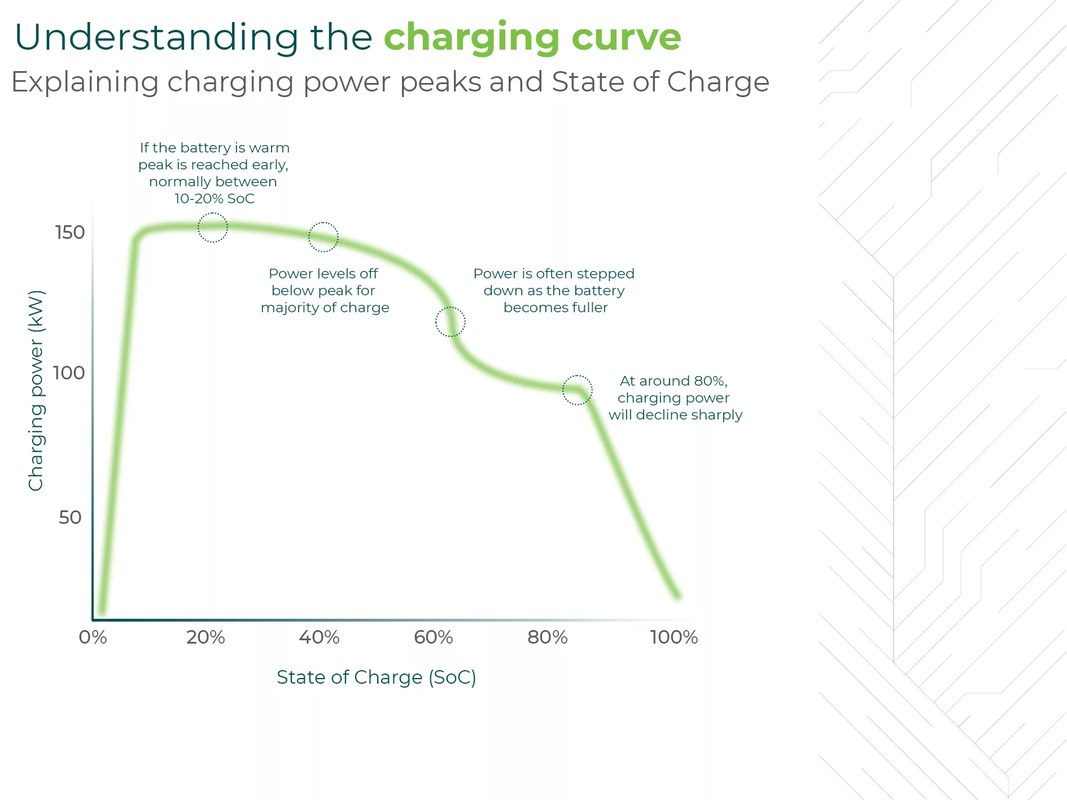
State of charge (SOC) is the percentage of usable energy currently in the pack. Charging power is how fast energy goes in, measured in kilowatts (kW). These are separate numbers, and the relationship between them is not linear.
Most EVs taper charging power as SOC climbs. A car might accept its highest power in the middle of the pack and a fraction of that above roughly 80%. This taper protects the cells and manages heat. It is also why the last 20% of a DC fast-charge session often takes as long as the first 60%.
Thermal management matters here. Vehicles with active liquid cooling can generally sustain higher charging power and tolerate more frequent DC fast charging than vehicles with passive or air-cooled packs. Temperature also affects how much power the pack will accept in the first place.
DC Fast Charging to 100%: Road-Trip Context and Battery Stress
DC fast charging to 100% is usually a poor use of time rather than a dangerous act. The taper means you spend a long time for a small amount of energy, and you occupy a stall other drivers may need.
On a road trip, the faster strategy is usually to charge to a moderate level, drive to the next stop, and repeat. Charge to 100% on DC only when you genuinely need the range to reach a destination or a reliable charger.
EV Charging Levels, Connectors, and Onboard Charger Limits
Level 1, Level 2, and DC Fast Charging: Speed, Connector, and Use Case
Level 1 uses a standard 120-volt household outlet and adds range slowly — often only a few miles per hour. It suits low-mileage drivers, plug-in hybrids, and overnight top-ups.
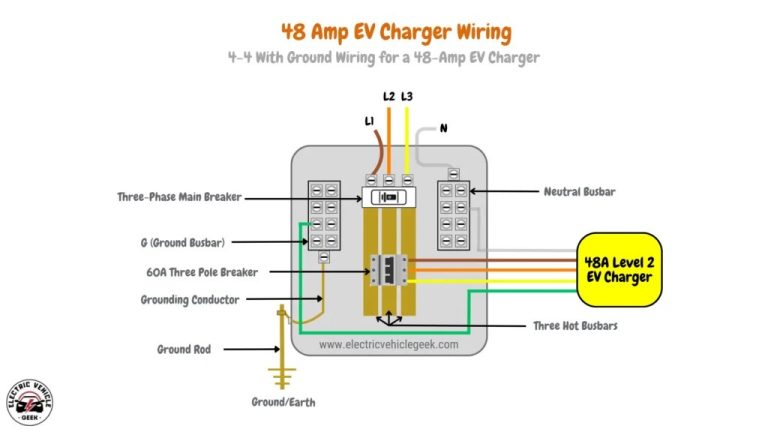
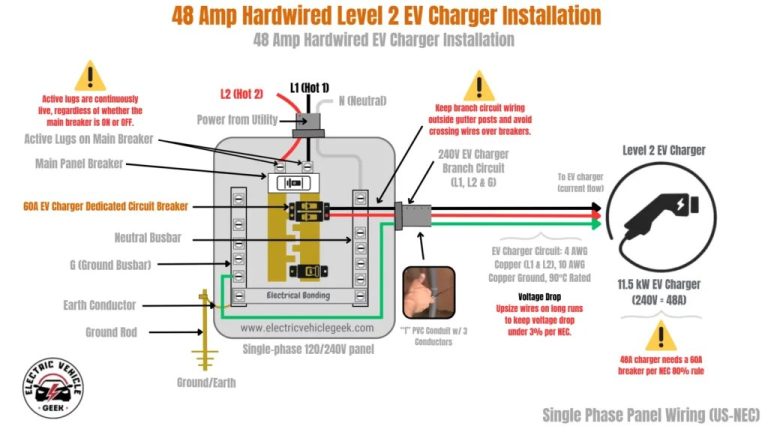
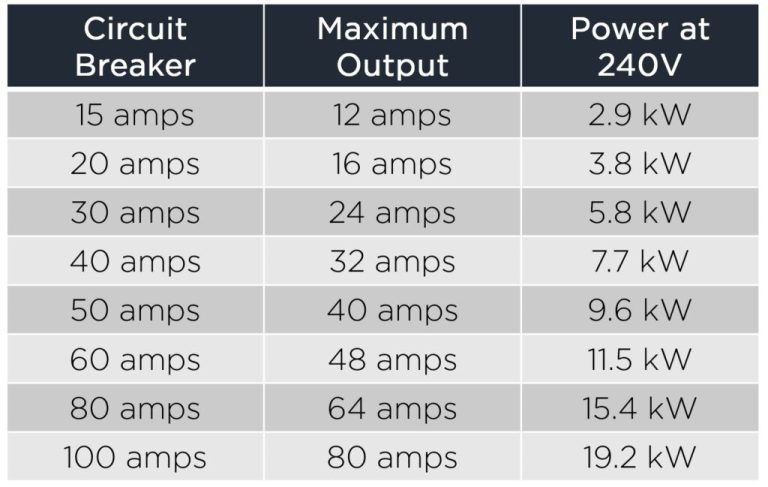
Level 2 uses 240 volts and is the standard home setup. It can fully recharge most EVs overnight. Actual speed depends on the EVSE’s amperage setting, the circuit behind it, and the vehicle’s onboard charger limit. If you want to understand the math, this breakdown of how many kW a 48-amp Level 2 charger actually delivers is a useful starting point.
DC fast charging bypasses the onboard charger and feeds the pack directly, which is why it can deliver far more power. It is the right tool for travel, not for routine overnight charging.
J1772, NACS, CCS, and CHAdeMO: What Fits Your Vehicle
In the U.S., J1772 is the long-standing AC connector, NACS (now standardized as SAE J3400) is the connector many automakers are adopting, CCS1 has been the dominant DC fast-charging standard, and CHAdeMO is largely legacy. Connector type tells you what physically fits; it does not tell you which charging mode the vehicle supports.
Vehicle Onboard-Charger Limit vs. EVSE Amperage and kW Rating
This is where many buyers get confused. A 48-amp EVSE does not force 48 amps into every car. The vehicle’s onboard AC charger has its own maximum, and the actual rate is the lower of the EVSE setting, the circuit capacity, and the vehicle limit.
If your car’s onboard charger caps at a lower amperage, buying a higher-output EVSE will not charge it faster. It may still be a reasonable purchase if you expect a future vehicle with a higher limit. Understanding 48-amp EV charger speed in real terms helps you decide whether the upgrade is worth it.
Adapters and Compatibility: Charging to 100% Without Damaging Equipment
AC vs. DC Adapter Direction, Source Connector, and Destination Connector
Adapters are directional in practice. An AC adapter changes the connector shape on an AC charging path; a DC adapter changes the connector shape on a DC fast-charging path. They are not interchangeable, and an AC adapter cannot make a DC station work.
Always identify the source connector (what the station or EVSE provides) and the destination connector (what your vehicle accepts), then confirm the adapter is rated for that combination and that mode.
Vehicle, Charging Network, Power Limit, and Firmware Restrictions
Compatibility is not just physical. It also depends on the vehicle’s software, the charging network’s authentication and authorization, and any power limits either side imposes. Manufacturer firmware updates have changed adapter support over time, so a combination that worked last year may behave differently now.
Check the vehicle manufacturer’s current adapter guidance and the charging network’s own compatibility page before relying on an adapter for a trip.
Thermal, Safety, and Vendor Requirements for Adapter Use
Adapters carry current, and heat is the failure mode to watch. Use only adapters the vehicle manufacturer or a reputable vendor explicitly supports for that specific use. Follow any instructions about locking, seating, ambient temperature limits, and inspection.
If a connector or adapter feels hot, smells unusual, or shows discoloration, stop charging and have the equipment inspected. Do not improvise around a thermal problem.
Home Charging Setup: Plug-In vs. Hardwired, Circuit, Panel, and Installation
Plug-In vs. Hardwired EVSE: Same-Criteria Comparison for Cost, Speed, and Weather
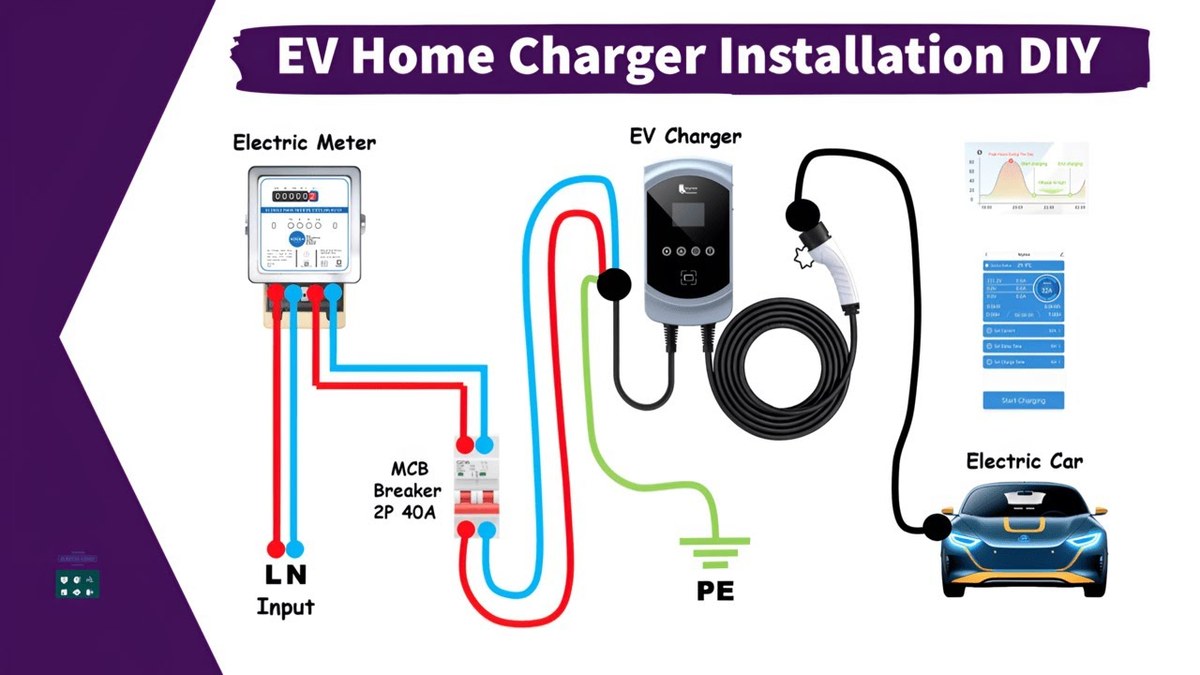
Uses a compatible receptacle and can be moved or taken along when you relocate. Usually lower installation cost, but often limited to a lower charging current and dependent on a suitable receptacle and circuit.
Wired directly to the circuit, which typically allows higher continuous current and a cleaner outdoor installation. Less portable and requires a qualified electrician for safe installation.
EVSE Amperage, Circuit Breakers, Panel Capacity, and Local Code/Permit Rules
Continuous charging loads are treated differently from short-duration loads in electrical design, which is why a charger rated at a given amperage generally needs a circuit sized above that number. The specific requirement depends on the equipment instructions and the applicable local code.
Panel capacity is the constraint that surprises people most. A home with a modest service panel may need a load calculation, a lower-amperage setting, or a panel upgrade before a high-output EVSE can be installed. Before committing to a 48-amp unit, it is worth reviewing whether a 48-amp charger needs a 60-amp circuit and what that means for your panel.
Cable Length, Weather Suitability, and Smart Features
Cable length determines whether you can reach your parking spot without strain. Weather suitability depends on the enclosure rating and the manufacturer’s stated operating temperature range — verify both rather than assuming an outdoor unit is fine in all conditions.
Smart features can add scheduling, time-of-use optimization, energy reporting, and utility program integration. They also add dependencies: app accounts, connectivity, firmware updates, and cloud services. Ask what happens if the app or cloud service is unavailable, and whether the charger still works as a basic EVSE.
Warranty, Support, and Installation Costs to Budget
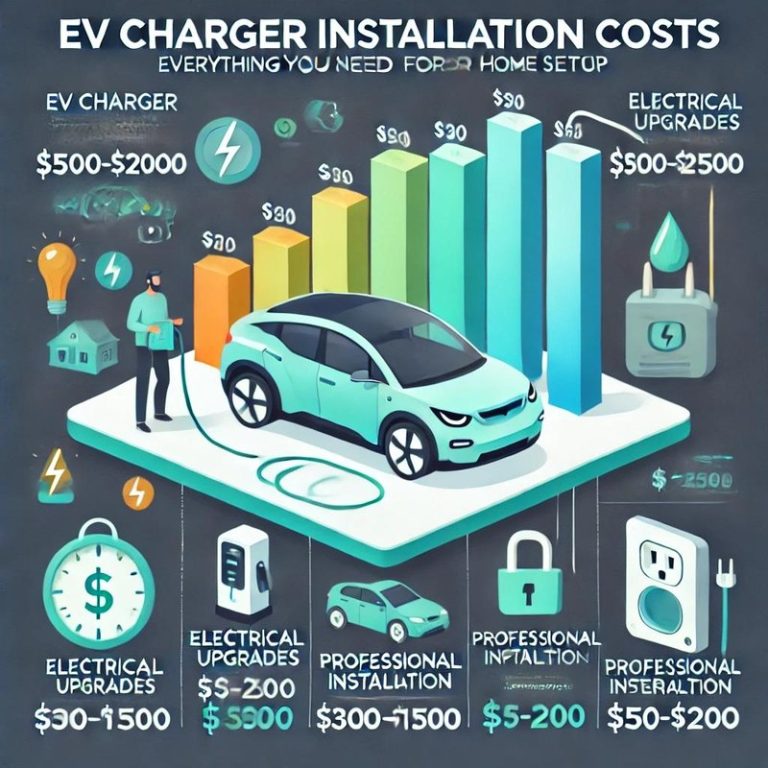
Budget for the EVSE, the electrical work, permits, and any panel or wiring upgrades. Costs vary widely by region and by how much electrical work your home needs, so treat any single number you read online as an example, not a quote.
Check the warranty term, whether it covers labor, how support is reached, and whether the unit carries a recognized safety listing from a national testing laboratory. If you are considering a lower-cost unit, a portable EV charger can cover occasional needs, but it is not a substitute for a properly installed home circuit for daily charging.
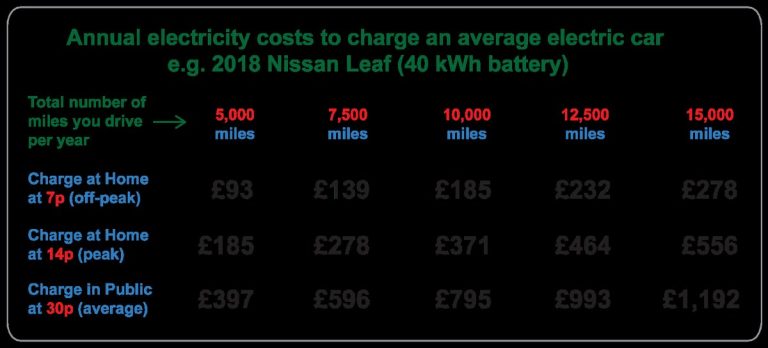
What It Costs to Charge an EV to 100%: Rates, kWh, Losses, and Time-of-Use
Formula: Electricity Rate × kWh Delivered + Charging Losses
The basic math is simple: your electricity rate per kilowatt-hour multiplied by the energy delivered, plus the energy lost as heat during charging. Charging losses mean you pay for slightly more electricity than ends up stored in the battery.
These are illustrative assumptions, not a quote. Your utility rate, taxes, fees, time-of-use schedule, and actual losses will differ.
Time-of-Use, Off-Peak, and Demand Charges in the United States
Many U.S. utilities offer time-of-use plans where electricity costs less overnight. Since most home charging happens overnight anyway, TOU pricing can substantially change the cost of a full charge. Check your specific rate schedule and whether an EV-specific plan exists.
Demand charges are a separate mechanism that can apply to some residential and most commercial accounts. They are based on peak power draw, not total energy, which is one reason a very high-amperage charger can carry a cost that the per-kWh math does not show.
Home Equipment and Installation vs. Public DC Fast Charging
Home charging is usually the cheapest per kWh because you pay a residential rate and avoid network markup. Public DC fast charging is typically priced higher per kWh or per session, and pricing varies by network, region, and membership status. For drivers who mostly charge at home, the equipment and installation cost is usually recovered over time through lower per-mile energy cost.
Range and Efficiency After a 100% Charge: mi/kWh, Wh/mi, and Real-World Variables
Speed, Weather, HVAC, Elevation, Payload, Tires, and Battery Temperature
A displayed range estimate after a 100% charge is a prediction, not a promise. Highway speed increases aerodynamic drag sharply. Cold temperatures reduce usable capacity and increase heating demand. Hot temperatures can trigger thermal management. Elevation gain, payload, tire pressure, tire type, and battery temperature all move the number.
HVAC is a major factor in both directions: cabin heating in winter can be a large draw, while air conditioning in summer is usually smaller but still measurable.
Charging Losses and Why the Range Estimate Drops or Rises
Charging losses mean the energy you pay for is not all stored. Some is converted to heat in the onboard charger, the wiring, and the battery itself. Those losses are generally larger at higher power and in extreme temperatures.
Range estimates can also shift because the battery management system recalculates based on recent driving. A week of highway driving can lower the estimate; a week of gentle city driving can raise it. That is the estimate adapting, not the battery gaining capacity.
Best Practices by Situation: Road Trips, Daily Driving, Extreme Weather, and Storage
Road Trips and Long-Distance Travel
Charge to 100% the night before departure if you want maximum first-leg range. On the road, charge to a moderate level and move on — the taper above roughly 80% makes the last portion slow. Plan around charger spacing rather than around a target percentage.
Daily Commutes and Short Trips
For predictable daily driving, a lower daily charge target is usually the low-effort choice. Set the limit once, plug in when convenient, and stop thinking about it. If your commute is short, you may not need to plug in every night at all.
Hot and Cold Climates
In hot climates, avoiding long periods at a very high state of charge is a reasonable precaution, and parking in shade or a garage helps. In cold climates, charging to a higher level before departure can be useful, and many EVs allow you to precondition the cabin and battery while still plugged in, which reduces the range penalty of the first miles.
Long-Term Storage, Leases, and Used EV Purchases
For storage, follow the manufacturer’s guidance on state of charge and check whether the manual specifies a charging cadence. For leased vehicles, remember that battery condition may be assessed at return, so following the manual is in your interest. When buying a used EV, ask for a battery health report or state-of-health reading and consider how the previous owner likely charged it.
Final Checklist: Should You Charge Your EV to 100%?
Follow the Manual, Plan for Convenience, and Protect the Battery
- Read your owner’s manual’s charging section and set your daily limit accordingly.
- Charge to 100% before long trips, in severe cold, or when charging access is uncertain.
- Avoid leaving a nickel-based pack at 100% for extended periods in high heat.
- Do not over-index on DC fast charging to 100% — the taper makes it slow and the stall is better used by someone else.
- Verify your connector, adapter direction, and charging mode before relying on any adapter.
When to Consult a Qualified Electrician or Dealer
Consult a qualified electrician for any new circuit, receptacle, hardwired EVSE, panel work, or permit question. Consult your dealer or manufacturer support if your manual’s guidance is unclear, if your vehicle reports a charging fault, or if you are unsure whether an adapter or charging rate is supported for your specific build.
- Best for: Charging to 100% before long trips, cold-weather departures, and any day when you need the full range.
- Think twice if: You are charging a nickel-based pack to 100% every night and leaving it there in hot weather.
- Next step: Open your owner’s manual, find the recommended daily charge limit, and set it in your vehicle’s charging menu today.
Frequently Asked Questions
It depends on chemistry and conditions. For nickel-based packs (NMC, NCA), routinely sitting at 100% — especially in high heat — is the pattern most associated with faster degradation. Many LFP packs are designed to be charged to 100% regularly. Your owner’s manual is the authoritative source for your specific vehicle.
Yes. Charging to 100% immediately before a long drive is one of the clearest cases where a full charge makes sense, because the battery does not sit at a high state of charge for long and you get maximum first-leg range.
Charging power tapers as the battery approaches full. This is normal behavior designed to protect the cells and manage heat. It is most noticeable on DC fast charging, where the last 20% can take as long as the first 60%.
Many manufacturers of LFP-equipped vehicles recommend charging to 100% regularly, partly because the battery management system uses a full charge to calibrate its state-of-charge estimate. Check your owner’s manual, since guidance varies by model and software version.
No. Adapters are directional and mode-specific — an AC adapter will not enable DC fast charging. Compatibility also depends on the vehicle’s software, the charging network’s authorization, and any power limits either side applies. Verify support with the vehicle manufacturer and the network before relying on an adapter.
You pay for the energy you add, so a 100% charge costs more in total than an 80% charge simply because more kilowatt-hours are delivered. Charging losses also tend to be slightly higher at very high states of charge and in extreme temperatures.