Can Tesla Charge at 48 Amps? EV Charging Explained
Yes, many Tesla models can charge at 48 amps on Level 2 AC power if the vehicle and EVSE both support it. The main check is the Tesla’s onboard charger limit and whether the home electrical setup is sized correctly.
can tesla charge at 48 amps is a common home-charging question, and the short answer is yes for many Tesla owners, but only if the car, EVSE, and electrical circuit are all set up to support it. The vehicle’s onboard AC charger, not just the wall unit, determines whether 48 amps will actually flow.
- Compatibility: 48 amps works only if the Tesla’s onboard AC charger and the EVSE both.
- Performance: Expect roughly 11.5 kW and about 30–45 miles of range per hour in typical.
- Safety: A 48-amp EVSE often needs a properly planned circuit, permit review, and professional installation.
- Cost: Charging cost depends on your utility rate, losses, and time-of-use pricing, not just amperage.
Can Tesla Charge at 48 Amps? Short Answer, Limits, and What It Means in 2026
In practical terms, a Tesla can charge at 48 amps on Level 2 AC power when the vehicle accepts that current and the EVSE is configured and installed for it. If the car’s onboard charger is limited below 48 amps, the EVSE will not force more power into the battery.
Why the answer is usually yes, but only if the vehicle and charging setup support it
Most Tesla home charging discussions focus on the wall charger, but the car sets the ceiling for AC charging. If the EVSE can supply 48 amps and the Tesla can accept 48 amps, the session can run at that rate; if either side is lower, charging will step down automatically.
How Tesla’s onboard charger, EVSE output, and circuit capacity work together
Think of the system in three layers: the circuit supplies power, the EVSE controls how much current it offers, and the Tesla onboard charger decides how much AC power to accept. For a deeper breakdown of the math, see how many kW a 48-amp Level 2 charger delivers.
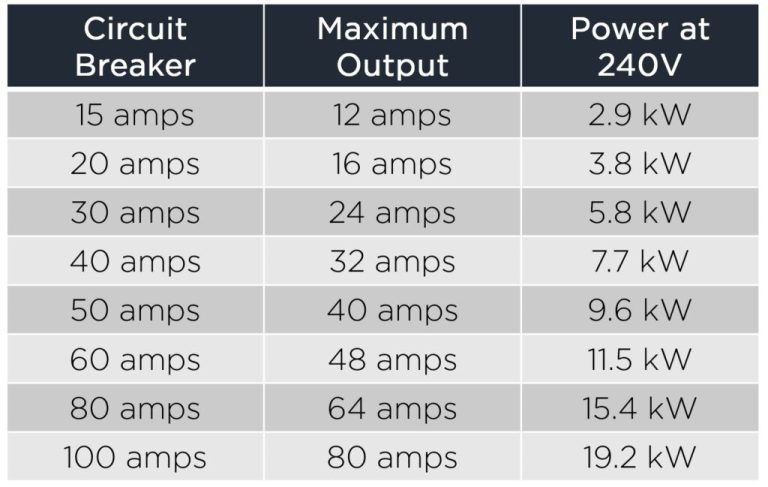
A 48-amp EVSE is typically paired with a 60-amp branch circuit because continuous loads are commonly sized with headroom. That is an electrical planning issue, not a charging preference, and it should follow the equipment instructions and local code.
What 48 Amps Means for Tesla Charging Speed, Power, and Range Added
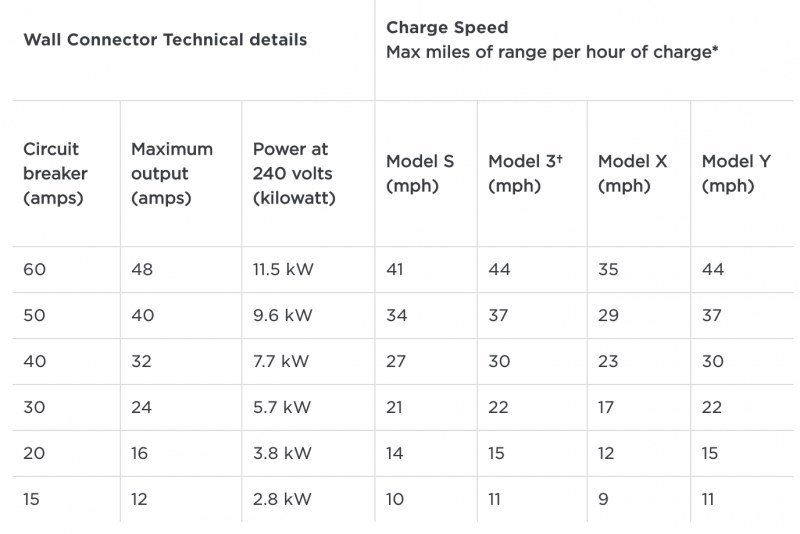
48 amps on a typical 240-volt U.S. Level 2 circuit is roughly 11.5 kW at the wall before losses. That makes it a strong home-charging option, but it is still AC charging, so the vehicle’s onboard charger and efficiency losses matter.
Amps to kW: the simple formula most owners can use
The basic formula is volts × amps = watts. At 240 V and 48 A, the theoretical output is 11,520 W, or 11.52 kW. Real charging power can be slightly lower because of voltage variation and charging overhead.
Use verified values and distinguish EVSE setting from circuit capacity and vehicle limits.
If you are comparing charger sizes, this is why a 40-amp unit and a 48-amp unit are not the same. A 48-amp setup can deliver more energy per hour, but only if the car can use it and the installation supports it. Our guide on whether 40 amps is enough for Level 2 charging helps frame that trade-off.
How much range per hour you can expect in typical U.S. driving terms
Range added per hour depends on the Tesla model’s efficiency, weather, battery temperature, and charging losses. A reasonable estimate for many Tesla drivers is roughly 30 to 45 miles of range per hour at 48 amps, but that is an estimate, not a guarantee.
Label estimates and state vehicle, onboard-charger, battery, temperature, and loss assumptions.
Why weather, battery temperature, and HVAC use change real-world results
Cold batteries often charge more slowly until they warm up. Hot weather can also add thermal-management overhead. If the cabin is preconditioning, if the battery is cold-soaked, or if the car is actively heating or cooling the pack, the wall power does not all become stored energy.
Tesla Compatibility: Vehicle Onboard-Charger Limits, Connector Type, and Model Differences
The key compatibility question is not just “Does the plug fit?” It is “Can the Tesla accept 48 amps of AC charging?” Some models and trims can, while others are limited below that level by onboard-charger hardware or software configuration.
Which Tesla models and trims can actually accept 48-amp AC charging
Tesla’s AC charging capability varies by model and trim, and it can change over time with product updates. Before buying a 48-amp EVSE, check the vehicle’s charging spec in Tesla’s current owner documentation for your exact model.
Connector basics: Tesla connector, NACS, and J1772 adapter considerations
Tesla vehicles in the U.S. use the Tesla/NACS inlet form factor on the vehicle side, but adapter needs depend on the charger side. A Tesla-compatible EVSE may connect directly, while a J1772-based Level 2 station may require an adapter that supports AC charging in the correct direction.
Important: Physical fit alone does not prove every AC or DC charging mode is supported.
When the car limits charging below the EVSE’s maximum output
Even with a 48-amp charger, the Tesla may charge at a lower rate if the onboard charger is the bottleneck, if the battery is near full, if the battery is cold, or if the vehicle is managing temperature. That is normal and does not necessarily indicate a fault.
Level 2 Charger Setup: Plug-In vs Hardwired, Circuit Planning, and Code Considerations
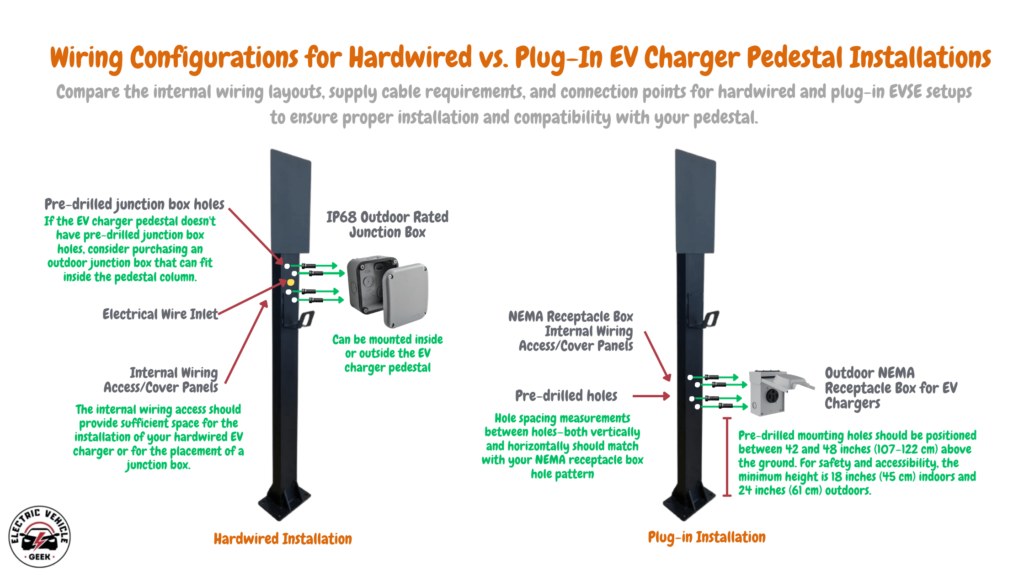
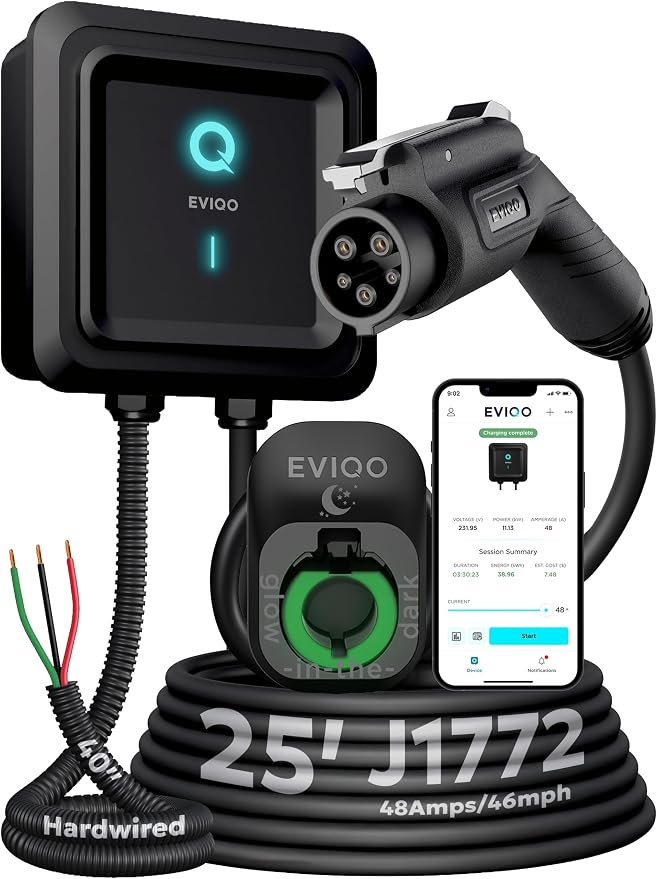
For 48 amps, installation details matter as much as the charger itself. Many 48-amp EVSEs are designed for hardwired installation, and the circuit, breaker, conduit, and panel capacity all need to be reviewed before anyone starts work.
Why many 48-amp EVSEs require hardwiring rather than a standard plug
A 48-amp continuous load often pushes beyond what many common 240-volt receptacle-based setups are intended to handle. Some manufacturers therefore specify hardwiring for the full output rating, which can improve installation flexibility and reduce plug/receptacle wear.
Useful when the manufacturer allows it, portability matters, and the receptacle is specifically rated for the setup.
Often preferred for higher-output EVSEs, but it requires proper wiring, mounting, and electrician involvement.
Panel capacity, load calculations, and why local permit rules matter
A 48-amp EVSE can be a substantial new home load. Before installation, a qualified electrician should confirm panel capacity, breaker sizing, feeder capacity, and whether a load calculation or permit is required in your jurisdiction.
What to check in the charger manual before any installation begins
Look for the required circuit size, whether the unit is plug-in or hardwired, any outdoor-use limits, recommended wire routing, torque specifications, and whether the product needs a specific receptacle or breaker type. Never assume the installation matches the marketing summary.
- Confirm vehicle inlet and AC/DC compatibility
- Check the vehicle’s maximum AC charging capability
- Verify EVSE amperage and electrical requirements
- Confirm cable length, mounting, and indoor/outdoor suitability
- Verify safety listing, warranty, app requirements, and support
- Include installation, adapter/accessory, and electricity costs
Best Use Cases for a 48-Amp Tesla Charger at Home
A 48-amp charger makes the most sense when overnight time is limited, daily mileage is high, or multiple drivers share one home charging point. If you can fully recover your daily driving on a lower-amp setup, the extra capacity may be unnecessary.
Daily commuters with overnight charging needs
If you drive a long commute and want the battery replenished quickly after returning home, 48 amps can offer more flexibility than a 32-amp or 40-amp unit. The added speed can matter when you have a short charging window before the next day.
Multi-driver households, higher-mileage owners, and colder-climate charging
Households with two EVs, frequent local driving, or winter charging losses may benefit from the extra output. In colder climates, faster AC charging can help offset the time lost to battery warming and cabin preconditioning.
When a lower-amp charger may be the smarter, lower-cost choice
If your Tesla only needs a modest overnight refill, a lower-amp charger can be cheaper to install and easier on the electrical panel. For many owners, the practical difference between 40 amps and 48 amps is convenience rather than necessity.
Charging Cost at 48 Amps: Electricity, Losses, and Time-of-Use Pricing
Charging cost depends on your utility rate, charging losses, and when you charge. A 48-amp setup does not automatically cost more per mile than a lower-amp setup; it usually just delivers energy faster.
How to estimate cost per mile using kWh delivered and your utility rate
Start with your electricity price in dollars per kWh, then estimate how many kWh you need for a typical charging session. If your Tesla averages about 3 to 4 miles per kWh, then each kWh of battery energy roughly adds that many miles before losses are considered.
State assumptions; rates, taxes, time-of-use pricing, and losses vary.
Charging losses: why wall energy and battery energy are not the same
Some energy is lost as heat in the EVSE, cabling, and vehicle charging electronics, and some may go to thermal management. That means the energy you buy from the utility can be higher than the energy that ends up stored in the battery.
How off-peak rates and scheduled charging can change monthly costs
If your utility offers time-of-use pricing, scheduled charging can materially reduce monthly cost. A 48-amp charger can still be used efficiently on an off-peak plan; the key is timing, not just amperage.
Battery Health and Charging at 48 Amps: What Tesla Owners Should Know
Home AC charging at 48 amps is generally easier on the battery than frequent DC fast charging, because AC charging is slower and the battery management system can regulate the process. Still, battery health depends on temperature, state of charge, and how often you charge to very high levels.
How AC home charging compares with DC fast charging for battery wear
AC home charging is typically the gentler daily option because the vehicle converts AC to DC onboard and manages the battery at a moderate rate. DC fast charging is more convenient on trips, but it usually creates more heat and more stress than routine home AC charging.
Manufacturer guidance matters most. Avoid assuming one universal charging percentage rule fits every Tesla, especially when weather, daily driving needs, and battery preconditioning all change the picture.
State of charge, temperature, and thermal management effects
Charging slows as the battery approaches a higher state of charge, and cold packs may accept energy more slowly until warmed. That means a 48-amp charger is most useful for the middle of the pack and for replenishing energy overnight, not for eliminating every charging slowdown.
Manufacturer guidance versus general battery-health best practices
Tesla’s own guidance should take priority over generic internet advice. The best home-charging habit is the one that fits your daily driving while respecting the vehicle’s recommended charging behavior and your local electrical setup.
Buying Guide: Features That Matter in a 48-Amp Level 2 Tesla Charger
If you are shopping for a 48-amp home charger, focus on compatibility, installation type, safety documentation, and long-term usability. The best choice is the one that matches your vehicle, panel, parking layout, and charging habits.
Cable length, weather resistance, and outdoor suitability for U.S. homes
Measure the parking distance before buying. A cable that is too short can make daily use annoying, while unnecessary extra length can add cost and clutter. For outdoor installs, verify the enclosure rating, operating temperature range, connector storage guidance, and manufacturer restrictions.
Smart features: app control, scheduling, load management, and energy tracking
Smart features can be helpful if you want scheduled charging, usage history, or utility-rate optimization. But they are not essential for everyone, and app-based controls can depend on cloud service, account setup, and firmware support.
Warranty, support, safety certifications, and long-term reliability
Look for a clear warranty, accessible support, and a real safety listing or certification from the manufacturer or certification record. Do not assume a product is code-compliant or outdoor-rated just because it is marketed for EV charging.
If you are still comparing units, our roundup of the best 48-amp Level 2 EV chargers for home charging can help you narrow the feature set that matters most.
Troubleshooting and Alternatives: When 48 Amps Is Not the Right Answer
Not every Tesla owner needs a 48-amp setup, and not every home can support one. If the installation is expensive, the panel is tight, or the car will not accept the full current, a smaller charger may be the better value.
Common reasons Tesla may not charge at the full advertised rate
The most common reasons are a lower onboard-charger limit, a charger configured below 48 amps, a circuit or receptacle that cannot support the load, or battery conditions that temporarily reduce charging speed. The EVSE is rarely the only factor.
Adapter, firmware, and network restrictions that can reduce charging power
Some adapters are limited by their design, and some smart chargers may have configuration settings that cap output. Firmware updates can also affect charging behavior, so it is worth checking both the vehicle software and the EVSE settings if performance seems off.
Who should choose 32 amps, 40 amps, or a portable charging solution instead
Choose 32 amps if you have modest overnight needs and want a simpler install. Choose 40 amps if it covers your mileage with margin. Choose portable charging if you need flexibility, travel frequently, or cannot commit to a dedicated home EVSE yet.
- Best for: Tesla owners who need fast overnight Level 2 AC charging and have a compatible vehicle plus a properly sized electrical setup.
- Think twice if: Your Tesla’s onboard charger caps below 48 amps or your panel and installation costs make the upgrade hard to justify.
- Next step: Verify your exact Tesla’s AC charging limit, then confirm the EVSE’s installation requirements with the manual and a qualified electrician.
Frequently Asked Questions
No. The car can reduce charging speed based on its onboard charger limit, battery temperature, state of charge, and thermal management needs.
No. Forty-eight amps is Level 2 AC charging. DC fast charging is a different charging mode and uses different hardware and vehicle-side support.
Often yes, depending on the EVSE manufacturer’s instructions and local electrical rules. Many 48-amp units are designed for hardwiring rather than a standard plug.
A common estimate is about 30 to 45 miles of range per hour, but actual results vary with model efficiency, temperature, HVAC use, and charging losses.
Often yes for AC charging if the adapter and EVSE support it, but the Tesla’s charging limits still apply. Physical fit does not guarantee every charging mode or current level.
It can be worth it for high-mileage drivers or colder climates, but many owners will be fine with 40 amps if overnight charging already covers daily use.

5 Comments