EV Charging Cost at Home: What You’ll Pay per kWh
Home EV charging usually costs the same as your delivered electricity rate per kWh, plus roughly 5–15% in charging losses at Level 2 — often a few cents per mile. The main check is your own bill: supply, delivery, taxes, time-of-use windows, and tier thresholds all change the real number.
EV charging cost at home usually comes down to one number: your delivered electricity rate per kWh, multiplied by the energy your car actually draws from the wall. In most US households that lands somewhere between roughly $0.10 and $0.30 per kWh of electricity used, which typically works out to a few cents per mile — often well below gasoline in the same state. The catch is that your bill is not simply rate × battery size, because time-of-use windows, tiered pricing, fixed fees, and Level 1 or Level 2 charging losses all move the final number.
- Cost formula: Delivered rate × kWh drawn from the wall, then add charging losses before comparing.
- Rate structure: Time-of-use windows, tiered pricing, and demand charges can change your effective per-kWh cost more.
- Equipment fit: The EVSE amperage and the vehicle’s onboard AC charger limit both apply — the.
- Safety: Circuit, breaker, and wiring decisions follow the manufacturer’s instructions plus your local code and.
EV Charging Cost at Home: The Short Answer
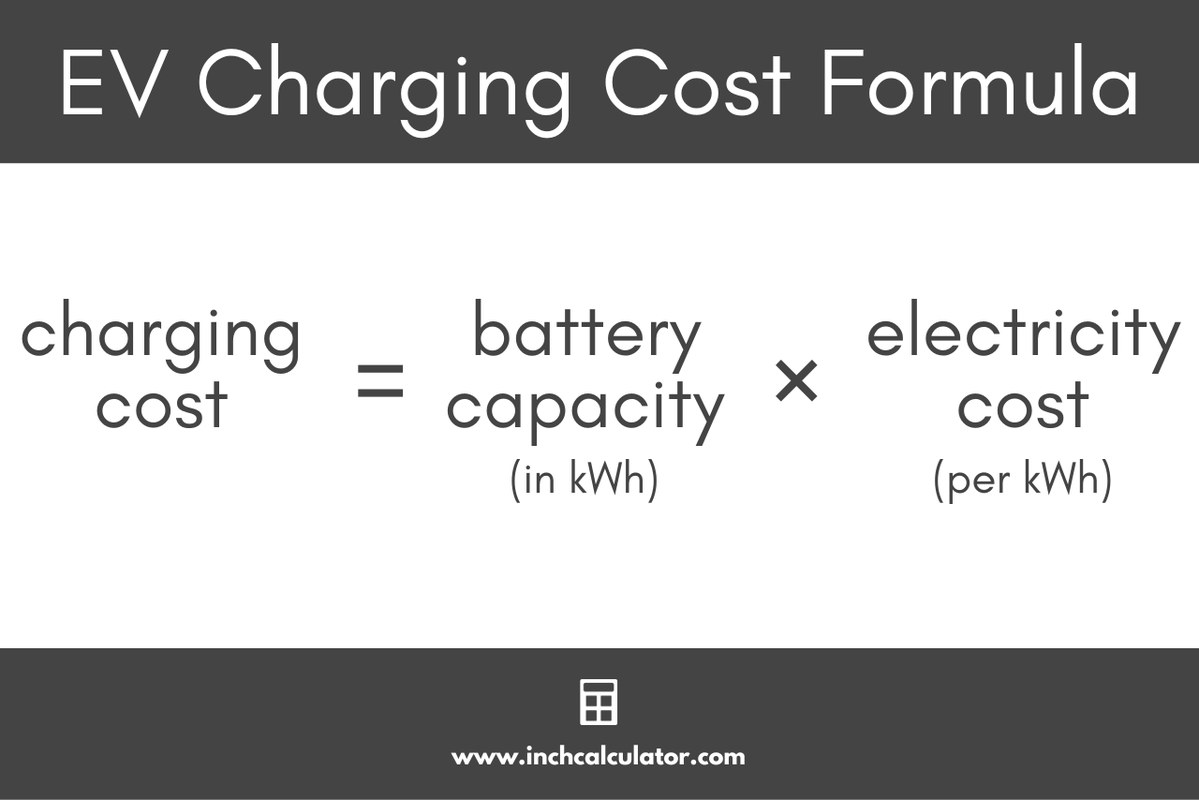
For most US drivers, home charging cost is driven by one equation: your delivered electricity rate per kWh × the kWh your car actually pulls from the wall. The “from the wall” part matters, because charging losses mean you pay for slightly more electricity than ends up stored in the battery.
If your delivered rate is $0.15 per kWh and your car needs roughly 300 kWh of usable energy in a month, you’ll pay somewhere near $50 for that month before fixed fees, taxes, or demand charges. At about 3 miles per kWh, that’s roughly 900 miles for $50 — under 6 cents per mile.
What You’ll Pay per kWh in the U.S. in 2026
There is no single national number. Residential electricity prices vary widely by state, by utility, and by rate plan, and the price you actually pay includes supply, delivery, taxes, and fixed charges — not just the headline rate on a utility webpage.
As a planning range, many US households see delivered residential rates somewhere between roughly $0.10 and $0.30 per kWh, with some high-cost markets above that and some low-cost markets below it. Verify with your own bill or your utility’s current tariff sheet before you build a budget on any figure, including this one.
Why Your Bill Is Not Just Rate × Battery Size
Three things break the simple math:
- Charging losses. Some electricity is lost as heat in the onboard charger, the EVSE, and the battery itself. Losses tend to be higher at Level 1 than at Level 2.
- Rate structure. Time-of-use windows, tiered pricing, and demand charges can change your effective rate dramatically depending on when you charge.
- Fixed and seasonal items. Monthly service charges, taxes, and seasonal rate changes apply whether you charge or not.
The Home Charging Cost Formula: Rate, kWh, and Charging Losses
Step 1: Find Your Delivered Electricity Rate
Look at an actual bill, not a marketing page. Add the supply charge, the delivery or distribution charge, applicable taxes, and any per-kWh riders. Divide total kWh billed into total dollars billed for a clean all-in rate.
If your utility offers a separate EV rate or time-of-use plan, run the same calculation for the off-peak window you’d actually charge in. The off-peak rate is the one that matters for EV math.
Step 2: Estimate kWh Added to the Battery
There are two common ways to get there:
- From the battery: usable battery capacity in kWh × the fraction you’re replenishing. Going from 20% to 80% on a 75 kWh usable pack is 0.60 × 75 = 45 kWh.
- From miles driven: monthly miles ÷ your vehicle’s mi/kWh. At 3 mi/kWh, 1,000 miles needs about 333 kWh.
The second method usually matches reality better because it reflects how you actually drive rather than how you think you drive.
Step 3: Add Charging Losses for Level 1 and Level 2
Charging losses are the gap between what the wall delivers and what the battery stores. Level 2 AC charging typically loses a smaller share than Level 1, which runs at lower power and often spends more time supporting overhead systems. A commonly cited planning range for Level 2 is roughly 5–15%, with Level 1 sometimes higher.
Treat those as general patterns, not specifications. Your vehicle, EVSE, ambient temperature, and battery state all influence the real number.
Step 4: Multiply and Compare With Gas per Mile
Cost per mile = (kWh added × loss factor × delivered rate) ÷ miles driven. Compare that to your gasoline cost per mile: fuel price ÷ your car’s mpg.
Example: $0.17/kWh, 10% losses, 3 mi/kWh gives roughly $0.062 per mile. A 30 mpg car at $3.20 per gallon runs about $0.107 per mile. That comparison shifts with local fuel and electricity prices, so rerun it with your own numbers.
What Changes Your EV Charging Cost at Home?
Time-of-Use, Tiered Pricing, and Demand Charges
Time-of-use plans price electricity differently by hour. If you can schedule charging overnight, the off-peak rate is often well below the on-peak rate.
Tiered pricing raises the per-kWh price as monthly usage crosses thresholds, and an EV can push a household into a higher tier. Demand charges, more common on certain commercial and specialty residential tariffs, bill based on peak kW draw rather than total kWh.
Seasonal Rates, Weather, and Fixed Fees
Summer and winter rates can differ. Cold weather also reduces range, so you may need more kWh for the same commute, and cabin preconditioning adds load. Fixed monthly service charges and taxes apply regardless of how much you charge.
Solar, Off-Peak Scheduling, and Utility EV Programs
With rooftop solar, the marginal cost of daytime charging can be near zero — though you’re forgoing export credits. Many utilities also offer managed charging or EV-specific rate programs that reward off-peak scheduling. Program terms, enrollment requirements, and whether they require a specific charger or network vary, so check your utility’s current page.
Home Charger Costs: Equipment, Installation, and Electrical Planning
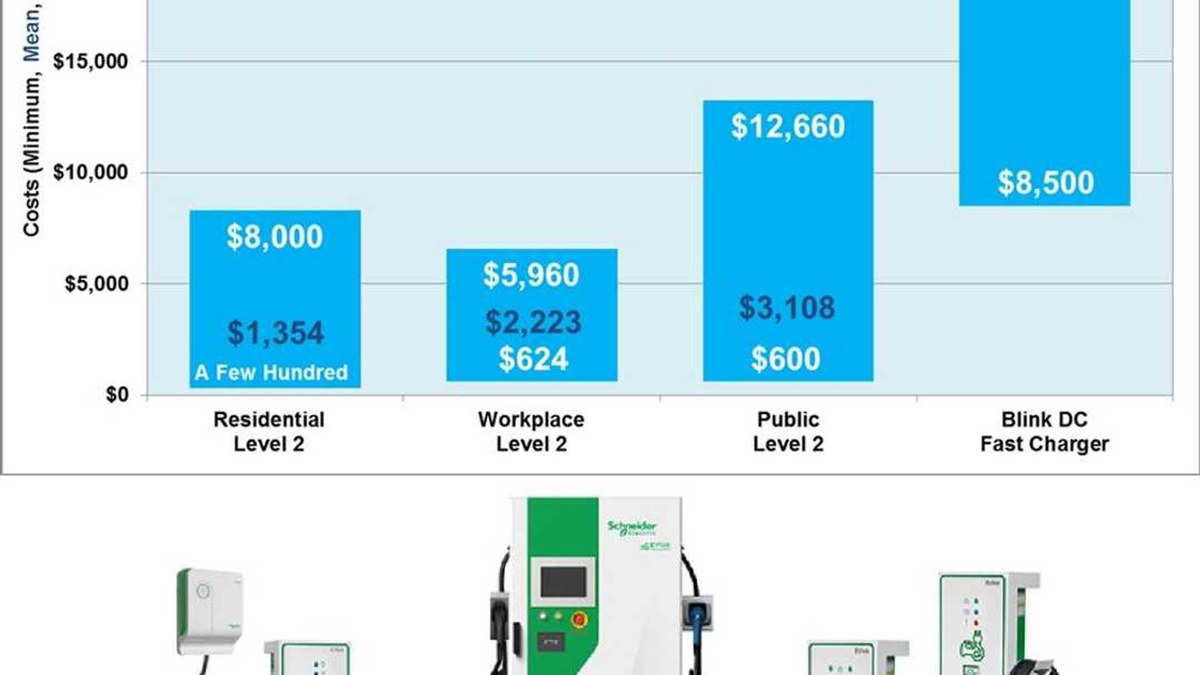
Level 1 vs Level 2 EVSE: Up-Front Cost and Daily Fit
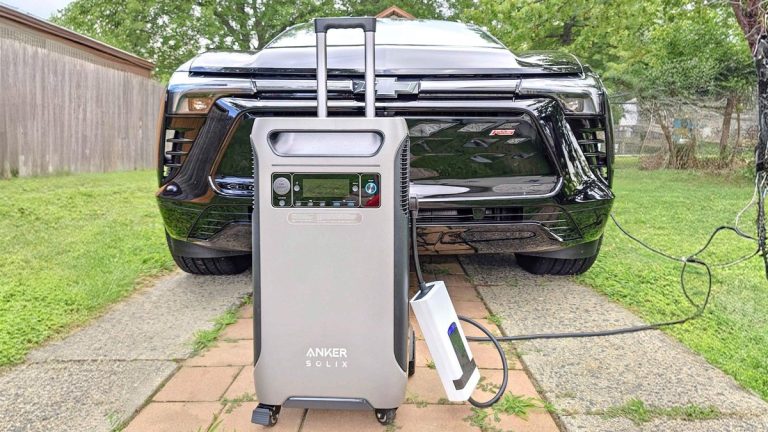
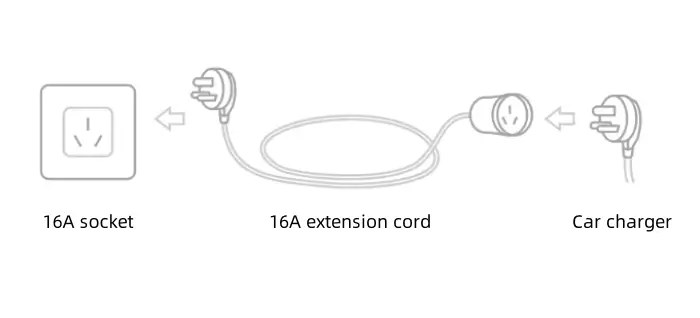
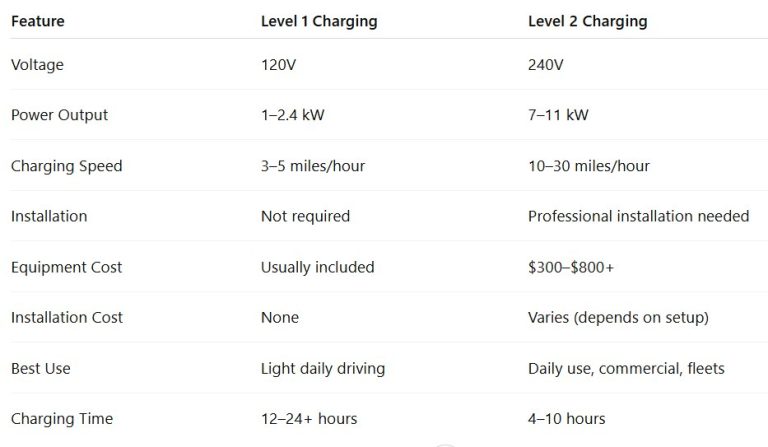
Level 1 uses the 120 V cord that typically comes with the car. Equipment cost is effectively zero, but it adds only a few miles of range per hour — workable for low-mileage drivers, frustrating for anyone with a long commute.
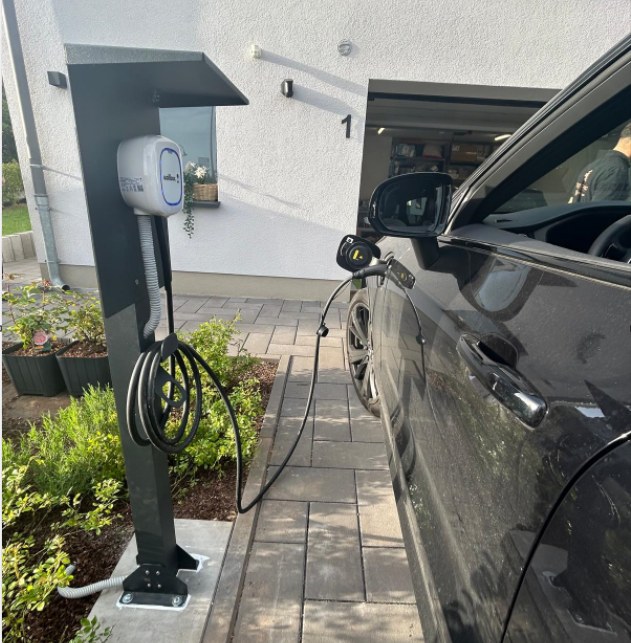
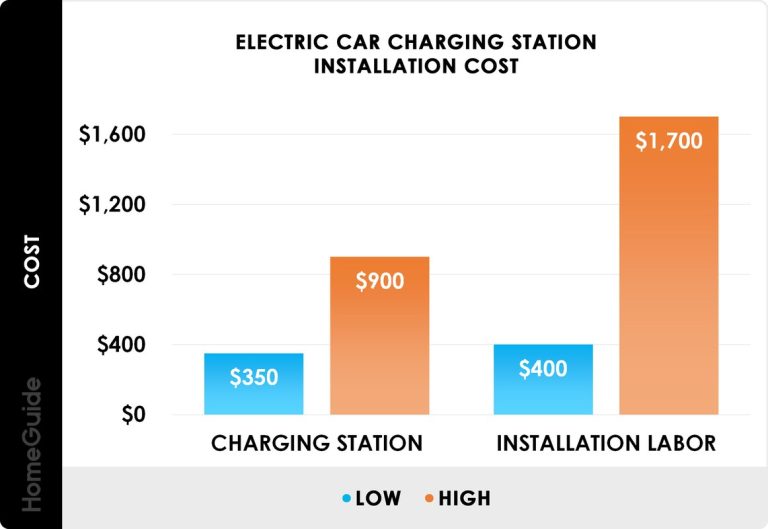
Level 2 uses a 240 V EVSE, either plug-in or hardwired. Equipment and installation add real up-front cost, but the speed usually makes it the practical default. Our guide to whether 40 amps is enough for a Level 2 charger walks through how to size this to your daily miles.
Plug-In vs Hardwired: Cost, Code, and Convenience
Uses a compatible 240 V receptacle and plug. Easier to move or take with you, but the receptacle, breaker, and wiring must match the EVSE’s requirements and your local rules.
Connected directly to the circuit. Common for higher-amperage units and outdoor installs, and it generally calls for a qualified electrician plus permit and inspection where applicable.
Circuit and Panel Planning: Follow the Manual and Local Code
Circuit size, breaker rating, conductor size, and whether a neutral is required all come from the EVSE manufacturer’s instructions plus the electrical code adopted in your area. Continuous-load rules mean the circuit is usually sized above the charger’s rated current, which is why a 48-amp unit is commonly discussed alongside a 60-amp circuit. Our explainer on whether a 48 amp EV charger needs a 60 amp circuit covers that relationship in detail.
Panel capacity is the other half of the question. If your service panel can’t support the added load, an electrician may discuss load management, a panel upgrade, or a lower-amperage setting. None of that is a DIY judgment call.
Cable Length, Weather Rating, Smart Features, Warranty, and Support
Longer cables cost more but reduce awkward parking. For outdoor mounting, verify the enclosure rating, operating temperature range, and connector storage guidance from the manufacturer — don’t infer weather suitability from appearance.
Smart features add scheduling, usage tracking, and sometimes utility program integration, but they also bring app accounts, connectivity requirements, firmware updates, and questions about what happens if the cloud service is unavailable. Warranty length and US-based support are worth comparing directly. You can browse our Level 2 home charger coverage for category context.
Matching Charger Power to Your EV: Connector, Onboard Charger, and EVSE Limits
J1772, NACS, and Tesla Compatibility in 2026
Most non-Tesla EVs sold in the US use the J1772 inlet for AC charging. Tesla vehicles have used NACS, now standardized as SAE J3400, and a growing number of new EVs ship with a NACS inlet for AC and DC. Adapters exist in both directions, but compatibility depends on the vehicle, the EVSE, and whether the adapter is rated for AC only or for DC as well.
Vehicle Onboard-Charger Limit vs EVSE Amperage and kW
This is where a lot of home charging expectations go wrong. The EVSE sets the maximum current it offers; the vehicle’s onboard AC charger sets the maximum it will accept. The lower of the two wins.
A 48-amp EVSE on a 60-amp circuit can deliver roughly 11.5 kW at 240 V, but a car with an 11 kW onboard charger will not exceed that. Our breakdown of how many kW a 48 amp Level 2 charger delivers covers the arithmetic.
Adapter Direction, Source/Destination Connectors, and AC/DC Mode
Adapters are directional. A J1772-to-NACS adapter for AC charging is not the same product as a NACS-to-CCS1 DC adapter, and using one in the wrong role is unsafe. Always confirm which connector is on the vehicle, which is on the charger, and whether the adapter is rated for the charging mode you’re using.
Adapter Power Limits, Thermal Safety, Firmware, and Vehicle Restrictions
Adapters carry their own amperage and power ratings. Exceeding them, or using a damaged or non-listed adapter, creates heat and risk. Some vehicles and networks also restrict which adapters or sessions are permitted, and firmware on either side can change behavior over time. Verify current compatibility with the vehicle manufacturer and the adapter maker before relying on it.
Battery Health, Range, and Efficiency: What Affects Cost per Mile
Manufacturer Guidance vs General Patterns
DC Fast Charging Context
DC fast charging isn’t a home option for most households — it requires dedicated high-power equipment and electrical service that residential wiring generally can’t support. It matters here mainly as a cost comparison: public DC charging is typically priced per kWh or per minute and usually costs more than home charging.
mi/kWh, Wh/mi, Speed, Weather, HVAC, Elevation, Payload, Tires, and Losses
Higher speeds, cold temperatures, heavy HVAC use, elevation gain, extra payload, and underinflated tires all raise Wh/mi, which raises cost per mile. These are labeled estimates and vary by vehicle and conditions.
Level 1 vs Level 2 vs Public Charging: Same Criteria, Different Fit
| Option | Typical cost pattern | Speed | Best fit |
|---|---|---|---|
| Level 1 (120 V) | Lowest equipment cost; losses tend to be higher | A few miles of range per hour | Low-mileage drivers, renters with an accessible outlet |
| Level 2 (240 V) | Equipment plus installation; efficient per kWh delivered | Roughly 20–40+ miles per hour depending on amperage and vehicle | Most homeowners with a daily commute |
| Public AC/DC | Usually the highest per-kWh price; sometimes session or idle fees | AC is slow; DC is fast | Road trips, apartment dwellers, no home charging access |
Compare on the same criteria — cost per kWh delivered, miles added per hour, installation burden, and convenience — rather than on sticker price alone.
How to Estimate Your 2026 Home Charging Cost: A Worked Example
Assumptions You Should Write Down
Write these down before you calculate, because changing any one of them changes the answer:
- Delivered electricity rate, including taxes and fees
- Monthly miles driven
- Vehicle efficiency in mi/kWh
- Charging-loss assumption
- Whether you’re on a time-of-use plan and which window you charge in
Monthly and Annual Cost Scenarios
Illustrative example only. Rates, taxes, time-of-use pricing, demand charges, and charging losses vary by utility and vehicle.
At 3 mi/kWh, 300 kWh added covers about 900 miles. Scaled to a year, that’s roughly $670 in electricity for about 10,800 miles. Drop the rate to $0.11/kWh and the annual figure falls to around $435; raise it to $0.28/kWh and it climbs past $1,100.
When to Recheck Your Numbers
Rerun the math when your utility changes rates, when you switch to a time-of-use plan, when you add solar or storage, when your commute changes, or when seasonal temperatures shift your efficiency. Rate schedules and utility EV programs change regularly, so verify current figures close to when you’re making a decision.
Frequently Asked Questions
It depends on miles driven, your vehicle’s efficiency, and your delivered electricity rate. A household driving about 900 miles a month at 3 mi/kWh with a $0.17/kWh all-in rate would spend roughly $56 in electricity, before any fixed monthly service charges. Run the same math with your own bill and mileage.
Usually yes, because residential rates are typically below public charging prices and you avoid session and idle fees. The gap narrows if you’re on a high residential tier or a costly time-of-use window, or if you have access to a free or subsidized workplace charger.
Per kWh delivered, Level 1 often costs slightly more because losses tend to be higher and charging takes longer. The difference is usually small in absolute dollars for low-mileage drivers, but it adds up for anyone regularly charging a large battery.
Not necessarily, but an EV or time-of-use rate can cut your per-kWh cost substantially if you charge overnight. Check whether the plan raises rates during hours you actually use, and whether there are enrollment requirements or charger restrictions.
Roughly the usable battery capacity plus charging losses. A vehicle with 75 kWh of usable capacity charged from near-empty at 10% losses would draw about 83 kWh from the wall. Most owners rarely charge from empty, so daily top-ups use far less.
Not practically. DC fast charging requires high-power equipment and electrical service that residential properties generally don’t have. Home charging is Level 1 or Level 2 AC; DC fast charging is what you use on the road.