EV Charger Permit Requirements: What to Know Before Installing
New circuits, panel work, and hardwired EVSE almost always require an electrical permit and inspection, while a portable charger on an existing correctly rated receptacle usually does not. The main variable is your local authority having jurisdiction, so confirm requirements and panel capacity before buying equipment.
EV charger permit requirements are less mysterious than most homeowners expect, but they are not optional and they are not uniform across the United States. In most jurisdictions, running a new dedicated 240V circuit for a Level 2 charger requires an electrical permit and a passed inspection, while plugging a portable EVSE into an existing, correctly rated receptacle usually does not. The catch is that “usually” is doing a lot of work in that sentence — your local authority having jurisdiction (AHJ) makes the final call.
- Permit trigger: New circuits, breakers, feeders, panel upgrades, and hardwired EVSE generally require a permit and.
- Code basis: NEC Article 625 applies only in the edition your state or city has adopted.
- Capacity first: Confirm panel and service capacity, plus your vehicle’s onboard charger limit, before choosing amperage.
- Cost drivers: Permit fees, wire run length, panel work, and labor rates vary widely; get itemized.
The Short Answer: When an EV Charger Install Needs a Permit
If the work involves running a new circuit, adding a breaker, extending a feeder, upgrading a panel, or hardwiring equipment, plan on a permit. Those are electrical modifications, and nearly every US jurisdiction requires a permit and an inspection for them.
If you are plugging a portable Level 1 or Level 2 EVSE into a receptacle that already exists and was installed and inspected for that purpose, a permit is usually not required. A receptacle that was never intended for continuous EV charging, however, may not be safe or code-compliant for that use — and that is a separate problem from the permit.
Hardwired vs. Plug-In: The Line Most Inspectors Draw
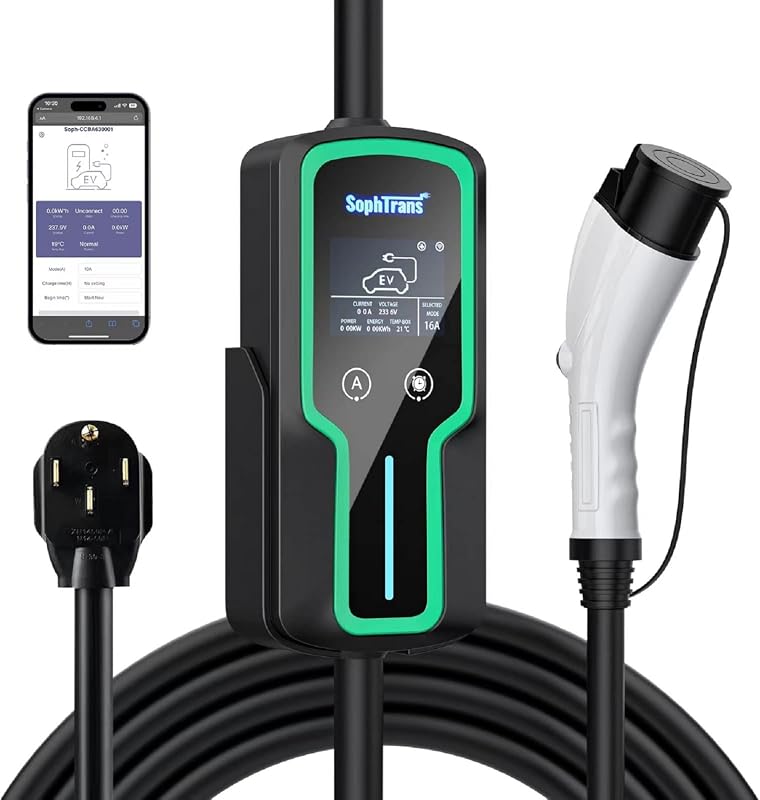
Hardwired EVSE is permanently connected to the branch circuit. That is new electrical work, so it triggers a permit in most places. A plug-in unit on a dedicated NEMA 14-50 or 6-50 receptacle is only permit-free when the circuit already exists and was installed correctly.
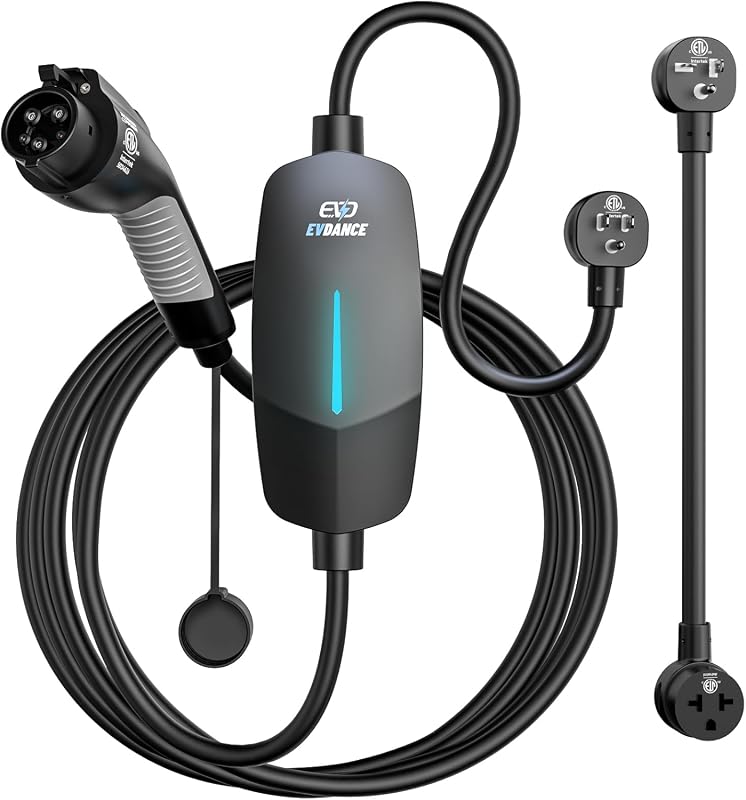
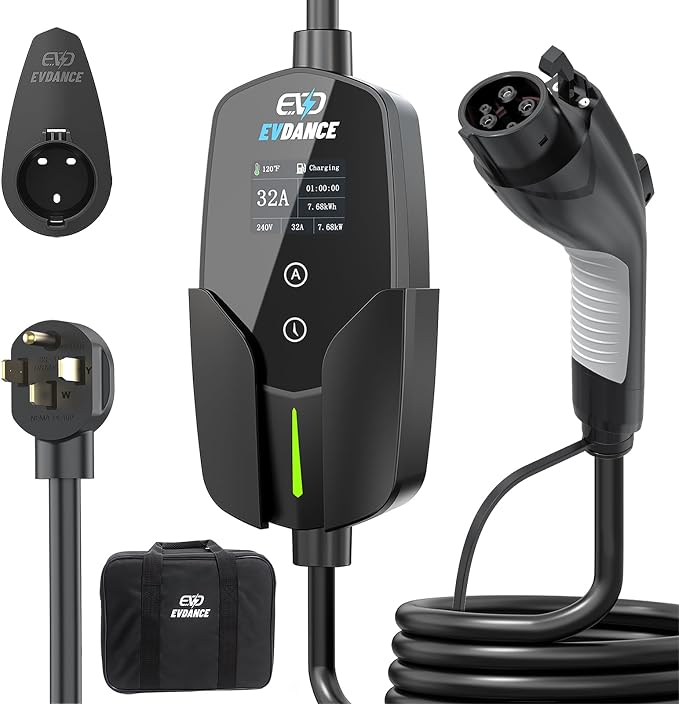
Requires a properly rated receptacle and circuit. Portable between locations. Amperage is typically capped by the receptacle and circuit rating.
Permanently connected, no receptacle or plug to wear out, and can run at higher amperage. Not portable, and almost always permitted work.
Why “It’s Just a Big Appliance” Is the Wrong Mental Model
A dryer or an electric range draws a large load intermittently. An EVSE can pull its full rated current for hours at a time. That continuous duty is why the National Electrical Code treats EV charging differently from a typical household appliance, and why inspectors look at it with more scrutiny.
What the Electrical Code Says About EV Charger Installation
Article 625 of the National Electrical Code (NEC) covers electric vehicle supply equipment. It addresses circuit rating, overcurrent protection, disconnecting means, ground-fault protection for receptacles, and related installation requirements. The NEC is a model code — it only applies where a state or local jurisdiction adopts it.
NEC Article 625 and the Code Cycle Your City Has Adopted
NEC editions are published on a three-year cycle, and adoption lags behind publication. Some jurisdictions enforce the 2020 edition, others the 2023 edition, and some remain on older editions with local amendments layered on top. The edition your AHJ enforces determines which requirements apply to your project.
Section 625.54, for example, requires ground-fault circuit-interrupter protection for receptacles installed for EV charging in the editions that include it. An older adopted edition may not carry that requirement at all. That is one reason two neighbors in different cities can get different answers to the same question.
Local Amendments, AHJ Discretion, and Why Requirements Differ by Zip Code
States and cities amend the NEC. Some add requirements for arc-fault protection, a visible disconnecting means, bollards, or signage. Some require the permit applicant to be a licensed electrician; others allow homeowners to pull permits for their own primary residence.
The AHJ — usually your city or county building department — decides what it will approve. A design that passes in one jurisdiction may be rejected in the next town over, which is why copying a neighbor’s setup is not a reliable plan.
The Permit Process, Step by Step
What a Typical Permit Application Requires
Most electrical permit applications ask for the property address, the scope of work, the contractor’s license number where applicable, the equipment being installed, and the circuit details. Many jurisdictions now accept online submissions with PDF attachments.
Verify connector type, amperage, installation type, and the manufacturer’s required circuit rating.
Confirm panel capacity, conductor sizing, breaker rating, receptacle or hardwire method, and local permit rules.
Follow the instructions and applicable code, then have the work inspected before relying on it.
Load Calculations, Panel Photos, and Equipment Cut Sheets
Expect to provide a load calculation showing the service and panel can support the new load, photos of the panel with the cover removed (taken by a qualified person), and the manufacturer’s installation instructions or cut sheet. The cut sheet matters because it states the required branch circuit rating and any equipment-specific instructions the inspector will check against.
Inspection Day: What Gets Checked and What Fails
Inspectors typically verify breaker size, conductor type and gauge, grounding and bonding, terminations, mounting and support, conduit or cable protection, GFCI protection where required, and whether the installation matches both the approved plans and the manufacturer’s instructions.
Common failures include undersized conductors, a breaker that does not match the EVSE’s required circuit rating, missing strain relief, unprotected cable in a garage or across a driveway, and equipment installed without a recognized safety listing.
Timelines, Fees, and the Mistakes That Cause Rejection
Permit fees vary widely. Some jurisdictions charge a flat fee for a residential circuit, others base the fee on project valuation or amperage, and some reduce or waive fees for EV charging equipment. Check your building department’s published fee schedule rather than trusting a forum post from another state.
Timelines depend on workload and completeness. Simple residential electrical permits are often issued the same day or within a few business days, with the inspection scheduled after the work is finished. Incomplete applications and missing documentation are the most common causes of delay.
Circuit, Panel, and Service Capacity: The Real Gating Factor
The permit is paperwork. The panel is physics. Before you file anything, confirm that your electrical service can actually carry the new load.
Why Breaker and Wire Sizes Come From the Product Manual, Not a Blog Post
EVSE manufacturers publish the required branch circuit rating and conductor sizing in their installation instructions. Those instructions are part of the listing, and inspectors check against them. A 48-amp EVSE generally requires a 60-amp circuit and conductors sized for that circuit — our guide to 48 amp EV charger wire size explains how that sizing is determined.
Panel Upgrades, Subpanels, and Load Management Under NEC 625.42
If the existing panel cannot support the new load, the usual options are a service upgrade, a subpanel fed from the main service, or an energy management system. NEC 625.42 addresses EVSE rating and, in editions that include it, permits an energy management system to reduce the calculated load under specified conditions.
Whether your AHJ accepts that approach is a local decision, and it usually requires documentation from the equipment manufacturer. Do not assume an energy management device solves a capacity problem without confirming it with the inspector first.
When a 240V Circuit Simply Isn’t Available
Older homes, detached garages, and multi-unit buildings sometimes have no practical path to a new 240V circuit without significant expense. In that case, a lower-amperage Level 2 setup or a Level 1 solution may be the realistic answer. Our look at whether 40 amps is enough for a Level 2 charger covers how much range different amperages actually add overnight.
Matching the Charger to Your Car Before You File
The permit describes the circuit. The circuit has to match the EVSE. The EVSE has to match the car. Get that order wrong and you may pay for the work twice.
J1772, NACS, and What Adapters Do and Don’t Solve in 2026
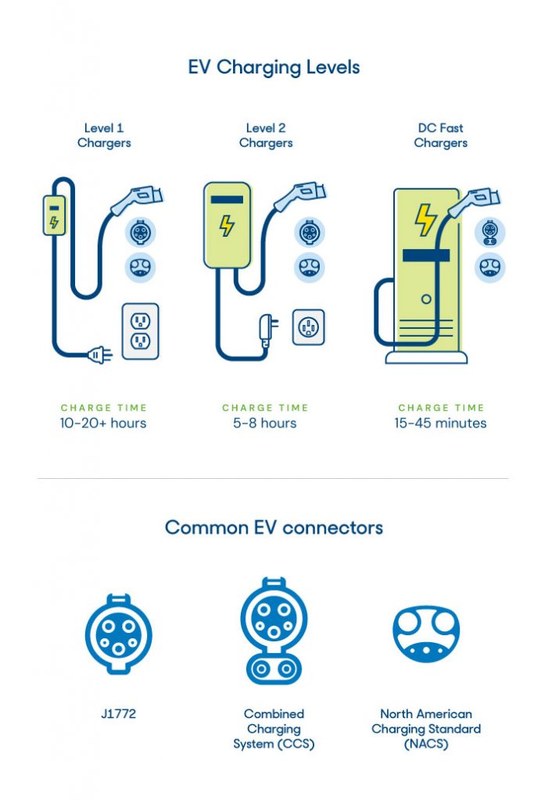
Most new EVs sold in the US now use the NACS / SAE J3400 inlet, while many older vehicles and most existing home EVSE use SAE J1772. AC adapters exist in both directions and are generally suitable for Level 2 charging when they are rated for the current and listed for the purpose.
What an adapter does not do is change the charging mode. A J1772-to-NACS adapter does not enable DC fast charging, and a DC adapter is a different product with different requirements. Physical fit alone proves nothing about protocol support.
Onboard Charger Limits: Why a 48-Amp EVSE May Not Charge Any Faster
The EVSE supplies AC power; the vehicle’s onboard charger converts it to DC for the battery. If the onboard charger maxes out at 7.2 kW or 9.6 kW, a 48-amp (roughly 11.5 kW) EVSE will not deliver more than the car can accept. We break down the math in 48 amp EV charger speed.
Plug-In vs. Hardwired: Amperage Ceilings, Cost, and Code Implications
Plug-in EVSE on a NEMA 14-50 receptacle is typically limited to 40 amps of charging current on a 50-amp circuit because of the continuous-load rule. Hardwired units can go higher and eliminate the receptacle and plug as wear points, but they are not portable and generally require a permit.
EVSE Amperage, kW, and the 80% Continuous-Load Rule
EV charging is treated as a continuous load, so the branch circuit and overcurrent device must be sized at 125% of the EVSE’s maximum current. That is why a 48-amp charger needs a 60-amp circuit and a 40-amp charger needs a 50-amp circuit. Our explainer on whether a 48 amp EV charger needs a 60 amp circuit walks through the calculation step by step.
What Permits and Installation Actually Cost
Costs vary too much by region to quote one number responsibly. What you can do is understand the drivers so you can evaluate quotes intelligently.
Permit Fee Ranges and What Drives Them Up
Permit fees are set by the local jurisdiction. Flat fees are common for a simple residential circuit, while valuation-based fees rise with project cost. Panel upgrades, service changes, and commercial or multi-family work usually cost more to permit because they involve more review and sometimes plan-check.
Installation Cost Assumptions: Labor, Wire Run Length, and Panel Work
The biggest variables are the distance from the panel to the mounting location, whether the run goes through finished walls or exposed conduit, whether the panel has spare capacity, and local labor rates. A short run in an unfinished garage is a very different job from a long run through a finished basement to a detached garage.
Get at least two or three quotes that specify the circuit rating, conductor type, permit handling, and whether panel work is included. Vague quotes are the most common source of surprise costs.
Utility Rebates and Tax Credits That Require a Permit and Inspection
Many utility and state EV charging programs require a permit and a passed inspection as a condition of the rebate. Federal, state, and utility incentives have changed repeatedly in recent years, and some have expired or been modified. Verify current eligibility directly with the IRS, your state energy office, and your utility before you budget around any incentive.
Renters, Condos, and HOAs: Permits Aren’t the Only Approval
State Right-to-Charge Laws and Landlord Sign-Off
A number of states have enacted right-to-charge laws that give renters and condo owners a path to install charging at their own expense, subject to conditions. The details — insurance requirements, equipment ownership, and restoration obligations — vary by state and by the specific statute. Check your state’s current law along with your lease or HOA governing documents.
Shared Parking, Submetering, and Who Owns the Equipment
In shared parking, the practical questions are who pays for the electricity, who owns and maintains the equipment, and what happens when you move out. Submetering or a networked charger with per-user billing can answer the first question; a written agreement answers the rest.
Cable Length, Weather Rating, and Smart Features in the Permit File
NEMA Ratings, Outdoor Mounting, and GFCI Requirements
Outdoor installations need an enclosure rated for the location and a mounting approach that keeps the connector out of standing water and snow. Where a receptacle is used for EV charging, GFCI protection is required in NEC editions that include 625.54. Verify the enclosure rating and operating-temperature limits in the manufacturer’s documentation rather than assuming from appearance.
Load Sharing, Demand Response, and Utility-Connected Smart Chargers
Some utilities offer programs that let them reduce or pause charging during peak demand in exchange for a lower rate or a bill credit. Those programs usually require a networked charger and a utility account connection. If you plan to enroll, mention it at permit time — the AHJ may want documentation showing how the energy management function works.
Warranty, Support, and Paperwork to Keep After the Permit
What Voids a Charger Warranty
Warranties commonly exclude damage from improper installation, use of unlisted or mismatched components, incorrect circuit sizing, water intrusion where the unit is not rated for it, and unauthorized modification. An installation that fails inspection or ignores the manufacturer’s instructions is a warranty risk as well as a safety risk.
Documentation That Matters at Resale or for a Future Inspection
Keep the permit, the inspection sign-off, the electrician’s invoice, the load calculation, and the equipment manual together. A documented, permitted installation is a selling point for an EV-ready home and answers questions quickly if a future electrician or inspector needs to trace the circuit.
Frequently Asked Questions
In most US jurisdictions, yes — if the installation involves a new dedicated 240V circuit, a new breaker, a panel upgrade, or hardwired equipment. Plugging a portable EVSE into an existing, correctly rated receptacle usually does not require a permit, but the receptacle and circuit still have to be suitable for continuous EV charging. Confirm with your local building department, since requirements are set locally.
Some jurisdictions allow homeowners to pull electrical permits for their own primary residence, and some do not. Even where it is allowed, the work still has to pass inspection and follow the manufacturer’s instructions and applicable code. Because EV charging is a continuous, high-current load, many homeowners choose to hire a licensed electrician for the circuit work and handle only the permit paperwork themselves.
EV charging is treated as a continuous load, so the branch circuit and overcurrent device are sized at 125% of the EVSE’s maximum current. A 48-amp EVSE therefore generally requires a 60-amp circuit with conductors sized accordingly. Always verify the required circuit rating in the specific product’s installation instructions, because equipment requirements can differ.
Not usually, but it depends on your jurisdiction and your home’s electrical setup. Permit fees are set locally and may be flat or based on project valuation. The larger cost variable is typically the installation itself — wire run length, whether the panel has spare capacity, and local labor rates. Get itemized quotes that state whether permit handling and panel work are included.
If the receptacle already exists and was installed and inspected for EV charging, a permit is usually not required to plug in a portable unit. If a new receptacle and circuit must be added, that is new electrical work and generally requires a permit. A receptacle that was never intended for continuous EV charging may also need to be replaced or upgraded.
Many utility and state programs require a permit and a passed inspection as a condition of the rebate, and some incentive programs have specific documentation requirements. Federal, state, and utility incentives have changed repeatedly in recent years, so verify current eligibility and requirements directly with the IRS, your state energy office, and your utility before relying on any incentive.