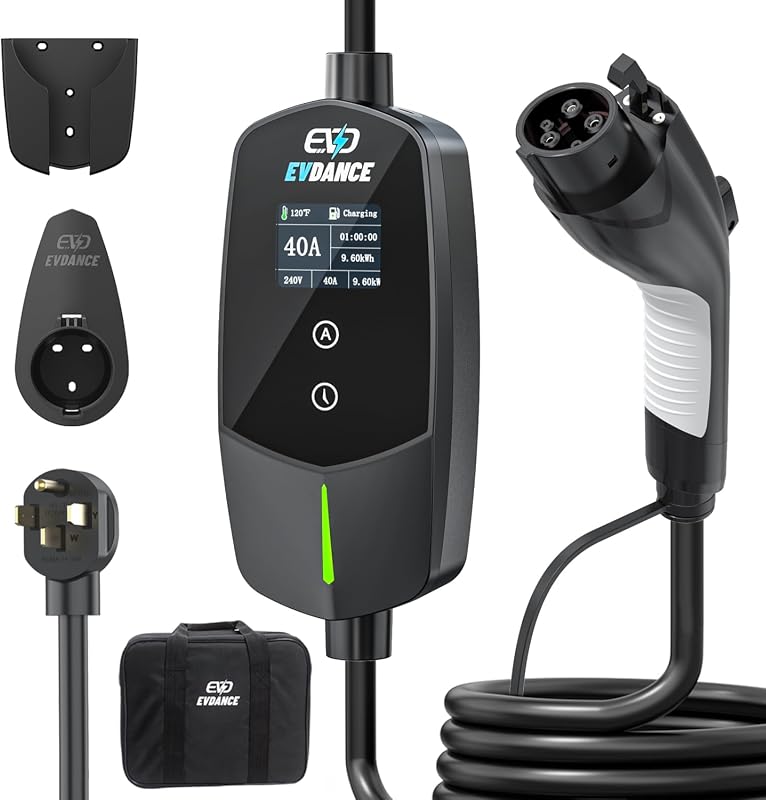
What Size Breaker for a 40 Amp EV Charger?
A 40 amp EV charger is commonly installed on a 50 amp circuit in U.S. homes, not a 40 amp breaker, because EV charging is treated as a continuous load. The final answer still depends on the charger manual, wire sizing, panel capacity, and local code requirements.
what size breaker for a 40 amp ev charger is usually a 50 amp circuit in a U.S. home, because EV charging is typically treated as a continuous load and the breaker must be sized for the installation, not just the charger’s nameplate output. The exact answer still depends on the charger manual, the wiring method, and your electrical panel capacity.
- Typical match: A 40 amp EVSE is commonly paired with a 50 amp dedicated circuit.
- Main reason: EV charging is usually treated as a continuous load, so the breaker needs headroom.
- Do not skip: Check the charger manual, wire requirements, panel space, and permit rules before installation.
- Important limit: Your vehicle may charge below the charger’s maximum if the onboard charger or battery.
What size breaker for a 40 amp EV charger? The short answer for U.S. homes
For most residential Level 2 setups, a charger that can deliver 40 amps is commonly installed on a 50 amp circuit. That does not mean every 40 amp charger must use the same breaker, but it does mean a 40 amp breaker is usually not the right match for a charger intended to output 40 amps continuously.
The key distinction is simple: the charger’s output current and the circuit breaker rating are not supposed to be identical. The breaker protects the branch circuit, while the EVSE’s current setting determines how much power the car is asked to draw.
Charging current: a 40 amp EVSE setting. Circuit / breaker: commonly a 50 amp branch circuit when the equipment instructions and local requirements support it. EV charging is commonly treated as a continuous load; follow the equipment instructions and applicable local requirements.
Why a 40 amp charger usually needs a 50 amp circuit, not a 40 amp breaker
In U.S. residential electrical practice, EV charging is generally treated as a continuous load, meaning it can run for three hours or more. Continuous loads are typically sized so the circuit is not operated at the breaker’s full rating for long periods.
Charging current vs. breaker rating: why the numbers are not the same
If a charger is set to provide 40 amps, that is the charging current the vehicle can request under ideal conditions. The breaker must be sized to handle that sustained load safely, which is why the circuit often needs headroom above 40 amps.
This is also why a 40 amp charger is often paired with a 50 amp breaker rather than a 40 amp breaker. The breaker is not there to “match” the charger; it is there to protect the wiring and circuit under expected operating conditions.
The 80% continuous load rule and how it applies to EV charging
A common rule used in EV charging calculations is that a continuous load should not exceed 80% of the circuit rating. Applied here, 40 amps is 80% of 50 amps, which is why a 50 amp circuit is the typical match for a 40 amp EV charger.
How a 40 amp Level 2 charger translates to voltage, kilowatts, and charging speed
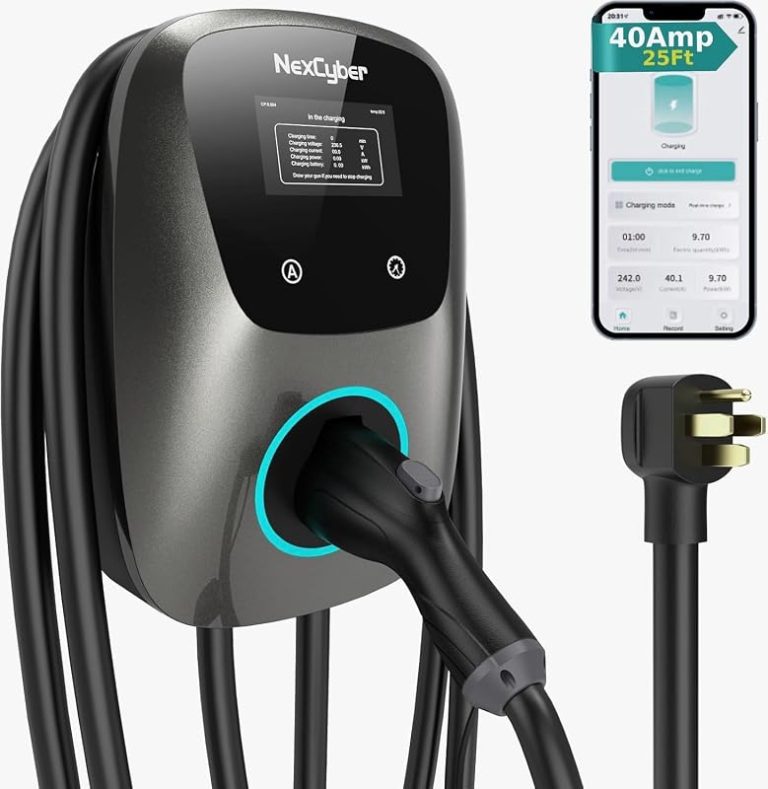
Most home Level 2 charging in the U.S. uses 240V power. A 40 amp charging rate at 240V works out to about 9.6 kW of power before losses, though actual vehicle intake may be lower.
240V charging math: what 40 amps means in real-world output
The basic estimate is voltage multiplied by current. At 240V and 40 amps, the result is roughly 9,600 watts, or 9.6 kW. That is a useful planning number for comparing home charging setups, but it is still only an estimate.
Use verified values and distinguish charger setting from circuit capacity.
If you want a broader overview of equipment at this output level, see our guide to the 40 amp Level 2 charger.
Why your vehicle may charge slower than the charger is rated for
The charger rating is only one part of the equation. Your vehicle’s onboard charger, battery temperature, state of charge, and charging curve can all reduce actual intake below the EVSE’s maximum output.
Label estimates clearly; actual results depend on vehicle intake limits, battery state, temperature, losses, and charging conditions.
When a 40 amp breaker is not the right answer
A 40 amp breaker is not automatically correct just because the charger is “40 amps.” In many cases, it is actually too small for a charger intended to supply 40 amps continuously.
Vehicle intake limits and onboard charger constraints
Some EVs cannot accept the full 40 amp AC rate even if the EVSE can supply it. If the vehicle’s onboard charger tops out below 40 amps, the installation may still need to be sized for the EVSE’s maximum output if that is how the equipment is configured.
Load management, panel capacity, and service limitations
In homes with limited panel capacity, an electrician may recommend load management, a lower EVSE setting, or a different installation approach. The right breaker size is not just about the charger; it also has to fit the rest of the home’s electrical demand and available service capacity.
For more context on whether this charging level fits your driving habits, our article on is 40 amps enough for Level 2 EV charging explains the practical tradeoffs.
Why some installations need a derated setting instead of a different breaker
Many modern EVSEs allow adjustable amperage settings. If the circuit, wiring, or panel cannot support a 40 amp charging rate, the safer solution may be to set the charger lower rather than force a larger breaker or ignore the installation limits.
Breaker size, wire size, receptacle type, hardwiring, panel capacity, and conduit routing all need to be planned together. The charger manual and local code requirements should drive the final installation design.
Installation safety basics that matter before choosing the breaker
Choosing the breaker is only one part of a safe EV charging install. The conductor size, termination method, receptacle or hardwire choice, and panel layout all have to match the intended load and equipment instructions.
Circuit sizing, conductor compatibility, and why wire and breaker must match the installation plan
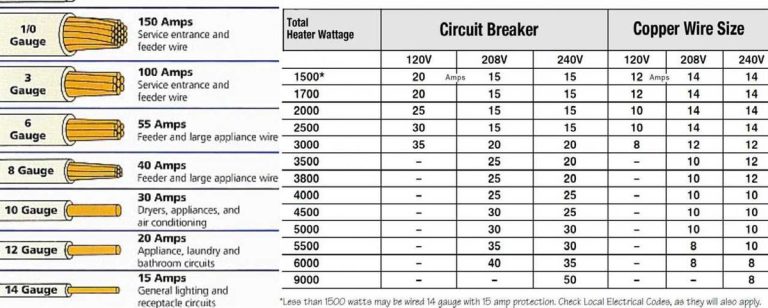
A breaker cannot be chosen in isolation. The branch circuit conductors, terminations, and installation method must all be compatible with the intended load and the charger’s instructions. If you want the wire-sizing side of the equation, see our guide on what size wire for a 40 amp EV charger.
Dedicated circuit requirements for EV charging
EV charging equipment is generally installed on a dedicated branch circuit so the charger is not sharing capacity with other household loads. That helps reduce nuisance tripping and supports the continuous-load design assumptions used for home charging.
Indoor vs. outdoor placement, weather exposure, and equipment rating
If the charger is installed outdoors, the EVSE and any connected receptacle or enclosure must be rated for that environment. Weather exposure does not change the breaker math, but it does affect the equipment you should choose and how the installation is protected.
State only verified enclosure/weather suitability and practical cable/connector considerations.
Connector and charger type considerations for 40 amp home charging
Breaker sizing is mostly about electrical load, but connector and charger compatibility still matter. A charger can be electrically correct and still be the wrong fit for the vehicle or the charging standard.
J1772, NACS/SAE J3400, and vehicle-side compatibility
For AC home charging, many non-Tesla EVs use J1772, while newer Tesla and some newer cross-compatible products may use NACS/SAE J3400 on the charger side or vehicle side. Physical fit alone does not confirm the charging rate or mode, so always verify both the connector and the supported AC charging standard.
Important: Physical fit alone does not prove every AC or DC charging mode is supported.
AC charging only: why breaker sizing differs from DC fast charging
Home Level 2 charging is AC charging through the vehicle’s onboard charger. DC fast charging works differently and is not the same electrical design problem, so breaker sizing guidance for a home EVSE should not be borrowed from DC charging equipment.
Common mistakes homeowners make with 40 amp EV charger breaker sizing
Most breaker-sizing mistakes come from assuming the charger label tells the whole story. In reality, the installation has to satisfy the EVSE instructions, the panel’s spare capacity, and the applicable electrical rules.
Confusing charger output with breaker size
The most common error is assuming a 40 amp charger should go on a 40 amp breaker. For continuous EV charging, that is often not the correct match, and it can create an undersized circuit.
Assuming every 40 amp charger works on the same circuit setup
Some chargers are plug-in units, some are hardwired, and some offer adjustable current settings. Those differences can change the installation requirements even when the maximum output is the same.
Useful when the charger is designed for a receptacle and portability matters, but the receptacle and plug must be rated for the installation.
Often preferred for a permanent install and may be required by some equipment instructions or local code interpretations.
Ignoring panel space, load calculations, and permit requirements
Even if the breaker size seems obvious, the project can still fail if the panel is full, the service is undersized, or a permit and inspection are required. Those items are not paperwork extras; they are part of a safe installation.
Electrical-code adoption, permitting, inspections, utility requirements, and local rules vary by jurisdiction. Cite the current local or primary authority for a specific requirement.
What to check before installation and what to ask your electrician
Before you buy equipment or schedule an install, confirm the charger’s maximum amperage, whether it is adjustable, and whether the manufacturer calls for plug-in or hardwired installation.
Confirm the charger’s adjustable amperage and manufacturer instructions
The manufacturer’s installation manual should be the first source for breaker and wiring requirements. If the charger can be set below 40 amps, that may be a useful option when panel capacity is tight or the available circuit cannot support the full output.
Verify your panel capacity and circuit path before purchasing equipment
Ask whether the electrical panel has room for the new branch circuit, whether the service has enough spare capacity, and whether the route from panel to charger location is straightforward. These details can affect cost as much as the charger itself.
Get the installation reviewed for code compliance and long-term safety
For a safety-sensitive project like EV charging, a qualified electrician should confirm the final breaker size, conductor compatibility, termination method, and any permit or inspection requirements before the circuit is energized.
- Confirm connector and vehicle compatibility
- Confirm current, voltage, circuit, and installation requirements
- Check cable reach and indoor/outdoor suitability
- Verify safety listing, warranty, support, and app requirements where relevant
- Include installation and electricity costs, not only charger price
How to choose the right next step if you are buying or upgrading a 40 amp EV charger
If you are replacing an older setup or planning a new install, the best next step is to start with the charger’s instructions and your home’s electrical limits, not with the breaker size alone.
When a 50 amp circuit is appropriate
A 50 amp circuit is often the practical match when the EVSE is designed to deliver 40 amps continuously and the wiring, panel, and local requirements all support that setup. That is the most common path for a 40 amp home charging install.
When a lower-amperage setting is the safer practical choice
If your panel is crowded, your service is limited, or the installation path is more complex than expected, a lower EVSE setting may be the better choice. That can preserve safety and reduce installation cost without forcing an oversized circuit.
Where to compare charger options and related setup guides
If you are comparing equipment, it helps to look at the charger’s maximum current, connector type, installation style, and whether it can be configured to a lower rate. Our broader guide to the 40 amp EV charger can help you compare those basics before you commit to the install.
- Best for: U.S. EV owners whose charger is set to 40 amps and whose electrician confirms a 50 amp dedicated circuit is appropriate.
- Think twice if: your panel is tight, your installation is outdoors, or your charger manual calls for a different circuit setup.
- Next step: verify the EVSE installation manual and have a qualified electrician confirm breaker, wire, and panel capacity before buying parts.
Frequently Asked Questions
Usually not if the charger is intended to deliver 40 amps continuously. In many home installations, a 40 amp EVSE is matched with a 50 amp circuit instead. Always follow the charger manual and local electrical requirements.
Because EV charging is commonly treated as a continuous load. The circuit needs extra capacity so the breaker is not loaded at its full rating for long periods. That is why 40 amps is often paired with a 50 amp breaker.
At 240V, 40 amps is about 9.6 kW before losses. Actual charging speed depends on the vehicle’s onboard charger, battery state, temperature, and charging curve, so real-world results can be lower.
Yes. The EVSE rating is only the maximum available output. Your vehicle may limit intake for technical or battery-management reasons, so the charger may not always deliver the full 40 amps.
For most U.S. homes, yes, or at least a qualified electrician should review the job. EV charging is a safety-sensitive electrical installation that involves breaker sizing, wire compatibility, panel capacity, and often permits or inspection.
Check connector compatibility, adjustable amperage, installation type, safety listing, and whether your panel can support the circuit. It is also smart to include installation and electrical costs, not just the charger price.