How Fast Does a 40 Amp EV Charger Charge? Charging Times Explained
A 40-amp Level 2 EV charger provides up to 9.6 kilowatts when connected to a suitable circuit. You can typically add about 25–35 miles of range per hour, although your vehicle and battery size affect the actual rate.
A full charge often takes about 6–10 hours, depending on the battery and how much energy it needs. We’ll explain the charging math, electrical requirements, and the factors that can slow charging at home.
Key Takeaways
- A 40-amp charger can deliver up to 9.6 kW.
- Most EVs gain about 25–35 miles of range per hour.
- Battery size, vehicle limits, and home wiring affect charging time.
Understanding 40-Amp Charging Power
A 40-amp Level 2 charger usually supplies up to 9.6 kilowatts (kW) on a 240-volt circuit. Actual charging speed depends on the vehicle’s onboard charger, battery size, temperature, and charging efficiency.
Amps, Volts, And Kilowatts
Amps measure the flow of electrical current, while volts measure electrical pressure. We calculate charging power with this formula:
Volts × amps = watts
A 40-amp charger on a 240-volt supply can deliver:
240 × 40 = 9,600 watts, or 9.6 kW
That power commonly adds about 25 to 35 miles of driving range per hour, although each vehicle differs. A vehicle with a smaller or less efficient battery may gain range faster than a larger, less efficient model.
The car—not just the charger—controls the final charging rate. If the vehicle accepts only 7.2 kW, it will not use the charger’s full 9.6-kW capacity. Charging also slows near a full battery and may decrease in very cold or hot weather.
Continuous Load Limits And Circuit Ratings
EV charging counts as a continuous electrical load because it can run for several hours without stopping. Under common electrical safety rules, we size a circuit for 125% of the charger’s continuous current.
For a charger delivering 40 amps:
40 × 1.25 = 50 amps
This generally means we need a dedicated 50-amp, 240-volt circuit with wiring and protection that match local electrical codes. The charger should not share that circuit with another high-power appliance.
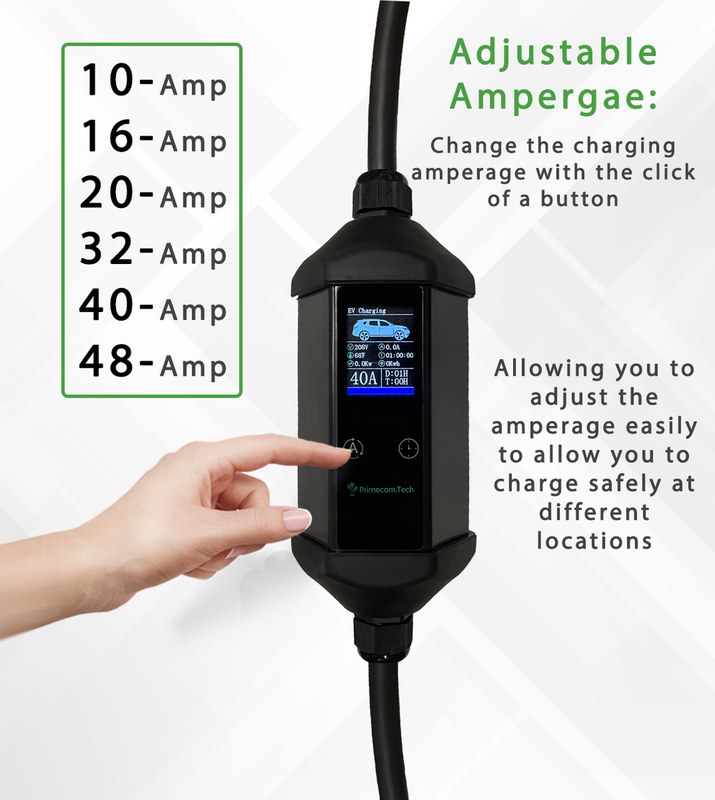
Some chargers allow us to set a lower current, such as 32 amps, when the home’s wiring or service capacity requires it. A qualified electrician should confirm the panel capacity, wire size, breaker rating, outlet type, grounding, and installation requirements before we use the charger.
Estimated Charging Times By Battery Size
A 40-amp Level 2 charger usually delivers about 9.6 kW on a 240-volt circuit. Charging time depends on the battery’s usable capacity, starting charge, vehicle charging limit, and energy losses.
Typical Range Added Per Hour
With a 40-amp charger, we can expect to add about 9 to 10 kWh per hour after allowing for normal charging losses. The actual range gained depends on the vehicle’s efficiency.
| Vehicle efficiency | Approximate range added per hour |
|---|---|
| 2.5 miles per kWh | 22–25 miles |
| 3.0 miles per kWh | 27–30 miles |
| 3.5 miles per kWh | 31–35 miles |
| 4.0 miles per kWh | 36–40 miles |
A small, efficient EV may gain close to 35 miles of range each hour. A larger electric SUV may add only 20 to 30 miles because it uses more energy per mile.
The vehicle’s onboard charger can also limit speed. If it accepts only 7.2 kW, a 40-amp circuit will not provide the full 9.6 kW.
Charging From Empty To Full
We can estimate charging time by dividing the battery’s usable capacity by the charger’s effective output. Since charging wastes some energy, a practical estimate uses about 8.5 to 9.0 kW rather than the full 9.6 kW.
| Usable battery size | Estimated empty-to-full time |
|---|---|
| 40 kWh | 4.5–5 hours |
| 60 kWh | 6.5–7.5 hours |
| 75 kWh | 8.5–9 hours |
| 100 kWh | 11–12 hours |
Most drivers do not charge from empty. Charging from 20% to 80% takes about 60% of the times shown above. For example, a 75-kWh battery may need roughly five to six hours for that range.
Charging may slow near full to protect the battery. This makes the final 10% take longer than the simple math suggests.
Real-World Time Estimates For Common EVs
We can use typical usable battery sizes to estimate charging times. Actual results vary by model, temperature, battery condition, and onboard charger rating.
| EV type | Usable battery | 20% to 80% | Empty to full |
|---|---|---|---|
| Small hatchback | 40 kWh | 3–4 hours | 4.5–5 hours |
| Compact sedan | 60 kWh | 4–5 hours | 6.5–7.5 hours |
| Midsize crossover | 75 kWh | 5–6 hours | 8.5–9 hours |
| Large SUV or truck | 100 kWh | 6.5–7.5 hours | 11–12 hours |
A vehicle with a 7.2-kW onboard charger may need about 25% longer than these estimates. We should also check whether the home circuit can safely support continuous 40-amp charging, since electrical codes commonly require a circuit rated above the charger’s continuous load.
Vehicle And Charger Limits
A 40-amp charger can deliver up to 9.6 kW on a 240-volt circuit, but the vehicle may accept less. Charging speed also changes with the connector type, charging standard, battery level, temperature, and the vehicle’s charging software.
Onboard Charger Capacity
An EV’s onboard charger converts AC power from a home charger into DC power for the battery. The vehicle sets the maximum charging rate, not the wall unit alone.
For example, a 40-amp charger can offer 9.6 kW, but an EV with a 7.2-kW onboard charger will draw only about 30 amps. A vehicle with an 11.5-kW onboard charger can use the full output of a 40-amp charger, but it cannot receive more than 9.6 kW from that charger.
We should check the vehicle manual or specifications for its maximum AC charging rate. If the vehicle accepts less power, installing a higher-amperage home charger will not increase its AC charging speed.
Connector And Charging Standard Compatibility
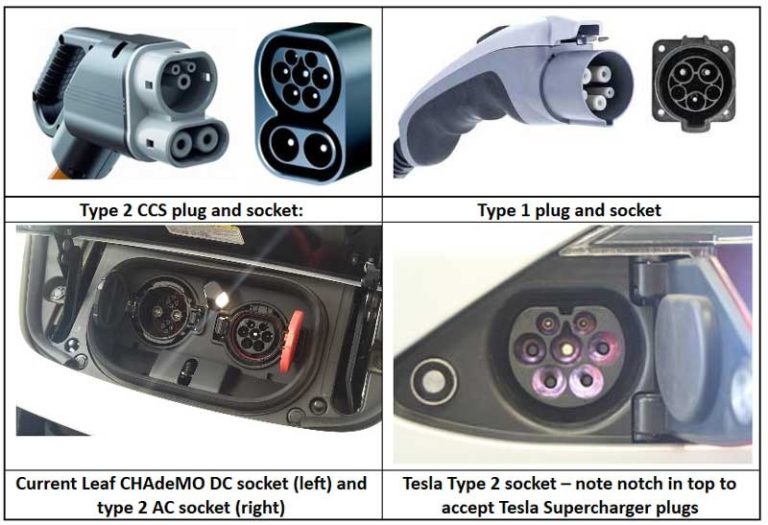
The charger and vehicle must use compatible connectors and charging standards. In North America, common AC connectors include J1772 and NACS, while many older vehicles use J1772 through an adapter.
A connector adapter may allow a physical connection, but it does not always increase charging power. The vehicle, charger, cable, and electrical circuit must all support the selected current. Some chargers also reduce output when the cable or plug has a lower rating.
We should confirm the vehicle’s connector, the charger’s connector, and its maximum current before buying equipment. A licensed electrician should also verify that the circuit supports a continuous 40-amp load, which usually requires a properly sized 50-amp circuit under common electrical rules.
Battery State Of Charge And Charging Curves
EVs usually charge fastest at lower battery levels. As the battery approaches about 80%, the vehicle often reduces power to protect the cells and manage heat. Charging from 80% to 100% can therefore take longer than charging through the first 80%.
Temperature also affects charging. A cold battery may charge slowly until the vehicle warms it, while a hot battery may reduce power to control heat. Battery age, size, and software settings can also change the rate.
A 40-amp charger may add roughly 25–35 miles of range per hour, depending on the vehicle’s efficiency. We should treat this as an estimate, not a fixed rate, because the vehicle controls power throughout the charging session.
Home Electrical Requirements
A 40-amp EV charger usually delivers 9.6 kW on a 240-volt circuit. We must match the circuit, panel, and installation method to the charger’s continuous electrical load and the vehicle’s charging limits.
Circuit Breaker And Wire Sizing
Because EV charging can run for several hours, electrical codes generally treat it as a continuous load. We size the branch circuit at 125% of the charger’s maximum current. For a 40-amp charger, that calculation requires a 50-amp, 240-volt circuit.
Wire size depends on the installation method, wire type, distance, temperature ratings, and local code. A licensed electrician typically selects the correct conductors rather than relying only on the charger’s amp rating. Long cable runs may also require larger wire to limit voltage drop.
A hardwired charger and a plug-in charger may have different requirements. We must use the manufacturer’s instructions, install the proper two-pole breaker, and include required ground-fault protection when applicable.
Electrical Panel Capacity
Our electrical panel must have enough capacity for the charger along with existing loads such as heating equipment, air conditioning, water heaters, cooking appliances, and other large devices. A panel’s main rating alone does not prove that it can support a new 50-amp circuit.
An electrician can perform a load calculation and check available breaker spaces, service capacity, wiring condition, and the panel’s age. Older panels, crowded load centers, or undersized services may need upgrades before installation.
Some chargers support power management or load sharing. These features can reduce charging current when other equipment operates, but we must confirm that the charger and installation meet local electrical requirements.
Professional Installation Considerations
We should use a licensed electrician familiar with EV charging equipment. The installer can verify the panel, route the cable correctly, install the charger at the proper height, and protect outdoor equipment from weather.
The electrician should also check grounding, connections, conduit, disconnect requirements, and the charger’s required protection features. We should not use extension cords, adapters, or undersized outlets to power a 40-amp charger.
Before work begins, we should confirm whether our city or utility requires a permit, inspection, or service approval. We also need to follow the charger manufacturer’s instructions, since some models require hardwiring while others allow a specific plug and receptacle.
Factors That Affect Actual Charging Speed
A 40-amp Level 2 charger can deliver about 9.6 kW at 240 volts, but several conditions can reduce the power reaching the battery. Temperature, charging losses, and other electrical loads can change the time needed for a full charge.
Temperature And Battery Conditioning
Battery temperature affects how much power an EV can accept. In very cold weather, the vehicle may limit charging until the battery warms to a safe operating range. The car might use some incoming power to heat the battery, leaving less power for storing energy.
Hot conditions can also reduce charging speed. The battery management system may lower the charging rate to control heat and protect battery life. Parking in a garage or shade can help, while preconditioning the vehicle while it remains plugged in can prepare the battery before driving.
The vehicle’s state of charge also matters. Many EVs charge near their maximum rate at lower battery levels, then reduce power as the battery gets close to full. We may see the biggest slowdown during the final part of a charge.
Charging Losses
The charger does not transfer every watt from the electrical panel into the battery. Some energy powers the vehicle’s onboard charger, cooling system, battery heater, and other controls. The rest becomes heat in the wiring and charging equipment.
For example, a 40-amp charger may draw about 9.6 kW from a 240-volt circuit, while the battery receives somewhat less. The exact difference depends on the vehicle, charger, cable, temperature, and installation.
We can estimate charging time with this formula:
Charging time = energy needed ÷ battery charging power
If our EV accepts 9.6 kW but charging losses reduce the effective rate, adding 20 kWh may take slightly more than two hours. The vehicle’s display or charging app usually provides the most useful estimate.
Shared Electrical Loads
A home charger may share the electrical service with appliances such as an oven, water heater, dryer, heat pump, or air conditioner. If the installation includes load management, the system may reduce charging power when other demand rises.
The charger can also run below 40 amps if the circuit, breaker, wiring, or vehicle sets a lower limit. A 40-amp circuit normally requires equipment rated for continuous charging, and the charger may be configured to draw less for safety or to meet installation limits.
We should avoid using extension cords or undersized wiring. A qualified electrician can confirm the circuit capacity and determine whether the charger can maintain its rated output while other household loads operate.
Frequently asked questions
How fast does a 40-amp EV charger charge?
A 40-amp Level 2 charger delivers up to 9.6 kilowatts on a 240-volt circuit. In many EVs, we can expect about 25–35 miles of range per hour.
How long does a full charge take?
Charging time depends on the battery size, the vehicle’s onboard charger, and the starting charge level. A 60-kWh battery may take about 6–8 hours to charge from empty, though real times can vary.
Can every EV use a 40-amp charger?
Most modern EVs can use one, but the vehicle may limit the power it accepts. We should check the owner’s manual or charging specifications before choosing a charger.
What electrical circuit does it need?
A 40-amp charger usually requires a 240-volt, 50-amp circuit because continuous loads generally use no more than 80% of the circuit’s rating. A licensed electrician should confirm that the home’s panel and wiring can support the installation.
Will a 40-amp charger work overnight?
For many drivers, yes. Charging for eight hours could add roughly 200–280 miles of range, depending on the EV, charging losses, weather, and battery limits.
Is 48 amps much faster?
A 48-amp charger can add around 30–37 miles per hour, but the improvement depends on whether the vehicle and home electrical system support the higher output.
Conclusion
A 40-amp Level 2 EV charger supplies up to 9.6 kW when connected to a 240-volt circuit. In real driving conditions, we can expect about 25–35 miles of range per hour, depending on the vehicle, battery, temperature, and charging efficiency.
For a 60 kWh battery, charging from empty may take roughly 6–8 hours. Most drivers can recharge overnight, although larger batteries or high daily mileage may require more time.
Before installing one, we should confirm that the vehicle supports this charging rate and that the home’s electrical system can handle a 50-amp circuit. Electrical codes commonly require the circuit to provide more capacity than the charger’s continuous 40-amp load.
A 40-amp charger gives us a useful balance of charging speed, installation cost, and daily convenience. It suits many households, especially when the vehicle remains parked for several hours each night.
One Comment