Are Portable EV Chargers Waterproof? What You Need to Know
Most portable EV chargers are water-resistant, not waterproof, and the IP rating usually covers the control box rather than the plug, outlet, or cable. Check the manufacturer’s indoor/outdoor statement and the operating temperature range before charging outdoors in rain or snow.
If you are wondering “are portable ev chargers waterproof,” the honest answer is that most are water-resistant rather than waterproof — and the rating usually applies to the control box, not to every plug, cable, and connection in the chain. That distinction matters a great deal when your only charging option is a driveway outlet in the rain.
- Compatibility: J1772 and NACS / SAE J3400 connectors seal best when fully latched to the.
- Performance: IP66 and IP67 enclosures handle rain and splashing; IP54 is splash-rated and better suited.
- Safety: Outdoor charging also depends on a weather-resistant receptacle with a closed in-use cover and.
- Cost: A portable unit avoids installation cost, but a dedicated 240 V circuit and possible.
Are Portable EV Chargers Waterproof? The Short Answer
No, and the word “waterproof” rarely appears in a legitimate spec sheet. Portable EVSE is rated for water resistance using IP codes, and those codes describe how a sealed enclosure performed under specific lab test conditions. They say nothing about what happens when a 25-foot cable lies across a wet driveway with the plug half seated in a receptacle.
The useful version: a portable charger with an IP66 or IP67 control box can handle rain, splashing, and hose-directed water when it is used exactly as the manufacturer describes. It cannot handle immersion, and it cannot protect an unprotected outlet, a loose plug connection, or a cable sitting in a puddle.
What “Waterproof” Really Means in EV Charger Marketing
“Waterproof” is marketing shorthand. The technical term is water-resistant, and it is always qualified: resistant to splashing, resistant to jets, resistant to temporary immersion for a stated depth and time. Each level is a different test with a different pass condition.
Some listings say “weatherproof” or “all-weather” instead, and those are not standardized ratings at all. Treat them as claims to verify against a published IP rating, an operating temperature range, and an explicit indoor/outdoor statement from the manufacturer.
Which Parts of a Portable Charger Are Actually Sealed — and Which Aren’t
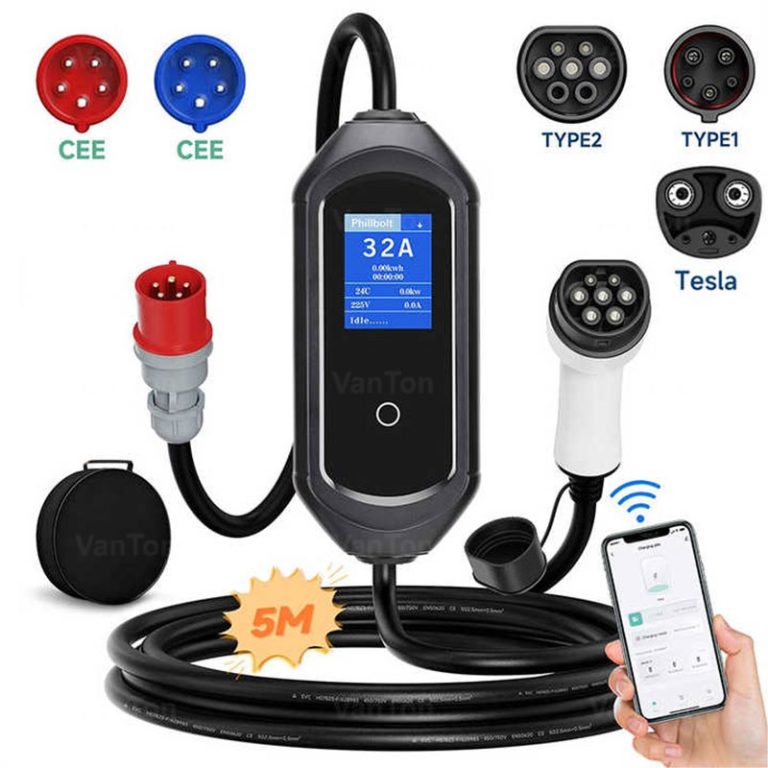
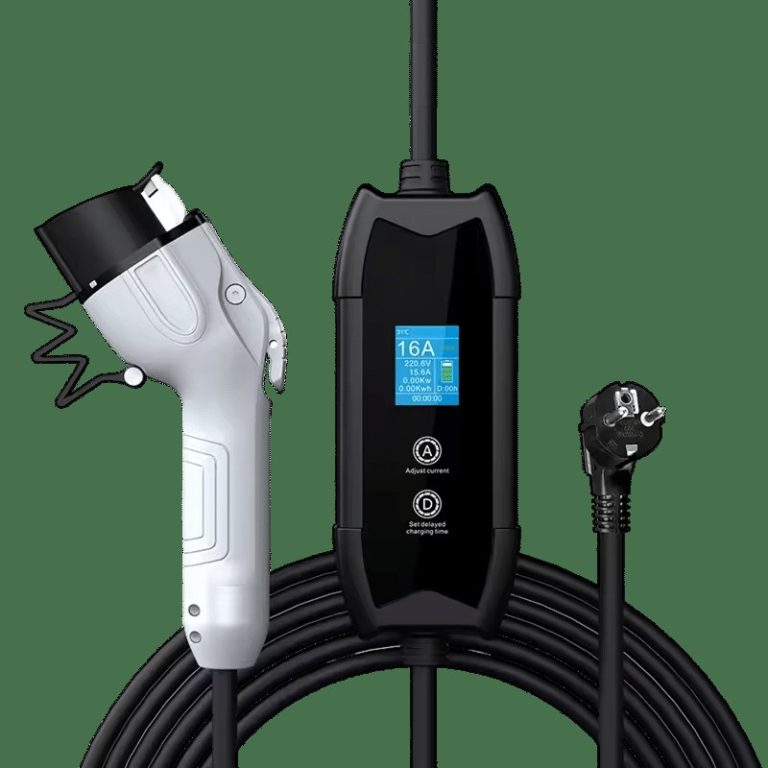
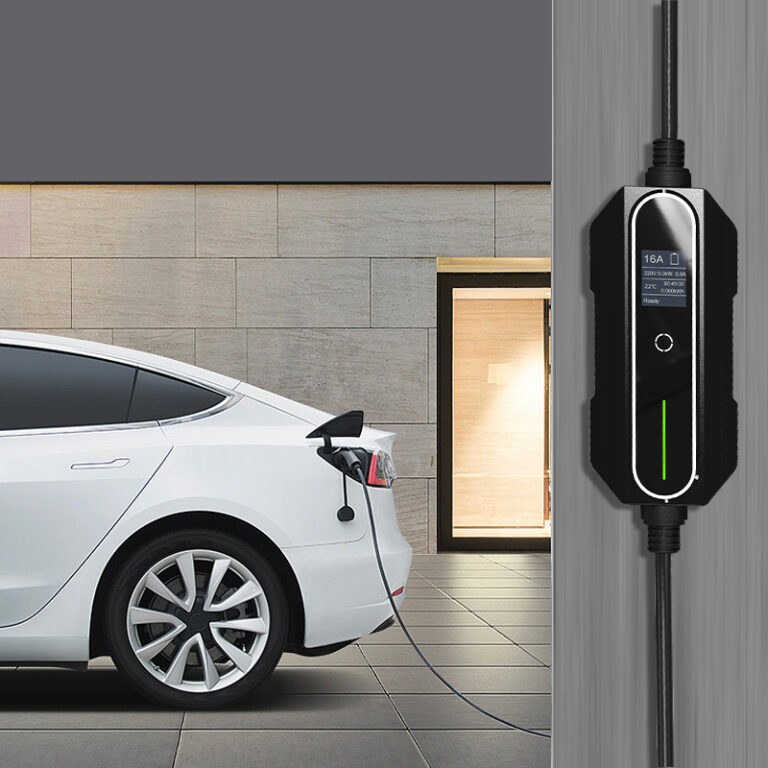
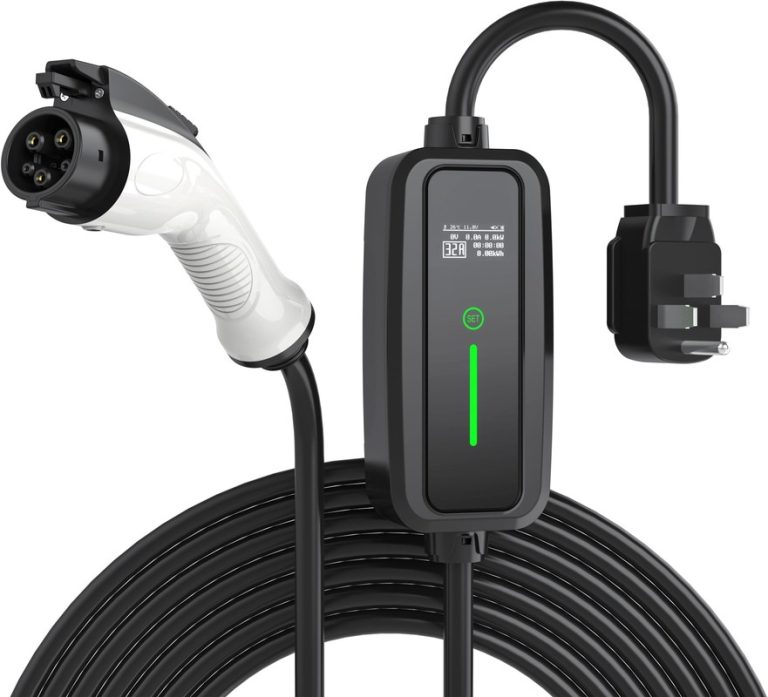
A portable EVSE is really four assemblies: the wall plug, the control box (the brick with the lights or screen), the cable, and the vehicle connector. Manufacturers typically seal the control box to a high standard and seal the connector to a high standard when it is fully mated to the vehicle inlet. The plug end is usually the weakest link because it is built to match a standard household or RV receptacle, not to be submerged.
The cable jacket resists water but is not a seal. Water on the outside of the cable is normal. Water inside the connector or inside the control box is a fault condition.
IP Ratings Explained: What IP54, IP66, IP67, and IP68 Actually Promise
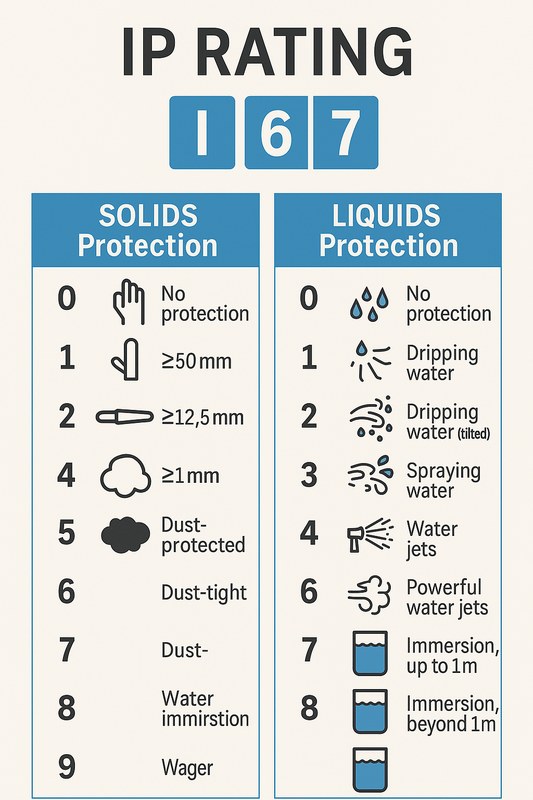
IP stands for Ingress Protection, defined in IEC 60529. The code has two digits. The first covers solids, including dust. The second covers liquids. A rating like IP67 reports two separate results, not one combined score.
| IP rating | Dust protection | Water protection | Typical EVSE use |
|---|---|---|---|
| IP54 | Dust protected | Splashing water | Sheltered outdoor or garage use |
| IP66 | Dust tight | Powerful water jets | Exposed outdoor mounting |
| IP67 | Dust tight | Temporary immersion at stated depth and time | Control box and mated connector |
| IP68 | Dust tight | Continuous immersion, manufacturer-stated conditions | Rare in portable EVSE |
The First Digit vs. the Second Digit: Dust and Water Tested Separately
The first digit runs 0–6 and the second runs 0–9. A product can be excellent at one and mediocre at the other. IP54, for example, is genuinely dust-protected but only splash-rated — fine under a carport, questionable on an exposed pedestal in a driving rainstorm.
Dust matters more than owners expect. Sand and grit work into button gaskets and connector latches, and a damaged gasket is often how water gets in months later.
Rain Resistance vs. Submersion: Where Most Portable EVSE Lands
Most current portable Level 2 chargers publish IP66 or IP67 for the enclosure, which is genuinely rain-capable. Very few publish IP68, and the ones that do usually state exact depth and duration conditions. An “IP68” claim with no stated conditions is not a usable specification.
Why an IP67 Control Box Doesn’t Mean an IP67 Charging Session
The rating applies to the enclosure as tested — closed, sealed, and undamaged. It does not travel to the receptacle it plugs into, an added extension cord, a plug adapter, or the vehicle inlet if the connector is not fully latched. One IP67 component in an unprotected chain does not make the chain weather-rated.
Level 1 vs. Level 2 Portable Chargers: Two Very Different Weather Realities
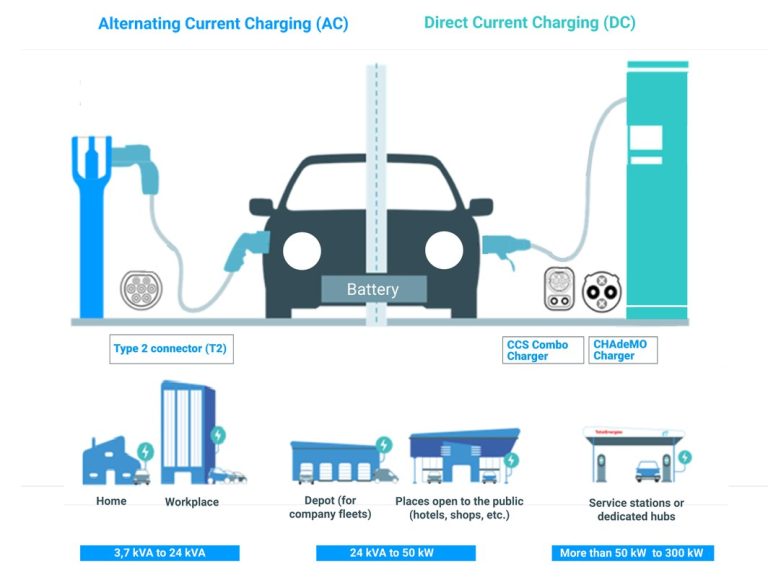
Level 1 and Level 2 portable units use different plugs, different circuits, and different exposure profiles. Weather risk tends to follow the plug.
Level 1 (120V) Units and the Ordinary Outdoor Household Outlet
Level 1 portable EVSE uses a NEMA 5-15 or 5-20 plug and typically draws about 12 A on a 120 V circuit, roughly 1.4 kW. It plugs into the same kind of receptacle as a leaf blower — which is exactly the problem. Many exterior household receptacles are not rated for wet locations, and an uncovered receptacle in rain is a shock and fire risk regardless of how good the charger is.
Level 2 (240V) Units, NEMA 14-50 Outlets, and RV Park Pedestals
Level 2 portable units use a NEMA 14-50 or 6-50 plug and commonly deliver 32–40 A at 240 V, roughly 7.7–9.6 kW, on an appropriately sized dedicated circuit. RV pedestals and campground 14-50 outlets are the classic travel use case. They are outdoor equipment, but pedestal condition, cover type, and exposure vary enormously. Some owners choose a dual-voltage unit such as a 40-amp Level 1 and 2 portable EV charger to cover both situations with one device.
Connector Type, Handle Sealing, and the Vehicle Charge Port Interface
J1772 connectors are designed so the handle and vehicle inlet form a weather-resistant interface when fully latched. NACS / SAE J3400 connectors follow the same principle. The catch is that “fully latched” is doing real work in that sentence: a partially seated connector exposes contacts, and the latch also carries the pilot signal that tells the vehicle to charge.
How EVSE Amperage and the Vehicle’s Onboard Charger Limit Shape Heat and Moisture Risk
The EVSE sets the maximum current it offers; the vehicle’s onboard AC charger decides how much it actually accepts. A 40 A portable EVSE connected to a vehicle limited to 32 A AC charging will run at 32 A. Lower current means less heat in the connector and cable, which is generally kinder to seals over years of outdoor use — but it is not a substitute for a proper weather rating.
The Five Places a Portable EV Charger Is Most Likely to Take On Water
The Plug-to-Outlet Interface and Loose-Fitting Covers
This is the number one failure point. Outdoor receptacles need a weather-resistant (WR) rating and an in-use “bubble” cover that stays closed while the plug is inserted. A flat cover that cannot close over a plugged-in cord leaves the connection fully exposed to rain.
The Control Box, Seams, and Screen or Button Gaskets
Control boxes fail at seams and gaskets, not through solid plastic. A cracked housing, a missing rubber plug over a port, or a screen that has been pried at will compromise an otherwise good IP rating.
The Connector, Charge Port, and Cable Jacket
Water entering the connector typically comes from a poor latch, a damaged seal, or a connector left lying on wet ground between sessions. Many manufacturers specify a holster or cap for storage — that guidance exists for a reason.
Cable Length, Strain, and Puddle Contact
A longer cable is more convenient and more likely to cross a low spot. Strain at the plug and at the connector is the real hazard: a taut cable can pull a plug partially out of a receptacle or stress the connector latch, and either one creates an opening for water.
Weather Suitability by Condition: Rain, Snow, Ice, Heat, and Dust
Heavy Rain, Standing Water, and Splash Zones
Rain is generally manageable with an IP66 or IP67 enclosure and a protected receptacle. Standing water is not. Never charge with any part of the plug, connector, or control box sitting in a puddle, and never rest the control box on the ground.
Snow, Ice, Sub-Freezing Temperatures, and Cold-Soaked Cables
Cold affects cables more than electronics. Jackets stiffen, coiling becomes difficult, and a stiff cable can crack if forced. Connectors packed with snow or ice should be cleared before mating, and the latch should be checked for full engagement.
Summer Heat, Direct Sun, and UV Degradation
Sustained UV exposure degrades cable jackets and plastic housings over years, which is how a sealed enclosure eventually becomes a leaky one. Shade, a holster, and storing the cable out of direct sun when not in use are cheap insurance. Heat also raises connector temperature during high-amperage sessions.
Dust, Sand, and Coastal Salt Air
The first IP digit matters here. Salt air corrodes exposed contacts and connector pins, and sand abrades gaskets. Wiping and drying the connector before storage, following the manufacturer’s guidance, helps — but never use a pressure washer on any part of the EVSE.
Outdoor Power Sources: GFCI, Weatherproof Covers, Extension Cords, and Adapters
Outlet Types and In-Use Covers That Actually Keep Water Out
For 240 V outdoor charging, the receptacle itself should be marked for wet locations and installed with an in-use cover rated for the plug. A NEMA 14-50 receptacle installed outdoors without a WR marking and a bubble cover is not a weather-rated setup, no matter what the charger’s IP rating says.
GFCI Protection, Permits, and Local Code — Always Defer to the Manual and Your AHJ
Recent editions of the National Electrical Code have expanded ground-fault protection requirements for receptacles installed for EV charging, and adoption timelines vary by state and municipality. The only reliable answer for your address is your local authority having jurisdiction (AHJ), along with the charger’s installation instructions.
Extension Cords, Plug Adapters, and What Manufacturers Explicitly Allow or Prohibit
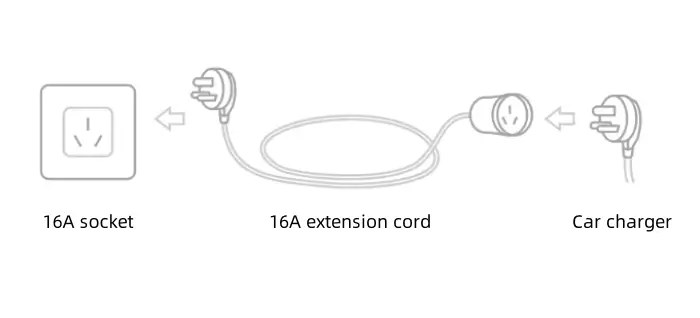
Most portable EVSE manufacturers prohibit extension cords outright, and the reasons are practical: voltage drop, undersized conductors, and an extra unmated connection that is not weather-rated. Adapters for RV pedestals and dryer outlets are model-specific — use only what the manufacturer lists, and check whether the adapter reduces the allowed charging current. Verify the breaker size a 40-amp EV charger actually requires rather than assuming a plug shape implies a safe circuit.
When an Outdoor Outlet Isn’t Enough: Panel Capacity and Circuit Implications
A portable 40 A EVSE needs a dedicated circuit sized per the equipment instructions, and adding that circuit may require a load calculation and possibly a panel upgrade. If you are weighing that cost, it helps to understand whether a 48 A EV charger needs a 60 A circuit and what your existing service can realistically support before you buy anything.
What to Check Before Buying a Weather-Rated Portable EV Charger
Spec-Sheet Checklist: IP Rating, Amperage and kW, Cable Length, Operating Temperature Range
Look for a stated IP rating plus the part it applies to, a maximum amperage and kW figure, an operating temperature range, a cable length, and an explicit indoor/outdoor statement. If the listing says “waterproof” and nothing else, that is not a specification you can plan around.
Smart Features, App Controls, Scheduled Charging, and Load Management
App features matter for outdoor use in one specific way: scheduled charging lets you avoid peak rates, and some units support adjustable current so you can match a lower-capacity circuit. Check what happens if the cloud service or Wi-Fi drops — a charger that needs an app to start a session is a different ownership experience than one that works offline.
Warranty, Support, and the Limits of Published Evidence
Confirm the safety listing with the manufacturer or the certification record rather than the marketing copy, and check the US warranty term and how support handles a water-damaged unit. Warranty terms rarely cover submersion or misuse, and “weatherproof” claims usually do not extend to it either. Browsing a curated set of Level 2 home chargers is a reasonable starting point, but verify each model’s own documentation.
- Confirm the vehicle inlet and its AC charging limit
- Verify the EVSE’s IP rating and which part it covers
- Check the operating temperature range and outdoor statement
- Confirm circuit, breaker, and receptacle requirements
- Verify the safety listing, warranty, and support terms
- Decide whether a WR receptacle and in-use cover are needed
Plug-In vs. Hardwired Outdoor Charging: A Side-by-Side Comparison
Portable and removable, but adds a plug-and-receptacle connection that must be weather-rated and GFCI-protected. Suits renters, travelers, and households that need flexibility.
No exposed plug interface and often higher continuous amperage. Requires an electrician, a permit in many jurisdictions, and gives up portability.
Same Criteria, Different Trade-Offs: Weather Exposure, Code, Convenience, Portability
On weather exposure, hardwired wins — there is one fewer connection to protect. On code and installation, hardwired involves more work and more inspection. On convenience and portability, plug-in wins clearly, which is why many owners keep a portable unit for travel and a hardwired unit at home.
Installation and Equipment Costs: Assumptions, Formulas, and Time-of-Use Math
Equipment and installation costs vary widely by panel condition, run length, and local labor rates, so any figure quoted here would be an assumption rather than a bid. The energy math is more predictable: kilowatts delivered × hours × your $/kWh rate, plus AC charging losses of roughly 5–15%, then adjusted for time-of-use pricing, taxes, and fees. Verify current rates with your utility.
Who Each Option Fits — Renters, Travelers, Homeowners, and Two-EV Households
Renters and frequent travelers are the clearest fit for portable EVSE, since they cannot modify the property and often charge from whatever receptacle is available. Homeowners with a dedicated parking spot and a panel that supports it usually get more value from hardwired. Two-EV households often end up with one of each.
Safe Habits, Storage, and Troubleshooting When Your Charger Gets Wet
Storing and Traveling With a Portable EVSE
Store the unit in a case or bag, keep the connector capped or holstered, and avoid coiling a cold cable tightly. Before each outdoor session, glance at the plug, the receptacle, and the connector for cracks, corrosion, or moisture.
What to Do If It’s Soaked, Frozen, or Faulting Mid-Session
Stop the session at the vehicle or the breaker, unplug only if it is safe to do so, and let the unit dry fully before reuse. A unit that was submerged should be taken out of service, not dried and retried. Faults that repeat after drying point to internal damage.
Signs It’s Time to Stop Using the Unit and Contact the Manufacturer
Stop using the EVSE if you see scorching or discoloration at the plug, a burning smell, a GFCI that trips repeatedly, a cracked housing, water visible inside the control box, or a connector that no longer latches firmly. Contact the manufacturer for guidance and have a qualified electrician check the circuit.
Frequently Asked Questions
Only if the manufacturer permits outdoor use and the published IP rating covers that exposure. The control box may be IP66 or IP67, but the plug-to-outlet connection also needs a weather-resistant receptacle and an in-use cover. Never leave any part of the unit sitting in standing water.
For an exposed, unsheltered location, IP66 or IP67 on the enclosure is the practical minimum most owners look for. IP54 is splash-rated and better suited to a garage or carport. The rating must be paired with a protected outlet, because it does not cover the plug end.
Charging in rain is generally considered acceptable when the EVSE, the receptacle, and the connector are all in good condition and rated for the exposure. Stop immediately if you notice a loose plug, damaged cable, scorched receptacle, or repeated GFCI trips.
Most manufacturers prohibit extension cords with portable EVSE. An extra cord adds voltage drop, an undersized-conductor risk, and an unmated connection that is not weather-rated. If the manufacturer explicitly permits one, follow its gauge and length limits exactly.
EVSE includes its own ground-fault protection for the vehicle side, but the receptacle supplying it may also require GFCI protection under your local electrical code. Recent NEC editions have expanded GFCI requirements for receptacles used for EV charging, and adoption varies — confirm the requirement with your AHJ.
Stop the session at the vehicle or the breaker, unplug only if it is safe, and let the unit dry completely before reuse. A unit that was submerged should be taken out of service. Contact the manufacturer if it faults after drying or if water is visible inside the housing.