Can You Use an Extension Cord With a Portable EV Charger?
You can use an extension cord with a portable EV charger only if the EVSE manual, the cord’s continuous-duty rating, your circuit, and local code all allow it. For daily Level 2 charging, a dedicated receptacle or hardwired EVSE is the safer and usually cheaper long-term answer.
The short answer to “can you use an extension cord with a portable ev charger” is: sometimes — but only when the cord is rated for continuous duty at the EVSE’s current, the receptacle and circuit are correct, and both the charger manufacturer and your local electrical authority allow it. In most US homes, a dedicated receptacle or hardwired EVSE is the safer, code-compliant long-term answer.
- Compatibility: Extension cords belong on the wall side of the EVSE, not between the EVSE.
- Performance: Undersized or overly long cords add voltage drop, heat, and charging losses.
- Safety: Never use a light-duty cord for EV charging; stop immediately if any plug or.
- Cost: A properly installed dedicated circuit usually beats repeated cord-based charging over time.
The Short Answer: Can You Use an Extension Cord With a Portable EV Charger?
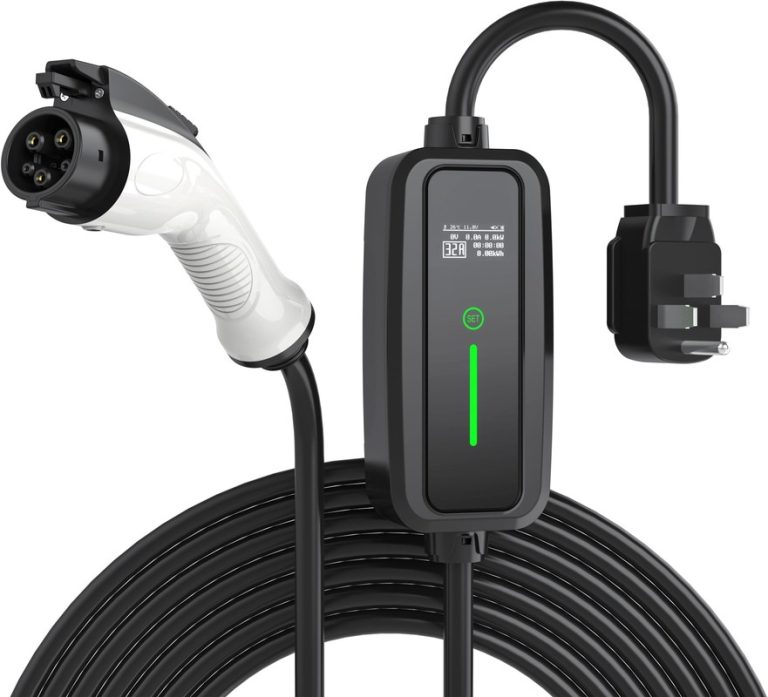
Portable EV chargers (EVSE) are designed to plug into a specific receptacle — commonly NEMA 5-15, 5-20, 6-20, 14-30, or 14-50 — and to draw a steady current for hours. A general-purpose household extension cord is not built for that duty cycle.
The honest answer depends on four things: what the EVSE manual says, what your local code and permitting authority allow, whether a properly rated cord exists for your plug type, and whether the circuit can carry the load continuously without overheating.
When the Manual and Local Code Say Yes—and When They Say No
Some EVSE manufacturers explicitly prohibit extension cords. Others permit them only if the cord meets specific gauge, length, and rating requirements. That language is tied to the warranty and to the thermal behavior of the EVSE’s plug and cordset.
Local code adds another layer. The National Electrical Code (NEC) is a model code; adoption, amendments, and inspection practices vary by state, county, and city. Some jurisdictions treat a temporary extension cord to an EVSE as acceptable for limited use; others do not. Always verify with your local authority having jurisdiction (AHJ) before relying on a cord.
Why Portable EV Chargers Are Not Standard Extension-Cord Loads
A portable EVSE is a continuous load. In NEC terms, that means it may run at its maximum current for three hours or more. Common household extension cords are sized for intermittent loads — a vacuum, a lamp, a power tool — not for hours of steady draw.
That mismatch shows up as heat at the plug blades, at the cord’s connector, and inside the cord itself. Heat degrades insulation, loosens spring contacts, and increases resistance, which increases heat further.
What U.S. Homeowners Must Verify Before Plugging In
Before using any extension cord with a portable EV charger, confirm: the EVSE manual permits it, the cord’s ampacity matches or exceeds the EVSE’s maximum draw, the receptacle is on a dedicated circuit sized for continuous load, the cord is not coiled or covered, and the plug and connector stay cool during charging.
Portable EV Charger Specs That Determine Extension-Cord Compatibility
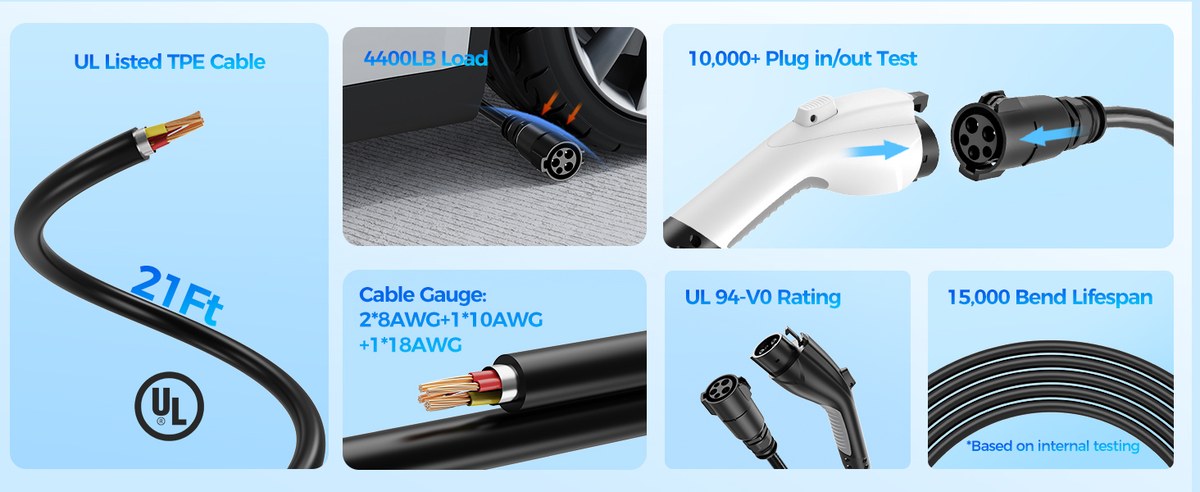
The specs that matter are not marketing numbers. They are the connector type, the EVSE’s maximum current setting, the vehicle’s onboard charger limit, the circuit’s capacity, and the cord’s own rating.
Connector Type, EVSE Amperage, and the Vehicle’s Onboard Charger Limit
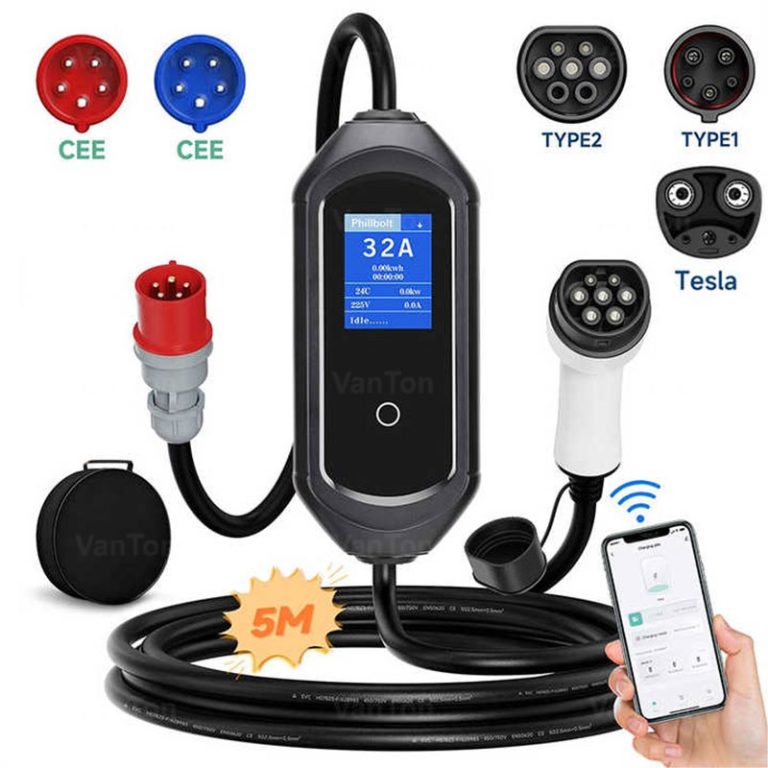
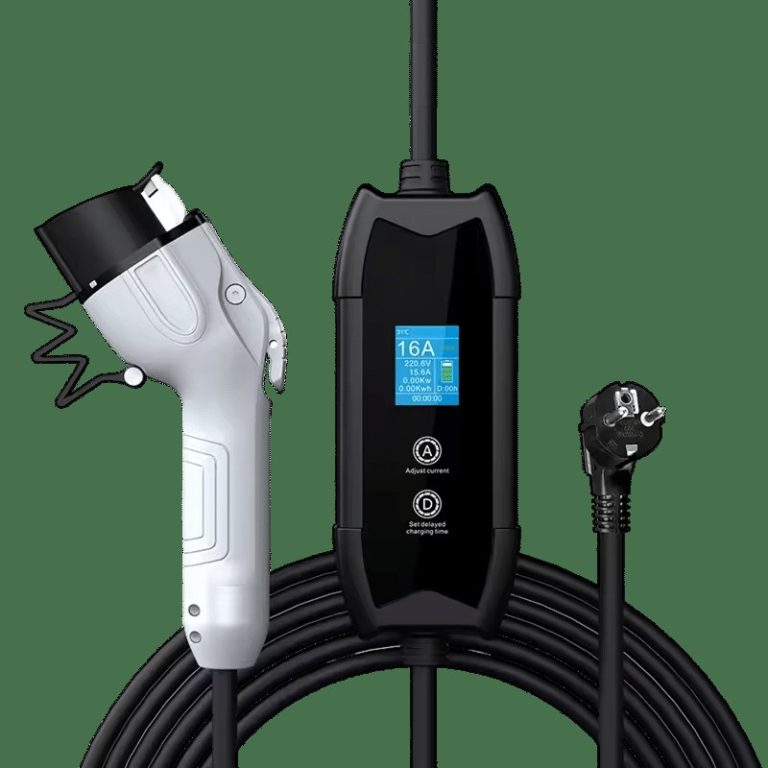
Portable EVSEs typically come with a NEMA plug on the wall side and a J1772 or NACS (SAE J3400) connector on the vehicle side. The extension cord, if used, sits between the wall receptacle and the EVSE’s plug — never between the EVSE and the vehicle unless the manufacturer explicitly allows a vehicle-side extension.
Three limits stack: the EVSE’s output setting, the vehicle’s onboard AC charger, and the circuit. The lowest one wins. If your EVSE is set to 40 A but your car’s onboard charger accepts 32 A, the car will pull 32 A. For a deeper look at how amperage translates into delivered power, see how many kW a 48-amp Level 2 charger delivers.
Plug-In vs. Hardwired, Circuit/Panel Implications, and the 80% Continuous-Load Rule
Plug-in EVSEs depend on the receptacle, the circuit, and the breaker behind them. Hardwired EVSEs skip the receptacle and are wired directly, which removes one connection point and one heat source.
The 80% continuous-load rule is the practical reason this matters: a circuit rated for 40 A is generally expected to carry no more than 32 A continuously. That is why a 40 A EVSE typically pairs with a 50 A circuit. Breaker sizing details are covered in our guide to 48-amp EV charger breaker size.
Cable Length, Voltage Drop, Weather Suitability, and Smart Load Management
Longer cords mean more resistance and more voltage drop. A small drop is tolerable; a large one wastes energy as heat and can cause the EVSE to derate or fault. Shorter is generally better.
Outdoor use adds weather exposure. The cord’s jacket, connectors, and the EVSE’s enclosure rating all matter. Smart load management — where the EVSE reduces current based on panel capacity or utility signals — can help, but it does not fix an undersized cord.
Extension Cord vs. Heavy-Duty EV-Capable Cord: Side-by-Side Criteria
Not all cords are equal. A “heavy-duty” label on a hardware-store cord does not mean it is rated for EV charging. The criteria below are what actually matter.
| Criteria | General-purpose extension cord | EV-capable heavy-duty cord |
|---|---|---|
| Conductor gauge | Often 16–14 AWG | Typically 10–6 AWG depending on amperage |
| Insulation and jacket | May be indoor-only or light outdoor | Rated for outdoor, abrasion, and repeated flex |
| Connector rating | Seldom rated for continuous duty | Rated for continuous EV charging current |
| Length | Frequently 25–100 ft | Usually kept short to limit voltage drop |
| Warranty and support | Not intended for EVSE use | Covered by the cord maker’s stated terms |
Conductor Gauge, Insulation, Connector Ratings, and Outdoor Use
Gauge determines how much current the cord can carry without excessive heat. Insulation determines whether it survives sun, rain, and cold. Connector ratings determine whether the plug and socket can handle continuous load without loosening.
Outdoor use requires verifying the cord’s and the EVSE’s weather ratings separately. A cord rated for outdoor use does not make an indoor-only EVSE safe outdoors.
Length Limits, Voltage Drop, and Who Each Option Fits
Short cords fit temporary situations — a driveway top-up, a rental with a suitable receptacle, a one-off need. Long cords fit almost nothing well when high current is involved.
If the run from receptacle to vehicle is long, the better answer is usually a properly installed receptacle closer to the parking spot, not a longer cord.
Warranty, Support, and Insurance Implications
Using an extension cord against the EVSE manufacturer’s instructions can void the warranty. It can also complicate an insurance claim if a fire is traced to an unapproved cord. Those are practical consequences, not scare tactics.
Adapters, Connectors, and Direction: Where Extension Cords Fit in the Charging Chain
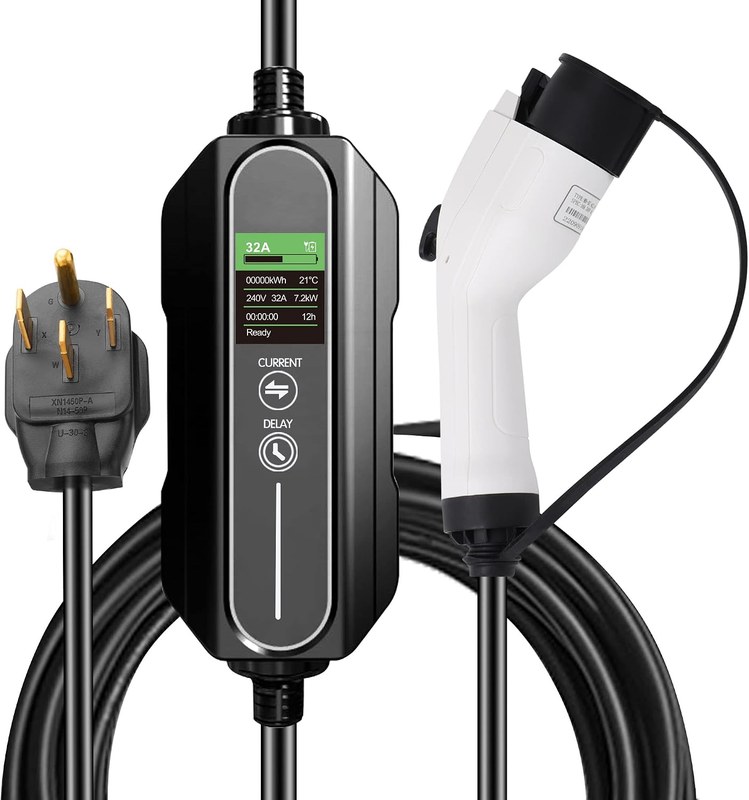
Direction matters. An extension cord belongs on the wall side of the EVSE — between the receptacle and the EVSE plug — not between the EVSE and the car. Vehicle-side extensions and adapters are a different category with their own rules.
Source Connector, Destination Connector, and Adapter Direction
Source connector means the plug that goes into the wall. Destination connector means the J1772 or NACS handle that goes into the car. Adapters change one or the other, and they are not interchangeable.
AC vs. DC Charging, Vehicle/Network Restrictions, and Power Limits
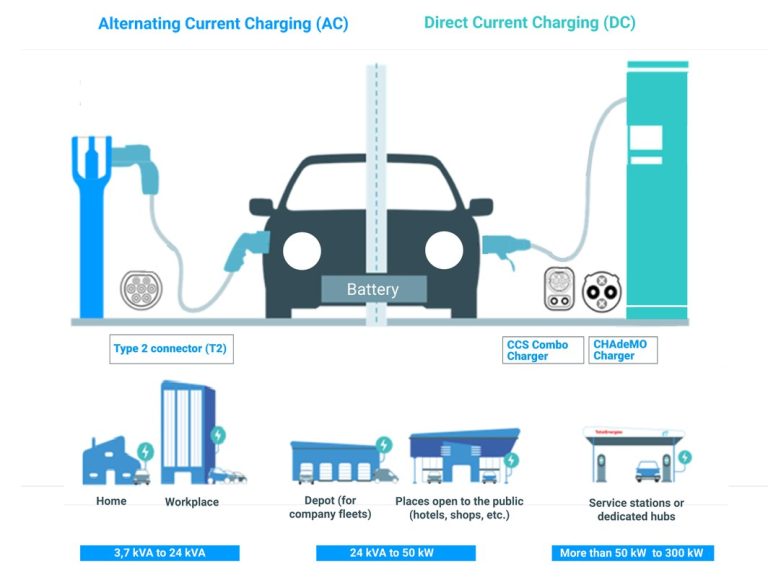
Portable EVSEs deliver AC power. The vehicle’s onboard charger converts AC to DC for the battery. DC fast charging bypasses the onboard charger entirely and uses a different connector and protocol — extension cords have no role there.
Network restrictions and vehicle-side limits can further cap charging current. Those are set by the vehicle and the charging equipment, not by the cord.
Thermal Safety, Firmware, and Vendor Requirements
EVSEs monitor temperature at the plug and connector. If a connection runs hot, many units will derate or stop. That protection is a backstop, not a substitute for correct cord sizing.
Some EVSEs receive firmware updates that change current limits or add temperature thresholds. Check the manufacturer’s current documentation rather than relying on older forum posts.
Charging Cost and Efficiency If You Add an Extension Cord
An extension cord does not change your electricity rate. It can change how much energy actually reaches the battery, because resistance in the cord becomes heat.
Assumptions and Formula: Rate × kWh Delivered ÷ Charging Efficiency
Cost formula: electricity rate ($/kWh) × energy delivered to the battery (kWh) ÷ charging efficiency. Charging efficiency accounts for losses in the cord, the EVSE, the onboard charger, and the battery itself.
Rates, taxes, time-of-use pricing, and losses vary by utility and setup. Verify your current rate before comparing.
Time-of-Use Pricing, Charging Losses, and Equipment/Installation Costs
Time-of-use plans reward charging overnight. The cord itself does not affect that, but extra losses slightly increase the kWh you pay for. A properly installed dedicated circuit usually costs more upfront and less in wasted heat over years.
When a Temporary Cord Costs More Than a Proper Receptacle
If you find yourself using the same cord every week, the math usually favors a proper receptacle or hardwired EVSE. Cord replacement, derated charging, and risk of damage add up.
Battery Health and Convenience Trade-Offs With Extension-Cord Charging
Charging through a cord does not damage the battery by itself. What matters is the current, the temperature, and the state of charge — the same factors that apply to any AC charging session.
Manufacturer Guidance vs. General Patterns for EV Batteries
Manufacturers publish their own guidance on daily charge limits, DC fast charging frequency, and storage state of charge. Those recommendations vary by chemistry and thermal management system. Follow the vehicle manual rather than a generic rule.
Temperature, State of Charge, Charging Power, and DC Fast Charging Context
Cold or hot battery temperatures can slow AC charging regardless of the cord. High state of charge also tapers current. DC fast charging is a separate mode with its own thermal and longevity considerations.
Chemistry, Thermal Management, and Slower-Charging Convenience
Slower charging is usually a convenience issue, not a health issue. If a cord forces a lower current, the session takes longer — that is the main trade-off for most owners.
Range, Efficiency, and Real-World Charging Speed Impacts
An extension cord affects charging losses, not driving efficiency. Those are two different numbers and should not be mixed.
mi/kWh and Wh/mi: What an Extension Cord Does and Does Not Change
mi/kWh and Wh/mi describe how efficiently the car converts stored energy into motion. The cord does not change that. It changes how much energy reaches the battery in the first place.
Speed, Weather, HVAC, Elevation, Payload, Tires, and Battery Temperature
Driving range is affected by speed, weather, HVAC use, elevation change, payload, tire pressure and type, and battery temperature. None of those are influenced by the cord.
Charging Losses vs. Driving Efficiency: Two Different Numbers
Charging efficiency describes how much of the energy drawn from the wall actually lands in the battery. Driving efficiency describes how far the car goes on each kWh stored. A cord can nudge the first number down; it does nothing to the second.
Safe Decision Checklist for U.S. EV Owners in 2026
Work through these steps in order. If any step fails, stop and fix that step before continuing.
Step-by-Step: Manual, Receptacle, Cord, EVSE, Vehicle, and Local Code/Permit
Read the EVSE manual for extension-cord language. Confirm the wall receptacle type and circuit rating. Match the cord’s ampacity to the EVSE’s maximum current. Verify the vehicle’s onboard charger limit. Check local code, permit, and inspection requirements. Confirm the cord’s indoor/outdoor and temperature ratings. Only then consider plugging in.
Troubleshooting Heat, Tripped Breakers, Fault Codes, and Derated Charging
Warm plug or cord: stop charging. Tripped breaker: do not simply reset and continue — investigate the load. Repeated EVSE fault codes: check the cord, the receptacle, and the EVSE’s current setting. Derated charging: many EVSEs reduce current when they detect heat, which is a symptom, not a solution.
Evidence Limits: What This Guide Cannot Confirm Without Your Specific Setup
Final Verdict: The Right Answer for Your Portable EV Charger Setup
There is no single yes-or-no answer that fits every US home. The right answer depends on your EVSE’s instructions, your receptacle, your circuit, and your local code.
Who Should Avoid Extension Cords Entirely
Renters without control over the circuit, owners with older wiring, anyone using a Level 2 EVSE above roughly 16 A, anyone whose manual prohibits it, and anyone in a jurisdiction that disallows it. For these owners, a proper receptacle or hardwired unit is the only sensible path.
Who Might Use a Properly Rated Extension Cord Short-Term
An owner with a correctly rated cord, a dedicated circuit, a manual that allows it, and a genuinely temporary need — a few days, not months. Even then, monitor for heat and stop if anything feels wrong. Our guide to 40-amp Level 1 and Level 2 portable EV chargers covers the portable category in more detail.
The Better Long-Term Fix: Dedicated Receptacle or Hardwired EVSE
For daily charging, a dedicated receptacle or hardwired EVSE removes the cord from the equation entirely. It is safer, faster, and usually cheaper over the life of the vehicle.
- Best for: Temporary, low-current charging where the EVSE manual and local code both allow a properly rated cord.
- Think twice if: You charge daily, use Level 2 current above roughly 16 A, or cannot verify your circuit and cord ratings.
- Next step: Read your EVSE manual, check your receptacle and circuit, and consult a licensed electrician before relying on any extension cord.
Frequently Asked Questions
Only if the EVSE manufacturer permits it, the cord is rated for the EVSE’s continuous current, the receptacle and circuit are correctly sized, and local code allows it. Many EVSE manuals prohibit extension cords outright, so check that document first.
The gauge depends on the EVSE’s maximum current and the cord length. A 12 A Level 1 load may tolerate 12–14 AWG over a short run, while a 32–40 A Level 2 load generally requires much heavier conductors. Match the cord’s ampacity rating to the EVSE’s continuous draw, not its peak.
Level 2 charging draws high current for hours, which is a demanding continuous load. Most household extension cords are not rated for that. If the EVSE manual prohibits cords or your circuit is not dedicated, use a proper receptacle or hardwired unit instead.
It can. A long or undersized cord increases resistance and voltage drop, and some EVSEs derate current when they detect heat. The vehicle’s onboard charger limit and the circuit capacity also cap the actual charging rate.
Level 1 charging on a standard 120 V outlet is the least demanding case, but the outlet should still be on a circuit that can handle the load, and the cord must be rated for continuous use. Never use a thin indoor-only cord for this purpose.
It can. Many EVSE manufacturers state that using an extension cord violates the product’s instructions, which may void warranty coverage. It can also complicate an insurance claim if damage is traced to an unapproved cord.