How Many kW Is a 48 Amp Level 2 EV Charger?
how many kw is a 48 amp level 2 ev charger is easiest to evaluate by checking compatibility, charging limits, installation requirements, safety, and total ownership cost.
how many kw is a 48 amp level 2 ev charger? In most U.S. homes, the quick answer is about 11.5 kW on a 240V circuit, but the exact output depends on voltage, charger design, and the vehicle’s AC charging limit.
- Compatibility: Confirm vehicle, connector, charging mode, and EVSE requirements.
- Performance: Check the vehicle and EVSE limits before assuming higher amperage means faster charging.
- Safety: Follow manufacturer instructions and applicable electrical requirements.
- Cost: Include equipment, installation, electricity, adapters, and any ongoing service costs.
How Many kW Is a 48 Amp Level 2 EV Charger? The Quick Answer
A 48 amp Level 2 EVSE is typically rated at roughly 11.5 kW because power is volts multiplied by amps, then divided by 1,000. At 240 volts, 48 amps works out to 11.52 kW.
That is the charger’s approximate AC output capacity, not always the exact power your battery receives. The vehicle onboard charger, line voltage, and charging losses can all reduce the real-world number.
Why 48 amps usually equals 11.5 kW on a 240V circuit
The basic math is simple: 240V × 48A = 11,520 watts, or 11.52 kW. In everyday EV charging discussions, that is usually rounded to 11.5 kW.
This is why many people searching for 48 amp Level 2 EV charger kW are really looking for the practical home-charging figure, not just the amp rating.
Why the exact output can vary by voltage and charger design
Some homes see slightly higher or lower supply voltage than 240V, and that changes the math. For example, 208V commercial-style power would put 48 amps closer to 10.0 kW.
Also, many EVSEs are designed to deliver a maximum current, while the car decides how much AC power it will accept. So the charger may be capable of 11.5 kW, but the vehicle may charge at less.
What a 48 Amp Level 2 Charger Actually Means
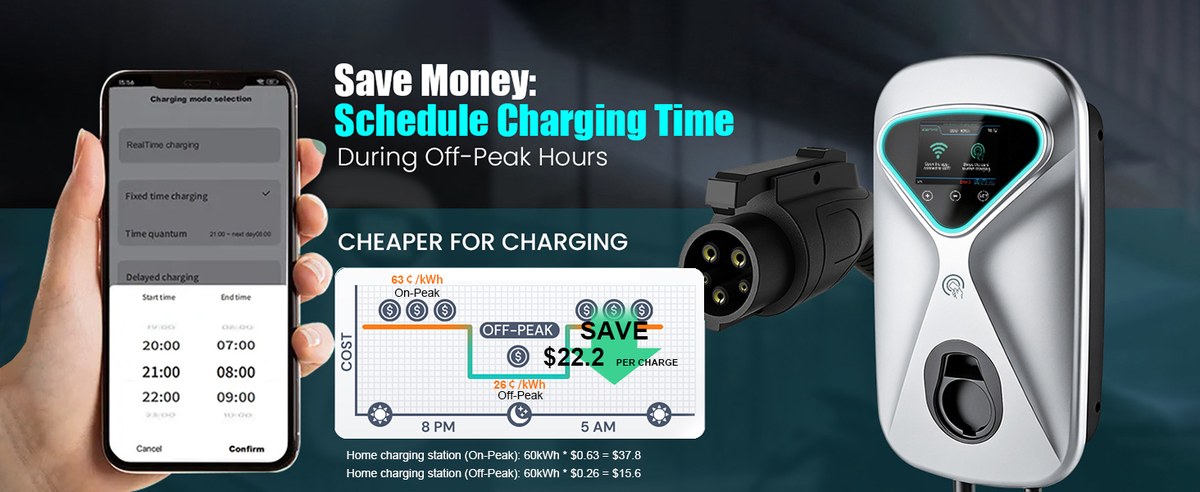
“48 amp charger” is shorthand for a Level 2 EVSE that can supply up to 48 amps of alternating current. It does not mean every EV will charge at 48 amps all the time.
EVSE amperage vs. charging power: amps, volts, and kW explained
Amps measure current, volts measure electrical pressure, and kW measure power. For charging, kW is the most useful number because it tells you the approximate speed of energy transfer.
A 48 amp EVSE on 240V supply is a common home setup because it lands in the sweet spot between speed and installation complexity. If you want a broader comparison, see our guide to the 40 amp Level 2 charger class as a lower-output benchmark.
How the charger, cable, and connector work together
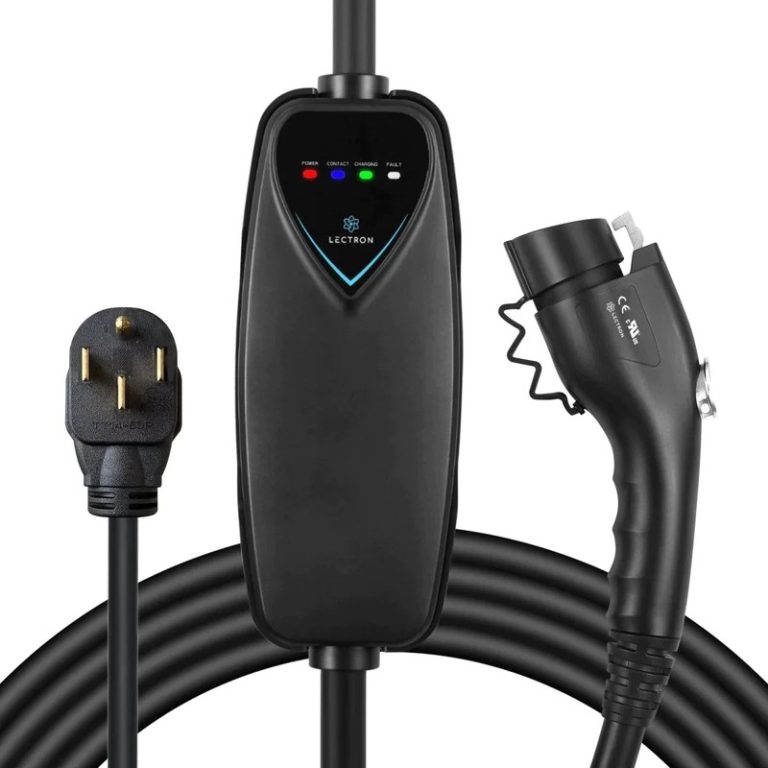
The EVSE, cable, and connector are part of one system. The EVSE controls current delivery, the cable must safely carry that current, and the connector must match the vehicle inlet.
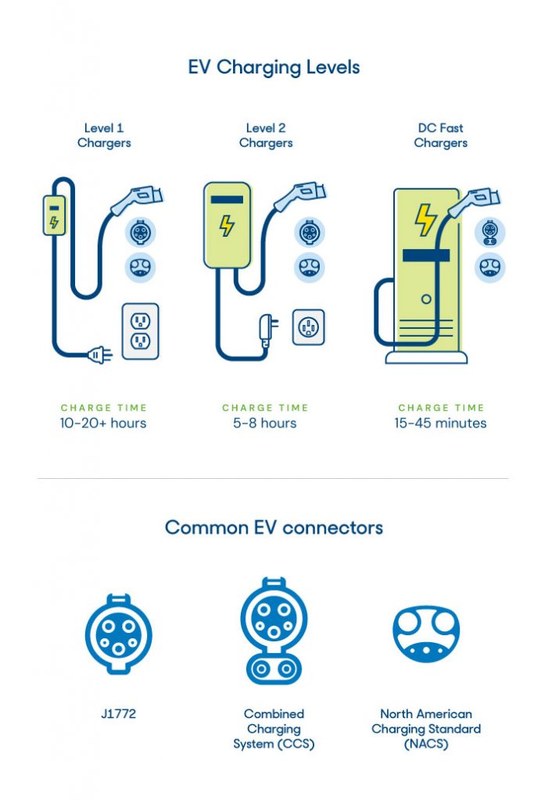
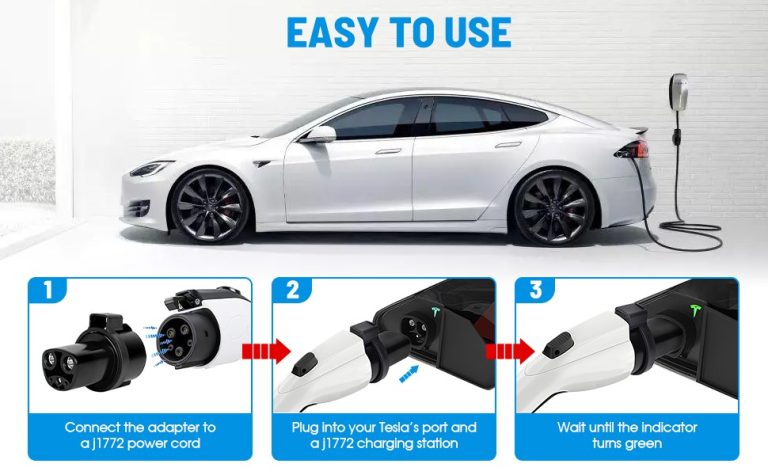
For U.S. drivers, that usually means J1772 for many AC-only chargers, or NACS/SAE J3400 on newer vehicles and EVSEs. Physical fit matters, but it does not by itself prove full charging compatibility.
Why the vehicle’s onboard charger can be the real bottleneck
Most EVs use an onboard AC charger to convert household AC power into battery-ready DC. If the onboard charger tops out below 11.5 kW, a 48 amp EVSE will not make the vehicle charge faster than that limit.
That is why a 48 amp unit may be ideal for one EV and only slightly better than a 40 amp unit for another. The car’s AC charging ceiling matters as much as the EVSE rating.
48 Amp Charger Compatibility: Which EVs Can Use It?
Compatibility has two parts: the connector must fit, and the vehicle must support AC charging at the desired rate. In 2026, that distinction matters more than ever as NACS transitions continue across the U.S. market.
J1772, NACS, and adapter considerations for U.S. drivers in 2026
Many older and current EVs still use J1772 for AC charging. Many newer vehicles are moving to NACS/SAE J3400 on the vehicle side, but adapter direction and AC/DC support must be checked carefully.
For example, a NACS-to-J1772 adapter may allow AC charging in one direction, but it does not automatically mean DC fast charging is also supported. The vehicle, EVSE, and adapter all have to align.
Important: Physical fit alone does not prove every AC or DC charging mode is supported.
AC charging limits set by the vehicle, not just the EVSE
Many EV owners focus on the charger’s maximum amperage, but the vehicle’s onboard charger is often the limiting factor. If the car accepts only 7.2 kW AC, a 48 amp EVSE will not change that.
This is why a charger labeled 48 amps can still be a good purchase even if your current EV cannot use the full output. It may support a future EV with a higher AC charging limit.
When a 48 amp charger is overkill versus a smart long-term choice
For drivers with short commutes and overnight charging habits, 48 amps can be more than they need. A lower-amperage unit may save on installation complexity and electrical upgrades.
For households with two EVs, high daily mileage, or plans to keep the charger through multiple vehicles, 48 amps can be a practical long-term choice. If you are comparing output tiers, our is 40 amps enough for Level 2 EV charging guide is a useful benchmark.
Electrical Requirements, Circuit Planning, and Code Considerations

A 48 amp EVSE is not a casual plug-in appliance. It is a safety-sensitive electrical load that should be matched to the charger manual, the panel, and local permit rules.
Why installation must follow the charger manual and local permit rules
Manufacturer instructions control the required circuit setup, maximum breaker size, wiring method, and installation conditions. Local electrical code adoption and permit requirements can also change by city or county.
Plug-in vs. hardwired: practical differences for 48 amp units
Many 48 amp EVSEs are hardwired because that is often the simplest way to support the load safely and per manufacturer instructions. Some models are plug-in, but the receptacle, plug type, and circuit requirements must be verified.
Useful if the product is specifically listed for receptacle use and you want portability or easier replacement.
Often preferred for higher-amperage home installs, cleaner cable management, and fewer receptacle-related concerns.
Panel capacity, load calculations, and why a licensed electrician matters
A 48 amp continuous load is substantial. The circuit, breaker, feeder, and service capacity all need to be evaluated, especially in older homes or panels already near capacity.
Weather rating, indoor/outdoor placement, and cable management
If the EVSE will live outdoors, verify the enclosure rating, operating temperature range, connector storage guidance, and any manufacturer restrictions. Do not assume a charger is outdoor-rated just because it looks weather resistant.
Charging Speed, Range Added, and Real-World Efficiency
Charging speed is best understood as a range estimate, not a promise. A 48 amp Level 2 charger can be fast enough for overnight refills, but the actual miles added depend on the vehicle and conditions.
How many miles per hour a 48 amp Level 2 charger can add
A common estimate is roughly 25 to 45 miles of range per hour, depending on vehicle efficiency. Efficient sedans will usually add more miles per hour than large SUVs or trucks.
Label estimates and state vehicle, onboard-charger, battery, temperature, and loss assumptions.
Using mi/kWh and Wh/mi to estimate charging and driving efficiency
If your EV averages 3.0 mi/kWh, then 11.5 kW of AC power could theoretically support about 34 miles of range per hour before losses and taper effects. A less efficient vehicle may see much less.
How temperature, HVAC use, elevation, payload, and tire pressure change results
Cold weather, cabin heating, steep terrain, heavy cargo, and underinflated tires can all reduce effective range. In hot weather, battery cooling and air conditioning can also lower efficiency.
Because of those variables, the same 48 amp charger can look very different from one household or season to another.
Charging losses and why “11.5 kW” does not equal 11.5 kW delivered to the battery
Some energy is lost as heat in the EVSE, cable, vehicle electronics, and battery system. That means the wall-side draw and the battery-side gain are not identical.
For a home charging estimate, you should think in terms of delivered kWh plus losses, not just the charger’s rated output.
Charging Cost Breakdown for a 48 Amp Level 2 Charger
The charger itself does not set your bill; the utility rate does. To estimate cost, multiply electricity price by kWh delivered, then account for charging losses.
Cost formula: electricity rate × kWh delivered × charging losses
If electricity costs $0.18 per kWh and you add 20 kWh to the battery, the energy cost is $3.60 before losses. If charging losses are 10%, the wall energy cost is closer to $3.96.
State assumptions; rates, taxes, time-of-use pricing, and losses vary.
How time-of-use pricing can change overnight charging economics
Time-of-use plans can make overnight charging much cheaper than daytime charging. In some markets, the savings can be large enough to influence whether a 48 amp charger is worth the installation premium.
Always check your utility’s current rate schedule, because pricing structures, demand charges, taxes, and fees vary by location.
Installation cost, equipment cost, and long-term ownership trade-offs
A 48 amp charger often costs more to install than a lower-amperage unit because it may require more electrical work, a larger circuit, or a hardwired setup. That upfront cost should be balanced against future flexibility.
For some households, a less expensive 40 amp solution is enough. For others, the ability to charge faster and future-proof the home setup justifies the extra work.
Battery Health: Is 48 Amps Too Much for Daily Charging?
In general, Level 2 AC charging is gentler than DC fast charging because the car manages the conversion and battery control internally. The bigger battery-health questions are temperature, state of charge, and how often you need the speed.
Manufacturer guidance versus general battery-care patterns
Follow the vehicle maker’s guidance first. Some brands provide specific recommendations for daily charging habits, while others focus more on temperature management and storage behavior than on a universal percentage target.
How state of charge, battery temperature, and chemistry affect charging stress
Batteries usually charge more efficiently when they are within a comfortable temperature range. Charging at very high state of charge can slow down, and battery chemistry can influence how the pack responds over time.
Why Level 2 AC charging is usually gentler than DC fast charging
Level 2 AC charging is typically slower and produces less stress than repeated DC fast charging sessions. That makes it a common choice for daily home use, especially when the car sits parked for several hours.
Convenience versus battery preservation for daily home charging
For many owners, the best setup is the one that makes home charging easy without overcomplicating the electrical install. If 48 amps gives you comfortable overnight recovery, that convenience can outweigh the theoretical benefit of a slower charger.
Buying Guide: Features to Compare in a 48 Amp Home EV Charger
Not all 48 amp chargers are equal. Connector type, cable length, smart controls, weather suitability, and support quality can matter as much as the headline amperage.
Connector type, cable length, and ease of daily use
Choose a connector that matches your vehicle or your verified adapter plan. Cable length should fit your parking layout without forcing the cord to stretch or hang awkwardly.
Smart features: scheduling, load management, energy tracking, and app control
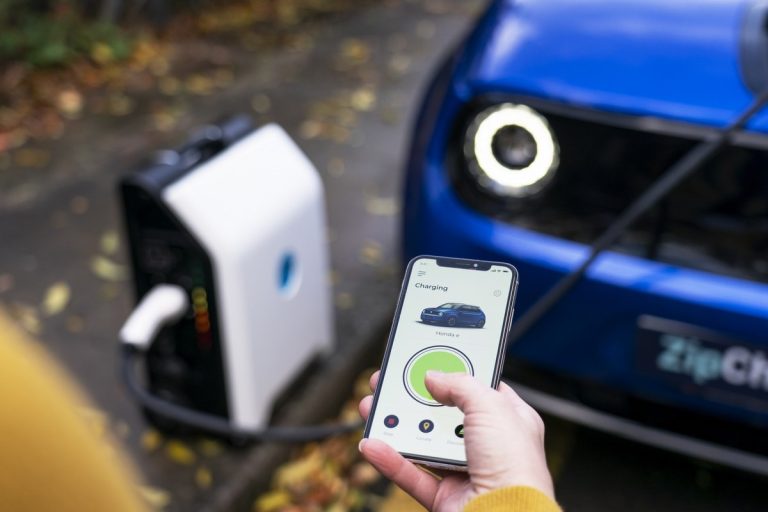
Some chargers offer scheduling, real-time energy tracking, load management, and app-based control. Those features can be useful, but they may also depend on Wi-Fi, cloud services, or a user account.
Weather suitability, durability, and safety protections for U.S. homes
Look for verified safety listings, clear indoor/outdoor ratings, overcurrent protection details, and documented operating limits. Do not rely on marketing language alone when safety is involved.
Warranty length, customer support, and what evidence matters in product reviews
Warranty length matters, but so does support responsiveness and documentation quality. For home charging gear, clear manuals and responsive customer service can be as important as raw specs.
Which 48 Amp Charger Setup Fits Your Home and Driving Needs?
The right answer depends on your commute, your home’s electrical capacity, and whether you want a charger you can keep through your next EV.
Best fit for high-mileage commuters and multi-EV households
A 48 amp setup is usually best for drivers who add a lot of miles each day, households that share charging access, or buyers who want more headroom for future EVs with stronger AC charging capability.
When a lower-amperage Level 2 charger may be the smarter buy
If your driving is modest and you can recharge overnight without stress, a 32 amp or 40 amp charger may be simpler and less expensive to install. Lower output can also reduce pressure on older electrical panels.
Side-by-side comparison criteria: speed, installation complexity, flexibility, and value
| Item | Verified value | Why it matters |
|---|---|---|
| 48 amp Level 2 EVSE | About 11.5 kW at 240V | Fast home AC charging for compatible vehicles |
| Vehicle onboard charger | May cap below 11.5 kW | Can limit real charging speed |
| Electrical install | Often more demanding than lower-amp units | May require more panel and wiring planning |
| Lower-amp alternative | Often simpler and cheaper | Can be enough for many daily drivers |
If you are still comparing options, the next most useful step is checking your vehicle’s maximum AC charging rate and your home’s electrical capacity before you buy.
- Best for: Drivers who want fast overnight AC charging and may keep the EVSE through multiple vehicles.
- Think twice if: Your vehicle tops out well below 11.5 kW or your panel is already tight.
- Next step: Verify the vehicle’s AC limit, the charger’s installation type, and the electrical requirements with a licensed electrician.
Frequently Asked Questions
Check the vehicle inlet, charging mode, EVSE or adapter compatibility, electrical requirements, and the latest manufacturer instructions before buying or installing anything.
Not necessarily. Compatibility can depend on the vehicle inlet, AC or DC charging mode, onboard-charger limit, adapter direction, model year, software, and product revision.
No. Actual AC charging speed is limited by the lowest relevant limit among the circuit, EVSE setting, vehicle onboard charger, voltage, and charging conditions.
Plug-in accessories may not require electrical work, but new circuits, receptacles, hardwired EVSE, panel work, or permit-sensitive installations should follow local requirements and may need a qualified electrician.
Verify manufacturer instructions, electrical requirements, connector use, weather suitability, and any claimed safety listing or certification from a primary source.
Purchase and installation costs vary, while charging cost depends on electricity rate, energy delivered, charging losses, taxes or fees, and time-of-use plans.

17 Comments