What Size Breaker Does a Level 2 EV Charger Need?
Size the breaker at 125% of the EVSE’s rated input current: 32A needs 40A, 40A needs 50A, and 48A needs 60A. The main limitation is your panel capacity and conductor sizing, so confirm both before buying equipment.
The short answer to what size breaker for Level 2 EV charger installations comes down to one rule: the breaker must be sized at 125% of the EVSE’s rated input current. A 32-amp charger needs a 40-amp breaker, a 40-amp charger needs a 50-amp breaker, and a 48-amp charger needs a 60-amp breaker — but your panel, wiring, and local code still have to support that circuit.
- Breaker rule: EVSE input amps × 1.25, rounded up to the next standard breaker size.
- Common pairings: 32A/40A, 40A/50A, and 48A/60A cover most US home installations.
- Safety: Breakers protect conductors, so undersized wire on an oversized breaker is a fire risk.
- Cost: Panel upgrades and long conduit runs usually drive installation cost more than the charger.
Quick Answer: What Size Breaker Does a Level 2 EV Charger Need?
Level 2 EV charging in the United States runs on 240-volt AC power, and the circuit that feeds it is treated as a continuous load. That single classification drives almost every breaker decision you will make.
Start With the EVSE’s Rated Input Amperage and the 125% Continuous-Load Rule
The National Electrical Code treats EV supply equipment as a continuous load, meaning it can draw its maximum current for three hours or more. Because of that, the overcurrent device must be rated at least 125% of the equipment’s maximum input current.
The math is simple. Take the EVSE’s rated input amps, multiply by 1.25, and round up to the next standard breaker size. A 32-amp unit becomes 40 amps. A 40-amp unit becomes 50 amps. A 48-amp unit becomes 60 amps.
Common U.S. Examples: 32A on a 40A Breaker, 40A on a 50A, 48A on a 60A — Confirm the Manual and Local Code
These three pairings cover the majority of residential Level 2 installations sold in the US. They are also the pairings most commonly cited in manufacturer installation manuals.
That said, the manual always wins. Some EVSEs ship with adjustable current settings, and the setting you choose determines the breaker you need — not the highest number printed on the box.
Why the Breaker Protects the Circuit, Not Just the Charger
A common misunderstanding is that the breaker exists to protect the charger. It does not, at least not primarily. The breaker protects the conductors, terminations, and receptacle in the circuit from overheating.
If you install a 60-amp breaker on wiring rated for 40 amps, the wire can overheat and fail before the breaker ever trips. That is a fire risk, and it is exactly why breaker size, wire size, and EVSE amperage must be planned together.
Level 2 Charging Basics: Connector, EVSE Amperage, kW, and Vehicle Onboard Charger Limits
Before choosing a breaker, it helps to separate the pieces of the charging chain. The wall equipment, the vehicle, and the physical connector each impose their own limits, and the slowest one sets your real charging speed.
J1772, NACS, and AC Adapter Cables: Source/Destination Connectors, Adapter Direction, AC vs. DC, and Why They Rarely Change Breaker Size
Level 2 charging uses AC power and the J1772 standard, or the NACS / SAE J3400 connector that many newer vehicles use. Both carry AC at Level 2, and both are limited by the same circuit rules.
Adapters exist to bridge connector shapes, not to change electrical capacity. A J1772-to-NACS adapter for AC charging does not increase amperage, does not change the breaker requirement, and does not convert AC into DC. Physical fit alone never proves a charging mode is supported.
Important: Physical fit alone does not prove every AC or DC charging mode is supported.
EVSE Nameplate Amps vs. Vehicle Onboard Charger Limit: Which One Sets the Real Charging Speed?
The EVSE advertises what it can deliver. The vehicle’s onboard AC charger determines what the car can actually accept. A 48-amp wall unit feeding a car with a 32-amp onboard charger will only deliver about 32 amps.
This matters for breaker planning because oversizing the circuit does not create faster charging. If your vehicle caps at 32 amps, a 40-amp circuit is often the sensible target rather than a 60-amp run. Our breakdown of whether 48 amps is enough for a Level 2 charger walks through that trade-off in more detail.
Plug-In vs. Hardwired Level 2 EV Chargers: Breaker, Receptacle, and Code Implications
How the charger connects to your home changes both the maximum practical amperage and the code requirements that apply.
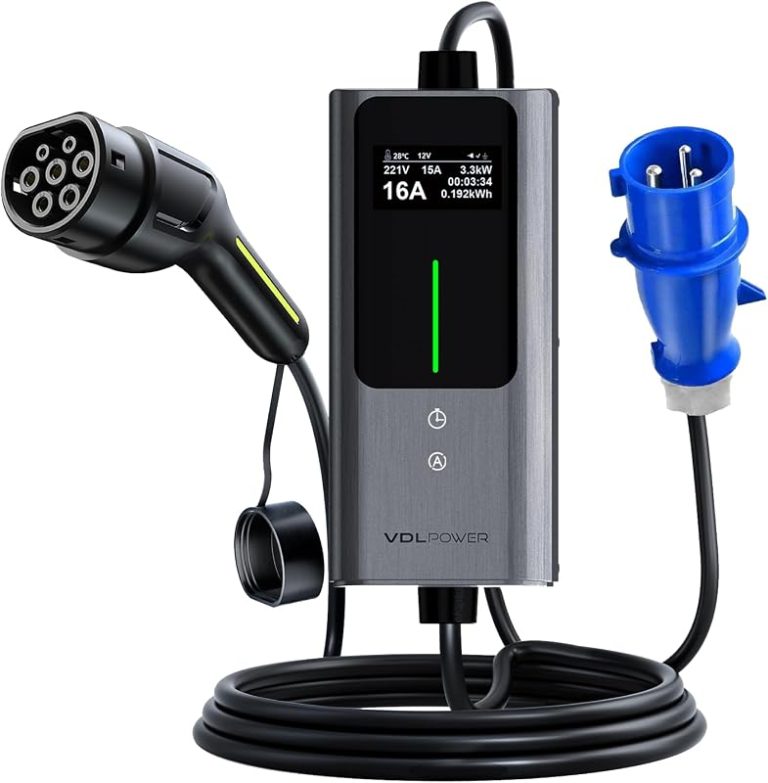
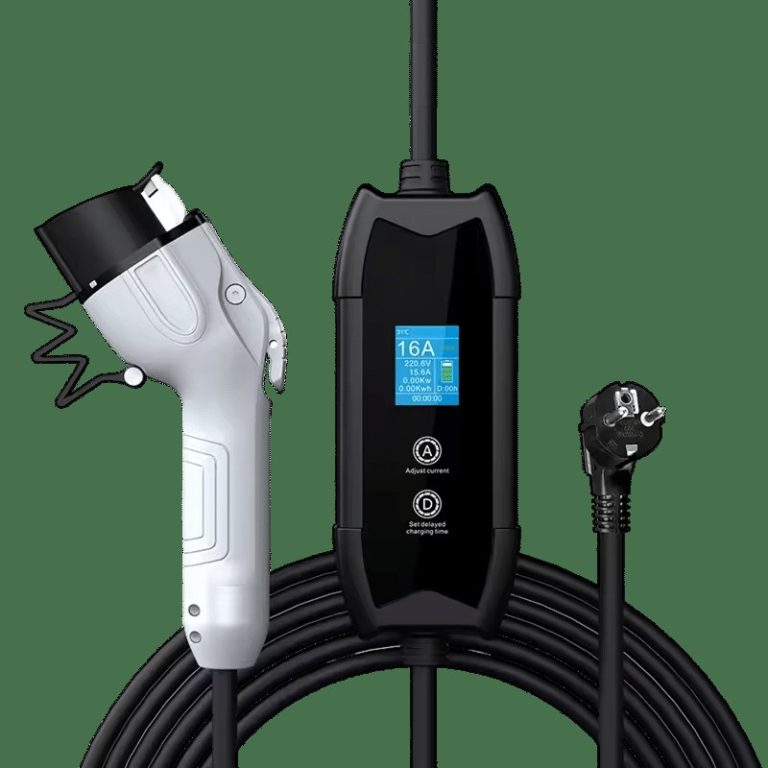
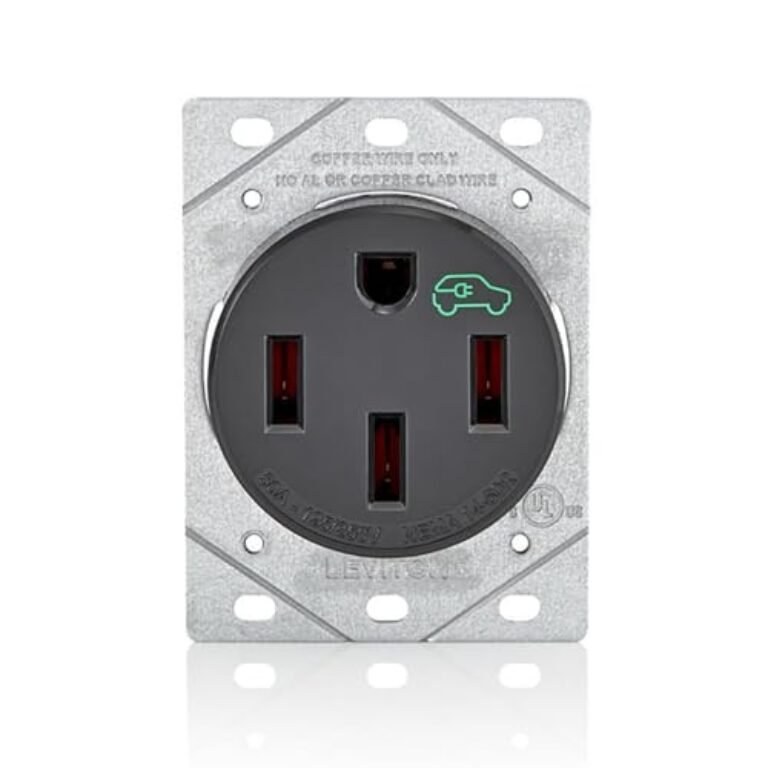
Uses a NEMA 14-50 or 6-50 receptacle on a dedicated circuit. Portable and easier to replace, but typically limited to 40 amps of charging on a 50-amp circuit, and receptacle GFCI rules may apply.
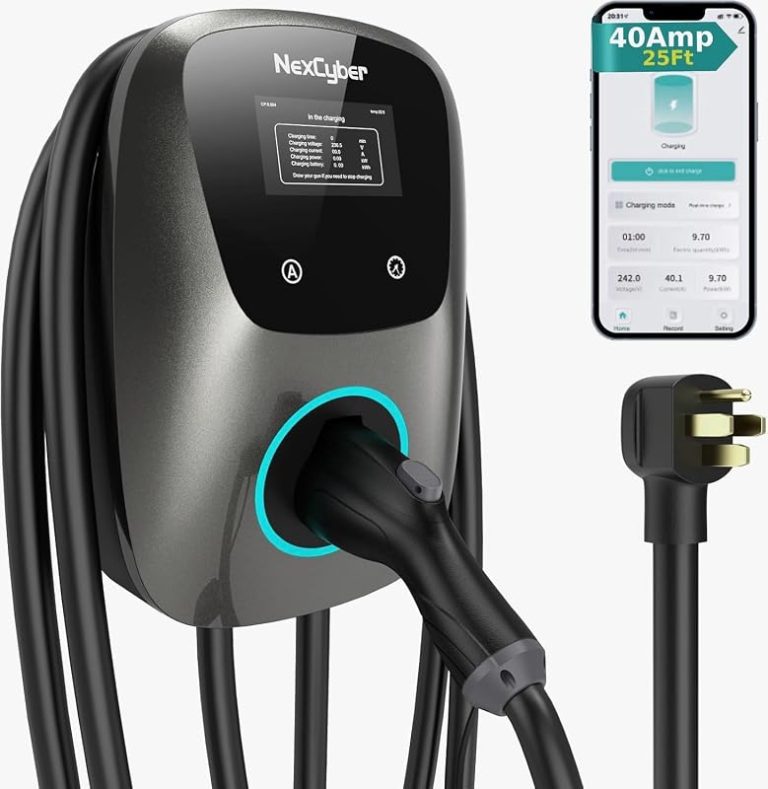
Wired directly into a junction box. Allows higher amperage such as 48 amps on a 60-amp circuit, avoids receptacle wear, and is often required for the highest-output home units.
NEMA 14-50 and 6-50 Plug-In Chargers: Common 40A and 50A Circuit Scenarios
A NEMA 14-50 receptacle on a 50-amp circuit is the classic plug-in setup. Because of the 125% rule, the charger on that circuit is normally configured to 40 amps, not 50.
The NEMA 6-50 is the same idea without a neutral conductor, since Level 2 EV charging does not use the neutral. Either way, the circuit must be dedicated to the EVSE. Our guide to 40 amp EV charger breaker size covers the plug-in case in more depth.
Hardwired EVSE: Higher Amperage, Adjustable Current Settings, GFCI Breakers, and Disconnect Rules
Hardwiring removes the receptacle as a limiting factor and is how most 48-amp home chargers are installed. Many hardwired units let you set the output in the app or with internal DIP switches, which means you can match the EVSE to the circuit you actually have.
Recent NEC editions have expanded GFCI protection requirements for receptacles that supply EVSE, and disconnecting-means rules apply to certain higher-rated equipment. Confirm the edition adopted in your jurisdiction before you buy.
Common Level 2 Breaker Sizes and Circuit Pairings for U.S. Homes
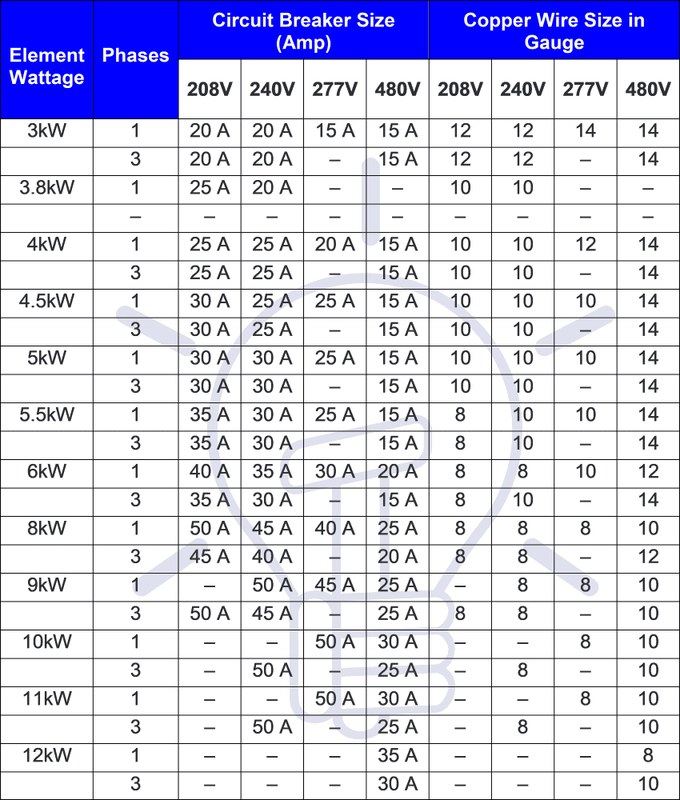
These pairings reflect the 125% continuous-load rule applied to typical EVSE output settings. Treat them as a planning reference, then verify against your specific equipment manual.
| EVSE output | Typical breaker | Why it matters |
|---|---|---|
| 16 A | 20 A | Fits modest panels; slow but workable for low-mileage drivers |
| 24 A | 30 A | Often used with load management or smaller services |
| 32 A | 40 A | Common plug-in and mid-range hardwired setting |
| 40 A | 50 A | Standard NEMA 14-50 plug-in ceiling |
| 48 A | 60 A | Highest common residential hardwired setting |
| 80 A | 100 A | Requires a large service and usually a disconnect |
16A, 24A, 32A, 40A, 48A, and 80A EVSE Examples: Who Each Setup Fits
16 and 24 amps suit overnight commuters with short daily drives and older homes with limited service capacity. 32 and 40 amps cover most households comfortably. 48 amps fits drivers who want to replenish a large battery pack quickly overnight.
80-amp equipment exists but sits outside typical residential territory. It generally requires a 100-amp circuit, heavy conductors, and a service that can absorb that load.
Why the Same Charger May Need a Different Breaker in a Different Home
Two owners can buy identical hardware and end up with different circuits. One may have a 200-amp service with spare capacity; the other may be on a 100-amp service with electric heating, an electric range, and a dryer already drawing power.
Adjustable current settings exist precisely for this reason. Dialing a 48-amp charger down to 32 amps can turn an impossible install into a straightforward one.
Panel Capacity and Load Calculation: Can Your Electrical Service Handle the New Breaker?
Breaker size is only half the question. The other half is whether your electrical service can carry the added load without overloading.
NEC Load Calculation Basics: Existing Loads, EVSE Load, and Continuous-Load Rules
A load calculation estimates your home’s existing demand, then adds the EVSE as a continuous load. Electricians may use historical utility data or a standard calculation method depending on the situation.
If the total exceeds the service rating, the installation cannot proceed as planned without changes. This is not a judgment call you want to make by eyeballing the panel.
When to Choose a Panel Upgrade, Subpanel, or Load Management Device
A panel upgrade replaces the service with more capacity — the most expensive option, but sometimes the only one. A subpanel redistributes circuits but does not create new capacity on its own.
Load management devices are often the practical middle path. They monitor the home’s total draw and throttle or pause EV charging when demand peaks, which can allow a large charger on a service that could not otherwise support it.
Permits, Inspections, and Working With a Qualified Electrician in 2026
Most US jurisdictions require an electrical permit for a new 240-volt EV circuit, followed by an inspection. Skipping that step can complicate insurance claims and resale.
A licensed electrician will also confirm torque specifications, breaker compatibility with your panel brand, and whether your utility needs advance notice of the added load.
Wire Size, Voltage Drop, Cable Length, and Outdoor Installation Details
Breaker and wire must be matched. An oversized breaker on undersized wire defeats the entire purpose of overcurrent protection.
Conductor Ampacity, Temperature Ratings, and Breaker Terminal Limits
Copper and aluminum conductors carry different ampacities, and the insulation temperature rating changes the allowable current. Terminations at the breaker and EVSE also carry temperature limits that can cap the usable ampacity of the wire.
For a 40-amp circuit, 8 AWG copper is a common choice. For 60 amps, 6 AWG copper is typical. Our article on what size wire a 40 amp EV charger needs explains how those selections are made.
Long Cable Runs, Voltage Drop, and NEMA Ratings for Weather Suitability
Long runs increase voltage drop, which can reduce delivered power and cause the vehicle to derate. Very long runs sometimes require upsizing the conductor beyond the minimum ampacity requirement.
For outdoor installations, verify the EVSE’s enclosure rating, operating-temperature range, and connector storage guidance from the manufacturer. Do not assume weather suitability from appearance alone.
Smart Chargers, Load Management, and Adjustable Amperage Settings
Modern EVSEs increasingly ship with features that directly affect breaker planning, and ignoring them can lead to an unnecessarily expensive installation.
Power Sharing and Dynamic Load Management: How They Change Breaker Planning
Power sharing lets two or more chargers split a single circuit’s capacity. Dynamic load management adjusts output in real time based on the home’s total draw. Both can reduce the circuit size you need to provision.
These features only help if they are configured correctly and if the local authority accepts the approach. Some jurisdictions have specific requirements for how load management is documented.
Wi-Fi, Firmware, Utility Programs, Warranty, and Support Trade-Offs
Connected chargers depend on apps, accounts, and cloud services for scheduling and utility programs. Ask what happens if the manufacturer’s service is discontinued or your Wi-Fi drops — a charger that cannot be configured offline is a real limitation.
Also confirm the US warranty term, the safety listing mark, and whether support is domestic or offshore before you commit.
Charging Cost, Battery Health, and Final Buying Checklist
Once the electrical side is settled, the remaining questions are cost, battery impact, and whether the setup actually fits your routine.
Level 2 Charging Cost Formula: Electricity Rate × kWh Delivered ÷ Charging Efficiency
Home charging cost is straightforward math once you account for losses. Level 2 AC charging typically loses some energy in conversion and thermal management, so the electricity you pay for slightly exceeds what reaches the battery.
Example only. Rates, taxes, time-of-use pricing, demand charges, and charging losses vary by utility and vehicle.
Time-of-Use Rates, Charging Losses, Equipment, and Installation Cost Assumptions
Time-of-use plans can cut the per-kWh price substantially if you charge overnight. That makes scheduled charging one of the highest-value features in a modern EVSE.
Installation cost depends heavily on run length, panel condition, and whether a permit or panel upgrade is required. Get at least two quotes that itemize labor, materials, and permit fees separately.
Does Faster Level 2 Charging Hurt the Battery? Manufacturer Guidance vs. General Patterns
Level 2 AC charging is far gentler than DC fast charging, and most manufacturers treat it as normal daily use. There is no universal charging-percentage rule that applies to every EV.
Battery chemistry, thermal management, ambient temperature, and state of charge all influence long-term degradation. Follow your vehicle manufacturer’s guidance rather than a blanket recommendation.
Temperature, State of Charge, Chemistry, Thermal Management, and DC Fast Charging Context
Cold packs accept less power, and hot packs may be actively cooled before charging ramps up. These behaviors are normal and are managed by the vehicle, not the wall unit.
If you regularly rely on DC fast charging for daily needs, a higher-output Level 2 circuit becomes more valuable because it reduces dependence on public infrastructure.
Convenience Trade-Offs and Final Checklist: Match EVSE, Breaker, Wire, Panel, and Local Permit Requirements
The right breaker size is the one that matches your EVSE’s configured output, your conductor ampacity, your panel capacity, and your local code. Get any one of those wrong and the installation is either unsafe or non-compliant.
If you are still deciding between a 40-amp and 48-amp setup, our explanation of whether a 48 amp EV charger needs a 60 amp circuit is a useful next step before you call an electrician.
- Confirm your vehicle’s onboard AC charger limit
- Check the EVSE’s rated input amps and adjustable settings
- Verify breaker size using the 125% continuous-load rule
- Match conductor size to the circuit and run length
- Confirm panel capacity with a load calculation
- Verify safety listing, warranty, and app requirements
- Best for: Most US homes are well served by a 40-amp or 50-amp circuit feeding a 32-amp or 40-amp EVSE.
- Think twice if: You are planning a 48-amp or higher circuit without confirming panel capacity and conductor sizing first.
- Next step: Read your EVSE manual for the rated input current, then have a licensed electrician run the load calculation before any permit is filed.
Frequently Asked Questions
A 48-amp EVSE requires a 60-amp circuit because 48 × 1.25 = 60. That circuit needs conductors rated for 60 amps and a panel that can support the added continuous load. Confirm the requirement in your specific charger’s installation manual before purchasing equipment.
No. Because EV charging is treated as a continuous load, the breaker must be rated at least 125% of the EVSE’s input current. A 40-amp charger needs a 50-amp breaker. Putting it on a 40-amp breaker would cause nuisance tripping and is not compliant.
A 50-amp breaker supports an EVSE configured to 40 amps of charging current, which is the standard ceiling for NEMA 14-50 plug-in setups. If your charger is set higher than 40 amps, you need a larger circuit — typically 60 amps for a 48-amp unit.
Requirements depend on your installation type and the NEC edition adopted in your area. Recent code cycles have expanded GFCI protection requirements for receptacles supplying EVSE, while hardwired installations are treated differently. Your local authority and the equipment manual are the deciding sources.
The breaker will not trip at the intended threshold, which means the conductors and terminations could overheat before protection activates. An oversized breaker on undersized wire creates a genuine fire hazard inside walls and should never be installed.
Often, yes. Many hardwired EVSEs allow you to set a lower output current, which reduces the required breaker size and the load added to your service. This is a common solution for homes with limited panel capacity, but the setting must match the installed circuit.