EV Charging Cost vs Gas: What Drivers Should Know
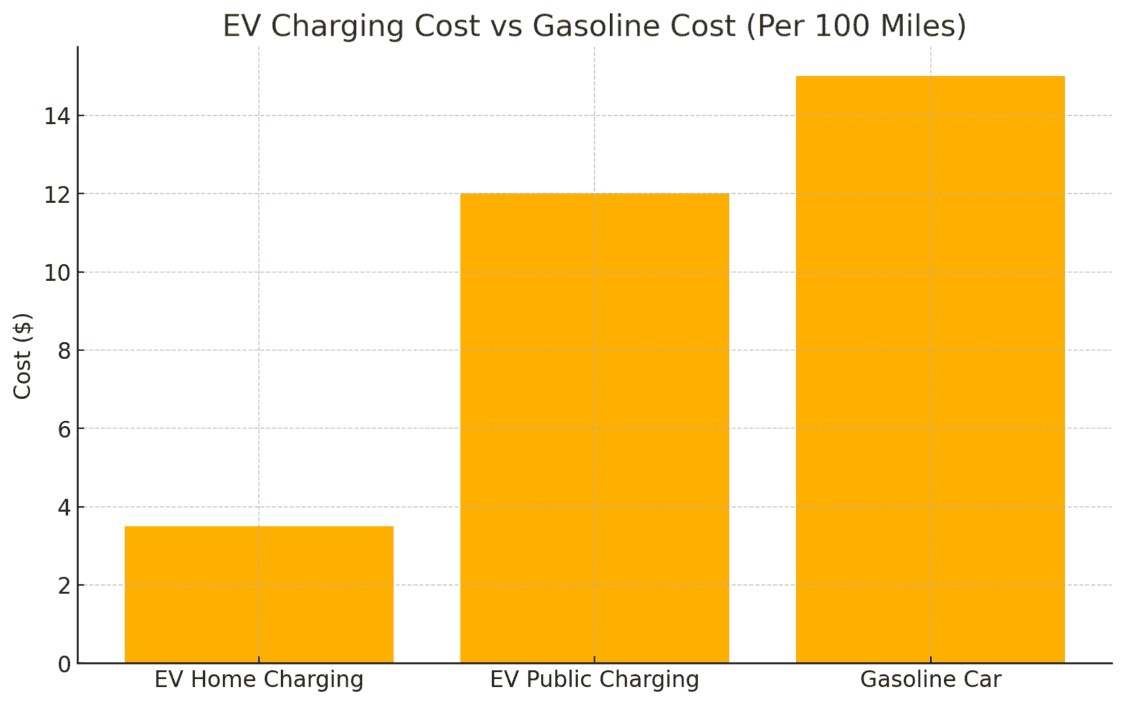
Home charging usually delivers the lowest cost per mile because an EV uses energy far more efficiently than a gasoline engine, even when electricity costs more per unit of energy than gasoline. The main check is where you plug in: public DC fast charging with per-minute billing or session fees can narrow or erase that advantage.
EV charging cost vs gas is the question most US drivers ask before switching, and the practical answer is that home charging usually wins on cost per mile while public DC fast charging can range from competitive to more expensive than gasoline. The deciding factors are your electricity rate, your vehicle’s efficiency, your charging losses, and where you actually plug in.
- Cost: Compare cost per mile, never cost per gallon versus cost per kWh — efficiency.
- Formula: Divide your all-in electricity rate by mi/kWh, then divide again by charging efficiency to.
- Compatibility: The EVSE sets the supply, but the vehicle’s onboard charger caps AC charging speed.
- Safety: Circuit sizing, panel capacity, permits, and code requirements vary by jurisdiction — follow manufacturer.
EV Charging Cost vs Gas: The 2026 Bottom Line
Comparing a gallon to a kilowatt-hour directly does not work. Gasoline is sold by volume; electricity is sold by energy. The only fair comparison is cost per mile driven, using your real electricity rate and your vehicle’s real efficiency.
Why Home Charging Usually Costs Less per Mile
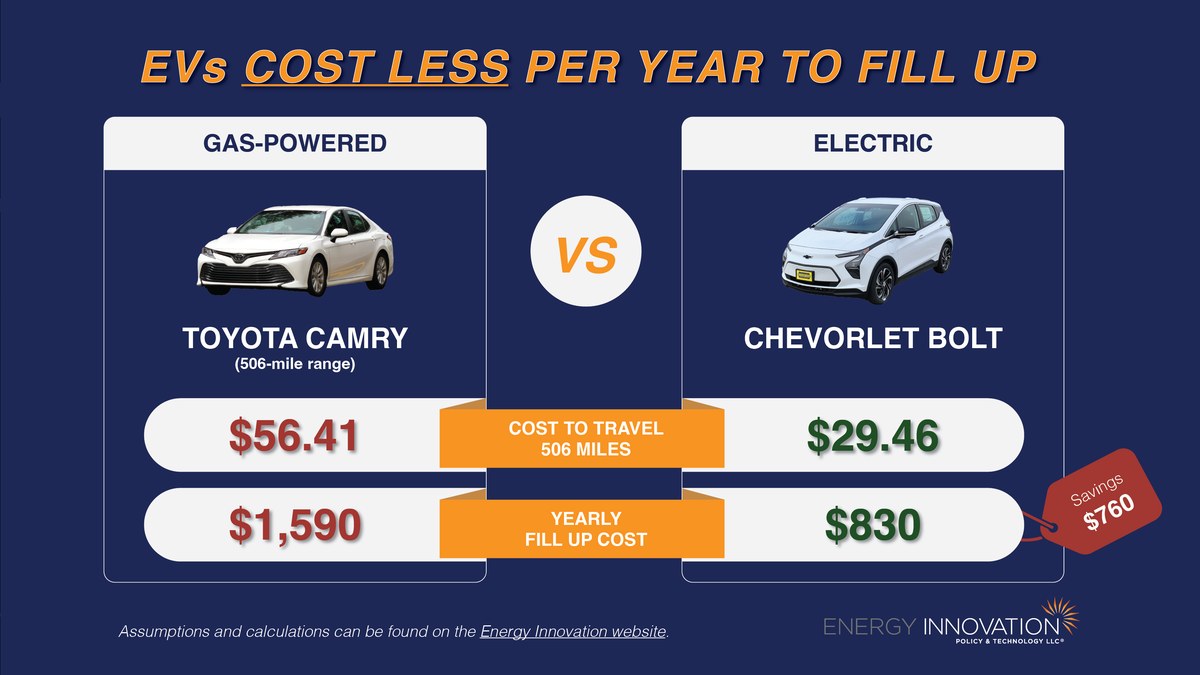
Per unit of energy, gasoline is often cheaper than residential electricity. The EV advantage comes from efficiency: an electric vehicle travels roughly three to four times farther per unit of energy than a comparable gasoline vehicle, because an electric motor converts stored energy to motion far more effectively than a combustion engine.
Example: at an illustrative $0.16 per kWh and an EV averaging 3.5 mi/kWh, energy costs about 4.6 cents per mile before charging losses. A 30 mpg gasoline car at an illustrative $3.20 per gallon costs roughly 10.7 cents per mile. These are examples, not quotes — your numbers will differ.
Off-peak and EV-specific utility rates widen the gap further, and charging at home avoids the retail margins built into public charging networks.
When Gas Can Still Be Cheaper or Competitive
Public DC fast charging changes the math. Network pricing often runs several times a residential rate, and some networks bill per minute rather than per kWh. A vehicle that charges slowly on a per-minute plan can pay a premium, and session fees, idle fees, and taxes add to the total.
Gas can also be competitive when you cannot charge at home and pay retail public rates, when winter conditions cut range and raise consumption, when you drive a very efficient hybrid, or when your region has unusually cheap gasoline and unusually expensive electricity.
None of this erases the home-charging advantage. It simply means “EV versus gas” is not one comparison — it is several.
How to Calculate Your Real EV Charging Cost per Mile
The Cost-per-Mile Formula: Electricity Rate, kWh Delivered, and Charging Losses
Step 1: Find your all-in electricity rate in dollars per kWh, including taxes and fees. Step 2: Divide that rate by your vehicle’s efficiency in miles per kWh. Step 3: Divide by charging efficiency to account for losses. The result is your cost per mile.
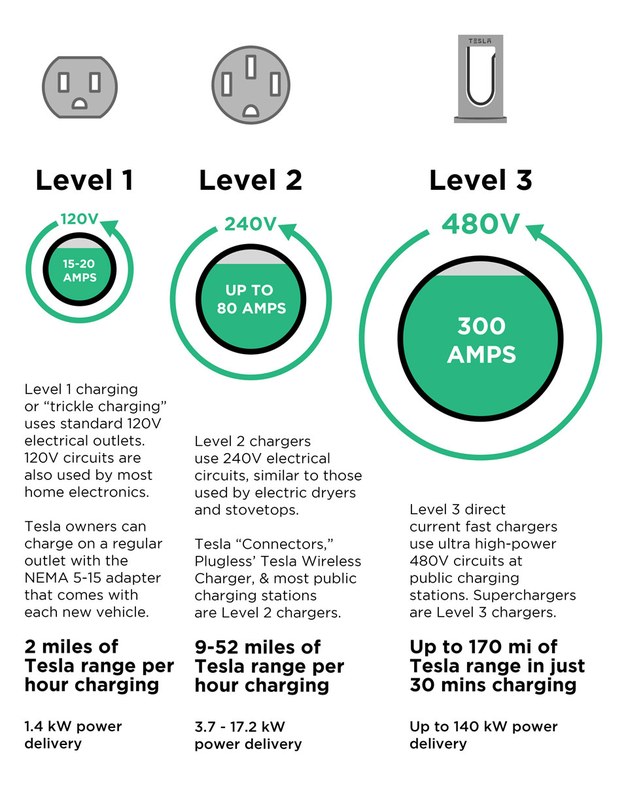
Charging losses matter because energy drawn from the wall is always more than energy stored in the battery. Level 2 AC charging commonly loses roughly 5–15 percent depending on the vehicle, EVSE, cable, temperature, and charging power. Level 1 tends to lose somewhat more, and DC fast charging losses vary by vehicle and conditions.
With a 10 percent loss assumption, roughly 55 kWh is drawn from the wall, so the illustrative cost is about $8.80. Rates, taxes, time-of-use pricing, and losses vary by utility and vehicle.
Time-of-Use Pricing and Off-Peak Savings
Many US utilities offer time-of-use plans or dedicated EV rates with a cheaper overnight window. If you can schedule charging, the off-peak rate can be substantially lower than the standard rate. Verify your utility’s current tariff sheet, because rates, windows, seasons, and enrollment rules change.
Watch for demand charges, which bill based on your peak draw rather than total energy. They are more common on commercial accounts and some EV programs, and they can dominate the bill if you charge during the wrong window.
Installation and Equipment Costs: The Upfront Side of the Equation
Home charging carries an upfront cost the per-mile math ignores: the EVSE itself, an electrician, permits and inspection, and sometimes a panel or service upgrade. Get written quotes from licensed electricians in your area and check whether your utility, state, or manufacturer offers a current incentive.
Amortized over years of driving, a home setup often pays back — but the payback depends on how much you drive and what public charging would have cost you instead.
Home Charging Equipment: What Affects Cost and Compatibility
Connector Types, Onboard Charger Limits, and EVSE Amperage/kW
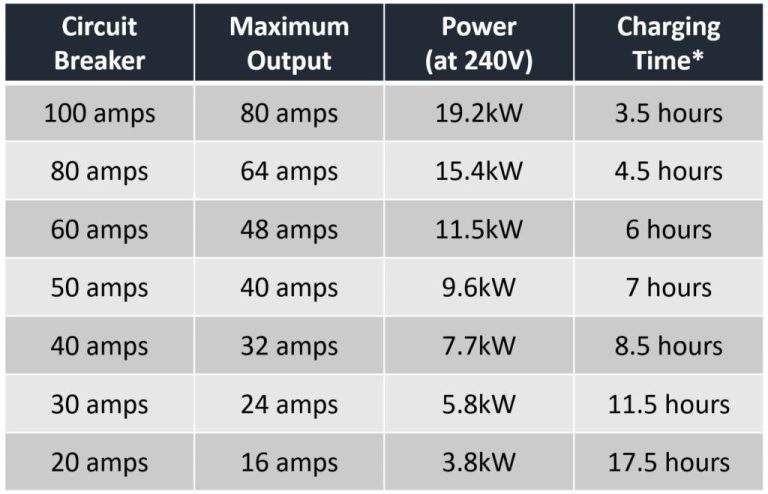
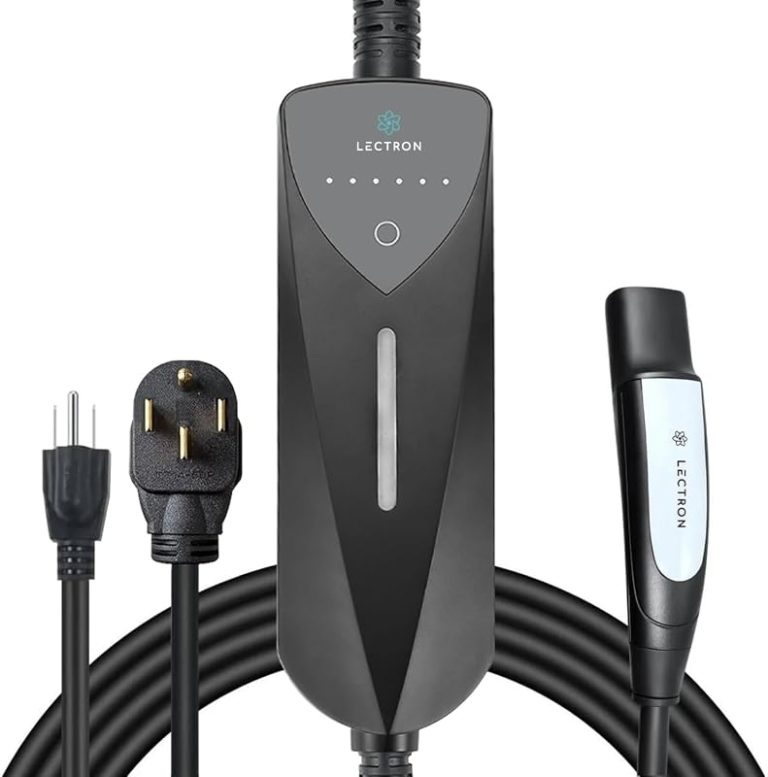
The EVSE — often called the charger — supplies AC power to the vehicle. The vehicle’s onboard charger converts AC to DC and sets the real limit. If the EVSE can deliver 48 amps but the onboard charger caps at 32 amps, the car charges at 32 amps.
Most US EVs use either a J1772 inlet or a NACS / SAE J3400 inlet for AC charging. Output in kW is approximately volts × amps ÷ 1000 at 240 V. Whether a 40-amp setup is enough for your routine depends on nightly miles and your off-peak window — see our breakdown of whether 40 amps is enough for a Level 2 EV charger.
Plug-In vs Hardwired: Circuit, Panel, and Code Implications
Uses a compatible receptacle on a dedicated circuit. Easier to move or replace, but the plug and receptacle must be rated for continuous EV duty and the installation must follow the equipment instructions.
Permanently connected, often at higher continuous current. Requires correct conductor sizing, overcurrent protection, and a professional installation that meets the code enforced in your area.
Continuous EV loads are treated differently from ordinary household loads, so conductor sizing and overcurrent protection must follow the equipment instructions and local requirements. For higher-amperage runs, review 48 amp EV charger wire size before assuming an existing circuit will work.
Cable Length, Weather Suitability, Smart Features, and Warranty Support
Cable length determines whether you can reach the charge port without an extension cord, which should not be used for EV charging. Outdoor installations need a verified enclosure or weather rating, a stated operating-temperature range, and a plan for connector storage.
Smart features — scheduling, load management, utility integration, app control — affect both cost and convenience. Confirm whether the app requires an account, whether scheduling works when the cloud service is unavailable, and how data is handled. Check the warranty term, US support channel, and safety listing on the manufacturer’s documentation or certification record.
Adapters and Public Charging: Cost, Compatibility, and Safety
Source and Destination Connectors, Adapter Direction, and AC/DC Mode
Adapters are not interchangeable. An AC adapter that lets a J1772 vehicle use a NACS Level 2 charger is a different product from a DC adapter that lets a CCS1 vehicle use a NACS DC fast charger. Direction matters: the adapter must match which side is the vehicle and which side is the charger.
Physical fit alone does not prove the charging mode or protocol is supported. Confirm AC or DC support, voltage, and current rating from the manufacturer before relying on any adapter.
Vehicle/Network Restrictions, Power Limits, and Thermal Safety
Some networks restrict adapter use, some vehicles limit charging power when an adapter is connected, and some adapters carry a maximum current or power rating. Thermal behavior matters most at high DC power, where heat buildup in the connector and cable is a real concern. Use only adapters the manufacturer or network explicitly supports for that specific combination.
Firmware/Vendor Requirements and When Adapters Make Sense
Automaker-provided adapters often require a specific vehicle software level, a network account, or both. Adapters make sense when they unlock a charger you would otherwise be unable to use. They are a poor substitute for a correctly specified home EVSE.
Battery Health and Charging Costs: What Manufacturers Actually Recommend
Manufacturer Guidance vs General Battery Patterns
There is no universal charging rule. Your owner’s manual is the authority for your vehicle. Some manufacturers recommend a daily charge limit and a different limit before long trips; others publish different guidance for LFP versus nickel-based chemistries.
Temperature, State of Charge, and Charging Power
Charging power tapers as the battery fills and as temperatures move outside a comfortable band. Cold batteries accept less power, and very hot batteries may be actively cooled before charging begins. That taper is normal and is part of why the last portion of a session takes longer.
DC Fast Charging Context and Chemistry/Thermal Management
Frequent DC fast charging is a stressor, but how much depends on chemistry, thermal management, pack size, and the charging curve. Vehicles with active liquid cooling and generous buffers generally handle it better than older air-cooled designs.
Convenience Trade-Offs vs Battery Longevity
For most owners, the practical approach is to follow the manual, avoid leaving the pack at very low or very high state of charge for long periods in extreme heat, and use DC fast charging when a trip requires it rather than avoiding it entirely.
Range, Efficiency, and the Real Cost per Mile
Mi/kWh and Wh/mi: The Numbers That Matter
Efficiency is the bridge between your electricity rate and your cost per mile. US EVs are commonly rated between roughly 2.5 and 4.5 mi/kWh, which is about 400 to 222 Wh/mi. Your real number will be lower than the label in winter and at highway speed.
Speed, Weather, HVAC, Elevation, Payload, Tires, and Battery Temperature
Aerodynamic drag rises with the square of speed, so 75 mph costs noticeably more energy per mile than 55 mph. Cold weather increases rolling and internal resistance and adds cabin heating load; hot weather adds cooling load. Elevation gain, roof racks, trailer loads, underinflated tires, and a cold battery all push consumption up.
Charging Losses and How They Change the Math
Losses occur in the onboard charger, the EVSE, the cable, and the battery itself, and they grow at low temperatures and low power. Ignoring them makes your cost-per-mile estimate optimistic, sometimes by more than a cent per mile.
Side-by-Side: EV Charging vs Gas by Driving Scenario
Commuter With Home Charging
This is the strongest case for an EV. Overnight Level 2 charging on an off-peak or EV rate usually produces the lowest cost per mile of any scenario, and the upfront installation cost amortizes over regular driving.
Apartment Dweller Without Home Charging
Without a dedicated outlet, you depend on public Level 2, workplace, or DC fast charging. Costs vary widely and can approach or exceed gasoline in some markets, especially where per-minute pricing or session fees apply. This is the scenario where a hybrid can still be the more economical choice.
Road-Tripper Using DC Fast Charging
DC fast charging is priced for speed and convenience. On a long trip, energy cost per mile can land close to gasoline, and cold weather or a slow charging curve on a per-minute plan can push it higher. The trade-off is time and convenience as much as dollars.
| Scenario | Typical cost position | What drives it |
|---|---|---|
| Home charging commuter | Usually lowest cost per mile | Residential or EV rate, off-peak scheduling, high EV efficiency |
| No home charging | Competitive to higher than gas | Retail public rates, session and idle fees, per-minute billing |
| DC fast charging road trip | Often close to gasoline | Network pricing model, charging curve, weather, HVAC load |
Electrical Requirements, Permits, and Installation Planning
What the Product Manual and Local Code Say
Manufacturer instructions and the electrical code enforced in your jurisdiction govern the installation. Adopted code editions, permit requirements, inspection processes, and utility interconnection rules vary by state and often by municipality, so there is no single national answer.
Panel Capacity, Circuit Sizing, and When to Call an Electrician
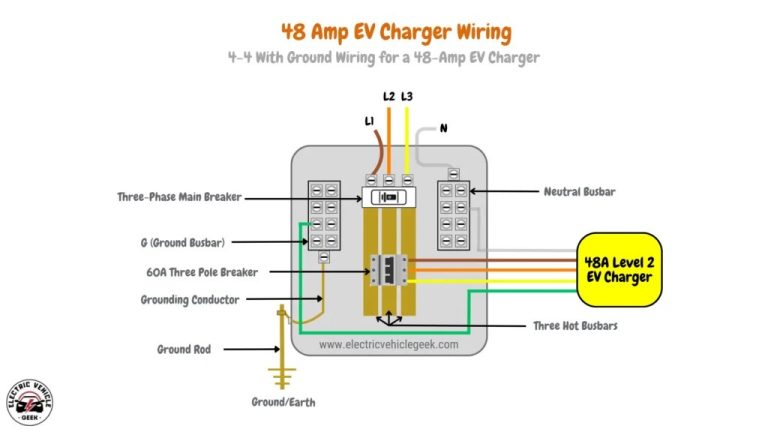
A load calculation determines whether your electrical panel can support a new EV circuit. Circuit sizing must match the EVSE’s rated continuous current and the manufacturer’s instructions. If the panel is full, a service upgrade or an energy-management device may be required. For 48-amp equipment, review whether a 48 amp EV charger needs a 60 amp circuit before planning the run, and confirm the final design with a licensed electrician.
- Best for: Drivers who can charge overnight at home on a residential or EV rate — this is where EV charging beats gasoline most clearly.
- Think twice if: You depend entirely on public DC fast charging, where per-minute billing, session fees, and cold weather can erase the cost advantage.
- Next step: Find your all-in electricity rate, your vehicle’s real mi/kWh, and your charging-loss assumption, then calculate cost per mile before comparing it to your current fuel cost.
Frequently Asked Questions
For most drivers who charge at home, yes — cost per mile is usually lower because an EV travels roughly three to four times farther per unit of energy than a comparable gasoline car. The advantage shrinks or disappears if you rely on public DC fast charging, especially on per-minute pricing plans or in cold weather.
Take your all-in electricity rate in dollars per kWh, divide it by your vehicle’s efficiency in miles per kWh, then divide by your charging efficiency to account for losses. For example, $0.16 per kWh divided by 3.5 mi/kWh is about 4.6 cents per mile before losses.
Public networks price for speed, real estate, equipment, demand charges, and maintenance, so rates are typically several times a residential rate. Some networks also bill per minute rather than per kWh, which penalizes vehicles that charge slowly or taper early.
They do, though usually by a modest amount. Level 2 AC charging commonly loses roughly 5–15 percent of the energy drawn from the wall, and Level 1 tends to lose more. Ignoring losses makes your cost-per-mile estimate optimistic.
No. Adapters are specific to connector type and to AC or DC charging mode, and direction matters — the adapter must match which side is the vehicle and which side is the charger. Some networks restrict adapter use and some vehicles limit power when one is connected, so verify support before relying on it.
Not directly, because home electricity is billed per kWh rather than per minute. Charging speed affects convenience and whether you finish within an off-peak window, which can indirectly change your effective rate on a time-of-use plan.