EV Charging Cost per Mile: Home vs. Public Charging
Home charging almost always produces the lowest EV charging cost per mile because you pay your utility’s retail rate rather than a network’s markup. Public DC fast charging is the most expensive option, and session, idle, and per-minute fees can push the real cost well above the posted rate.
EV charging cost per mile is usually lowest at home, where you pay your utility’s retail electricity rate, and highest at DC fast chargers, where networks price in speed, equipment, and location. The exact number depends on your electricity rate, your vehicle’s efficiency, charging losses, and the session or idle fees public networks add on top.
- Cost: Cost per mile equals your electricity rate multiplied by your vehicle’s kWh per mile.
- Home vs. public: Home charging is typically cheapest; DC fast charging is typically the most expensive.
- Efficiency: mi/kWh is the denominator — a less efficient EV costs more per mile at.
- Safety: Verify adapter direction, AC/DC support, and manufacturer approval before using any adapter.
The Short Answer: EV Charging Cost per Mile at Home vs. Public
For most US drivers who can charge at home, home charging is the cheapest way to move an EV. Public DC fast charging is typically the most expensive, and public Level 2 sits somewhere in between.
Example arithmetic, using round numbers: at $0.15 per kWh and a vehicle that uses 0.30 kWh per mile, energy costs roughly $0.045 per mile before losses. At $0.50 per kWh — a plausible DC fast charging price — the same vehicle costs roughly $0.15 per mile. Those are illustrations, not quotes; electricity rates and network pricing change by region and by plan.
The practical takeaway: compare cost per mile, not cost per session. A $12 fast-charging stop and a $12 home charging week can represent very different amounts of driving.
How to Calculate EV Charging Cost per Mile: Formula and Assumptions
The Basic Formula: Electricity Rate × kWh per Mile
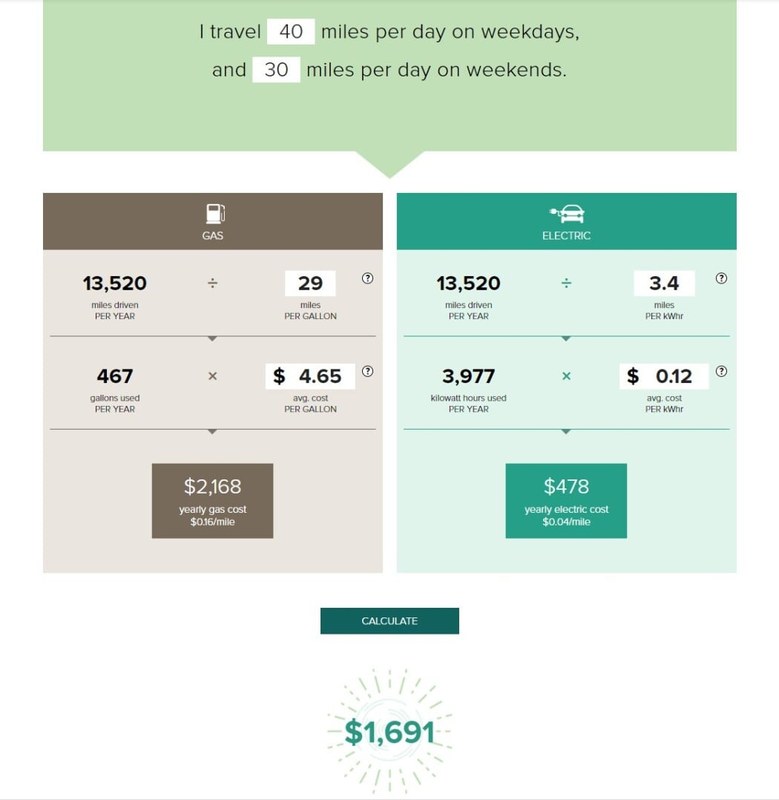
Cost per mile = your electricity price per kWh × the kWh your vehicle uses per mile. If your EV uses 0.30 kWh per mile (the same as 3.3 mi/kWh) and you pay $0.15 per kWh, the energy cost is about $0.045 per mile.
To get kWh per mile, divide 1 by your vehicle’s mi/kWh figure. A car rated at 4 mi/kWh uses 0.25 kWh per mile; one at 2.5 mi/kWh uses 0.40 kWh per mile.
Accounting for Charging Losses and Time-of-Use Rates
Not every kWh you buy reaches the battery. AC charging losses — heat in the onboard charger, cable, and battery — mean you may pay for slightly more energy than the pack stores. The difference varies by vehicle, amperage, and temperature, so treat published efficiency figures as a baseline rather than a guarantee.
Time-of-use plans can change the math more than losses do. If off-peak power costs meaningfully less than on-peak power, scheduling charging overnight can cut your per-mile cost substantially. Check your utility’s current tariff sheet for actual rates, taxes, and fees.
Separating Equipment and Installation Costs from Per-Mile Costs
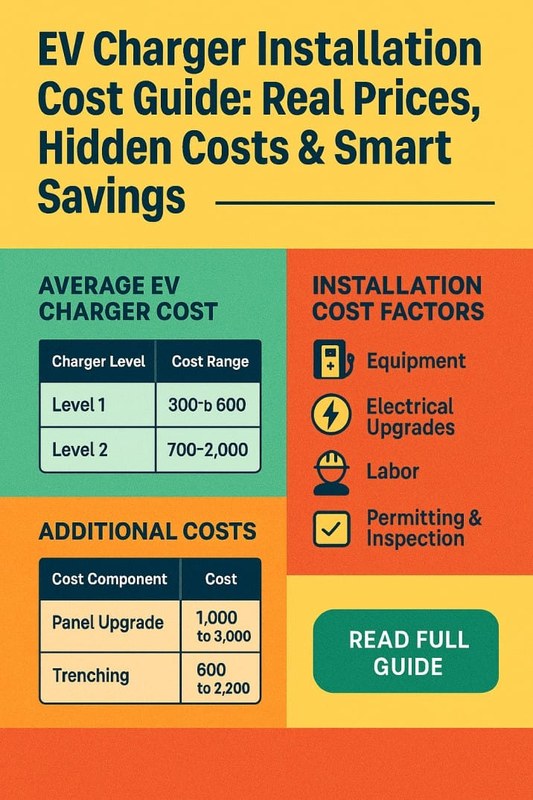
An EVSE and its installation are one-time costs, not per-mile costs. A $600 charger plus a $1,200 install is roughly $1,800 up front; spread over 60,000 miles, that’s about $0.03 per mile on top of electricity. Include it in ownership math, but don’t confuse it with the energy rate.
Assumptions matter more than the headline rate. Taxes, time-of-use pricing, demand charges, and charging losses vary by utility, vehicle, and temperature.
Home EV Charging Costs: Rates, Equipment, and Installation
Level 1 vs. Level 2 Home Charging: Speed and Cost per Mile
Level 1 uses a standard household outlet and adds range slowly — often only a few miles per hour. Level 2 uses a dedicated 240 V circuit and can add tens of miles per hour depending on amperage and the vehicle’s onboard charger.
Cost per mile is essentially the same for both, because both use the same household electricity. The difference is convenience and how much of your driving you can cover overnight.
EVSE Amperage, Onboard Charger Limits, and Plug-in vs. Hardwired
A higher-amperage EVSE only helps if your vehicle’s onboard AC charger accepts that current. A 48 A EVSE on a car limited to 32 A AC charging will not charge faster. Understanding how many kW a 48 amp Level 2 EV charger delivers helps you match equipment to the vehicle rather than overbuying capacity.
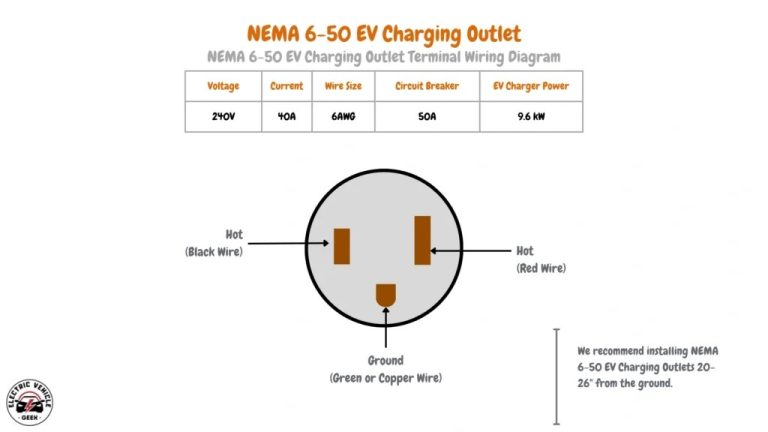
Plug-in units use a compatible receptacle and can be moved; hardwired units are permanently connected and often support higher continuous current. Both approaches can deliver the same cost per mile — the wiring method doesn’t change your utility rate.
Circuit, Panel, and Permit Considerations for Home Installation
Continuous EV charging loads are treated differently from short-duration appliance loads, and the circuit must be sized for the EVSE’s setting. Whether a 48 A unit needs a 60 A circuit is a common question, and the answer depends on the equipment instructions and applicable code — see our breakdown of whether a 48 amp EV charger needs a 60 amp circuit.
Panel capacity, available breaker spaces, wire routing, and permit requirements vary by home and jurisdiction. A qualified electrician should confirm the service can support the load before any work begins.
Smart Features, Cable Length, Weather Suitability, and Warranty
Smart EVSEs add scheduling, usage tracking, and sometimes utility demand-response integration. Scheduling matters for cost if your utility offers time-of-use rates. Check what happens if the app or cloud service is unavailable, and whether schedules persist locally.
Cable length affects where you can park, weather ratings determine whether outdoor mounting is appropriate, and warranty terms vary widely. Verify each of these in the manufacturer’s documentation rather than from listing photos.
Public EV Charging Costs: Networks, Pricing Models, and Membership
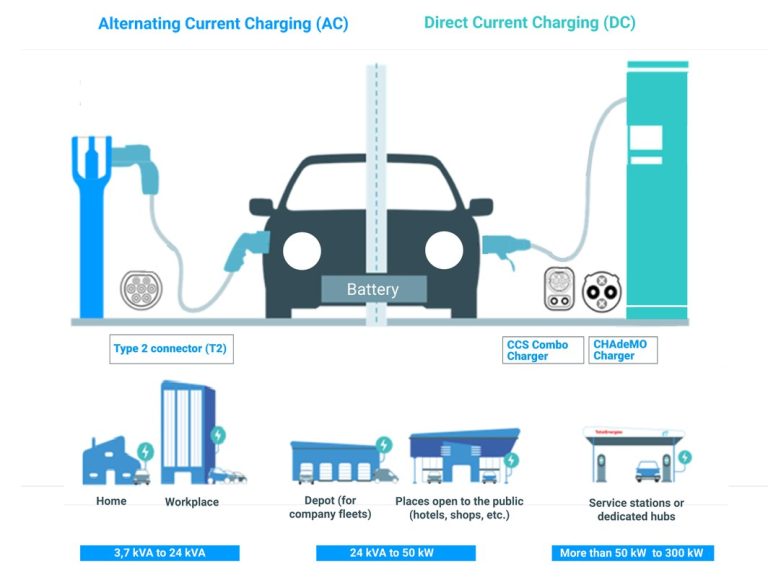
DC Fast Charging vs. Public Level 2: Cost per kWh and per Minute
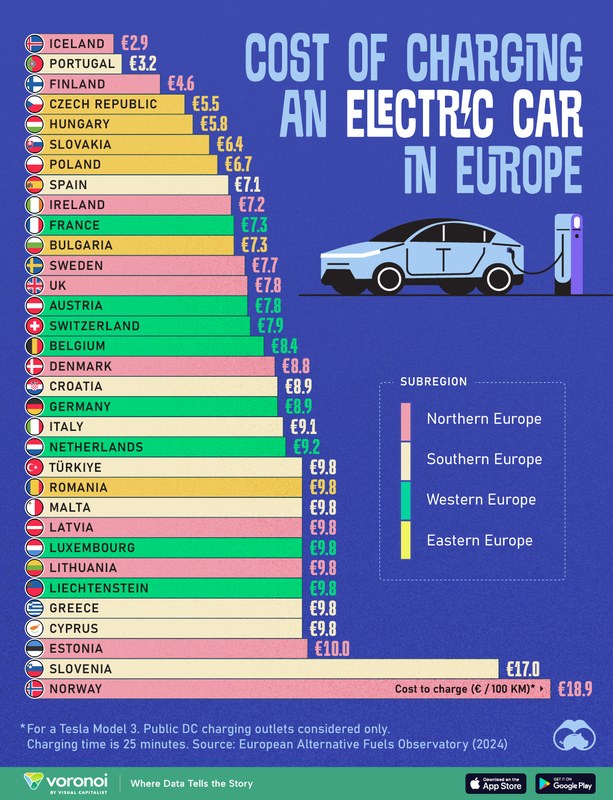
DC fast charging is the fastest option and generally the most expensive per kWh. Some networks bill per kWh where state rules allow it; others bill per minute, which penalizes vehicles that charge slowly or taper early.
Public Level 2 is slower but often cheaper per kWh, and it’s frequently the better choice for destinations where you’ll park for hours anyway.
Session Fees, Idle Fees, and Membership Discounts
Many networks add a flat session fee, and most charge idle fees once charging completes and you remain plugged in. Those fees can raise your effective cost per mile well above the posted rate.
Membership plans typically trade a monthly fee for a lower per-kWh rate. Run the numbers against your actual monthly public charging volume before subscribing.
Adapters and Connectors: What You Need for Public Charging
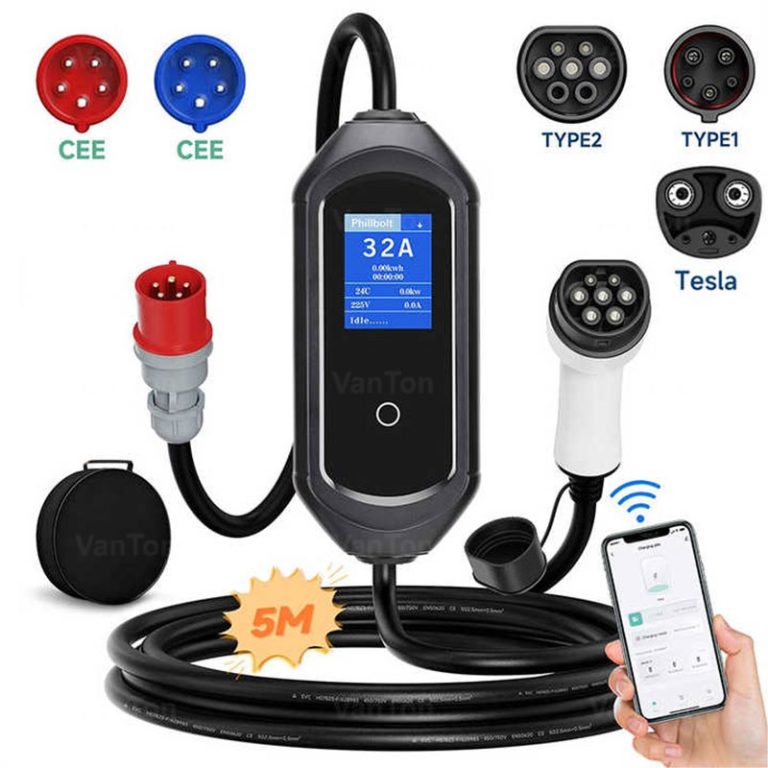
Connector standards have been shifting in the US, and the correct adapter depends on both the vehicle inlet and the charger’s cable. Verify compatibility for your specific vehicle model year before relying on any adapter.
Side-by-Side Comparison: Home vs. Public Charging Cost per Mile
| Criteria | Home charging | Public charging |
|---|---|---|
| Cost per kWh | Your utility’s retail rate, including taxes and fees | Network rate plus session, idle, and possibly parking fees |
| Cost per mile | Usually the lowest available | Higher, especially DC fast charging |
| Speed | Level 1 slow; Level 2 limited by onboard charger | Level 2 moderate; DC fast charging much faster |
| Convenience | Plug in at home, no detours | Requires locating, reaching, and often waiting for a stall |
| Availability | Depends on your parking situation | Depends on network coverage and stall uptime |
Criteria: Cost per kWh, Cost per Mile, Speed, Convenience, Availability
These five criteria rarely point the same direction. Home charging wins on cost and convenience but requires a dedicated parking spot and a viable circuit. Public charging wins on availability away from home but usually costs more per mile.
Who Should Rely on Home Charging vs. Public Charging
- Home charging: drivers with off-street parking and a workable circuit
- Public charging: renters, apartment dwellers, and road-trip drivers
- Home charging: no dedicated parking or insufficient panel capacity
- Public charging: daily commuting if you want the lowest cost per mile
Factors That Change Your Cost per Mile: Efficiency, Weather, and Driving
Miles per kWh (mi/kWh) and Wh/mi: The Efficiency Baseline
Efficiency is the denominator in every cost-per-mile calculation. A vehicle rated at 4 mi/kWh uses 250 Wh per mile; one at 2.5 mi/kWh uses 400 Wh per mile. At the same electricity rate, the second car costs 60% more per mile to drive.
Speed, Weather, HVAC, Elevation, Payload, and Tires
Highway speeds increase aerodynamic drag, cold temperatures reduce usable range, and cabin heating or cooling draws energy directly from the pack. Elevation gain, heavy payloads, and underinflated or high-rolling-resistance tires all push consumption upward.
Every one of those factors raises kWh per mile, which raises cost per mile at any electricity rate.
Battery Temperature and Charging Losses
A cold pack accepts charge more slowly and loses more energy to internal resistance and conditioning. That means you may pay for more kWh than you store, particularly in winter. Manufacturer guidance and your vehicle’s thermal management system determine how much this affects you.
Battery Health and Charging Costs: Manufacturer Guidance vs. General Patterns
State of Charge, Charging Power, and DC Fast Charging Context
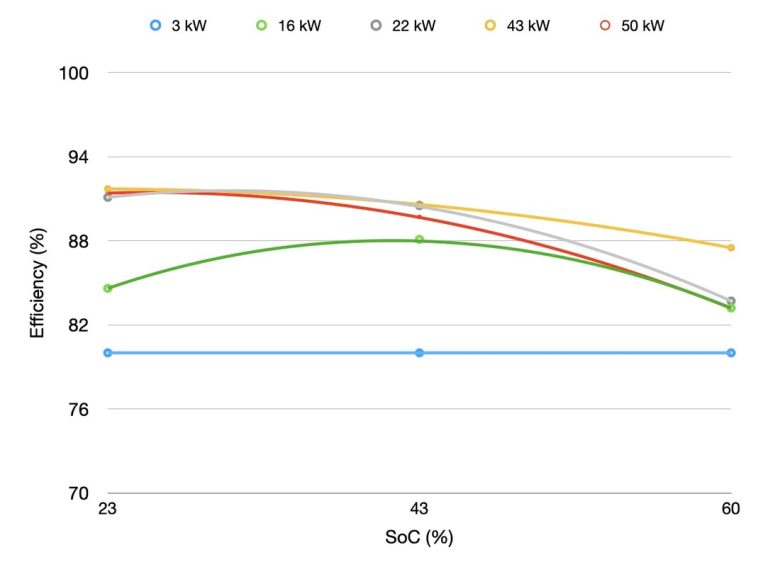
Charging power typically tapers as state of charge rises, so the last portion of a DC session is slower and sometimes billed at the same per-minute rate. That taper is one reason cost per mile can climb during a fast-charging stop.
Follow your manufacturer’s guidance on routine charging and DC fast charging frequency. There is no single universal state-of-charge rule that applies to every chemistry and pack design.
Temperature, Chemistry, and Thermal Management
Battery chemistry and whether the pack is actively cooled or heated strongly influence how charging behavior changes with temperature. Vehicles with robust thermal management generally tolerate a wider range of conditions, but manufacturer documentation remains the authority for your specific model.
Convenience Trade-offs and Long-Term Cost Implications
Slower charging is often cheaper per mile, but it costs time. The right balance depends on whether your priority is minimizing energy spend or minimizing downtime — and on whether you have home charging available at all.
Adapters and Connectors: How They Affect Compatibility and Cost
Source and Destination Connectors: AC vs. DC and Adapter Direction
Adapters are directional. An adapter that lets a vehicle with one inlet accept a charger cable with a different connector is not the same as one that does the reverse. AC and DC adapters are separate categories, and a physical fit does not prove the charging mode is supported.
Important: Physical fit alone does not prove every AC or DC charging mode is supported.
Vehicle and Network Restrictions, Power Limits, and Safety
Some vehicle manufacturers restrict adapter use to approved hardware, and some networks restrict which vehicles or adapters may connect. Adapters can also carry power limits below what the charger or vehicle could otherwise deliver.
Thermal behavior matters: an undersized or unapproved adapter under sustained current is a safety concern. Use only hardware the vehicle manufacturer or network explicitly supports.
Firmware and Vendor Requirements for Adapter Use
Adapter compatibility can depend on vehicle firmware versions and network-side authentication. Requirements change, so confirm current support with the manufacturer and the charging network before purchasing an adapter.
When Home Charging Isn’t Possible: Public Charging Strategies and Cost Control
Using Apps, Off-Peak Pricing, and Membership Plans
Network apps typically show live pricing, availability, and member versus guest rates. Where a network offers off-peak or time-based pricing, shifting sessions can reduce cost per mile. Compare the membership fee against your actual monthly kWh before committing.
Balancing DC Fast Charging and Public Level 2 for Lower Costs
Use DC fast charging for time-sensitive needs and public Level 2 for longer parking sessions where the per-kWh rate is lower. Combining the two usually produces a lower blended cost per mile than relying on fast charging alone.
Also account for idle fees: moving your car promptly after charging completes is one of the simplest ways to avoid paying for energy you never received.
Frequently Asked Questions
Multiply your electricity price per kWh by the kWh your vehicle uses per mile. If you pay $0.15 per kWh and the car uses 0.30 kWh per mile, the energy cost is about $0.045 per mile before charging losses. Convert mi/kWh to kWh per mile by dividing 1 by the mi/kWh figure.
Usually, but not universally. Public Level 2 at a low per-kWh rate can occasionally beat a high home rate, especially in regions with expensive residential electricity. DC fast charging is almost always the most expensive option per mile once session and idle fees are included.
Yes. Not all the energy you pay for reaches the battery — some is lost as heat in the onboard charger, cable, and pack. The amount varies by vehicle, charging amperage, and temperature, so published efficiency figures should be treated as a baseline rather than an exact result.
No. Amperage affects charging speed, not the price of a kWh. A faster charger may reduce charging losses slightly in some conditions, but the dominant factor in cost per mile is your electricity rate and your vehicle’s efficiency.
It depends on your vehicle inlet and the charger’s cable. Adapters are directional and split into AC and DC categories, so a physical fit does not prove the charging mode is supported. Verify compatibility with your vehicle manufacturer and the charging network before relying on any adapter.
Use public Level 2 for long parking sessions instead of DC fast charging, compare membership pricing against your actual usage, charge during off-peak windows where offered, and move your car promptly when charging finishes to avoid idle fees.