Can a Tesla Use a J1772 Charger? Yes, With an Adapter
Yes — a Tesla with a NACS charge port can use a J1772 station by adding a J1772-to-NACS adapter, but only for Level 1 and Level 2 AC charging. Confirm the adapter’s safety listing and amperage rating, and remember your car’s onboard charger sets the real speed ceiling.
Can a Tesla use a J1772 charger? Yes — any Tesla sold in North America with an NACS (SAE J3400) charge port can accept AC power from a J1772 EVSE once you add a J1772-to-NACS adapter. The limits are specific: AC Level 1 and Level 2 only, never DC fast charging, and the adapter has to be rated and listed for the current involved.
- Compatibility: A J1772-to-NACS adapter enables AC charging only; J1772 cannot deliver DC fast charging.
- Performance: Actual speed is the lower of the EVSE output and your Tesla’s onboard AC.
- Safety: Use an adapter with a verified listing mark and a current rating at or.
- Cost: Energy cost is identical to NACS at the same amperage; the adapter or EVSE.
Can a Tesla Use a J1772 Charger? The Short Answer
This is one of the most common connector questions from new Tesla owners, and the answer is simpler than the acronym soup suggests. A J1772 station is an AC charger. Your Tesla’s port is a NACS inlet. An adapter bridges the physical difference, and the car handles the rest.
Yes — With a J1772-to-NACS Adapter, on AC Level 2 Only
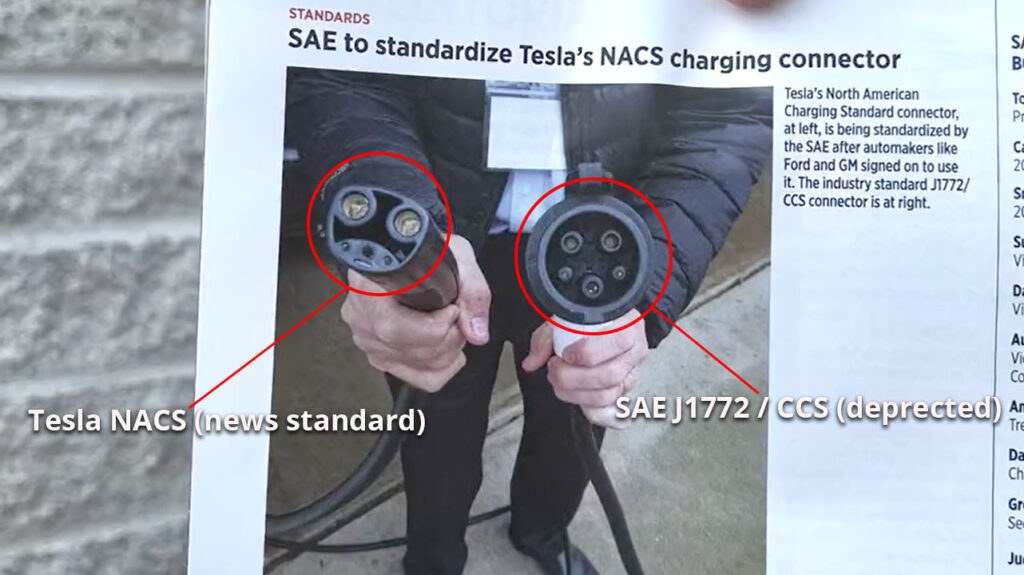
Tesla’s North American vehicles use the NACS (SAE J3400) connector, which carries both AC and DC through the same inlet. J1772 is a five-pin AC connector used by most non-Tesla Level 1 and Level 2 equipment in the US. A J1772-to-NACS adapter lets the J1772 handle plug into the Tesla inlet.
What you cannot do is DC fast charge through a J1772 handle. J1772 has no DC pins, so there is no path for high-voltage DC. DC fast charging on a Tesla from a non-Tesla station requires a CCS1-to-NACS adapter (for CCS1 sites) or a native NACS connection at a Supercharger or NACS-equipped site.
What the Adapter Physically Does: Source Connector, Destination Connector, and Direction
Adapter direction matters. A J1772-to-NACS adapter has a J1772 socket on one end (the source, matching the station’s cable) and a NACS plug on the other (the destination, matching your car). Adapters built the other way — NACS socket to J1772 plug — exist for non-Tesla cars using Tesla destination chargers and will not fit this use case.
Most adapters in this category are passive pass-through devices with no electronics. They carry the pilot signal, ground, and AC conductors straight through. That is why build quality, contact plating, and thermal rating matter more than any “smart” feature.
Which Teslas Need the Adapter — and Which Situations Don’t
Every Tesla with a NACS inlet in North America needs the adapter to use a J1772 station. That covers Model S, Model 3, Model X, Model Y, and Cybertruck. Tesla has historically included a J1772 adapter with new vehicles but has changed bundled accessories over time, so check what is currently included with your order or in your glovebox before buying a second one.
You do not need an adapter at a Tesla Wall Connector, a Tesla Destination Charger, or a Supercharger. You also do not need one at a public station that already offers a NACS cable. You do need one at most ChargePoint, Blink, SemaConnect, and older municipal J1772 posts, plus most workplace and apartment Level 2 installations.
How the J1772 Adapter Works With Tesla’s Charging Port
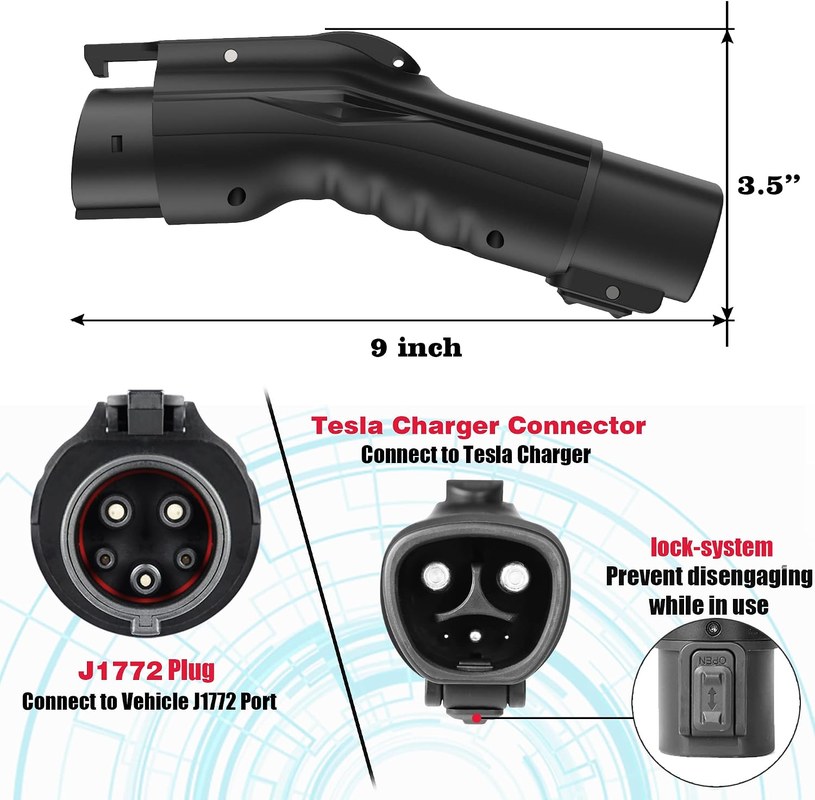
Once the adapter is seated and latched, the car and the EVSE run the same handshake they would with any other Level 2 connection. The EVSE signals available current through the pilot line, and the Tesla’s onboard charger draws up to whichever limit is lower.
AC vs DC: Why J1772 Cannot DC Fast Charge a Tesla
Level 1 and Level 2 charging sends AC power to the vehicle, where an onboard charger converts it to DC for the battery. DC fast charging skips that step and feeds DC directly to the pack, which is why DC connectors are physically larger and carry dedicated DC pins.
J1772 was designed as an AC connector. Even the highest-output J1772 station delivers AC, so the ceiling is set by your car’s onboard charger, not the station’s nameplate. That is the single most misunderstood point in this topic.
Power Ceiling: J1772 EVSE Amperage vs. Your Tesla’s Onboard Charger Limit
Two numbers govern your actual charge rate: the EVSE’s advertised output and the vehicle’s onboard AC charger rating. Whichever is lower wins. A 48A J1772 station connected to a Tesla with a 7.7 kW (32A) onboard charger will deliver roughly 32A, not 48A.
Common J1772 output tiers are 16A, 32A, 40A, and 48A at 240V. If you want to dig into what a Tesla will actually accept at the top of that range, our breakdown of whether a Tesla can charge at 48 amps covers the trim-by-trim picture.
Illustrative values only. The EVSE setting, circuit capacity, and the vehicle’s onboard charger limit all cap the real number.
Thermal, Safety, and Certification Checks Before You Buy an Adapter
Adapters carry full charging current through small contact surfaces, so heat is the real risk. Look for a listing mark from a recognized testing laboratory on the adapter itself, not just on the packaging or the product page. Verify the listing through the manufacturer or the certifier’s public record rather than trusting marketing language.
Avoid unbranded adapters with no listing, no amperage rating, and no temperature guidance. A passive adapter that overheats at the pins can damage the vehicle inlet or the station handle, and that repair is far more expensive than a properly listed adapter.
Important: Physical fit alone does not prove every AC or DC charging mode is supported.
Firmware, Vendor, and Network Requirements That Still Apply
The adapter solves the mechanical connection, not the business logic. Many public J1772 stations require an app account, an RFID card, or a session activation before any power flows. Some workplace and apartment stations are restricted to specific user groups.
Your Tesla also needs to be awake and set to charge. If scheduled charging or a charge limit is active, the car may accept the plug but delay or refuse the session — which looks like an adapter failure when it is not.
Charging Speed to Expect: Matching J1772 Output to Your Tesla
Speed is where expectations usually need adjusting. A J1772 connection is a Level 1 or Level 2 session, so think in miles added per hour, not in Supercharger minutes.
Onboard Charger Ratings Across Tesla Model Years and Trims
Tesla’s published specifications for many current Model 3, Model Y, Model S, Model X, and Cybertruck configurations list an 11.5 kW onboard AC charger on higher trims, with some Standard Range configurations listed at 7.7 kW. Older Model S and Model X vehicles varied widely by year and option, including 40A, 48A, and higher dual-charger setups.
Because this varies by VIN and configuration, confirm your specific vehicle’s onboard charger rating in the owner’s manual or Tesla’s spec page before assuming a 48A station will run at full output.
Typical J1772 Output Levels: 16A, 32A, 40A, and 48A Compared
At 240V, those tiers work out to roughly 3.8 kW, 7.7 kW, 9.6 kW, and 11.5 kW. The jump from 16A to 32A roughly doubles your hourly range gain. The jump from 40A to 48A is smaller and only helps if your car’s onboard charger can accept more than 40A.
Level 1 J1772 (120V) vs. Level 2 J1772 (240V): Realistic Miles Added Per Hour
A 120V Level 1 connection at 12A delivers about 1.4 kW, which typically adds a handful of miles per hour — enough for a short commute but not for a full overnight recovery on a large pack. A 240V Level 2 connection at 32A to 48A typically adds roughly 25 to 44 miles per hour depending on the vehicle and conditions.
Those figures are estimates. Cold battery packs, cabin preconditioning, and high HVAC loads all reduce the effective rate.
Why a Bigger EVSE Doesn’t Always Mean Faster Charging
Buying a 48A J1772 charger for a car with a 32A onboard charger does not make charging faster. It just means the EVSE runs below its capacity. Matching the EVSE to the vehicle and the circuit is cheaper and avoids unnecessary electrical work.
J1772 Adapter vs. Tesla Wall Connector vs. Public NACS Charging
These three options are not competitors so much as different tools for different situations.
| Option | Speed ceiling | Who it fits |
|---|---|---|
| J1772 EVSE + adapter | Vehicle onboard charger limit | Owners with existing J1772 equipment, renters, mixed-EV households |
| Tesla Wall Connector | Vehicle onboard charger limit | Tesla-only households wanting native plug and integrated scheduling |
| Public NACS / Supercharger | AC or DC depending on site | Road trips and drivers without home charging |
Criteria Compared Side by Side: Speed, Cost, Portability, Convenience, and Availability
Speed is essentially identical between a J1772 EVSE and a Tesla Wall Connector when both are sized to the same amperage and the car accepts it. Cost favors whichever equipment you already own. Portability favors the adapter, which fits in a glovebox. Convenience favors the native NACS connector, which needs no extra part. Availability favors J1772 in the wild, since it is the dominant public Level 2 standard in the US.
Who Each Option Actually Fits
The adapter fits drivers who charge at work, at apartments, at municipal lots, or at a relative’s house with a J1772 unit. The Wall Connector fits homeowners who want a permanent, tidy installation and only charge Teslas. Public NACS fits anyone without reliable home charging.
When Carrying an Adapter Beats Installing Anything at All
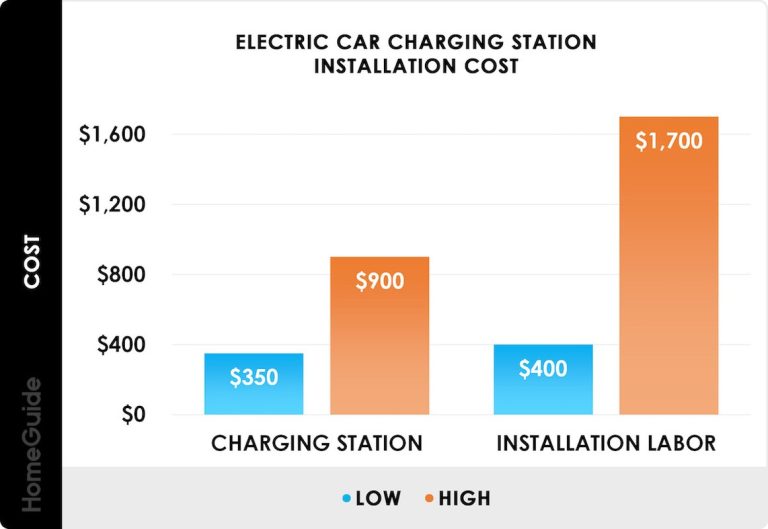
If you rent, move frequently, or rely mostly on public and workplace charging, a listed adapter in the trunk solves more problems than a $1,000-plus home installation. It is also the cheapest way to charge at a friend’s or family member’s existing Level 2 setup.
Installing a J1772 Home Charger for a Tesla: Electrical and Practical Considerations
If you are adding a J1772 EVSE at home specifically for a Tesla, you are choosing the adapter route permanently. That is a legitimate setup, but it adds one more connection point to every session.
Plug-In vs. Hardwired J1772 EVSE: Trade-Offs and Limitations
Uses a compatible receptacle, which means the plug and receptacle must be rated for the continuous load. Portable and easier to relocate, but adds a connection point and typically caps at lower amperage.
Wired directly to the circuit, which is how the highest-amperage J1772 units are typically installed. Requires a qualified electrician and generally delivers the most reliable high-current performance.
Circuit, Panel Capacity, and Permit Rules — Always Per the Manual and Local Code
EVSE circuits are treated as continuous loads, which is why a 48A charger generally requires a 60A branch circuit. Our article on whether a 48-amp EV charger needs a 60-amp circuit walks through that sizing logic.
Cable Length, Mounting Position, and Weather Suitability
Measure the actual parking position before ordering. A cable that reaches in summer may not reach when the car is parked differently in winter. For outdoor mounting, verify the enclosure’s weather rating, its operating-temperature range, and the manufacturer’s guidance on connector storage — do not infer outdoor suitability from appearance.
Smart Features, Load Management, and Warranty/Support to Verify
Smart J1772 units often require an app account, Wi-Fi or cellular connectivity, and firmware updates. Ask what happens if the cloud service is discontinued and whether scheduled charging still works locally. For load management, confirm the specific hardware and utility approval path. On warranty, verify the US term, whether it covers the full unit or only parts, and whether professional installation is required to keep coverage valid.
What It Costs to Charge a Tesla on a J1772 Charger
Charging cost has nothing to do with the connector type. A J1772 session and a NACS session at the same amperage draw the same energy at the same price.
The Formula: kWh Delivered × Electricity Rate ÷ Charging Efficiency
Energy added to the battery is measured in kWh. Your utility bills you for energy drawn from the grid. Because Level 2 charging loses a few percent to conversion and thermal management, grid energy is slightly higher than battery energy. Divide battery kWh by charging efficiency to estimate grid kWh, then multiply by your rate.
Separating Energy Cost From Equipment and Installation Cost
Energy cost is ongoing and small. Equipment and installation cost is a one-time expense that can range from the price of an adapter to a full circuit run with permits. Do not blend the two when comparing options — a $50 adapter and a $1,500 installation are not the same kind of decision.
Time-of-Use Pricing and Off-Peak Scheduling
Many US utilities offer time-of-use rates with cheaper overnight windows. Tesla’s scheduled charging and most smart J1772 EVSEs can be set to start in that window. Verify your current rate plan and any demand charges before assuming overnight charging is cheapest.
Worked Example With Stated Assumptions
Illustrative example only. Rates, taxes, fees, time-of-use pricing, and losses vary by utility and conditions.
Battery Health: Tesla’s Guidance vs. General Level 2 Patterns
Level 2 charging is the gentlest routine option for most Tesla packs, but that does not mean every owner should follow the same schedule.
State of Charge Targets, Temperature, and Charging Power
Tesla’s in-vehicle guidance and owner’s manual set the recommended daily charge limit for your specific model, and it can differ between battery chemistries and trim levels. Follow the vehicle’s own guidance rather than a universal percentage from a forum post.
Where DC Fast Charging Fits — and Why Level 2 Is the Default
DC fast charging exists for road trips and time-constrained situations. For daily charging, Level 1 or Level 2 is the practical default because it is slower, gentler, and usually cheaper per kWh at home.
Chemistry and Thermal Management Differences Across Tesla Packs
Tesla has used different cell chemistries and pack architectures across model years, with different thermal management strategies. This is one reason a single charging rule does not apply across every Tesla on the road.
Convenience Trade-Offs of Slower, Steadier Charging
Range and Efficiency: What Level 2 Charging Does and Doesn’t Change
Charging speed affects how long you wait. It does not change how far the car goes on a given amount of energy.
mi/kWh and Wh/mi: Reading Efficiency Numbers Correctly
Tesla displays consumption in Wh/mi, while many comparisons use mi/kWh. They are reciprocals. A car using 250 Wh/mi is achieving 4.0 mi/kWh. Neither number is fixed — both move with conditions.
Speed, Weather, HVAC, Elevation, Payload, Tires, and Battery Temperature
Highway speed, cold ambient temperature, cabin heating, elevation change, passenger and cargo weight, tire type and inflation, and a cold-soaked battery all reduce real-world range. A J1772 session does not change any of these factors.
Accounting for Charging Losses in Your Cost and Range Math
Troubleshooting: When a Tesla Won’t Charge on a J1772 Station
Most failures come down to seating, station state, or account restrictions rather than the car.
Adapter Seating, Latch, and Connector Contamination Checks
Push the adapter fully into the car’s inlet until it latches, then push the J1772 handle fully into the adapter until its latch clicks. Inspect the pins for dirt, moisture, or corrosion. A partially seated connection can prevent the pilot signal from completing.
EVSE Faults, Grounding, and Shared-Circuit Limits
Many public and shared Level 2 stations reduce output when multiple vehicles are plugged in, and some fault out on grounding issues. If the station displays a fault code, that is a station problem, not a car problem.
Network Authentication and Station-Side Restrictions
Check whether the station requires an app, an RFID card, or a payment method before the session starts. Some workplace and residential stations are restricted to authorized users and will simply refuse to energize.
When to Stop Diagnosing and Contact the Equipment Vendor or Tesla
If the adapter is properly seated, the station is active, the car shows no error, and power still does not flow, stop swapping parts. Contact the EVSE operator or the adapter manufacturer with the station ID and any error codes, and contact Tesla if the vehicle reports a charge-port or onboard-charger fault. Do not attempt to modify, bypass, or force any connector.
- Drivers using workplace, apartment, or public J1772 Level 2 stations
- Households with an existing J1772 EVSE and a second EV
- Renters who cannot install home charging
- Anyone expecting DC fast charging speeds
- Owners who never encounter a J1772 station
- Buyers unwilling to verify listing marks and amperage ratings
- Best for: Tesla owners who need access to the large installed base of J1772 Level 2 stations.
- Think twice if: You expect fast charging or plan to buy an unlisted, unrated adapter.
- Next step: Confirm your Tesla’s onboard AC charger rating and buy a listed J1772-to-NACS adapter rated for at least the current you will actually draw.
Frequently Asked Questions
Every Tesla sold in North America uses the NACS (SAE J3400) inlet, so yes — a J1772-to-NACS adapter is required to connect a J1772 handle. Tesla has changed which accessories ship with new vehicles over time, so check what is included with your order or already in the car before buying a second adapter.
No. J1772 is an AC connector with no DC pins, so there is no electrical path for DC fast charging. DC fast charging on a Tesla from a non-Tesla station requires a CCS1-to-NACS adapter at CCS1 sites, or a native NACS connection at a Supercharger or NACS-equipped location.
Speed depends on the lower of the station’s output and your Tesla’s onboard AC charger rating. Common outcomes range from roughly 25 to 44 miles added per hour at 32A to 48A on a 240V supply. Cold battery temperature, cabin heating, and preconditioning can reduce the effective rate.
No. The adapter only changes the physical connector, not the charging current or protocol. Level 2 charging is generally the gentler routine option. Follow the charge limits and guidance in your Tesla’s owner’s manual for your specific model and battery chemistry.
Check that both the adapter and the J1772 handle are fully latched, inspect the pins for dirt or moisture, and confirm the station is activated and not restricted to certain users. Many public stations require an app or RFID card before power flows. Shared stations may also reduce output when multiple vehicles are connected.
Verify a listing mark from a recognized testing laboratory on the product itself, confirm the amperage rating meets or exceeds what you will draw, and check the manufacturer’s temperature and storage guidance. Avoid unbranded adapters with no listing or rating, since heat at the contacts is the main risk.