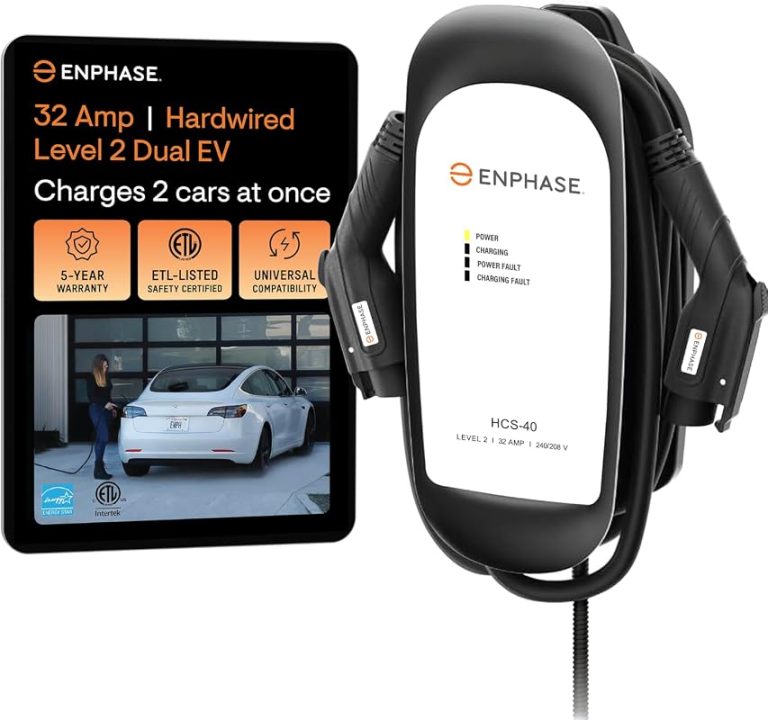
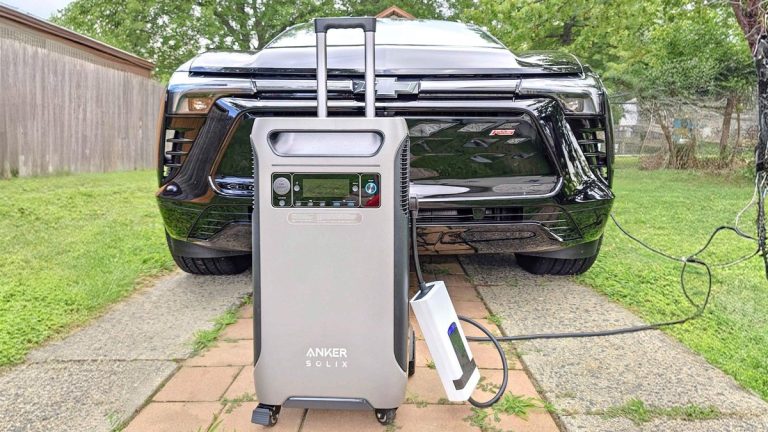
Hardwired EV Charger Installation: What to Expect
Hardwired EV charger installation permanently connects a Level 2 EVSE to a dedicated circuit, which is usually how you reach the unit’s highest amperage and avoid a plug interface that can wear out. The catch is that your panel’s load calculation, the manufacturer’s manual, and your local code — not the charger’s marketing spec — decide what you can actually install.
Hardwired EV charger installation means your Level 2 EVSE is permanently connected to a dedicated circuit instead of plugged into a receptacle. It is often the only way to reach an EVSE’s highest output, but whether it is required, better, or simply one option depends on the specific charger, your vehicle, your electrical panel, and the rules your local authority enforces.
- Compatibility: Confirm your vehicle’s inlet (J1772 or NACS/SAE J3400) and its onboard-charger kW limit before.
- Performance: kW = volts × amps ÷ 1,000 at the EVSE, but the car’s onboard.
- Safety: Breaker, conductor, wiring method, and torque values come from the manufacturer’s manual and the.
- Cost: Budget for equipment, permit, labor, and a possible service upgrade; charging cost is rate.
Hardwired EV Charger Installation: The Short Answer and First Decisions
What hardwired means for a Level 2 EVSE in the United States
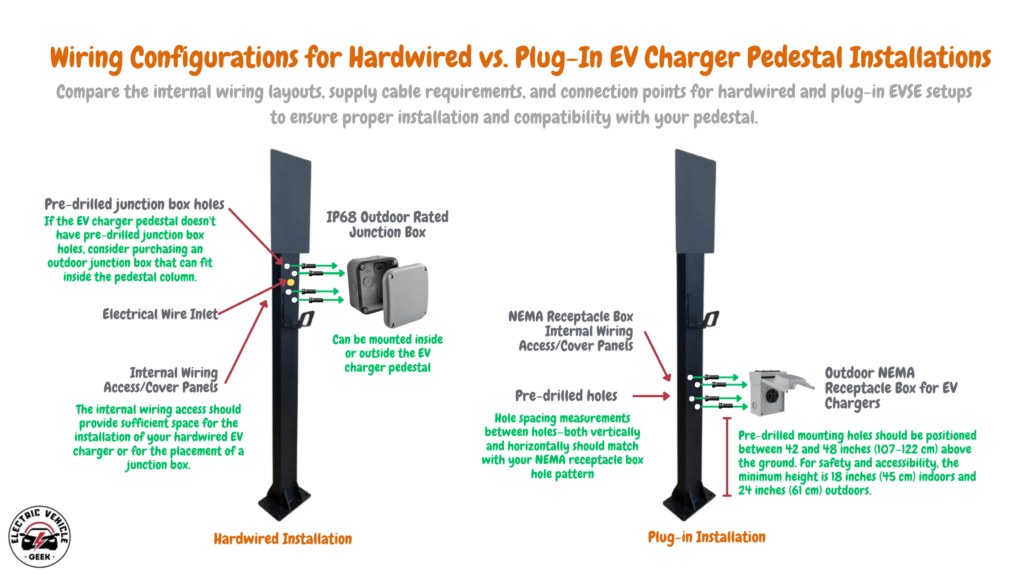
A Level 2 EVSE runs on 240 V AC and is what most US owners call “the home charger.” The EVSE is really a smart, safety-interlocked power supply — the actual conversion from AC to DC happens in the vehicle’s onboard charger. In a hardwired setup, the circuit conductors terminate inside the EVSE or an adjacent junction box. There is no plug and no receptacle, so the connection is permanent and the unit is not meant to be moved.
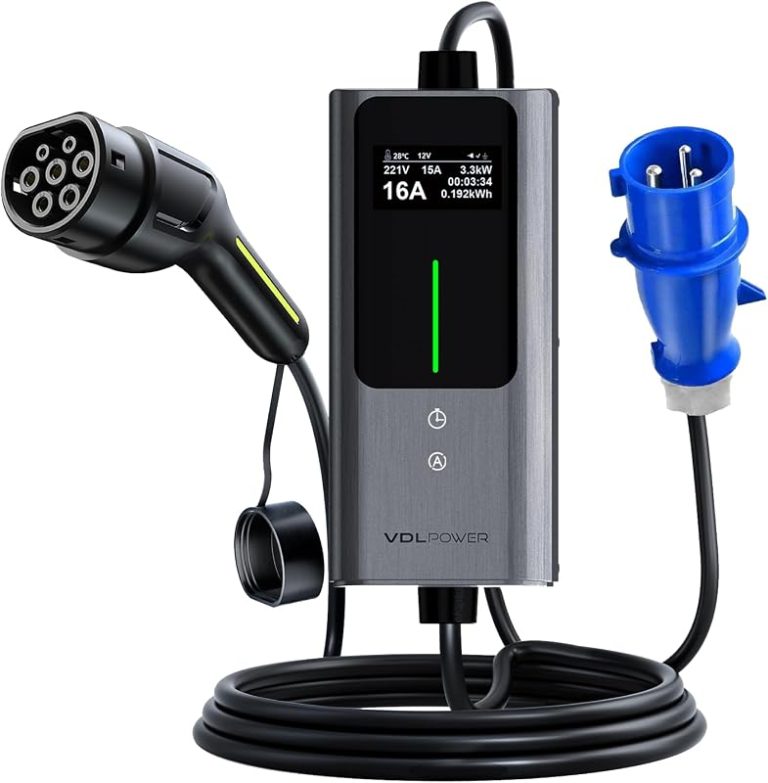
A plug-in Level 2 EVSE, by contrast, ends in a NEMA 14-50 or 6-50 plug that goes into a matching receptacle. Both approaches use the same J1772 or NACS/SAE J3400 connector at the car end; the difference is entirely on the building side.
The primary question: is hardwiring required, better, or just one option?
All three situations exist, and the answer is product-specific.
Required: Some EVSE models are sold only as hardwired units, and some models can only deliver their top amperage when hardwired. Because standard US receptacles top out at a 50 A circuit — which supports 40 A of continuous charging — an EVSE rated above 40 A generally cannot legally or practically be fed through a plug.
Better: Hardwiring removes a plug-and-receptacle interface that can wear, heat up, or corrode, and it is often the preferred approach for outdoor or garage-wall installations where the unit will never move.
Just one option: A 32 A or 40 A EVSE can often be installed either way, and many owners choose plug-in specifically so the unit can travel or be swapped later.
Evidence limits: manufacturer manual, local code, and your specific panel
Three documents control this decision, and none of them can be replaced by a forum post. The manufacturer’s installation manual defines permitted wiring methods, breaker and conductor requirements, torque values, and mounting rules. Your local electrical code — as adopted and amended by your state or jurisdiction — sets the enforceable minimums. Your panel and service calculation determine whether the circuit can exist at all.
Charger and Vehicle Specs That Determine Your Real Charge Rate
Connector type, vehicle inlet, and adapter direction
Level 2 AC charging in the US uses either the J1772 connector or NACS (SAE J3400). CCS1 is a DC fast-charging connector and is not used for home Level 2 charging. Adapters exist in both directions, but direction matters: a J1772-to-NACS adapter and a NACS-to-J1772 adapter are different parts, and each is rated for specific current and temperature conditions. Never assume that because a plug physically fits, the full amperage or the intended charging mode is supported.
Important: Physical fit alone does not prove every AC or DC charging mode is supported.
Vehicle onboard-charger limit vs EVSE amperage and kW
The basic math is kW = volts × amps ÷ 1,000. At a nominal 240 V, a 32 A setting is about 7.7 kW, 40 A is about 9.6 kW, and 48 A is about 11.5 kW. Those are EVSE-side figures.
Your vehicle may cap lower. Many EVs have a 7.2 kW or 9.6 kW onboard charger, which means a 48 A EVSE delivers no more than the car accepts. Before paying for a higher-amperage circuit, confirm the vehicle’s onboard-charger rating. If your car tops out around 9.6 kW, a smaller circuit may be the smarter spend — our breakdown of whether 40 amps is enough for a Level 2 charger walks through that trade-off.
Cable length, weather suitability, smart features, warranty, and support
Compare these on the same criteria for every candidate: cable length and whether the connector holster is included, the enclosure’s rated indoor/outdoor suitability and operating-temperature range, connector storage guidance, smart features and app or cloud dependence, safety listing, warranty term, and US support. A 25 ft cable is common; longer runs may need a different mounting position rather than a longer cord. Check the manufacturer’s documentation for the exact weather and temperature ratings rather than relying on product photos.
Electrical Planning: Panel, Circuit, Permit, and Code Checks
Load calculation and service capacity
EVSE is treated as a continuous load, which is why the circuit is sized larger than the charging current. A qualified electrician performs a load calculation on your service — not a guess based on the main breaker size. A 100 A service can sometimes support a modest EVSE circuit; in other cases the practical answer is an energy-management device that pauses or reduces charging when the house load climbs, or a service upgrade.
Permit, inspection, and local code
Most jurisdictions require an electrical permit for a new 240 V EVSE circuit, and the work is inspected afterward. Adoption and amendments vary widely, so the enforceable requirements are the ones your local authority publishes, not a national summary. Skipping the permit can complicate insurance claims and resale, and it removes the inspection that catches undersized conductors or missing protection.
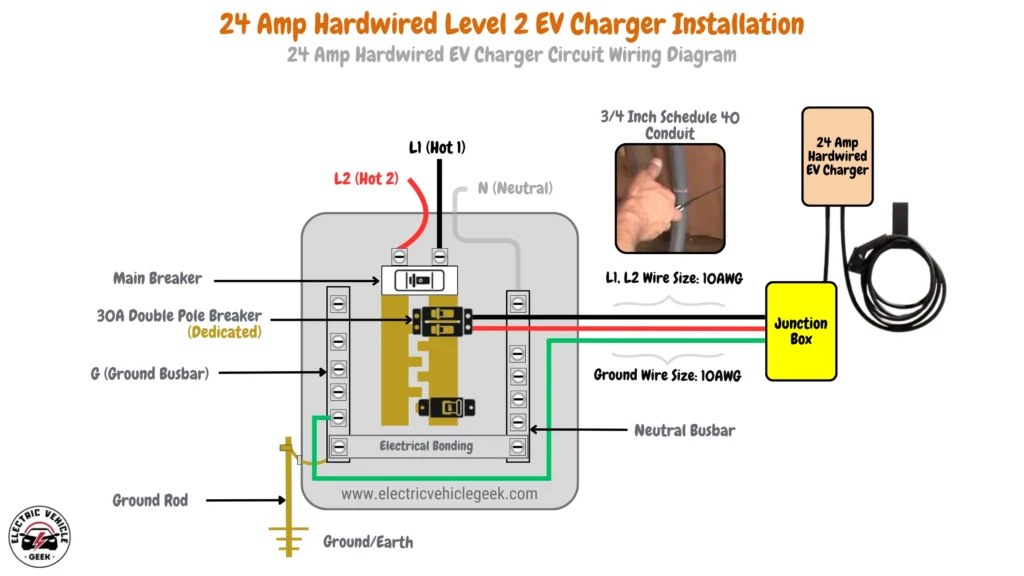
Breaker, wire, conduit, and disconnect per the product manual
The manual, not a blog table, specifies breaker size, conductor gauge and type, conduit or cable method, and whether a local disconnect is required. As a general pattern, a 48 A EVSE is installed on a 60 A circuit, which is why questions about whether a 48-amp EV charger needs a 60-amp circuit come up so often. Conductor sizing for long or hot runs is covered in our guide to 48-amp EV charger wire size.
Hardwired vs Plug-In EV Chargers: Side-by-Side Criteria and Who Each Fits
Power, safety, and code implications
Hardwiring typically unlocks the highest amperage the unit supports and removes a plug interface that can loosen or overheat over years of daily use. The EVSE’s own ground-fault and safety circuitry is required by the applicable EVSE safety standard; whether the branch circuit additionally needs a GFCI device depends on the wiring method and your local code. A hardwired connection also avoids receptacle-location rules that can constrain where a plug-in unit may be installed.
Flexibility, portability, and future replacement
Plug-in wins on flexibility. You can unplug the unit for a move, take it to a second home, or replace it without an electrician. Hardwired units are effectively fixtures: replacing one means another electrical visit, though a well-installed circuit and mounting plate can make the swap simpler.
Uses a NEMA 14-50 or 6-50 receptacle on a dedicated circuit. Portable, easier to replace, but generally limited to 40 A of continuous charging and adds a plug interface.
Conductors terminate inside the unit. Supports higher output where the EVSE and vehicle allow it, fewer connection points, and cleaner outdoor mounting, at the cost of permanence.
Best fit: hardwired, plug-in, or a mixed setup
Hardwired suits owners who park in the same spot nightly, want maximum available power, or are installing outdoors. Plug-in suits renters with permission to install, owners who move frequently, or anyone buying a modest 32–40 A unit. A mixed setup — a hardwired primary EVSE plus a portable plug-in unit kept in the trunk — covers daily charging and travel. If you are shopping specifically for maximum-output units, our roundup of hardwired 48-amp EV chargers compares that category.
What Installation Day Looks Like: From Site Survey to First Charge
Mounting, cable routing, and weatherproofing
The electrician confirms the mounting height, stud or masonry anchoring, and the cable path from the panel. Outdoor runs use appropriate conduit or cable methods, sealed penetrations, and drip loops so water cannot track into the enclosure. The connector holster position matters more than most owners expect — it should reach the car’s charge port without strain.
Wiring, torque specifications, and commissioning
Terminations are tightened to the torque values printed in the manual, using a torque tool, because loose lugs are a genuine fire risk. After wiring, the breaker is energized and the unit runs its startup sequence. This is also when the amperage setting is configured — often via DIP switches or a rotary dial inside the enclosure — and it must match the circuit, not the owner’s wish for more power.
Verify connector type, target charge rate, hardwired versus plug-in, and the manufacturer’s installation instructions.
Confirm the load calculation, breaker, conductor, wiring method, permit, and any required disconnect.
Mount, wire, torque to spec, set the amperage, then confirm the vehicle actually accepts the expected rate.
Load management, Wi-Fi setup, and verifying actual charge rate
If a power-sharing or load-management device is part of the plan, it is configured and tested during commissioning. Wi-Fi and app setup comes next; ask what happens if the cloud service or app is unavailable, since some units fall back to a default schedule and others keep charging. Finally, verify the real rate: watch the vehicle’s reported kW or added-range-per-hour after 10–15 minutes. If it is lower than expected, the limiter is usually the vehicle’s onboard charger, the EVSE amperage setting, or battery temperature.
Installation and Charging Costs: Assumptions, Formulas, and 2026 Context
Equipment, permit, labor, and possible panel upgrade costs
Four line items drive the total: the EVSE itself, the permit and inspection fee, the electrician’s labor and materials, and — the largest potential wildcard — a service or panel upgrade if the load calculation fails. Run length and whether the path goes through a finished wall or requires trenching move the labor number significantly. Get at least two written quotes that itemize the circuit, conductor type, and any load-management hardware, and ask each contractor to state whether the permit is included.
Electricity rate × kWh delivered ÷ charging efficiency
Charging cost is not simply rate × battery kWh, because some energy is lost as heat in the onboard charger and wiring. A practical formula is: grid kWh = energy added to the battery ÷ charging efficiency, then cost = grid kWh × your all-in rate including taxes and fees.
Illustrative only: 50 kWh ÷ 0.90 = about 55.6 kWh from the grid. Your rate, taxes, fees, time-of-use windows, and losses will differ. Verify current rates with your utility.
Time-of-use pricing and a sample annual cost calculation
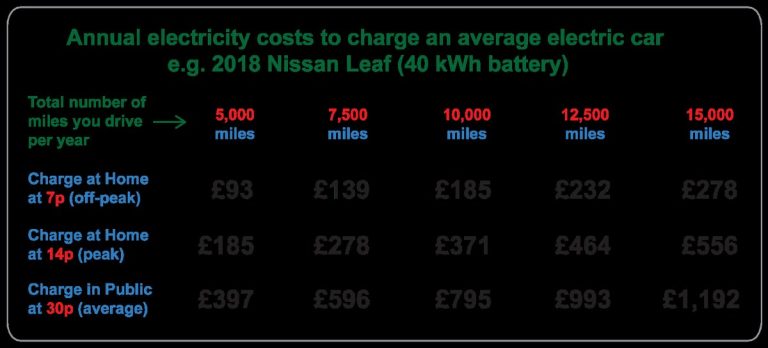
Many utilities offer time-of-use plans with cheaper overnight windows, and some add separate meter options or demand charges. Assuming 12,000 miles a year at an example 3.3 mi/kWh, the car needs about 3,640 kWh at the wheels. Add 10% for losses and you draw roughly 4,040 kWh from the grid. At the example $0.16/kWh flat rate that is about $646 a year — and shifting most of that into a cheaper off-peak window can lower it further. Treat all three inputs (efficiency, losses, rate) as variables to check, not constants.
Battery Health, Charging Power, and Hardwired EVSE: Guidance vs General Patterns
Manufacturer guidance vs general owner patterns
Your vehicle’s manual is the authority on charging recommendations, and it differs by model. Some manufacturers publish specific daily-charging guidance; others do not. There is no universal percentage rule that applies to every EV, and treating one as gospel can be counterproductive. Follow the manual that came with your car.
Temperature, state of charge, charging power, chemistry, and thermal management
What actually affects degradation is a combination: cell chemistry, pack thermal management, ambient temperature, how long the pack sits at very high or very low state of charge, and how often it is subjected to high-power DC fast charging. A hardwired Level 2 EVSE delivers relatively gentle AC power compared with DC fast charging, and it typically lets you charge overnight at low current — which is generally easier on the pack than repeated fast sessions, though it is not a guarantee of longevity.
DC fast charging context and daily convenience trade-offs
DC fast charging bypasses the onboard charger and feeds the pack directly. It is the right tool for road trips and the wrong default for daily home charging, both because of cost and because of the thermal and current stress it places on cells. A hardwired Level 2 setup exists to make DC fast charging mostly unnecessary at home.
Range, Efficiency, and Charging Losses After Hardwired Installation
mi/kWh and Wh/mi: measuring what you actually get
Track two numbers separately: driving efficiency (mi/kWh or Wh/mi, from the trip meter) and charging efficiency (energy into the battery versus energy drawn from the grid). A wall-mounted energy monitor or the EVSE’s own reporting, if it offers it, is the practical way to separate them.
Speed, weather, HVAC, elevation, payload, tires, and battery temperature
Highway speed is usually the single biggest efficiency variable. Cold ambient temperatures reduce available range and increase consumption for cabin and battery heating; hot weather increases HVAC load and can trigger active pack cooling. Elevation gain, roof racks, payload, tire pressure and tread, and a cold-soaked battery all move the numbers too. Any mi/kWh figure quoted without those conditions attached is an estimate, not a prediction.
Charging losses and preconditioning effects
Losses show up as heat in the onboard charger, the EVSE, and the wiring, and they grow in extreme cold when the pack must be warmed before it accepts full power. Preconditioning — warming or cooling the cabin and pack on grid power before departure — improves driving efficiency and comfort but draws additional energy from the wall. It is a trade, not free range.
Adapters, Network Restrictions, and Firmware: What Hardwiring Does Not Solve
Source connector, destination connector, and adapter direction
A hardwired circuit fixes your building side. It does nothing for connector compatibility at the car. If your EVSE has a J1772 cable and your vehicle has a NACS inlet — or the reverse — you need the correct adapter, rated for the amperage you intend to use, and inserted in the correct direction.
AC vs DC mode, power limits, and thermal safety
An AC adapter for Level 2 charging is not the same hardware as a DC fast-charging adapter, and using the wrong one can be dangerous. Adapters also add a thermal junction. Follow the adapter manufacturer’s current rating and temperature guidance, inspect for heat or discoloration, and stop using any adapter that runs hot.
Vehicle and charging-network restrictions plus vendor firmware requirements
Some vehicles limit AC charging current regardless of the EVSE, some enforce charging schedules or state-of-charge limits of their own, and some charging networks restrict which vehicles or adapters may use specific DC equipment. Separately, many smart EVSEs require firmware updates and an active account for scheduling, utility programs, or reporting — and features can change or require a subscription. Confirm what the unit does without connectivity before you rely on a cloud feature.
- Best for: Owners who park in the same place nightly, want the highest output their vehicle can accept, or need a clean outdoor installation.
- Think twice if: You rent, move often, or drive a vehicle whose onboard charger caps well below the EVSE’s rating.
- Next step: Have a licensed electrician run a load calculation on your panel and confirm the EVSE manual’s breaker, conductor, and torque requirements before you buy.
Frequently Asked Questions
Not universally. Hardwiring typically allows higher continuous charging current, removes a plug-and-receptacle interface that can wear or overheat, and is often preferred for outdoor mounting. Plug-in units are easier to move and replace. If your vehicle’s onboard charger caps at 7.2 kW or 9.6 kW, the extra headroom of a hardwired high-amperage circuit may deliver no real benefit.
Most US jurisdictions require an electrical permit for a new 240 V EVSE circuit, followed by an inspection. Requirements are adopted and amended locally, so confirm with your city or county building department and your utility before work begins. Unpermitted work can create problems with insurance and at resale.
It depends on the EVSE’s configured charging current and the manufacturer’s instructions. Because EVSE is treated as a continuous load, the circuit is generally sized at 125% of the charging current — which is why a 48 A unit is commonly installed on a 60 A circuit. Always use the values printed in your specific product’s manual rather than a generic table.
Often, yes, but only if the specific EVSE is documented for outdoor use with a stated enclosure rating and operating-temperature range. Outdoor installations also need appropriate conduit or cable methods, sealed penetrations, and connector storage that keeps the handle out of standing water. Check the manufacturer’s documentation for your exact model.
Only if something else was limiting it. Hardwiring can allow a higher EVSE output setting, but the vehicle’s onboard AC charger is a hard ceiling, and battery temperature and state of charge can reduce the rate further. If your car accepts only 9.6 kW, a 48 A hardwired EVSE will not charge it faster than a 40 A unit.
It depends on the wiring method and your adopted local code, and the answer differs from the receptacle rules that apply to plug-in installations. A hardwired EVSE includes its own ground-fault protection circuitry as required by the applicable EVSE safety standard, but that does not automatically settle the branch-circuit question. Have your electrician confirm the requirement for your jurisdiction and equipment.