10 Best NACS Adapters for Non-Tesla EVs
Finding the right NACS adapter for non-Tesla EVs is the difference between pulling into a Tesla Supercharger with confidence and hunting for a compatible stall. As Tesla opens its network to CCS1 vehicles from Ford, Rivian, GM, Volvo, and Polestar, a quality adapter turns thousands of Supercharger stalls into practical charging options. But connector direction, AC versus DC mode, and safety certification all matter — this roundup compares 10 top NACS adapters to help you choose.
The AIMILER NACS to CCS1 Adapter is our strongest recommendation for CCS1 EV owners with Supercharger access, thanks to its 500A/1000V rating, IP65 weather resistance, and included protective case. If you need AC charging at Tesla destination chargers instead, the WenStorm NACS to J1772 adapter is the top-rated pick. Always confirm your automaker’s Supercharger access before buying.
Supercharger access for non-Tesla EVs is expanding by automaker and model, and the NACS connector is becoming the common standard across North America. For non-Tesla owners, the right adapter bridges the gap between your vehicle’s CCS1 or J1772 port and Tesla’s charging hardware. This guide covers both DC fast-charging adapters for Superchargers and AC adapters for Tesla wall connectors and destination chargers.
Quick Product Comparison
| Product | Image | Type / Connector | Best For | Current Price |
|---|---|---|---|---|
| AIMILER NACS to CCS1 |  |
NACS to CCS1 (DC fast) | CCS1 EVs at Tesla V3/V4 Superchargers | See Price → |
| FTSLVHI J1772 to NACS | 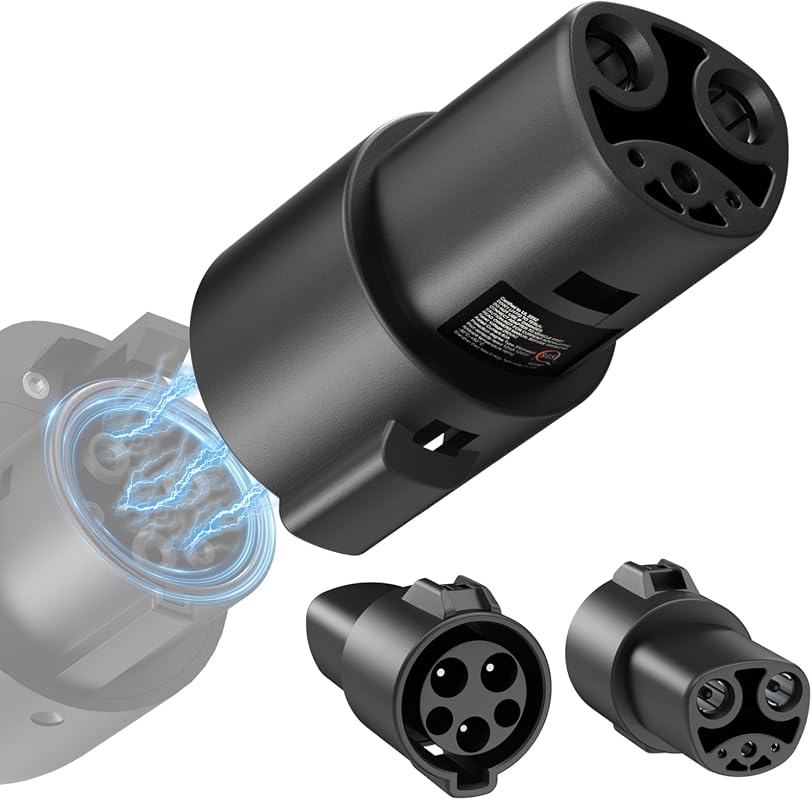 |
J1772 to NACS (AC) | Tesla owners at J1772 Level 2 stations | See Price → |
| Vprnix NACS to CCS | 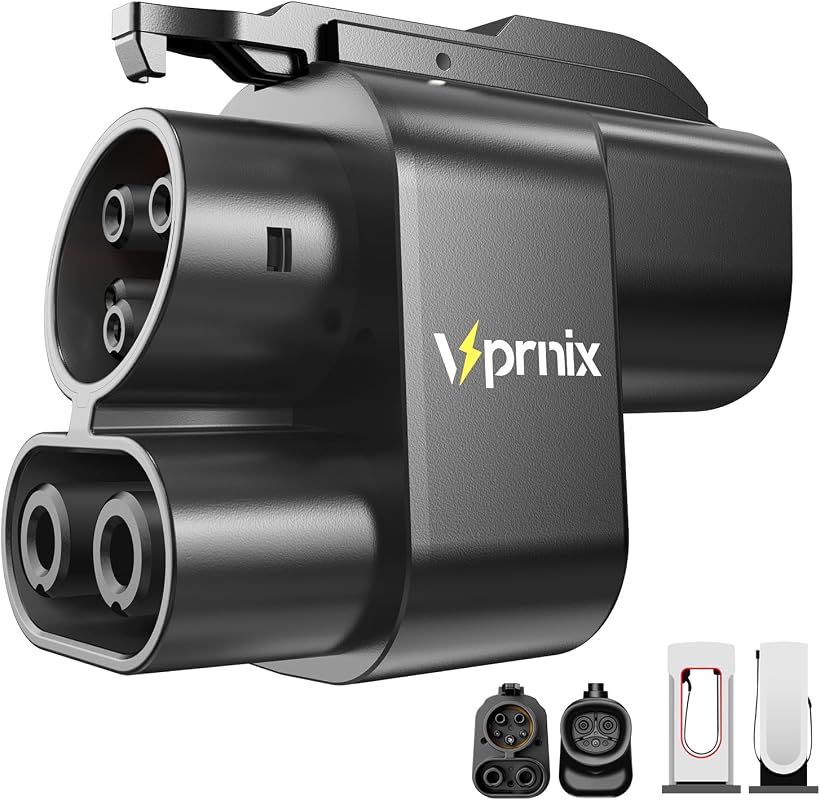 |
NACS to CCS1 (DC fast) | Ford, Rivian, GM, Volvo, Polestar EVs | See Price → |
| FTSLVHI NACS to J1772 | 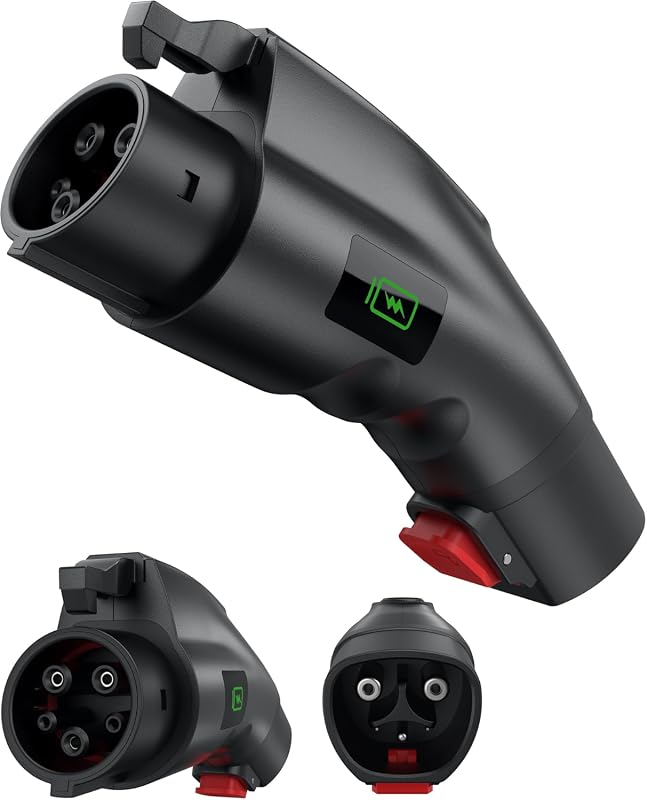 |
NACS to J1772 (AC) | Non-Tesla EVs at Tesla AC chargers | See Price → |
| ZERTRAN NACS to CCS1 | 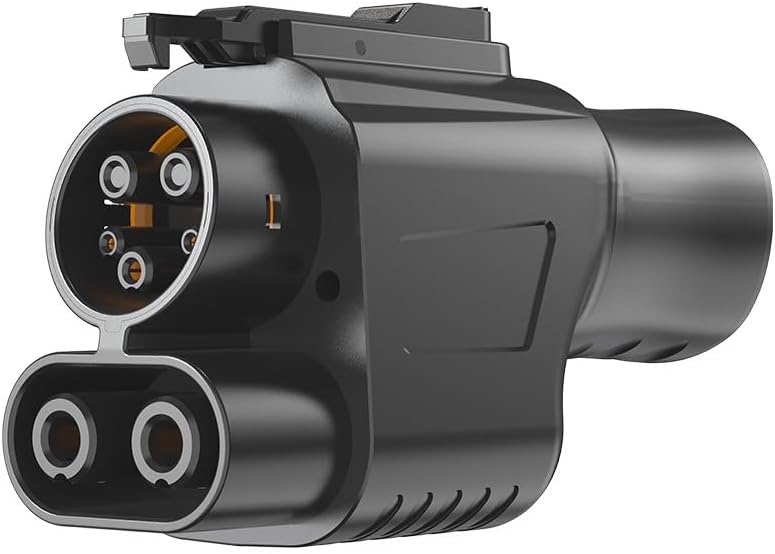 |
NACS to CCS1 (DC fast) | CCS1 EVs with Supercharger access | See Price → |
| Lectron NACS Bundle |  |
NACS to CCS1 + NACS to J1772 | DC Supercharger and AC destination coverage | See Price → |
| Mozeyerh NACS to CCS | 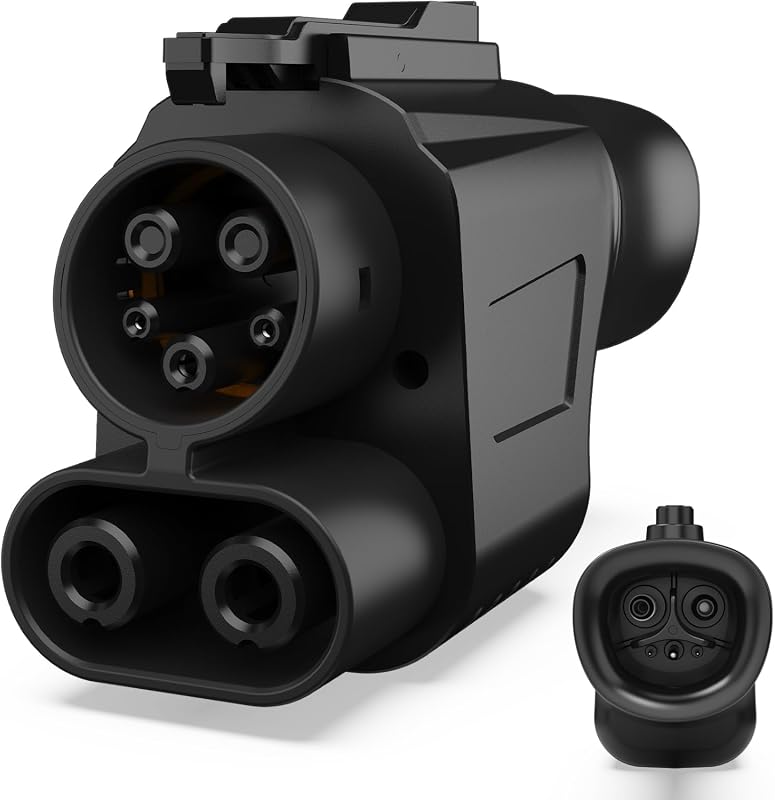 |
NACS to CCS1 (DC fast) | Rivian and GM EVs | See Price → |
| NACS to CCS1 UL2252 |  |
NACS to CCS1 (DC fast) | Safety-focused CCS1 EV owners | See Price → |
| WenStorm NACS to J1772 | 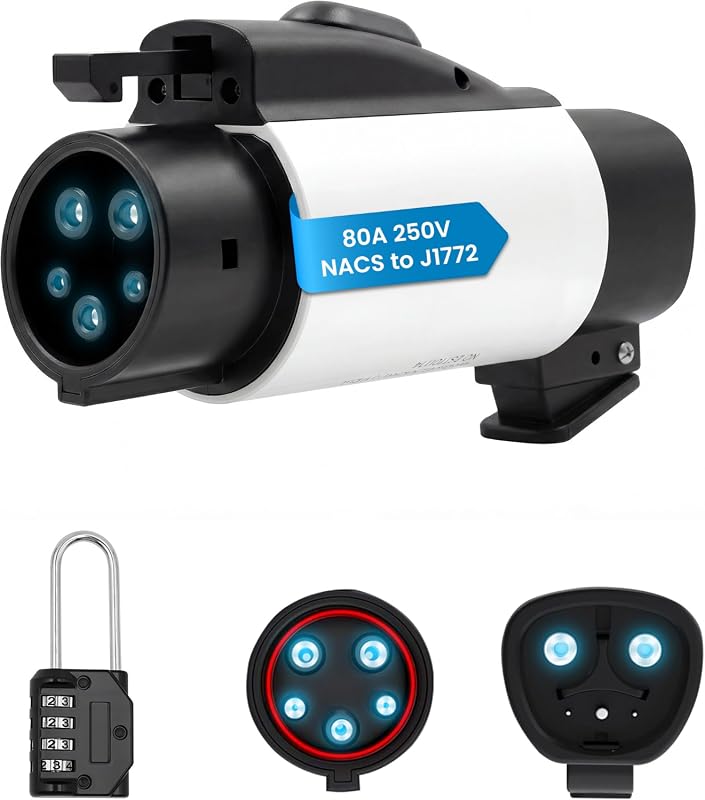 |
NACS to J1772 (AC) | J1772 EVs at Tesla wall connectors | See Price → |
| XYVEXOR NACS to CCS |  |
NACS to CCS1 (DC fast) | V3/V4 Supercharger users | See Price → |
What Matters for NACS Adapter for Non-Tesla EVs
Connector direction is everything. Most non-Tesla EVs need a NACS-to-CCS1 adapter for DC Superchargers. If you want to use Tesla wall connectors or destination chargers, you need a NACS-to-J1772 adapter. These are separate products with separate purposes.
DC fast charging vs. AC Level 2. CCS1 adapters are rated for DC fast charging — most listings here claim 500A/1000V — and work at Supercharger stalls. J1772 adapters are AC-only, typically rated at 80A/240V, and work at Tesla’s slower AC chargers. Never use an AC adapter at a Supercharger.
Automaker approval is required. Ford, Rivian, GM, Volvo, and Polestar have rolling Supercharger-access programs, but not every model or model year is included. Check with your automaker before buying any NACS-to-CCS1 adapter.
Safety certification matters. Look for UL 2252 certification, SGS verification, temperature sensors, and mechanical locks. Several picks here include these features, but always verify the current listing, since documentation can change.
Advertised ratings are maximums, not guarantees. A 500A/1000V adapter won’t necessarily charge your EV at 500A. The Supercharger generation and your vehicle’s charging curve determine real-world speed. The same logic applies at home: a 48-amp charger only delivers what the vehicle accepts, as we explain in our guide on whether 48 amps is enough for a Level 2 charger.
Build quality affects daily usability. Ergonomic grips, weather-resistant housings (IP55 or IP65), protective cases, and lock mechanisms make a real difference when you’re plugging in at a busy Supercharger.
Our Top 10 Picks
1. AIMILER NACS to CCS1 Adapter, 500A/1000V, Fast Charge CCS1 EVs at Tesla V3/V4 Superchargers, Check Compatibility
The AIMILER unlocks Tesla V3/V4 Supercharger stalls for select non-Tesla EVs with CCS1 ports. The listing highlights a patented ergonomic grip tested for over 10,000 plug/unplug cycles, an IP65 weather-resistant housing, and a portable protective case. It operates from -22°F to 122°F, making it a solid year-round companion. Main limitation: you must confirm your automaker has enabled Supercharger access for your specific vehicle.
- 500A/1000V DC rating per listing
- IP65 weather-resistant with protective case
- Ergonomic grip tested for 10,000+ cycles
- Vehicle compatibility must be confirmed before buying
2. J1772 to NACS Charger Adapter, UL 2252 Certified, Charge Tesla EVs at J1772 Stations with Reliable Performance
This pick runs in the opposite direction of every other product here: instead of helping a non-Tesla EV use Tesla chargers, it helps a Tesla use the broader J1772 AC network. The listing cites UL 2252, CE, and FCC compliance, plus a 2-year warranty. It’s rated for 80A and 240V AC and is designed for Tesla Model 3, Y, S, X, and Cybertruck. Main limitation: it’s AC-only and Tesla-exclusive.
- UL 2252 certified per listing
- Compact and glove-box friendly
- 2-year warranty
- Tesla-exclusive — won’t help non-Tesla EVs
- AC Level 1/2 only, no Supercharger support
3. NACS to CCS Adapter, 500A/1000V, 500kW Peak, Fast Charge CCS1 EVs at Tesla Superchargers for Ford, Rivian
The Vprnix adapter targets the most common Supercharger-access brands — Ford, Rivian, GM, Volvo, and Polestar — and is rated for 500A/1000V with a 500kW peak. It adds dual temperature sensors that adjust or cut power at 194°F, a UL94 V0 fireproof housing, and IP55 weather protection. The listing excludes PHEVs and pre-2016 models such as the Ford Focus EV. Main limitation: only 14 customer reviews so far, and automaker access is still required.
- 500kW peak rating per listing
- Dual temp sensors with 194°F cutoff
- 5-year support and multi-brand compatibility
- Small review count
- PHEVs and older EVs excluded
4. NACS to J1772 EV Charging Adapter for Tesla, Convert Tesla Charger to J1772 for Non-Tesla EVs Efficiently
This FTSLVHI adapter converts Tesla mobile connectors, wall connectors, and destination chargers to J1772 for non-Tesla EVs and PHEVs. A built-in green LED shows charging status, a security lock keeps the connection secure, and the listing cites SGS certification under UL 2252. It does not support Tesla Superchargers, and the listing excludes the Jeep Cherokee 4xe, Chevy Bolt, and Chrysler Pacifica Hybrid. Main limitation: AC-only operation and several popular EVs are explicitly excluded.
- LED charging status indicator
- SGS-certified under UL 2252 per listing
- Works with Tesla AC chargers
- No Supercharger support
- Verify excluded vehicles before buying
5. EV Adapter, Tesla Supercharger NACS to CCS1, 500A/1000V DC Fast Charge CCS1 EVs with CCS1 Plug
The ZERTRAN adapter is built around a Vortex Plug design and rated for 500A/1000V DC, with a claimed 150 miles in 15 minutes. It’s designed for CCS1 EVs that already have automaker-granted Supercharger access and unlocks more than 15,000 Tesla Supercharger ports. Main limitation: the listing has no customer ratings yet, so there’s no real-world feedback to reference.
- 500A/1000V DC rating per listing
- Unlocks 15,000+ Supercharger ports
- Broad CCS1 vehicle compatibility
- No customer reviews yet
- Automaker access still required
6. Lectron Bundle, NACS to CCS Adapter 500A/1000V for Tesla Superchargers plus NACS to J1772 Adapter for EVs
The Lectron bundle covers both charging worlds: a Vortex Plug NACS-to-CCS adapter rated at 500A/1000V for V3 and V4 Superchargers, plus a NACS-to-J1772 adapter rated at 80A/250V for Tesla AC chargers. Lectron claims access to 25,000+ Supercharger stalls. Main limitation: no customer ratings yet, and the DC adapter still requires automaker-granted Supercharger access.
- Two adapters cover DC and AC charging
- 500A/1000V DC rating per listing
- Established accessory brand
- No reviews yet
- Higher cost than single adapters
7. Upgraded NACS to CCS Adapter for Tesla Supercharger, Max 500A 1000V, Compatible with Rivian and GM EVs
The Mozeyerh adapter is rated for 500A/1000V DC with a 250kW maximum and claims 180 miles in 15 minutes. It’s explicitly positioned for Rivian and GM EVs with Supercharger access. Main limitation: only 2 customer reviews, so long-term reliability data is minimal.
- 500A/1000V DC rating per listing
- Clear Rivian and GM compatibility
- Perfect 5.0 rating (small sample)
- Only 2 reviews
- Limited real-world data
8. NACS to CCS1 Adapter, UL2252 SGS Verified, 500A 250kW Fast Charging, Enables CCS1 EVs at Tesla Superchargers
This adapter highlights UL 2252 verification by SGS, a mechanical safety lock to prevent accidental disconnects during high-current charging, IP55 weather protection, and a compact travel-ready design. It supports Tesla Supercharger V3, Destination, and Wall Connectors per the listing. Main limitation: verify the UL 2252 claim on the current listing, and confirm your EV’s Supercharger access.
- UL 2252 SGS verification per listing
- Mechanical lock for secure connection
- IP55 all-weather build
- Certification should be verified on current listing
- 250kW max rating
9. NACS to J1772 EV Adapter for Tesla Chargers, 80A Up to 19.2kW, Charge Your J1772 EV Efficiently
The WenStorm is the most-reviewed AC adapter on this list, with 53 ratings at 4.5 stars. It’s rated for 80A and up to 19.2kW, fits EVs and PHEVs with SAE J1772 AC inlets, and works with Tesla wall connectors, destination chargers, and mobile connectors. It is not for DC Superchargers. Main limitation: your EV’s onboard charger determines actual AC speed — an 80A adapter won’t exceed what the vehicle accepts.
- 53 ratings at 4.5 stars
- 80A / 19.2kW rating per listing
- Lightweight and water-resistant
- AC-only, no Supercharger support
- Vehicle onboard charger limits actual speed
10. 2026 Upgraded NACS to CCS Adapter, MAX 500A 1000V, Fits Ford, Rivian, GM, Volvo, Polestar EVs
The XYVEXOR adapter adds a 3-sensor temperature monitoring system at the plug, cable, and chip with auto-power adjustment to prevent overheating. It features auto-lock on both NACS and CCS sides and is compatible only with Tesla V3/V4 Supercharger stalls. The kit includes protective gloves and an instruction manual. Main limitation: 15 reviews is a modest sample, and the “2026 upgraded” label is a marketing claim.
- 3-sensor smart temperature control
- Auto-lock on both connectors
- Includes gloves and manual
- V3/V4 Superchargers only
- Modest review count
NACS Adapter Buying Guide
Buying the right NACS adapter starts with understanding your vehicle’s charging port and the type of charging you plan to do. Most non-Tesla EVs in North America use a CCS1 port for DC fast charging and a J1772 port for AC Level 2 charging. Tesla’s Supercharger network uses the NACS connector, so the adapter you need depends entirely on which Tesla charger you’re connecting to.
For Supercharger access, you need a NACS-to-CCS1 adapter rated for DC fast charging. These adapters handle high current — most listings here rate 500A/1000V — and are designed for V3 and V4 Supercharger stalls. Your automaker must also grant your vehicle access to the Supercharger network; the adapter alone isn’t enough.
For Tesla AC chargers — wall connectors, destination chargers, and mobile connectors — you need a NACS-to-J1772 adapter. These are rated for AC only, typically at 80A/240V, and won’t work at Superchargers. Your EV’s onboard charger sets the actual AC speed; a higher-rated adapter doesn’t make the car charge faster.
Important: Physical fit alone does not prove every charging mode is supported.
Safety certification is another key factor. UL 2252 is the most relevant standard for EV charging adapters, and several listings here cite it — the FTSLVHI J1772-to-NACS adapter, the FTSLVHI NACS-to-J1772 adapter, and the UL2252 SGS-verified NACS-to-CCS1 pick. When a listing doesn’t show certification, verify it with the seller or look for an alternative.
Finally, match the adapter to your vehicle’s limits. For AC adapters, the car’s onboard charger is the ceiling — a Tesla’s AC charging speed depends on the model and onboard charger, so check our guides on whether a Tesla can charge at 48 amps and whether a Tesla can charge at 40 amps for the details. For DC adapters, the Supercharger generation and your EV’s battery acceptance rate determine how fast you actually charge.
- Confirm your EV has automaker-granted Tesla Supercharger access
- Verify the adapter direction: NACS to CCS1 for DC, NACS to J1772 for AC
- Check the current listing for UL 2252 or SGS certification
- Compare the adapter’s amp/voltage rating with your vehicle’s charging limit
- Review the return policy, warranty, and included accessories
- Best for: CCS1 EV owners with automaker-granted Supercharger access — the AIMILER NACS to CCS1 adapter offers a strong 500A/1000V rating, weather-resistant build, and a protective case.
- Think twice if: your automaker hasn’t enabled Supercharger access, or you need AC charging at Tesla destination chargers — in that case, choose a NACS-to-J1772 adapter instead.
- Next step: confirm your EV’s Supercharger eligibility and verify the adapter’s current safety certification before ordering.
Frequently Asked Questions About NACS Adapter for Non-Tesla EVs
No. Your automaker must enable Supercharger access for your specific vehicle, and the adapter must match your EV’s connector. A NACS-to-CCS1 adapter handles DC fast charging, but it won’t grant network access by itself.
NACS-to-CCS1 adapters are for DC fast charging at Tesla Superchargers and are typically rated at 500A/1000V. NACS-to-J1772 adapters are for AC Level 2 charging at Tesla wall connectors, destination chargers, and mobile connectors. The two are not interchangeable.
Most single adapters support only one mode. The Lectron bundle is the exception on this list — it includes a NACS-to-CCS1 adapter for DC Superchargers and a NACS-to-J1772 adapter for AC chargers in one package.
Look for UL 2252 certification, SGS verification, temperature sensors, and mechanical locks. Several picks on this list include these features, but always verify the current listing, since certification documentation can change.
Advertised ratings like 500A/1000V are maximums, not guarantees. Actual speed depends on the Supercharger generation (V3 or V4) and your EV’s charging curve. Most listings claim 150–180 miles in 15 minutes under ideal conditions.
Tesla vehicles use the NACS connector natively, so no adapter is needed at Superchargers. However, a J1772-to-NACS adapter — like pick #2 on this list — lets Tesla owners plug into the broader J1772 AC charging network at workplaces and public Level 2 stations.
Choosing the right NACS adapter comes down to where you plan to charge. If you want DC fast charging at Tesla Superchargers, a NACS-to-CCS1 adapter with a high amp rating and solid safety features is the essential tool. If you’re more likely to charge at Tesla destination chargers, hotels, or workplaces, a NACS-to-J1772 AC adapter is the better match. The Lectron bundle covers both scenarios in one purchase.
Before you order, verify three things: your automaker’s Supercharger access, the adapter’s connector direction, and the safety certification shown on the current listing. Prices and availability change frequently, so use the links above to check the latest details and confirm compatibility with your specific EV.