3 Best Portable EV Battery Chargers for U.S. EV Owners
Finding the best portable ev charger battery for a U.S. EV usually means shopping for something very different from a wall-mounted station: a compact 12V maintainer, solar trickle charger, or power bank that keeps a car’s small accessory battery healthy when the vehicle sits unused. The three options below are the ones U.S. buyers ask about most often for that job, and each one solves a slightly different problem.
For most U.S. EV owners who leave a car parked for weeks at a time, the 12W Solar Car Battery Charger is the strongest overall pick because it maintains a 12V battery using sunlight and needs no outlet. The CTEK CS Free is the most versatile if you also want charging, maintenance, and jump-starting in a single unit, while the INIU 10000mAh Power Bank is the practical choice for topping up phones and small devices on the road. The main limitation shared by all three: none of them charges an EV’s high-voltage traction battery.
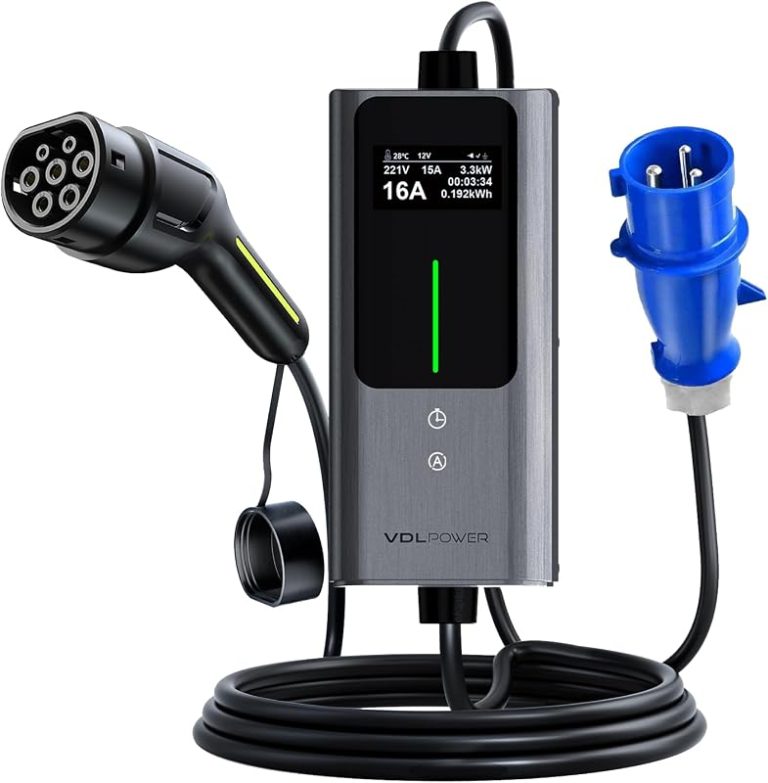
That distinction matters. A true portable EV charger — the kind you plug into a wall outlet or a 240V receptacle — is an EVSE that talks to your car’s onboard charger, and it is a completely different product category from the 12V accessories below. If you are shopping for that type of hardware, our guide to a 40 amp Level 1 and 2 portable EV charger covers the plug-in EVSE side of the market. The three products here are 12V battery tools: they keep the small battery that runs your car’s electronics alive, and they charge your personal devices.
Quick Product Comparison
| Product | Image | Type / Connector | Best For | Current Price |
|---|---|---|---|---|
| 12W Solar Car Battery Charger | 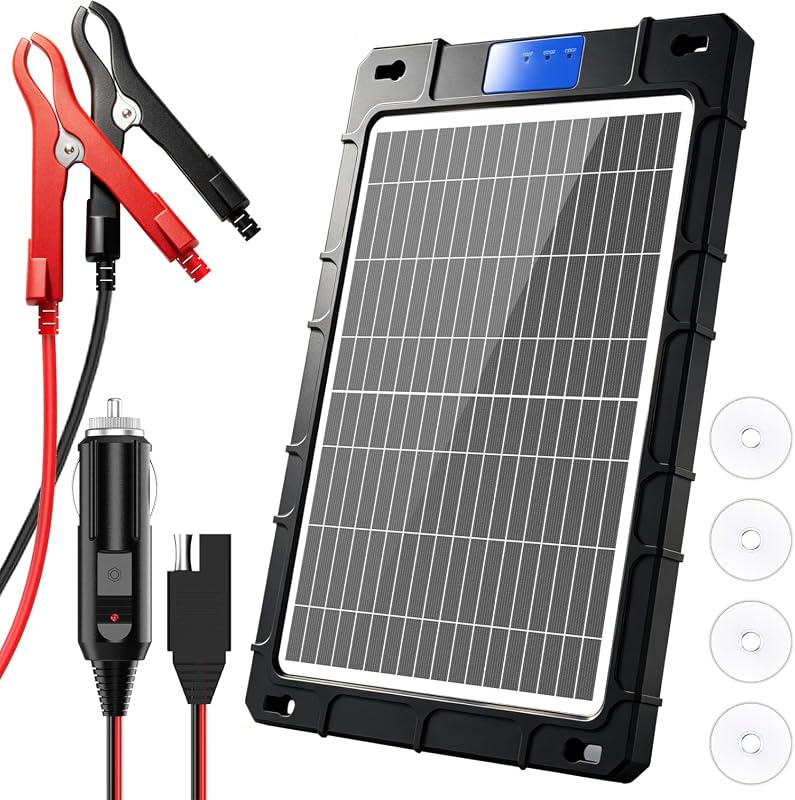 |
12V solar maintainer; connector not stated | Keeping a parked 12V battery topped up with sunlight | See Price → |
| INIU 10000mAh 20W PD Power Bank | 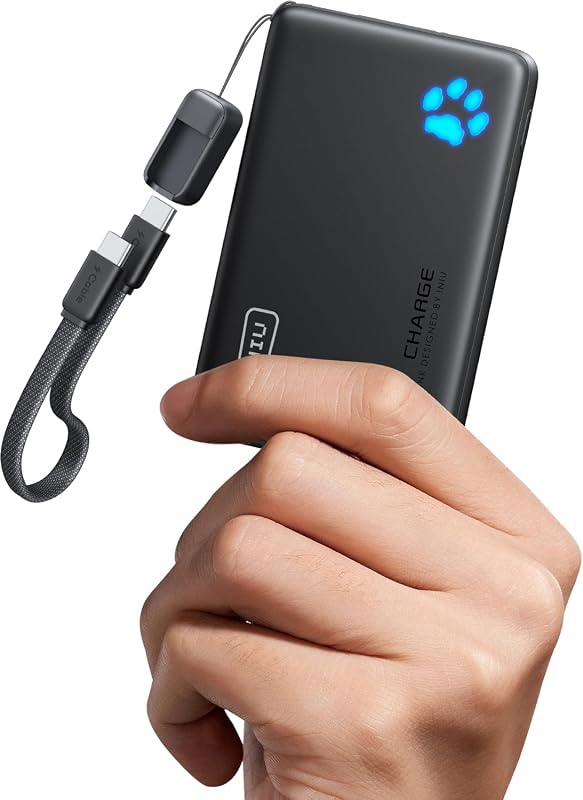 |
USB Type-A + USB Type-C (USB-C in and out) | Charging phones, tablets, and small USB devices on the road | See Price → |
| CTEK CS Free Portable Battery Charger | 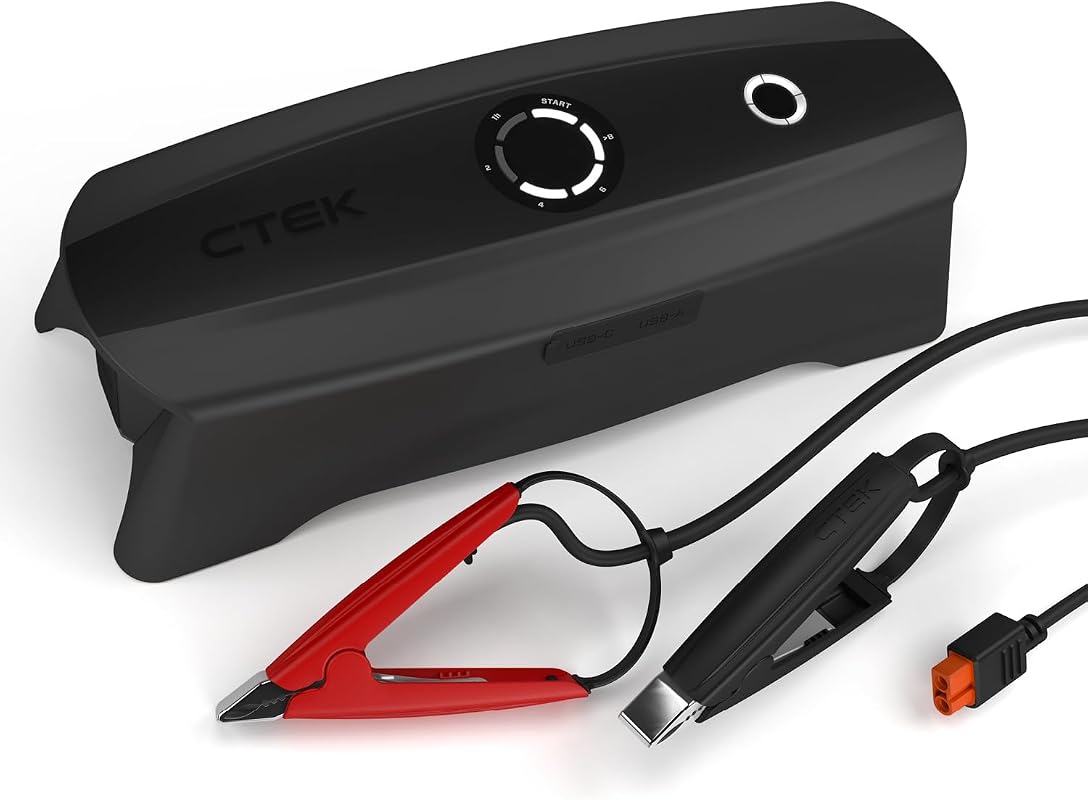 |
12V battery connections; USB-A and USB-C ports | Charging, maintaining, and jump-starting 12V batteries | See Price → |
What Matters for Best Portable Ev Charger Battery
1. What the unit actually charges. Every product on this list works on 12V systems. None of them feeds energy into a high-voltage traction pack. Before you buy, confirm whether you need a 12V accessory-battery maintainer or a plug-in EVSE, because the two are not interchangeable.
2. Power source and output. The solar unit relies on sunlight and lists a 12V output. The power bank lists 10,000mAh capacity, 20W PD output, and 9V. The CTEK unit lists 12V charging with adaptive boost. Matching the output type to your actual job matters more than the biggest number on the box.
3. Connector and cable type. The INIU bank uses USB Type-A and USB Type-C, and its USB-C port works in both directions. The CTEK unit lists USB-A and USB-C ports plus 12V battery connections. The solar charger’s connector style is not stated in the supplied data, so verify it against your battery terminals.
4. Weather and outdoor exposure. The solar charger is advertised as waterproof with tempered glass and an ABS frame, which suits a panel that lives outside. The other two are not described as weather-rated, so treat them as indoor or in-cabin items.
5. Battery chemistry support. The CTEK unit is stated to charge and maintain all types of 12V lead-acid and 12V LiFePO4 batteries. If your car uses a different 12V chemistry, confirm support before connecting anything.
6. Safety documentation. None of the supplied listings state a safety certification mark. Check the current product page and manual for listing details, and follow the manufacturer’s connection sequence exactly.
Our Top 3 Picks
1. 12W Solar Car Battery Charger 12V Waterproof Portable Trickle Charger Maintainer with Smart Controller for RV Boat
This AeternaSol panel is designed as a trickle maintainer rather than a fast charger. The listing describes premium solar materials, smart protection, and a high conversion rate, plus a housing built from high-strength tempered glass and an ABS frame that is advertised as impact resistant and able to handle wind and snow. Three LEDs tell you what is happening: blue for sunlight received, red for battery connected and charging, and green for charge complete. With a 4.6 rating across 47 reviews, it is the best-reviewed pick here for the specific job of keeping a stored vehicle’s 12V battery from going flat. The trade-off is scale — 12W is maintenance-level output, and the listing does not state a connector type or a safety certification mark.
- Advertised as waterproof with tempered glass and an ABS frame
- Three LED indicators make charging status easy to read
- No outlet needed, so it suits long-term parking and storage
- 12W output is a maintainer, not a fast charger
- Connector type and safety listing are not stated in the supplied data
- Panel needs meaningful sun exposure to work as intended
2. INIU Portable Charger Slimmest 10000mAh 20W PD Power Bank USB C High-Speed Charging for iPhone Samsung
This is the pick for EV owners who want backup power for their devices rather than for the car. The headline feature is the USB-C IN&OUT port, which the listing says only about 5% of power banks offer — meaning you can charge the bank and charge other devices through the same USB-C cable instead of hunting for a separate input. Capacity is 10,000mAh with 20W PD fast charging, and it carries a 4.5 rating across 1,195 reviews, by far the largest review base in this roundup. The limitation is straightforward: it is a phone and tablet charger. It will not maintain a 12V car battery and has no jump-start function.
- USB-C port works for both input and output
- 10,000mAh capacity with 20W PD fast charging
- Large, established review base at 4.5 stars
- Cannot charge or maintain a 12V car battery
- No jump-start capability
- Not described as weather-rated
3. CTEK CS Free 12V Portable Battery Charger 4-in-1 Power Bank Smart Maintainer Jump Starter with Adaptive Boost
The CS Free is the most capable unit in this group because it combines four jobs: an adaptive booster, a battery charger, a smart maintainer, and a power bank. Adaptive Boost is described as working out the safest way to bring a dead battery up so you can get going within 15 minutes, which replaces the need for a separate jumper starter. It charges and maintains all types of 12V lead-acid and 12V LiFePO4 batteries, and it can be fed from a wall outlet, a solar panel kit, or a stand-alone 12V battery through its USB-C input for longer off-grid maintenance. There are no buttons or modes — countdown LEDs show time remaining until full charge. The trade-off is a 3.9 rating across 678 reviews, the lowest here, and the supplied data does not state the power bank’s capacity in milliamp-hours, so verify that detail if device charging is a priority for you.
- Four functions in one portable unit
- Adaptive Boost is described as removing the need for jumper starters
- Stated support for all 12V lead-acid and 12V LiFePO4 batteries
- Can be recharged from a wall outlet, solar panel kit, or 12V battery
- Lowest rating in this roundup at 3.9 stars
- Power bank capacity in milliamp-hours is not stated in the supplied data
- Solar panel kit and 12V connection accessories may be sold separately
Buying Guide: Choosing a Portable 12V Charger for an EV
Start by deciding which battery you are trying to protect. Your EV has a high-voltage traction pack and a separate 12V accessory battery. The traction pack is charged through the charge port by an EVSE. The 12V battery is what these products work on, and it is the one that goes flat when a car sits for months.
If what you actually need is AC charging at home, the numbers are different and the hardware is different. Our breakdown of whether 40 amps is enough for a Level 2 EV charger is a better starting point for that decision, and it explains why the charger’s rating and your vehicle’s onboard limit are two separate things.
- Confirm whether you need a 12V maintainer or a plug-in AC EVSE
- Verify the connector style against your battery terminals
- Check the stated battery chemistry support
- Confirm weather suitability if the unit will live outdoors
- Verify safety listing, warranty, and any separately sold accessories
Confirm whether the goal is the 12V accessory battery or the traction pack.
A maintainer, a jump starter, and a phone power bank are three different tools.
Follow the product instructions for connection order and use a qualified professional where required.
Only the 12W solar charger is advertised as waterproof with tempered glass and an ABS frame. The INIU power bank and CTEK CS Free are not described as weather-rated in the supplied data, so keep them out of standing water and prolonged rain.
One more consideration for anyone comparing this category with home charging hardware: a portable 12V tool is cheap insurance for a car that sits, but it will never replace the charger you plug into the wall. If you are weighing a permanent setup instead, our roundup of the best 40 amp Level 2 EV charger options covers that path.
- Best for: the 12W Solar Car Battery Charger if you want to keep a parked EV’s 12V battery topped up without an outlet.
- Think twice if: you expect any of these to add driving range — none of them charges a traction battery.
- Next step: confirm your vehicle’s 12V battery type, the connector style, and the current safety listing before ordering.
Frequently Asked Questions About Best Portable Ev Charger Battery
No. All three products work on 12V systems — the small accessory battery that runs your car’s electronics — or on USB devices. Charging the high-voltage traction pack requires a proper EVSE connected to the charge port.
A 12V maintainer trickles a small amount of current into the accessory battery to keep it from discharging during storage. A Level 2 EVSE supplies AC power to the vehicle’s onboard charger to recharge the traction pack. They use different connectors and serve completely different purposes.
The 12W panel is designed as a maintainer, not a fast charger, so it is intended to offset normal parasitic drain rather than refill a deeply discharged battery. It also needs reasonable sun exposure to perform as advertised.
The INIU 10000mAh power bank is a device charger with USB-A and USB-C ports and no stated jump-start function, so it should not be used for that purpose. The CTEK CS Free is the unit in this group that lists Adaptive Boost for reviving a dead 12V battery.
The listing states that it charges and maintains all types of 12V lead-acid and lithium (12V LiFePO4) batteries. If your vehicle uses a different 12V chemistry, confirm support with the manufacturer before connecting it.
Confirm the 12V battery’s type and location in your owner’s manual, verify the charger’s connector and chemistry support, and follow the product’s connection sequence exactly. If you are unsure, have a qualified professional handle it.
For most U.S. EV owners, the realistic use case for this category is storage and standby power, not charging. A car that sits for weeks benefits from a solar maintainer like the 12W panel, while a car that gets driven regularly mostly needs the CTEK CS Free for the occasional flat 12V battery — and a power bank like the INIU for the devices in your pocket.
Whichever you choose, verify the details that the listings do not spell out: connector style, battery chemistry, weather exposure, and current safety documentation. Those four checks will tell you more about real-world fit than any single spec on the page.