EV Charger Extension Cord Safety: Risks and Safe Practices
Most EV and EVSE manufacturers prohibit extension cords for charging, and the only defensible use is a short, heavy-gauge, EV-rated cord in a temporary, supervised setup. The durable fix is a dedicated circuit or a longer-cable EVSE, because continuous EV current is what turns a marginal cord into a fire risk.
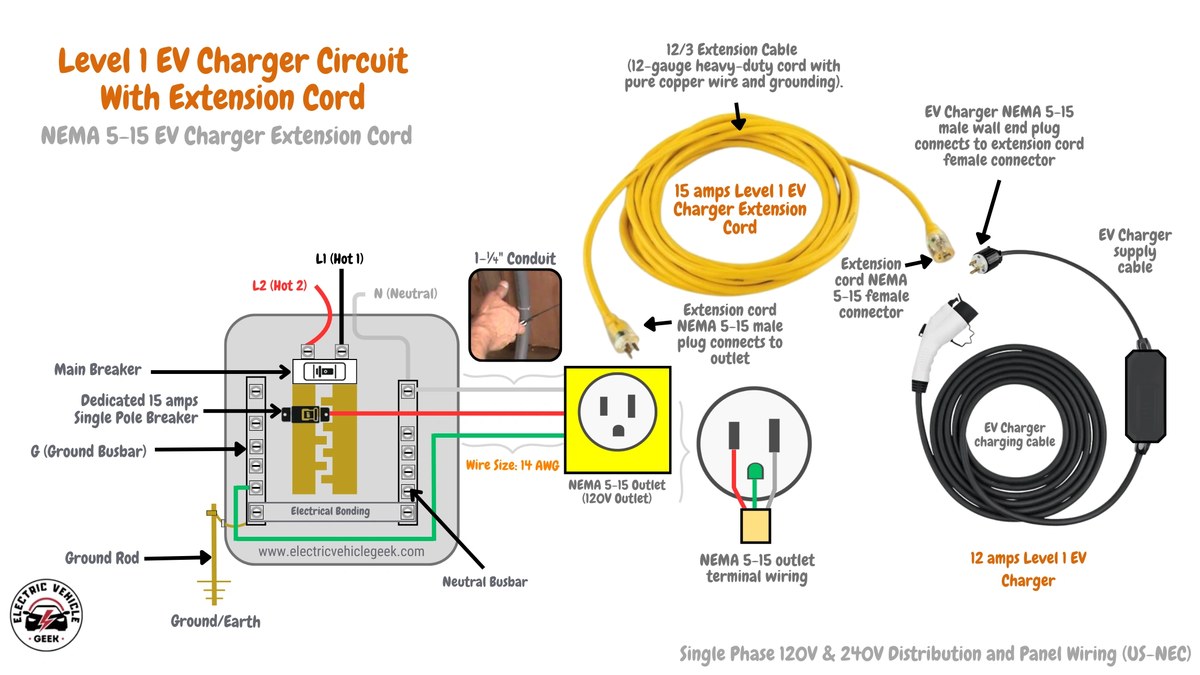
EV charger extension cord safety comes down to one blunt rule: most EV and EVSE manufacturers tell owners not to use an extension cord at all, and the narrow exceptions require a properly rated, short, uncoiled cord that is never treated as a permanent substitute for a dedicated circuit. The real danger is not the cord itself but the heat, voltage drop, and connector stress that build up when a household extension cord is asked to carry a continuous load it was never designed for.
- Compatibility: Adapters and extension cords are different products; AC and DC adapters are never interchangeable.
- Performance: Voltage drop and connector resistance reduce delivered power, but the vehicle’s onboard charger still.
- Safety: Heat, discoloration, or burning smells mean stop charging and call a qualified electrician.
- Cost: A dedicated circuit costs more upfront but removes warranty, insurance, and fire risk that.
Can You Use an Extension Cord With an EV Charger in 2026? The Short Answer
For the vast majority of drivers, the answer is no. EV charging is a continuous, high-current load that runs for hours, which is a fundamentally different stress case than a lamp, a drill, or a vacuum cleaner. Extension cords are typically rated for short, intermittent use, and the gap between that rating and a multi-hour EV session is where fires start.
Why Most EV Manufacturers and EVSE Brands Say No
Vehicle owner’s manuals and EVSE installation guides generally prohibit extension cords because the manufacturer cannot control the cord’s gauge, length, insulation, connector quality, or condition. An unapproved cord introduces resistance the EVSE was never designed to see, and it voids the safety assumptions built into the product’s listing.
The Narrow Exception: Temporary, Properly Rated, and Never a Substitute for a Dedicated Circuit
A temporary, supervised setup — a short, heavy-gauge, EV-rated cord with matching connectors, fully uncoiled, on a GFCI-protected circuit, at a reduced current setting — is the only scenario where the risk is meaningfully reduced. It is still not a permanent solution, and it is still outside most manufacturers’ instructions.
What the Owner’s Manual and Local Electrical Code Actually Require
The owner’s manual governs the equipment. Local electrical code governs the installation. Where they conflict or where the manual is silent, the safer reading wins. Always check both before assuming a cord is acceptable.
The Real Risks: Heat, Voltage Drop, and Fire

Three failure modes dominate: resistive heating in the conductor, voltage drop that starves the vehicle, and mechanical stress at the connectors. Each one compounds the others.
Ampacity, Gauge, and Length: Why 12 AWG vs. 10 AWG Matters
Ampacity is the current a conductor can carry continuously without exceeding its temperature rating. A longer cord of the same gauge has more resistance, so it heats more and drops more voltage. Moving from 12 AWG to 10 AWG lowers resistance, but length still erodes the margin.
Voltage Drop, Vehicle Onboard-Charger Limits, and EVSE Amperage/kW
Voltage drop means the vehicle’s onboard AC charger receives less than nominal voltage, which can reduce delivered power and, in some cases, trigger charging faults. The onboard charger — not the EVSE — sets the vehicle’s maximum AC acceptance rate, so a thicker cord will never exceed that ceiling.
Connector and Outlet Stress: NEMA 5-15, 5-20, 14-50, and EV-Specific Plugs
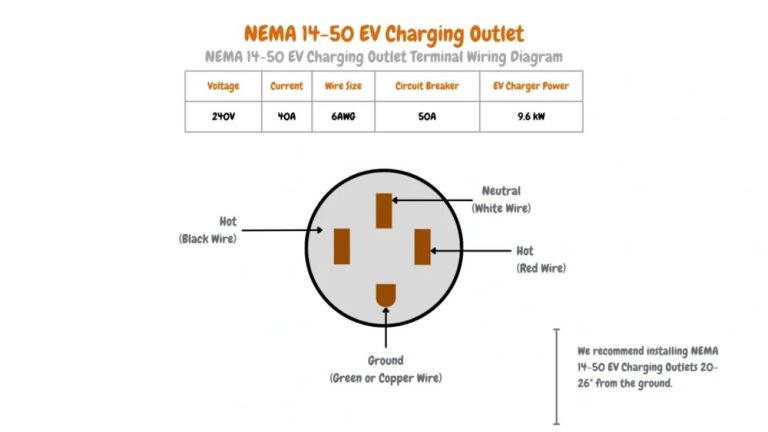
Every additional connection point is a potential hot spot. NEMA 5-15 and 5-20 household receptacles are not intended for sustained EV loads, and 14-50 receptacles demand correctly torqued terminations and quality hardware. Loose or worn contacts raise resistance fast.
Weather Suitability, Water Exposure, UV Damage, and Outdoor Use
Outdoor cords face rain, snow, sun, and abrasion. Unless the cord and its connectors carry a verified outdoor rating and the manufacturer permits that use, outdoor extension-cord charging should be treated as unsafe.
EV Charger Extension Cord Safety Rules That Actually Reduce Risk
If you are in the narrow temporary-use scenario, these rules are the difference between a controlled risk and an uncontrolled one.
Use Only EV-Rated Extension Cords With Matching Connectors
EV-rated cords use heavier conductors and connectors designed for continuous duty. Matching connectors avoid adapters, which add resistance and failure points.
Keep It Short, Uncoiled, and Off the Ground
Coiled cord traps heat. Short runs reduce voltage drop. Keeping the cord off the ground limits water exposure, abrasion, and trip hazards.
Never Daisy-Chain, Use Household Adapters, or Hide It Under a Mat
Daisy-chaining multiplies resistance. Household adapters are not rated for continuous EV current. Covering a cord hides heat buildup and removes your ability to notice a problem early.
Check Temperature, GFCI Protection, and Smart EVSE Current Settings
Periodically feel the plug, cord, and receptacle for warmth during charging. Use GFCI protection where required. If your EVSE allows current adjustment, lowering the setting reduces thermal stress on the whole chain.
Warranty and Support Consequences of Unapproved Cord Use
Manufacturers can decline warranty coverage for damage traced to unapproved accessories. That is a real cost, not a theoretical one.
Adapters vs. Extension Cords: What EV Drivers Need to Know
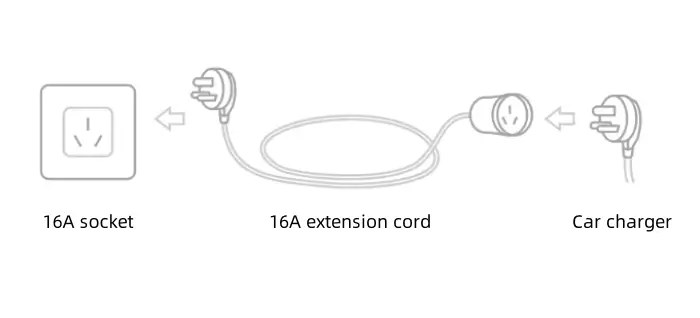
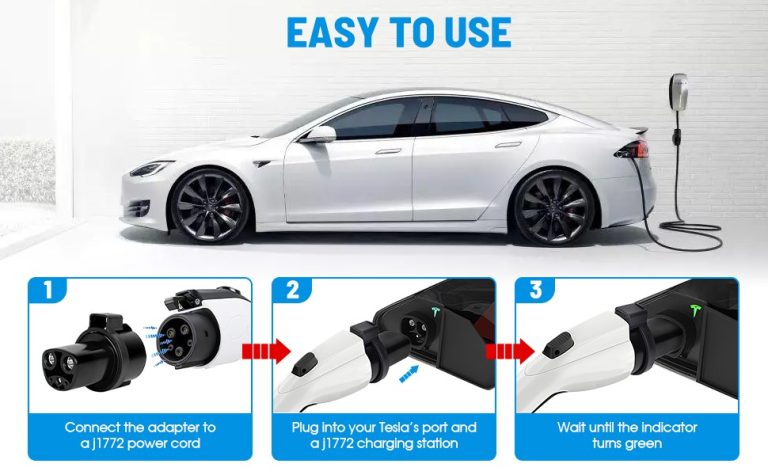
Adapters change connector geometry; extension cords add conductor length. They are different products with different risks, and they are often confused.
Source Connector, Destination Connector, and Adapter Direction
An adapter has a source side and a destination side, and direction matters. A J1772-to-NACS adapter for AC charging is not the same product as a CCS1-to-NACS DC adapter, and using one in the wrong direction can be unsafe or simply non-functional.
AC vs. DC Charging and Power Limits
Level 1 and Level 2 charging are AC; DC fast charging uses a different protocol and much higher power. A connector that fits does not mean the vehicle will accept DC on that path.
Vehicle, Network, and Firmware Restrictions
Some vehicles restrict adapter use by firmware, and some charging networks restrict which adapters are permitted on their equipment. Check the vehicle and network documentation before relying on an adapter.
Thermal and Safety Considerations for Adapter Use
Adapters add a connection point, and every connection point can heat. Use only adapters with a verified safety listing and a stated power rating that meets or exceeds the session’s current.
Electrical Requirements: Circuit, Panel, and Permit Basics
The durable fix for extension-cord charging is a proper circuit. This is where most owners should focus their money.
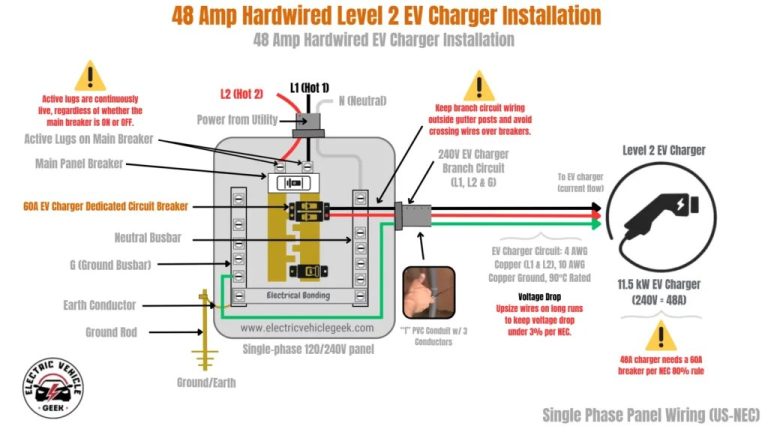
Plug-In vs. Hardwired EVSE: Which Setup Avoids Extension Cords
Uses a compatible receptacle on a dedicated circuit. Portable and easier to relocate, but the plug and receptacle become a wear point.
Eliminates the plug connection entirely and is often required for the highest continuous currents. Typically installed by a qualified electrician.
Breaker, Wire Gauge, and Receptacle: Follow the Manual and Local Code
Breaker size, conductor gauge, and receptacle type must match the EVSE’s instructions and the applicable local electrical requirements. There is no single universal answer, because adoption and amendments vary by jurisdiction.
Panel Load Calculation and Why a 120V Outlet May Not Be Enough
A 120V household outlet delivers a small fraction of what a 240V circuit provides, and it may share a branch circuit with other loads. A load calculation determines whether the panel can support an added continuous load.
Installation and Inspection: When to Call a Licensed Electrician
Call a licensed electrician for panel work, new circuits, hardwiring, receptacle replacement, or any uncertainty about code compliance. Permits and inspections exist to catch exactly the failure modes described above.
Safe Alternatives to an EV Charger Extension Cord
Every alternative below removes the cord from the equation, which is the point.
Relocate the EVSE or Upgrade the Outlet
Moving the EVSE closer to the parking position, or installing a properly rated outlet where you actually park, is usually cheaper than a fire.
Use a Longer EVSE Cable or Hardwired Unit
Many EVSEs are available with longer cables, and hardwired units remove the plug connection. If you are choosing equipment, review how a portable EV charger works before assuming portability solves your reach problem.
Portable Level 2 Chargers and Public Charging
A portable Level 2 EVSE paired with a correctly rated receptacle can replace a cord-and-adapter setup. When home charging is impractical, public charging is a legitimate fallback.
Load Management, Solar, and Battery-Backed Options
Load-management devices let an EVSE share capacity with existing household loads, which can make a proper circuit feasible when panel capacity is tight. Solar and battery-backed setups change the economics but not the electrical fundamentals.
Cost and Efficiency Trade-Offs of Extension Cord Charging
Cord charging looks cheap until you account for losses and risk.
Electricity Rate, kWh Delivered, and Charging Losses
You pay for energy drawn from the grid, not energy stored in the battery. Voltage drop and heat in a marginal cord increase the gap between the two.
Time-of-Use Pricing and Off-Peak Scheduling
If your utility offers time-of-use rates, scheduling charging off-peak lowers cost per kWh. Verify your current rate plan and any demand charges before estimating savings.
Equipment and Installation Costs vs. Temporary Cord Costs
A cord is a small upfront cost. A dedicated circuit and EVSE are a larger one. The comparison should include safety, warranty, and longevity, not just the receipt.
When the “Cheap” Cord Becomes Expensive
Damaged wiring, a failed receptacle, an insurance dispute, or a house fire all cost far more than the proper installation. The cheap option is only cheap if nothing goes wrong.
Rates, taxes, fees, time-of-use pricing, and charging losses vary. Verify current figures before relying on any estimate.
Battery Health, Range, and Efficiency: What Extension Cord Charging Does Not Change
A cord does not damage your battery directly. It changes the reliability and safety of the charging session, not the chemistry inside the pack.
Manufacturer Guidance vs. General Patterns for State of Charge and Temperature
Follow your vehicle manufacturer’s charging guidance. There is no universal state-of-charge rule that applies to every chemistry and thermal-management design.
Charging Power, DC Fast Charging Context, and Thermal Management
Charging power at home is limited by the onboard charger and the circuit. DC fast charging is a separate mode with its own thermal considerations.
mi/kWh and Wh/mi: Speed, Weather, HVAC, Elevation, Payload, and Tires
Efficiency varies with speed, temperature, HVAC use, elevation change, payload, and tire condition. A cord does not change these variables.
Charging Losses and Voltage Drop: Efficiency Effects You Can Measure
You can compare energy drawn at the meter against energy added to the battery to estimate charging efficiency. A marginal cord widens that gap.
Troubleshooting: When Your EV Won’t Charge on an Extension Cord
Most failures show up as faults, trips, or heat rather than a silent stop.
EVSE Fault Codes, GFCI Trips, and Overheating
Repeated GFCI trips or fault codes usually indicate a grounding, insulation, or moisture problem. Overheating indicates resistance. Neither should be ignored.
Connector Fit, Latch, and Vehicle Inlet Issues
A partially seated connector, a worn latch, or debris in the vehicle inlet can interrupt charging. Inspect and clean per the manufacturer’s guidance.
Onboard Charger Limits and EVSE Amperage Settings
If the session is slower than expected, check the EVSE’s configured current, the circuit’s capacity, and the vehicle’s onboard charger limit before blaming the cord.
When to Stop and Call an Electrician or EVSE Support
Stop and get professional help if you see heat, discoloration, burning smells, repeated trips, or fault codes you cannot clear. This is not a troubleshooting-until-it-works situation.
- Best for: A properly rated, short, uncoiled, temporary cord setup used only when no dedicated circuit is available.
- Think twice if: You are treating a cord as a permanent solution, daisy-chaining, or using household adapters.
- Next step: Get a quote for a dedicated circuit or a longer-cable EVSE — it is the only fix that removes the risk entirely.
Frequently Asked Questions
Most EV and EVSE manufacturers say no, and their owner’s manuals and installation guides generally prohibit it. The only narrow exception is a short, heavy-gauge, EV-rated cord with matching connectors, used temporarily and supervised, on a GFCI-protected circuit at a reduced current setting. Even then, it is outside most manufacturers’ instructions and should never replace a dedicated circuit.
There is no universally “safe” gauge, because safety depends on current, length, insulation rating, connector quality, and the manufacturer’s instructions. In general, heavier gauge (lower AWG number) and shorter length reduce resistance and heat, but an EV-rated cord that matches the EVSE’s connector is the starting point. If the manufacturer prohibits extension cords, no gauge makes the setup approved.
EV charging is a continuous, high-current load that runs for hours, which is a different stress case than intermittent household use. Resistance in the conductor and at each connection point converts energy into heat, and coiled or covered cords trap that heat. Undersized conductors, long runs, worn connectors, and loose receptacle contacts all raise resistance further.
Manufacturers can decline warranty coverage for damage traced to unapproved accessories or installation practices. Because owner’s manuals typically prohibit extension cords, damage linked to one may not be covered. Check your specific vehicle and EVSE warranty documents rather than assuming coverage either way.
Only if the cord is specifically rated for continuous duty at the EVSE’s configured current, uses correctly sized conductors, has verified connectors, and the manufacturer permits that use. A 14-50 receptacle also requires correctly torqued terminations and appropriate circuit protection. Many EVSE brands still prohibit extension cords regardless of plug type, so verify the equipment instructions first.
Relocate the EVSE closer to where you park, install a properly rated dedicated circuit and outlet, choose an EVSE with a longer cable, or switch to a hardwired unit. If panel capacity is limited, ask a licensed electrician about load-management options. Public charging is a reasonable fallback when home charging is impractical.