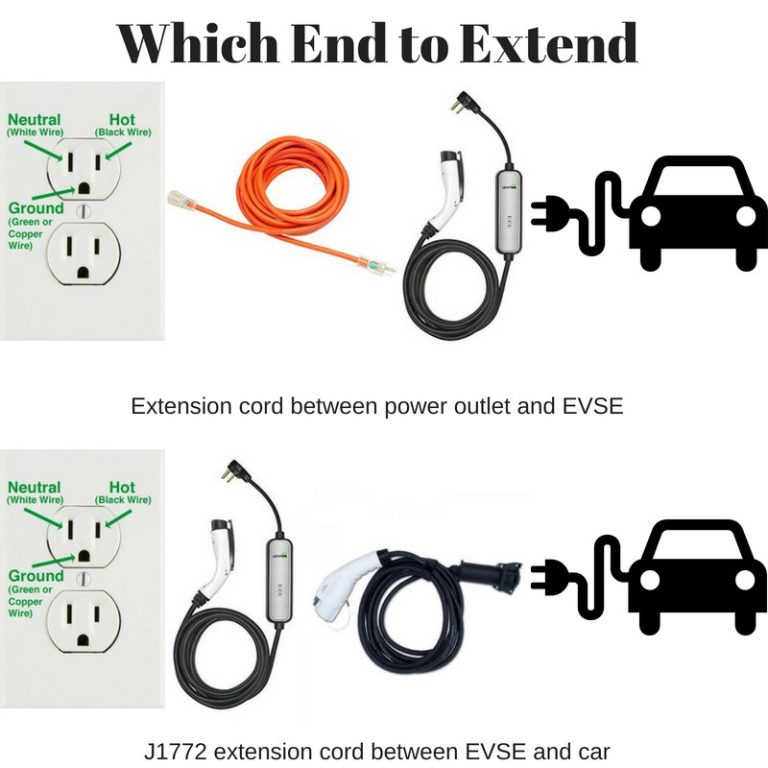
NEMA 14-50 EV Charger Outlet: What You Need to Know
The primary decision for EV owners is whether to install a NEMA 14-50 outlet for a plug-in Level 2 charger or hardwire the charger, since a 14-50 outlet must be on a dedicated 240V circuit with a 40- or 50-amp breaker and therefore limits continuous charging to 32 or 40 amps under the 80% rule. It also requires an EV-rated receptacle, proper grounding, and often a GFCI breaker, and it may force costly panel or wiring upgrades if your home’s electrical service cannot support the added load.
A NEMA 14-50 EV charger outlet is one of the most common ways US drivers power a Level 2 home charging setup, but it is also one of the most misunderstood. The outlet itself is not a charger — it is a 240-volt receptacle that supplies power to a plug-in EVSE (Electric Vehicle Supply Equipment). Understanding what this outlet can and cannot do helps you plan a safe, code-compliant install that matches your vehicle, your panel, and your daily driving.
This guide explains what a NEMA 14-50 outlet actually is, how much power it can safely deliver for EV charging, when it makes sense versus a hardwired setup, and the electrical details a qualified electrician will want to confirm before you buy anything.
- Compatibility: Common 240V Level 2 outlet, but your EVSE plug and EV connector must match.
- Charging performance: Faster than 120V; actual range added depends on EVSE and onboard charger.
- Installation/safety: Requires dedicated circuit, proper breaker/wiring, and code-compliant GFCI where required.
- Cost: Outlet is inexpensive; installation can vary with panel capacity, wiring run, and permits.
- Battery/ownership limits: AC charging is generally gentler than DC fast charging, but panel, rental, and permanent-install.
What Is a NEMA 14-50 Outlet?
NEMA stands for the National Electrical Manufacturers Association, which standardizes plug and receptacle configurations in North America. A NEMA 14-50 receptacle is a 240-volt, 50-amp outlet with four conductors: two hot legs, one neutral, and one ground. It is the same receptacle type many electric ranges and RV hookups use, which is why it is already familiar to electricians and widely installed in garages.
For EV charging, the outlet supplies AC power to a plug-in Level 2 EVSE. The EVSE then communicates with the vehicle’s onboard charger, which converts AC to DC and manages the battery. The outlet does not set charging speed by itself — the EVSE’s amperage setting, the circuit’s capacity, and the vehicle’s onboard charger limit all matter.
How Much Power Can a NEMA 14-50 Outlet Deliver for EV Charging?
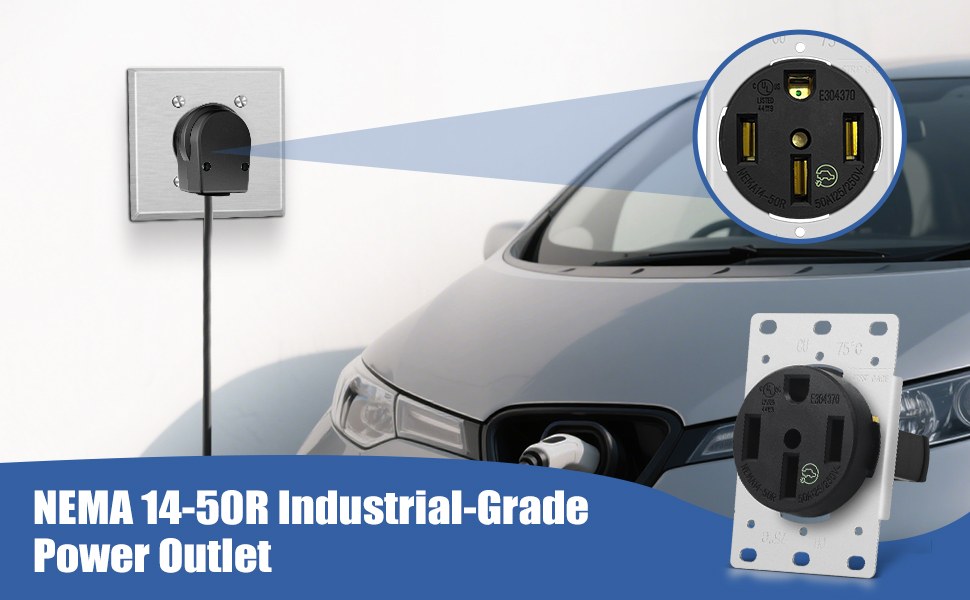
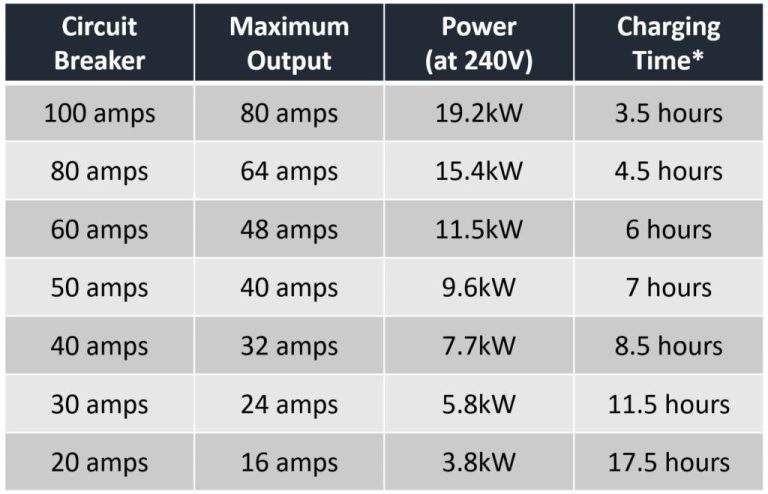
The most important number to understand is the 80% rule. The NEC treats EV charging as a continuous load, which means the EVSE’s charging current cannot exceed 80% of the circuit’s rated capacity. On a 50-amp circuit, that works out to a maximum continuous charging current of 40 amps.
These are typical values for a plug-in EVSE on a properly installed 50 A circuit. Actual delivered power depends on the EVSE setting, voltage, and the vehicle’s onboard charger limit.
In practice, many plug-in EVSEs sold for NEMA 14-50 use are factory-set to 40 A or lower. Some are adjustable, but the setting must never exceed the circuit’s safe continuous rating. If your vehicle’s onboard charger maxes out at 7.2 kW or 9.6 kW, a 40 A EVSE is usually enough to reach that limit. If your vehicle supports higher AC charging (11 kW or more), you may need a hardwired 48 A setup on a 60 A circuit instead. Our breakdown of whether 40 amps is enough for a Level 2 EV charger walks through that trade-off in more detail.
Charging current: Typically 40 A maximum on a 50 A circuit. Circuit / breaker: A 50 A breaker and conductors sized for 50 A are typical, but the EVSE manufacturer’s instructions and the NEC as adopted locally govern the final requirement. Confirm with a licensed electrician and your AHJ.
Plug-In vs. Hardwired: Which Fits Your Setup?
A NEMA 14-50 outlet supports a plug-in EVSE. That has real advantages, but it also has trade-offs compared with a hardwired installation.
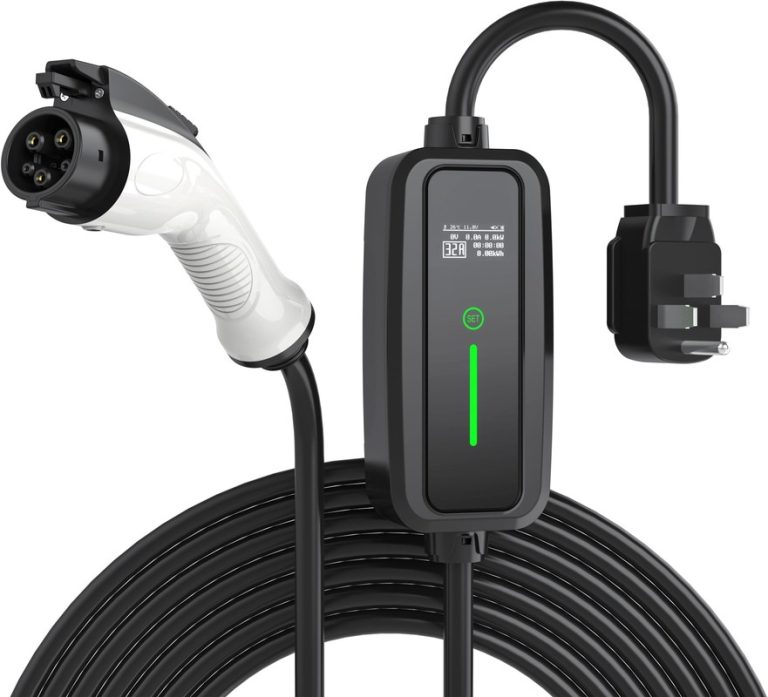
Uses a NEMA 14-50 receptacle. The EVSE can be unplugged for service, moved, or taken on a trip if the unit is portable. Typically limited to 40 A continuous charging. Adds a plug-and-receptacle connection point that must be installed per code and rated for the load.
EVSE is wired directly to the circuit with no receptacle. Allows higher continuous current (commonly 48 A on a 60 A circuit) when the EVSE and vehicle support it. Fewer connection points, but the unit is not portable and must be installed by a qualified electrician.
If you want the option to unplug the EVSE, a 14-50 outlet makes sense. If you want the fastest Level 2 charging your vehicle can accept, hardwiring is usually the better path. Our article on whether a 48 amp EV charger needs a 60 amp circuit explains the amperage and circuit relationship in detail.
Installation Requirements and Code Considerations
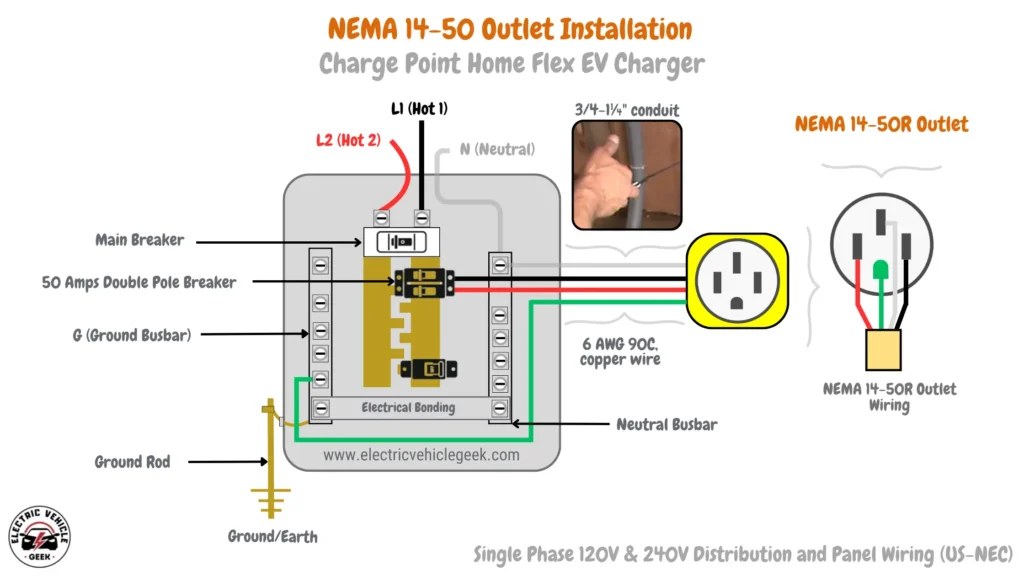
A NEMA 14-50 outlet for EV charging is a dedicated 240 V circuit. That means it should not share a circuit with other loads, and it must be installed with the correct breaker, conductors, and receptacle for the application. The exact wire gauge, breaker size, and grounding method depend on the amperage, the conductor type, and the code edition adopted in your area.
GFCI requirements for EV receptacles have changed in recent NEC editions, and many jurisdictions now require GFCI protection on the receptacle circuit. Some EVSE manufacturers also require or recommend specific GFCI arrangements. Because adoption timelines differ, the safest approach is to confirm the current requirement with your local AHJ and follow the EVSE manufacturer’s installation instructions.
Charging Speed: What to Expect in Real Life
Charging speed on a NEMA 14-50 setup depends on more than the outlet. The EVSE’s output setting, the vehicle’s onboard charger limit, battery state of charge, and temperature all shape how quickly range is added. The table below uses typical values, not guarantees.
Estimates only. Actual results depend on vehicle efficiency, onboard charger limit, battery state of charge, ambient temperature, HVAC use, and charging losses. Vehicles with lower onboard charger limits may not reach 9.6 kW even when the EVSE can supply it.
If you are comparing 40 A and 48 A charging, our guide to 48 amp EV charger speed shows how the difference plays out across common battery sizes.
Charging Cost: A Simple Example
Home charging cost depends on your utility rate, your rate plan, and charging losses. The example below uses a hypothetical rate to show the math; your actual rate will differ.
Assumptions: flat residential rate, no time-of-use discount, no demand charges, and a 10% AC charging loss. Utility rates, taxes, fees, TOU plans, and losses vary. Verify current rates with your utility before comparing costs.
Weather, Outdoor Use, and Enclosure Ratings
If the outlet or EVSE is installed outdoors or in an unconditioned garage, weather suitability matters. The receptacle, cover, and EVSE each have their own ratings, and the manufacturer’s instructions define what is allowed.
Common Mistakes to Avoid
- Assuming a 14-50 outlet always delivers 50 A of charging current. It does not — 40 A is the typical continuous maximum on a 50 A circuit.
- Buying a 48 A plug-in EVSE and expecting full output on a 14-50 outlet. That combination usually exceeds safe continuous limits for a 50 A circuit.
- Skipping the load calculation. A panel that looks fine on paper may not support a new 50 A continuous load.
- Ignoring GFCI and permitting requirements that apply in your jurisdiction.
- Assuming a NEMA 14-50 outlet is interchangeable with a 6-50 outlet. They are different configurations with different conductors.
Is a NEMA 14-50 Outlet Right for You?
- Drivers who want a plug-in Level 2 EVSE with flexibility to unplug or move the unit
- Households with a vehicle whose onboard charger tops out around 7.2–9.6 kW
- Garages that already have a 50 A circuit or easy panel capacity
- Vehicles that can accept more than 40 A of AC charging and drivers who want the fastest Level 2 speed
- Panels without spare capacity or service headroom
- Installations where the local code or EVSE instructions require a hardwired connection
Before You Buy: A Short Checklist
- Confirm your vehicle’s onboard AC charger limit and inlet type
- Verify the EVSE’s amperage setting and whether it is adjustable
- Confirm the circuit, breaker, and conductor sizing with a licensed electrician
- Check panel capacity and whether a load calculation is needed
- Verify GFCI, permit, and inspection requirements with your AHJ
- Confirm indoor/outdoor suitability, cable length, and mounting needs
- Include installation cost and any utility or incentive paperwork
The Bottom Line
A NEMA 14-50 EV charger outlet is a practical, widely supported way to run a Level 2 home charging setup, especially if you want the flexibility of a plug-in EVSE. The key is to treat it as a 50 A circuit with a 40 A continuous charging limit, confirm your panel and code requirements with a qualified electrician, and match the EVSE’s output to your vehicle’s onboard charger. If you need more than 40 A of AC charging, a hardwired installation on a larger circuit is usually the better path.
- Best for: Plug-in Level 2 charging where a 40 A continuous load matches the vehicle’s onboard charger.
- Think twice if: Your vehicle supports higher AC charging and you want the fastest Level 2 speed your car can accept.
- Next step: Have a licensed electrician confirm panel capacity, breaker and conductor sizing, GFCI requirements, and permit needs for your specific home before purchasing an EVSE.
Frequently Asked Questions
A NEMA 14-50 is a 240-volt, four-wire receptacle with two hot wires, a neutral, and a ground. It is commonly used for RVs and for Level 2 EV charging. Many portable EVSEs come with a 14-50 plug, and some plug-in home chargers can be connected to a 14-50 circuit. The EV itself does not plug directly into the outlet; the EVSE does.
No. The outlet is only the power source. Actual charging speed depends on the EVSE’s output and the vehicle’s onboard charger limit. Some EVs can accept more power than others, so two different EVs on the same 14-50 setup may charge at different rates.
For EV charging, it should be a dedicated circuit designed for the load, not shared with a dryer, range, or other large appliance. Installation should be done by a qualified electrician who follows local code, the EVSE manufacturer’s instructions, and your vehicle’s requirements. Have an existing 14-50 outlet inspected before relying on it for regular EV charging.
A properly installed 14-50 outlet and EVSE can be used outdoors if the equipment is rated for the location and protected as required. Use a weatherproof enclosure or cover where appropriate, keep connectors clean and dry, and never use damaged cords or unrated extension cords. Follow the EVSE and vehicle manuals for safe operation.
Typical cost factors include the distance and route from your electrical panel, wire and breaker requirements, indoor versus outdoor installation, permit and inspection requirements, local labor rates, and whether your panel or service needs an upgrade. Get quotes from licensed electricians. Any rebates or incentives depend on your location and current program rules.
Yes, but the adapter must be used in the correct direction and be rated for the voltage, current, and EV charging duty. A NEMA 14-50 outlet is a power source: you connect an EVSE with a 14-50 plug, or use a manufacturer-approved 14-50 adapter for a compatible portable EVSE. Do not use an adapter to connect a 14-50 plug into a smaller receptacle, and avoid unlisted or undersized adapters.