EV Charger Cable Length: How Long Should It Be?
For most U.S. homes, a 25-foot Level 2 EV charger cable is the practical default, with 15–18 feet for tight garages and 30+ feet for far-wall mounts or shared driveways. The main check is measuring the real cable path to your vehicle’s charge port before ordering, since connector type and onboard-charger limits matter more than length for charging speed.
EV charger cable length is one of the few charging specs you can evaluate before installation day, and it decides whether you can park nose-in, back in, or not at all. In the U.S., 25 feet has become the de facto baseline for Level 2 home EVSE, but the right number for your driveway depends on where the vehicle’s charge port sits, where the unit is mounted, and how the cable actually drapes.
- Compatibility: Cable length is separate from connector type — confirm J1772 or NACS / SAE.
- Performance: Longer cable does not slow charging; the vehicle’s onboard charger and the EVSE amperage.
- Safety: Avoid taut cables and tightly bundled coils, never use a general-purpose extension cord on.
- Cost: Extra cable length adds modest equipment cost, but avoiding an EVSE relocation can save.
The Short Answer: How Long Should an EV Charger Cable Be?
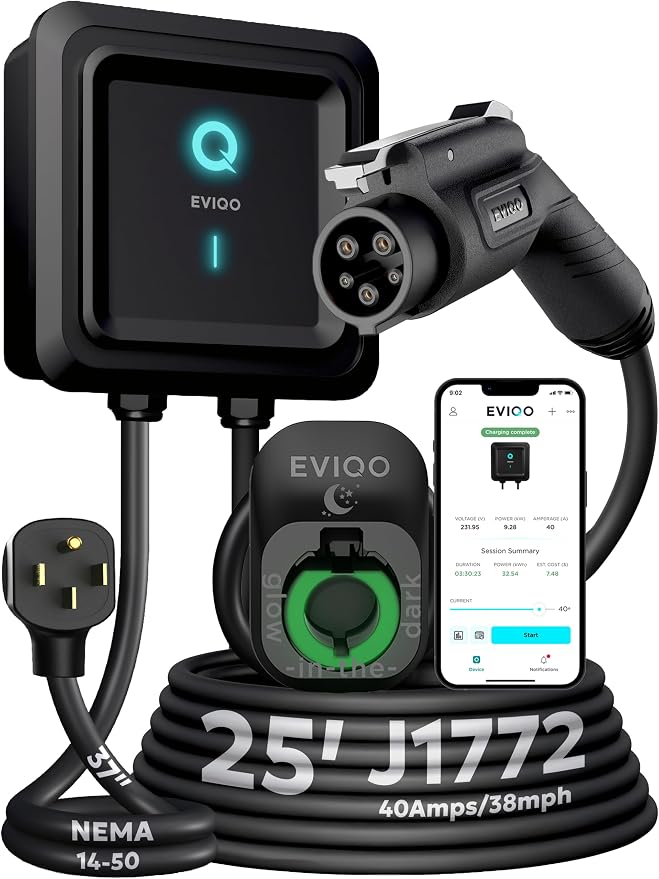
For most U.S. single-family homes, a 25-foot cable covers a one- or two-car garage where the EVSE is mounted on the wall nearest the vehicle’s charge port. That length reaches across a garage bay, leaves slack for a service loop, and still coils onto a hook without dragging. Shorter cables of 15–18 feet suit tight single-car garages or pedestal mounts positioned directly beside the port. Longer cables of 30 feet and up help when the unit must stay on a far wall, when two vehicles share one EVSE, or when a driveway parker backs in from an awkward angle.
Why 25 Feet Is the U.S. Baseline — and When 15–18 or 30+ Feet Fits Better
Twenty-five feet is a market convention, not a code requirement. It satisfies the majority of residential layouts without adding much weight, cost, or storage burden. Many manufacturers offer the same EVSE in multiple lengths, which means cable length is a purchasing decision rather than a fixed property of the charger.
Choose shorter when the EVSE sits within a few feet of the port and you want less cable to manage. Choose longer when the mounting location is constrained — a panel on the opposite garage wall, a shared driveway, or a rental where you cannot relocate the unit. Longer is not automatically better: extra cable adds weight, takes more space to store, and can become a trip hazard if it crosses a walking path.
EV Charger Cable Length and Connector Compatibility
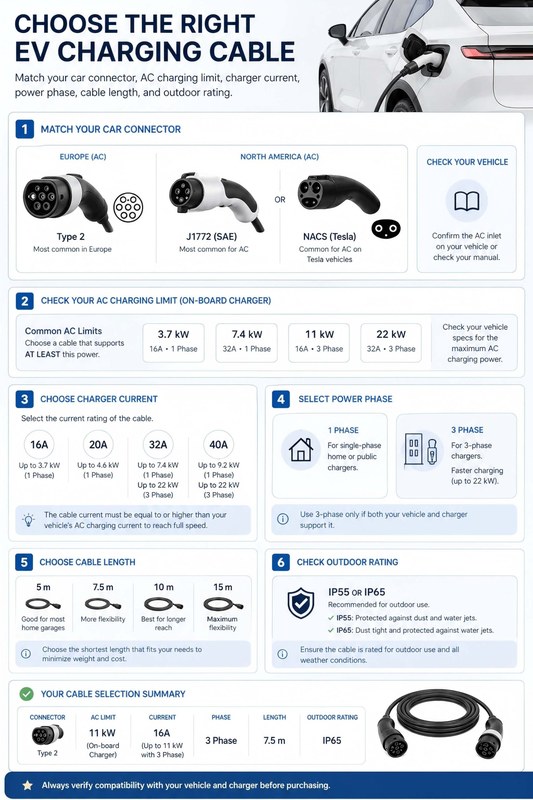
Cable length and connector type are separate decisions, but they meet at the vehicle port. A longer cable only helps if the connector on the end fits your inlet and the EVSE can deliver power in the mode your vehicle accepts.
J1772, NACS/Tesla, and Adapter Reach at the Vehicle Port
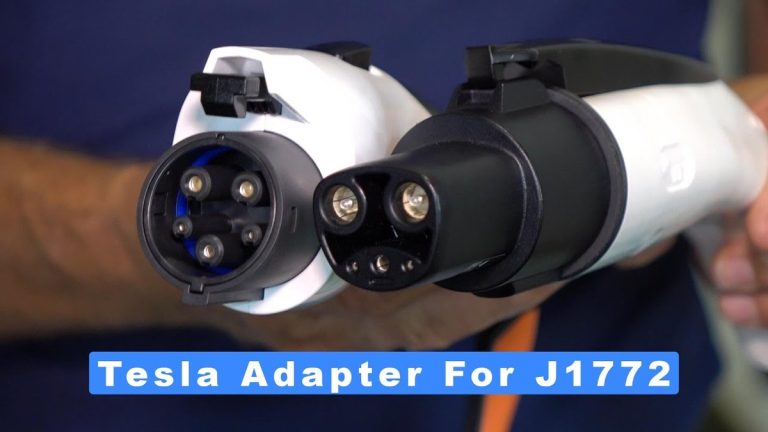
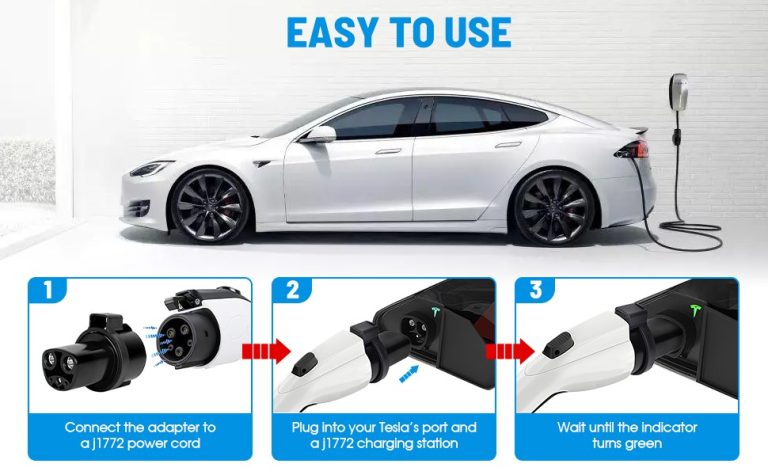
Level 2 AC charging in the U.S. uses either the J1772 connector or the NACS / SAE J3400 connector, depending on vehicle and EVSE. Many newer EVs ship with NACS inlets, while older EVs and much of the current Level 2 EVSE stock still use J1772. Adapters exist in both directions and add a few inches of effective reach, but they also add a connection point that must be rated for the current involved.
Important: Physical fit alone does not prove every AC or DC charging mode is supported. Verify the adapter’s AC/DC rating and the vehicle’s supported modes.
Front, Rear, and Side Ports: Measuring the Real Cable Path
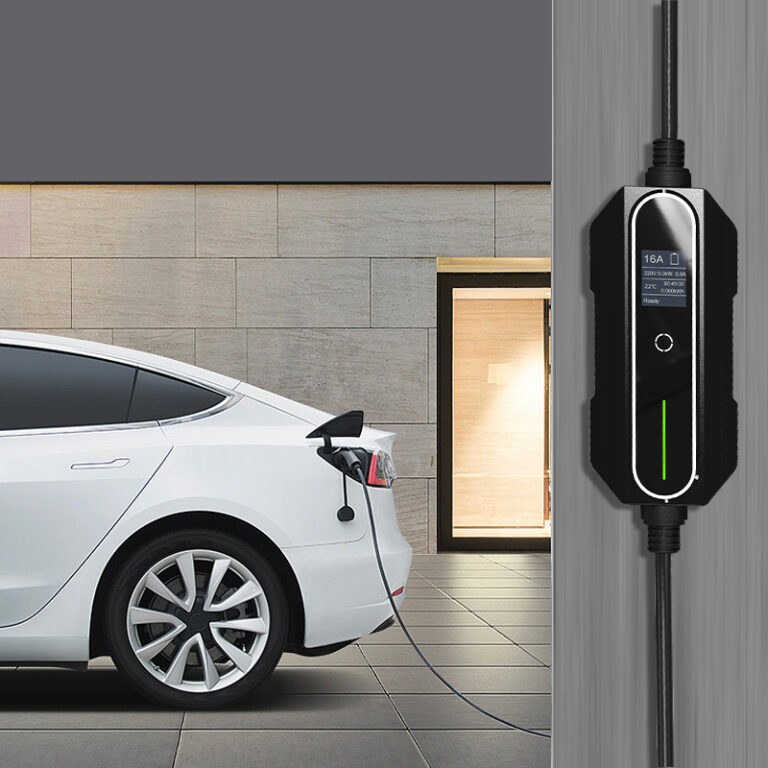
The cable does not travel in a straight line. It drapes from the EVSE, sags under its own weight, and has to clear the vehicle body, mirrors, and any wall obstruction. A car with a front-left port parked nose-in needs a very different path than one with a rear-left port parked nose-out.
A practical approach: measure the horizontal distance from the EVSE’s cable exit to the port, then add the vertical drop plus 3–5 feet of slack for a comfortable service loop. If the cable must pass around a mirror, pillar, or open garage-door track, add more.
Adapter Direction, AC/DC Mode, and Power Limits: What Can and Cannot Be Extended
Adapters change connector geometry, not cable length. A NACS-to-J1772 adapter or the reverse lets one connector mate with the other inlet, but it does not meaningfully extend the run and it does not raise the maximum current the EVSE or vehicle will allow. Extension cords are a different matter: using a general-purpose extension cord on a Level 2 EVSE is not a supported practice and is a common cause of overheating at the plug. If you need more reach, buy a longer cable or relocate the unit.
The Limits That Matter More Than Cable Length
Once the cable reaches the port, the charging rate is set by a chain of limits. Cable length is rarely the bottleneck; the circuit, the EVSE setting, and the vehicle’s onboard charger usually are.
Vehicle Onboard-Charger Limits, EVSE Amperage, and kW
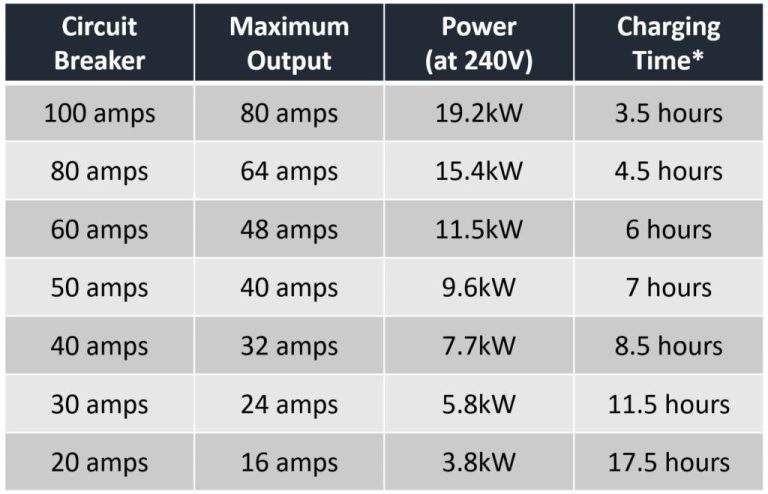
The EVSE supplies AC power; the vehicle’s onboard charger converts it to DC for the battery. Whichever limit is lower wins. A 48-amp EVSE connected to a vehicle with a 32-amp onboard charger will charge at roughly 32 amps. A 40-amp EVSE on a vehicle that can accept 48 amps will charge at 40. You can see how these numbers translate into power in our guide to how many kW a 48-amp Level 2 charger delivers.
Plug-In vs. Hardwired, Circuit, Panel, and Local Code
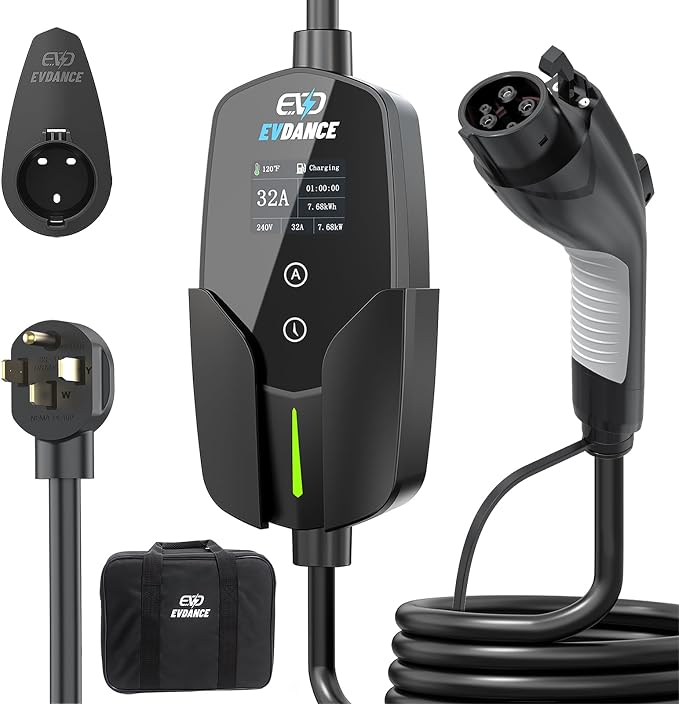
Plug-in EVSE uses a specific receptacle and can be moved; hardwired units are permanently connected and often support higher continuous current. Either way, the circuit, breaker, conductor size, and grounding must match the equipment instructions and the electrical code adopted in your jurisdiction. Panel capacity is often the real constraint on a home install, not the cable.
Outdoor, Cold-Weather, and Daily Durability

A cable that lives in a garage and one that lives on a driveway post face very different conditions. Length affects both, because a longer cable spends more of its life on the ground.
Temperature Ratings, UV Exposure, and Cable Jacket Types
Manufacturers publish operating-temperature ranges and enclosure ratings for their EVSE. Cold weather stiffens most cable jackets, which makes a long cable harder to coil and more likely to crack if it is repeatedly bent at low temperature. UV exposure degrades unprotected jackets over years, so outdoor installs benefit from a unit whose documentation explicitly supports outdoor use and from storing the connector in its holster rather than on the ground.
Snow, Rain, and Cable Management Without Trip Hazards
In snow country, a cable left on the ground can freeze into place, and a loosely coiled cable can trap water. A hook, holster, or retractable management system keeps slack off the floor. If the cable must cross a walking path, that is a design problem rather than a storage problem — consider relocating the EVSE or choosing a mounting position that keeps the run along a wall.
Smart Features, Warranty, and Support
Smart EVSE Features and Warranty Terms That Affect Cable Choice
Smart EVSE adds app scheduling, load management, and sometimes utility demand-response integration. Those features rarely depend on cable length, but warranty terms sometimes do: some manufacturers exclude damage from improper storage, abrasion, or use with unapproved adapters. Before buying a longer cable, read the warranty language covering the cable assembly and connector, and confirm whether the cable is a replaceable part. A replaceable cable assembly is a meaningful ownership advantage.
Installation Planning: Measure Before You Buy
How to Measure Your Parking Spot for EV Charger Cable Length
Park the car the way you normally will. Note the charge port location. Measure from the intended EVSE mounting point to the port in a straight line, then trace the path the cable would actually take. Add the vertical drop and a service loop. If the result lands within a foot or two of a standard length, size up.
Permits, Inspections, and Product-Manual Requirements
Hardwired installs and new circuits generally require a permit and inspection in most U.S. jurisdictions, and the specifics vary. The product manual governs the equipment side: torque specifications, conductor sizing, breaker size, and mounting height. Local code governs the installation side. When the two appear to conflict, the stricter requirement applies, and a licensed electrician is the right person to resolve it.
Relocating the EVSE vs. Buying a Longer Cable
If the EVSE is already installed and the cable is short, the cheaper fix is often a longer cable — but only if the manufacturer sells one for your model. If not, relocating the unit is the alternative, and that usually means new conduit, a new circuit run, and a new permit. Compare both before assuming a longer cable is the easy answer.
Cost and Efficiency Trade-Offs of Longer EV Charger Cables
Equipment and Installation Costs: What Extra Length Adds
Longer cable assemblies typically cost more than shorter ones from the same manufacturer, though the premium is usually modest relative to the installation itself. The larger cost driver is the electrical work: circuit length, conduit, and labor. If a longer cable lets you avoid moving the EVSE, it often pays for itself.
Voltage Drop, Charging Losses, kWh Delivered, and Time-of-Use Pricing
Voltage drop depends mainly on conductor size and run length, not on the flexible cable attached to the EVSE. That cable is short relative to the branch circuit, so it contributes little to overall losses. The bigger efficiency factors are the vehicle’s onboard charger, ambient temperature, and battery state. If you charge on a time-of-use plan, when your session runs usually matters more to your bill than the small difference a longer cable makes.
Mark Reynolds’ Final Recommendations: Choosing the Right EV Charger Cable Length for 2026
Cable Too Short or Too Long: Safety, Heat, and Storage Issues
A cable stretched taut puts strain on the connector and the vehicle port. A cable that is far too long and left coiled on the ground can run warmer if bundled tightly while carrying current, and it becomes a trip hazard. Both extremes are avoidable with a little planning.
Best Fit by Parking Situation: Garage, Driveway, Apartment, Street
Garage: 25 feet is usually generous, and 15–18 feet works if the unit is on the correct wall. Driveway: 25 feet minimum, 30+ if the mount is on the house and the car parks perpendicular. Apartment or shared parking: confirm whether portable charging is permitted at all and whether a suitable outlet exists — our overview of what a portable EV charger is and how it works covers the basics. Street parking: home Level 2 charging is generally impractical without a dedicated off-street space.
- Confirm vehicle inlet and AC/DC compatibility
- Check the vehicle’s maximum AC charging capability
- Verify EVSE amperage and electrical requirements
- Confirm cable length, mounting, and indoor/outdoor suitability
- Verify safety listing, warranty, app requirements, and support
- Include installation, adapter or accessory, and electricity costs
- Best for: Most U.S. single-family homes — a 25-foot Level 2 cable mounted near the vehicle’s charge port.
- Think twice if: You plan to stretch a short cable across a driveway or leave a long cable bundled on the ground.
- Next step: Measure the real cable path with the car parked as usual, then confirm connector type, amperage, and outdoor rating in the manufacturer documentation.
Frequently Asked Questions
For most single-family garages and driveways in the U.S., yes. A 25-foot Level 2 cable typically reaches across a two-car garage bay or a perpendicular driveway park when the EVSE is mounted on a nearby wall. It is less likely to be enough if the unit is on the far side of the garage or if the vehicle’s charge port is on the opposite corner from the mount.
No. General-purpose extension cords are not rated for the continuous current a Level 2 EVSE draws, and the connection point is a common source of overheating. If you need more reach, choose a longer cable from the manufacturer or relocate the EVSE. Follow the product manual and applicable local electrical requirements.
Not in any meaningful way. The flexible cable is short relative to the branch circuit, so voltage drop across it is small. The real limits are the vehicle’s onboard charger, the EVSE’s configured amperage, the circuit capacity, and battery conditions such as temperature and state of charge.
Park the car the way you normally will, note the charge port location, and measure from the intended EVSE mounting point to the port in a straight line. Then trace the actual path the cable would take, add the vertical drop, and add 3–5 feet for a service loop. If the result is within a foot or two of a standard length, size up.
Length options depend on the specific manufacturer and model, not on the connector standard. Some brands offer the same EVSE in multiple lengths with either connector. Check the product documentation for the exact cable length and connector type offered for your model.
Only if the manufacturer sells a compatible replacement cable assembly for your model and permits field replacement. Many hardwired EVSE have non-replaceable cables, in which case relocating the unit is the alternative. Never substitute a cable from another brand or modify a cable assembly yourself.