Home EV Charger Rebates: What You Need to Know
Home EV charger rebates come from state, utility, and occasional manufacturer programs rather than one national source, and most require pre-approval plus a licensed installation. The main catch: eligibility lists, funding windows, and paperwork rules vary by territory, so verify current terms before you buy.
A home EV charger rebate can cover part of the cost of a Level 2 charging station and, in some programs, part of the installation — but the money is almost never automatic. Funding comes from a patchwork of federal tax rules, state programs, utility incentives, and occasional brand promotions, and each one has its own eligibility rules, paperwork, and deadlines.
This guide explains where the money comes from, how to run the math, what typically disqualifies a project, and how to avoid the mistakes that cause claims to be denied.
- Where money comes from: State energy offices, electric utilities, and brand promotions — each with separate rules and.
- Eligibility basics: New, safety-listed Level 2 EVSE, licensed installation, receipts, and often pre-approval before work starts.
- Math to run: Equipment + labor + permits + tax − incentives, plus ongoing electricity cost at.
- Biggest pitfall: Starting installation before approval, or buying hardware that is not on the program’s eligible.
Home EV Charger Rebates in 2026: The Short Answer for U.S. Drivers
There is no single national home EV charger rebate. Instead, you are looking at four separate buckets of money, and they rarely stack cleanly. Some pay a flat amount toward equipment, some reimburse a percentage of the whole project, and some tie the payout to income limits, a specific charger model, a licensed installer, or enrollment in a time-of-use electricity plan.
The practical answer: check your state energy office, your electric utility, and the charger manufacturer’s promotions page before you buy anything — and confirm the program is still funded on the day you apply.
Federal, State, Utility, and Manufacturer Rebates: Where the Money Comes From
Federal support has historically come through the tax code rather than a point-of-sale rebate. The Section 30C alternative fuel refueling property credit was terminated for property placed in service after June 30, 2026 under 2026 tax legislation. If your installation was completed on or before that date, the credit may still apply to your return — confirm current rules with the IRS and a tax professional rather than relying on older articles.
State programs are typically administered by a state energy office or a clean-transportation agency and are funded in cycles, so they open and close. Utility programs are funded through ratepayer dollars or state grants and are usually limited to customers in that service territory. Manufacturer promotions are the least predictable: they change quarterly, often require a specific model, and may be structured as a prepaid card rather than a check.
What Qualifies and What Usually Doesn’t: Charger, Installer, and Paperwork Rules
Common eligibility patterns include a new, safety-listed Level 2 EVSE; installation by a licensed electrician; itemized receipts; and sometimes pre-approval before work begins. Some programs require a networked or “smart” charger so the utility can manage load, and some are reserved for households under an income threshold or in a specific ZIP code.
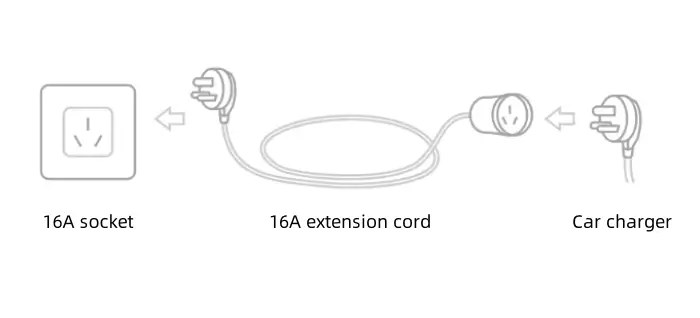
Common exclusions include used or resold equipment, DIY installations, portable chargers, extension cords, non-listed hardware, and any work started before approval. Adapters and accessories are often not covered even when the charger is.
How to Claim a Home EV Charger Rebate Step by Step
Confirm funding status, eligible equipment list, income rules, and whether pre-approval is required.
Many denials happen because work started before the utility or agency issued approval.
Keep the invoice, permit, inspection sign-off, serial number, and proof of payment.
Rebate Math: What a Home EV Charger Really Costs After Incentives
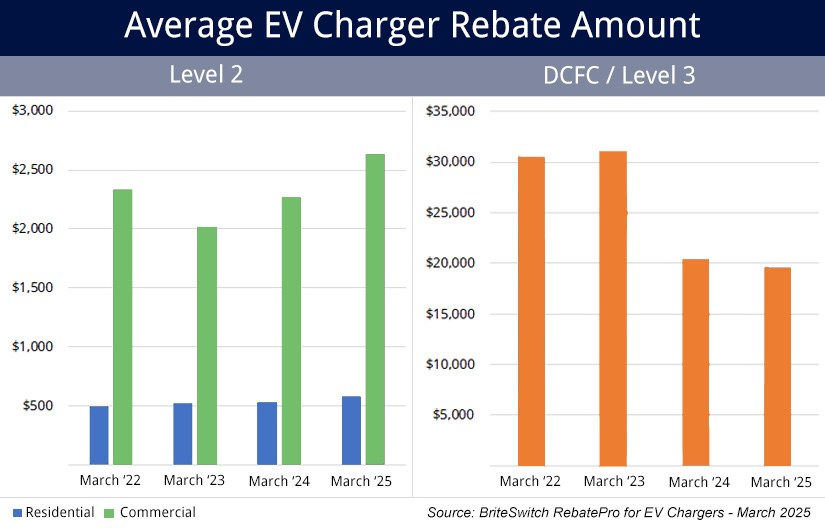
Rebates change the purchase price, not the physics. A $1,000 incentive on a $1,800 project is meaningful, but it does not change how much electricity your car consumes or how fast your vehicle can accept a charge.
The Rebate Math Formula: Equipment + Installation + Permits – Incentives
Net cost = equipment + installation labor + permits and inspection fees + applicable sales tax − rebates − eligible tax credits. Add a contingency for panel upgrades or a longer wire run, because those are the two line items that most often blow up a budget. If a rebate caps reimbursement at a percentage of cost, the cap — not the percentage — usually determines what you actually receive.
Separating Electricity Rate, kWh Delivered, Charging Losses, and Time-of-Use Pricing
Your electricity rate is a price per kWh, not a price per mile. The kWh your car actually stores is less than the kWh drawn from the grid, because AC-to-DC conversion and thermal management consume some energy. Time-of-use plans can cut the effective rate substantially for overnight charging, but they can also raise the rate during peak hours — which matters if your household runs heavy loads in the evening.
Illustrative only. Your rate, taxes, fees, time-of-use windows, and losses will differ.
Example Scenarios: 120V, 240V Plug-In, and Hardwired Setups
A 120 V cordset uses an existing outlet, so project cost is minimal but daily range added is modest and rebates rarely apply. A 240 V plug-in setup adds a dedicated receptacle and a portable or plug-in EVSE; it is easier to move but is capped by the receptacle and breaker. A hardwired setup typically delivers the highest home charging rate, is usually the configuration most rebate programs prefer, and usually requires a permit and inspection.
Charger Hardware and Rebate Eligibility: Connectors, Power, and Installation
Connector Types and Vehicle Onboard-Charger Limits
The EVSE is the wall unit; the onboard charger is inside the car. The onboard charger sets the ceiling on AC charging speed regardless of how much power the wall unit can supply. A 48 A EVSE cannot make a vehicle with a 32 A onboard charger accept more than 32 A.
EVSE Amperage, kW, Plug-In vs. Hardwired
Amperage multiplied by voltage gives approximate power: 240 V × 40 A ≈ 9.6 kW, and 240 V × 48 A ≈ 11.5 kW. Whether 40 A is enough depends on your daily mileage and overnight window — a question worth working through before you buy, since 40 amps is plenty for many commuters but tight for high-mileage drivers.
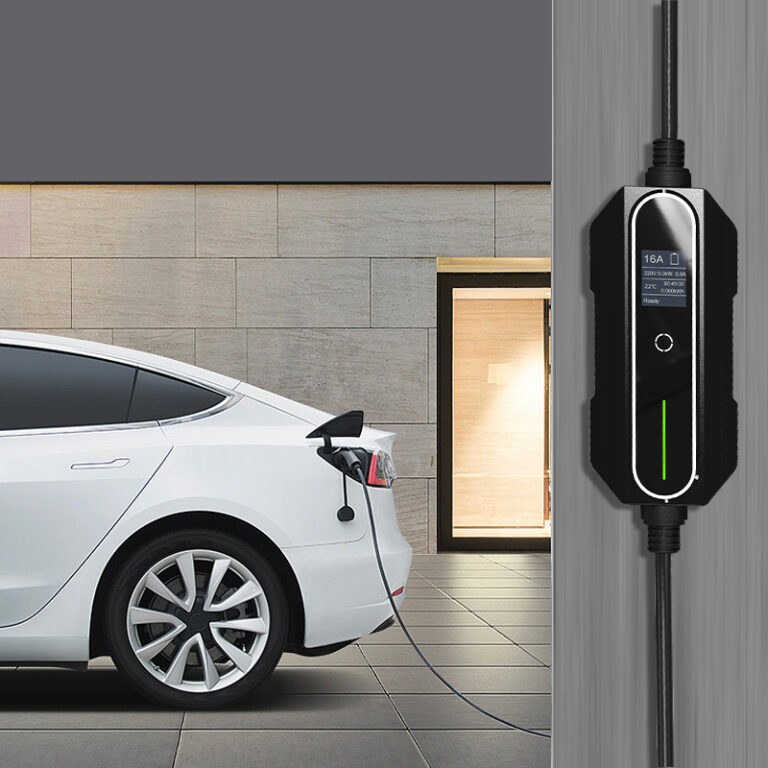
Uses a dedicated 240 V receptacle. Easier to relocate, but limited by the receptacle and breaker rating and more exposed to wear at the plug.
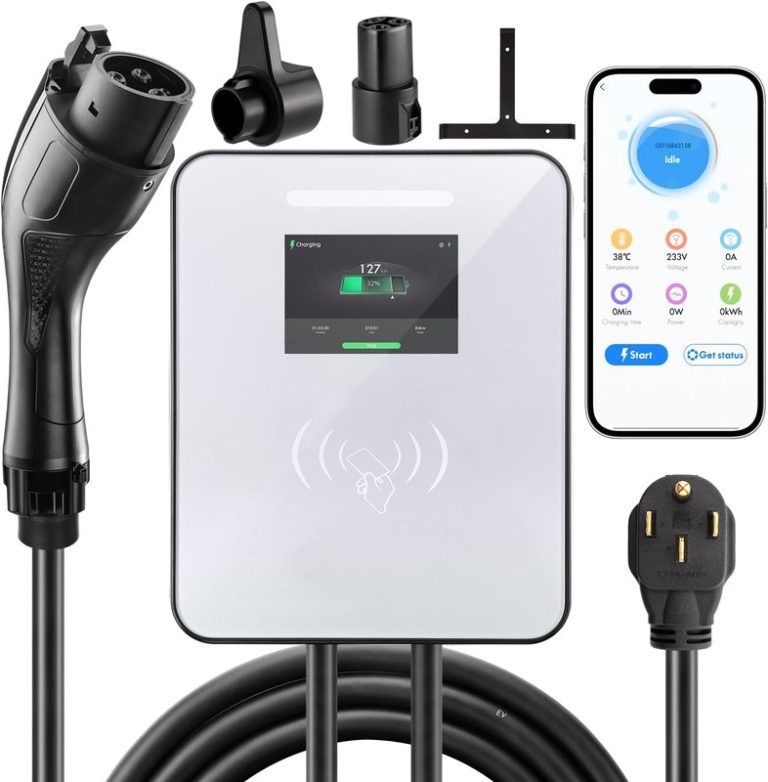
Wired directly to a dedicated circuit. Typically supports the highest home charging rate and is the configuration most rebate programs expect.
Circuit and Panel Implications, Cable Length, and Weather Suitability
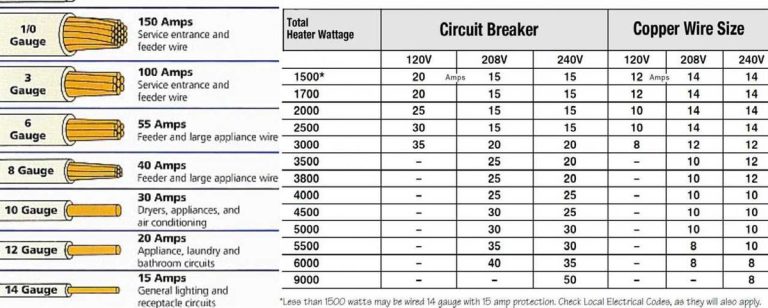
EV charging is treated as a continuous load, which is why a 48 A EVSE is commonly paired with a 60 A circuit. Confirm that pairing against the equipment instructions and your local authority rather than assuming, and review the circuit requirements for a 48 amp charger before committing. Conductor sizing follows the same logic — see this guide to 48 amp EV charger wire size.
Charging current: Match the EVSE setting to the circuit and the vehicle. Circuit / breaker: Follow the equipment instructions and applicable local electrical requirements — do not size from marketing copy.
Cable length matters more than buyers expect: park where you actually park, account for a wall or pedestal mount, and confirm the connector holster location. For outdoor mounting, verify the enclosure rating, operating-temperature range, and connector storage guidance from the manufacturer.
Smart Features, Warranty, and Support
Smart features can be a rebate requirement, so treat them as an eligibility question rather than a luxury. Check whether the unit needs an account, whether scheduling works offline, what happens if the cloud service is discontinued, and what data is collected. Warranty length, US-based support, and firmware update history are reasonable proxies for long-term ownership value.
Adapters, Networks, and Compatibility for Rebated Chargers
Source Connector, Destination Connector, and Adapter Direction
Adapters are directional. A J1772-to-NACS adapter lets a NACS vehicle charge from a J1772 EVSE; a NACS-to-J1772 adapter does the reverse. Getting the direction wrong means it simply will not connect. For home Level 2 charging, most adapters are AC-only, and the adapter must be rated for the current your EVSE delivers.
AC vs. DC Mode, Vehicle Restrictions, and Network Restrictions
AC and DC use different pins and different protocols. A connector that physically fits does not prove the charging mode is supported. DC adapters are typically vehicle-specific and vendor-specific, and some are restricted to particular models or firmware versions. Home charging is AC, so DC adapter rules generally do not apply to your wall unit — but they do matter if you are choosing a connector type for future public charging.
Power Limits, Thermal Safety, and Firmware/Vendor Requirements
Adapters add resistance and heat. Use only adapters the manufacturer lists for your vehicle and current level, avoid daisy-chaining, and never use an adapter to exceed the EVSE or circuit rating. If an adapter or connector feels hot during charging, stop and have the setup evaluated.
Battery Health, Range, and Efficiency: What Rebates Don’t Change
Manufacturer Guidance vs. General Patterns for Home Charging
Your vehicle’s manual is the authority on charging habits, not internet folklore. Many manufacturers publish specific guidance on daily charge targets and preconditioning, and those instructions vary by chemistry and thermal-management design.
Temperature, State of Charge, Charging Power, and DC Fast Charging Context
Cold slows the electrochemical reactions and can reduce how much energy the pack accepts; heat accelerates aging. DC fast charging is a different stress category than overnight Level 2 charging, and its effect depends on how often you use it and how the pack is managed.
There is no universal “80% rule.” Follow the manufacturer’s guidance for your specific vehicle, and weigh any charging habit against real convenience needs. Level 2 home charging is generally the gentlest routine option.
Chemistry, Thermal Management, and Convenience Trade-Offs
LFP and nickel-based packs behave differently at high and low states of charge, and liquid-cooled packs tolerate fast charging better than passively cooled ones. Rebates do not change any of this — a discounted charger still delivers the same current profile.
mi/kWh and Wh/mi: Putting Home Charging Efficiency in Context
Vehicle efficiency is measured in miles per kWh or watt-hours per mile, and it describes the car, not the charger. Charging efficiency describes how much grid energy is lost on the way into the pack. Confusing the two leads to cost estimates that are off by 10–15%.
Speed, Weather, HVAC, Elevation, Payload, Tires, Battery Temperature, and Charging Losses
Highway speed, cold weather, cabin heating, elevation change, cargo, tire pressure and tread, and battery temperature all move real-world range. Charging losses sit on top of that. Treat any range figure as an estimate with stated assumptions.
Comparing Rebate-Eligible Home EV Chargers: Same Criteria, Different Fits
Side-by-Side Criteria: Connector, Amperage, Plug-In vs. Hardwired, Smart Features, Warranty, Rebate Eligibility
| Criteria | What to verify | Why it matters |
|---|---|---|
| Connector | NACS/J3400 or J1772, plus adapter needs | Determines whether it plugs into your car |
| Amperage / output | EVSE setting vs. onboard charger limit | Extra EVSE capacity may be unusable |
| Installation type | Plug-in or hardwired | Affects cost, permits, and rebate eligibility |
| Smart features | App, scheduling, load management | Often a program requirement |
| Warranty / support | US term and support channel | Ownership value over 5–10 years |
| Rebate eligibility | Program list and pre-approval rules | Determines whether money actually arrives |
Who Each Option Fits: Budget, Long Commute, Cold Climate, Multifamily
Budget-focused buyers usually do best with a plug-in unit on an existing or modestly upgraded circuit. Long commuters benefit most from hardwired capacity matched to the vehicle’s onboard charger. Cold-climate owners should prioritize cable flexibility, enclosure rating, and connector storage. Multifamily and renter situations often depend on landlord approval and a shared or sub-metered circuit before any rebate question matters.
Evidence Limits: What This Comparison Can and Cannot Verify
This framework compares published criteria, not measured performance. It cannot confirm real-world reliability, app quality, or long-term support for any specific model. For model-level context, see our roundup of 48 amp Level 2 EV chargers for home charging, and verify current specifications against the manufacturer’s own documentation.
Installation, Permits, and Code: Product Manual First, Local Rules Always
Electrical Requirements: Start With the Product Manual and Local Code
The manual specifies conductor sizing, breaker rating, torque values, and mounting requirements. Local code and the authority having jurisdiction decide what is actually permitted. Neither source can be replaced by a forum post or a retailer’s summary.
Permits, Inspections, and Choosing a Licensed Electrician
Most jurisdictions require an electrical permit for a new 240 V circuit, and rebate programs frequently require proof of inspection. Ask the electrician how they handle permits, whether they will do a load calculation on your panel, and whether they have installed EVSE before.
Electrical-code adoption, permitting, inspection, and utility requirements vary by state, county, and city. Verify specific requirements with your local building department and your utility before work begins.
Documenting Rebate Paperwork Before and After Installation
Before: save the program terms, pre-approval letter, and eligible-equipment list. After: save the itemized invoice, permit number, inspection sign-off, charger serial number, and proof of payment. Photograph the installed unit and the panel label. Missing documentation is one of the most common reasons claims are denied.
Common Rebate Pitfalls and How to Avoid Them
Deadlines, Pre-Approval, Receipts, and Post-Installation Inspection
Programs close when funds run out, sometimes mid-year. Application windows, installation deadlines, and submission deadlines are often different dates. Read all three and calendar them.
Landlord, HOA, Multifamily, and Used Equipment Limits
Renters and condo owners may need written owner or HOA approval, and some programs exclude shared parking or require a dedicated meter. Used equipment is almost universally excluded, even if it is a high-quality unit.
Rebate Stacking, Tax Credits, and Income-Qualified Programs
Stacking rules vary: some programs explicitly prohibit combining with other incentives, and some reduce the payout if you receive another credit. Income-qualified programs often pay more but require documentation. Confirm the interaction between a rebate and any tax credit before you file.
Bottom Line for EmissionsFreeCars Readers
A home EV charger rebate is worth pursuing, but it should be the last variable in your decision — not the first. Get the hardware, circuit, and installation right, then layer incentives on top.
A Practical Checklist Before You Buy
- Confirm your vehicle’s inlet and maximum AC charging rate
- Verify the EVSE’s amperage, connector, and installation type
- Check panel capacity and whether a permit is required
- Confirm the charger appears on the program’s eligible-equipment list
- Get pre-approval before scheduling any work
- Budget for permits, inspection, and a possible panel upgrade
Where to Verify 2026 Rebates in Your State and Utility Territory
Start with your state energy office, then your electric utility’s EV or clean-energy page, then the charger manufacturer’s promotions page. Verify funding status and current terms directly with the program administrator, and confirm any tax treatment with a qualified tax professional. Program details change frequently, so a phone call or a current program page beats an old blog post every time.
Frequently Asked Questions
There is no point-of-sale federal rebate. Federal support has historically come through the tax code, and the Section 30C alternative fuel refueling property credit was terminated for property placed in service after June 30, 2026 under 2026 tax legislation. Installations completed on or before that date may still qualify on a return. Confirm current rules with the IRS and a tax professional.
Many utility and state programs require it. If you install before approval, the claim is often denied with no appeal. Read the program terms first and get written approval before scheduling an electrician.
Sometimes, but stacking rules vary widely. Some programs prohibit combining incentives, and others reduce the payout if you receive another credit. Confirm the interaction in writing before you rely on the combined amount.
It depends on the program. Some reimburse equipment only, some cover a percentage of the total project including labor, and some cap the reimbursement at a fixed dollar amount. Panel upgrades and long wire runs are frequently excluded or capped.
Used and resold equipment is almost universally excluded, and portable chargers are often excluded as well. Most programs require a new, safety-listed Level 2 unit installed on a dedicated circuit by a licensed electrician.
Programs frequently close when funds are exhausted, sometimes mid-year, and reopening dates are not guaranteed. Check the program page or call the administrator on the day you apply, and keep a dated copy of the terms you relied on.