Home EV Charger Tax Credit: How It Works and What Qualifies
The home EV charger tax credit under IRC Section 30C has covered 30% of qualified home charging installation costs, capped at $1,000, and is claimed on IRS Form 8911. The two biggest gates are your census tract and the placed-in-service deadline, so verify both before you buy equipment.
The home EV charger tax credit — formally the federal credit under Internal Revenue Code Section 30C — has historically covered 30% of the cost of buying and installing a qualifying Level 2 charger at a residence, up to $1,000. It is not automatic. The address must sit in an eligible census tract, the equipment must meet specific conditions, and the residential version of this credit now operates on a timeline that every homeowner should confirm before scheduling installation work.
- Eligibility: The address must generally fall in a qualifying low-income or non-urban census tract.
- Credit math: 30% of qualified residential cost, capped at $1,000, claimed on Form 8911.
- Timing: The residential credit is tied to a placed-in-service deadline that changed in 2026 legislation.
- Cost: Charging cost depends on your rate, kWh delivered, charging losses, and time-of-use pricing, not.
What Is the Home EV Charger Tax Credit and Who Qualifies in 2026?
Section 30C is the Alternative Fuel Vehicle Refueling Property Credit. It applies to refueling and charging property, including home EV charging equipment, and it is claimed on IRS Form 8911. It is a completely separate provision from the credit that once applied to purchasing an electric vehicle itself — mixing the two up is one of the most common filing errors.
For individual filers, the structure has always been straightforward: a percentage of qualified cost, subject to a dollar cap. The difficult parts are the eligibility map and the calendar, not the arithmetic.
The 30C Credit at a Glance: 30% of Cost Up to $1,000
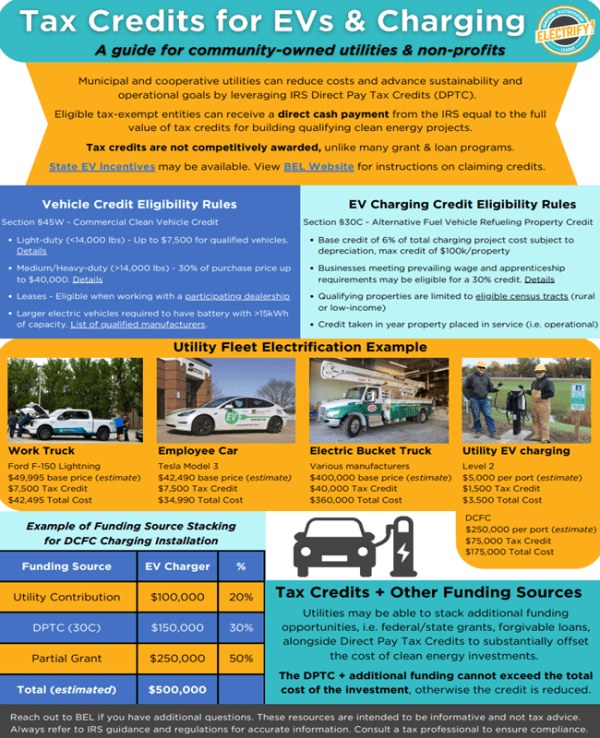
For residential use, the long-standing formula is 30% of qualified costs with a maximum credit of $1,000. That means a project costing roughly $3,333 or more would hit the ceiling, and anything below that scales down proportionally.
Two practical details matter. First, the credit is nonrefundable, so it can only offset tax liability you actually owe. Second, “placed in service” is the trigger date — not the purchase date. A charger bought in June but installed in August is generally treated as placed in service in August.
Legislation enacted in July 2026 changed the 30C timeline. Under that law, the credit generally is not allowed for property of a character not subject to depreciation — the category that covers most homeowner installations — if that property is placed in service after June 30, 2026. Business property follows a separate, longer schedule with different rates and caps. Because this is a moving target, confirm the current rule with the IRS and a tax professional before you rely on it.
Eligible Census Tract Check and Residential vs. Business Use
Since the Inflation Reduction Act changes took effect, 30C has been geographically restricted. Property generally must be placed in service in a low-income community census tract or a non-urban census tract. The IRS publishes a mapping tool that lets you enter an address and check tract status.
This is the single most common disqualifier. A homeowner can buy a perfectly compliant charger, hire a licensed electrician, and still lose the credit because the driveway sits in the wrong tract. Check the address first, before ordering anything.
Residential and business use are treated differently. A homeowner claiming a personal credit uses Form 8911 with the $1,000 cap. A business installing charging for employees or customers operates under a different rate structure and a much higher per-property cap. If a charger is used partly for a home business, the allocation gets complicated — that is a conversation for a tax professional, not a blog post.
How the 30C Credit Works: Qualified Costs, Caps, and Form 8911
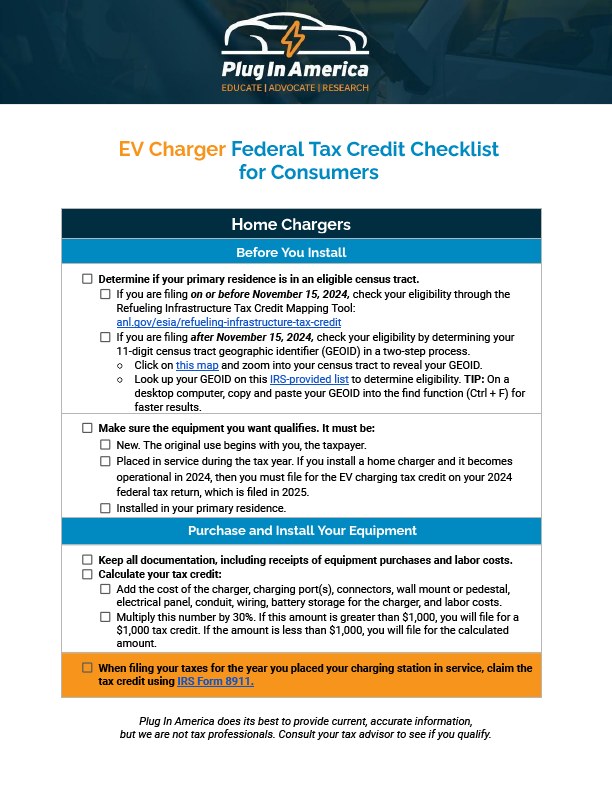
The credit is calculated on qualified costs, which is broader than the sticker price of the charger but narrower than “everything the electrician billed.”
Qualified Expenses: Equipment, Labor, Permits, and Panel Upgrades
For residential installations, qualified costs have generally included the charging equipment itself plus the labor and materials needed to install it. Permit fees and inspection costs are commonly included as part of the installation expense.
Panel upgrades and service work are the gray zone. Installers frequently advertise them as credit-eligible, but the IRS has not published a bright-line list separating a qualifying electrical upgrade from general home improvement. Document these line items separately on your invoice, keep the receipts, and get specific advice from a tax professional rather than assuming.
What Does Not Qualify and How to Claim with Form 8911
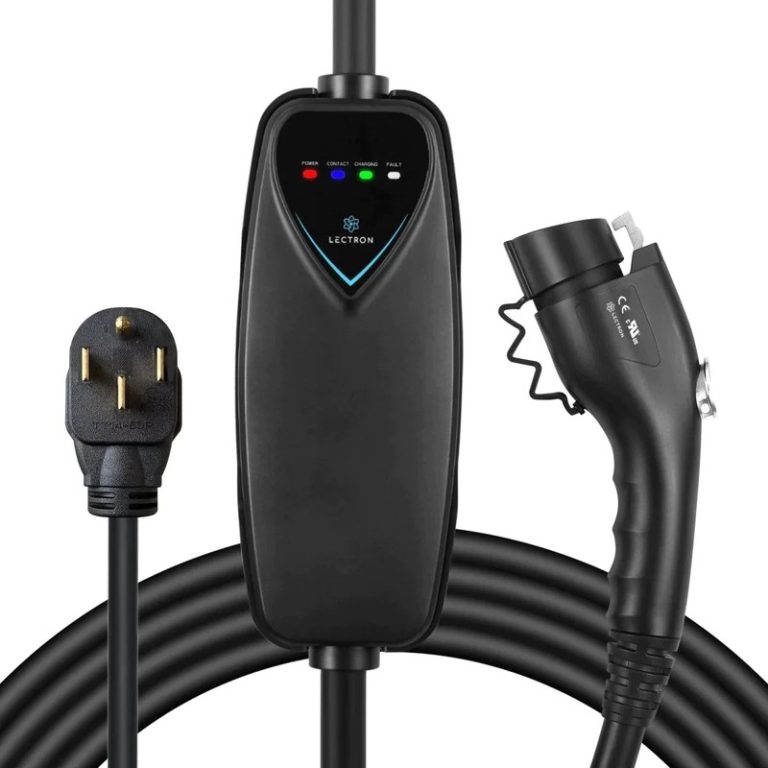
Items that typically do not qualify include portable Level 1 cordsets that plug into an ordinary household outlet, extension cords, cosmetic garage work, and general home electrical repairs unrelated to the charger circuit. Vehicles, adapters, and software subscriptions are separate purchases with separate rules.
To claim the credit, file IRS Form 8911 with your return. You will need the placed-in-service date, the total qualified cost, and the address where the property was installed. Keep the manufacturer’s specification sheet, the electrician’s itemized invoice, and the permit or inspection record in your files.
What Qualifies: Charger Hardware, Connectors, and Electrical Limits
The tax rules and the technical rules overlap here. A charger that fails code or compatibility checks is a problem regardless of whether it qualifies for a credit.
Connector Types, Adapters, and Vehicle Compatibility
Home AC Level 2 charging in the US uses either the J1772 connector or the NACS / SAE J3400 connector. CCS1 is a DC fast-charging standard and is not used for home AC charging.
Adapter direction matters. A J1772-equipped EVSE charging a NACS-inlet vehicle requires a passive NACS-to-J1772 adapter rated for AC. Physical fit alone does not prove the charging mode is supported — verify the adapter’s AC rating and the vehicle manufacturer’s approved accessory list.
Important: Physical fit alone does not prove every AC or DC charging mode is supported.
Onboard Charger Limit vs. EVSE Amperage and kW
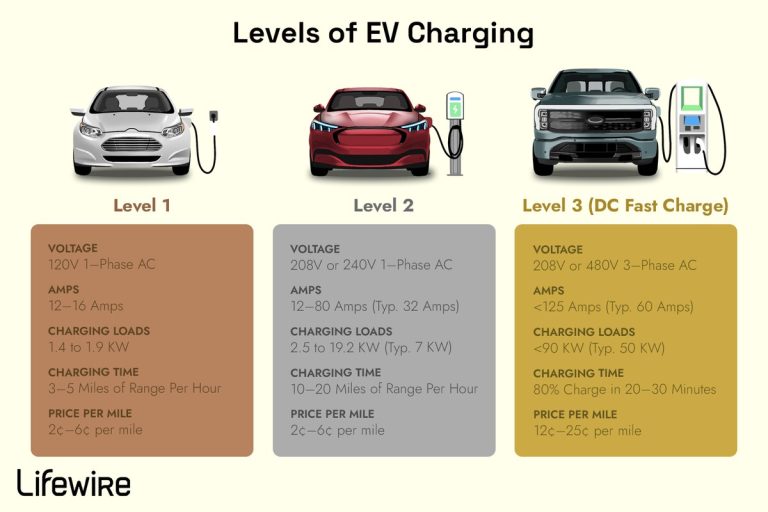
The vehicle’s onboard AC charger is the ceiling. A 48-amp EVSE cannot force more power into a car whose onboard charger tops out at 32 amps. Buyers regularly overspend on amperage they can never use.
Understanding how much power a given amperage actually delivers helps here — see our breakdown of how many kW a 48 amp Level 2 EV charger produces. If your daily mileage is modest, a lower-amperage unit may be entirely sufficient, which is the question addressed in is 40 amps enough for a Level 2 EV charger.
Plug-In vs. Hardwired: Circuit, Panel, and Code Implications
Plug-in units use a NEMA 14-50 or 6-50 receptacle and typically top out at 40 amps of charging current on a 50-amp circuit. Hardwired units can run higher currents and are often required for 48-amp operation.
Receptacle-based installations frequently require GFCI protection under current code cycles, while hardwired installations are governed by the equipment instructions and local amendments. Breaker sizing is not guesswork — our guide to 48 amp EV charger breaker size covers how circuit capacity relates to continuous-load rules.
Portable and easier to replace, but usually limited to 40 A charging current and often requires a GFCI-protected receptacle under current code cycles.
Supports higher continuous current and cleaner cable routing, but requires a dedicated circuit, professional installation, and a permit in most jurisdictions.
Cable Length, Weather Rating, Smart Features, and Warranty Support
Cable length determines whether you can reach the parking position without strain on the connector. Outdoor installations need a verified enclosure rating and stated operating-temperature limits — check the manufacturer’s documentation rather than marketing language.
Smart chargers add scheduling, utility demand-response programs, and remote monitoring, but they also introduce app accounts, firmware updates, and cloud dependencies. Confirm what happens if the service is discontinued. Warranty terms and US-based support channels vary widely; read the actual warranty document before buying. For a sense of what separates stronger hardware from weaker, see our roundup of the best 48 amp Level 2 EV chargers for home charging.
Installation, Permits, and Documentation: Manual and Local Code First
Mains-voltage EVSE installation is safety-sensitive work. Manufacturer instructions and your local authority having jurisdiction govern — not internet generalizations.
When You Need a Licensed Electrician vs. DIY
Replacing a like-for-like plug-in unit on an existing, correctly rated circuit is a different task from running new conductors, installing a breaker, or opening a panel. The latter should be handled by a licensed electrician.
If you are unsure whether your panel can support the load, that uncertainty itself is the answer: stop and get a qualified assessment.
Permits, Inspections, and Receipts for IRS Documentation
Most jurisdictions require an electrical permit for a new dedicated EV circuit. The inspection record is useful beyond code compliance — it is contemporaneous documentation of when the work was completed, which supports your placed-in-service date.
Keep the itemized invoice, the permit, the inspection sign-off, and the equipment specification sheet together. If the credit is questioned, a clean paper trail is the difference between a smooth filing and a frustrating one.
Panel Upgrades and Load Management: What Counts as Qualified?
If your service panel lacks capacity, an electrician may propose an energy management system that monitors total household load and reduces EVSE current when other appliances draw power. This can avoid a full service upgrade.
Whether the cost of that device or a panel upgrade counts as a qualified expense for 30C is not clearly resolved in published IRS guidance. Document it as a separate line item and get professional tax advice.
How to Calculate Your Real Home EV Charging Costs in 2026
Charging cost is not the same as electricity rate multiplied by battery size. Losses, time-of-use pricing, and taxes all shift the number.
Electricity Rate, kWh Delivered, and Charging Losses
You pay for energy drawn from the grid, not energy stored in the battery. AC charging typically loses roughly 10% to 15% of delivered energy to conversion, thermal management, and onboard electronics, though the exact figure varies by vehicle and conditions.
Always separate the rate, the kWh, and the loss assumption when you estimate.
Time-of-Use Pricing and Off-Peak Charging Savings
Many utilities offer time-of-use plans with substantially lower overnight rates. Because most home charging happens overnight, shifting to a TOU plan can matter more than the charger you choose.
Check whether your plan includes demand charges or separate delivery and supply components. A low headline rate can still produce a high bill if a demand charge applies.
Installation and Equipment Costs After the 30% Credit
A rough planning framework: equipment plus installation, minus 30% of qualified cost, capped at $1,000. If your project qualifies and the cap applies, the effective discount is $1,000 regardless of whether the total was $3,400 or $6,000.
Remember the credit is nonrefundable and geographically restricted, so treat any reduction as a possibility to verify — not a certainty to budget around.
Example Formula: From Miles Driven to Monthly Charging Cost
Start with monthly miles, divide by your vehicle’s efficiency in mi/kWh, then divide by charging efficiency to get grid kWh, and multiply by your all-in rate.
Example: 1,000 miles ÷ 3.3 mi/kWh = 303 kWh stored. At 90% charging efficiency, that is about 337 kWh from the grid. At $0.17/kWh, roughly $57 per month. Change any input and the result moves.
Illustrative example only. Rates, taxes, time-of-use pricing, demand charges, and losses vary by utility, vehicle, and season.
Battery Health and Charging Power: What Home EV Charging Means for Your Pack
Home AC charging is generally the gentlest routine charging method available. That does not mean every habit is equally good for every pack.
Manufacturer Guidance vs. General Patterns for Daily Charging
There is no universal state-of-charge rule. Some manufacturers recommend a daily charge limit; others specify different guidance for different battery chemistries. Follow your own vehicle’s manual, not a general internet number.
Temperature, State of Charge, and AC vs. DC Fast Charging
Level 2 AC charging operates at a fraction of DC fast-charging power, which generally means less heat stress on the pack. Extreme ambient temperatures affect charging regardless of the power level, and many vehicles actively manage battery temperature during charging.
DC fast charging has its place on road trips. Frequent reliance on it is a different use pattern than overnight AC charging, and manufacturer guidance reflects that difference.
Chemistry, Thermal Management, and Convenience Trade-Offs
Lithium iron phosphate and nickel-based chemistries behave differently, and vehicles with active liquid thermal management handle temperature extremes differently than those without. Practical convenience — arriving to a full car every morning — is a legitimate part of the decision.
Range and Efficiency Context for EV Charging Cost Estimates
Every cost estimate rests on an efficiency assumption. If that assumption is wrong, the estimate is wrong.
mi/kWh and Wh/mi: Setting Realistic Expectations
US EVs are commonly rated between roughly 2.5 and 4.0 mi/kWh in mixed real-world driving, though larger vehicles and cold climates can fall below that. Wh/mi is simply the inverse — 250 Wh/mi equals 4.0 mi/kWh.
Speed, Weather, HVAC, Elevation, Payload, and Tires
Highway speed increases aerodynamic drag sharply. Cold weather reduces usable range and increases cabin-heating load. Elevation gain, passenger and cargo weight, and tire pressure or tread condition all move the number.
Any single figure you see quoted is a snapshot under specific conditions, not a guarantee.
Battery Temperature and Charging Losses in Cost Estimates
A cold pack accepts charge more slowly and may require conditioning energy. That is one reason winter charging costs often exceed summer estimates even when the rate per kWh is unchanged.
Common Mistakes and Who Should Claim the Home EV Charger Tax Credit
Most failed claims trace back to one of a few avoidable errors.
Assuming Every Address Qualifies or Missing Documentation
Check the census tract before you buy. Then keep every document: itemized invoice, permit, inspection record, and equipment specification sheet. Reconstructing a paper trail months later is far harder than filing it as you go.
Confusing the EV Purchase Credit with the Charger Credit
These are different provisions with different forms, different caps, and different eligibility rules. The charger credit is 30C and uses Form 8911. Do not assume one qualifies because the other did.
Best Fit: Homeowners in Eligible Areas Needing Level 2 Charging
The credit fits homeowners who own their property, park on-site, need faster charging than a standard outlet provides, and whose address falls in an eligible tract — and who have enough tax liability to use a nonrefundable credit.
Maybe or Not a Fit: Renters, Condos, and No Tax Liability
Renters generally cannot claim a credit for property installed at a landlord’s building. Condo owners face shared electrical infrastructure and HOA approval hurdles. And anyone with little or no federal tax liability may not be able to use a nonrefundable credit at all in a given year.
- Homeowners in eligible census tracts installing Level 2 charging
- Filers with sufficient federal tax liability to use a nonrefundable credit
- Renters and many condo owners without control over the electrical service
- Anyone whose address falls outside an eligible tract
- Best for: Homeowners in eligible census tracts who need Level 2 charging and can use a nonrefundable credit.
- Think twice if: Your address is outside an eligible tract, you rent, or you have little federal tax liability.
- Next step: Look up your census tract, then confirm the current placed-in-service deadline and Form 8911 rules with the IRS and a tax professional before scheduling installation.
Frequently Asked Questions
For residential use, Section 30C has provided 30% of qualified costs with a maximum credit of $1,000. That means projects costing about $3,333 or more reach the cap. The credit is nonrefundable, so it can only offset federal tax liability you actually owe in that year.
Yes. Since the Inflation Reduction Act changes took effect, the property generally must be placed in service in a low-income community census tract or a non-urban census tract. The IRS publishes a mapping tool that lets you check an address. Verify your tract before ordering equipment or scheduling installation.
Renters generally cannot claim the credit for property installed at a landlord’s building. Condo owners often face shared electrical infrastructure and HOA approval requirements. In both cases, talk to a tax professional about your specific situation before assuming eligibility.
This is not clearly resolved in published IRS guidance. Many installers treat panel and service work as part of the installation cost, but the IRS has not issued a bright-line list. Keep panel work as a separate, itemized line on your invoice and get specific tax advice rather than assuming it qualifies.
No. They are separate provisions with different forms, caps, and eligibility rules. The home charging credit is Section 30C and is claimed on IRS Form 8911. The vehicle purchase credit was a different code section entirely. Qualifying for one does not mean you qualify for the other.
Keep the manufacturer’s specification sheet, the electrician’s itemized invoice showing equipment and labor separately, the electrical permit, the inspection sign-off, and proof of the placed-in-service date. A clean paper trail matters if the claim is ever questioned.