Is Level 2 Charging Bad for EV Battery Health?
Level 2 AC charging is not bad for EV battery health — it is a low-rate charge that most manufacturers design around for daily use. The bigger factors are temperature, state of charge, and how often you use DC fast charging, so follow your owner’s manual limits.
If you have been searching for whether is Level 2 charging bad for EV battery, the short answer is no. Level 2 AC charging is one of the gentlest ways to put energy into a modern electric vehicle, and the factors that actually drive degradation are temperature, state of charge, and how often you use DC fast charging — not the fact that you plugged into a 240-volt outlet at home.
- Compatibility: Level 2 uses AC power through J1772 or NACS / SAE J3400, and your.
- Performance: At roughly 0.1C–0.2C, Level 2 is far less stressful than 50–350 kW DC fast.
- Safety: EV charging circuits are continuous loads; confirm breaker, wire, panel capacity, permits, and local.
- Cost: Cost = energy added ÷ charging efficiency × your rate, and time-of-use plans can.
Is Level 2 Charging Bad for EV Battery Health?
The Short Answer: No, But Usage Patterns Matter
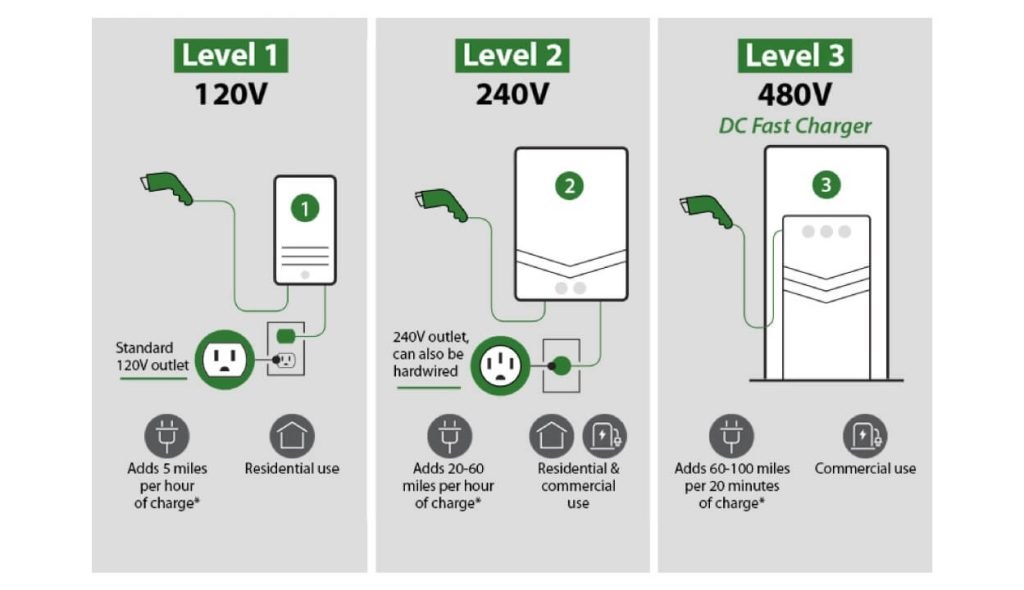
Level 2 charging usually delivers somewhere between 3.3 kW and 19.2 kW of AC power, depending on the equipment and the vehicle’s onboard charger. For a typical 75 kWh pack, 7 to 11 kW works out to roughly 0.1C to 0.15C — a very low charge rate relative to the pack’s capacity. Low-rate charging produces less heat and less mechanical stress on the cell structure than high-rate charging.
What matters more is the pattern: charging to a very high state of charge and leaving the car parked that way in the heat, or repeatedly arriving at a low state of charge and fast charging back up. Level 2 is the middle ground that most manufacturers design around.
Level 2 vs. DC Fast Charging: Battery Stress Compared
DC fast charging bypasses the onboard charger and pushes DC power directly into the pack, often at 50 kW to 350 kW. That is roughly 0.7C to 4C or more on a typical pack. The higher current and the resulting heat are the reasons DC fast charging is associated with faster capacity loss when used heavily.
Level 2 charging cannot reach those rates in most passenger EVs because the onboard charger is the bottleneck. Even a 19.2 kW onboard charger on a 100 kWh pack is about 0.19C. That is not a stressful event for a liquid-cooled pack.
How Level 2 Charging Works: Connectors, Onboard Chargers, and EVSE Limits
The J1772 Connector and Your Vehicle’s Onboard Charger Limit
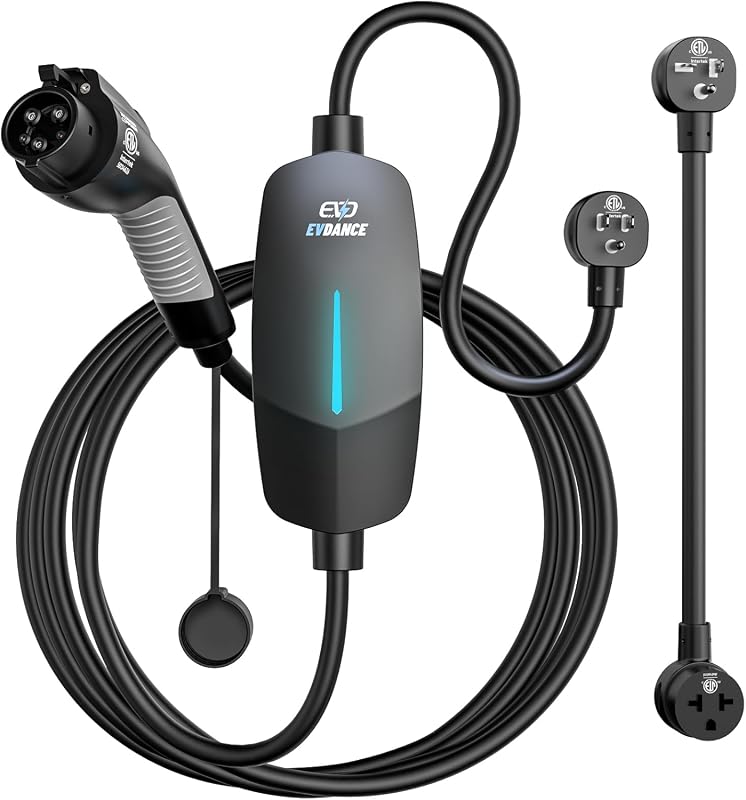
In the United States, Level 2 charging has traditionally used the SAE J1772 connector. Many newer vehicles now use the NACS / SAE J3400 connector on the vehicle side, and J1772-to-NACS adapters are common for home use. Both carry AC power; the connector type does not change the charging mode.
The onboard charger is the real ceiling. A car with a 7.2 kW onboard charger will not accept more than about 7.2 kW no matter how large the wall unit is. Buying a 48-amp EVSE for a car limited to 32 amps simply means the car draws less than the equipment can supply.
EVSE Amperage and Kilowatts: Matching Charger to EV
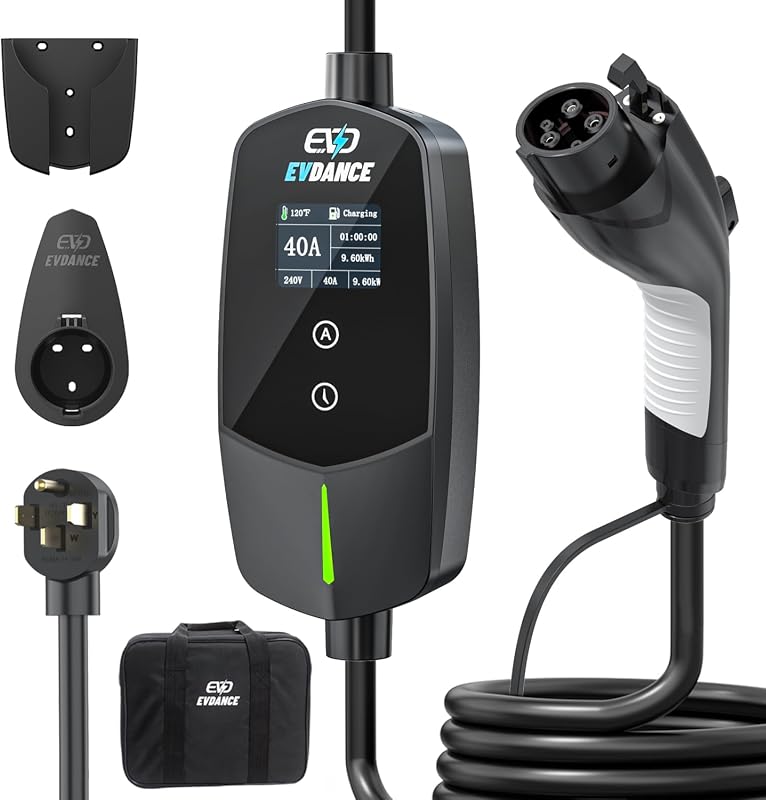
Level 2 EVSE output is set by amperage at a nominal 240 V. A 32-amp unit is about 7.7 kW; a 40-amp unit is about 9.6 kW; a 48-amp unit is about 11.5 kW. Whether a higher-amperage unit is worth it depends entirely on your vehicle’s onboard charger and your daily mileage. If you are weighing that decision, our breakdown of whether 48 amps is enough for a Level 2 charger walks through the math.
From a battery-health standpoint, a lower amperage setting is not automatically “safer.” Both 32 A and 48 A are low-stress for a modern pack. The difference is convenience, not longevity.
Plug-In vs. Hardwired Level 2 Chargers: Installation and Circuit Implications
Uses a compatible receptacle on a dedicated circuit. Portable between locations and easier to replace, but the plug and receptacle add a connection point that must be correctly rated and installed.
Wired directly to the circuit. Common for higher-amperage units and outdoor installations. Requires a qualified electrician and generally allows higher continuous output.
Electrical Code, Panel Capacity, and Permits (NEC 2026)
EV charging circuits are governed by the National Electrical Code (NFPA 70), but adoption is by state and local jurisdiction. The 2026 edition exists, yet many areas are still enforcing the 2020 or 2023 edition, so the requirement that applies to your home depends on your local authority having jurisdiction.
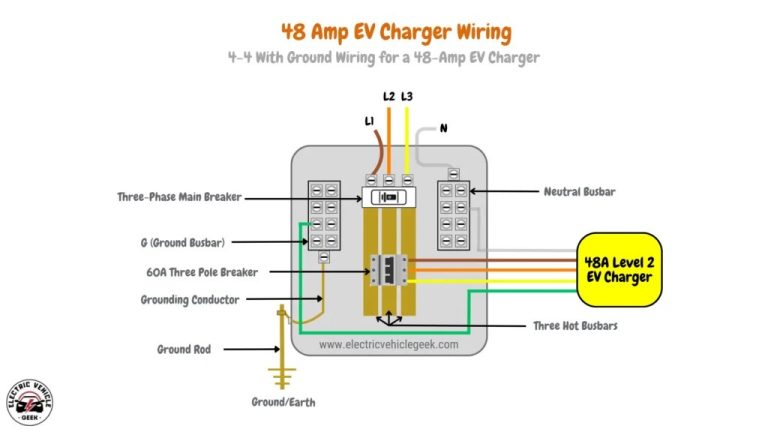
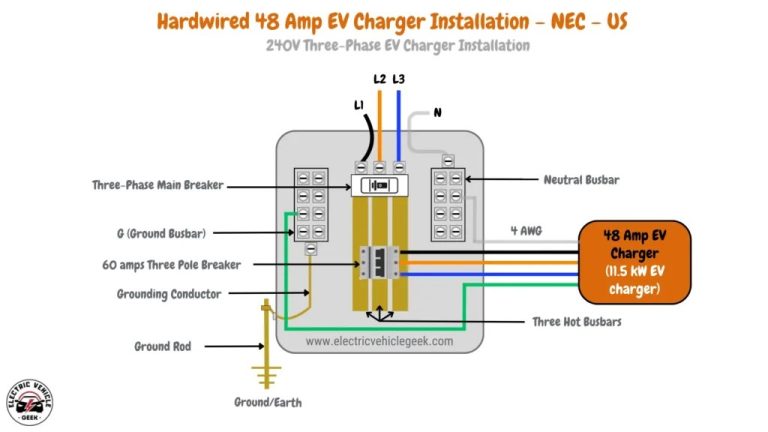
Continuous loads like EV charging are generally sized at 125% of the charging current, which is why a 48-amp charger is typically paired with a 60-amp circuit. Our explainer on whether a 48-amp EV charger needs a 60-amp circuit covers that relationship in detail. Panel capacity, service size, wire gauge, breaker type, GFCI requirements, permits, and inspections all vary — confirm them with a licensed electrician and your local building department before installation.
Battery Health Factors: Temperature, State of Charge, and Charging Power
Thermal Management and Battery Chemistry: Why They Matter
A pack with active liquid cooling holds temperature far more consistently than an older passively cooled design. Chemistry matters too: lithium iron phosphate (LFP) packs generally tolerate high states of charge better than nickel-rich NMC packs, which is why manufacturer guidance differs between them.
Because of those differences, there is no single charging percentage that is correct for every EV.
Manufacturer Guidance vs. General Patterns for Level 2 Charging
Always start with your owner’s manual. Many automakers recommend a daily charge limit in the 80–90% range for NMC packs, while some LFP vehicles recommend charging to 100% at least weekly for cell balancing. Those are manufacturer instructions, not universal rules.
The Role of State of Charge and Charging Power on Degradation
Calendar aging — capacity loss that happens while the car sits — accelerates at high state of charge and high temperature. That is why a car left at 100% in a hot garage for weeks can lose more capacity than one charged nightly to 80% and driven daily.
Charging power plays a smaller role at Level 2 rates. The combination of high SOC plus high heat is the pattern worth avoiding.
Does Level 2 Charging Actually Degrade EV Batteries?
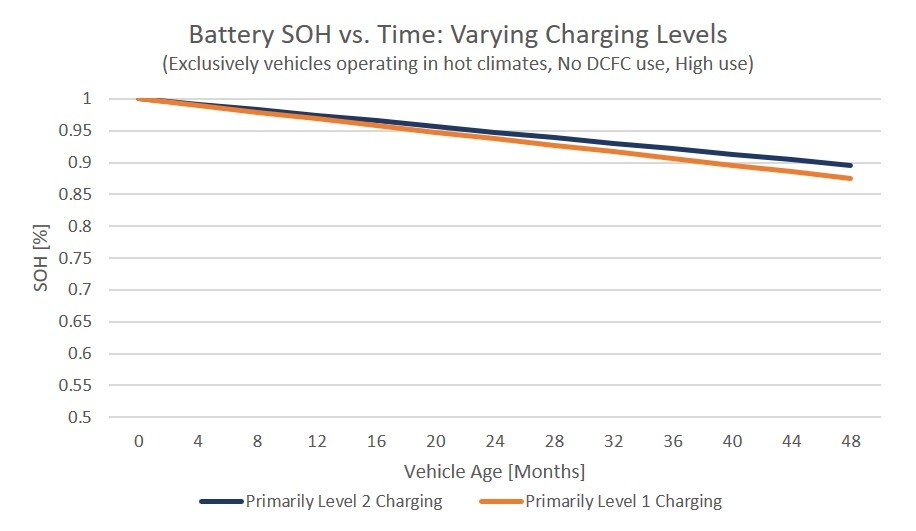
What Real-World Data and Studies Show in 2026
Fleet-level data and manufacturer documentation consistently point to the same conclusion: Level 2 charging is not the problem. High ambient temperatures, frequent DC fast charging, and prolonged high state of charge are the recurring themes in reported capacity loss.
When Level 2 Charging Could Be a Concern (Extreme Heat, Cold, High SOC)
There are edge cases. Charging an already-hot pack in a 110°F garage, or leaving a car at 100% for weeks in summer, adds stress regardless of the charging level. In extreme cold, a pack that cannot warm itself will accept power slowly and may show reduced range temporarily — that is a temperature effect, not permanent degradation.
Older EVs with passive thermal management are more sensitive to these conditions than a current model with an active thermal system.
Best Practices for Level 2 Charging to Maximize Battery Life
Setting State of Charge Limits and Scheduled Charging
Set your daily charge limit to whatever your manufacturer recommends, and raise it only before a long trip. Scheduled charging that finishes shortly before you leave reduces the time the pack spends sitting at a high state of charge.
Temperature Management: Preconditioning and Garage Parking
Parking in a shaded garage or a covered spot lowers the pack’s average temperature, which is one of the most reliable ways to slow calendar aging. Many EVs let you precondition the cabin while still plugged in, which draws from the wall rather than the battery.
Using Smart Features for Battery-Friendly Charging
Charge scheduling, charge-limit presets, and utility time-of-use integration are the features that matter most for battery health and cost. A smart EVSE can also log energy per session, which helps you see how much of your charging is Level 2 versus DC fast charging.
Convenience Trade-Offs: Balancing Battery Health and Daily Needs
Chasing perfect charging habits has diminishing returns. If your commute is 30 miles a day, charging to 80% overnight on Level 2 is both convenient and easy on the pack. The owner who fast-charges weekly and parks at 100% in Phoenix has more to gain from changing habits than the owner who already charges gently.
Cost and Efficiency of Level 2 Charging: What to Expect
Electricity Rates, Time-of-Use Pricing, and Charging Losses (with Formulas)
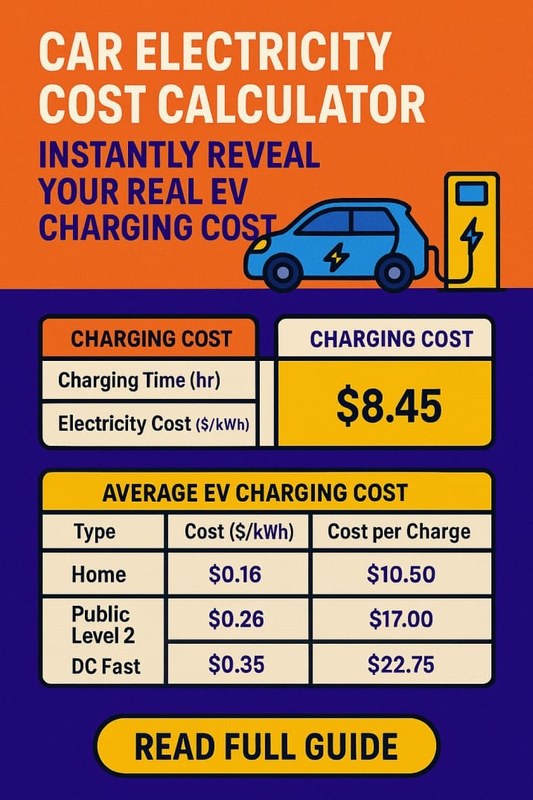
The basic formula is simple: cost = energy added ÷ charging efficiency × your electricity rate. If you add 40 kWh and Level 2 charging is about 90% efficient at the wall, you actually pay for roughly 44.4 kWh. Time-of-use plans can shift that cost significantly by moving charging to overnight hours.
Rates, taxes, fees, demand charges, and time-of-use windows vary by utility. Verify your own rate schedule before comparing.
Installation and Equipment Costs: EVSE, Electrician, and Permits
Total cost depends on the unit, the run length from the panel, whether a panel upgrade is needed, and local permit and inspection fees. A short run on an existing panel with spare capacity is far less expensive than a service upgrade. Get at least two written quotes that separate equipment, labor, permits, and any panel work.
Range and Efficiency Impacts: mi/kWh, Weather, HVAC, Elevation, Payload, Tires, and Charging Losses
Cold weather, highway speeds, headwinds, elevation gain, roof racks, underinflated tires, and heavy payloads all reduce miles per kWh. Charging losses are separate from driving efficiency and are why the energy you pay for is always slightly more than the energy stored in the pack.
Level 2 Charger Features That Support Battery Health
Smart Features, Warranty, and Customer Support
Look for adjustable current settings, reliable scheduling, and a documented safety listing from a recognized testing laboratory. Confirm the warranty term for the US market and whether support is domestic. If a charger depends on a cloud app, check what happens to scheduled charging when the service is unavailable.
You can compare options in our Level 2 home chargers category, and if charging speed is your main concern, this look at 48-amp EV charger speed shows how amperage translates into miles added per hour.
Weather Suitability and Cable Length Considerations
For outdoor installation, verify the enclosure’s weather rating, its operating-temperature range, and the manufacturer’s guidance for connector storage. Cable length matters more than most buyers expect — a 25-foot cable reaches most driveways, but a detached garage or a long parking pad may need more.
Common Myths About Level 2 Charging and EV Battery Health
Myth: Level 2 Charging Is Worse Than Level 1 for Battery Life
Level 1 charging is slower, not gentler in any meaningful way. Both are low-C-rate AC charging. Level 1 simply takes far longer and is less efficient in cold weather because more energy goes to keeping the pack warm over a longer session.
Myth: You Should Avoid Level 2 Charging to Prevent Degradation
Avoiding Level 2 charging means relying on a standard outlet or DC fast charging. Neither is better for the battery in normal daily use. Level 2 is the design intent for most EVs: overnight, low rate, moderate state of charge.
Conclusion: Is Level 2 Charging Right for Your EV?
Who Should Use Level 2 Charging for Daily Charging
Level 2 fits almost every owner who drives more than about 30 to 40 miles a day, lives in a climate with real winters, or wants to precondition the cabin without draining the pack. Renters and apartment dwellers may not be able to install one, and a standard outlet can still cover very low daily mileage.
Final Thoughts from Mark Reynolds
The battery-health conversation around Level 2 charging is mostly a distraction from the habits that actually matter. Temperature, state of charge, and DC fast-charging frequency are where the measurable differences show up. Level 2 is the tool manufacturers expect you to use for daily charging, and using it within your owner’s manual guidance is the practical answer.
- Best for: Daily charging for owners with a dedicated 240 V circuit and average daily driving above roughly 30 miles.
- Think twice if: You cannot install a dedicated circuit, or your vehicle’s onboard charger is already limited well below the EVSE’s output.
- Next step: Check your owner’s manual for the recommended daily charge limit and confirm your panel capacity with a licensed electrician.
Frequently Asked Questions
No. Level 2 charging delivers AC power at a low rate relative to pack capacity — usually around 0.1C to 0.2C — which produces less heat and stress than DC fast charging. Temperature, state of charge, and fast-charging frequency matter far more than the fact that you charged at 240 volts.
Not in any meaningful way. Both are low-rate AC charging. Level 1 is slower and often less efficient in cold weather because the session runs longer, but neither level is inherently damaging to a healthy pack with proper thermal management.
Follow your owner’s manual rather than a universal rule. Many automakers recommend a daily limit around 80–90% for nickel-rich NMC packs, while some LFP vehicles recommend charging to 100% periodically for cell balancing. Raise the limit only when you need the range.
No. DC fast charging pushes much higher current into the pack and generates significantly more heat. Level 2 charging at home is a comparatively gentle thermal event, especially in vehicles with active liquid cooling.
Not if your vehicle’s onboard charger can accept the higher current. Both are low-C-rate AC charging. A higher-amperage unit mainly reduces charging time; the battery-health difference between 32 A and 48 A is minimal.
Leaving the pack at a very high state of charge for extended periods in high heat is one of the most consistently cited patterns. Frequent DC fast charging in hot climates also contributes. Level 2 charging itself is rarely the culprit.