Outdoor EV Charger Requirements: What You Need to Know
Outdoor EV charger requirements come down to a weather-rated EVSE, a dedicated circuit sized to the manufacturer’s instructions, and an installation that passes local code, permit, and inspection. The main limitation is that breaker size, wire gauge, and amperage are never universal — they depend on your charger, your vehicle, and your panel.
Understanding outdoor EV charger requirements starts with three things: a weather-rated EVSE, a dedicated circuit sized to the manufacturer’s instructions, and an installation that satisfies your local electrical code, permit, and inspection process. Everything else — breaker size, wire gauge, amperage, and connector type — depends on the specific charger, the vehicle, and your electrical panel.
- Compatibility: Match the EVSE connector to the vehicle inlet — J1772 or NACS/SAE J3400 for.
- Performance: Delivered power is capped by the lowest of the circuit, the EVSE output setting.
- Safety: Outdoor EVSE needs a verified enclosure rating, published temperature limits, and a permitted, inspected.
- Cost: Budget for conduit, trenching, weather-rated hardware, and possible panel work — not just the.
Outdoor EV Charger Requirements: The Direct Answer
Mounting a Level 2 charger on an exterior wall, a post, or a pedestal adds weather exposure to an already safety-sensitive electrical job. The equipment must be listed for outdoor use, the circuit must match the installation manual, and the work must pass whatever your local authority having jurisdiction (AHJ) requires.
There is no single national checklist that fits every driveway. Panel capacity, code adoption, utility rules, and permit thresholds vary by state and often by city or county.
The Three Core Requirements: Weather-Rated EVSE, Correct Circuit, and Code-Compliant Installation
Weather-rated EVSE. The unit needs a verified enclosure rating — typically expressed as a NEMA type or an IP rating — plus published operating-temperature limits and connector-storage guidance. Words like “weatherproof” or “all-season” in marketing copy are not ratings.
Correct circuit. A hardwired Level 2 EVSE normally needs a dedicated branch circuit with overcurrent protection sized to the manufacturer’s instructions and the applicable electrical code. Plug-in models need the specific receptacle type the manual calls for.
Code-compliant installation. That generally means a permit, an inspection, and work performed to the code edition your AHJ enforces.
What Is Not Universal: Breaker, Wire Gauge, and Amperage
Breaker size, conductor size, and charging amperage are not numbers you can copy from another owner’s installation. They depend on the EVSE’s rated input, hardwired versus plug-in configuration, circuit length, ambient temperature derating, and local code. Our walkthrough of 48 amp EV charger wire size shows how conductor sizing scales with current and run length.
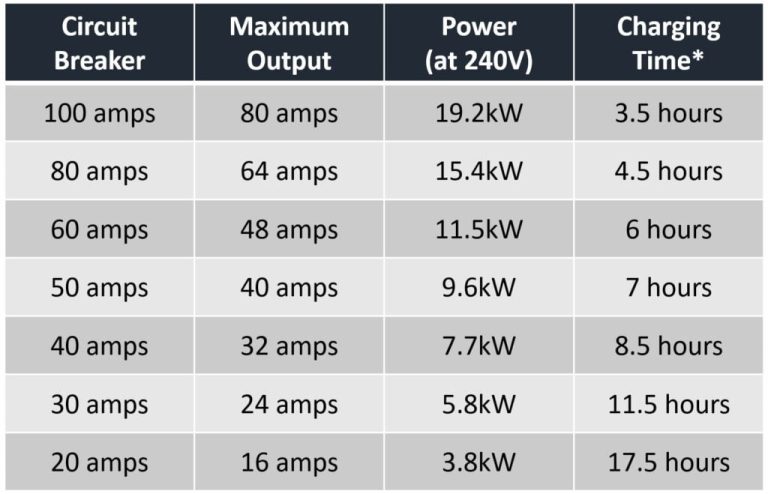
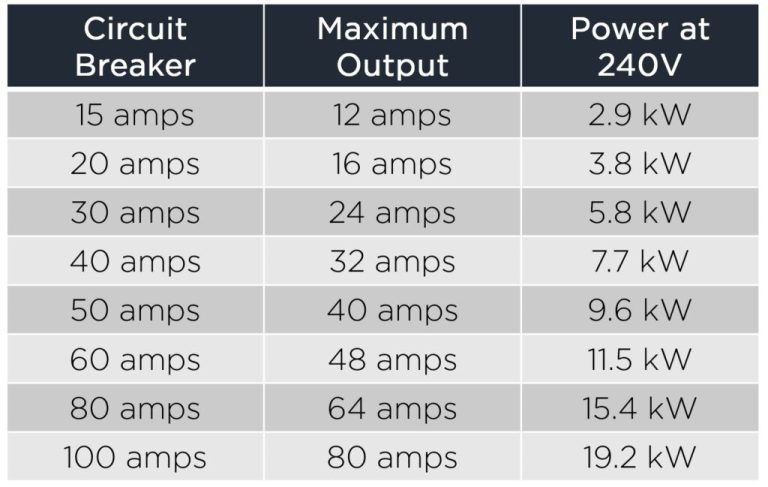
One principle does travel well: EV charging is treated as a continuous load, so charging current is generally limited to 80% of the circuit’s overcurrent protection. That is why a 48 A EVSE is normally installed on a 60 A circuit. Our explainer on whether a 48 amp EV charger needs a 60 amp circuit covers the reasoning.
How to Verify: Product Manual, Licensed Electrician, and Local AHJ
Three sources answer almost every question. The installation manual governs the equipment. A licensed electrician who works in your jurisdiction knows local practice. Your building or electrical department governs permits and inspection. When those three disagree with a forum thread, the forum thread loses.
- Confirm vehicle inlet and AC/DC compatibility
- Check the vehicle’s maximum AC charging capability
- Verify EVSE amperage and electrical requirements
- Confirm cable length, mounting, and indoor/outdoor suitability
- Verify safety listing, warranty, app requirements, and support
- Include installation, adapter/accessory, and electricity costs
Connector, Vehicle, and EVSE Limits for Outdoor Charging
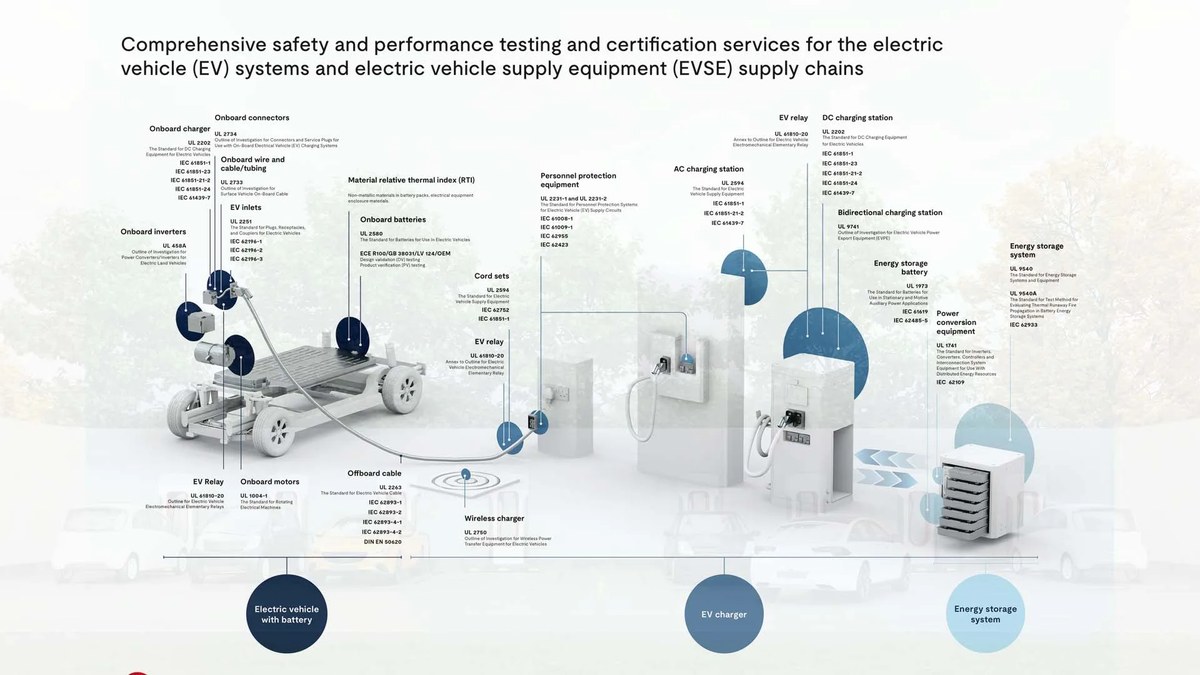
Outdoor placement changes exposure, not electrical logic. Delivered power is capped by the lowest of three limits: the circuit, the EVSE’s configured output, and the vehicle’s onboard AC charger.
Connector Types: J1772, NACS/Tesla, and Adapter Direction
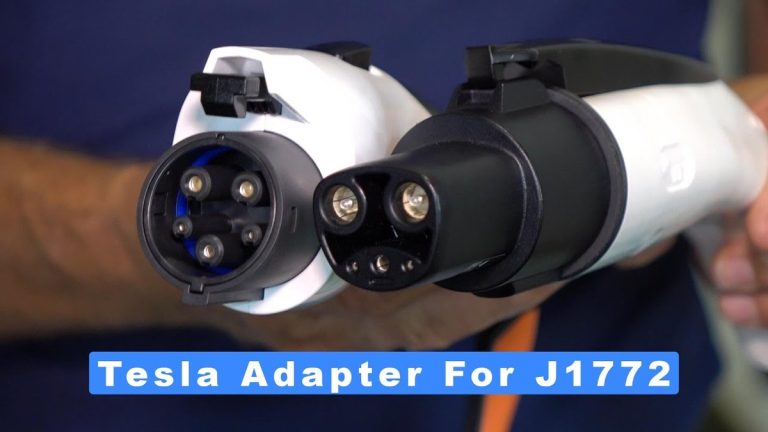
Level 2 AC charging in the US uses one of two connectors. J1772 remains the inlet on many EVs built before the NACS transition. NACS — standardized as SAE J3400 — is now used natively on many newer EVs and is the connector Tesla vehicles have used for years. CCS1 is a DC fast-charging standard built around the J1772 shape; it is not a home Level 2 connector.
Important: Physical fit alone does not prove every AC or DC charging mode is supported.
Onboard Charger Limit: Why the EV May Cap Your Delivered kW
The EVSE does not push power into the battery. It supplies AC, and the vehicle’s onboard charger converts it to DC. If your car’s onboard charger accepts less current than the EVSE can supply, the car sets the ceiling. That is why two owners with identical 48 A chargers can see very different charge rates.
Labeled example: a 240 V circuit delivering 40 A is roughly 9.6 kW at the EVSE. If the vehicle’s onboard charger accepts only 7.2 kW, the session runs at about 7.2 kW. These are illustrative figures, not a specification for any particular product.
EVSE Amperage, kW, and Plug-In vs Hardwired: Same Criteria, Different Fits
Plug-in and hardwired chargers are judged on the same criteria — connector, output, circuit requirements, weather rating, safety listing, warranty, and support — but they fit different situations. Hardwired units allow higher continuous current and avoid a receptacle, which many electricians prefer outdoors. Plug-in units offer portability and easier replacement, but they depend on a correctly rated receptacle. If you are weighing output levels, our take on whether 40 amps is enough for a Level 2 EV charger is a useful starting point.
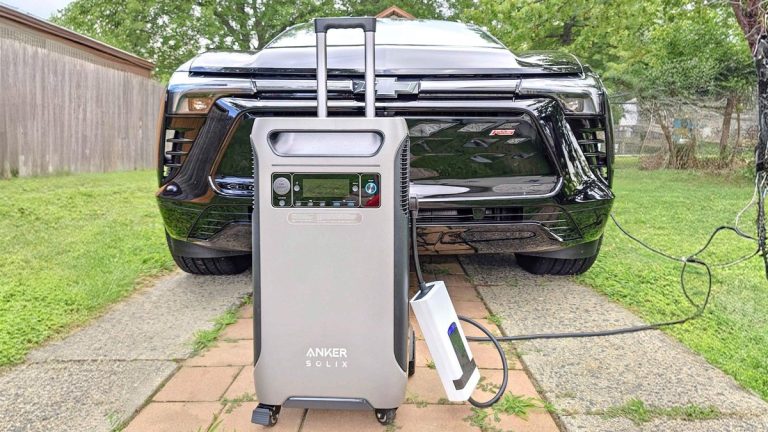
Portable EVSEs used outdoors deserve extra scrutiny. They are typically limited to lower currents, and the receptacle they plug into must be GFCI-protected and rated for the load. Our overview of what a portable EV charger is and how it works explains those trade-offs.
Electrical Circuit, Panel, Cable, and Installation Requirements
Circuit and Breaker Sizing: Follow the Manual and Local Code First
Start with the EVSE manual. It lists the required supply voltage, rated input current, recommended overcurrent protection, and whether hardwiring is required. Then confirm the circuit against local code. Never upsize a breaker to make a charger run at a higher current — the breaker protects the conductor, not the charger’s ambition.
Panel Capacity, Load Calculations, Permits, and Inspection Steps
A licensed electrician typically performs a load calculation to confirm your service and panel can support the new continuous load. If capacity is tight, options include a lower-amperage EVSE, a load-management device that reduces charging when household demand is high, or a service upgrade. Only the electrician and the AHJ can determine which is acceptable in your home.
The permit process usually runs: apply with the local department, complete the installation, schedule the inspection, and obtain sign-off. Some utilities also require notification or offer EV-specific programs.
Cable Length, Mounting Height, and Physical Protection Outdoors
Outdoor installs add practical constraints. Cable length has to reach the vehicle’s charge port without stretching across a walkway or driveway. Mounting height should keep the unit above standing water and snow accumulation while remaining reachable, and the holster should be positioned so the connector does not rest in water or on the ground.
Physical protection matters too: bollards or a post set back from traffic lanes, conduit or cable management for long runs, and strain relief where the cable exits the unit. Any of these may be governed by local code or by the manufacturer’s instructions.
Weather Suitability, Smart Features, and Warranty for Outdoor EVSE
NEMA/IP Ratings, Temperature Range, Rain, Snow, and Sun Exposure
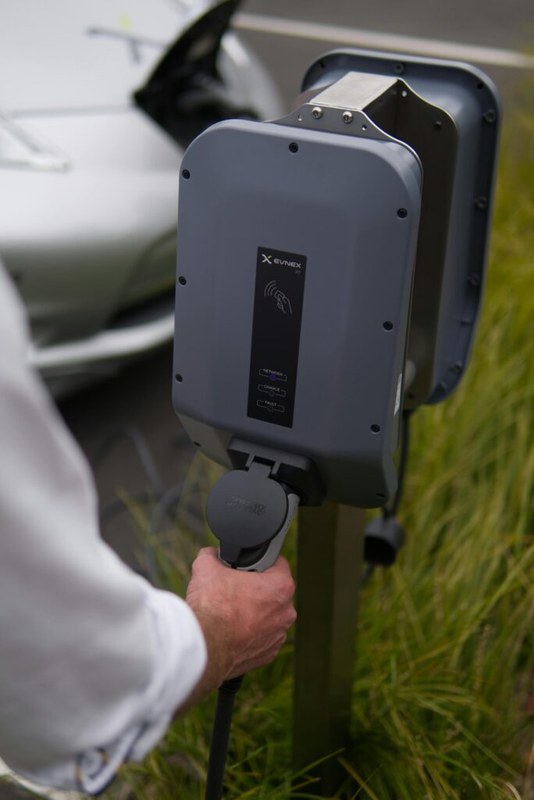
Two rating systems appear on EVSE spec sheets. NEMA enclosure types (for example, Type 3R or Type 4) describe protection against weather and, in some cases, hose-directed water. IP ratings (such as IP54, IP66, or IP67) describe ingress protection against dust and water. Neither rating tells you the operating temperature range — that is listed separately.
Some outdoor factors are not covered by ratings at all: UV degradation of the cable jacket over years of direct sun, ice buildup on the connector, and snow blocking the holster. A shaded or covered mounting location reduces wear even when the unit is fully outdoor-rated.
Smart Features: Wi-Fi, Cellular, Load Management, Scheduling, and Firmware
Smart charging features can be genuinely useful outdoors, where scheduled off-peak charging and load management reduce cost and panel strain. But connectivity is a dependency. Wi-Fi range to a detached garage or the far corner of a driveway is often worse than indoors, and some units rely on a cloud account for scheduling.
Ask what happens if the app or cloud service is unavailable: does the charger default to charging, or does it stop? Also check whether firmware updates require an active account and whether any feature carries a subscription.
Warranty, Support, and Serviceability for Outdoor Installations
Outdoor installations stress hardware more than garage installations, so warranty terms matter. Check the US warranty length, whether it explicitly covers outdoor use, whether labor is included, and how replacements are handled. Serviceability counts too — a hardwired charger that fails in February is a bigger problem if the replacement requires a new permit.
Adapters and Compatibility: What Outdoor EV Owners Must Check
Source and Destination Connectors: Adapter Direction and What Plugs Into What
Adapter direction is the most common source of confusion. A NACS-to-J1772 adapter lets a J1772 vehicle charge from a NACS AC source. A J1772-to-NACS adapter lets a NACS vehicle charge from a J1772 EVSE. They are not interchangeable, and AC adapters generally cannot be used for DC fast charging.
AC vs DC Adapters: Power Limits, Thermal Safety, and Vehicle Restrictions
AC adapters pass power to the vehicle’s onboard charger; DC adapters pass high-voltage DC directly to the pack and involve different safety and communication requirements. Never assume an adapter rated for AC will work on a DC charger, and never substitute a passive adapter where the vehicle or network requires an active, communicating one. Heat is the practical failure mode — undersized or damaged adapters can overheat at the pins.
Network Restrictions and Firmware/Vendor Requirements for Adapter Use
Some charging networks and vehicle manufacturers restrict adapter use, require a specific approved adapter, or require a software update before certain combinations work. Verify current compatibility with the vehicle manufacturer and the network before relying on an adapter as your primary outdoor charging method.
Outdoor EV Charging Costs: Electricity, Losses, and Installation
Electricity Rate, Time-of-Use Pricing, and the kWh Delivered Formula
The basic math is simple: cost equals the energy drawn from the wall in kWh multiplied by your effective electricity rate, including taxes and fees. Time-of-use plans change that rate by hour, which is why scheduled overnight charging often costs less than charging at 6 p.m.
Illustrative only. Rates, taxes, time-of-use pricing, and losses vary by utility, plan, and equipment.
Charging Losses and Cost per Mile: Separating Wall kWh from Battery kWh
Not every kWh drawn from the wall reaches the battery. AC Level 2 charging loses a portion of energy to conversion, cable resistance, and thermal management, and cold weather widens the gap because some energy goes to warming the pack. Cost per mile should therefore be calculated from wall energy, not from the battery’s displayed consumption.
Example method: if the vehicle uses 0.28 kWh per mile (about 3.6 mi/kWh) and wall-to-battery losses are 10%, wall energy per mile is roughly 0.31 kWh. At $0.17 per kWh, that is about 5.3 cents per mile. These are illustrative assumptions — substitute your own efficiency, rate, and loss estimate.
Equipment and Installation Cost Ranges: What Changes for Outdoor Projects
Equipment prices vary by amperage, connector, cable length, and smart features, and they change frequently — check current listings rather than relying on older figures. Installation is where outdoor projects diverge from garage projects: longer conduit runs, trenching to a detached garage or post, weather-rated boxes, GFCI protection for receptacles, and sometimes a panel upgrade or load-management device.
Get at least two or three quotes from electricians who have completed permitted EVSE installs in your area, and ask each quote to state whether the permit fee is included.
Battery Health, Temperature, and Range Efficiency Outdoors
Manufacturer Guidance vs General Patterns: What to Follow for Your EV
Follow your vehicle manufacturer’s guidance first. Advice about charge limits, daily charging targets, and DC fast-charging frequency varies by battery chemistry and thermal-management design, and blanket rules such as “never charge above 80%” do not apply uniformly across EVs.
Temperature, State of Charge, Charging Power, Chemistry, and DC Fast Charging Context
Cold packs accept less power, and hot packs may have power reduced to protect cells. State of charge also shapes the curve: most EVs taper charging speed as the battery fills. Outdoor charging in winter can mean a slower session than the same charger delivers in spring, even with identical settings.
DC fast charging is a separate use case from home Level 2 charging. Manufacturers often publish specific guidance about DC fast-charging frequency and preconditioning, and that guidance should take priority over generic advice.
Range and Efficiency: mi/kWh, Wh/mi, Speed, Weather, HVAC, Elevation, Payload, and Tires
Efficiency estimates should always be labeled as estimates, because the variables are large. Highway speed increases aerodynamic drag. Cold temperatures reduce usable range and raise HVAC demand. Elevation gain, payload, roof racks, underinflated tires, and battery temperature all move the number. EPA range figures come from a standardized test cycle and rarely match a winter commute at 75 mph.
Convenience Trade-Offs: Preconditioning, Scheduled Charging, and Battery Temperature
Outdoor charging in cold climates involves a trade-off between cost and comfort. Scheduled off-peak charging saves money but may leave the pack cold unless the vehicle supports departure preconditioning while plugged in. Cabin preconditioning draws energy too, so decide whether you want the cheapest session or the warmest cabin — and confirm what your vehicle allows while connected to an outdoor EVSE.
Frequently Asked Questions
Yes. The unit must be listed for outdoor use, which means a verified enclosure rating such as a NEMA type or IP code, plus published operating-temperature limits and connector-storage guidance from the manufacturer. Marketing terms like “weatherproof” are not ratings, so check the spec sheet and installation manual.
That depends entirely on your local jurisdiction. Many US cities and counties require an electrical permit and inspection for a new dedicated 240 V circuit, but thresholds and adoption of code editions vary. Contact your local building or electrical department before starting work.
There is no universal answer. Because EV charging is a continuous load, charging current is generally limited to 80% of the circuit’s overcurrent protection, so a 48 A EVSE is typically paired with a 60 A circuit and a 40 A EVSE with a 50 A circuit. The EVSE manual and local code govern the final numbers.
Only with the correct adapter. A J1772-to-NACS adapter lets a NACS vehicle charge from a J1772 AC EVSE, but adapter direction matters and AC adapters are not interchangeable with DC fast-charging adapters. Confirm current compatibility with your vehicle manufacturer before relying on an adapter.
Often, yes. Cold battery packs accept less power, and some energy may go toward warming the pack rather than charging it. State of charge also affects the curve, since most EVs taper charging speed as the battery fills. Check your owner’s manual for manufacturer guidance on cold-weather charging.
It depends on your electricity rate, your vehicle’s efficiency, and charging losses. As an illustration, a vehicle using 0.28 kWh per mile with 10% wall-to-battery losses draws about 0.31 kWh per mile from the wall; at $0.17 per kWh that is roughly 5.3 cents per mile. Substitute your own rate and efficiency figures.