Can an EV Charger Be Installed Outside? What to Know
Yes, an EV charger can be installed outside in most US locations, provided the EVSE has a documented outdoor enclosure rating and the circuit is installed to code. The main checks are the manufacturer’s environmental limits, your panel capacity, and local permit and inspection requirements.
Yes — can EV charger be installed outside, and for most US homeowners it is a normal, code-compliant setup rather than a compromise. The real question is not whether outdoor installation is possible, but whether the specific EVSE is rated for the environment, the circuit is built correctly, and your local authority having jurisdiction accepts the plan. Get those three right and an outdoor charger can be as safe and reliable as one mounted in a garage.
- Compatibility: Confirm the EVSE’s NEMA enclosure rating and operating temperature range in the manual, not.
- Performance: The vehicle’s onboard charger caps AC charging speed regardless of the EVSE’s rated amperage.
- Safety: Outdoor circuits still require proper overcurrent protection, grounding, and a permit and inspection where.
- Cost: Outdoor installs often cost more due to conduit, trenching, and weather-rated materials; operating cost.
Can an EV Charger Be Installed Outside? The Short Answer
Outdoor EV charging equipment is widely available and widely installed across the United States. Driveways, carports, detached garages, and curbside pedestals all host Level 2 EVSE. What makes an installation “outdoor” is a combination of the equipment’s enclosure rating, how the wiring is protected, and what your local code official requires.
The equipment is only one third of the answer. A charger rated for outdoor use, mounted to a wall in the rain, is still unsafe if the circuit lacks proper overcurrent protection, grounding, or a weather-rated receptacle. That is why electricians and inspectors treat this as a system problem, not a product problem.
What “Outdoor-Rated” Means for EVSE
When a manufacturer describes an EVSE as suitable for outdoor use, the claim should be traceable to an enclosure rating such as NEMA 3R, NEMA 4, or NEMA 4X, and to a stated operating temperature range. NEMA ratings describe protection against weather and, in the case of 4X, corrosion. They do not describe charging performance.
Verify the rating on the manufacturer’s specification sheet or installation manual, not on a retail listing headline. If a product page says “weatherproof” without naming a rating, treat that as marketing language until the manual confirms it.
The Three Pillars: Equipment, Installation, and Local Code
Think of outdoor charging as three separate approvals. The equipment must be listed by a recognized testing laboratory and rated for the environment. The installation must follow the manufacturer’s instructions and the applicable electrical code. The jurisdiction must issue the permit and pass the inspection.
Fail any one of those and the installation is either non-compliant or unsafe, even if the charger itself is excellent.
Outdoor EV Charger Fundamentals: Connectors, Power, and Vehicle Limits
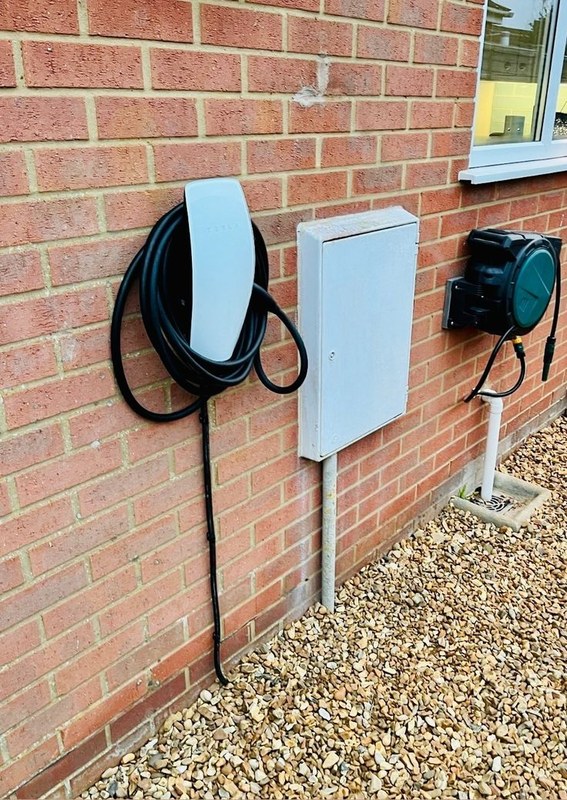
Before choosing a mounting location, it helps to separate three things that owners often blend together: the connector, the power the EVSE can deliver, and the power the vehicle can actually accept.
Connector Types and Adapter Basics for Outdoor Use
In the US, Level 2 AC charging happens through a J1772 connector or the NACS / SAE J3400 connector that has replaced it on many newer vehicles. CCS1 appears on many older DC fast-charging vehicles. Physical fit between a connector and an inlet does not prove that a given charging mode is supported, and adapters must be matched to the correct direction and current type.
Outdoors, connectors also face moisture, dust, and temperature swings. Follow the manufacturer’s guidance on where to holster the connector when it is not in use; many manuals specify a holster that keeps the pins off the ground and out of standing water.
Vehicle Onboard Charger Limit vs. EVSE Amperage and kW
The EVSE is the box on the wall. The onboard charger is inside the vehicle and converts AC power to DC for the battery. A 48-amp EVSE cannot push more current than the vehicle’s onboard charger accepts, so a car limited to 32 amps will charge at 32 amps regardless of the equipment rating.
For a closer look at how amperage translates into real-world speed, see our breakdown of whether 40 amps is enough for a Level 2 EV charger. The same logic applies outdoors: circuit capacity, EVSE output setting, and the vehicle limit all have to line up.
Plug-In vs. Hardwired: Which Is Better Outdoors?
Uses a compatible receptacle and allows the unit to be moved. Outdoors, the receptacle, cover, and GFCI protection must match the equipment instructions and local requirements.
Connects directly to the circuit, typically supports higher continuous current, and removes the plug-and-receptacle interface that weather and wear can degrade. Requires a qualified electrician.
Electrical and Code Requirements for Outdoor EV Charging
Outdoor installation adds variables that indoor work does not: UV exposure, water intrusion, freeze-thaw cycles, and longer conduit runs. Each of those affects materials and labor.
Circuit, Panel, and Wiring: Start with the Product Manual
Every EVSE manual states the required supply voltage, continuous current, overcurrent protection, and conductor sizing. Those numbers drive the breaker and wire selection. A common source of confusion is the relationship between the charger’s rated output and the circuit that feeds it — our explainer on whether a 48-amp EV charger needs a 60-amp circuit walks through that continuous-load math.
Wire gauge for a given amperage also depends on run length, termination temperature ratings, and conduit fill. Our guide to 48-amp EV charger wire size covers why a long outdoor run can require a larger conductor than a short indoor one.
Permits, Inspections, and the Authority Having Jurisdiction (AHJ)
Electrical code adoption varies by state and often by municipality. The National Electrical Code is a model document; your local jurisdiction decides which edition applies and what amendments it has added. The person who makes that call is the authority having jurisdiction, usually a municipal electrical inspector.
Practically, this means you should confirm permit requirements before buying equipment, not after. Some jurisdictions require a permit and inspection for any new EV branch circuit; others have streamlined processes. Requirements can also change between code cycles.
Cable Length, Routing, and Physical Protection
Outdoor cable runs need protection from vehicles, lawn equipment, and foot traffic. Conduit, bollards, and mounting height all matter. Cable length also determines whether you can reach the vehicle’s charge port without stretching the cord across a walkway or driveway.
Measure the actual route from the mounting location to the charge port in its parked position, including any slack the manufacturer recommends. A cord that reaches in the showroom may not reach in a two-car driveway.
Weather Suitability, Smart Features, and Warranty for Outdoor EVSE
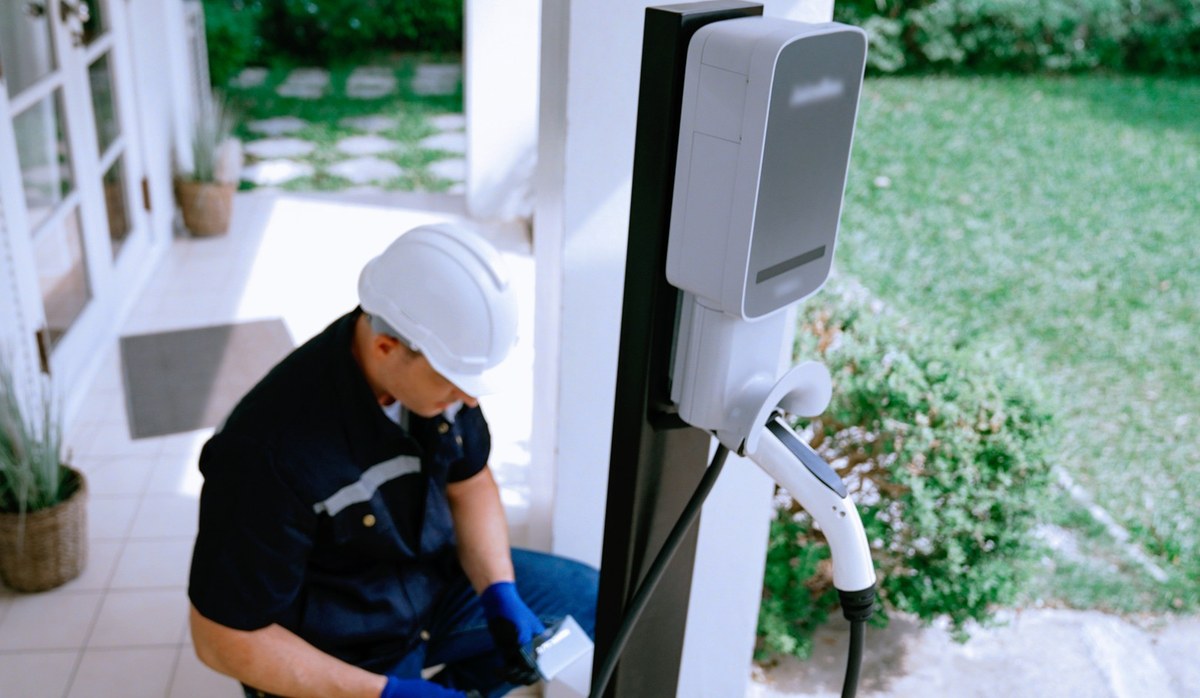
Weather performance is where outdoor installation diverges most from indoor installation, and where the manufacturer’s documentation matters most.
Temperature, Rain, Snow, and UV: What to Check
Look for a stated operating temperature range and an enclosure rating in the manual. Pay attention to whether the low end of that range covers your winter conditions, and whether the manufacturer places restrictions on charging at extreme temperatures.
Smart Features and Connectivity in Outdoor Environments
Wi-Fi and cellular connectivity can be weaker at the far end of a driveway or in a detached garage. Before committing to a smart charger, check whether it requires a persistent cloud connection for scheduled charging, and what happens if that connection drops. Some units retain local schedules; others do not.
Also consider app accounts, firmware updates, utility demand-response programs, and subscription terms. These are ownership costs and dependencies, not just features.
Warranty and Support: What to Expect
Warranty terms vary widely and often exclude damage from improper installation, flooding, or use outside the stated temperature range. Read the warranty language alongside the installation manual, because the two documents define what “proper use” means.
Adapters and Outdoor Charging: Direction, Power, and Safety
Adapters are a frequent source of confusion because the same physical shape can mean different things depending on which side of the connection it sits.
AC vs. DC Adapters: Source, Destination, and Vehicle Restrictions
An adapter that converts a J1772 EVSE to a NACS vehicle inlet handles AC charging. An adapter that converts a CCS1 DC connector to a NACS inlet handles DC fast charging. These are not interchangeable, and using the wrong one is a safety issue, not a convenience issue.
Vehicle-side and charger-side requirements must both be satisfied. A vehicle that supports NACS AC charging may still require a specific adapter for DC fast charging, and network restrictions can apply.
Power Limits, Thermal Considerations, and Firmware/Vendor Requirements
Adapters have their own current and thermal ratings. Some vehicles require a firmware update before a particular adapter is recognized. Verify compatibility against the adapter manufacturer’s documentation and the vehicle manufacturer’s guidance rather than assuming that a physical fit is sufficient.
Cost to Install and Operate an Outdoor EV Charger
Outdoor installation usually costs more than indoor installation because of conduit, trenching, weather-rated materials, and longer runs. Operating cost depends on your electricity rate and how much energy you actually draw.
Electricity Rate, kWh Delivered, and Charging Losses
The energy that reaches the battery is less than the energy drawn from the grid. AC-to-DC conversion, standby, and thermal management all consume some power. A rough 10% loss assumption is a reasonable planning figure, but actual losses vary by equipment, temperature, and charging rate.
Time-of-Use Pricing and Installation/Equipment Costs
Many utilities offer time-of-use rates that make overnight charging cheaper. Taxes, fees, and demand charges can change the effective rate. Installation cost depends on panel capacity, run length, trenching, permits, and whether the unit is hardwired or plug-in.
Formula: Estimating Your Outdoor Charging Cost
The basic formula is: cost = (energy added ÷ charging efficiency) × your effective rate. Add taxes, fees, and any subscription costs separately.
Illustrative example only. Rates, taxes, time-of-use pricing, and losses vary by utility and equipment.
Battery Health, Range, and Efficiency When Charging Outdoors
Outdoor charging does not inherently harm a battery, but ambient temperature does influence how the battery system behaves.
Manufacturer Guidance vs. General Patterns for Battery Care
Follow your vehicle manufacturer’s charging guidance first. General patterns — such as avoiding prolonged periods at very high or very low state of charge — are useful context, but they are not universal rules, and battery chemistry and thermal management differ between models.
Temperature, State of Charge, and Charging Power
Cold batteries accept less power, and many vehicles precondition the pack before charging in cold weather. That preconditioning draws energy, which shows up as a lower effective charging efficiency. Hot ambient temperatures can also cause the vehicle to reduce charging power.
DC Fast Charging Outdoors: Context, Chemistry, and Thermal Management
DC fast charging is a different mode from Level 2 AC charging, and outdoor exposure at a public station is normal. Frequent DC fast charging is a consideration for some owners, but the practical impact depends on the vehicle’s battery system, thermal management, and how often it occurs relative to AC charging at home.
Range and Efficiency: mi/kWh, Speed, Weather, HVAC, Elevation, Payload, and Tires
Range estimates vary with speed, temperature, HVAC use, elevation change, payload, tire pressure and tread, and battery state. These factors affect driving range, not charging speed directly, but they determine how much energy you need to put back.
Charging Losses and Battery Temperature: The Hidden Factors
The gap between energy drawn from the grid and energy stored in the battery is real, and it widens in extreme temperatures. For accurate cost planning, treat published efficiency figures as estimates rather than guarantees.
Outdoor vs. Indoor EV Charging: Comparison and Final Recommendations
Both options work. The right choice depends on where you park, what your electrical service can support, and how much weather exposure you are willing to manage.
Side-by-Side Criteria: Weather, Cost, Convenience, Code
| Criteria | Outdoor | Indoor (garage) |
|---|---|---|
| Weather exposure | Requires rated enclosure and temperature range | Minimal |
| Installation cost | Often higher: conduit, trenching, weather-rated parts | Usually lower for short runs |
| Convenience | Charges where the car is parked | Depends on garage access and door clearance |
| Code and permits | Same permit process, additional weather requirements | Standard branch-circuit rules |
| Cable routing | Needs protection from vehicles and foot traffic | Typically simpler |
Who Each Option Fits Best
Outdoor installation fits households without a garage, renters with landlord approval and a dedicated parking spot, and anyone whose vehicle sits in a driveway overnight. Indoor installation fits owners with a garage and a short, straightforward run from the panel.
If you need flexibility — a unit you can move between locations or take on a trip — a portable option may be worth reviewing. Our overview of what a portable EV charger is and how it works explains the trade-offs between portability and installed output.
Final Thoughts: Making the Right Call
Outdoor EV charging is a solved problem in the US. The work is in the details: verify the enclosure rating and temperature range, confirm the circuit and permit requirements with your local authority, and have the installation done to the manufacturer’s instructions. Do that, and the location stops being a concern.
- Best for: Owners who park in a driveway, carport, or detached garage and want charging where the vehicle sits.
- Think twice if: The panel has limited spare capacity, the run is long and requires trenching, or the chosen EVSE lacks a documented outdoor rating.
- Next step: Read the EVSE manual’s electrical and environmental requirements, then confirm permit and inspection rules with your local authority before purchasing.
Frequently Asked Questions
Yes, if the EVSE carries a documented outdoor enclosure rating such as NEMA 3R, NEMA 4, or NEMA 4X and the installation follows the manufacturer’s instructions. The connector and holster placement also matter, since standing water and ground contact should be avoided. Verify the rating in the product manual rather than relying on marketing terms like “weatherproof.”
Requirements vary by jurisdiction. Many US municipalities require a permit and inspection for a new EV branch circuit, while others have streamlined or exempted certain residential installations. Confirm with your local building or electrical department before work begins, since code adoption and amendments differ by state and city.
Hardwiring removes the plug-and-receptacle interface, which is often the most weather-exposed part of the setup, and typically supports higher continuous current. Plug-in units offer portability but depend on a properly rated receptacle and cover. Either can work outdoors when installed to the manufacturer’s instructions and local code.
Cold battery temperatures can reduce the power the vehicle accepts, and many EVs precondition the pack before charging, which draws additional energy. The effect depends on the vehicle’s thermal management system and the ambient temperature. Check your vehicle manufacturer’s guidance for cold-weather charging recommendations.
Cost depends on run length, whether trenching is needed, panel capacity, permit fees, and whether the unit is hardwired or plug-in. Outdoor work generally costs more than a short indoor run because of conduit and weather-rated materials. Get quotes from licensed electricians who have reviewed your panel and proposed route.
Adapters exist for both AC and DC charging, but they are not interchangeable. An AC adapter for J1772-to-NACS is a different product from a DC fast-charging adapter, and each has its own current rating and compatibility requirements. Verify the adapter’s direction, current type, and vehicle support against the manufacturer’s documentation before use.