EVIQO Level 2 EV Charger 40A vs 48A: Which One Should You Choose?
EVIQO Level 2 EV Charger J1772 40A vs EVIQO Level 2 EV Charger J1772 48A is a straightforward comparison if you’re deciding between a plug-in 40A unit and a hardwired 48A unit from the same brand. The right pick mostly comes down to your home setup, your installation preferences, and whether you want the added flexibility of the 40A model or the higher stated current ceiling of the 48A model.
Choose the EVIQO Level 2 EV Charger J1772 40A if you want a NEMA 14-50 plug-in setup with a 37″ input cable and a 25-foot charging cable. Choose the EVIQO Level 2 EV Charger J1772 48A if you want the hardwired version with 6-48A app control and a 40″ input cable. Before buying either one, verify your vehicle’s connector needs, your installation method, and the manufacturer’s current electrical requirements.
Both chargers share the same J1772-based approach for North American non-Tesla EVs and PHEVs, plus similar smart-app features, weatherproofing claims, and rebate language. The meaningful differences are mostly in installation style, stated amperage range, and a few hardware details that can matter in real garages and driveways.
Quick Comparison
| Feature | EVIQO Level 2 EV Charger J1772 40A | EVIQO Level 2 EV Charger J1772 48A |
|---|---|---|
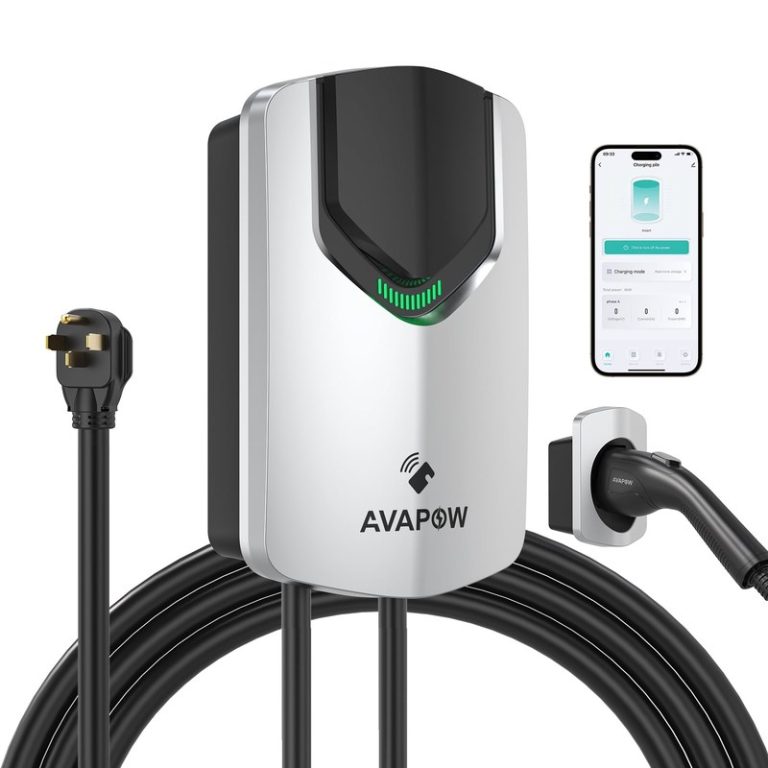
| Product image | 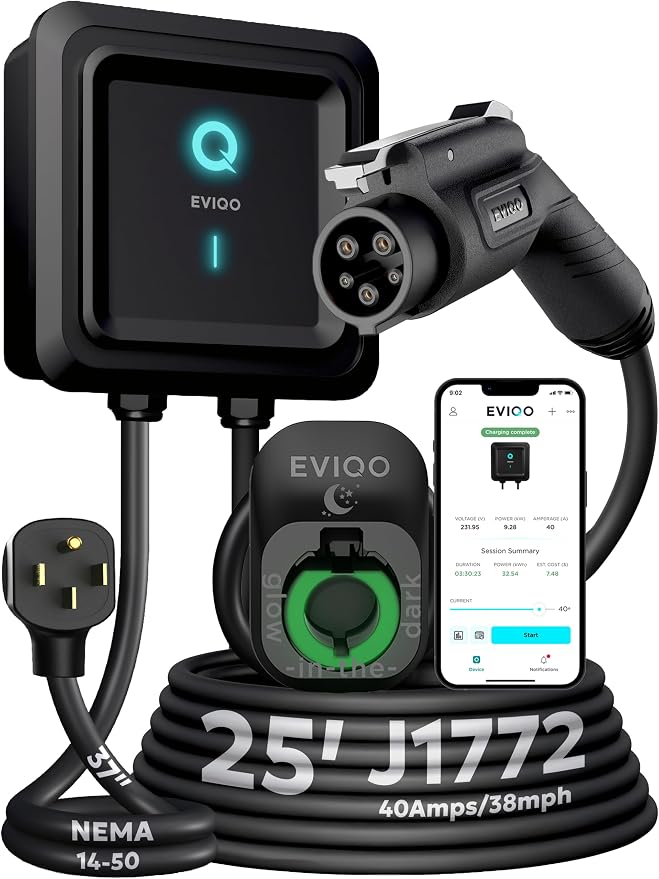 |
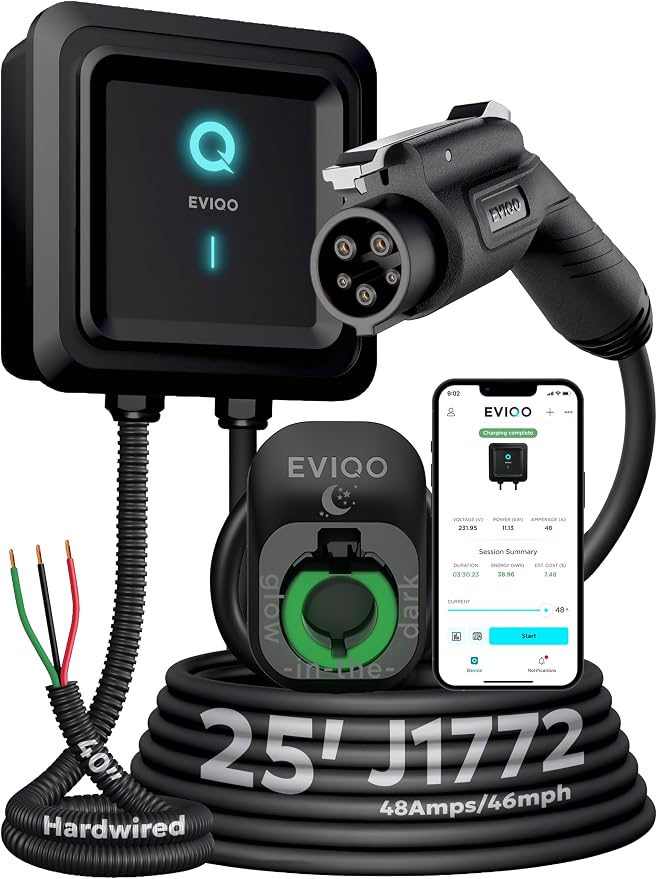 |
| Product type | 240V wall charging station with NEMA 14-50 input | 240V wall charging station, hardwired |
| Connector | J1772; Tesla use requires a J1772-to-NACS adapter, not included | J1772; Tesla use requires a J1772-to-NACS adapter, not included |
| Stated current range | 6-40A in the app | 6-48A in the app |
| Installation style | Plug-in via NEMA 14-50 input cable | Hardwired |
| Input cable length | 37 inches | 40 inches |
| Charging cable length | 25 feet | 25 feet |
| Weatherproof rating | IP66/NEMA-4 enclosure | IP66/NEMA-4 enclosure |
| Warranty / support | Not confirmed in supplied listing data | 3-year warranty and U.S.-based support included |
| Current price | See Price → | See Price → |
What Matters Most
If you’re comparing these two EVIQO chargers for a U.S. home setup, the biggest factors are not just “40A vs 48A.” The more practical questions are how each unit installs, how much control you want from the app, and whether the listed hardware fits your garage or parking layout.
For a deeper look at the broader EVIQO lineup, you may also want our EVIQO Level 2 EV charger review. If you’re still deciding whether 40 amps is enough for your household charging pattern, our guide on whether 40 amps is enough for a Level 2 EV charger can help frame the decision. And if you’re leaning toward the higher-output side, see our explainer on how many kW a 48 amp Level 2 EV charger can provide.
1) Installation style
The 40A model is the plug-in option with a NEMA 14-50 input cable. The 48A model is hardwired. That difference matters because it can affect how permanent the setup feels, how your electrician approaches the install, and how easily you can move the unit later. The supplied listing data does not confirm the exact installation requirements for either charger, so verify the manufacturer’s instructions before planning electrical work.
2) Stated current range
The 40A charger is listed with 6-40A current control in the app, while the 48A charger is listed with 6-48A current control. That is the most obvious technical difference in the supplied data, but it should be interpreted alongside your vehicle’s onboard AC charging limits and your home electrical setup. A higher charger rating does not automatically mean your EV will charge faster.
3) Cable reach and garage fit
Both models include a 25-foot charging cable, which is a useful length for many home garages and driveway scenarios. The input cable differs slightly: 37 inches on the 40A model and 40 inches on the 48A model. That may seem minor, but it can matter when you’re planning where the unit sits relative to the power source.
4) Smart controls and scheduling
Both chargers offer app-based control, current adjustment, reminders, consumption tracking, and cost tracking, with the app requiring 2.4 GHz WiFi. Both also support off-peak scheduling and remote software updates. If you want to shift charging to cheaper nighttime hours, either model appears to support that use case based on the supplied facts.
5) Outdoor durability claims
Both products are listed as UL/ETL/FCC/Energy Star certified and housed in an IP66/NEMA-4 weatherproof enclosure. That’s helpful if the charger may see rain, snow, dust, or temperature swings. Still, weatherproofing does not replace correct installation, so confirm whether your chosen mounting location and electrical plan match the manufacturer’s guidance.
EVIQO Level 2 EV Charger J1772 40A Deep Dive
EVIQO Level 2 EV Charger J1772 40A NEMA 14-50 – 240V Wall Charging Station
The 40A EVIQO model stands out as the more flexible installation option in the supplied data because it uses a NEMA 14-50 input cable instead of hardwiring. It keeps the same J1772 connector, smart app controls, weatherproof enclosure, and 25-foot charging cable found on the 48A version, but with a 6-40A current range and a slightly shorter 37-inch input cable. One important limitation is that the listing data does not confirm a warranty or U.S. support package for this specific model, so verify current documentation if those details matter to you.
- Plug-in NEMA 14-50 design may suit homes that already have that outlet
- 25-foot charging cable and app-based current control
- Warranty and U.S. support are not confirmed in the supplied listing data
- Lower stated app current ceiling than the 48A model
EVIQO Level 2 EV Charger J1772 48A Deep Dive
EVIQO Level 2 EV Charger J1772 48A – Hardwired 240V Wall Charging Station
The 48A EVIQO model is the more installation-permanent option in the supplied facts and the one with the higher stated app current ceiling. It shares the same J1772 connector, 25-foot charging cable, IP66/NEMA-4 enclosure, and smart app features as the 40A model, while also adding a 3-year warranty and U.S.-based support in the listing data. The main trade-off is that it is hardwired, so it may be less convenient if you want a plug-in unit or expect to relocate the charger later.
- 6-48A current control in the app
- 3-year warranty and U.S.-based support are listed
- Hardwired installation may be less flexible than a plug-in model
- Vehicle compatibility still depends on connector fit and the vehicle’s charging requirements
Head-to-Head
Installation and setup
The most important difference is simple: the 40A model is a NEMA 14-50 plug-in charger, while the 48A model is hardwired. If you want a removable or more outlet-based setup, the 40A version is the clearer fit. If you want a fixed wall installation, the 48A version better matches that preference.
Stated current range
The 40A unit is listed with 6-40A app control, and the 48A unit is listed with 6-48A app control. That makes the 48A model the higher-ceiling option on paper. However, the supplied data does not tell us how either unit behaves with specific vehicles, so actual charging results still depend on the car and the home electrical setup.
Cable and physical reach
Both chargers include a 25-foot charging cable, so reach to the vehicle is equal on the key user-facing cable. The input cable is slightly longer on the 48A model at 40 inches versus 37 inches on the 40A model. The difference is small, but it may help in a tighter mounting layout.
Support and warranty information
The 48A listing explicitly includes a 3-year warranty and U.S.-based support. The 40A listing does not confirm those details in the supplied data. If after-sale support matters to you, that is a meaningful distinction, but you should still verify the current manufacturer documentation in case the listing changes.
Shared strengths
Both models are J1772 chargers for North American non-Tesla EVs and PHEVs, and both can work with a Tesla only when paired with a J1772-to-NACS adapter, which is not included. Both also claim UL/ETL/FCC/Energy Star certification, IP66/NEMA-4 weatherproofing, app-based scheduling, remote updates, and a side reset button.
Which One Should You Choose?
You want a plug-in NEMA 14-50 charger with a 25-foot cable and app-based control up to 40A. This is the better fit if your home setup already favors a removable, outlet-based charger and you do not need the higher stated current range of the hardwired model.
You want the hardwired version, the higher stated 6-48A app range, and the listed 3-year warranty with U.S.-based support. This is the better fit if you are planning a permanent installation and want the more feature-complete listing on paper.
Buying and Compatibility Checks
- Confirm exact vehicle and connector compatibility
- Verify current product specifications and included hardware
- Confirm electrical/installation requirements from manufacturer documentation
- Check cable reach, mounting/location needs, and verified indoor/outdoor suitability
- Verify current warranty, support, price, and availability
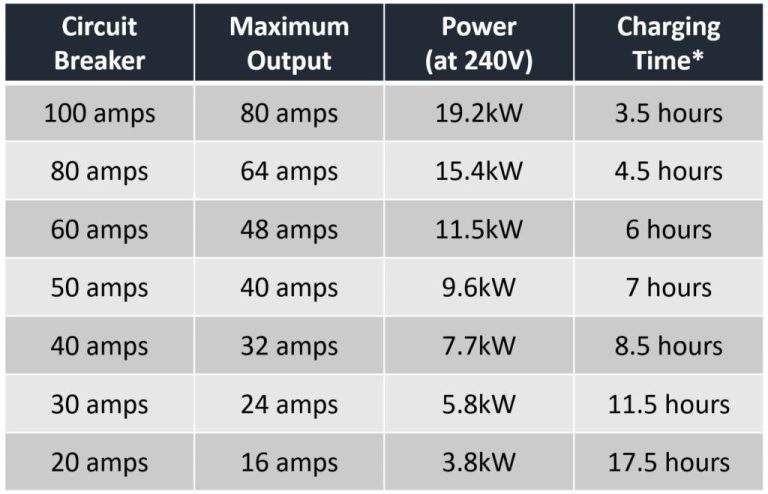
It is also worth confirming whether your vehicle’s onboard AC charging limits will take advantage of the 48A model’s higher stated current range. If you are comparing installation approaches more broadly, our guide to the 48 amp EV charger breaker size and our article on whether a 48 amp EV charger needs a 60 amp circuit can help you prepare the right questions for an electrician. For readers comparing 40A equipment, our 40 amp EV charger guide is another useful reference.
FAQs
The biggest difference in the supplied data is installation style. The 40A model is a NEMA 14-50 plug-in charger, while the 48A model is hardwired.
They can function as Tesla Level 2 chargers only when used with a J1772-to-NACS adapter, which is not included. Native connector fit still depends on the vehicle and adapter pairing.
The 48A model has the higher stated app range at 6-48A. The 40A model is listed at 6-40A.
Both are listed with IP66/NEMA-4 weatherproof enclosures and UL/ETL/FCC/Energy Star certification. Even so, you should still verify the installation location and the manufacturer’s instructions for your specific setup.
No. Installation style, vehicle charging limits, cable reach, and support details can matter just as much. The best choice is the one that fits your home electrical plan and your day-to-day charging habits.
- EVIQO Level 2 EV Charger J1772 40A: strongest supported use case is a plug-in NEMA 14-50 home charger with a 25-foot cable; main trade-off is the lower stated current range and missing confirmed warranty/support details in the supplied data.
- EVIQO Level 2 EV Charger J1772 48A: strongest supported use case is a hardwired home charger with the higher stated 6-48A app range and listed 3-year warranty/U.S. support; main trade-off is less installation flexibility.
- Before buying: verify your vehicle’s connector needs and the manufacturer’s current installation requirements, especially whether you want plug-in NEMA 14-50 or hardwired setup.
Both EVIQO chargers are credible-looking Level 2 options on paper, but the better choice depends on how you want to install and use the unit at home. If you match the charger to your electrical setup first, the rest of the decision becomes much easier.
6 Comments