Why Does EV Charging Slow Down? Causes Explained
EV charging slows down because the effective rate is always the lowest limit among the vehicle’s onboard charger, the battery’s accepted current, the EVSE setting, the circuit, and the connector — and the battery limit drops as state of charge rises. The main check is to confirm your vehicle’s onboard charger and DC peak ratings before blaming the equipment.
If you have ever watched a DC fast charger drop from its advertised peak to a fraction of that within a few minutes, you have probably asked why does EV charging slow down. The short answer is that charging power is always the lowest of several limits working at the same time — the vehicle’s onboard charger, the battery’s accepted charge rate, the EVSE setting, the circuit capacity, the connector or adapter, and the surrounding conditions — and several of those limits change as the session goes on.
- Compatibility: Adapter direction, AC/DC mode, and vehicle-side requirements must all match before a connector will.
- Performance: DC fast charging tapers by design as state of charge rises; AC charging is.
- Safety: Never bypass overcurrent protection or grounding, and stop charging immediately if a connector shows.
- Cost: Per-minute DC pricing punishes slow sessions, while per-kWh and off-peak home charging are largely.
Why Does EV Charging Slow Down? The Short Answer
No EV charging session runs at one fixed speed. The vehicle and the equipment continuously negotiate, and the vehicle is almost always the deciding party. A 350 kW dispenser cannot push 350 kW into a pack whose battery management system is only willing to accept 90 kW at that moment.
The Charging Curve: Power Tapers as State of Charge Rises
DC fast charging follows a curve, not a flat line. Manufacturers publish peak rates that apply only inside a window — usually at lower state of charge with a battery in its preferred temperature range. As the pack fills, the battery management system reduces accepted current to protect the cells. That is designed behavior, not a defect.
The Weakest Link: Vehicle Onboard Charger, EVSE, Circuit, or Connector
For AC charging, the effective rate is the lowest of four things: the vehicle’s onboard charger rating, the EVSE’s output setting, the circuit’s continuous-duty capacity, and the connector and cable rating. Upgrading one without the others changes nothing. A 48-amp EVSE connected to a car with a 32-amp onboard charger still delivers 32 amps.
AC vs. DC Charging: Two Different Slowdown Stories
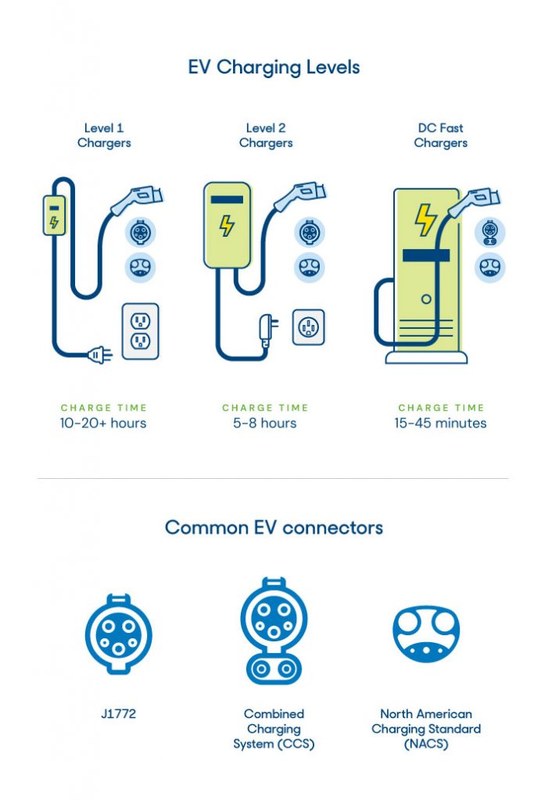
AC charging — Level 1 and Level 2 — is limited mainly by hardware: the onboard charger and the circuit. It usually holds a steady rate from start to finish, then tapers near full. DC fast charging bypasses the onboard charger and is limited mainly by how much current the battery will accept, which makes tapering far more noticeable.
Vehicle and Battery Causes: Onboard Charger Limits, Temperature, and State of Charge
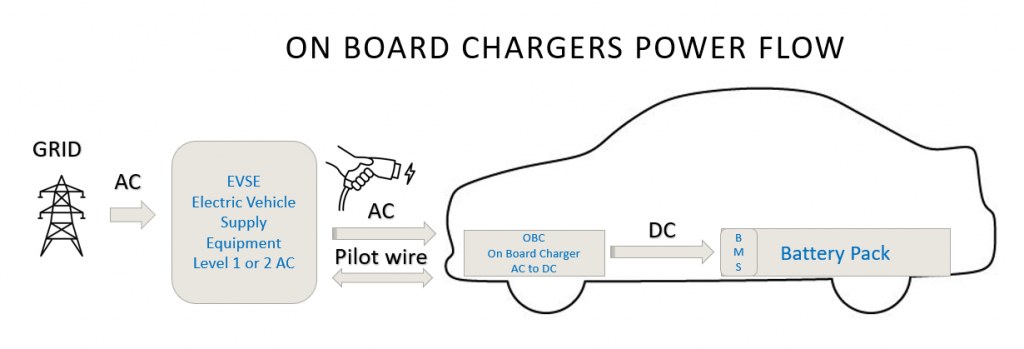
The car is the most common reason a session slows down. Its onboard charger, its thermal system, and its battery state all cap what the equipment outside can deliver.
Onboard Charger Limits in AC Charging and What kW Ratings Mean
The onboard charger converts AC from the wall into DC the battery can store. Its rating is a hard ceiling on AC charging speed. If you want to know how many kW a 48-amp Level 2 charger actually delivers, the math is volts × amps, but the real-world result is capped by the vehicle’s onboard charger regardless of what the EVSE offers.
Battery Temperature, Thermal Management, and Chemistry: Cold, Hot, and Ideal Windows
Lithium-ion packs accept charge fastest inside a moderate temperature window. A cold pack resists fast charging until it warms, which is why winter sessions often start slowly and then speed up. A very hot pack triggers derating to avoid damage. Vehicles with active liquid thermal management generally handle both extremes better than older air-cooled designs.
Manufacturer Guidance vs. General Patterns for DC Fast Charging and 80% Taper
The often-quoted “80% rule” is a general pattern, not a universal requirement. Many manufacturers do recommend limiting routine DC fast charging to roughly 80% for daily use, but the exact guidance, the taper point, and the recommended daily charge level vary by model, chemistry, and thermal design. Always follow your own vehicle’s manual rather than a blanket rule.
State of Charge, Battery Health, and Convenience Trade-Offs
Above roughly 80% state of charge, most packs accept current far more slowly. On a road trip, two shorter stops usually beat one long one because the vehicle spends more time in its fast window. On a home Level 2 charger, the taper matters much less — you are parked for hours anyway.
EVSE and Electrical Causes: Amperage, Voltage, Plug-In vs. Hardwired, and Panel Limits
Once the vehicle’s limits are understood, the next place to look is the equipment and the circuit feeding it.
EVSE Amperage and kW Ratings: What the Charger Can Actually Deliver
An EVSE is a safety device and a switch, not a converter. It advertises available current to the car and stops the session if something goes wrong. Its amperage setting, not its marketing name, determines what it can offer. Many units ship with a lower default setting that must be adjusted during installation.
Plug-In vs. Hardwired EVSE: Power Ceiling, Weather Suitability, and Installation
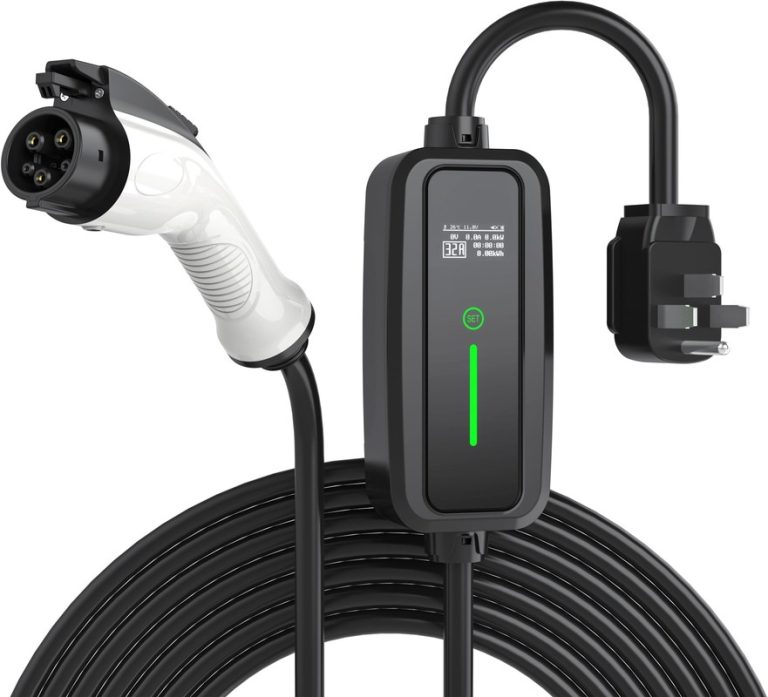
Uses an existing compatible receptacle, so it can move with you. Output is limited by the receptacle and circuit, and plug-and-receptacle connections need appropriate weather protection outdoors.
Wired directly to a dedicated circuit, which supports higher continuous output and avoids a plug connection. Requires a qualified electrician, permits, and inspection where applicable.
Circuit Breaker, Panel Capacity, and Voltage Drop: Why the Manual and Local Code Rule
Continuous EV loads are treated differently from short-duration appliance loads, which is why breaker and wire sizing follow specific rules. If you are weighing a 48-amp unit, it helps to understand whether a 48-amp EV charger needs a 60-amp circuit before ordering equipment. Long runs, undersized conductors, and a loaded panel can all reduce delivered voltage and, in turn, delivered power.
Cable Length, Connector Type, and Smart Features That Can Reduce Power
Thinner or very long cables add resistance and heat. Some smart chargers also reduce output deliberately — load management, scheduled off-peak windows, or utility demand-response events can all lower the rate you see in the app. That is intentional, not a malfunction.
Adapters and Connector Compatibility in 2026: When the Wrong Adapter Slows You Down
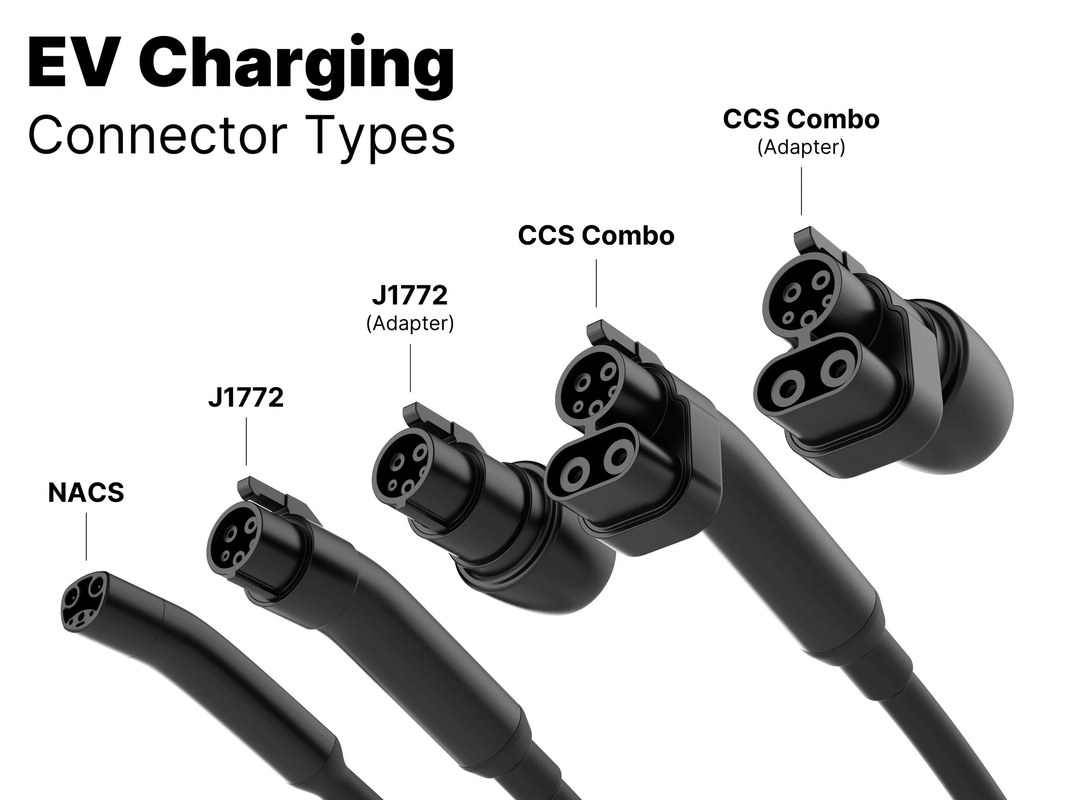
Adapters solve physical connection problems. They do not create capability that the vehicle or the station does not have.
Source and Destination Connectors: J1772, NACS/J3400, CCS1, and CHAdeMO
North American EVs use a mix of J1772 for AC, NACS/SAE J3400 for newer AC and DC charging, CCS1 for DC fast charging on many existing models, and CHAdeMO on some older imports. The vehicle inlet and the station connector must both be accounted for separately.
Adapter Direction and AC/DC Mode: What Can and Cannot Pass Through
An adapter designed to let a CCS1 vehicle use a NACS station is not the same as one that lets a NACS vehicle use a CCS1 station. AC and DC adapters are also distinct products. Physical fit alone does not prove that a given AC or DC charging mode is supported.
Important: Physical fit alone does not prove every AC or DC charging mode is supported.
Vehicle and Network Restrictions, Power Limits, Thermal Safety, and Firmware/Vendor Requirements
Even a correct adapter may be limited by the vehicle’s software, the charging network’s authentication rules, or the adapter’s own thermal rating. Some manufacturers require specific approved adapters and current firmware. A third-party adapter that is not approved may work at reduced power — or refuse the session entirely.
Weather, Environment, and Driving Conditions That Affect Charging Speed
Conditions outside the car change both how fast it charges and how far each kilowatt-hour takes you.
Hot and Cold Weather: Battery Preconditioning, Cabin HVAC, and Charger Derating
Preconditioning — warming or cooling the pack before a fast-charge stop — is one of the most effective ways to avoid a slow session. Cabin heating or cooling also draws energy, which can slow the rate at which range is added even when charging power looks normal. Some outdoor equipment derates in extreme heat or cold as well.
Elevation, Payload, Tires, and Speed: How They Affect Range and Charging Stops
Higher speeds, headwinds, elevation gain, roof racks, trailer loads, and underinflated tires all raise consumption. Higher consumption does not slow the charger, but it means you arrive at lower state of charge and need more energy for the same distance — which makes the stop feel longer.
mi/kWh and Wh/mi Context: Why Efficiency Losses Make Charging Feel Slower
If your vehicle returns 2.5 mi/kWh instead of 3.5 mi/kWh in winter, an hour of charging adds noticeably fewer miles even at identical power. Charging losses — energy that becomes heat in the onboard charger, cable, and pack — add a few percent on top. Labeled estimates, not guarantees, are the honest way to plan.
Charging Cost and Time: How Slowdowns Affect Your Bill and Road Trip Plan
Slower charging is not automatically cheaper or more expensive — it depends on how you are billed.
Electricity Rate, kWh Delivered, and Charging Losses: A Simple Formula
The basic formula is cost = rate × kWh delivered ÷ charging efficiency. If you pay per minute instead of per kWh, a slow session costs you more for the same energy. If you pay per kWh, a slow session costs about the same but takes longer.
Illustrative only. Rates, taxes, time-of-use pricing, demand charges, and real losses vary by utility and equipment.
Time-of-Use Pricing and Demand Charges: When Slower Charging Costs More or Less
Time-of-use plans reward charging in off-peak windows, so a slower overnight session usually costs less per kWh than a fast afternoon one. Commercial DC fast charging often includes demand charges and session fees that make a long, slow top-up disproportionately expensive.
Installation and Equipment Costs: EVSE, Permit, Electrician, and Adapter Expenses
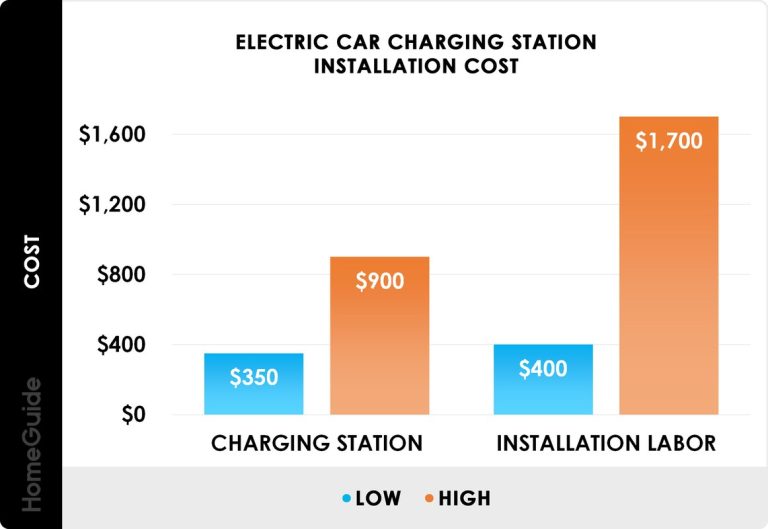
Budget beyond the box itself: an electrician, possibly a permit and inspection, mounting hardware, a longer run of conductors, and any adapters you need. A lower-amperage unit can reduce installation cost if your panel has limited headroom.
Troubleshooting Slow Charging: What to Check Before Calling Support
Most slow-charging complaints resolve with a short, ordered check rather than a service visit.
Check the Vehicle, Charger, App, and Connector for Error States
Look for derating messages, thermal warnings, or reduced-power notifications in the vehicle and in the charging app. Inspect the connector pins for heat damage, discoloration, moisture, or debris. A hot connector is a stop-now condition, not something to work around.
Isolate the Weakest Link: Try a Different EVSE, Circuit, or Public Station
If the same car charges normally elsewhere, the problem is likely the home equipment or circuit. If the same station charges other cars normally, the problem is likely the vehicle. That single comparison narrows the cause faster than any diagnostic menu.
When to Contact the Manufacturer, Network, or Electrician: Warranty and Support Paths
Contact the vehicle manufacturer for onboard charger or battery-management concerns, the charging network for station faults, and a qualified electrician for anything involving the circuit, breaker, panel, or hardwired connection. Do not open or modify mains-voltage equipment yourself.
How to Choose Equipment and Habits That Reduce Slowdowns
The goal is not the biggest number on a spec sheet. It is matching the equipment to the car, the panel, and your actual driving pattern.
Match EVSE to Vehicle Onboard Charger and Panel Capacity
Find your vehicle’s maximum AC acceptance rate first. Then confirm what your electrical service can support. Buying more EVSE capacity than the car can use, or more than the panel can safely supply, adds cost without adding speed.
Compare Plug-In vs. Hardwired, Smart vs. Basic, and Adapter Options Side by Side
- Confirm vehicle inlet and AC/DC compatibility
- Check the vehicle’s maximum AC charging capability
- Verify EVSE amperage and electrical requirements
- Confirm cable length, mounting, and indoor/outdoor suitability
- Verify safety listing, warranty, app requirements, and support
- Include installation, adapter/accessory, and electricity costs
Who Each Option Fits: Commuters, Road-Trippers, Renters, and Older EVs
Commuters with a short daily drive usually do well with a modest plug-in unit on an existing circuit. Road-trippers benefit most from preconditioning and route planning around fast-charging windows. Renters should confirm what the property allows before buying equipment. Owners of older EVs with lower onboard charger ratings gain little from a high-amperage upgrade.
Understanding 48-amp charger speed in the context of your own vehicle’s limits is the fastest way to set realistic expectations. Once you know which cap is lowest, slow charging stops feeling mysterious and starts being something you can plan around.
- Best for: Owners who want to identify the actual limiting factor before spending on equipment.
- Think twice if: You are considering a higher-amperage EVSE without confirming your onboard charger and panel capacity.
- Next step: Check your vehicle’s onboard charger rating, then verify your circuit and breaker with a qualified electrician.
Frequently Asked Questions
This is the charging curve at work. DC fast charging delivers peak power only within a limited window, usually at lower state of charge with a battery in its preferred temperature range. As the pack fills, the battery management system reduces accepted current to protect the cells, so the final portion of the session takes longer.
No. The effective AC rate is the lowest of the vehicle’s onboard charger rating, the EVSE output setting, the circuit capacity, and the connector rating. If your car accepts 32 amps, a 48-amp EVSE still delivers 32 amps. Confirm your vehicle’s onboard charger rating before upgrading equipment.
Cold battery cells resist fast charging until they warm up, so winter sessions often start slowly and then accelerate. Preconditioning the pack before a fast-charging stop helps significantly. Cabin heating also draws energy, which can reduce the range added per hour even when charging power looks normal.
Yes, in some cases. An adapter that is not approved for your vehicle, is rated below the station’s output, or is thermally limited may reduce power or refuse the session. Adapter direction matters too — an adapter built for one connector combination generally will not work in reverse.
It is not dangerous, but it is slow and often unnecessary. Many manufacturers recommend limiting routine DC fast charging to around 80% for daily use, but exact guidance varies by model, battery chemistry, and thermal design. Follow your own vehicle’s manual rather than a universal rule.
Try the same car on a different charger, and try a different car on the same charger. If the car charges normally elsewhere, the home equipment or circuit is the likely cause. If the station works fine for other vehicles, the vehicle is the likely cause. Contact the manufacturer, network, or a qualified electrician accordingly.