EV Charger Breaker Size: What Size Breaker for EV Charging?
Size the breaker at 125% of the EVSE’s rated charging current — a 40-amp charger on a 50-amp breaker, a 48-amp charger on a 60-amp breaker — following the manufacturer’s instructions and local code. The main check is whether your panel and vehicle can actually use that capacity, since the onboard charger caps real-world AC speed.
EV charger breaker size is not a single universal number — it is determined by the EVSE’s rated input current, the manufacturer’s installation instructions, and the electrical code your local authority enforces. In most US homes the working answer is 125% of the charger’s continuous current, which is why a 40-amp EVSE lands on a 50-amp breaker and a 48-amp EVSE lands on a 60-amp breaker.
- Compatibility: Breaker size follows the EVSE’s rated current, not the vehicle’s connector or the charger’s.
- Performance: A larger breaker never speeds up charging; the EVSE setting and the vehicle’s onboard.
- Safety: Oversizing a breaker without upsizing conductors removes overcurrent protection and violates the equipment listing.
- Cost: Higher-amperage circuits cost more in conductor, conduit, and labor, so confirm your car can.
EV Charger Breaker Size: What the Manual and Code Require (Not a Universal Number)
Start with the label on the equipment, not a forum thread. A Level 2 EVSE lists a maximum input or output current, and that number drives the branch circuit, the conductor size, and the overcurrent device. The breaker exists to protect the wire and the equipment — not to set how fast your car charges.
NEC Article 625 treats EV charging as a continuous load, and overcurrent protection for the branch circuit is generally required to be rated at not less than 125% of the EVSE’s maximum load. Your local code edition and the manufacturer’s instructions govern the final number.
The 125% Rule: Why a 40A EVSE Needs a 50A Breaker
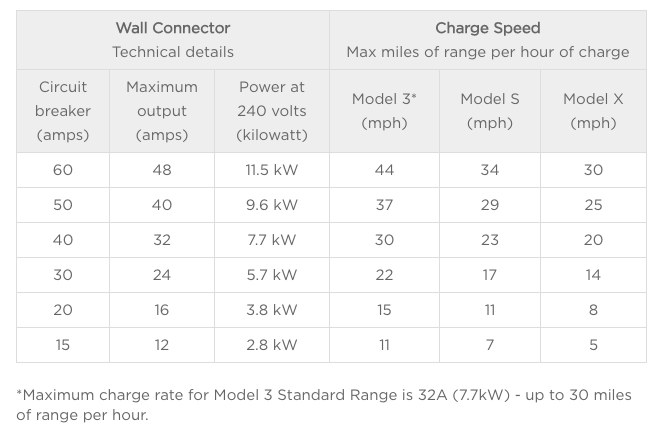
Continuous loads run for three hours or more, so the circuit is sized with headroom. Multiply the EVSE’s charging current by 1.25: 16 A → 20 A, 24 A → 30 A, 32 A → 40 A, 40 A → 50 A, 48 A → 60 A. That is the entire rule in one line.
The catch is that many hardwired EVSEs ship with adjustable current settings. If a 48-amp unit is installed on a 50-amp circuit and nobody changes the setting, the equipment is now mismatched to its protection. Settings must match the circuit, and the setting should be documented for the inspector.
Common Breaker Sizes for Level 2 Charging: 20A, 30A, 40A, 50A, 60A
These are the breaker sizes most US homes actually use for Level 2 charging. Power figures are simple arithmetic at 240 V and describe the circuit’s capability, not necessarily what your vehicle will accept.
| EVSE charging current | Typical minimum breaker / circuit | Approx. power at 240 V |
|---|---|---|
| 16 A | 20 A | 3.8 kW |
| 24 A | 30 A | 5.8 kW |
| 32 A | 40 A | 7.7 kW |
| 40 A | 50 A | 9.6 kW |
| 48 A | 60 A | 11.5 kW |
For a deeper look at the two most common setups, see our breakdowns of 40-amp EV charger breaker size and 48-amp EV charger breaker size, plus the specific question of whether a 48-amp EV charger needs a 60-amp circuit.
Why You Can’t Simply Install a Larger Breaker for Faster Charging
A breaker does not push current into the car; it interrupts the circuit when current exceeds a safe threshold. Installing a 60-amp breaker on wiring sized for 40 amps removes the protection the conductor depends on and creates a genuine fire risk. It also violates the equipment listing.
If a breaker trips repeatedly, the answer is diagnosis — loose terminations, an undersized conductor, a failing EVSE, or a genuine overload — not a bigger breaker. Charging speed is capped by the EVSE’s output setting and, more often, by the vehicle itself.
EVSE Amperage, Vehicle Onboard Charger Limits, and Breaker Sizing
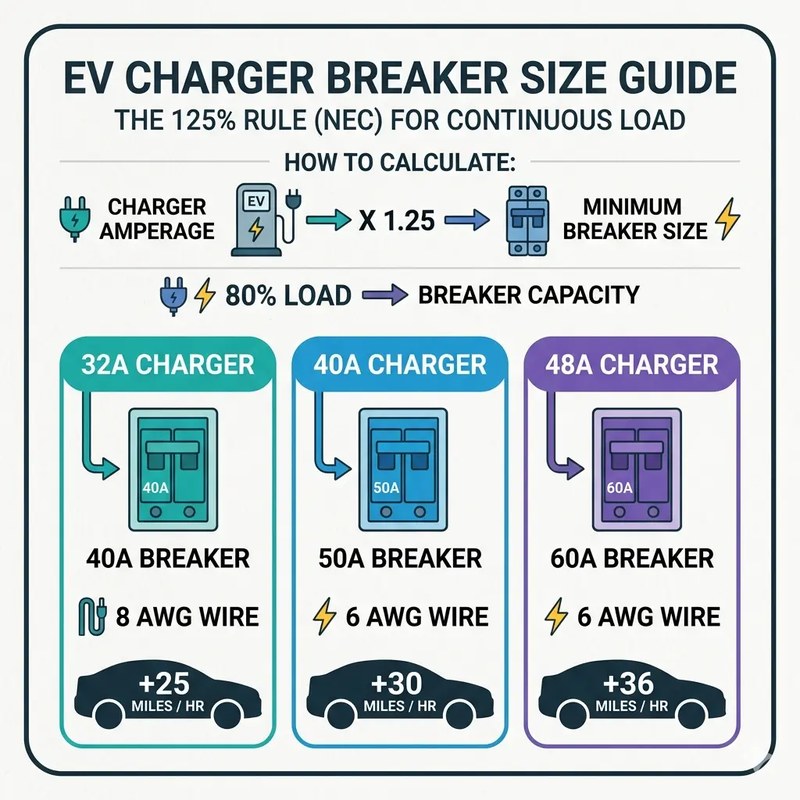
Three separate limits decide how fast you actually charge: the circuit’s capacity, the EVSE’s output setting, and the vehicle’s onboard AC charger. The smallest of the three wins.
Level 1 vs. Level 2 vs. DC Fast Charging: Breaker and Circuit Differences
Level 1 uses a standard 120 V household circuit, typically drawing about 12 A on a 15 A or 20 A branch circuit, delivering roughly 1.4 kW. Level 2 uses 240 V and spans roughly 16 A to 80 A, which is where breaker sizing decisions actually happen.
DC fast charging is different in kind. The charger is off-board, converting AC to DC at the station, and the vehicle receives DC directly. There is no home branch-circuit breaker sized to 125% of a DC charging rate in the same sense — the relevant protections live inside the equipment and the site’s electrical design.
Plug-In vs. Hardwired EV Chargers: Code and Breaker Implications
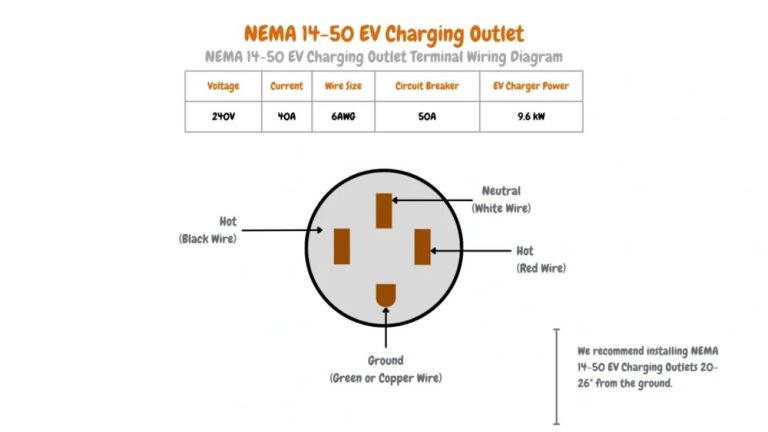
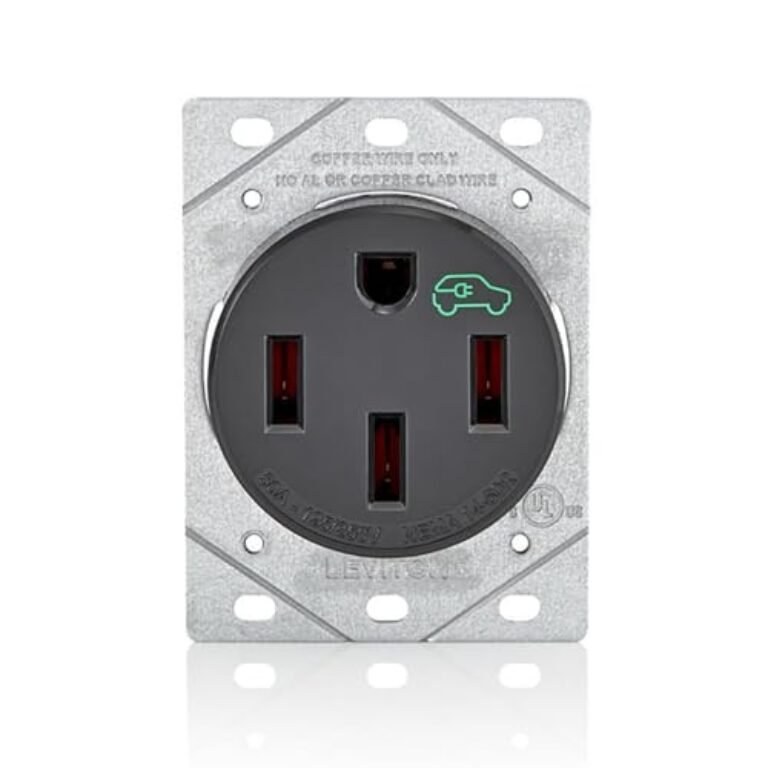
Uses a receptacle, commonly NEMA 14-50 or 6-50 on a 40 A or 50 A circuit. Portable and easier to relocate, but receptacle-based EV charging is generally subject to GFCI protection requirements under the applicable code edition, and the plug limits how much current the setup can safely deliver.
Wired directly to the branch circuit, which is how higher-current units (48 A and above) are normally installed. No plug to wear or overheat, fewer receptacle-related requirements, and typically the configuration manufacturers specify for maximum output.
How Your Vehicle’s Onboard Charger Caps AC Charging Speed
The onboard charger converts AC from the wall into DC for the battery, and it has a fixed maximum. As a general pattern, many current EVs accept somewhere between 7.2 kW and 11 kW on AC, though this varies widely by model and trim — verify your own vehicle’s specification in the owner’s manual or window sticker.
If your car tops out at 7.2 kW, a 48-amp EVSE will not charge it faster than a 32-amp unit. That is the single most common reason buyers overpay for electrical work. Our explainer on whether 40 amps is enough for a Level 2 EV charger walks through that math for typical daily driving.
Electrical Panel, Service Capacity, and Installation Requirements
A breaker that fits is not the same as a panel that can support it. The service and the panel have to carry the new load alongside everything else in the house.
Load Calculation: Will Your Panel Support the New Breaker?
A licensed electrician performs a load calculation using the methods in the applicable code edition, accounting for existing appliances, heating and cooling, and the new continuous EV load. Homes with 200 A service usually have room; 100 A service is often tight, especially with electric ranges, dryers, or heat pumps already installed.
Physical space matters too. A panel can have spare amperage but no open breaker slots, and some older panels cannot accept the breaker type required for EV charging.
Permits, Local Codes, and Hiring a Licensed Electrician in the US
EV charging circuits are safety-sensitive work. Most jurisdictions require an electrical permit and an inspection, and the installer should be licensed for the scope. Get the permit pulled in your name or confirm the contractor does it — uninspected work can complicate insurance claims and future home sales.
When a Panel Upgrade or Load Management Device Is Needed
If the load calculation fails, the options are a service or panel upgrade, or a load management approach. Some code editions allow an energy management system or a demand-control device that monitors the service and reduces or pauses EV charging when the house approaches its limit, which can permit a smaller circuit than the EVSE’s full rating.
That is an engineering decision with documentation requirements, not a DIY workaround. It must be approved locally and must match what the equipment manufacturer supports.
EV Charger Installation Costs and Breaker Size: What to Budget

Breaker size influences cost mainly through conductor size, conduit, and labor — not through the breaker itself, which is a modest line item.
Equipment and Installation Cost Ranges by Breaker Size
A 20 A or 30 A circuit close to the panel is the least expensive scenario. A 50 A or 60 A circuit with a long conduit run, a finished-wall path, or a subpanel feed costs meaningfully more because the conductors are larger and the labor is longer.
The largest cost drivers are usually a panel or service upgrade, trenching or long cable runs, and any drywall repair. Because local labor rates and permit fees vary so widely, treat any national average you read as a starting point and get at least two or three itemized quotes for your specific home.
Electricity Rates, Time-of-Use Pricing, and Charging Losses: Formulas
Charging cost is not simply battery kWh times your rate. Energy drawn from the wall is higher than energy stored in the battery because of conversion and thermal losses. A common estimate for Level 2 AC charging is roughly 5–15% loss, with Level 1 typically higher — treat those as estimates, not fixed values.
Formula: Wall energy = battery energy ÷ charging efficiency, then Cost = wall energy × rate. Time-of-use plans can change the rate by a factor of two or more depending on when you charge, and demand charges on some commercial or residential tariffs can matter more than the energy rate itself.
How to Estimate Cost per kWh Delivered to Your Battery
Divide total session cost by the kWh that actually reached the battery. If 40 kWh landed in the pack and the session cost $7.55, the delivered cost is about $0.19 per kWh — higher than the $0.17 rate because of losses.
Example only. Rates, taxes, fees, time-of-use pricing, and charging losses vary by utility, equipment, and conditions.
Battery Health and Charging Power: Does Breaker Size Matter?
Indirectly, and less than most owners assume. Breaker size sets the ceiling on AC charging power, but AC Level 2 rates are generally modest relative to DC fast charging.
Manufacturer Guidance vs. General Patterns for AC Charging
Follow your vehicle’s manual. Many manufacturers publish guidance on daily charging habits, storage state of charge, and DC fast-charging frequency, and those instructions take priority over generic advice. There is no universal charging-percentage rule that applies to every chemistry and thermal design.
Temperature, State of Charge, and DC Fast Charging Context
Battery temperature and state of charge shape how much power the pack accepts at any moment. A cold pack limits acceptance on AC and DC alike, and a very high state of charge tapers DC fast charging sharply. AC Level 2 is usually gentler simply because the power level is lower and sessions are longer.
Chemistry, Thermal Management, and Convenience Trade-Offs
Packs with active liquid thermal management generally tolerate higher sustained charging power than passively cooled designs. The practical trade-off is convenience: a smaller breaker means slower recovery, which matters most for high-mileage drivers and short overnight windows.
Range, Efficiency, and Charging Losses: Breaker Size Impact
Breaker size does not change how efficiently your car drives. It changes how efficiently energy moves from the grid into the battery, and even that effect is modest at Level 2.
Mi/kWh, Wh/mi, and How Charging Power Affects Efficiency
Driving efficiency is expressed as miles per kWh or watt-hours per mile and depends on the vehicle, speed, and conditions. Charging efficiency is a separate number describing the wall-to-battery conversion. Higher charging power can slightly improve charging efficiency because fixed overheads are spread over more energy, but the difference is small.
Weather, HVAC, Elevation, Payload, Tires, and Battery Temperature
Cold weather, cabin heating, headwinds, elevation gain, roof cargo, underinflated tires, and a cold battery can each cut real-world range substantially. These variables dwarf any effect breaker size has on efficiency.
Separating Charging Losses from Driving Efficiency
When you compare your wall meter to your trip meter, you are measuring both losses at once. Track them separately: note wall kWh per session and battery percentage gained, then track mi/kWh from the vehicle’s own display. Mixing the two produces confusing numbers.
Smart Features, Cable Length, Weather Suitability, and Warranty
These factors rarely change breaker size, but they change whether the installation is worth doing.
Smart Charging and Load Management: Can They Reduce Breaker Needs?
Some EVSEs and third-party controllers can throttle charging based on household demand or utility signals. Where local code permits and the equipment is listed for the application, that capability can allow a smaller circuit. It also introduces dependencies: app accounts, Wi-Fi, firmware updates, and utility program enrollment. Confirm what happens if the cloud service or your network goes down.
Cable Length, NEMA Ratings, and Outdoor Installation
Longer cables add convenience but also voltage drop and cost. For outdoor mounting, verify the enclosure’s actual weather rating, the manufacturer’s operating-temperature range, and its guidance on connector storage. Do not infer outdoor suitability from appearance or marketing language.
Warranty and Support: What to Check Before Buying
Confirm the US warranty term, whether it covers labor, how support is reached, and whether the unit carries a recognized safety listing from a nationally recognized testing laboratory. Verify the listing from the manufacturer’s documentation or the certification record rather than a product page claim.
Adapters and Connectors: Do They Change EV Charger Breaker Size?
No. Connectors and adapters change what physically mates and which protocol is negotiated. They do not change the branch circuit, the breaker, or the conductor size behind the wall.
Important: Physical fit alone does not prove every AC or DC charging mode is supported.
J1772, NACS, and Adapter Direction: AC vs. DC Power Limits
Adapters are directional. A J1772-to-NACS adapter for AC charging is a different product from a DC fast-charging adapter, and using one in the wrong direction or for the wrong mode can be unsafe. Always confirm the adapter’s rated voltage, current, and mode from the manufacturer.
Vehicle and Network Restrictions, Thermal Safety, and Firmware
Compatibility can also be limited by the vehicle’s software, the charging network’s access rules, and firmware versions on either side. Thermal performance matters at high current: a marginal adapter connection is a heat source. If a connector or adapter feels hot during charging, stop the session.
When an Adapter Is Safe and When It Isn’t
An adapter is appropriate when the manufacturer explicitly rates it for that vehicle, that EVSE or station, and that charging mode, and when both sides are functioning normally. It is not appropriate as a workaround for a mismatched circuit, a damaged connector, or an unlisted product.
Final Checklist: Choosing the Right EV Charger Breaker Size
Work in order, and let the documentation drive each decision.
Note the maximum input current and the branch circuit rating the manufacturer requires.
Confirm the maximum AC power your EV accepts so you don’t pay for capacity it cannot use.
A licensed electrician performs a load calculation and confirms service capacity, conductor size, and breaker type.
Pull the permit, follow manufacturer instructions and local code, then pass inspection before regular use.
Step-by-Step: From EVSE Manual to Licensed Installer
Write down three numbers before you call anyone: your EVSE’s maximum charging current, your vehicle’s maximum AC charging power, and your panel’s service rating. Those three numbers answer most of the questions an electrician will ask and prevent you from buying a charger your car cannot fully use.
Common Mistakes to Avoid with Breaker and Circuit Sizing
The recurring errors are installing a larger breaker than the conductor supports, leaving an adjustable EVSE set above the circuit rating, assuming a 48-amp charger will charge every EV faster, skipping the permit, and choosing a receptacle installation when the manufacturer requires hardwiring for the current you want.
If anything about your panel, service, or wiring is uncertain, stop and bring in a qualified electrician. The cost of a proper installation is small compared with the cost of an electrical fire.
Frequently Asked Questions
A 48-amp EVSE normally requires a 60-amp branch circuit and breaker, because 48 A × 125% = 60 A. Confirm this against the manufacturer’s installation instructions and the code edition enforced by your local authority, since some equipment and jurisdictions differ.
Generally no. EV charging is treated as a continuous load, so the overcurrent device is typically rated at 125% of the charger’s current — 50 A for a 40-amp EVSE. Some EVSEs can be set to a lower current to match an existing circuit, but the setting must match the circuit and be documented.
No. A breaker limits current; it does not deliver more of it. Charging speed is capped by the EVSE’s output setting and, usually first, by the vehicle’s onboard AC charger. Installing an oversized breaker without matching conductors is a fire hazard and a code violation.
A 48-amp EVSE on a 50-amp circuit would exceed the continuous-load margin. Either install the 60-amp circuit the equipment requires, or set the EVSE to a lower current that matches a 50-amp circuit — typically 40 A — if the manufacturer permits that setting.
No. Adapters change the physical connection and the negotiated protocol, not the branch circuit. Breaker and conductor sizing is determined by the EVSE and the circuit behind the wall, and adapters must still be rated for the correct voltage, current, and AC or DC charging mode.
A licensed electrician performs a load calculation using the applicable code method, checking service capacity, available breaker slots, and panel compatibility with the required breaker type. If capacity is short, the options are a panel or service upgrade or, where local code permits, a listed load management device.