EVIQO Level 2 EV Charger J1772 48A vs ELEGRP 40A J1772
EVIQO Level 2 EV Charger J1772 48A vs ELEGRP Level 2 EV Charger 40Amp, J1772 comes down to a simple but important choice: a hardwired 48A wall charger with smart app features, or a plug-in 40A portable charger with a NEMA 14-50 plug.
Choose the EVIQO Level 2 EV Charger J1772 48A if you want a hardwired home charging station with app control, a longer 25-foot charge cable, and a weatherproof enclosure. Choose the ELEGRP Level 2 EV Charger 40Amp, J1772 if you want a portable plug-in charger with a NEMA 14-50 plug, ETL certification, and a lower-commitment setup. Before buying either one, verify your vehicle’s connector needs and confirm your installation plan matches the charger type and your home electrical setup.
If you’re comparing these two for daily U.S. home charging, the biggest difference is not just output—it’s form factor and installation style. For readers who want more background on higher-output home units, our 48-amp home charger guide and 40-amp charger roundup can help frame the trade-offs.
Quick Comparison
| Feature | EVIQO Level 2 EV Charger J1772 48A | ELEGRP Level 2 EV Charger 40Amp, J1772 |
|---|---|---|
| Product image | 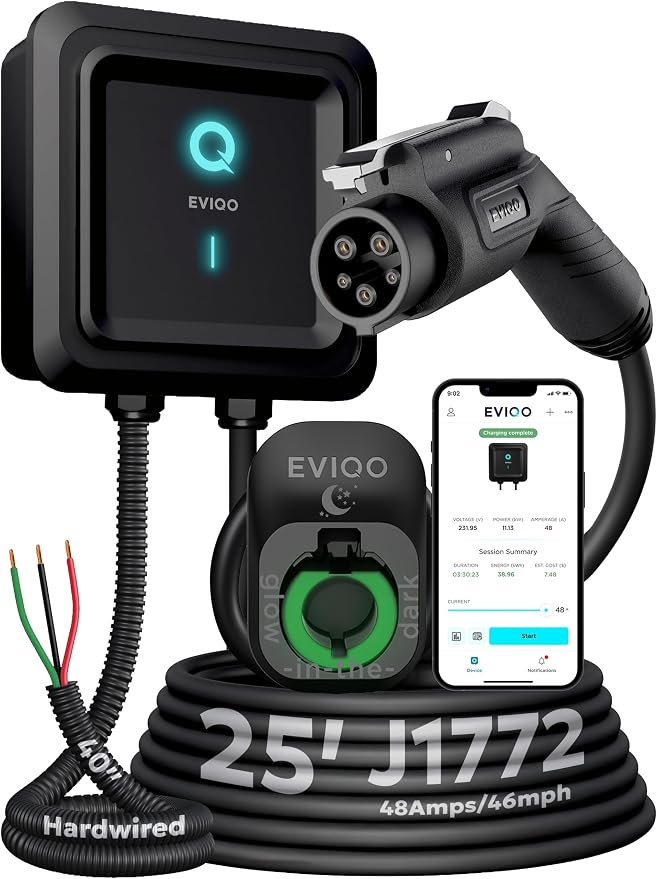 |
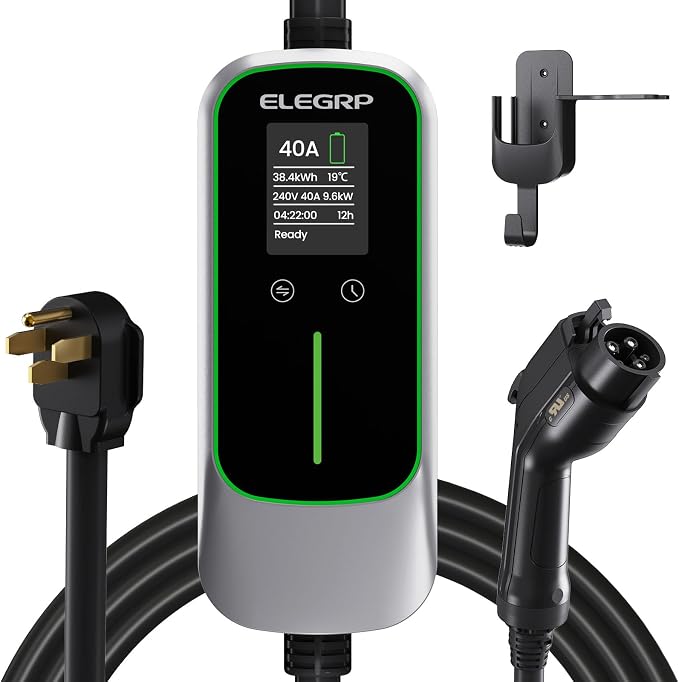 |
| Product type | Hardwired 240V wall charging station | Portable electric car charger with NEMA 14-50 plug |
| Connector | J1772; Tesla use requires a J1772-to-NACS adapter, not included | J1772; Tesla use requires a NACS adapter, sold separately |
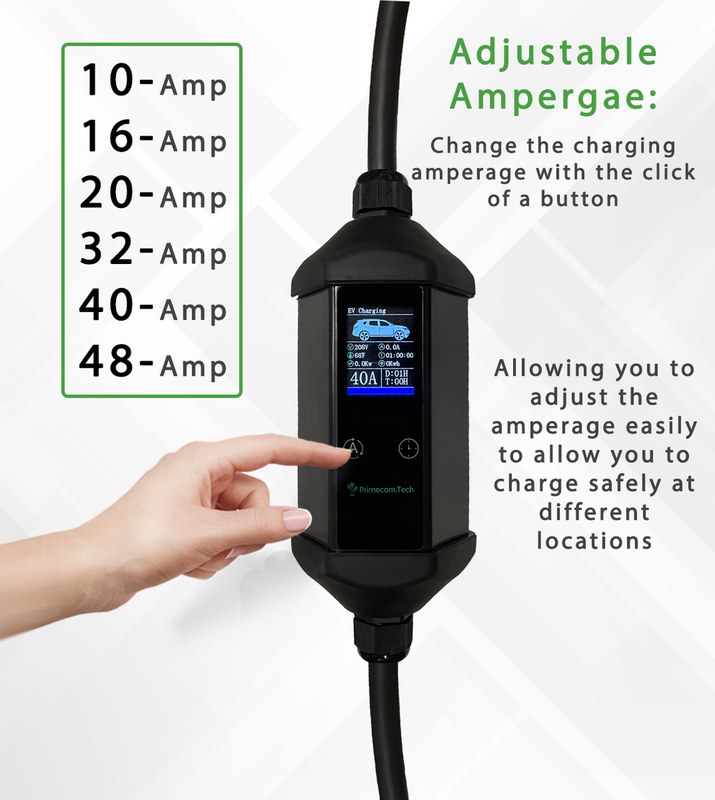
| Stated current control | 6–48A via smartphone app | 5 current levels: 16/20/24/32/40A |
| Stated charging output | Not confirmed in the supplied listing data | Up to 9.6 kW, 37 mph |
| Cable length | 25 ft charging cable; 40″ input cable | 25 ft cable |
| Weather rating / enclosure | IP66 / NEMA-4 weatherproof enclosure | IP67-rated |
| Smart features | App start/stop, current setting, reminders, and consumption/cost tracking; 2.4 GHz WiFi required | 1–12H timing delay; app control not confirmed in the supplied listing data |
| Certification / listing | UL / ETL / FCC / Energy Star | ETL certified |
| Warranty | 3-year manufacturer warranty | 2-year warranty |
| Current price | See Price → | See Price → |
What Matters Most
For these two chargers, the best comparison points are the ones that affect real-world ownership: installation style, current control, connector compatibility, weather protection, and warranty/support. A charger can look similar on paper and still fit a very different use case once you factor in where it will be installed and how often you plan to move it.
1. Installation style
The EVIQO is a hardwired wall charging station, which points to a more permanent home setup. The ELEGRP uses a NEMA 14-50 plug, which makes it the more portable option of the two and easier to move between locations if your setup supports that.
2. Current range and flexibility
EVIQO lists 6–48A current control in its app. ELEGRP lists five current levels—16, 20, 24, 32, and 40A. If you want finer adjustment, EVIQO has the edge on the supplied data.
3. Smart controls and scheduling
EVIQO includes smartphone control for start/stop, current setting, reminders, and consumption/cost tracking, with 2.4 GHz WiFi required. ELEGRP lists a 1–12 hour timing delay, but broader app features are not confirmed in the supplied listing data.
4. Weather protection
EVIQO is listed with an IP66 / NEMA-4 weatherproof enclosure. ELEGRP is listed as IP67-rated. Both are presented as indoor/outdoor-capable options, but their exact real-world use still depends on installation and local conditions.
5. Warranty and support
EVIQO includes a 3-year warranty and U.S.-based support. ELEGRP includes a 2-year warranty and U.S.-based support. That doesn’t decide performance, but it does matter for long-term ownership confidence.
Product 1: EVIQO Level 2 EV Charger J1772 48A
EVIQO Level 2 EV Charger J1772 48A – Hardwired 240V Wall Charging Station
The EVIQO is the more feature-rich home installation on the supplied listing data, especially if you want a hardwired unit with smartphone controls and a long charge cable. Its main limitation is that some key performance details, like a specific kW figure, are not confirmed in the supplied listing data, so buyers should verify the current product page and installation guidance before planning a setup.
- Hardwired design for a permanent wall-mounted setup
- Smart app control with 6–48A adjustment and usage tracking
- 3-year warranty plus U.S.-based support
- UL / ETL / FCC / Energy Star listed in the supplied data
- Tesla compatibility requires a separate J1772-to-NACS adapter
- Specific charging kW is not confirmed in the supplied listing data
- 2.4 GHz WiFi is required for smart app features
If you want a deeper look at this model’s broader positioning, see our EVIQO Level 2 EV charger review. For installation planning questions tied to higher-output units, our guides on 48-amp circuit needs and wire size for 48-amp EV chargers may also be useful background reading.
Product 2: ELEGRP Level 2 EV Charger 40Amp, J1772
ELEGRP Level 2 EV Charger 40Amp, J1772 Portable Electric Car Charger, 240V NEMA 14-50 Plug, ETL Certified with
The ELEGRP is the more portable, plug-and-play option in this comparison, and its supplied listing data is straightforward about output and current levels. Its main trade-off is that it does not show the same smart-app feature set as EVIQO in the supplied facts, so buyers who want remote control and detailed tracking may prefer the other unit.
- Plug-in NEMA 14-50 design for easier portability
- Up to 9.6 kW with five current levels
- ETL certified with IP67-rated durability
- 2-year warranty and U.S.-based support
- App-based control is not confirmed in the supplied listing data
- Shorter warranty than EVIQO based on supplied facts
- Tesla compatibility requires a separate NACS adapter
For more context on this style of unit, you can also compare it with our 40-amp portable charger guide and our 40-amp sizing article.
Head-to-Head
Installation and portability
EVIQO is the permanent-installation option here because it is explicitly listed as a hardwired 240V wall charging station. ELEGRP is the portable option because it uses a NEMA 14-50 plug. If you want to relocate the charger more easily, ELEGRP has the clearer advantage on the supplied data.
Current control
EVIQO offers broader current adjustment, from 6A to 48A, through the app. ELEGRP offers five fixed current levels up to 40A. That makes EVIQO the more flexible choice if you expect to fine-tune charging current over time.
Smart features
EVIQO clearly leads on smart functionality in the supplied listing data, with app-based start/stop, current control, reminders, and consumption/cost tracking. ELEGRP’s listed timing delay is useful, but broader app control is not confirmed in the supplied listing data.
Weather protection and durability
Both products are presented as suitable for indoor or outdoor use, but their ratings differ. EVIQO is listed as IP66 / NEMA-4 weatherproof, while ELEGRP is listed as IP67-rated. The supplied data supports saying both are built for tough conditions, but not that one is universally better in every environment.
Warranty and support
EVIQO includes a 3-year warranty. ELEGRP includes a 2-year warranty. Both list U.S.-based support, though their support hours differ in the supplied facts. If warranty length matters to you, EVIQO has the edge.
Which One Should You Choose?
You want a hardwired wall charger with smart app controls, a wider 6–48A current range, a 25-foot charging cable, and a 3-year warranty. It’s the stronger fit for a permanent home installation where you value control and convenience more than portability.
You want a plug-in charger with a NEMA 14-50 plug, 25-foot cable, ETL certification, and portable use across home or travel scenarios. It’s the better fit if you want simpler setup flexibility and don’t need the more advanced app features listed for EVIQO.
Buying and Compatibility Checks
- Confirm exact vehicle and connector compatibility
- Verify current product specifications and included hardware
- Confirm electrical/installation requirements from manufacturer documentation
- Check cable reach, mounting/location needs, and verified indoor/outdoor suitability
- Verify current warranty, support, price, and availability
For installation-related research, our guides on 40-amp breaker size and 48-amp breaker size may help you prepare questions for a licensed electrician. If you are still deciding between charger families, our Level 2 home chargers category is a good place to compare more options.
Based on the supplied listing data, yes: EVIQO is the hardwired wall charging station, so it is the more natural fit for a permanent installation. It also adds app controls and a longer warranty.
Based on its NEMA 14-50 plug and portable design, ELEGRP is the more portable option in this comparison. That said, portability still depends on having the right outlet and safe charging conditions wherever you use it.
The supplied listings say Tesla use is possible with a separate adapter. For EVIQO, a J1772-to-NACS adapter is noted; for ELEGRP, a NACS adapter is sold separately.
EVIQO has the clearer smart-feature set in the supplied facts, including app start/stop, current control, reminders, and consumption/cost tracking. ELEGRP lists timing delay, but broader app features are not confirmed in the supplied listing data.
Not automatically. The right choice depends on your installation plan, your vehicle’s onboard charging limits, and whether you need a hardwired or plug-in unit. Verify the current manufacturer documentation before deciding.
- EVIQO Level 2 EV Charger J1772 48A: strongest supported use case is a permanent home charger with app control and a longer warranty; main trade-off is that it requires hardwired installation and Tesla use needs a separate adapter.
- ELEGRP Level 2 EV Charger 40Amp, J1772: strongest supported use case is a portable plug-in home charger with straightforward setup; main trade-off is fewer confirmed smart features and a shorter warranty.
- Before buying: verify your vehicle connector needs, adapter direction if you drive a Tesla, and whether your installation plan matches a hardwired unit or a NEMA 14-50 plug-in charger.
For most U.S. EV owners, the better choice depends less on brand and more on whether you want a permanent wall unit or a portable plug-in charger. If you match the charger type to your home electrical setup and your daily driving routine, either model can make sense.